Prevod
Vihar je prišel sredi najhujše poletne vročine. Prebivalci kmečkega dvorišča so mu vselej rekli kar »tisti vihar«, kajti niti Slepi Konj, ki je na kmetiji živel dlje od vseh svojih sosedov, ni pomnil česa podobnega. »Spominjam se,« je dejal, »kako je nekoč jeseni veter podrl jablano s sladkimi jabolki. Prašiči so jo našli in pojedli ves sad, še preden je kmet izvedel, da se je podrla. Morali bi jih slišati, kako so krulili ob njej. Bali so se, da jih bo kmet odgnal, preden bodo vse pojedli. Eh, kaj hočemo! Najedli so se do sitega, toda eden od Pujskov mi je pozneje povedal, da jim je bilo potem slabo in da do konca življenja noče videti nobenega sladkega jabolka več. Tisto je bil hud vihar, a ne takšen kot ta, ne takšen kot ta.«
Prišel je ponoči, ko so prebivalci kmečkega dvorišča spali, in vse je hitelo iskat zavetje. Perutnina, ki je prenočevala na stari jablani, ni imela časa, da bi si namastila perje in ga naredila nepremočljivega. Ptice so le kar najhitreje zletele z vej in stekle k odprtim vratom kokošnjaka. Ko so bile na varnem v njem, so našopirile perje in se stresale, da bi se otresle dežnih kapljic. Perutnina ne mara mokrega vremena in jo zelo jezi, če mora biti na dežju. Njeni sosedje to tako dobro vedo, da imajo navado o jeznem človeku reči, da je »besen kot mokra Kokoš«.
Krave so bile v svojem delu hleva, z vratovi med pregradami, zato jim ni preostalo drugega, kakor da mirno stojijo in mislijo na tiste, ki so zunaj. Konji so bili v svojih udobnih stojiščih. Ves dan so trdo delali in kmet jim je v jaslih pripravil dobro večerjo iz ovsa, da so se lahko hitro najedli in zaspali, namesto da bi morali ostati budni in hoditi po pašniku ter si sami iskati večerjo.
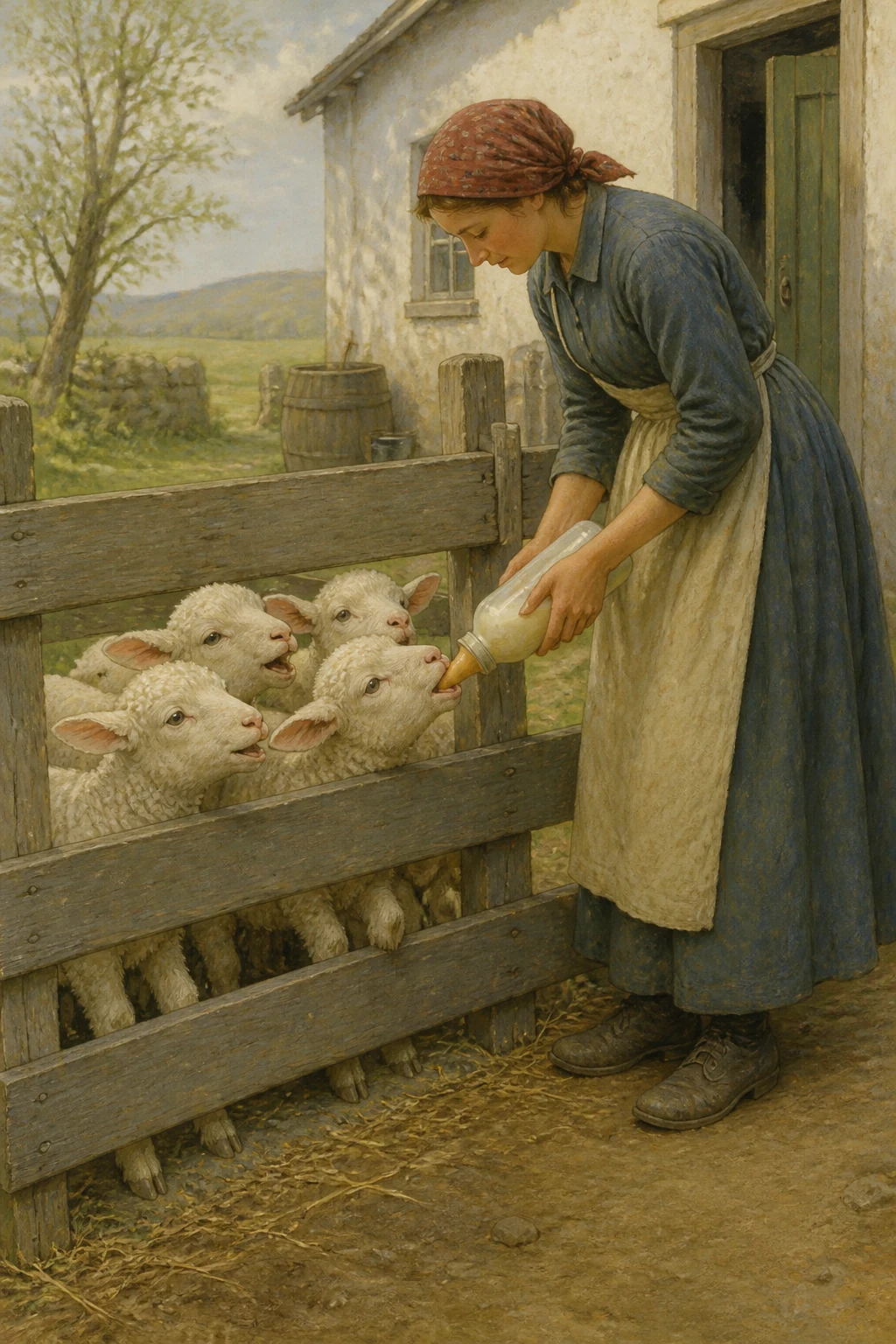
Ovce so se zunaj na travniku tesno stisnile pod drevo z nizkimi vejami in mirno stale, dokler vihar ni minil. Bilo jim je tako vroče, da jim je hladni dež prijal, veter pa je butal vanje in zibal drevesne veje. Ob glasnem grmenju so Jagnjeta poskakovala. Bliskanje jim je bilo všeč in iz njega so si naredila igro: vsako je povedalo, kaj je videlo ob zadnjem blisku. Tudi oblaki so bili lepi in so leteli čez nebo kakor velike temne ptice s puhastimi prsmi, ki jim je tu in tam iz kljunov padel svetleč se črv.
Naposled je zrak postal hladen in čist, oblaki pa so odleteli daleč proti vzhodu. Nato so pokukale na plan zvezde, najprej ena, potem dve, potem šest, potem dvajset, nazadnje pa toliko, da jih ne bi mogli prešteti — več kot listov na javorju, več kot travnih bilk na travniku. Ovce so malo tekale naokrog, da bi se otresle dežnih kapljic in se ogrele, potem pa so se spet stisnile skupaj in legle spat.
Ko je na vzhodnem nebu vzšlo sonce, so njegovi topli žarki obsvetili Ovce in jih prebudili. »Kako svež in lep dan,« so rekle. »Kakšno jutro za tek!«
»Prej kot vi bom pri visoki travi!« je eno od malih Jagnjet zaklicalo drugim in vsa so se razbežala po travniku ter od veselja brcala z zadnjimi nogami. Že nekaj časa so se pasla ločeno od mater in se naučila jesti travo, namesto da bi pila mleko. Zelo so bila ponosna na to, kako so jo trgala s hitrimi sunki glave navzgor, in zobje so jim lepo rasli. Zgornjih sprednjih zob niso pričakovala, kajti namesto njih imajo Ovce le trdo mesnato blazinico.
Kmalu so pritekla nazaj k čredi. »Tamle je Pes,« so vzklikala, »neki tuj Pes. Ni podoben Collieju. Sem prihaja in strah nas je.«
Njihov stric, Oven Zvončar, je pogledal proti tujemu Psu, nato pa se hitro obrnil in začel teči. Zvonec okoli njegovega vratu je zazvenketal ob vsakem koraku. Ko so druge Ovce zaslišale zvonec, so dvignile glave in stekle za njim, Jagnjeta pa za njimi. Tuji Pes jim ni sledil niti ni lajal nanje, pa so vseeno tekle naprej in s koraki otresale bleščeče dežne kapljice s trave. Nobena ni sama zase razmišljala, kaj bi pravzaprav morala storiti. Oven Zvončar je pomislil: »Pred Psom bi rad zbežal, pa bom zbežal.«
Druge Ovce so si rekle: »Oven Zvončar teče, pa bomo tekle še me.« In Jagnjeta so rekla: »Če vsi tečejo, bomo tekla še mi.«
Tekle so vzdolž ograje, zvonec je cingljal, parklji so topotali in nobena ni razmišljala s svojo glavo, dokler niso prišle do mesta, kjer je veter podrl ograjo. Ni je položil čisto na tla, temveč jo je nagnil toliko, da se jo je dalo preskočiti. Če bi en sam član črede, tudi najmlajše Jagnje, rekel: »Ne skačite!«, bi ostale na pašniku, toda nihče ni tega rekel. Ovnu Zvončarju se je zahotelo skočiti čez, pa je skočil. Nato so Ovce storile, kar je storil Oven Zvončar, in Jagnjeta so storila, kar so storile Ovce.
Zdaj so bile na cesti in Oven Zvončar je zavil proč od kmečke hiše ter tekel naprej, Ovce in Jagnjeta pa za njim. Še zdaj bi se ustavile, če bi kdo rekel: »Stojte!«, saj so vedele, da ne ravnajo prav, toda nihče ni tega rekel.
Čez nekaj časa je za njimi po cesti pridrdrala težka vprega in Oven Zvončar je preskočil jarek ter stekel na gričevnat travnik, za katerim je bil gozd. Ker je šel on, so šle tudi Ovce, in ker so šle Ovce, so šla tudi Jagnjeta, in nihče ni rekel: »Stojte!« Vidite, do takrat so bile že pošteno prestrašene, in nič čudnega. Ko so zagledale tujega Psa, so se nekoliko ustrašile, saj so mislile, da bi jih utegnil loviti. Če bi se prisilile ostati tam in bi se vedle pogumno, bi kmalu tudi začutile pogum. Tudi če bi bil Pes hudoben, bi mu lahko preprečile, da bi jih poškodoval, kajti Ovce imajo zelo močna, trda čela, s katerimi lahko udarijo, Oven Zvončar pa je imel še dolge, zavite rogove s tremi grebeni ob strani vsakega. Toda z Ovcami je tako kot z drugimi ljudmi — če se prepustijo strahu, jih je vse bolj in bolj strah, tudi kadar ni prave nevarnosti, in zdaj so bile za vse njihove težave krive le one same, ker se niso ustavile in premislile, kaj bi morale storiti.
Pohitele so na najvišji del travnika in ko so bile tam ter niso mogle više, so se ustavile in pogledale druga drugo. Eno Jagnje je reklo svoji materi: »Zakaj smo prišli sem? Tu ni niti približno tako lepo kot na našem travniku.«
»No, jaz sem prišla zato, ker je prišel Oven Zvončar,« je odgovorila. Nato se je obrnila k Ovnu Zvončarju in rekla: »Zakaj si nas pripeljal sem?« »Nisem vas pripeljal sem,« je odvrnil. »Zahotelo se mi je priti, pa sem prišel. Nisem vas silil, da mi sledite.«
»N-ne,« je odgovorila Ovca, »ampak lahko bi vedel, da bomo Ovce šle za teboj, če boš šel ti.« »No,« je rekel Oven Zvončar, »ve Ovce pa bi lahko vedele, da bodo Jagnjeta šla za vami, če boste šle ve, zato bodite raje tiho.«
»Bee!« so zavpila Jagnjeta. »Vroče nam je in žejna smo, tu pa ni vode, da bi pila. Nazaj hočemo.« Vsakdo je izgubil potrpljenje z nekom drugim in nikomur ni bilo prijetno. Niso si upale poskusiti vrniti domov, ker so se bale, da bi jih doletelo še več težav, zato so se stisnile skupaj na vrhu hriba in bile zelo nesrečne in potrte. Niso imele nobenega dobrega razloga, da so prišle sem, in niti povedati ne bi znale, zakaj so stekle na vrh hriba, namesto da bi ostale v prijetni dolinici spodaj.
A razlog, da so stekle navkreber, je vendarle obstajal, čeprav ga niso poznale. Njihova pra-pra-pra-pra-pra-praded in pra-pra-pra-pra-pra-prababica sta bila namreč divji Ovci v gorah in sta ob nevarnosti stekla navzgor med skale, kjer ni bilo nikogar, ki bi jima lahko kaj storil. Navadila sta se teči v hrib, kadar sta se prestrašila, in njuni otroci so počeli enako, pa tudi otroci njunih otrok, in zdaj tako ravnajo celo Ovce s kmečkega dvorišča, čeprav so že zdavnaj pozabile, zakaj.
»Hov-hov-hov!« je zadonelo skozi mirni jutranji zrak. »Collie je!« so veselo vzkliknila Jagnjeta. »Prihaja, da nas odpelje domov. Zablejajmo, da nas bo hitreje našel.« Vsa Jagnjeta so s svojimi visokimi, mehkimi glasovi rekla: »Bee! Beee!«, njihove matere pa so glasneje rekle: »Bee! Beee!« In Oven Zvončar je dodal še svoj »Bee! Beee!«, ki je bil tako globok in močan, da je zvenel kot droben, prav drobcen grom.
Collie je priskakljal mimo, mahal z repom in bliskal z očmi. Pognal je čredo proti domu ter jo vso pot ošteval in se ji posmehoval, toda zdaj so bile Ovce tako srečne, da jim ni bilo mar, kaj govori. Ko so bile spet na varnem na domačem travniku in je kmet popravil ograjo, jih je Collie zapustil. Ko se je obrnil, da bi odšel, jim je zaklical še zadnji nasvet.
»Jaz sem Ovčarski Pes,« je rekel, »in moja naloga je skrbeti za Ovce, kadar ne znajo skrbeti same zase, a prav rad bi bil za nekaj časa Oven Zvončar. Mene že ne bi zalotili, da počnem vsako neumnost, ki se mi zahoče, in spravljam v težave vso čredo, ki mi sledi! Nihče ne more ničesar storiti, ne da bi za njim isto storil še kdo drug, in jaz ne bi vodil drugih v težave, potem pa rekel, da nisem pomislil. Hov-hov-hov-hov!«
Oven Zvončar je godrnjal sam pri sebi: »Saj drugim ni treba capljati za menoj, če nočejo. To bi bilo pa res žalostno, če ne bi smel preskočiti ograje, ne da bi vsi šli za menoj.« Toda globoko v srcu ga je bilo sram, saj je vedel, da mora tisti, ki vodi druge, ravnati prav.
Izvirnik
It was during the hottest summer weather that the wind-storm came. The farmyard people always spoke of it as "the" wind-storm, because not even the Blind Horse, who had lived on the farm longer than any of his neighbors, could remember anything like it. "I recall one time," he said, "when a sweet-apple tree was blown down in the fall. The Hogs found it and ate all the fruit before the farmer knew that it was down. You should have heard them grunt over it. They were afraid the farmer would drive them away before they had eaten it all. Eh, well! They ate all they wanted, but one of the Pigs told me afterward that it made them sick, and that he never wanted to see another sweet apple as long as he lived. That was a hard storm, but not like this, not like this."
It had come in the night when the farmyard people were asleep, and there was much scampering to shelter. The fowls, who were roosting in the old apple-tree, did not have time to oil their feathers and make them water-proof. They just flew off their perches as fast as they could and ran for the open door of the Hen-house. When they were once inside, they ruffled up their feathers and shook themselves to get rid of the rain-drops. Fowls do not like wet weather, and it vexes them very much to be in the rain. Their neighbors know this so well that it has become their custom to say of an angry person that he is "as mad as a wet Hen."
The Cows were in their part of the barn with their necks between the stanchions, so there was nothing for them to do but to keep still and think of those who were out of doors. The Horses were in their comfortable stalls. They had been working hard all day and the farmer had gotten a good supper of oats ready for them in their mangers, so that they could eat quickly and go to sleep, instead of staying awake and walking around to get their own suppers in the pasture.
Out in the meadow the Sheep huddled close together under a low-branching tree, and stood still until the storm passed. They had been so warm that the cool rain made them comfortable, but the wind pushed them and swayed the branches of the trees. The loud thunder made the Lambs jump. They liked the lightning and made a game out of it, each one telling what he had seen by the last flash. The clouds, too, were beautiful, and flew across the sky like great dark birds with downy breasts, dropping now and then shining worms from their beaks.
At last the air became cool and clear, and the clouds flew far away toward the east. Next, the stars peeped out, first one, then two, then six, then twenty, and then so many that you could not have counted them,--more than the leaves on a maple-tree, more than the grass-blades of the meadow. The Sheep ran around a little to shake off the rain-drops and warm themselves, then they huddled down again to sleep.
When the sun arose in the eastern sky, his warm beams fell upon the Sheep and awakened them. "How cool and beautiful a day," they said. "What a morning for a run!"
"I can beat you to the tall grass!" called one little Lamb to the rest, and they all scampered around the field, throwing up their heels for joy. They had been away from their mothers for awhile, and had learned to eat grass instead of milk. They were quite proud of the way in which they broke it off, with quick upward jerks of their heads, and their teeth were growing finely. They did not expect any upper front teeth, for in place of them the Sheep have only a hard pad of flesh.
Soon they came running back to the flock. "There is a Dog over there," they cried, "a strange Dog. He doesn't look like Collie. He is coming this way, and we are afraid."
Their uncle, the Bell-Wether, looked over to where the strange Dog was, then turned quickly and began to run. The bell around his neck clinked at every step. When the other Sheep heard the bell they raised their heads and ran after him, and the Lambs ran after them. The strange Dog did not follow or even bark at them, yet on they went, shaking the shining rain-drops from the grass as they trod upon it. Not one of them was thinking for himself what he really ought to do. The Bell-Wether thought, "I feel like running away from the Dog, and so I will run."
The other Sheep said to themselves, "The Bell-Wether is running and so we will run."
And the Lambs said, "If they are all running we will run."
Along the fence they went, the bell clinking, their hoofs pattering, and not one of them thinking for himself, until they reached a place where the fence was blown over. It was not blown 'way down, but leaned so that it could be jumped. If a single one of the flock, even the youngest Lamb, had said, "Don't jump!" they would have stayed in the pasture; but nobody said it. The Bell-Wether felt like jumping over, so he jumped. Then the Sheep did as the Bell-Wether had done, and the Lambs did as the Sheep had done.
Now they were in the road and the Bell-Wether turned away from the farmhouse and ran on, with the Sheep and the Lambs following. Even now, if anybody had said, "Stop!" they would have stopped, for they knew that they were doing wrong; but nobody said it.
After a while a heavy wagon came rumbling down the road behind them, and the Bell-Wether jumped over a ditch and ran into a hilly field with woodland beyond. Because he went the Sheep did, and because the Sheep went the Lambs did, and nobody said "Stop!" You see, by this time they were very badly frightened, and no wonder. When they saw the strange Dog they were a little scared, for they thought he might chase them. If they had made themselves stay there and act brave they would soon have felt brave. Even if the Dog had been a cruel one, they could have kept him from hurting them, for Sheep have been given very strong, hard foreheads with which to strike, and the Bell-Wether had also long, curled horns with three ridges on the side of each. But it is with Sheep as it is with other people,--if they let themselves be frightened they grow more and more fearful, even when there is no real danger and now all of their trouble came from their not stopping to think what they ought to do.
They hurried up to the highest ground in the field, and when they were there and could go no farther, they stopped and looked at each other. One Lamb said to his mother, "Why did we come here? It isn't nearly so nice as our own meadow."
"Why, I came because the Bell-Wether did," she answered. Then she turned to the Bell-Wether and said, "Why did you bring us here?"
"I didn't bring you here," he replied. "I felt like coming, and I came. I didn't make you follow."
"N-no," answered the Sheep; "but you might have known that if you came the Sheep would come."
"Well," said the Bell-Wether, "you might have known that if you Sheep came the Lambs would, so you'd better not say anything."
"Baa!" cried the Lambs. "We are hot and thirsty and there isn't any water here to drink. We want to go back."
Everybody was out of patience with somebody else, and nobody was comfortable. They did not dare try to go home again, for fear they would have more trouble, so they huddled together on the top of the hill and were very miserable and unhappy. They hadn't any good reason for coming, and they could not even have told why they ran to the hilltop instead of staying in the pleasant hollow below.
There was a reason for their running up, however, although they didn't know it. It was because their great-great-great-great-great-great-grandfather and-grandmother were wild Sheep in the mountains, and when frightened ran up among the rocks where there was nobody to hurt them. They got into the habit of running up-hill when scared, and their children did the same, and their children's children did the same, and now even the farmyard Sheep do so, although they long ago forgot the reason why.
"Bow-wow-wow!" rang out on the still morning air.
"There's Collie!" cried the Lambs joyfully. "He's coming to take us home. Let's bleat to help him find us more quickly." All the Lambs said, "Baa! Baaa!" in their high, soft voices, and their mothers said "Baa! Baaa!" more loudly; and the Bell-Wether added his "Baa! Baaa!" which was so deep and strong that it sounded like a little, very little, clap of thunder.
Collie came frisking along with his tail waving and his eyes gleaming. He started the flock home, and scolded them and made fun of them all the way, but they were now so happy that they didn't care what he said. When they were safely in the home meadow again and the farmer had mended the fence, Collie left them. As he turned to go, he called back one last piece of advice.
"I'm a Shepherd Dog," he said, "and it's my work to take care of Sheep when they can't take care of themselves, but I'd just like to be a Bell-Wether for a little while. You wouldn't catch me doing every foolish thing I felt like doing and getting all the flock into trouble by following me! Nobody can do anything without somebody else doing it too, and I wouldn't lead people into trouble and then say I didn't think. Bow-wow-wow-wow!"
The Bell-Wether grumbled to himself, "Well, the rest needn't tag along unless they want to. Pity if I can't jump a fence without everybody following." But down in his heart he felt mean, for he knew that one who leads should do right things.