Waltey
Jagnječja dvojčka
007 THE TWIN LAMBS
Živalske zgodbe Clare Dillingham Pierson · Clara Dillingham PiersonO besedilu
Jagnječja dvojčka
- Vir
- Živalske zgodbe Clare Dillingham Pierson
- Avtor
- Clara Dillingham Pierson
- Jezik branja
- Slovenščina
- Jezik izvirnika
- English
- Čas branja
- 10 min branja
- Obseg
- 8 strani
- Naslov izvirnika
- 007 THE TWIN LAMBS
O izvirniku
Živalske zgodbe Clare Dillingham Pierson
Devetindevetdeset avtorskih zgodb o živalih na kmetiji, travniku, v gozdu, ob ribniku in ponoči. Bralni jezik je Slovenščina, izvirnik pa prihaja iz vira Živalske zgodbe Clare Dillingham Pierson v jeziku English.
Besedilo
Jagnječja dvojčka
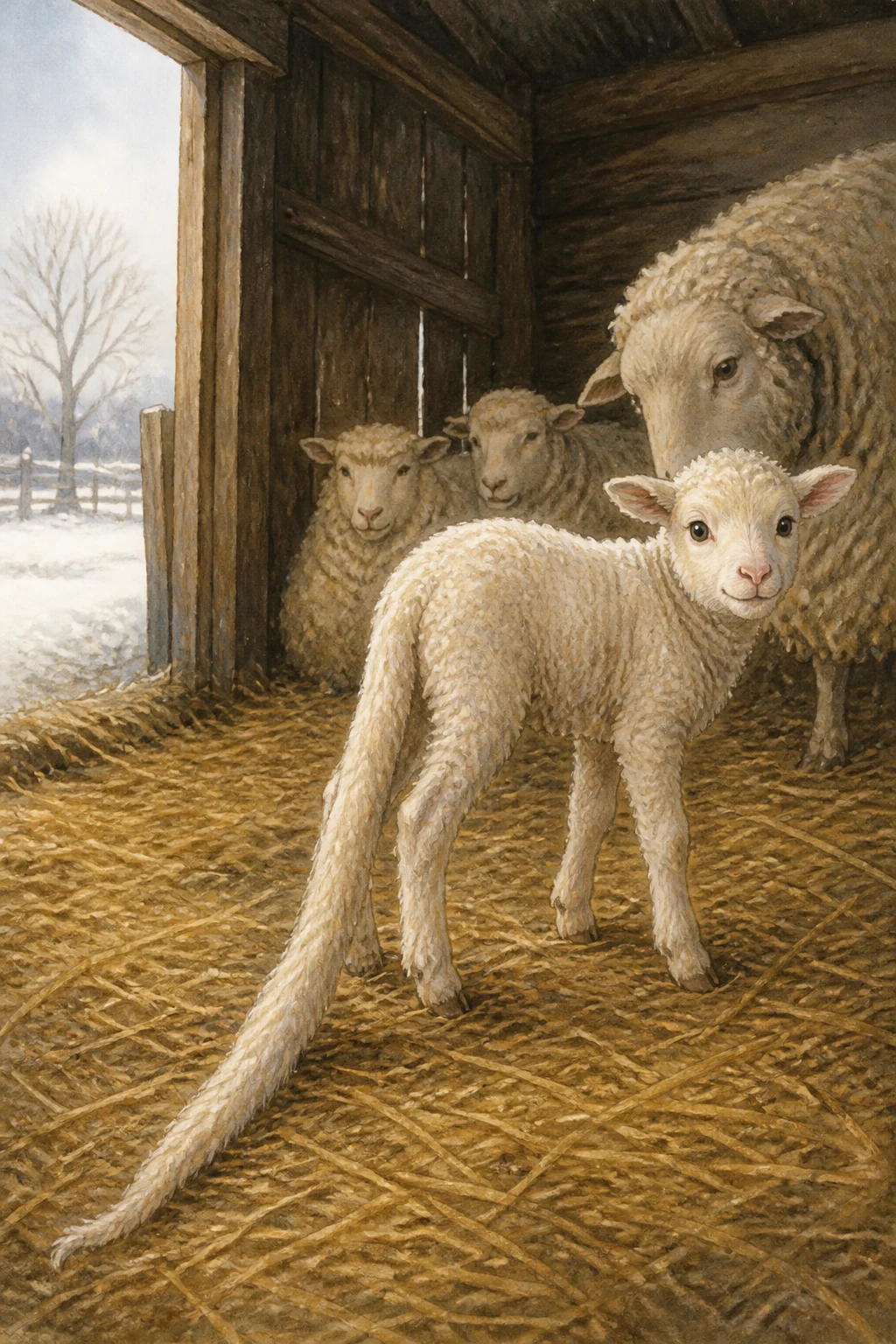
Nekoč je živel jagenjček, bister in razposajen mladič, ki je imel sestrico dvojčico. Njuna mama je imela oba rada in je bila do obeh enako prijazna, toda bratec je hotel imeti vse najboljše zase in je sestrico včasih celo sunil s svojim trdim čelcem. Mama ga je morala zaradi tega večkrat okarati, saj je bil eden tistih napornih otrok, ki ne ubogajo, ko jim prvič kaj rečeš.
V resnici ni hotel biti poreden — bil je le močan, razposajen in nepremišljen. Včasih je bil celo nesramen do mame. Kadar se je to zgodilo, je bila zelo žalostna, vendar ga je imela neizmerno rada in je v svojem srcu vedno našla kak izgovor zanj.
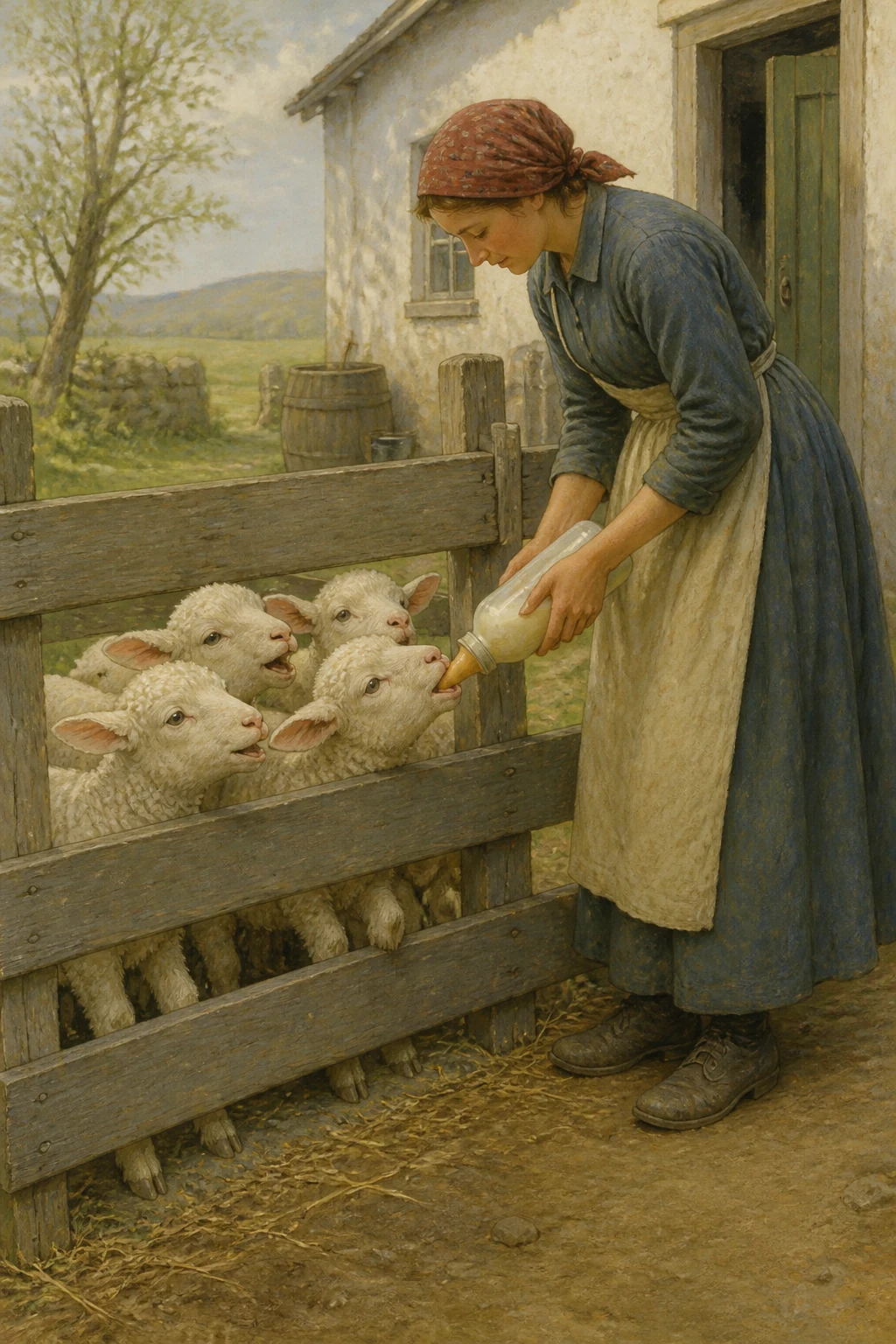
Tisto leto so bili v čredi še trije pari dvojčkov. Ker njihove mame niso bile dovolj močne, da bi skrbele vsaka za dva mladiča, je kmet iz vsakega para vzel po enega in ga odnesel v majhno ogrado ob hiši. Tam so ostali, se veselo igrali in pili mleko iz stekleničke, ki jim jo je prinašala kmetova žena. Kot vsi majhni otroci so bili zelo pogosto lačni, in ko so začutili, da imajo prazne želodčke, ali pa so se jim ti zazdeli že čisto malo prazni, so se nagnetli ob stranico ograde, pomolili rožnato bele smrčke skozi reže med deskami ter meketali in meketali in meketali, da bi jih kmetova žena slišala.
Kmalu je prišla skozi kuhinjska vrata in v roki prinesla veliko steklenico, polno mleka zanje. Na njej je bil mehak gumijast cucelj, skozi katerega so jagenjčki lahko sesali mleko. Seveda so hoteli vsi piti hkrati, čeprav je lahko pil le eden, drugi pa so med čakanjem vselej postali nestrpni. Kmetova žena je bila potrpežljiva tudi takrat, ko so ji jagenjčki v naglici, da bi prišli do mleka, namesto cuclja zgrabili prste in jo ugriznili.
Naš jagenjček dvojček si je želel, da bi njegovo sestrico odnesli v ogrado k drugim trem, in o tem je spregovoril z mamo. »Vem, kako lahko to urediš,« je rekel. »Vsakič, ko pride k tebi, se ji preprosto umakni, pa jo bo kmet odnesel v ogrado.«
»Ti sebičnež!« mu je odgovorila mama. »Bi rad, da naju tvoja ljuba sestrica dvojčica zapusti?« Za hip je povesil glavo, potem pa odvrnil: »Saj bi se imela prav tako lepo. Tam imajo hrane, kolikor je hočejo, pa še zelo se zabavajo.«
»Če misliš, da je v ogradi tako prijetno,« je rekla mama, »kaj ko bi se začela umikati tebi in pustila, da kmet odnese tebe? Mislim, da bi tvoja sestrica raje ostala pri meni.«
»O, ne!« je vzkliknil njen sin. »Nočem zapustiti svoje ljube volnate mame! Vsak večer se hočem stisniti k tebi, da mi pripoveduješ zgodbe o zvezdah.«
»Misliš, da me imaš zelo rad?« ga je vprašala. »Še ne znaš zares ljubiti, ker si sebičen, v sebičnem srcu pa ni prostora za najlepšo ljubezen.«
Ob teh besedah je bilo jagenjčku zelo hudo. »Saj jo imam neizmerno rad,« je vzkliknil, ko je stal sam. »Prepričan sem, da jo imam veliko bolj rad kakor moja sestrica.«
Toda v tem se je malček motil. Čeprav njegova sestrica o tem ni toliko govorila, je svojo ljubezen kazala na številne druge načine. Če bi jo odnesli od mame že samo za nekaj dni, ne bi mogli nikoli več preživljati tako ljubkih in srečnih dni skupaj. Ovce so si zelo podobne in si ne morejo prav dolgo zapomniti obrazov druga druge. Če jagnje ločijo od mame že za kratek čas, se ob ponovnem srečanju ne prepoznata več. Morda je tudi zato toliko časa ostajajo skupaj, saj bi bilo zares žalostno, če ne bi prepoznal svoje mame ali svojega otroka.
Njegova sestrica ni nikoli izvedela, da je hotel, da jo odnesejo. Včasih se ji je zdelo, da se vede čudno, toda sama je bila tako ljubeča in nesebična, da o njegovi sebičnosti ni niti sanjala. Namesto da bi to misel pregnal iz svoje male volnate glave, kar bi lahko storil, če bi več razmišljal o drugih rečeh, je bratec o njej premišljeval vse pogosteje. Zaradi tega je postal nestrpen celo do mame in ji je pogosto odgovarjal precej osorno. Včasih ji, ko ga je ogovorila, sploh ni odgovoril, kar je bilo prav tako grdo.
Mama je vzdihovala in si govorila: »Moj otrok mi vendarle ni v veselje, čeprav sem, ko sem prvič pogledala njegov ljubi obrazek, mislila, da bom vedno srečna, dokler ga bom imela ob sebi.«
Nekega večera, ko je bilo vreme lepo in toplo, je kmet vse ovce in jagnjeta nagnal v ovčji hlev. Dotlej so ponoči ležali zunaj pod čudovitim modrim nebom, zato jim v hlevu še zdaleč ni bilo tako všeč. Prav tako niso razumeli, zakaj so tam, in so prestrašeni in zbegani pogosto meketali drug drugemu: »Čemu je to? Čemu je to?«
Jagnjet to ni tako zelo motilo, saj še niso imela toplega kožuha, ovcam, ki jim je volna rasla že celo leto in je bila dolga in težka, pa je bilo zelo zatohlo in neprijetno. Niso vedele, da ima kmet dober razlog, da jih tisto noč, ko je zunaj padala močna rosa, ohrani suhe. Vsako leto je storil enako, a tako dolgo se niso mogle spominjati, slab spomin pa vedno povzroča težave.
»Ostanita blizu mene, otroka,« je rekla mama dvojčkov. »Če vaju dolgo ne bo ob meni, lahko pozabim, kakšna sta.« »Meni se pa zdi,« je rekel bratec, »da morava biti ves čas pri tebi. Nikoli se ne morem niti malo zabavati!«
Ko so se stisnili k počitku, sta jagenjčka dvojčka trdno zaspala. Njuna mama pa je še dolgo, dolgo ležala budna v temi in bila nesrečna. Nekaj nepremišljenih besed sebičnega malega jagenjčka jo je zabolelo v srcu. Pa še resnične niso bile, saj sta njena otroka podnevi tekala s prijatelji in se imenitno zabavala. Toda saj vemo, da ljudje, kadar jim zmanjka potrpljenja, pogosto rečejo kaj, kar v resnici ne drži.
Zjutraj so v skedenj, ki je bil povezan z ovčjim hlevom, prišli možje. Oblečeni so bili v groba, stara oblačila, v rokah pa so nosili škarje čudne oblike. Ovce so jih tu in tam videle, kadar so bila vrata odprta. Nekoč je kmet obstal med vrati in videti je bilo, kakor da jih šteje. Zato so se stisnile druga k drugi še tesneje kot prej. Videle so, kako možje nosijo v skedenj čisto rumeno slamo in jo razgrinjajo po tleh. Čeznjo so razprostrli veliko polo čistega platna.
Nato so možje začeli prihajati v hlev, loviti ovce in jih odnašati v skedenj. Ovce so bile prestrašene in so veliko meketale, toda ko so katero ujeli in odnesli, ni odprla ust, čeprav se je morda na vso moč otepala, da bi se osvobodila. Najprej so odnesli starega skopljenega ovna, nato pa mlade ovce, ki so bile prejšnje leto še jagnjeta. Dolgo niso izbrali nobene od mam. Vendar nihče ni vedel, kaj se bo zgodilo v naslednjem trenutku, in manj ko je bilo ovc, tesneje so se stiskale skupaj.
Ko so nazadnje odnesli vse mlade ovce, je eden od mož ujel mamo dvojčkov in jo odnesel. Obrnila je obraz proti otrokoma, toda vrata so se za njo zaprla in dvojčka sta ostala z drugimi jagnjeti in njihovimi mamami. Iz skednja sta se slišala škripanje škarij in pridušeno govorjenje mož. Za hip se je dvojčkoma zazdelo, da vidita mamo ležati na tleh, ob njej pa kleči mož, ki ji pod roko drži glavo in sprednji nogi, vendar o tem nista bila prepričana.
Bratec je stekel v kot hleva in prislonil glavo ob deske. Nenadoma se je počutil tako majhnega in nebogljenega. »Moja ljuba volnata mama!« si je ponavljal znova in znova ter se spraševal, ali jo bo še kdaj videl. Spomnil se je, kaj ji je rekel prejšnji večer. Zdelo se mu je, da še zdaj sliši svoj glas, ki osorno pravi: »Zdi se mi, da morava biti ves čas pri tebi. Nikoli se ne morem niti malo zabavati!« Želel si je, da tega ne bi bil rekel. Vedel je, da je njegova mama ljubezniva in dobra, in dal bi vse na svetu, da bi lahko spet ostal blizu nje.
Njegova sestrica je bila prav tako osamljena in prestrašena kakor on, vendar se je vedla drugače. Stala je ob mlajši jagenjčici, ki so ji pravkar odnesli mamo, in jo skušala potolažiti. Drugo za drugo so odnašali mame, dokler niso ostala samo še jagnjeta. Zdaj so bila že zelo lačna in so milo meketala. Bratec dvojček pa je še vedno stal z glavo v kotu. Zaprl je oči, zdaj pa jih je odprl in skozi špranjo v steni hleva zagledal nekaj zelo vitkih in belih ovc, ki so jih spustili na travnik. Sprva so bile videti omotične in so se opotekale, namesto da bi hodile naravnost; potem so se nehale opotekati in začele poskakovati. »Ali je mogoče?« je rekel. »Prav gotovo je!« Čeprav v svojem kratkem življenju še nikoli ni videl sveže ostrižene ovce, je začel razumeti, kaj se je zgodilo.
Spoznal je, da so možje ovcam le ostrigli dolgo volno in da so zdaj pripravljene na toplo vreme. Nič čudnega, da so poskakovale, ko so jim previdno odstranili težko breme volne.
Zdaj je kmet spet odprl vrata v skedenj in pustil jagnjetom, da so skozenj odšla do vrat na travnik. V tem skednju še nikoli niso bila in bratec dvojček se je med dirjanjem po tleh hitro ozrl naokrog. Zagledal je nekaj velikih, razmršenih kupov volne, neki mož pa je ravno zvijal zadnje runo. Spraševal se je, ali je ta volna pripadala njegovi mami in ali je prav tista, h kateri se je stiskal, kadar ga je zeblo ali ga je bilo strah.
Ko so prišla na pašnik, jagnjeta sprva niso vedela, katere ovce so njihove mame. Brez dolgih, umazanih run so bile videti tako zelo drugačne! Bratec dvojček je svojo mamo prepoznal po hoji in glasu, opazil pa je, da je sestrica sploh ne prepozna. Videl je mamo, kako tava naokrog, kakor da ne ve, kje bi našla svoja otroka, in v glavi se mu je porodil poreden načrt. Vedel je, da bo kmet sestrico odnesel v ogrado, če ji bo lahko vsaj za kratek čas preprečil, da bi našla mamo. Mislil je, da natančno ve, kako to storiti, in je že stekel proti njej. Nato pa se je ustavil in se spomnil, kako žalosten in osamljen je bil še malo prej brez mame, in jagenjčki v ogradi so se mu začeli smiliti.
Zdaj sta se v njem srdito bojevali sebičnost in dobrota. Ena je govorila: »Pošlji sestrico proč,« druga pa: »Odpelji jo k mami.« Nazadnje je, kar so ga nesle noge, stekel k sestrici. »Zdaj sem dober,« si je rekel, »ampak morda ne bom dolgo. Povedal ji bom, preden bom spet poreden.«
»Sestrica!« je zaklical. »Pridi z mano k najini mami. Ne ve, kje naj naju poišče.« Videl je, kako je žalostni sestričin obrazek zasijal od sreče, in vesel je bil, da je storil prav. Skupaj sta odskakljala, veselo brcala z zadnjimi nogami in bratcu se je zdelo, da še nikoli v življenju ni bil tako srečen. Toda kmalu naj bi bil še srečnejši, kajti ko sta prišla do njegove »nove, bele mame«, kakor jo je imenoval, in ji je sestrica povedala, kako ji je pokazal pot, je mama rekla: »Zdaj si mi v veselje. Tudi ti boš srečnejši jagenjček, saj veš, da je mamino srce dovolj veliko za vse njene otroke in da tisti, ki bolj ljubi, tudi lepše ljubi.«
»Saj to je vendar jasno,« je rekla sestrica dvojčica. »Kaj hočeš s tem reči?« Toda mama ji ni nikoli povedala in bratec ji ni nikoli povedal in upamo, da boste tudi vi ohranili skrivnost.
Izvirnik
007 THE TWIN LAMBS
Naslednje strani prikazujejo izvirno besedilo za primerjavo.
There was a Lamb, a bright, frisky young fellow, who had a twin sister. Their mother loved them both and was as kind to one as to the other, but the brother wanted to have the best of everything, and sometimes he even bunted his sister with his hard little forehead. His mother had to speak to him many times about this, for he was one of those trying children who will not mind when first spoken to.
He did not really mean to be naughty--he was only strong and frisky and thoughtless. Sometimes he was even rude to his mother. She felt very sad when this was so, yet she loved him dearly and found many excuses for him in her own heart.
There were three other pairs of twins in the flock that year, and as their mothers were not strong enough to care for two Lambs apiece, the farmer had taken one twin from each pair to a little pen near the house. Here they stayed, playing happily together, and drinking milk from a bottle which the farmer's wife brought to them. They were hungry very often, like all young children, and when their stomachs began to feel empty, or even to feel as if they might feel empty, they crowded against the side of the pen, pushed their pinkish-white noses through the openings between the boards, and bleated and bleated and bleated to the farmer's wife.
Soon she would come from the kitchen door and in her hand would bring the big bottle full of milk for them. There was a soft rubber top to this bottle, through which the Lambs could draw the milk into their mouths. Of course they all wanted to drink at once, though there was only a chance for one, and the others always became impatient while they were waiting. The farmer's wife was patient, even when the Lambs, in their hurry to get the milk, took her fingers into their mouths and bit them instead of the top of the bottle.
Our twin Lamb wanted to have his sister taken into the pen with the other three, and he spoke about it to his mother. "I know how you can manage," said he. "Whenever she comes near you, just walk away from her, and then the farmer will take her up to the pen."
"You selfish fellow!" answered his mother. "Do you want your dear little twin sister to leave us?"
He hung his head for a minute, but replied, "She'd have just as good a time. They have all they can eat up there, and they have lots of fun."
"If you think it is so pleasant in the pen," said his mother, "suppose I begin to walk away from you, and let the farmer take you away. I think your sister would rather stay with me."
"Oh, no!" cried her son. "I don't want to leave my own dear woolly mother! I want to cuddle up to you every night and have you tell me stories about the stars."
"Do you think you love me very much?" said she. "You don't know how to really love yet, for you are selfish, and there is not room in a selfish heart for the best kind of love."
That made the Lamb feel very badly. "I do love her dearly," he cried, as he stood alone. "I believe I love her ever so much more than my sister does."
That was where the little fellow was mistaken, for although his sister did not talk so much about it, she showed her love in many other ways. If she had been taken from her mother for even a few days, they could never again have had such sweet and happy days together. Sheep look much alike, and they cannot remember each other's faces very long. If a Lamb is taken away from his mother for even a short time, they do not know each other when they meet afterward. Perhaps this is one reason why they keep together so much, for it would be sad indeed not to know one's mother or one's child.
His sister never knew that he had wanted her taken away. She thought he acted queerly sometimes, but she was so loving and unselfish herself that she did not dream of his selfishness. Instead of putting the idea out of his woolly little head, as he could have done by thinking more of other things, the brother let himself think of it more and more. That made him impatient with even his mother, and he often answered her quite crossly. Sometimes, when she spoke to him, he did not answer at all, and that was just as bad.
His mother would sigh and say to herself, "My child is not a comfort to me after all, yet when I looked for the first time into his dear little face, I thought that as long as I had him beside me I should always be happy."
One night, when the weather was fair and warm, the farmer drove all the Sheep and Lambs into the Sheep-shed. They had been lying out under the beautiful blue sky at night, and they did not like this nearly so well. They did not understand it either, so they were frightened and bewildered, and bleated often to each other, "What is this for? What is this for?"
The Lambs did not mind it so much, for they were not warmly dressed, but the Sheep, whose wool had been growing for a year and was long and heavy, found it very close and uncomfortable. They did not know that the farmer had a reason for keeping them dry that night while the heavy dew was falling outside. The same thing was done every year, but they could not remember so long as that, and having a poor memory is always hard.
"Stay close to me, children," said the mother of the twins. "I may forget how you look if you are away long."
"It seems to me," said the brother, "that we always have to stay close to you. I never have a bit of fun!"
When they had cuddled down for the night, the twin Lambs slept soundly. Their mother lay awake for a long, long time in the dark, and she was not happy. A few careless words from a selfish little Lamb had made her heart ache. They were not true words either, for during the daytime her children ran with their playmates and had fine frolics. Still, we know that when people are out of patience they often say things that are not really so.
In the morning, men came into the barn, which opened off the Sheep-shed. They had on coarse, old clothing, and carried queer-looking shears in their hands. The Sheep could see them now and then when the door was open. Once the farmer stood in the doorway and seemed to be counting them. This made them huddle together more closely than ever. They could see the men carrying clean yellow straw into the barn and spreading it on the floor. On top of this was stretched a great sheet of clean cloth.
Then the men began to come into the shed and catch the Sheep and carry them into the barn. They were frightened and bleated a good deal, but when one was caught and carried away, although he might struggle hard to free himself, he did not open his mouth. The old Wether Sheep was the first to be taken, and then the young ones who had been Lambs the year before. For a long time not one of the mothers was chosen. Still, nobody knew what would happen next, and so, the fewer Sheep there were left, the more closely they huddled together.
At last, when the young Sheep had all been taken, one of the men caught the mother of the twins and carried her away. She turned her face toward her children, but the door swung shut after her, and they were left with the other Lambs and their mothers. From the barn came the sound of snip-snip-snipping and the murmur of men's voices. Once the twins thought they saw their mother lying on the floor and a man kneeling beside her, holding her head and forelegs under his arm, yet they were not sure of this.
The brother ran to the corner of the shed and put his head against the boards. He suddenly felt very young and helpless. "My dear woolly mother!" he said to himself, over and over, and he wondered if he would ever see her again. He remembered what he had said to her the night before. It seemed to him that he could even now hear his own voice saying crossly, "Seems to me we always have to stay close to you. I never have a bit of fun!" He wished he had not said it. He knew she was a dear mother, and he would have given anything in the world for a chance to stay close to her again.
His sister felt as lonely and frightened as he, but she did not act in the same way. She stood close to a younger Lamb whose mother had just been taken away, and tried to comfort her. One by one the mothers were taken until only the Lambs remained. They were very hungry now, and bleated pitifully. Still the twin brother stood with his head in the corner. He had closed his eyes, but now he opened them, and through a crack in the wall of the shed, he saw some very slender and white-looking Sheep turned into the meadow. At first they acted dizzy, and staggered instead of walking straight; then they stopped staggering and began to frisk. "Can it be?" said he. "It surely is!" For, although he had never in his short life seen a newly shorn Sheep, he began to understand what had happened.
He knew that the men had only been clipping the long wool from the Sheep, and that they were now ready for warm weather. No wonder they frisked when their heavy burdens of wool were carefully taken off.
Now the farmer opened the door into the barn again, and let the Lambs walk through it to the gate of the meadow. They had never before been inside this barn, and the twin brother looked quickly around as he scampered across the floor. He saw some great ragged bundles of wool, and a man was just rolling up the last fleece. He wondered if that had been taken from his mother and was the very one against which he had cuddled when he was cold or frightened.
When they first reached the pasture, the Lambs could not tell which were their mothers. Shearing off their long and dingy fleeces had made such a difference in their looks! The twin brother knew his mother by her way of walking and by her voice, but he could see that his sister did not know her at all. He saw his mother wandering around as though she did not know where to find her children, and a naughty plan came into his head. If he could keep his sister from finding their mother for even a short time, he knew that the farmer would take her up to the pen. He thought he knew just how to do it, and he started to run to her. Then he stopped and remembered how sad and lonely he had been without his mother only a little while before, and he began to pity the Lambs in the pen.
Now his selfishness and his goodness were fighting hard in him. One said, "Send your sister away," and the other, "Take her to your mother." At last he ran as fast as he could toward his sister. "I am good now," he said to himself, "but it may not last long. I will tell her before I am naughty again."
"Oh sister!" cried he. "Come with me to our mother. She doesn't know where to find us."
He saw a happy look on his sister's sad little face, and he was glad that he had done the right thing. They skipped away together, kicking up their heels as they went, and it seemed to the brother that he had never been so happy in his life. He was soon to be happier, though, for when they reached his "new, white mother," as he called her, and his sister told her how he had shown her the way, his mother said, "Now you are a comfort to me. You will be a happier Lamb, too, for you know that a mother's heart is large enough for all her children, and that the more one loves, the better he loves."
"Why, of course," said the twin sister. "What do you mean?"
But the mother never told her, and the brother never told her, and it is hoped that you will keep the secret.
Nadaljuj z branjem