Prevod
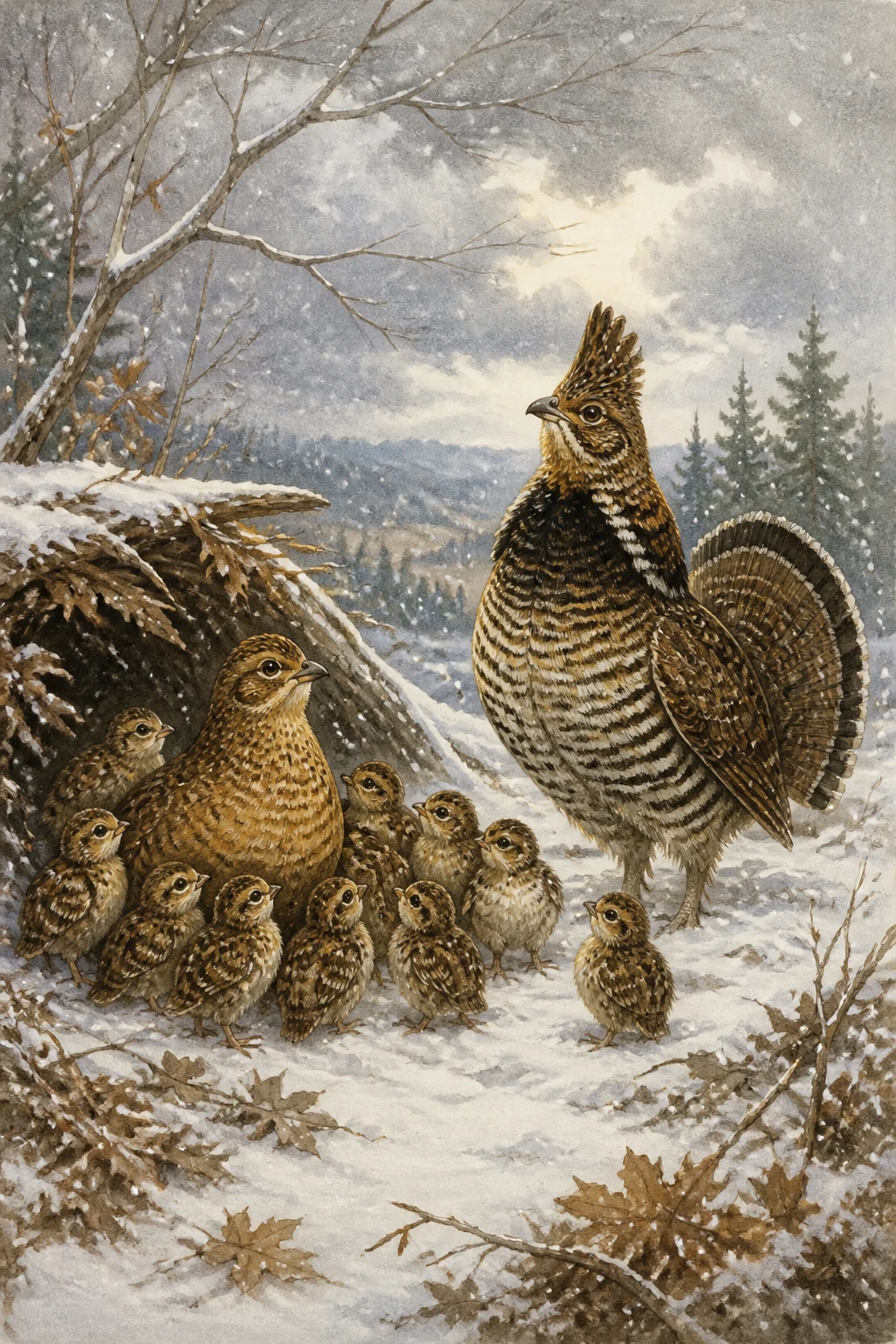
Zima je bila mrzla in vetrovna. Dan za dnem so se na severozahodu kopičili nevihtni oblaki in se počasi razprostirali čez nebo ter na drgetajočo zemljo stresali velike, razcefrane snežinke. Tedaj so se gozdna drevesa odela v puhasto bela oblačila, veje zimzelenih dreves pa so se povešale pod težkim ogrinjalom.
Potem so prišli drugačni dnevi, ko je močan veter drevesom slekel odejo in s seboj prinesel na tisoče drobnih, trdih snežink. Te so bile bolj suhe od razcefranih in se niso tako ljubeče oprijemale vsega, česar so se dotaknile. Raje so se poigravale po tleh, se vedno znova dvigale s svojih ležišč in plesale z vetrom ter mu pomagale ustvarjati velike zamete in previse snega na robu Gozda, kjer je bilo več odprtega sveta.
Resda vsa zima ni bila mrzla in viharna. Včasih so se zameti počasi topili in ponikali v zemljo, trava, ki je bila prejšnje poletje tako nežna in zelena, pa se je pokazala rjava in poležana po tleh. Kljub temu Virginijski uhar in njegova žena nista našla dovolj hrane. »Saj se nočeva pritoževati,« je dostojanstveno dejal, medtem ko se je s svojo operjeno desno nogo praskal po enem ušesu, »ampak od prvega obilnega snega se nobeden od naju ni najedel niti toliko, da bi bilo dovolj za krepkega Ameriškega drozga.«
To je dejal svojemu bratrancu Čuku. »Dovolj za Ameriškega drozga!« je vzkliknila gospa Uharica. »Seveda se nisva. Mislim, da še za Liščka nisem dobila dovolj, in to je za ptico moje velikosti precej hudo. Tako suha sem, da imam občutek, kakor da mi je perje preohlapno.«
»Sta bila kdaj tako lačna, da sta sanjala o hrani?« je vprašal Čuk. »N-ne, tega pa ne morem reči,« je odgovoril Virginijski uhar, njegova žena pa je resno odkimala.
»Ah, to je strašno,« je rekel Čuk. »Meni se je to že večkrat zgodilo. Še včeraj sem v svojem duplu sanjal, da lovim. Povsod je bilo polno hrane, a brž ko sem se spustil ponjo, se je spremenila v koščke ledu. Ko sem se zbudil, sem bil že napol sestradan in tako me je zeblo, da mi je kljun šklepetal.«
Le nekaj dni po obisku pri sorodnikih se je Čuk neke noči prebudil in ugotovil, da se je vreme otoplilo, tla pa je pokrivala le tanka plast mehkega snega. Čudovita okrogla luna je sijala nanj, na zahodnem nebu pa so bili oblaki še rdeči od žarkov zahajajočega sonca.
Nekje daleč onkraj polj in gozdov tega dela sveta so se dnevne ptice že začele prebujati in na tisoče puhastih glavic se je izvilo izpod varnega zavetja peruti, medtem ko so Petelini na kmečkih dvoriščih klicali soncu v pozdrav. Toda Čuk ni razmišljal o tem. Zbudil je ženo in odpravila sta se na lov. Ko sta se vrnila, nista sanjala o hrani. Najedla sta se do sitega, pa tudi Virginijski uhar in njegova žena sta si privoščila obrok, ki bi zadostoval ducatu Ameriških drozgov in celi jati Liščkov. Še sreča za dnevne ptice, da je bilo tako, kajti pravijo, da Sove včasih lovijo tudi podnevi, kadar hrane zelo primanjkuje.
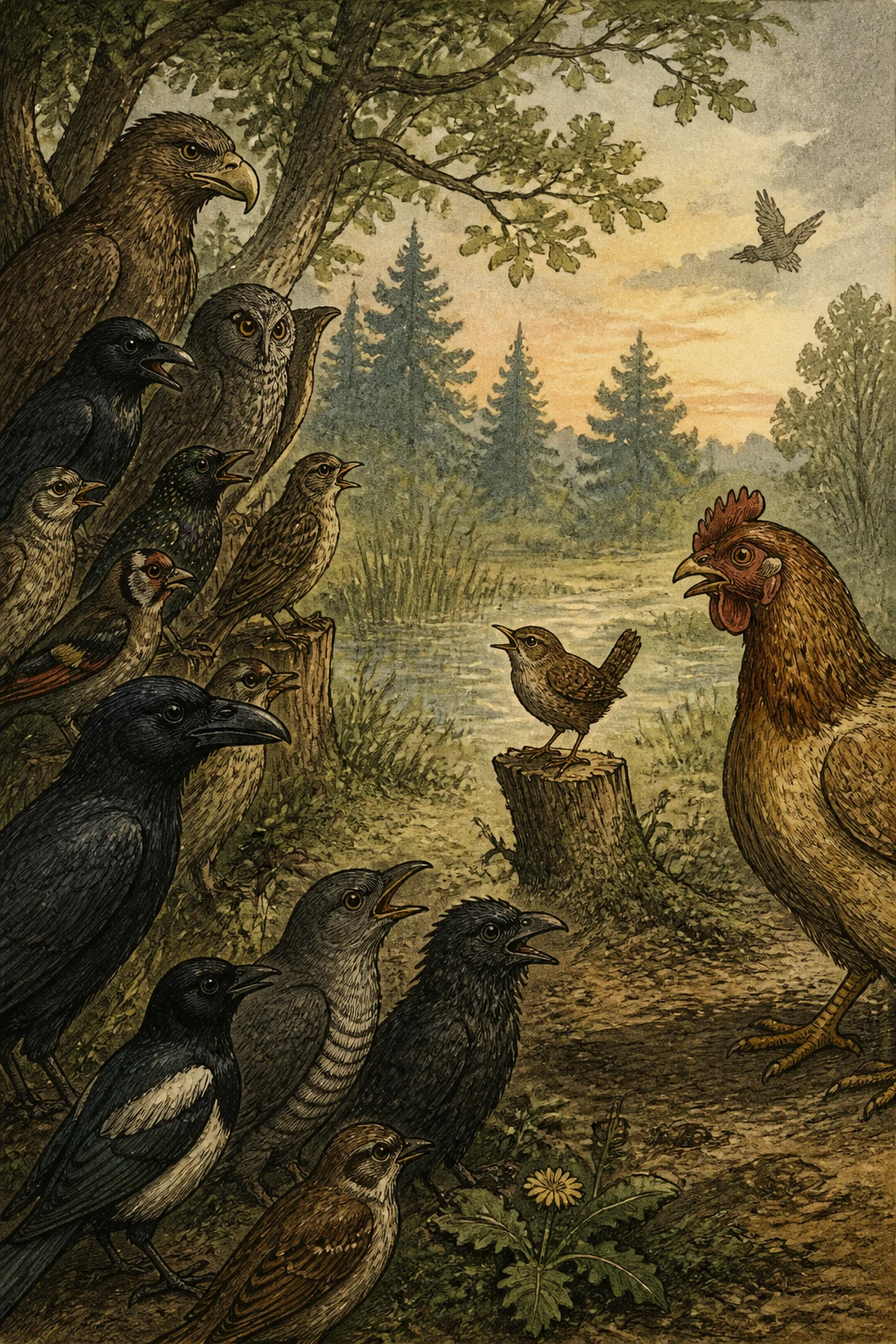
Ko je prišlo jutro in je bila luna na vrsti, da na zahodu izgine izpred oči, so Sove legle spat v svoja dupla, na plan pa so prišli Vrani, Modre šoje, Žolne, Sinice, Gozdne kure, Prepelice, Veverice in Zajci. Tudi Liščki so bili tam, vendar mož in očetov v jati ne bi nikoli prepoznali, če jih ne bi že kdaj prej videli v zimskem oblačilu, podobnem tistemu, ki so ga nosile njihove žene in otroci. Tu so bili tudi zimski gostje, Snežni strnadi in Junki, ki so kar prekipevali od veselja in novic iz svojih severnih domov. Ta topli dan jih je spomnil na bližajočo se pomlad in že so načrtovali odlet.
»Želim si, da bi ostali pri nas vse poletje,« je rekel prijazen Lišček, medtem ko je z visokega rjavega plevela otresal sneg in začel izbirati ter zobati semena.
»Da bi ostali vse poletje!« je vzkliknil vesel mali Snežni strnad. »Zakaj pa bi si želeli ostati? Morda bi res, če bi nam obljubili, da boste obdržali sneg in led.«
»Zakaj ne bi povabili Liščkov, naj gredo z nami na sever?« je predlagal Junko. »To bi bilo veliko bolj pametno, saj mraz prenašajo prav tako dobro kot mi, mi pa ne prenesemo toplih dni, kakršne imate menda v teh krajih, ko se led stali.«
Potem so se starejši v druščini začeli pogovarjati o življenjskih skrbeh in številnih drugih rečeh, ki njihovih otrok niso zanimale, zato so se mlajši oddaljili od njih.
»Hej,« je mladi Junko poklical mladega Snežnega strnada, »ali ne bi rad nekaterim našim prijateljem pokazal krajev, kjer sva se rodila?«
»Pa še kako,« je odgovoril Snežni strnad. »To bi šele debelo gledali! Rad bi jim pokazal tamkajšnje skale.« »Pa živali,« je dodal Junko.
»Ja! Kako bi šele strmeli v Medvede!« »Pha,« je rekla Modra šoja. »Meni že ni kaj dosti do tega, da bi videla Medvede. Pa tebi?« In obrnila se je k Vranu v bližini.
»Ne,« je rekel Vran. »O Medvedih tako ali tako nimam posebno visokega mnenja.« To je rekel, kakor da bi jih videval že vse življenje, toda Sinice pravijo, da ni videl še niti Medvedka.
»Tukaj sploh nimajo velikih živali,« je rekel Junko Snežnemu strnadu. »O, pa jih imamo!« je odvrnila Modra šoja. »Stavim, da tega ne bi rekel, če bi videl Svizca. Ali bi še govoril tako?« je vprašala in se obrnila k mladim Gozdnim kuram, Prepelicam, Žolnam, Liščkom, Sinicam, Vevericam in Zajcem, ki so stali naokrog in poslušali.
»Prav gotovo ne!« so odgovorili, saj so želeli, da bi njihovi gostje razumeli, kako čudovit kraj je Gozd, in Svizec se jim je res zdel zelo velik.
»Ne verjamem, da je tako velik kot Medved,« je rekel Snežni strnad in privzdignil kljun. »Kako velik pa je?« je vprašal Junko. Modra šoja se je zdaj zbala, da jo bosta severna ptiča prekosila, in ker je bila trdno prepričana, da bosta odšla, še preden bo Svizec odspal zimsko spanje, je storila nekaj, na kar noben pošten ptič ne bi niti pomislil. Visoko je dvignila čopasto glavo in rekla: »Večji je od tiste skale, veliko večji.«
Vran je pogledal skalo in se hripavo zahahljal, saj je bila stokrat večja od Svizca. Gozdne kure, Prepelice, Žolne, Liščki, Sinice, Veverice in Zajci so se brez besed spogledali. Vedeli so, kako se je Modra šoja zlagala, in bilo jih je sram. Gozdne kure so se pretvarjale, da si popravljajo krplje. Niso hotele pogledati ptic s severa.
Snežni strnadi in Junki so začutili, da ne bi bilo prav govoriti o Medvedih nekomu, ki ima med seboj tako velikansko bitje, kakršno je Svizec. »Gotovo je čudovit,« so rekli. »Kje pa spi?«
»V jami Netopirjev,« je odgovorila Modra šoja, ki je morala zdaj, ko je povedala eno laž, povedati še drugo, da bi prvo prikrila. »On spi na sredi, ob robovih pa ostane ravno še dovolj prostora za Netopirje.«
Prav takrat pa je bil Svizec v svojem rovu že buden. Čutil je, da je topleje, in želel si je prostora, da bi se pretegnil. Pomislil je, kako prijetna bi bila zgodnja pomlad po tako mrzli zimi, zato se je odločil, da bo šel na sprehod in napovedal vreme, kakor je to počel njegov ded. Ko je prišel iz rova, je zaslišal glasno čebljanje in šel pogledat, kaj se dogaja. Tako se je zgodilo, da je kmalu zatem, ko je Modra šoja povedala zgodbo o jami Netopirjev, neki bistri mladi Junko opazil rdečerjavo žival, ki je po travi drobencljala proti njim. »Kdo pa je to?« je vzkliknil.
Gozdne kure, Prepelice, Žolne, Liščki, Sinice, Veverice in Zajci so se ozrli. »O, tam je Svizec!« so vzkliknili. Potem so se spomnili besed Modre šoje in spet jih je postalo sram.
»O!« so rekli Snežni strnadi in Junki. »To je torej Svizec! Velik kot tista skala, kajne? In o Medvedih nimate posebno visokega mnenja?« Vran je z enim krempljem pokazal na Modro šojo. »Jaz nisem nikoli rekel, da je velik kot tista skala. Ona je to rekla.«
»Pa kaj potem,« je rekla Modra šoja. »Samo šalila sem se. Saj sem vam nameravala čez čas povedati. Pa sem vas dobro potegnila.« Toda ko je govorila, je imela okoli kljuna tak potuhnjen izraz, da ji nihče ni verjel. Kmalu sta bila z Vranom še kako vesela, da sta se lahko umaknila od drugih in skupaj odšla. A tudi potem nista bila srečna, saj sta začela kriviti drug drugega in se nazadnje strašansko sprla.
Ko so Svizcu povedali, kaj se je zgodilo, je rekel: »Kako neumno si je želeti povedati najbolj napihnjeno zgodbo! Moj ded nam je nekoč rekel, da je laž vedno laž in da ni prav nič boljša, če ji rečeš šala. Mislim, da je imel prav.«
In Snežni strnadi in Junki, ki so bistri in pošteni, so prikimali s svojimi drobnimi, ljubkimi glavicami ter rekli: »Nihče v naši ljubi severni deželi še nikoli ni povedal nič bolj resničnega.« Tako so postali Svizčevi zvesti prijatelji, četudi ni bil tako velik kot skala.
Izvirnik
It had been a cold and windy winter. Day after day the storm-clouds had piled up in the northwest and spread slowly over the sky, dropping great ragged flakes of snow down to the shivering earth. Then the forest trees were clothed in fleecy white garments, and the branches of the evergreens drooped under their heavy cloak.
Then there had been other days, when a strong wind stripped the trees of their covering, and brought with it thousands of small, hard flakes. These flakes were drier than the ragged ones had been, and did not cling so lovingly to everything they touched. They would rather frolic on the ground, rising again and again from their resting-places to dance around with the wind, and help make great drifts and overhanging ledges of snow in the edge of the Forest, where there was more open ground.
It is true that not all the winter had been cold and stormy. There were times when the drifts melted slowly into the earth, and the grass, which last summer had been so tender and green, showed brown and matted on the ground. Still the Great Horned Owl and his wife could not find enough to eat. "We do not mean to complain," said he with dignity, as he scratched one ear with his feathered right foot, "but neither of us has had a meal hearty enough for a healthy Robin, since the first heavy snow came."
This was when he was talking to his cousin, the Screech Owl. "Hearty enough for a Robin!" exclaimed Mrs. Great Horned Owl. "I should say we hadn't. I don't think I have had enough for a Goldfinch, and that is pretty hard for a bird of my size. I am so thin that my feathers feel loose."
"Have you been so hungry that you dreamed about food?" asked the Screech Owl.
"N-no, I can't say that I have," said the Great Horned Owl, while his wife shook her head solemnly.
"Ah, that is dreadful," said the Screech Owl. "I have done that several times. Only yesterday, while I lay in my nest-hollow, I dreamed that I was hunting. There was food everywhere, but just as I flew down to eat, it turned into pieces of ice. When I awakened I was almost starved and so cold that my beak chattered."
It was only a few days after the Screech Owl's call upon his cousins that he awakened one night to find the weather milder, and the ground covered with only a thin coating of soft snow. The beautiful round moon was shining down upon him, and in the western sky the clouds were still red from the rays of the setting sun.
Somewhere, far beyond the fields and forests of this part of the world, day-birds were beginning to stir, and thousands of downy heads were drawn from under sheltering wings, while in the barnyards the Cocks were calling their welcome to the sun. But the Screech Owl did not think of this. He aroused his wife and they went hunting. When they came back they did not dream about food. They had eaten all that they could, and the Great Horned Owl and his wife had made a meal hearty enough for a dozen Robins, and a whole flock of Goldfinches. It was a good thing for the day-birds that this was so, for it is said that sometimes, when food is very scarce, Owls have been known to hunt by daylight.
When morning came and it was the moon's turn to sink out of sight in the west, the Owls went to bed in their hollow trees, and Crows, Blue Jays, Woodpeckers, Chickadees, Grouse, Quail, Squirrels, and Rabbits came out. The Goldfinches were there too, but you would never have known the husbands and fathers of the flock, unless you had seen them before in their winter clothing, which is like that worn by the wives and children. Here, too, were the winter visitors, the Snow Buntings and the Juncos, brimming over with happiness and news of their northern homes. This warm day made them think of the coming springtime, and they were already planning their flight.
"I wish you would stay with us all summer," said a friendly Goldfinch, as he dirted the snow off from a tall brown weed and began to pick out and eat the seeds.
"Stay all summer!" exclaimed a jolly little Snow Bunting. "Why should we want to stay? Perhaps if you would promise to keep the snow and ice we might."
"Why not ask the Goldfinches to come north with us?" suggested a Junco. "That would be much more sensible, for they can stand the cold weather as well as we, but we cannot stand warm days, such as I hear they have in this part of the country after the ice melts."
Then the older people of the group began to talk of the cares of life and many other things which did not interest their children, so the younger ones wandered away from them.
"I say," called a young Junco to a young Snow Bunting, "wouldn't you like to show some of these playmates of ours the countries where we were born?"
"Yes indeed," answered the Snow Bunting. "Wouldn't they open their eyes, though? I'd like to have them see the rocks up there."
"And the animals," said the Junco.
"Yes! Wouldn't they stare at the Bears, though!"
"Humph," said a Blue Jay. "I wouldn't care very much about seeing Bears, would you?" And he turned to a Crow near by.
"No," said the Crow. "I don't think very much of Bears anyway." He said this as though he had seen them all his life, but the Chickadees say that he never saw even a Cub.
"They haven't any big animals here," said the Junco to the Snow Bunting.
"Haven't we, though?" replied the Blue Jay. "Guess you wouldn't say that if you saw the Ground Hog. Would he say that?" he asked, turning to the young Grouse, Quail, Woodpeckers, Goldfinches, Chickadees, Squirrels, and Rabbits who stood around listening.
"No indeed!" they answered, for they wanted their visitors to understand that the Forest was a most wonderful place, and they really thought the Ground Hog very large.
"I don't believe he is as big as a Bear" said the Snow Bunting, with his bill in the air.
"How big is he?" asked the Junco.
Now the Blue Jay was afraid that the birds from the north were getting the better of him, and he felt very sure that they would leave before the Ground Hog had finished his winter sleep, so he did what no honest bird would have even thought of doing. He held his crested head very high and said, "He is bigger than that rock, a great deal bigger."
The Crow looked at the rock and gave a hoarse chuckle, for it was a hundred times larger than the Ground Hog. The Grouse, Quail, Woodpeckers, Goldfinches, Chickadees, Squirrels, and Rabbits looked at each other without saying a word. They knew how the Blue Jay had lied, and it made them ashamed. The Grouse pretended to fix their snow-shoes. They did not want to look at the birds from the north.
The Snow Buntings and Juncos felt that it would not do to talk about Bears to people who had such a great creature as the Ground Hog living among them. "He must be wonderful," they said. "Where does he sleep?"
"In the Bats' cave," answered the Blue Jay, who having told one lie, now had to tell another to cover it up. "He sleeps in the middle and there is just room left around the edges for the Bats."
Now at this very time the Ground Hog was awake in his burrow. He could feel that it was warmer and he wanted room to stretch. He thought it would seem good to have an early spring after such a cold winter, so he decided to take a walk and make the weather, as his grandfather had done. When he came out of his burrow he heard a great chattering and went to see what was the matter. That was how it happened that soon after the Blue Jay had told about the Bats' cave, one wide-awake young Junco saw a reddish-brown animal trotting over the grass toward them. "Who is that?" he cried.
The Grouse, Quail, Woodpeckers, Goldfinches, Chickadees, Squirrels, and Rabbits gave one look. "Oh, there is the Ground Hog!" they cried. Then they remembered and were ashamed again because of what the Blue Jay had said.
"Oh!" said the Snow Buntings and the Juncos. "So that is the Ground Hog! Big as that rock, is he? And you don't think much of Bears?"
The Crow pointed one claw at the Blue Jay. "I never said he was as big as that rock. He is the fellow that said it."
"I don't care," said the Blue Jay; "I was only fooling. I meant to tell you after a while. It's a good joke on you." But he had a sneaky look around the bill as he spoke, and nobody believed him. Before long, he and the Crow were glad enough to get away from the rest and go away together. Yet even then they were not happy, for each began to blame the other, and they had a most dreadful fight.
When the Ground Hog was told about it he said, "What foolishness it is to want to tell the biggest story! My grandfather told us once that a lie was always a lie, and that calling it a joke didn't make it any better. I think he was right."
And the Snow Buntings and Juncos, who are bright and honest, nodded their dainty little heads and said, "Nobody in our own dear north country ever spoke a truer word than that." So they became firm friends of the Ground Hog, even if he were not so large as the rock.