Waltey
Jerebova zgodba
065 THE RUFFED GROUSE'S STORY
Živalske zgodbe Clare Dillingham Pierson · Clara Dillingham PiersonO besedilu
Jerebova zgodba
- Vir
- Živalske zgodbe Clare Dillingham Pierson
- Avtor
- Clara Dillingham Pierson
- Jezik branja
- Slovenščina
- Jezik izvirnika
- English
- Čas branja
- 7 min branja
- Obseg
- 6 strani
- Naslov izvirnika
- 065 THE RUFFED GROUSE'S STORY
O izvirniku
Živalske zgodbe Clare Dillingham Pierson
Devetindevetdeset avtorskih zgodb o živalih na kmetiji, travniku, v gozdu, ob ribniku in ponoči. Bralni jezik je Slovenščina, izvirnik pa prihaja iz vira Živalske zgodbe Clare Dillingham Pierson v jeziku English.
Besedilo
Jerebova zgodba
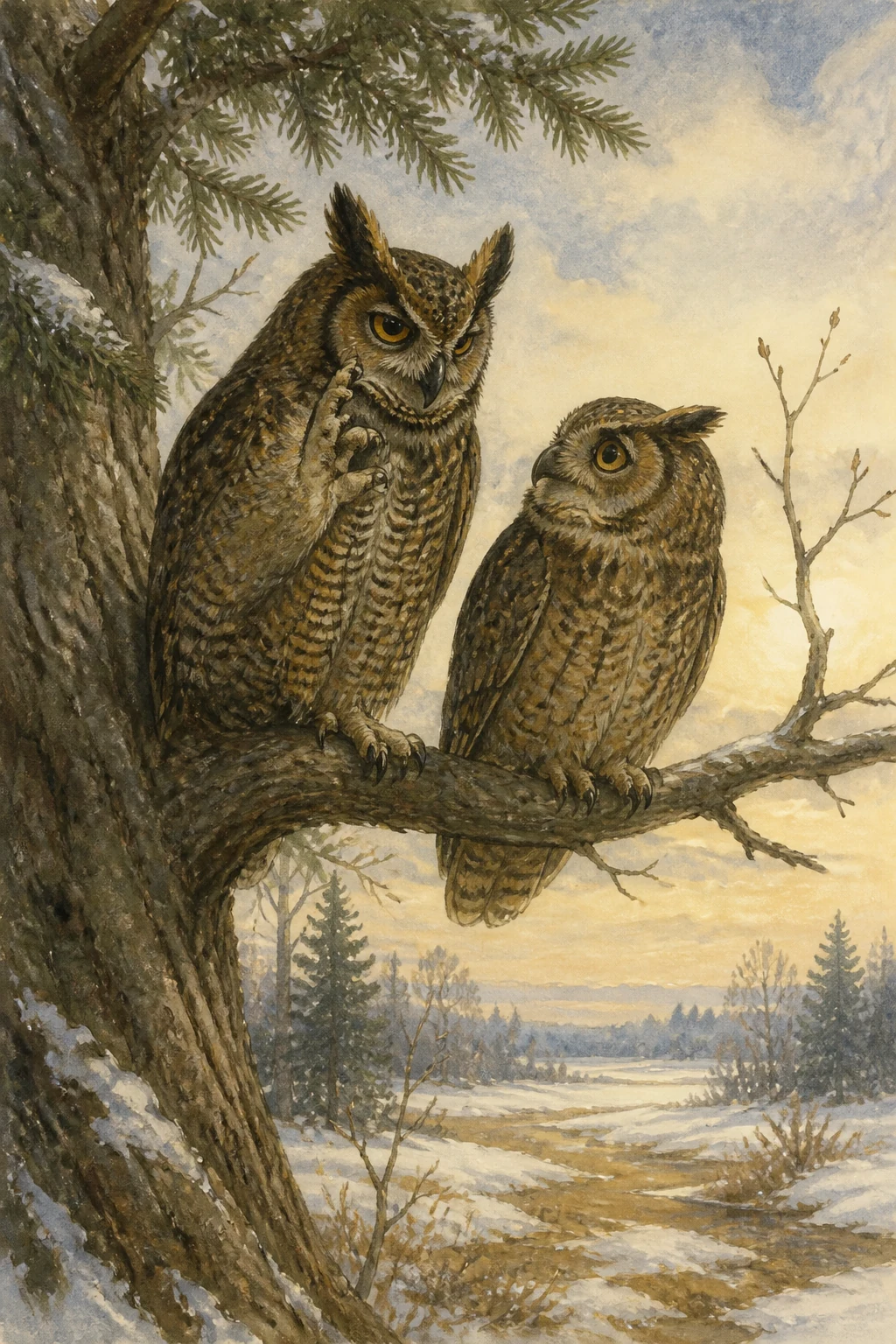
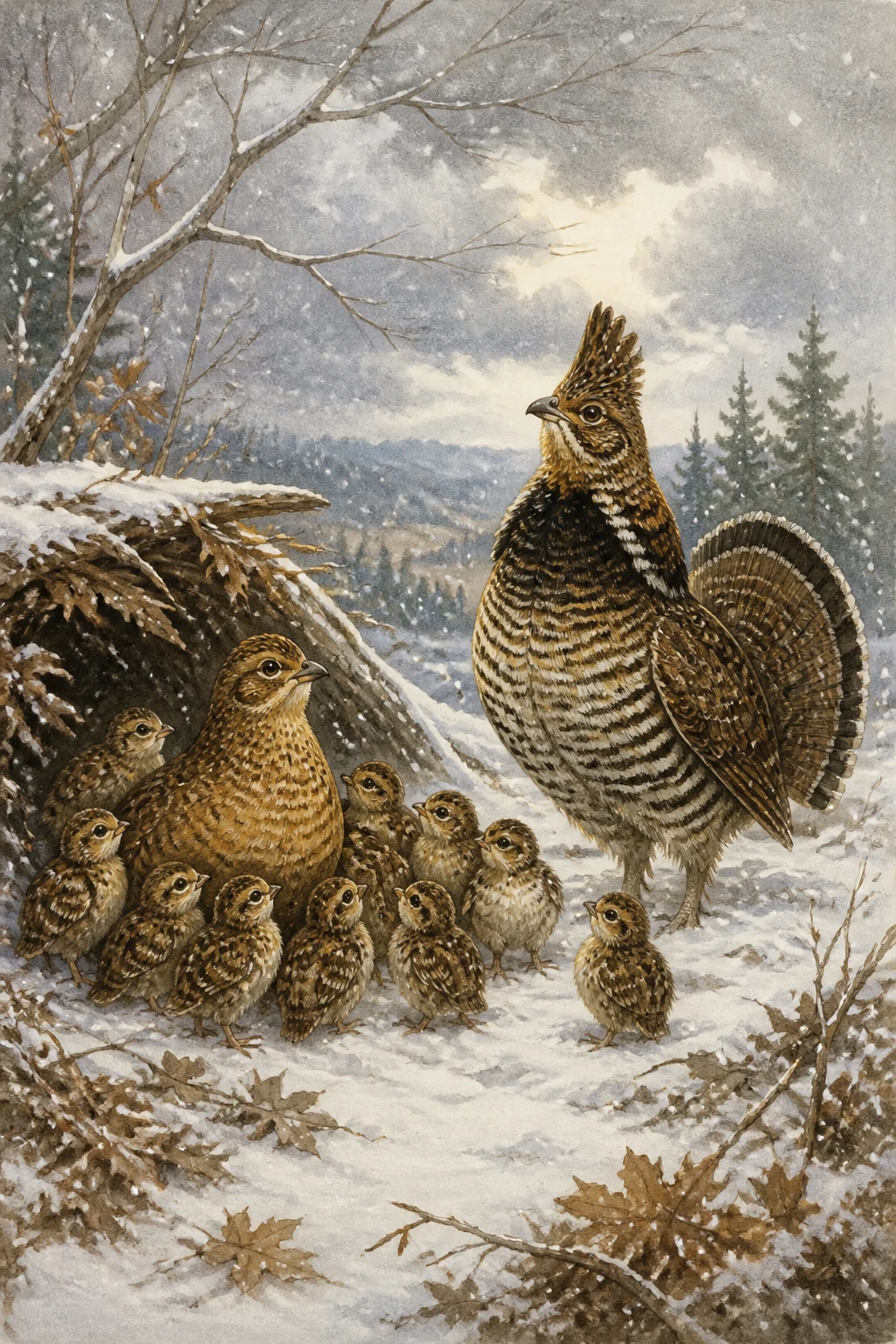
Ovratni jereb je nagnil čopasto glavo na stran in se skozi gole veje zazrl v nebo. Bilo je nežno sivo, na zahodu pa so se kopičili modrikasti oblaki. »Mislim, da bo prav kmalu snežilo,« je dejal. »Gospa Jerebova, so otroci že vsi pripravljeni na mraz?«
»Vsi so pripravljeni,« je odgovorila njegova vesela ženica. »Že kar nekaj časa imajo na sebi svoje najgostejše perje. Zajci so pred dnevi rekli, da še nikoli niso videli bolj rejene in bolje oblečene jate, kakor je naša.« Med govorjenjem so ji lepe zlatorjave oči žarele od ponosa.
In res so bili mladi ovratni jerebi družina, na katero je bila lahko upravičeno ponosna. Dvanajst zdravih in poslušnih otrok ni dano vsaki materi v Gozdu, in z drobnim, žalostnim vzdihom si je zaželela, da bi se izvalili tudi mladički iz preostalih dveh jajc. Pogosto je hrepeneče mislila nanju. Kako lepo bi bilo imeti štirinajst otrok! A prav tedaj so se njeni mladiči prestrašeno zgrnili okoli nje.
»Nekaj mrzlih belih stvari,« so rekli, »je priletelo na nas in nas prestrašilo. Te bele stvari niso niti besedice rekle, a so prihajale tako hitro, da mislimo, da morajo biti žive. Povej nam, kaj naj naredimo. Ali se moramo skriti?«
»Saj to je vendar sneg!« je vzkliknila njihova mati. »Pada iz oblakov tam zgoraj, prav kakor jeseni pada listje z dreves. Nič vam ne bo storil, vendar si moramo poiskati zavetje.«
»Kaj sem vam rekel, gospa Jerebova?« je vprašal njen mož. »Prepričan sem bil, da bo še pred nočjo snežilo. Čutil sem v peresih.« In gospod Jereb se je važno šopiril. Človek se vedno počuti silno modrega, kadar ženi vnaprej natanko pove, kaj se bo zgodilo.
»Kako si to čutil v peresih?« je vprašal eden od njegovih otrok. »Bom tudi jaz čutil v peresih, ko bom toliko star kot ti?« »Morda,« se je glasil odgovor. »A dokler tega sam ne občutiš, ne moreš razumeti, saj ta občutek ni podoben nobenemu drugemu.«
Nato so se vsi odpravili proti nizkemu grmičevju, da bi si poiskali zavetje pred sneženjem. Med potjo so se prestrašili, ko so zagledali veliko bitje, ki je z glasnimi koraki prihajalo skozi gozd proti njim. »Človek!« je rekel gospod Jereb. »Skrijte se!« je rekla gospa Jerebova, in vsak mali jereb se je tako hitro skril pod listje, da nihče ni mogel videti, kako mu je to uspelo. Skoraj bi si lahko mislil, da jih je odnesel močan veter. Mati se je pretvarjala, da ima zlomljeno perut, in odskakljala proč, pri tem pa tako milo tožila, da ji je človek sledil, da bi jo pobral. Ko ga je odvedla daleč stran od otrok, je tudi sama hitro stekla in se skrila; in čeprav je človek iskal vsepovsod, ni mogel najti niti ene ptice.
Saj veste, v jerebovih družinah je vedno tako, in tudi če bi človekova noga razgrnila listje, pod katerim se je skrival mladiček, se ta ne bi niti premaknil niti oglasil. Otroci so vzgojeni tako, da ubogajo brez vprašanj. Ko mati reče: »Skrijte se!«, to tudi storijo in niti enkrat ne vprašajo: »Zakaj?« ali odgovorijo: »Takoj ko pogoltnem to jagodo.« Nič čudnega, da so odrasli ponosni na svoje otroke. Vsaka mati bi bila srečna že z enim samim otrokom, ki bi tako ubogal, kaj šele z dvanajstimi!
Naposled je vsa družina prišla do grmičevja, kjer naj bi ostala, nato pa so si v bližini začeli iskati hrano. »Najejte se, kolikor morete,« je rekel gospod Jereb, »preden se nabere veliko snega. Morda še mnogo dni ne boste imeli tako dobre priložnosti.« In tako so jedli, dokler v njihovih želodčkih ni bilo prostora niti za eno samo seme ali popek zimzelene rastline več.
Ves ta čas so padale snežinke, a jerebovi otroci se jih niso več bali. Včasih so jih celo lovili in hlastali za njimi, kakor bi poleti lovili muho. Tedaj so se naučili uporabljati tudi krplje. Najstarejši otrok je jeseni zagnal velik vik in krik, ko je opazil, da mu ob prstih rastejo resice iz trdih rožičkov, in je ves čivkajoč stekel k materi vprašat, kaj je narobe. Pokazala mu je svoje noge in mu povedala, da vsem ovratnim jerebom vsako zimo na nogah zrastejo takšne krplje.
»Prav nič nam ni treba skrbeti zanje,« je rekla. »Kar same se nadenejo, ko se jeseni shladi, in same se snamejo, ko pride pomlad. Vsak od nas dobi vsako leto nov par, in ko zrastejo, lahko brez težav hodimo po mehkem snegu. Brez njih bi se ugrezali vanj in se mukoma prebijali naprej.«
Ko se je znočilo, so se vsi stisnili pod grmičevje in legli tesno drug ob drugega, da so se med seboj greli. Naslednji dan so se zakopali v snežni zamet in si tam uredili prijetno zavetje, ki je bilo še boljše od prejšnjega; mehka bela odeja je tako dobro zadrževala veter. Malčkom je bilo težko dolgo mirovati, zato jim je gospod Jereb za razvedrilo pripovedoval, kako je spomladi prvič srečal njihovo mater.
»Bil je lep, sončen dan,« je rekel, »in vsi so bili srečni. Že nekaj časa sem se učil bobnati in zdaj sem čutil, da sem prav tako dober bobnar kot kateri koli drug v gozdu. Zato sem si poiskal podrto deblo — vsak ovratni jereb mora imeti svoj prostor, veste —, skočil nanj in se z visoko dvignjeno glavo šopiril sem in tja. Bilo je v senčnem delu gozda in nisem videl daleč, vendar sem vedel, da je nekje v bližini lepa mlada jerebica. Upal sem, da bo prišla k meni, če bom prav lepo bobnal.«
»Vem!« ga je prekinil eden od malih jerebov. »To je bila naša mama.« »No, takrat še ni bila vaša mama, moj piščanček,« je rekel gospod Jereb, »saj je bilo to davno, davno, preden ste se izvalili.«
»Pozneje je bila pa vseeno naša mama,« je vzkliknil mladi jereb. »To pa že vem!« Gospodu Jerebu so se oči navihano zaiskrile, a je z resnim obrazom nadaljeval. »Nazadnje sem začel močno in hitro zamahovati s perutmi in zamolklo bobnenje se je slišalo daleč naokrog. ‘Bum-bum-bum-bum-bum; bum-bum-rup-rup-rup-rup-r-r-r-r-r-r-r-r-r.’ Čakal sem, a nihče ni prišel. Nato sem spet zabobnal in po tistem sem bil prepričan, da sem v listju zaslišal šelestenje. Zabobnal sem še tretjič, in tedaj, otroci, je prišla lepa mlada jerebica. Prebijala se je skozi goščavo in se skušala delati, kakor da sploh ne ve, da sem tam.«
»Pa je vedela?« so vzkliknili mali jerebi. »To morate vprašati svojo mater,« je odgovoril, »saj je bila ona tista, ki je prišla. Ah, kako srečne dni sva preživljala skupaj vso pomlad! Potepala sva se po vsem tem velikem Gozdu in se nekajkrat podala celo na rob Travnika. A nobenega kraja nisva imela tako rada kot senčno globel ob starem deblu, kjer sva se prvič srečala. Nekega dne mi je vaša mati povedala, da si mora začeti urejati dom in da se ji moram umakniti, dokler bo zaposlena. Tako sem moral oditi z druščino drugih ovratnih jerebov, medtem ko si je ona uredila gnezdo, znesla jajca in izvalila vas, mladičke. Ni bilo prav lahko, ko me je tako odgnala, a saj veste, takšna je navada med jerebi. Ubogi samci smo se morali zabavati sami in drug z drugim, dokler nas niso žene poklicale domov, da smo jim pomagali skrbeti za otroke. In to delo opravljamo vse odtlej.«
»Oh!« je rekel eden od mladih jerebov. »Oh, kako sem vesel, da si bobnal in da je prišla, ko te je slišala. Kdo bi skrbel za nas, če se ne bi zgodilo prav tako?«
Ob tem so se vsi zelo zresnili. Gospod Jereb ni znal odgovoriti, gospa Jerebova ni znala odgovoriti in nobeden od malih jerebov ni znal odgovoriti, kajti, veste, to je eno tistih vprašanj, na katera ni odgovora. Vendar so bili vsi tam in bili so srečni, zato si s tem niso prav dolgo belili svojih čopastih glavic.
Izvirnik
065 THE RUFFED GROUSE'S STORY
Naslednje strani prikazujejo izvirno besedilo za primerjavo.
The Ruffed Grouse cocked his crested head on one side and looked up through the bare branches to the sky. It was a soft gray, and in the west were banks of bluish clouds. "I think it will snow very soon," said he. "Mrs. Grouse, are the children all ready for cold weather?"
"All ready," answered his cheerful little wife. "They have had their thickest feathers on for quite a while. The Rabbits were saying the other day that they had never seen a plumper or better clothed flock than ours." And her beautiful golden-brown eyes shone with pride as she spoke.
Indeed, the young Ruffed Grouse were a family of whom she might well be proud. Twelve healthy and obedient children do not fall to the lot of every Forest mother, and she wished with a sad little sigh that her other two eggs had hatched. She often thought of them with longing. How lovely it would have been to have fourteen children! But at that moment her brood came crowding around her in fright.
"Some cold white things," they said, "came tumbling down upon us and scared us. The white things didn't say a word, but they came so fast that we think they must be alive. Tell us what to do. Must we hide?"
"Why, that is snow!" exclaimed their mother. "It drops from the clouds up yonder quite as the leaves drop from the trees in the fall. It will not hurt you, but we must find shelter."
"What did I tell you, Mrs Grouse?" asked her husband. "I was certain that it would snow before night. I felt it in my quills." And Mr. Grouse strutted with importance. It always makes one feel so very knowing when he has told his wife exactly what will happen.
"How did you feel it in your quills?" asked one of his children. "Shall I feel it in my quills when I am as old as you are?"
"Perhaps," was the answer. "But until you do feel it you can never understand it, for it is not like any other feeling that there is."
Then they all started for a low clump of bushes to find shelter from the storm. Once they were frightened by seeing a great creature come tramping through the woods towards them. "A man!" said Mr. Grouse. "Hide!" said Mrs. Grouse, and each little Grouse hid under the leaves so quickly that nobody could see how it was done. One might almost think that a strong wind had blown them away. The mother pretended that she had a broken wing, and hopped away, making such pitiful sounds that the man followed to pick her up. When she had led him far from her children, she, too, made a quick run and hid herself; and although the man hunted everywhere, he could not find a single bird.
You know that is always the way in Grouse families, and even if the man's foot had stirred the leaves under which a little one was hiding, the Grouse would not have moved or made a sound. The children are brought up to mind without asking any questions. When their mother says, "Hide!" they do it, and never once ask "Why?" or answer, "As soon as I have swallowed this berry." It is no wonder that the older ones are proud of their children. Any mother would be made happy by having one child obey like that, and think of having twelve!
At last, the whole family reached the bushes where they were to stay, and then they began to feed near by. "Eat all you can," said Mr. Grouse, "before the snow gets deep. You may not have another such good chance for many days." So they ate until their little stomachs would not hold one more seed or evergreen bud.
All this time the snowflakes were falling, but the Grouse children were no longer afraid of them. Sometimes they even chased and snapped at them as they would at a fly in summer-time. It was then, too, that they learned to use snow-shoes. The oldest child had made a great fuss when he found a fringe of hard points growing around his toes in the fall, and had run peeping to his mother to ask her what was the matter. She had shown him her own feet, and had told him how all the Ruffed Grouse have snow-shoes of that kind grow on their feet every winter.
"We do not have to bother about them at all," she said. "They put themselves on when the weather gets cold in the fall, and they take themselves off when spring comes. We each have a new pair every year, and when they are grown we can walk easily over the soft snow. Without them we should sink through and flounder."
When night came they all huddled under the bushes, lying close together to keep each other warm. The next day they burrowed into a snow-drift and made a snug place there which was even better than the one they left; the soft white coverlet kept the wind out so well. It was hard for the little ones to keep quiet long, and to amuse them Mr. Grouse told how he first met their mother in the spring.
"It was a fine, sunshiny day," he said, "and everybody was happy. I had for some time been learning to drum, and now I felt that I was as good a drummer as there was in the forest. So I found a log (every Ruffed Grouse has to have his own place, you know) and I jumped up on it and strutted back and forth with my head high in the air. It was a dusky part of the forest and I could not see far, yet I knew that a beautiful young Grouse was somewhere near, and I hoped that if I drummed very well she might come to me."
"I know!" interrupted one of the little Grouse. "It was our mother."
"Well, it wasn't your mother then, my chick," said Mr. Grouse, "for that was long, long before you were hatched."
"She was our mother afterwards, anyway," cried the young Grouse. "I just know she was!"
Mr. Grouse's eyes twinkled, but he went gravely on. "At last I flapped my wing's hard and fast, and the soft drumming sound could be heard far and near. 'Thump-thump-thump-thump-thump; thump-thump-rup-rup-rup-rup-r-r-r-r-r-r-r-r-r.' I waited, but nobody came. Then I drummed again, and after that I was sure that I heard a rustling in the leaves. I drummed a third time, and then, children, there came the beautiful young Grouse, breaking her way through the thicket and trying to look as though she didn't know that I was there."
"Did she know?" cried the little Grouse.
"You must ask your mother that," he answered, "for it was she who came. Ah, what happy days we had together all spring! We wandered all through this great Forest and even made some journeys into the edge of the Meadow. Still, there was no place we loved as we did the dusky hollow by the old log where we first met. One day your mother told me that she must begin housekeeping and that I must keep out of the way while she was busy. So I had to go off with a crowd of other Ruffed Grouse while she fixed her nest, laid her eggs, and hatched out you youngsters. It was rather hard to be driven off in that way, but you know it is the custom among Grouse. We poor fellows had to amuse ourselves and each other until our wives called us home to help take care of the children. We've been at that work ever since."
"Oh!" said one of the young Grouse. "Oh, I am so glad that you drummed, and that she came when she heard you. Who would we have had to take care of us if it hadn't happened just so?"
That made them all feel very solemn and Mr. Grouse couldn't answer, and Mrs. Grouse couldn't answer, and none of the little Grouse could answer because, you see, it is one of the questions that hasn't any answer. Still, they were all there and happy, so they didn't bother their crested heads about it very long.
Nadaljuj z branjem