Prevod
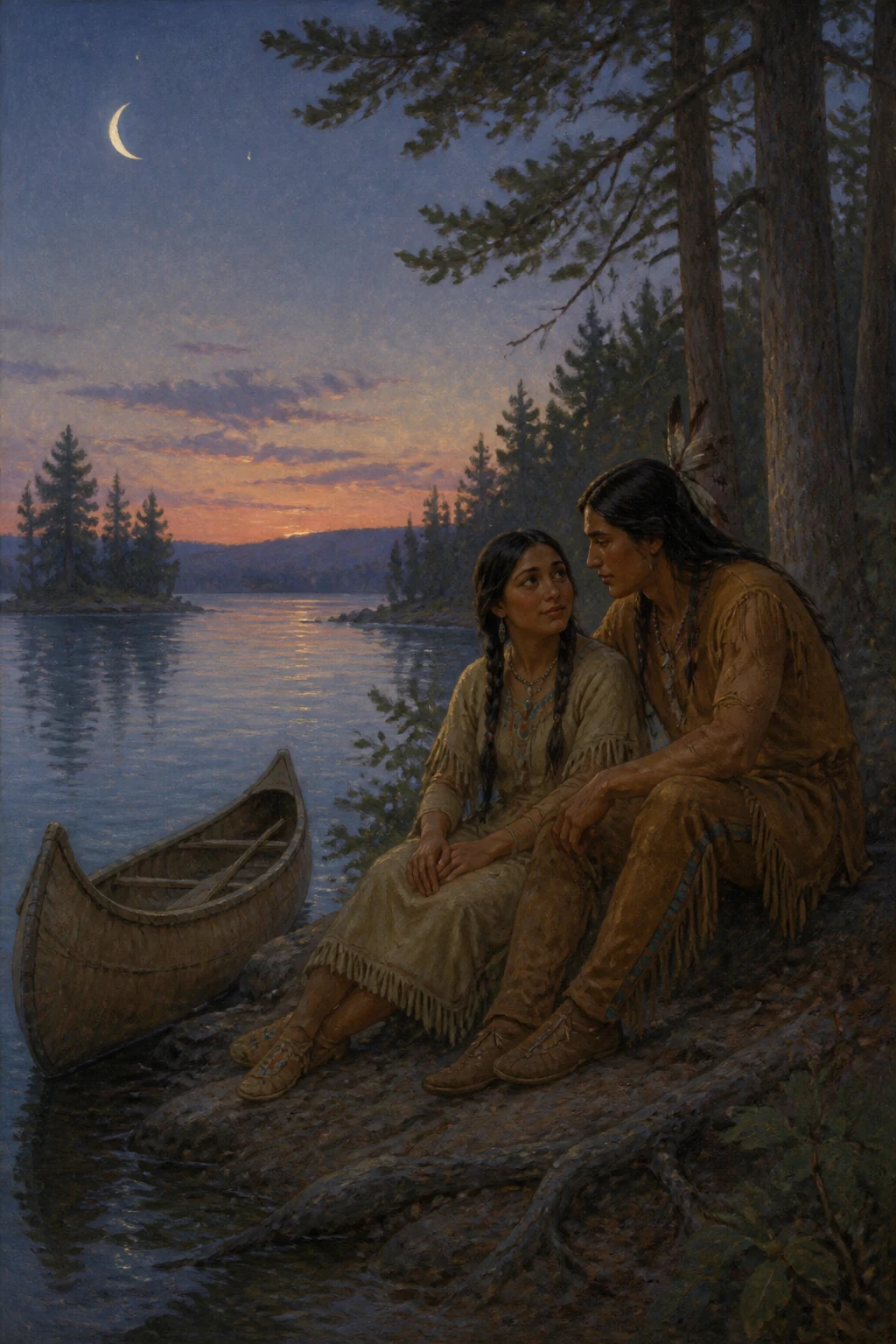
Prijetni dolini Dalton v hribovju Berkshire je Miacomo vladal že štirideset let, ko je mohoški veljak s petdesetimi skalpi in petdesetimi zimami za seboj prišel snubit njegovo hčer Wahconah. Nekega junijskega dne leta 1637 je dekle sedelo ob slapu, ki nosi njeno ime, si vpletalo cvetje v lase in opazovalo listje, ki je plavalo po potoku navzdol. Tedaj je začutilo, da vanj iz bližnje goščave zre par oči, in nekoliko preplašeno vstalo. Ko je lastnik teh oči, čeden mladenič, spoznal, da je odkrit, je stopil naprej in s pomirjujočo prijaznostjo vzkliknil: »Pozdravljena, Svetla zvezda!«
»Pozdravljen, brat,« je odgovorila Wahconah. »Nessacus sem,« je dejal mladenič, »eden od vojakov kralja Philipa. Nessacus je utrujen od bega pred Dolgimi noži (Angleži), njegovi ljudje pa omagujejo. Bo ljudstvo Svetle zvezde njemu in njegovim prijateljem zaprlo vrata svojih bivališč?«
Dekle je odgovorilo: »Mojega očeta ni doma, z Mohoki se posvetuje, toda njegovi vigvami so vedno odprti. Pridi za menoj.« Nessacus je dal znamenje in iz gozda je prišla četa otožnih oči, izčrpana od bojev, ter se zbrala okoli njega. Pod dekletovim vodstvom so se spustili v dolino, kjer so jih gostoljubno nastanili. Pet dni pozneje se je Miacomo vrnil, z njim pa tudi ostareli mohoški snubec in svečenik Tashmu, ki je slovel kot priliznjen spletkar. Lovci in vojaki z njim niso mogli imeti nič skupnega in bi ga z veseljem spravili s poti, če jih ne bi odvračal vraževerni strah. Tujce so lepo sprejeli, čeprav jih je Tashmu mračno pogledoval, in jim v čast priredili tekmovanja. Nessacus je navadno zmagoval, na veliko veselje Wahconah, saj sta se z mladim bojevnikom zaljubila na prvi pogled, in ni trajalo dolgo, preden je njenega očeta prosil za njeno roko. Miacomo je bil snubitvi naklonjen, toda svečenik mu je iz političnih razlogov svetoval, naj dekle da staremu Mohoku in tako utrdi prijateljstvo med plemenoma, ki bi utegnilo biti v tistih dneh angleškega nasilja še kako potrebno. Mohok je že imel tri žene, vendar je bil odločen, da svoji zbirki doda še Wahconah, in si je na vse pretege prizadeval, da bi z grožnjami in laskanjem izsilil privolitev. Nessacus je predlagal, naj o stvari odloči dvoboj z njegovim tekmecem, in ta je izziv sprejel. Toda pretkani Tashmu je v glasovih vetra in groma, letu ptic in oblikah oblakov odkril takšna znamenja, da so preplašeni Indijanci soglasno prepovedali odločanje z orožjem. »Naj spregovori Veliki duh!« je vzkliknil Tashmu in vsi so privolili.
Tashmu je zagrozil s prekletstvom vsakomur, ki bi mu sledil, in razglasil, da bo noč prebil v soteski Wizard's Glen, kjer bo z zaklinjanjem izvedel božjo voljo. Ob sončnem zahodu je z odločnim korakom odšel, a ni prišel daleč, ko se mu je pridružil Mohok, in skupaj sta se napotila k slapovom Wahconah. Tisto noč ni bilo časa za čarovniške vragolije, saj sta oba trdo garala in poglabljala del struge, da bi tok na tisti strani tekel hitreje in bolj neovirano. Zjutraj je Tashmu oznanil, kako bo Veliki duh pokazal svojo izbiro. Pleme so zbrali na rečnem bregu pod skalo, ki je sredi struge razdvajala tok, in blizu slapov spustili na vodo kanu, poslikan z znamenji. Če bo mimo skale, ki je delila tok, priplul na strani, kjer je čakal Nessacus, bo Wahconah pripadla njemu. Če pa bo zavil k nasprotnemu bregu, kjer sta stala Mohok in njegov svetovalec, bo to pomenilo, da ji je Veliki duh za moža izbral starega poglavarja. Mohok je seveda stal na globlji strani. Čolnič se je približeval po sredini struge. Zadel je ob skalo in vsi so ga napeto opazovali, Tashmu in Mohok pa sta komaj zadrževala zmagoslavni nasmeh. Tedaj je v kanu udaril majhen val; čolnič se je ob skali zasukal in odplaval Nessacusu pred noge. Na obrazih poraženega snubca in njegovega prijatelja se je zarisalo nemo začudenje, medtem ko so drugi z radostnim vzklikom pozdravili tako modro odločitev Velikega duha. Mladi par se je ob vsesplošnem veselju poročil; Mohok se je pobito odpravil domov in v splošno zadovoljstvo je z njim izginil tudi Tashmu. Pozneje, ko se je razvedelo, da je prav Tashmu v dolino pripeljal vojake majorja Talcotta, so Miacomovi možje svečenika ujeli in ubili.
Izvirnik
The pleasant valley of Dalton, in the Berkshire Hills, had been under the rule of Miacomo for forty years when a Mohawk dignitary of fifty scalps and fifty winters came a-wooing his daughter Wahconah. On a June day in 1637, as the girl sat beside the cascade that bears her name, twining flowers in her hair and watching leaves float down the stream, she became conscious of a pair of eyes bent on her from a neighboring coppice, and arose in some alarm. Finding himself discovered, the owner of the eyes, a handsome young fellow, stepped forward with a quieting air of friendliness, and exclaimed, “Hail, Bright Star!”
“Hail, brother,” answered Wahconah.
“I am Nessacus,” said the man, “one of King Philip's soldiers. Nessacus is tired with his flight from the Long Knives (the English), and his people faint. Will Bright Star's people shut their lodges against him and his friends?”
The maiden answered, “My father is absent, in council with the Mohawks, but his wigwams are always open. Follow.”
Nessacus gave a signal, and forth from the wood came a sad-eyed, battle-worn troop that mustered about him. Under the girl's lead they went down to the valley and were hospitably housed. Five days later Miacomo returned, with him the elderly Mohawk lover, and a priest, Tashmu, of repute a cringing schemer, with whom hunters and soldiers could have nothing in common, and whom they would gladly have put out of the way had they not been deterred by superstitious fears. The strangers were welcomed, though Tashmu looked at them gloomily, and there were games in their honor, Nessacus usually proving the winner, to Wahconah's joy, for she and the young warrior had fallen in love at first sight, and it was not long before he asked her father for her hand. Miacomo favored the suit, but the priest advised him, for politic reasons, to give the girl to the old Mohawk, and thereby cement a tribal friendship that in those days of English aggression might be needful. The Mohawk had three wives already, but he was determined to add Wahconah to his collection, and he did his best, with threats and flattery, to enforce his suit. Nessacus offered to decide the matter in a duel with his rival, and the challenge was accepted, but the wily Tashmu discovered in voices of wind and thunder, flight of birds and shape of clouds, such omens that the scared Indians unanimously forbade a resort to arms. “Let the Great Spirit speak,” cried Tashmu, and all yielded their consent.
Invoking a ban on any who should follow, Tashmu proclaimed that he would pass that night in Wizard's Glen, where, by invocations, he would learn the divine will. At sunset he stalked forth, but he had not gone far ere the Mohawk joined him, and the twain proceeded to Wahconah Falls. There was no time for magical hocus-pocus that night, for both of them toiled sorely in deepening a portion of the stream bed, so that the current ran more swiftly and freely on that side, and in the morning Tashmu announced in what way the Great Spirit would show his choice. Assembling the tribe on the river-bank, below a rock that midway split the current, a canoe, with symbols painted on it, was set afloat near the falls. If it passed the dividing rock on the side where Nessacus waited, he should have Wahconah. If it swerved to the opposite shore, where the Mohawk and his counsellor stood, the Great Spirit had chosen the old chief for her husband. Of course, the Mohawk stood on the deeper side. On came the little boat, keeping the centre of the stream. It struck the rock, and all looked eagerly, though Tashmu and the Mohawk could hardly suppress an exultant smile. A little wave struck the canoe: it pivoted against the rock and drifted to the feet of Nessacus. A look of blank amazement came over the faces of the defeated wooer and his friend, while a shout of gladness went up, that the Great Spirit had decided so well. The young couple were wed with rejoicings; the Mohawk trudged homeward, and, to the general satisfaction, Tashmu disappeared with him. Later, when Tashmu was identified as the one who had guided Major Talcott's soldiers to the valley, the priest was caught and slain by Miacomo's men.