Prevod
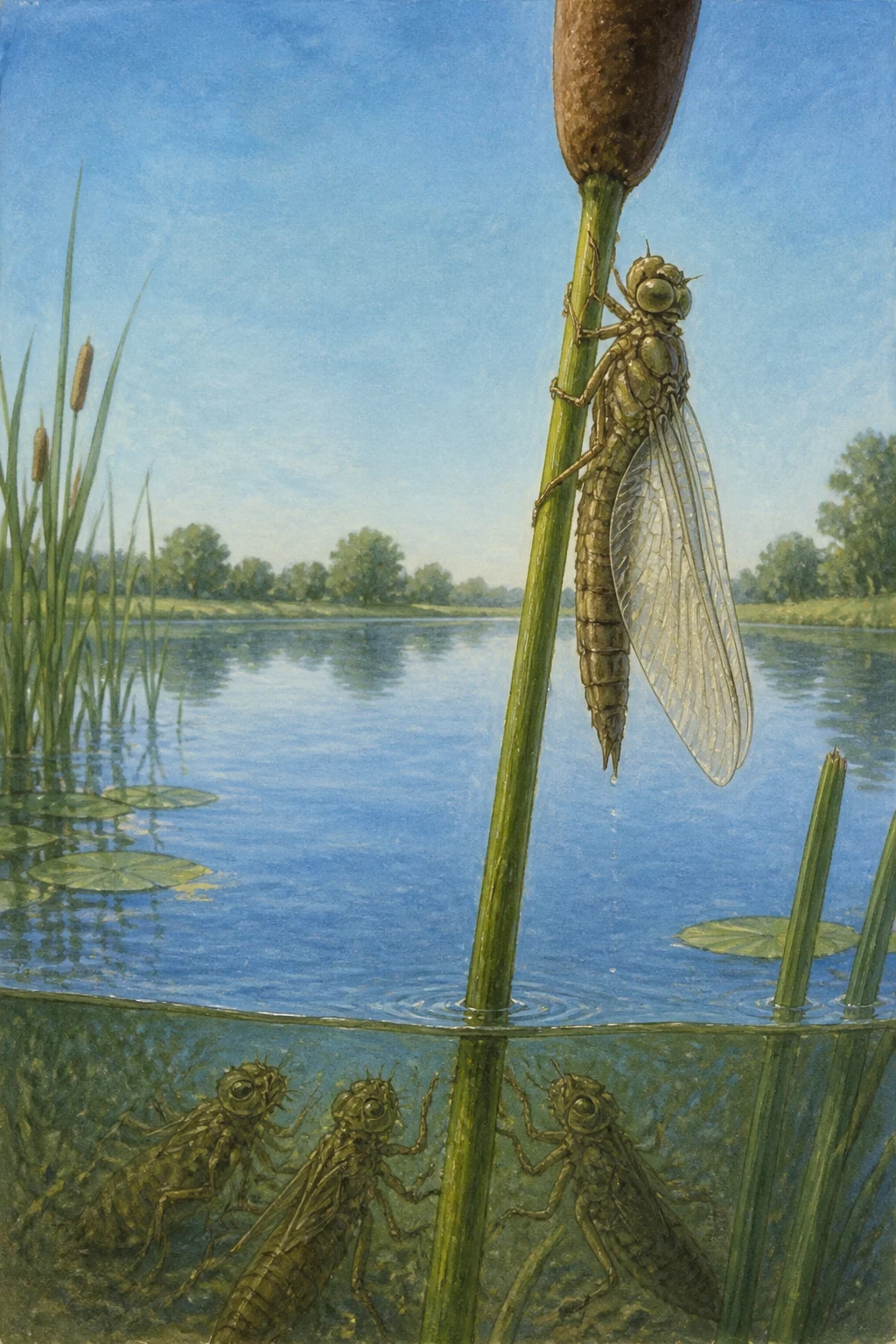
Kačji pastirji so od nekdaj živeli ob ribniku. Seveda ne isti, ki so tam zdaj, temveč njihovi pra-pra-pradedje. Človek bi si mislil, da bodo sosedje vzljubili družino, ki že tako dolgo živi v istem kraju, pa ni tako. Kačji pastirji so morda čisto dobri ljudje — in celo želva Hlastavka pravi, da so — vendar so tako posebni, da jih mnogi sosedje prav nič ne marajo. Že kot ličinke oziroma dojenčki niso prijetni tovariši za igro, saj imajo grdo navado, da vse vtikajo v usta. Oče Zet je malim Zetom nekoč celo rekel, da ne smejo niti koraka iz gnezda, če mu ne obljubijo, da se bodo držali proč od mladih Kačjih pastirjev.
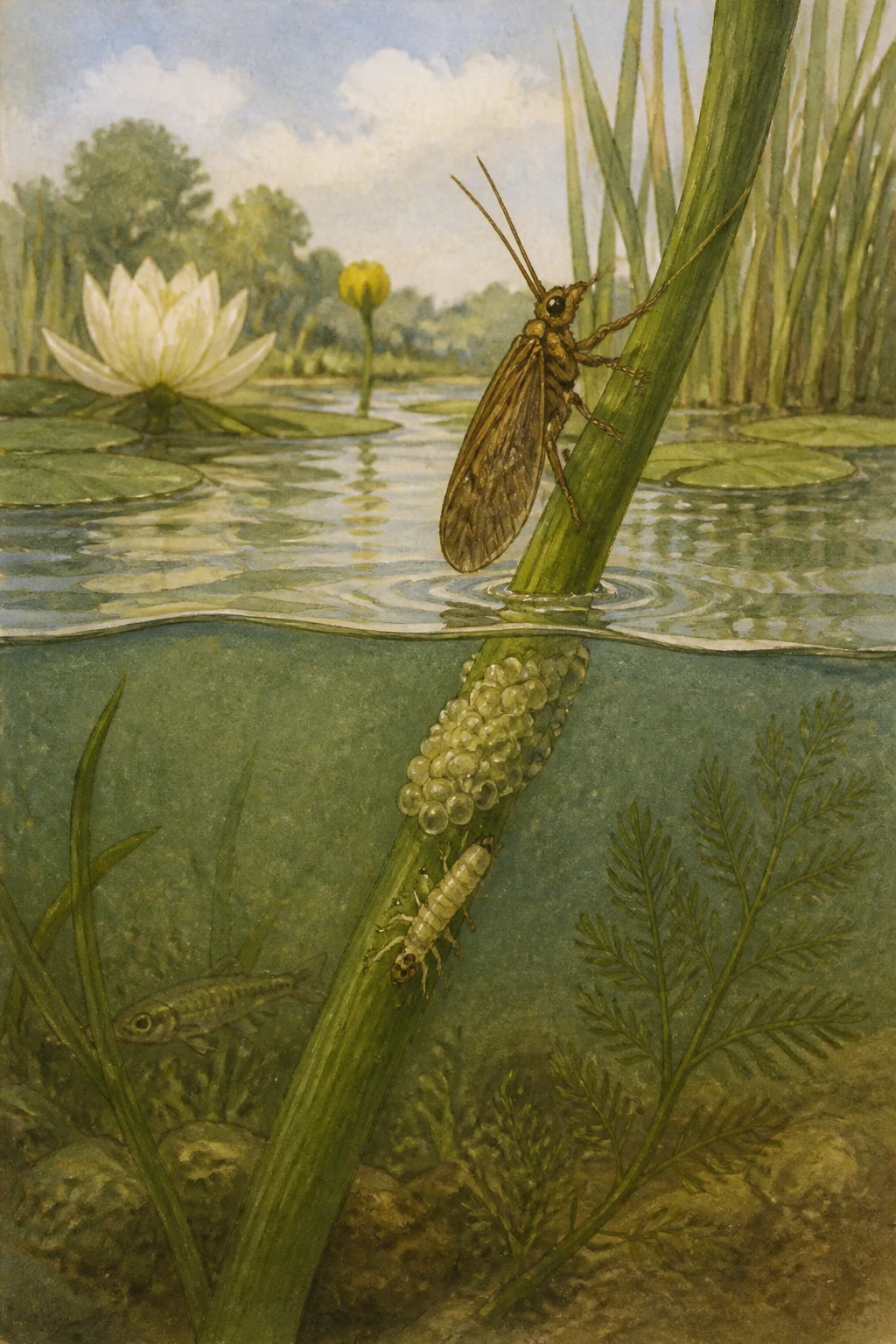
Mame Zetinje so pravile, da so za vse krive mame Kačjih pastirjev. »Kaj pa lahko pričakujete,« je vzkliknila ena izmed njih, »ko pa Kačji pastirji tako malomarno odlagajo jajčeca? Šele včeraj sem videla mamo Kačjega pastirja, ki jih je odlagala, in kaj mislite, kako je to počela? Kar letala je naokrog po soncu in klepetala s prijateljicami, tu in tam pa se spustila dovolj nizko, da se je dotaknila vode in vanjo spustila jajčece. Sramota!«
Mame Pisanke niso mislile, da je toliko kriv način odlaganja jajčec, »čeprav,« je rekla ena, »jaz svoja vedno odložim tesno skupaj, namesto da bi jih raztresla po vsem ribniku«. Menile so, da je težava v slabi vzgoji ali v tem, da jih sploh nihče ne vzgaja. Vsako jajčece, veste, po odložitvi potone na dno ribnika, otroci pa se tam izvalijo in odrastejo, ne da bi sploh kdaj videli svoje očete in matere.
Zdaj se je večina ličink spreminjala v nimfe, napol odrasle Kačje pastirje. Prej so bile kratke in debelušne, zdaj pa so postajale daljše in vitkejše, na ramenih pa so imele majhne izbokline, kjer so jim pod kožo rasla krila. Svojo staro kožo so že velikokrat prerasle in so se morale izviti iz nje, da jim je bilo spet udobno. Ko je otrok Kačjega pastirja postal prevelik za svojo kožo, se je z ostrima krempeljcema na vsaki od svojih šestih nog čvrsto oprijel česa, razprl kožo vzdolž hrbta in se izvil iz nje, nato pa jo pustil, da se je premetavala po vodi, dokler ni postala del blata.
Kakor večina odraščajočih otrok so morale tudi ličinke in nimfe Kačjih pastirjev veliko jesti. Njihovi želodci so bili dolgi kot njihova telesa in nikoli niso bile zares srečne, če jih niso imele polnih. Vedno so jedle preprosto hrano, in to v izobilju, med obroki pa niso nikoli jedle. Zajtrkovale so od trenutka, ko so se zjutraj zbudile, pa vse do takrat, ko je bilo sonce visoko na nebu, nato so kosile, dokler ni bilo sonce nizko na nebu, odtlej pa večerjale, dokler se ni stemnilo in so šle spat: med obroki pa niti grižljaja, pa naj so bile še tako lačne. Pravili so, da je to njihovo edino pravilo pri jedi in da se ga bodo držali.
Vedno so bili počasni otroci. Človek bi si mislil, da bi lahko s šestimi nogami in tremi sklepi na vsaki nogi hodili precej hitro, pa nikoli niso. Kadar je bilo treba, so pohiteli drugače, z dolgim skokom skozi vodo. Seveda so dihali vodo kakor njihovi sosedje, ribe in Paglavci. Niso je vdihovali skozi usta ali škrge, temveč so jo zajemali skozi odprtinice v zadnjem delu telesa. Kadar so hoteli pohiteti, so to vodo tako sunkovito izdihnili, da jih je hitro pognala naprej.
Želva Hlastavka jih je nekega dne, ko je bila slabe volje, imenovala »nadležen mrčes« (in to je bilo dan po tistem, ko je bila slabe volje, in tik pred dnem, ko bo spet slabe volje), zato je niso marali in so se ji hoteli maščevati. Staknili so svoje čudne, majhne trikotne glave in v njihovih velikih, izbuljenih očeh se je prikazal zloben pogled.
»Grdoba stara!« je rekla neka ličinka. »Ko bi jo le lahko pičil!« »No, pa je ne moreš,« je rekla nimfa in se tako nenadoma obrnila proti njemu, da je kar poskočil. »Nimaš žela in nikoli ga ne boš imel, zato bodi kar tiho.« Prav nič lepo ni bilo od nje, da je tako govorila, toda saj veste, ni bila lepo vzgojena, in morda ji prav zato lahko oprostimo, da je tako govorila s svojim malim bratcem. Pogosto je bila nestrpna in je pravila, da ne more nikamor, ne da bi se ji za pete prilepila kakšna ličinka.
»Veste, kaj naredimo,« je rekla druga nimfa. »Pojdimo vsi skupaj v plitvino, kjer se sonči, in se postavimo čisto tesno drug ob drugega, potem pa ji, ko pride mimo, pomolimo ustnice!«
»Obe ustnici?« so vprašale ličinke. »No, vsaj spodnje,« je odgovorila nimfa. »Zgornje so tako majhne, da niso pomembne.« »Pa dajmo!« so vzkliknili vsi otroci Kačjih pastirjev in se skupaj odpravili po dnu ribnika proti plitvini. Mislili so, da bodo želvo Hlastavko strašno prestrašili. Vedeli so, da majhne ribe in žuželke vselej odplavajo, kolikor hitro morejo, kadar jim pomolijo spodnje ustnice. Orjaški vodni stenec (Belostoma) je bil edina žuželka, ki se jih ni bala, kadar so se pačili. In res bi spodnja ustnica otroka Kačjega pastirja lahko koga prestrašila, saj je pritrjena na dolgo, členasto reč, podobno roki, in ima klešče, s katerimi lovi in drži hrano. Otrok Kačjega pastirja ima sklep večinoma upognjen, tako da si ustnico drži pred obrazom kakor masko. Včasih pa sklep iztegne in pomoli ustnico predse, tedaj pa njene klešče zagrabijo stvari. To naredi, kadar je lačen.
Ko so prišli v plitvino, so se otroci Kačjih pastirjev postavili tesno drug ob drugega, ličinke v sredino, nimfe pa okoli njih. Želve Hlastavke ni bilo nikjer videti, zato so morali počakati. »Te ni strah?« je ena ličinka zašepetala drugi.
»Strah? Pha! Koga pa je strah?« je odgovorila druga. »O, poglejte!« je vzkliknila nimfa. »Tam nad našimi glavami letijo odrasli Kačji pastirji. Samo počakajte, da se še enkrat prelevim, potem se bom pa imela lepo! Posušila si bom krila, potem pa bom ...«
»Pšššt!« je rekla ena od ličink. »Želva Hlastavka prihaja.« In res, prihajala je skozi plitvino, njen mokri hrbtni oklep je deloma molel iz vode in se bleščal v sončni svetlobi. Šla je naravnost proti otrokom Kačjih pastirjev in ti so bili veseli, ko so videli, da ni videti lačna. Mislili so, da bo po kosilu morda malo zadremala. Tedaj so se vsi stisnili še tesneje skupaj in ji pomolili spodnje ustnice. Mislili so, da bo zaradi tega morda zbežala. Prepričani so bili, da se bo vsaj zelo hudo prestrašila.
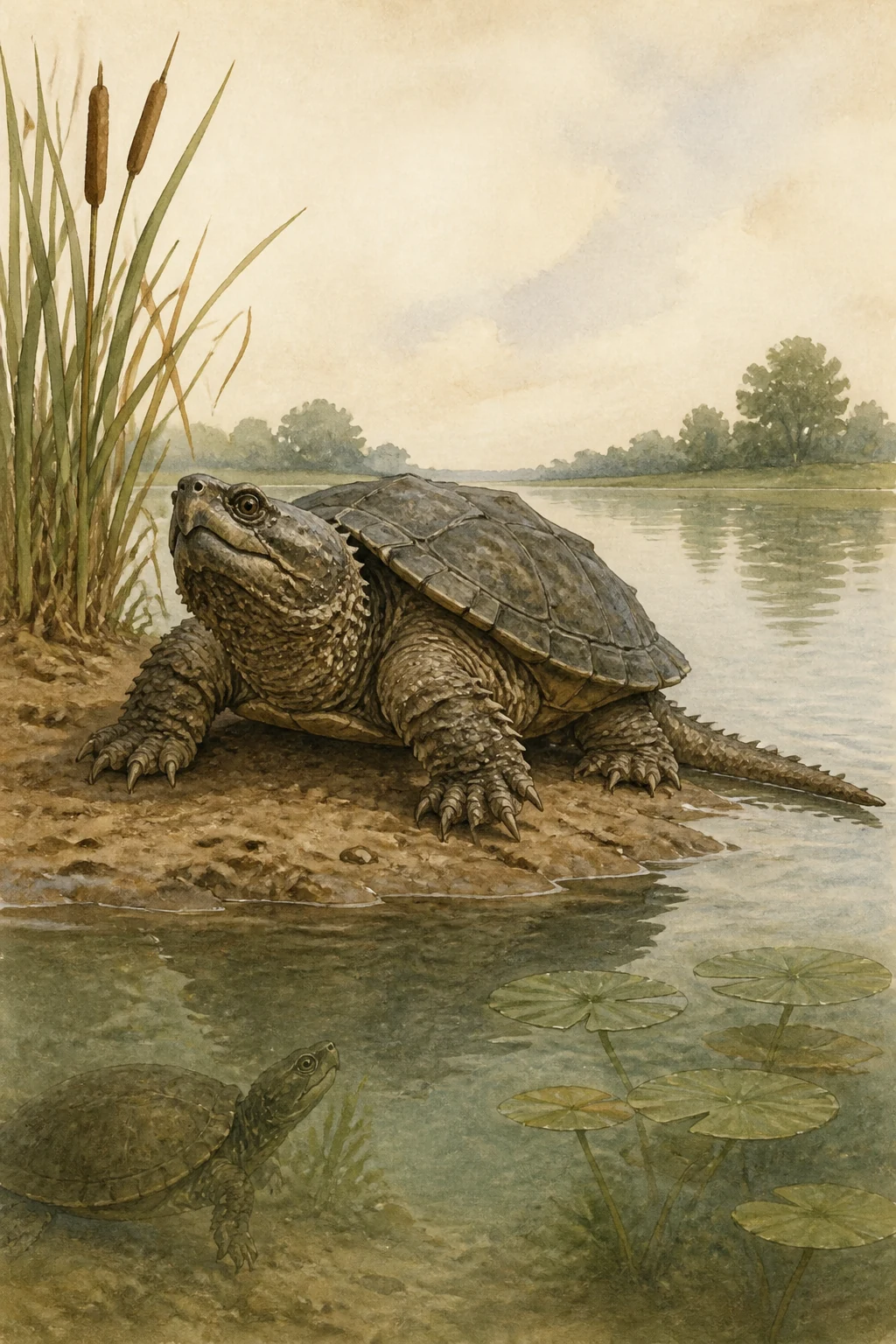
Zdelo se je, da jih želva Hlastavka sploh ne vidi. Čudno. Kar racala je naprej in naprej, naravnost proti njim. »A-a-ah!« je rekla. »Kako sem zaspana! Legla bom na sonce in si odpočila.« Naredila je še nekaj korakov, tako da je bilo njeno veliko telo tik nad množico otrok Kačjih pastirjev. »Mislim, da bom potegnila noter glavo,« je rekla (otroci Kačjih pastirjev so se spogledali), »pa še rep (ob tem sta dve najmlajši ličinki začeli jokati) in legla.« Začela je zelo, zelo počasi vleči noge pod oklep in ravno ko se je njen veliki, trdi trebušni oklep dotaknil blata, je zadnja ličinka prilezla izpod njenega repa. Nimfe so že prej pobegnile.
»Oh,« so si govorili otroci Kačjih pastirjev, »ali ni bilo grozno!« »Hm,« je rekla želva Hlastavka sama sebi — tega se je navadila, ker je imela tako malo prijateljev —, »kako strašno so me prestrašili!« Nato se je zasmejala s svojim mrkim hlastavjim smehom in zaspala.
Izvirnik
The Dragon-Flies have always lived near the pond. Not the same ones that are there now, of course, but the great-great-great-grandfathers of these. A person would think that, after a family had lived so long in a place, all the neighbors would be fond of them, yet it is not so. The Dragon-Flies may be very good people--and even the Snapping Turtle says that they are--still, they are so peculiar that many of their neighbors do not like them at all. Even when they are only larvae, or babies, they are not good playmates, for they have such a bad habit of putting everything into their mouths. Indeed, the Stickleback Father once told the little Sticklebacks that they should not stir out of the nest, unless they would promise to keep away from the young Dragon-Flies.
The Stickleback Mothers said that it was all the fault of the Dragon-Fly Mothers. "What can you expect," exclaimed one of them, "when Dragon-Fly eggs are so carelessly laid? I saw a Dragon-Fly Mother laying some only yesterday, and how do you suppose she did it? Just flew around in the sunshine and visited with her friends, and once in a while flew low enough to touch the water and drop one in. It is disgraceful!"
The Minnow Mothers did not think it was so much in the way the eggs were laid, "although," said one, "I always lay mine close together, instead of scattering them over the whole pond." They thought the trouble came from bad bringing up or no bringing up at all. Each egg, you know, when it is laid, drops to the bottom of the pond, and the children are hatched and grow up there, and do not even see their fathers and mothers.
Now most of the larvae were turning into Nymphs, which are half-grown Dragon Flies. They had been short and plump, and now they were longer and more slender, and there were little bunches on their shoulders where the wings were growing under their skin. They had outgrown their old skins a great many times, and had to wriggle out of them to be at all comfortable. When a Dragon-Fly child became too big for his skin, he hooked the two sharp claws of each of his six feet firmly into something, unfastened his skin down the back, and wriggled out, leaving it to roll around in the water until it became just part of the mud.
Like most growing children, the Dragon-Fly larvae and Nymphs had to eat a great deal. Their stomachs were as long as their bodies, and they were never really happy unless their stomachs were full. They always ate plain food and plenty of it, and they never ate between meals. They had breakfast from the time they awakened in the morning until the sun was high in the sky, then they had dinner until the sun was low in the sky, and supper from that time until it grew dark and they went to sleep: but never a mouthful between meals, no matter how hungry they might be. They said this was their only rule about eating, and they would keep it.
They were always slow children. You would think that, with six legs apiece and three joints in each leg, they might walk quite fast, yet they never did. When they had to, they hurried in another way by taking a long leap through the water. Of course they breathed water like their neighbors, the fishes and the Tadpoles. They did not breathe it into their mouths, or through gills, but took it in through some openings in the back part of their bodies. When they wanted to hurry, they breathed this water out so suddenly that it sent them quickly ahead.
The Snapping Turtle had called them "bothering bugs" one day when he was cross (and that was the day after he had been cross, and just before the day when he was going to be cross again), and they didn't like him and wanted to get even. They all put their queer little three-cornered heads together, and there was an ugly look in their great staring eyes.
"Horrid old thing!" said one larva. "I wish I could sting him."
"Well, you can't," said a Nymph, turning towards him so suddenly that he leaped. "You haven't any sting, and you never will have, so you just keep still." It was not at all nice in her to speak that way, but she was not well brought up, you know, and that, perhaps, is a reason why one should excuse her for talking so to her little brother. She was often impatient, and said she could never go anywhere without one of the larvae tagging along.
"I tell you what let's do," said another Nymph. "Let's all go together to the shallow water where he suns himself, and let's all stand close to each other, and then, when he comes along, let's stick out our lips at him!"
"Both lips?" asked the larvae.
"Well, our lower lips anyway," answered the Nymph. "Our upper lips are so small they don't matter."
"We'll do it," exclaimed all the Dragon-Fly children, and they started together to walk on the pond-bottom to the shallow water. They thought it would scare the Snapping Turtle dreadfully. They knew that whenever they stuck out their lower lips at the small fishes and bugs, they swam away as fast as they could. The Giant Water-Bug (Belostoma), was the only bug who was not afraid of them when they made faces. Indeed, the lower lip of a Dragon-Fly child might well frighten people, for it is fastened on a long, jointed, arm-like thing, and has pincers on it with which it catches and holds its food. Most of the time, the Dragon-Fly child keeps the joint bent, and so holds his lip up to his face like a mask. But sometimes he straightens the joint and holds his lip out before him, and then its pincers catch hold of things. He does this when he is hungry.
When they reached the shallow water, the Dragon-Fly children stood close together, with the larvae in the middle and the Nymphs all around them. The Snapping Turtle was nowhere to be seen, so they had to wait. "Aren't you scared?" whispered one larva to another.
"Scared? Dah! Who's afraid," answered he.
"Oh, look!" cried a Nymph. "There go some grown-up Dragon-Flies over our heads. Just you wait until I change my skin once more, and then won't I have a good time! I'll dry my wings and then I'll----"
"Sh-h!" said one of the larvae. "Here comes the Snapping Turtle."
Sure enough, there he came through the shallow water, his wet back-shell partly out of it and shining in the sunlight. He came straight toward the Dragon-Fly children, and they were glad to see that he did not look hungry. They thought he might be going to take a nap after his dinner. Then they all stood even closer together and stuck out their lower lips at him. They thought he might run away when they did this. They felt sure that he would at least be very badly frightened.
The Snapping Turtle did not seem to see them at all. It was queer. He just waddled on and on, coming straight toward them. "Ah-h-h!" said he. "How sleepy I do feel! I will lie down in the sunshine and rest." He took a few more steps, which brought his great body right over the crowd of Dragon-Fly children. "I think I will draw in my head," said he (the Dragon-Fly children looked at each other), "and my tail (here two of the youngest larvae began to cry) and lie down." He began to draw in his legs very, very slowly, and just as his great hard lower shell touched the mud, the last larva crawled out under his tail. The Nymphs had already gotten away.
"Oh," said the Dragon-Fly children to each other, "Wasn't it awful!"
"Humph," said the Snapping Turtle, talking to himself--he had gotten into the way of doing that because he had so few friends--"How dreadfully they did scare me!" Then he laughed a grim Snapping Turtle laugh, and went to sleep.