Waltey
Nepazljiva ličinka mladoletnice
071 THE CARELESS CADDIS WORM
Živalske zgodbe Clare Dillingham Pierson · Clara Dillingham PiersonO besedilu
Nepazljiva ličinka mladoletnice
- Vir
- Živalske zgodbe Clare Dillingham Pierson
- Avtor
- Clara Dillingham Pierson
- Jezik branja
- Slovenščina
- Jezik izvirnika
- English
- Čas branja
- 10 min branja
- Obseg
- 8 strani
- Naslov izvirnika
- 071 THE CARELESS CADDIS WORM
O izvirniku
Živalske zgodbe Clare Dillingham Pierson
Devetindevetdeset avtorskih zgodb o živalih na kmetiji, travniku, v gozdu, ob ribniku in ponoči. Bralni jezik je Slovenščina, izvirnik pa prihaja iz vira Živalske zgodbe Clare Dillingham Pierson v jeziku English.
Besedilo
Nepazljiva ličinka mladoletnice
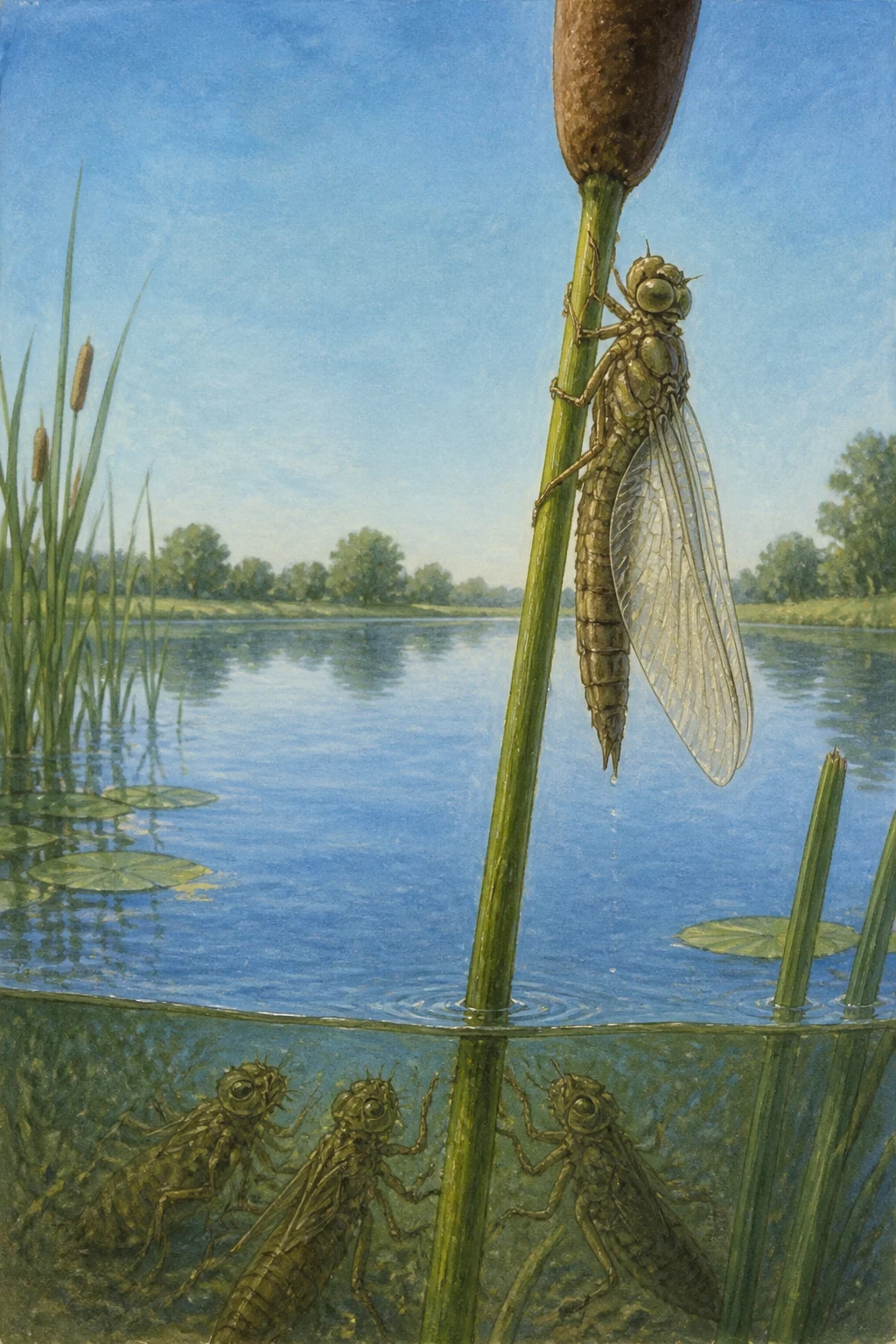
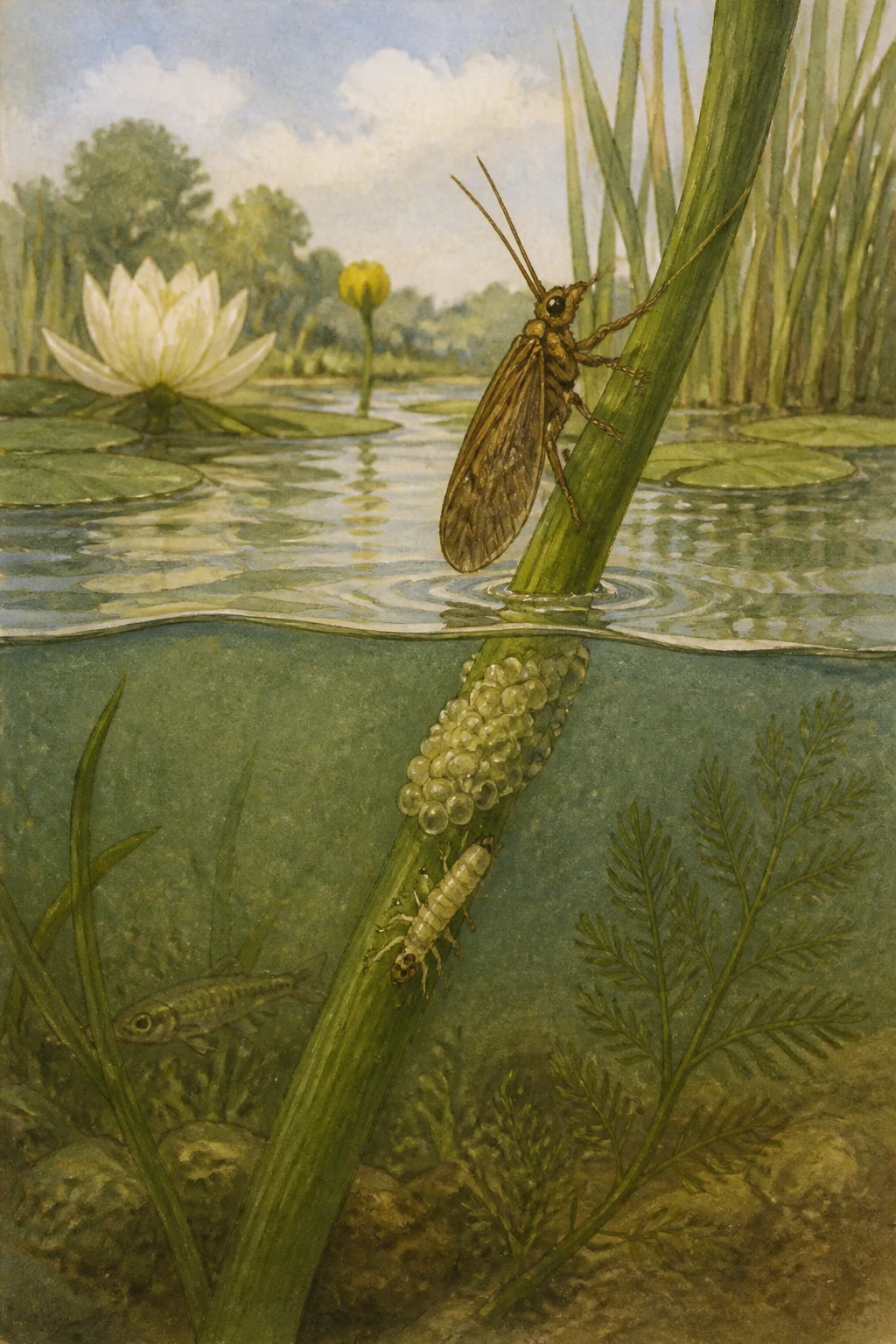
Ko je Mladoletnica začutila, da je čas za odlaganje jajčec, je zlezla po steblu ene izmed ribniških rastlin pod vodo in jih tam odložila. Prekrila jih je z nečim lepljivim, da bi zagotovo ostala tam, kamor jih je položila. »Tako!« je rekla, ko je spet lezla proti zraku. »Moje delo je opravljeno.« Kmalu zatem je legla k dolgemu, dolgemu počitku. Od vsega letanja, obiskovanja in odlaganja jajčec je bila že zelo utrujena; in nič čudnega, saj od takrat, ko je dobila krila, ni zaužila niti grižljaja.
Kačje Pastirje je to zelo begalo. Nikakor niso mogli razumeti, saj so sami kar naprej jedli. Radi bi jo povprašali o tem, toda zvečer so legli spat kmalu zatem, ko je ona vstala, in kadar jih je zagledala prihajati, je odletela. »Prav nič lačna nisem,« je rekla, »zakaj bi torej jedla? Poleg tega,« je dodala, »tudi če bi hotela, ne bi mogla jesti, tako drobna in šibka usta imam. Med odraščanjem sem veliko pojedla — dovolj, da mi zadostuje do konca — in zdaj prihranim čas, ker se mi ni treba ubadati z iskanjem hrane.«
Ko so se iz njenih jajčec izlegle ličinke, so bili to vitki, mehki, šestnogi otročički, imenovani Tulčarji. Bili so beli in v vodi tako dobro vidni kakor lokvanj na njeni gladini. Če živiš v vodi, ni varno biti bel; prav gotovo ne, če ne znaš hitro plavati in se naglo obračati. In za to obstaja razlog, kakor ti bo povedal vsak prebivalec ribnika. Celo ribe imajo vso belino na spodnji strani telesa, da jih lačni Ribji Orel ne bi tako zlahka opazil in se pognal nanje, kadar plavajo tik pod gladino.
Tulčarji so kmalu spoznali, da bela barva ni prav dobra oprava, in o tem so se pogovarjali med seboj. Bili so zelo bistre ličinke. Nekega dne je največji med njimi stal na steblu pontederije, ko je proti njemu prišla njegova sestra. Ni se pomikala prav hitro, saj ni ne plavala ne hodila, temveč si je pomagala z ugrizi. Vsi Tulčarji so včasih počeli tako, kajti njihove noge so bile šibke. Iztegnila se je naprej, kolikor je mogla, se z močnimi čeljustmi oprijela rastline, nato pa se sunkovito potegnila naprej. »To je zelo dober način potovanja,« je rekla, »pa še noge si tako lepo odpočijejo.« Zdaj pa se ji je tako mudilo, da je ob potegu včasih naredila pol prevala in pristala na hrbtu.
»Kaj pa je?« je zaklical Največji Tulčar. »Nikar tako ne hiti. Časa je na pretek.« To mu je bilo čisto podobno, saj je bil len. Vsi so tako govorili.
»Moram hiteti,« je rekla in zelo hitro dihala z belimi dihalnimi dlačicami, ki so ji rasle po obeh straneh telesa. Po zadnjem prevalu se je pobrala in stopila k bratu, dovolj blizu, da je lahko govorila čisto potiho. »Bežala sem pred Belostomo,« je rekla, »in strašno me je bilo strah, da me bo ujel.«
»No, zdaj si pa na varnem, kajne?« je vprašal brat. Tudi to mu je bilo podobno. Dokler je imel dovolj hrane in mu je bilo udobno, ni hotel razmišljati o ničemer neprijetnem.
»Ne, nisem,« je odgovorila, »in tudi ne bom, dokler me lahko vsaka lačna riba ali vodna stenica tako dobro vidi. Dovolj imam te beline.« »Saj nisi več tako bela, kot si bila,« je rekel brat. »Nihče od nas otrok ni več. Glave in sprednji deli teles nam postajajo rjavi in vse trši.« To je bilo res, on sam pa je imel še posebno trdo glavo.
»Že, ampak kaj pa preostali del telesa?« je rekla, in prav gotovo ji ni bilo zameriti, če je bila nestrpna. »Če Belostoma vidi del mene in se požene za njim, bo tudi preostanek našel prav blizu.«
»Potem pa miruj in počakaj, morda boš vsa postala trda in rjava,« je rekel. »Nikoli ne bom,« je odvrnila. »Šla sem k Školjkam in jih vprašala, ali bom, pa so rekle: ‘Ne.’ Zgradila si bom hišico, da si pokrijem zadnji del telesa, in tudi ti bi storil prav, če bi si jo.«
Največji Tulčar je bil videti silno presenečen. »Kako neki si se tega domislila?« je vprašal. »Najbrž zato, ker se ni bilo mogoče domisliti ničesar drugega,« je rekla. »Česa se pač moraš domisliti.«
»Meni se ni treba,« je rekel. Odpravila se je tja, kjer so bili njuni drugi bratje in sestre. »Kam greš?« je zaklical. »Gradit svojo hišico,« je odgovorila. »Najbolje bo, da prideš še ti.«
»Zdaj ne,« je rekel. »Čakam, da pojem zajtrk do konca. Pridem pozneje.« Največji Tulčar je stal na pontederiji in jedel zajtrk. Potem je tam stal še nekaj časa. »Mislim, da ni dobro delati takoj po jedi,« je rekel. Pod njim v vodi so njegovi bratje in sestre pridno nabirali drobne paličice, kamenčke in koščke razbitih lupin, da bi si iz njih zgradili hišice. Vsak Tulčar si je sam poiskal gradivo in ga povezal z nekakšno svilo, ki jo je vlekel iz svojega telesa. Nikogar niso imeli, da bi jim pokazal, kako se to dela, zato je vsak načrtoval po svoje in nobeni hišici nista bili povsem enaki.
»Svojo hišico bom naredil dovolj veliko, da bom lahko potegnil vanjo glavo in noge, kadar bom hotel,« je rekel eden. »Jaz tudi!« so zaklicali vsi drugi Tulčarji.
Čez nekaj časa je nekdo rekel: »Na zadnji strani hišice bom pustil odprta vrata.« Tedaj so vsi njegovi marljivi bratje in sestre zaklicali: »Jaz tudi!«
Ko so bile drobcene hišice narejene, je vsak Tulčar zlezel v svojo in obležal tako, da so mu glava in noge molele skozi sprednja vrata. Beli del telesa se jim ni prav nič videl, in če so hoteli, so lahko potegnili noter še glavo. Celo Belostoma, Orjaški Vodni Stenici, bi se lahko tedaj zgodilo, da bi šel tik mimo njih, ne da bi jih sploh opazil.
»Zataknimo se noter!« je zaklical neki Tulčar in vsi drugi so odgovorili: »Dajmo!« Vsak se je torej zasidral z močnima kaveljcema, ki sta mu rasla na koncu telesa, in tako so bili na varnem in udobnem kakor Školjke. Približno takrat je po steblu pontederije počasi prilezel Veliki Brat. »Kaj,« je rekel, »menda nimate hišic že narejenih?«
»Pa jih imamo,« so veselo odgovorili drugi. »Poglej, kako potegnemo glave noter.« In vsi so potegnili glave noter ter jih spet pomolili ven. Bil je edino bitje z belim telesom, kar jih je bilo videti.
»Tudi jaz moram imeti dom,« je rekel. »Ko bi mi kateri od vas Tulčarjev dal svojega! Saj bi si lahko naredil drugega. Gradiva je še na pretek.«
»Kar sam si ga naredi,« so odgovorili. »Gradiva si vzemi, kolikor hočeš.« »Ampak jaz ne znam,« je rekel, »vi pa znate.« »Kdo je pa tega kriv?« je vprašala sestra. Potem se je zbala, da bi jo utegnil imeti za zadirčno, in je hitro dodala: »Povedali ti bomo, kako, če se boš le lotil.«
Največji Tulčar je zbral nekaj drobnih paličic, kamenčkov in koščkov razbitih lupin, toda samemu mu ni bilo prav nič zabavno delati. Potem so mu povedali, kaj naj naredi in kako naj jih s svilo poveže med seboj. »Glej, da jih trdno zvežeš,« so rekli.
»Saj je dovolj trdno,« je odgovoril. »Bo že držalo. Če razpade, lahko popravim.« Njegovi bratje in sestre so mislili, da bi moral hišico narediti trdnejšo, vendar niso rekli nič več, saj mu ne bi bilo všeč, če bi mu prigovarjali; enkrat pa so mu to že povedali. Ko je zlezel v svojo hišico in se v njej zataknil, ni bilo videti niti enega Tulčarja več, in vsi so bili zelo ponosni ob misli, kako so si zamislili in zgradili svoje hišice. Niso vedeli, da so Tulčarji že od nekdaj počeli tako, in mislili so, da so se prvi domislili česa takega.
Hišica Največjega Tulčarja ni bila dobro povezana in vsak dan je rekel: »Jutri jo moram res popraviti.« Toda ko je prišel jutri, se je vselej izkazalo, da je danes, poleg tega pa je navadno našel kaj zanimivejšega za početi. Veliko časa mu je vzelo levljenje in tega ni bilo lahko odlagati. Tako hitro je rasel, da se mu je lahko skoraj vsako jutro zgodilo, da se je zbudil in ugotovil, da mu glava že sili skozi vrh stare kože. In čeprav je bil len, ni hotel, da bi ga prebivalci ribnika videvali z razpoko v koži na glavi, prav tam, kjer se je najbolj videla. Zato je vselej, kadar se je to zgodilo, potegnil telo skozi razpoko in staro kožo odvrgel. Pod njo ga je namreč zagotovo čakala čisto nova.
Ko so se Tulčarji že velikokrat levili, so postali tišji in bolj zamišljeni. Nazadnje je sestra, ki se je prva domislila gradnje hišic, svojo pritrdila na kamen ter čez sprednja in zadnja vrata spletla mrežico. »Spat grem,« je rekla, »da mi zrastejo tipalnice in se pripravim na letenje in dihanje zraka. Nočem, da bi me kdo zbudil. Samo spati hočem, rasti in dihati. Voda bo pritekala skozi mrežici, zato mi ne bo hudega. Ne bi mogla spati v hišici, kjer ne bi bilo obilo sveže vode za dihanje.« Potem se je udobno zvila in zadremala, in kadar so bratje in sestre govorili o njej, so ji rekli »Buba Mladoletnice«.
Vendar niso prav velikokrat govorili o njej, saj so tudi sami kmalu pritrdili svoje hišice na kaj trdnega, spletli mrežice čez vrata in zaspali.
Nekega dne je Vodna Kača priplavala tja, kjer so stale vse hišice Tulčarjev. »Hm, hm,« si je rekla. »Včasih je bilo tod lepo število Tulčarjev, zdaj pa že celo večnost nisem videla nobenega. Najbrž so se kam poskrili in spijo. No, moram drugam in si poiskati kosilo. Skoraj že umiram od lakote. V sprednji polovici želodca nimam niti grižljaja.« Švignila je z repom in odplavala, toda pri tem je zadela drobceno hišico iz paličic, kamenčkov in koščkov razbitih lupin in iz nje se je skotalila debela speča Buba Mladoletnice. Bil je Največji Brat.
Kmalu je mimo prišel Belostoma, Orjaška Vodna Stenica. »Kaj pa je to?« je vzkliknil, ko je zagledal spečo Bubo Mladoletnice. »Nekdo si je zgradil slabo hišico za spanje. Zate bo treba poskrbeti, mlada Mladoletnica.« Spečo Bubo Mladoletnice je pobral z močnima sprednjima nogama in odplaval. Nihče ne ve, kaj natanko se je zgodilo potem.
Ko so se druge Bube Mladoletnic prebudile, so pregrizle svoje mrežice in se prijetno naklepetale, preden so zlezle iz ribnika v svoj novi dom, v zrak. »Je kdo videl mojega največjega brata?« je ena Buba vprašala drugo, a vsi so odgovorili: »Ne.«
Vsaka se je ozrla naokrog s svojima široko razmaknjenima očesoma, potem pa so sklenile, da se je gotovo prebudil prvi in zapustil vodo pred njimi. Toda ti veš, da tega ni mogel storiti, saj ne bi mogel nikoli postati Mladoletnica, če ne bi v svoji hišici do konca prespal bubjega spanca, tega pa ni storil. Ko se je preobrazil v Bubo Mladoletnice, je nehal biti Tulčar. Nihče ne bo nikoli izvedel, kaj natanko je bilo z njim, razen če Belostoma pove — Belostoma pa najbrž ne bo povedal.
Izvirnik
071 THE CARELESS CADDIS WORM
Naslednje strani prikazujejo izvirno besedilo za primerjavo.
When the Caddis Fly felt like laying eggs, she crawled down the stalk of one of the pond plants and laid them there. She covered them with something sticky, so that they were sure to stay where she put them. "There!" she said, as she crawled up to the air again. "My work is done." Soon after this, she lay down for a long, long rest. What with flying, and visiting, and laying eggs, she had become very tired; and it was not strange, for she had not eaten a mouthful since she got her wings.
This had puzzled the Dragon-Flies very much. They could not understand it, because they were always eating. They would have liked to ask her about it, but they went to sleep for the night soon after she got up, and whenever she saw them coming she flew away. "I do not seem to feel hungry," said she, "so why should I eat? Besides," she added, "I couldn't eat if I wanted to, my mouth is so small and weak. I ate a great deal while I was growing--quite enough to last me--and it saves time not to bother with hunting food now."
When her eggs hatched, the larvae were slender, soft, six-footed babies called Caddis Worms. They were white, and they showed as plainly in the water as a pond-lily does on the top of it. It is not safe to be white if one is to live in the water; certainly not unless one can swim fast and turn quickly. And there is a reason for this, as any one of the pond people will tell you. Even the fishes wear all their white on the under side of their bodies, so that if they swim near the top of the water, a hungry Fish Hawk is not so likely to see them and pounce down on them.
The Caddis Worms soon found that white was not a good color to wear, and they talked of it among themselves. They were very bright larvae. One day the biggest one was standing on a stem of pickerel-weed, when his sister came toward him. She did not come very fast, because she was neither swimming nor walking, but biting herself along. All the Caddis Worms did this at times, for their legs were weak. She reached as far forward as she could, and fastened her strong jaws in the weed, then she gave a jerk and pulled her body ahead. "It is a very good way to travel," said she, "and such a saving of one's legs." Now she was in so great a hurry that sometimes when she pulled herself ahead, she turned a half-somersault and came down on her back.
"What is the matter?" called the Biggest Caddis Worm. "Don't hurry so. There is lots of time." That was just him, for he was lazy. Everybody said so.
"I must hurry," said she, and she breathed very fast with the white breathing hairs that grew on both sides of her body. She picked herself up from her last somersault and stood beside her brother, near enough to speak quite softly. "I have been getting away from Belostoma," she said, "and I was dreadfully afraid he would catch me."
"Well, you're all right now, aren't you?" asked her brother. And that was also like him. As long as he could have enough to eat and was comfortable, he did not want to think about anything unpleasant.
"No, I'm not," she answered, "and I won't be so long as any hungry fish or water-bug can see me so plainly. I'm tired of being white."
"You are not so white as you were," said her brother. "None of us children are. Our heads and the front part of our bodies are turning brown and getting harder." That was true, and he was particularly hard-headed.
"Yes, but what about the rest of us?" said she, and surely there was some excuse for her if she was impatient. "If Belostoma can see part of me and chase that, he will find the rest of me rather near by."
"Keep quiet then, and see if you don't get hard and brown all over," said he.
"I never shall," said she. "I went to the Clams and asked them if I would, and they said 'No.' I'm going to build a house to cover the back part of my body, and you'd better do the same thing."
The Biggest Caddis Worm looked very much surprised. "Whatever made you think of that?" said he.
"I suppose because there wasn't anything else to think of," said she. "One has to think of something."
"I don't," said he.
She started away to where her other brothers and sisters were. "Where are you going?" cried he.
"Going to build my house," answered she. "You'd better come too."
"Not now," said he. "I am waiting to get the rest of my breakfast. I'll come by and by."
The Biggest Caddis Worm stood on the pickerel-weed and ate his breakfast. Then he stood there a while longer. "I do not think it is well to work right after eating," he said. Below him in the water, his brothers and sisters were busily gathering tiny sticks, stones, and bits of broken shell, with which to make their houses. Each Caddis Worm found his own, and fastened them together with a sort of silk which he pulled out of his body. They had nobody to show them how, so each planned to suit himself, and no two were exactly alike.
"I'm going to make my house big enough so I can pull in my head and legs when I want to," said one.
"So am I," cried all the other Caddis Worms.
After a while, somebody said, "I'm going to have an open door at the back of my house." Then each of his busy brothers and sisters cried, "So am I."
When the tiny houses were done, each Caddis Worm crawled inside of his own, and lay with head and legs outside the front door. The white part of their bodies did not show at all, and, if they wanted to do so, they could pull their heads in. Even Belostoma, the Giant Water-Bug, might have passed close to them then and not seen them at all.
"Let's hook ourselves in!" cried one Caddis Worm, and all the others answered, "Let's."
So each hooked himself in with the two stout hooks which grew at the end of his body, and there they were as snug and comfortable as Clams. About this time the Big Brother came slowly along the stem of pickerel-weed. "What," said he, "you haven't got your houses done already?"
"Yes," answered the rest joyfully. "See us pull in our heads." And they all pulled in their heads and poked them out again. He was the only white-bodied person in sight.
"I must have a home," said he. "I wish one of you Worms would give me yours. You could make yourself another, you know. There is lots more stuff."
"Make it yourself," they replied. "Help yourself to stuff."
"But I don't know how," he said, "and you do."
"Whose fault is that?" asked his sister. Then she was afraid that he might think her cross, and she added quickly, "We'll tell you how, if you'll begin."
The Biggest Caddis Worm got together some tiny sticks and stones and pieces of broken shell, but it wasn't very much fun working alone. Then they told him what to do, and how to fasten them to each other with silk. "Be sure you tie them strongly," they said.
"Oh, that's strong enough," he answered. "It'll do, anyhow. If it comes to pieces I can fix it." His brothers and sisters thought he should make it stouter, yet they said nothing more, for he would not have liked it if they had; and they had already said so once. When he crawled into his house and hooked himself in, there was not a Caddis Worm in sight, and they were very proud to think how they had planned and built their houses. They did not know that Caddis Worms had always done so, and they thought themselves the first to ever think of such a thing.
The Biggest Caddis Worm's house was not well fastened together, and every day he said, "I really must fix it to-morrow." But when to-morrow came, it always proved to be to-day, and, besides, he usually found something more interesting to be done. It took him a great deal of time to change his skin, and that could not be easily put off. He grew so fast that he was likely to awaken almost any morning and find his head poking through the top of his skin, and, lazy as he was, he would not have the pond people see him around with a crack in the skin of his head, right where it showed. So when this happened, he always pulled his body through the crack, and threw the old skin away. There was sure to be a whole new one underneath, you know.
When they had changed their skin many times, the Caddis Worms became more quiet and thoughtful. At last the sister who had first planned to build houses, fastened hers to a stone, and spun gratings across both its front and its back doors. "I am going to sleep," she said, "to grow my feelers and get ready to fly and breathe air. I don't want anybody to awaken me. All I want to do is to sleep and grow and breathe. The water will come in through the gratings, so I shall be all right. I couldn't sleep in a house where there was not plenty of fresh water to breathe." Then she cuddled down and dozed off, and when her brothers and sisters spoke of her, they called her "the Caddis Nymph."
They did not speak of her many times, however, for they soon fastened their houses to something solid, and spun gratings in their doorways and went to sleep.
One day a Water-Adder came around where all the Caddis houses were. "Um-hum," said he to himself. "There used to be a nice lot of Caddis Worms around here, and now I haven't seen one in ever so long. I suppose they are hidden away somewhere asleep. Well, I must go away from here and find my dinner. I am nearly starved. The front half of my stomach hasn't a thing in it." He whisked his tail and went away, but that whisk hit a tiny house of sticks, stones, and bits of broken shell, and a fat sleeping Caddis Nymph rolled out. It was the Biggest Brother.
Soon Belostoma, the Giant Water-Bug, came that way. "What is this?" he exclaimed, as he saw the sleeping Caddis Nymph. "Somebody built a poor house to sleep in. You need to be cared for, young Caddis." He picked up the sleeping Caddis Nymph in his stout forelegs and swam off. Nobody knows just what happened after that.
When the other Caddis Nymphs awakened, they bit through their gratings and had a good visit before they crawled out of the pond into their new home, the air. "Has anybody seen my biggest brother?" asked one Nymph of another, but everybody answered, "No."
Each looked all around with his two far-apart eyes, and then they decided that he must have awakened first and left the water before them. But you know that he could not have done so, because he could never be a Caddis Fly unless he finished the Nymph-sleep in his house, and he did not do that. He had stopped being a Caddis Worm when he turned into a Caddis Nymph. Nobody will ever know just what did become of him unless Belostoma tells--and Belostoma is not likely to tell.
Nadaljuj z branjem