Waltey
Paglavec, ki je hotel odrasti
072 THE TADPOLE WHO WANTED TO BE GROWN-UP
Živalske zgodbe Clare Dillingham Pierson · Clara Dillingham PiersonO besedilu
Paglavec, ki je hotel odrasti
- Vir
- Živalske zgodbe Clare Dillingham Pierson
- Avtor
- Clara Dillingham Pierson
- Jezik branja
- Slovenščina
- Jezik izvirnika
- English
- Čas branja
- 10 min branja
- Obseg
- 8 strani
- Naslov izvirnika
- 072 THE TADPOLE WHO WANTED TO BE GROWN-UP
O izvirniku
Živalske zgodbe Clare Dillingham Pierson
Devetindevetdeset avtorskih zgodb o živalih na kmetiji, travniku, v gozdu, ob ribniku in ponoči. Bralni jezik je Slovenščina, izvirnik pa prihaja iz vira Živalske zgodbe Clare Dillingham Pierson v jeziku English.
Besedilo
Paglavec, ki je hotel odrasti
Bil je svetel, topel aprilski dan, ko se je Prvi Paglavec tiste pomladi pregrizel iz zdrizastega jajčeca, v katerem je oživel. Bil je drobcen, temno rjav fantič. Težko bi bilo povedati, kakšen natanko je bil videti, kajti paglavec ni podoben ničemur na svetu, razen drugemu paglavcu. Imel je čisto majhno glavo, spredaj na njej pa živahna usteca. Tik nad vsakim ustnim kotičkom se je svetilo črno oko, iz spodnjega dela glave pa mu je rasel rep, ki je nenehno migetal. Nekje med glavo in konico repa je imel majhen želodček in nastavke za noge, vendar se vsega tega na njem ni dalo videti. Zdelo se je, da je vse, kar ni glava, rep, in vse, kar ni rep, glava.
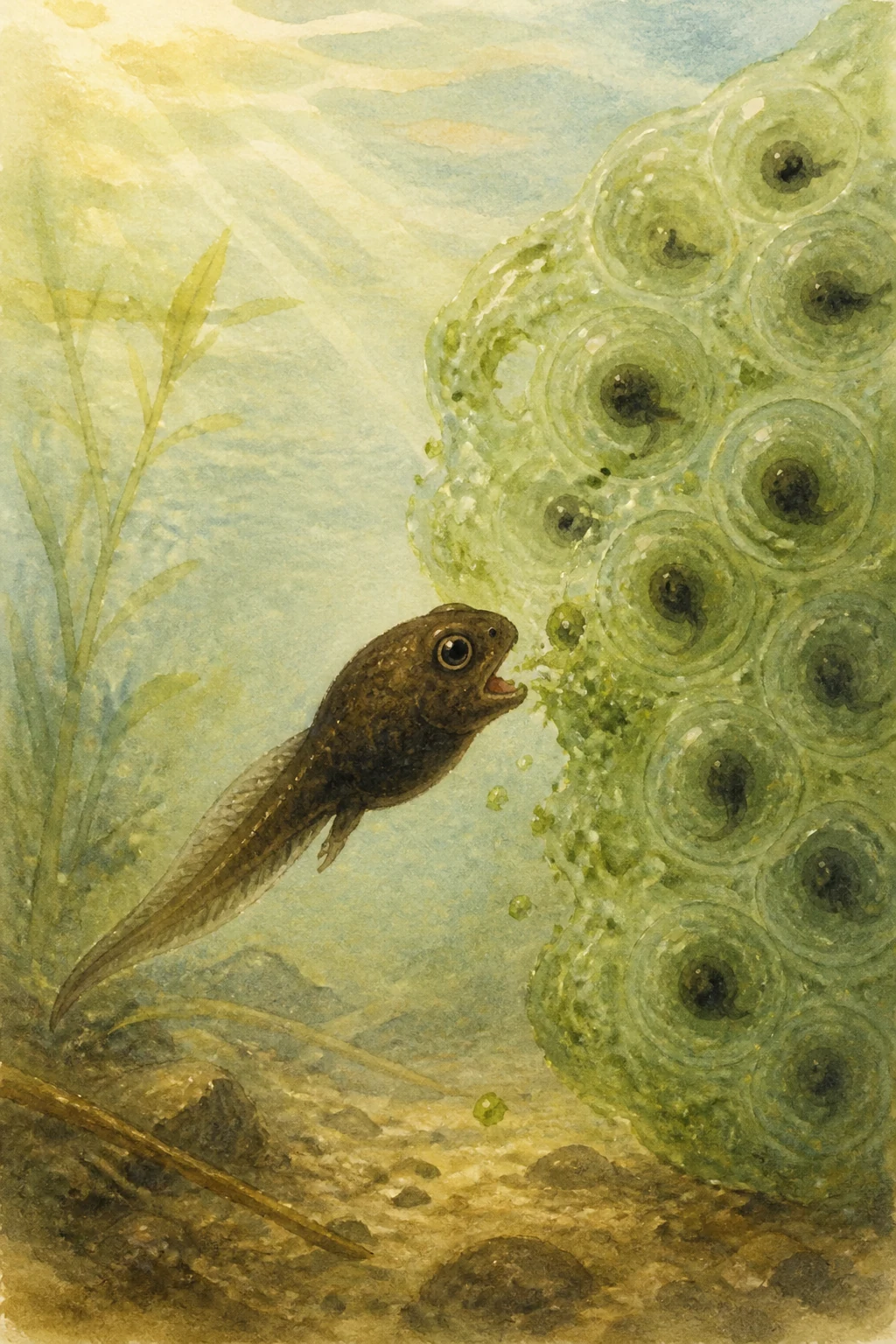
Ko se je Prvi Paglavec znašel svoboden v vodi, je zaplaval ob veliki zeleni plavajoči zdrizasti gmoti žabjih jajčec in se z obrazkom pritisnil zdaj k enemu, zdaj k drugemu jajčecu. V njih je videl druge Paglavce, skoraj tako velike, kot je bil sam, kako se zvijajo v svojih jajčnih domovih. Skozi zdrizasto gmoto se z njimi ni mogel pogovarjati — lahko jih je le gledal, in ker jih je gledal skozi zeleno zdriz, so bili videti zelenkasti. V resnici so bili temno rjavi, prav kakor on. Želel si je, da bi prišli ven in se igrali z njim, zato jim je skušal pokazati, da je tam, kjer je on, zanimiveje. Zelo hitro je odpiral in zapiral svoje drobne trde čeljusti ter si polnil paglavčja usteca z velikimi grižljaji zelene zdrizi.
Morda so jih spodbudili ti prizori, morda pa so zaradi toplega sonca postali nemirni — iz tega ali onega razloga so zaprti Paglavci začeli marljivo grizljati jajčno ovojnico in bili kmalu v vodi s svojim bratom. Vsi so si bili podobni in nihče razen tistega prav določenega Paglavca ni vedel, kdo se je izlegel prvi. Sam tega ni nikoli pozabil, in zakaj bi tudi? Kdor je bil kdaj Prvi Paglavec, se bo vse življenje gotovo spominjal, kako osamljen je bil takrat.
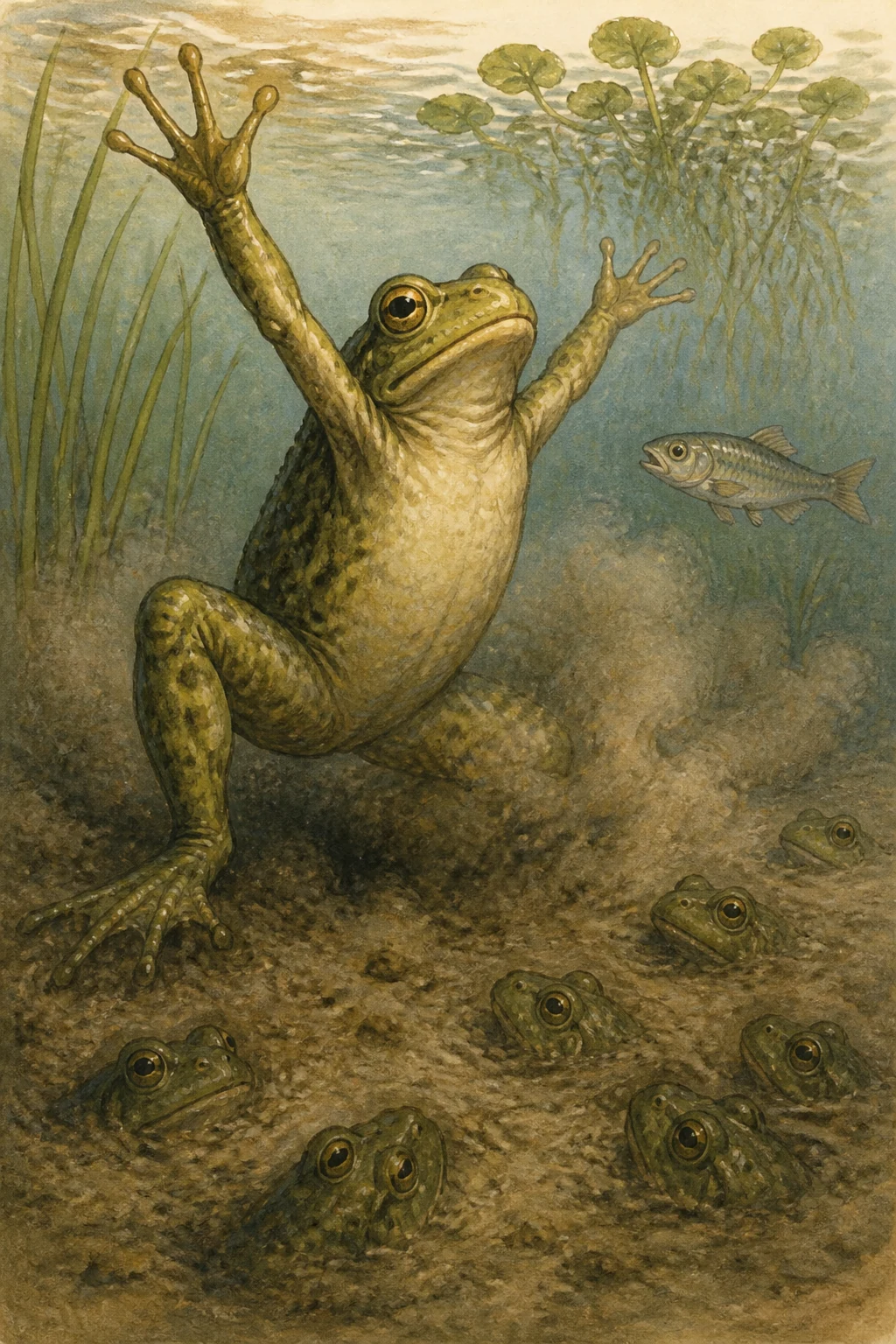
Kmalu so se spustili na dno ribnika in spoznali sosede. Bili so tako majhni, da jim nihče ni posvečal posebne pozornosti. Zdelo se je, da starejši prebivalci ribnika pogosto pozabijo, da Paglavci slišijo njihove besede in da jim ni vseeno zanje. Pisanci so plavali sem in tja med njimi, jih udarjali s plavutmi, jih ploskali z repi in jim pravili »mali širokoustneži«, Paglavci pa jim niso mogli vrniti udarcev, ker so bili premajhni. Pisanci jih niso poškodovali, vendar so se norčevali iz njih, in še najmanjši Pisanec je odplaval stran, če se je kak Paglavec poskušal igrati z njim.
Potem so se o njih začele pogovarjati Jegulje. »Prav vesel bom,« je rekel stari Oče Jegulja, »ko bodo ti mladički pospravili svoje škrge in odšli na vodno gladino.«
»Jaz tudi,« je vzkliknila Mama Jegulja. »Tako nenehno migajo z repi, da me kar oči bolijo, ko jih gledam. Zakaj ne morejo mirno ležati in biti pridni?«
Paglavci so se zdaj spogledali s svojimi svetlečimi črnimi očmi. »Kaj so naše škrge?« so se vprašali. »Najbrž te drobne reči ob straneh naših glav.«
»Res so!« je vzkliknil Prvi Paglavec. »Največji Žabec je tako rekel. Ampak ne vem, kam naj jih pospravimo, saj jih ne moremo sneti. In kako bi sploh dihali v vodi brez njih?«
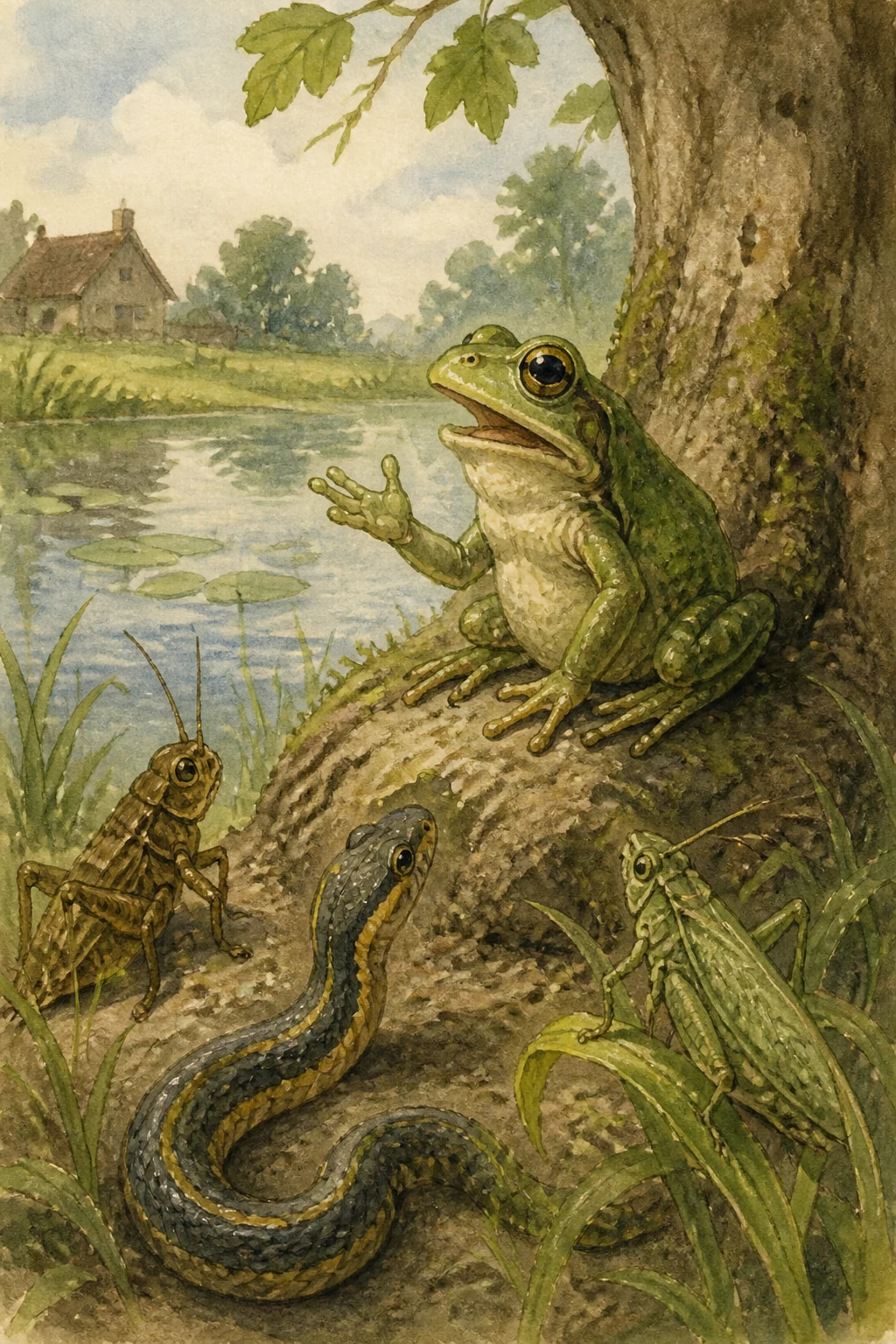
»Le poslušajte te otroke,« je vzkliknila Zelenorjava Žaba, ki se je spustila k Paglavcem, da bi si jih ogledala in presodila, kateri so njeni. »Saj ne boste vedno hoteli dihati v vodi. Kmalu boste morali dihati zrak, tako da ga boste požirali, in potem ne boste mogli dolgo ostati pod vodo. Zdaj moram iti. Čisto brez sape sem. Zbogom!«
Paglavci so se znova spogledali. »Ni nam povedala, kaj naj naredimo s škrgami,« so rekli. Ena od Paglavk, ki so se izlegle nazadnje, je priplavala k Prvemu Paglavcu. »Tvoje škrge niso tako velike kot moje,« je rekla.
»Pa še kako so!« je vzkliknil, saj se je počutil zares velikega, ker se je izlegel prvi. »O, pa niso!« so vzkliknili vsi njegovi prijatelji. »Ne štrlijo več ven tako kot prej.« In res je bilo tako, kajti škrge so mu izginjale v glavi, in ugotovili so, da se to dogaja vsem starejšim Paglavcem.
Naslednji dan so začeli prihajati na gladino dihat zrak, najprej najstarejši in nato po vrsti še drugi, dokler niso bili tam vsi. Zdelo se jim je veliko prijetneje kakor na dnu ribnika, ni pa bilo tako varno. Tu je bilo treba paziti na več nevarnosti in nekateri neprevidni mladi Paglavci niso nikoli dočakali, da bi postali Žabe. Žalostno je, vendar je vedno tako.
Včasih so jih prišle obiskat Žabe, in nekoč — nekoč, ko so Paglavcem že zrasle zadnje noge, je Največji Žabec sedel v bližnjem močvirju in jim pripovedoval zgodbe iz svojih paglavčjih dni. Rekel je, da je bil vedno zelo priden Paglavček in je vedno naredil, kar so mu naročile Žabe; in da je bil tako obetaven fantič, da je bila vsaka Mama Žaba v ribniku prepričana, da se je izlegel iz enega njenih jajčec.
»In ali ste se res?« je vprašal neki Paglavec, ki nikoli ni pazljivo poslušal in je zato vedno postavljal neumna vprašanja. Največji Žabec ga je zelo strogo pogledal. »Ne,« je rekel, »nisem se. Vsaka me je hotela imeti za sina, a nikoli nisem vedel, kateri pripadam. Nikoli nisem vedel! Sicer pa,« je dodal, »ni tako zelo pomembno, kdo je žabčeva mama, če je žabec zares velik.« Nato je napolnil vrečici ob straneh vratu z zrakom in glasno zakvaknil. Njegova sestra je pozneje povedala Paglavcem, da je imel v mislih enega od gozdnih prebivalcev, Svizca, ki je bil zelo ponosen, ker se je spominjal svojega deda.
Zelenorjava Žaba jih je pogosto prihajala gledat in preverjat, kako rastejo. Prvega Paglavca je imela zelo rada. »Saj imaš že sprednje noge!« je nekega jutra vzkliknila. »Kako hitro rasteš!«
»Kaj bom dobil zdaj?« je vprašal. »Še več nog ali še en rep?« Zelenorjava Žaba se je nasmehnila po vsej dolžini svojih ust, in to je bil zares zelo širok nasmeh. »Poglej me,« je rekla. »Kaj se mora še spremeniti, da boš podoben Žabi?«
»Vi nimate repa,« je počasi rekel. »Je to vsa razlika med nami Paglavci in Žabami?« »Zdaj je to vsa razlika,« je odgovorila, »vendar bo trajalo še dolgo, dolgo, preden bo tvoj rep izginil. Z njim bo prav tako, kakor je bilo s tvojimi škrgami. Ti boš postajal večji in večji in večji, on pa manjši in manjši in manjši, dokler nekega dne ne boš ugotovil, da si Žabec.« Zaprla je usta, da bi zajela sapo, kajti Žabe, veste, lahko skozi kožo dihajo le malo, pa še to samo takrat, kadar so mokre. Večino zraka vdihnejo skozi nos in ga pogoltnejo z zaprtimi usti. Zato ne morejo imeti dolgih govorov. Kadar imajo usta odprta, ne morejo požirati zraka.
Čez nekaj časa je spet spregovorila. »Da se pravkar izleženi Paglavec razvije v povsem odraslega Žabca,« je rekla, »je potrebnih toliko let, kolikor imaš prstov na eni zadnji nogi.«
Prvi Paglavec ni vedel, kaj je leto, toda po njenem načinu govorjenja je bil prepričan, da je to dolgo, dolgo časa, njemu pa se je mudilo odrasti. »Prej hočem postati Žabec!« je nejevoljno rekel. »Biti Paglavec sploh ni zabavno.« Zelenorjava Žaba je odplavala proč, saj je postajal tako neprijeten.
Prvi Paglavec je postajal vse bolj čemeren in se je vedel zelo nerazumno. Ni mislil na prijetne reči, ki so se dogajale vsak dan, temveč samo na nadležne. Ni vedel, da si Žabe pogosto želijo biti spet Paglavci, in ves dan se je kujavo potikal med vodnim rastlinjem. Vsakič, ko je pogledal katero od svojih zadnjih nog, se je spomnil besed Zelenorjave Žabe, in nazadnje je izgubil potrpljenje celo s svojim repom — prav tistim močnim, migetavim repkom, na katerega je bil prej tako ponosen.
»Ti grda stara reč!« mu je rekel in sunkovito zamahnil z njim. »Kako bom vesel, ko se te znebim!« Potem pa se je nečesa domislil — ta nespametni, domišljavi Prvi Paglavček. Razmišljal je in razmišljal in razmišljal in razmišljal, in ko so njegovi tovariši pri igri plavali okoli njega, se ni hotel poditi za njimi. Ko so ga vprašali, kaj mu je, pa je samo kar se da brezbrižno odgovoril: »Ah, nič!«
V resnici je hotel takoj postati Žabec in mislil je, da ve, kako bi to lahko dosegel. Drugim Paglavcem ni hotel povedati, ker ni želel, da bi še kdo postal Žabec tako kmalu kot on. Čez nekaj časa je odplaval k Hlastavemu Želvaku. Zelo se ga je bal, pa vendar je mislil, da je prav zdaj najbolje obiskati njega. »Prišel sem vprašat, ali bi mi odgriznili rep,« je rekel.
»Tvoj kaj?« je kar najbolj presenečeno vprašal Hlastavi Želvak. »Moj rep,« je odgovoril Prvi Paglavec, ki mu še nikoli niso odgriznili repa in je mislil, da je to mogoče zlahka narediti. »Danes hočem postati Žabec, nočem čakati.«
»Seveda,« je rekel Hlastavi Želvak. »Z veseljem! Nobene težave! Lahko še kaj storim zate?« »Ne, hvala,« je rekel Prvi Paglavec, »samo preveč pa ne boste odgriznili, kajne?«
»Niti trohice preveč,« je odgovoril Hlastavi Želvak s čudnim pogledom v očeh. »In če se kateremu od tvojih prijateljev mudi odrasti, mu bom z veseljem pomagal.« Nato je zaplaval proti Prvemu Paglavcu in storil, za kar ga je ta prosil.
Naslednje jutro so se vsi drugi Paglavci zgrnili okoli Prvega Paglavca in si ga ogledovali. »Joj!« so vzklikali. »Kje pa imaš rep?« »Ne vem,« je odgovoril, »ampak mislim, da bi vam Hlastavi Želvak znal povedati.«
»Kaj pa je to?« je vprašala Zelenorjava Žaba, ko je priplavala k njim. »Te je Hlastavi Želvak poskušal ujeti? Ti ubogi malček! Kako se je to zgodilo?« Prvega Paglavca je imela zelo rada in se je že skoraj odločila, da mora biti eden od njenih sinov.
»No,« je počasi rekel, saj ni hotel, da bi drugi Paglavci naredili isto, »včeraj zvečer sem ga srečal in on je —« »Hlastnil po tebi!« je vzkliknila Zelenorjava Žaba. »Še sreča zate, da ni pristaš obilnih večerij, samo to bom rekla! Ampak zelo nespameten Paglavec si, ker se mu ne izogibaš, čeprav so ti vedno govorili, da se mu moraš.«
Takrat pa je Prvi Paglavec izgubil živce. »Nisem nespameten in nisem Paglavec,« je rekel. »Prosil sem ga, naj mi odgrizne rep, in zdaj sem Žabec!«
»Oho!« se je za njim oglasil Rumenorjavi Žabec. »Žabec si, kaj? Pa te slišimo kvakniti. Pridi na breg in se pomeri z menoj v skakanju.«
»Jaz — jaz še ne kvakam,« je zajecljal Prvi Paglavec, »i-in ni mi do skakanja.« »Samo brezrepi Paglavec si,« je strogo rekel Rumenorjavi Žabec. »Naj nobenemu od vas mladičkov ne pade na pamet še kdaj poskusiti kaj takega, sicer bo od nekaterih ostal le rep brez Paglavca, od marsikoga pa prav nič.«
Stari Hlastavi Želvak je vse dopoldne čakal še na kakšnega Paglavca, ki bi hotel, da ga spremeni v Žabca, vendar ni prišel nobeden. Največji Žabec je hripavo zakvakal, ko je slišal, kaj se je zgodilo. »Repi! Repi! Repi! Repi! Repi! Repi! Repi! Repi!« je rekel. »Ta mladiček ne bo nikoli močan Žabec. Paglavci morajo dolgo ostati Paglavci, z repom vred, če upajo, da bodo kdaj postali res imenitni Žabci, kakršen sem jaz.« In res je tako, kot vam bo povedala vsaka Žaba.
Zelenorjava Žaba je zavzdihnila, ko je zlezla na breg. »Kakšen nespameten Paglavec,« je rekla. »Še dobro, da ni moj otrok!«
Izvirnik
072 THE TADPOLE WHO WANTED TO BE GROWN-UP
Naslednje strani prikazujejo izvirno besedilo za primerjavo.
It was a bright, warm April day when the First Tadpole of the season ate his way out of the jelly-covered egg in which he had come to life. He was a very tiny, dark brown fellow. It would be hard to tell just what he did look like, for there is nothing in the world that one Tadpole looks like unless it is another Tadpole. He had a very small head with a busy little mouth opening on the front side of it: just above each end of this mouth was a shining black eye, and on the lower side of his head was a very wiggly tail. Somewhere between his head and the tip of this were his small stomach and places for legs, but one could not see all that in looking at him. It seemed as if what was not head was tail, and what was not tail was head.
When the First Tadpole found himself free in the water, he swam along by the great green floating jelly-mass of Frogs' eggs, and pressed his face up close to first one egg and then another. He saw other Tadpoles almost as large as he, and they were wriggling inside their egg homes. He couldn't talk to them through the jelly-mass--he could only look at them, and they looked greenish because he saw them through green jelly. They were really dark brown, like him. He wanted them to come out to play with him and he tried to show them that it was more interesting where he was, so he opened and shut his hard little jaws very fast and took big Tadpole-mouthfuls of green jelly.
Perhaps it was seeing this, and perhaps it was because the warm sunshine made them restless--but for some reason the shut-in Tadpoles nibbled busily at the egg-covering and before long were in the water with their brother. They all looked alike, and nobody except that one particular Tadpole knew who had been the first to hatch. He never forgot it, and indeed why should he? If one has ever been the First Tadpole, he is quite sure to remember the loneliness of it all his life.
Soon they dropped to the bottom of the pond and met their neighbors. They were such little fellows that nobody paid much attention to them. The older pond people often seemed to forget that the Tadpoles heard what they said, and cared too. The Minnows swam in and out among them, and hit them with their fins, and slapped them with their tails, and called them "little-big-mouths," and the Tadpoles couldn't hit back because they were so little. The Minnows didn't hurt the Tadpoles, but they made fun of them, and even the smallest Minnow would swim away if a Tadpole tried to play with him.
Then the Eels talked among themselves about them. "I shall be glad," said one old Father Eel, "when these youngsters hide their breathing-gills and go to the top of the water."
"So shall I," exclaimed a Mother Eel. "They keep their tails wiggling so that it hurts my eyes to look at them. Why can't they lie still and be good?"
Now the Tadpoles looked at each other with their shining black eyes. "What are our breathing-gills?" they asked. "They must be these little things on the sides of our heads."
"They are!" cried the First Tadpole. "The Biggest Frog said so. But I don't see where we can hide them, because they won't come off. And how could we ever breathe water without them?"
"Hear the children talk," exclaimed the Green Brown Frog, who had come down to look the Tadpoles over and decide which were hers. "Why, you won't always want to breathe water. Before long you will have to breathe air by swallowing it, and then you cannot stay long under water. I must go now. I am quite out of breath. Good-bye!"
Then the Tadpoles looked again at each other. "She didn't tell us what to do with our breathing-gills," they said. One of the Tadpoles who had hatched last, swam up to the First Tadpole. "Your breathing-gills are not so large as mine," she said.
"They surely are!" he exclaimed, for he felt very big indeed, having been the first to hatch.
"Oh, but they are not!" cried all his friends. "They don't stick out as they used to." And that was true, for his breathing-gills were sinking into his head, and they found that this was happening to all the older Tadpoles.
The next day they began going to the top to breathe air, the oldest ones first, and so on until they were all there. They thought it much pleasanter than the bottom of the pond, but it was not so safe. There were more dangers to be watched for here, and some of the careless young Tadpoles never lived to be Frogs. It is sad, yet it is always so.
Sometimes the Frogs came to see them, and once--once, after the Tadpoles had gotten their hindlegs, the Biggest Frog sat in the marsh near by and told them stories of his Tadpolehood. He said that he was always a very good little Tadpole, and always did as the Frogs told him to do; and that he was such a promising little fellow that every Mother Frog in the pond was sure that he had been hatched from one of her eggs.
"And were you?" asked one Tadpole, who never listened carefully, and so was always asking stupid questions.
The Biggest Frog looked at him very sternly. "No," said he, "I was not. Each wanted me as her son, but I never knew to which I belonged. I never knew! Still," he added, "it does not so much matter who a Frog's mother is, if the Frog is truly great." Then he filled the sacs on each side of his neck with air, and croaked loudly. His sister afterward told the Tadpoles that he was thinking of one of the forest people, the Ground Hog, who was very proud because he could remember his grandfather.
The Green Brown Frog came often to look at them and see how they were growing. She was very fond of the First Tadpole. "Why, you have your forelegs!" she exclaimed one morning. "How you do grow!"
"What will I have next?" he asked, "more legs or another tail?"
The Green Brown Frog smiled the whole length of her mouth, and that was a very broad smile indeed. "Look at me," she said. "What change must come next to make you look like a Frog?"
"You haven't any tail," he said slowly. "Is that all the difference between us Tadpoles and Frogs?"
"That is all the difference now," she answered, "but it will take a long, long time for your tail to disappear. It will happen with that quite as it did with your breathing-gills. You will grow bigger and bigger and bigger, and it will grow smaller and smaller and smaller, until some day you will find yourself a Frog." She shut her mouth to get her breath, because, you know, Frogs can only breathe a little through their skins, and then only when they are wet. Most of their air they take in through their noses and swallow with their mouths closed. That is why they cannot make long speeches. When their mouths are open they cannot swallow air.
After a while she spoke again. "It takes as many years to make a newly hatched Tadpole into a fully grown Frog," she said, "as there are toes on one of your hindfeet."
The First Tadpole did not know what a year was, but he felt sure from the way in which she spoke that it was a long, long time, and he was in a hurry to grow up. "I want to be a Frog sooner!" he said, crossly. "It isn't any fun at all being a Tadpole." The Green Brown Frog swam away, he was becoming so disagreeable.
The First Tadpole became crosser and crosser, and was very unreasonable. He did not think of the pleasant things which happened every day, but only of the trying ones. He did not know that Frogs often wished themselves Tadpoles again, and he sulked around in the pondweed all day. Every time he looked at one of his hindfeet it reminded him of what the Green Brown Frog had said, and he even grew out of patience with his tail--the same strong wiggly little tail of which he had been so proud.
"Horrid old thing!" he said, giving it a jerk. "Won't I be glad to get rid of you?" Then he thought of something--foolish, vain little First Tadpole that he was. He thought and he thought and he thought and he thought, and when his playmates swam around him he wouldn't chase them, and when they asked him what was the matter, he just answered, "Oh nothing!" as carelessly as could be.
The truth was that he wanted to be a Frog right away, and he thought he knew how he could be. He didn't want to tell the other Tadpoles because he didn't want any one else to become a Frog as soon as he. After a while he swam off to see the Snapping Turtle. He was very much afraid of the Snapping Turtle, and yet he thought him the best one to see just now. "I came to see if you would snap off my tail," said he.
"Your what?" said the Snapping Turtle, in his most surprised way.
"My tail," answered the First Tadpole, who had never had a tail snapped off, and thought it could be easily done. "I want to be a Frog to-day and not wait."
"Certainly," said the Snapping Turtle. "With pleasure! No trouble at all! Anything else I can do for you?"
"No, thank you," said the First Tadpole, "only you won't snap off too much, will you?"
"Not a bit," answered the Snapping Turtle, with a queer look in his eyes. "And if any of your friends are in a hurry to grow up, I shall be glad to help them." Then he swam toward the First Tadpole and did as he had been asked to do.
The next morning all the other Tadpoles crowded around to look at the First Tadpole. "Why-ee!" they cried. "Where is your tail?"
"I don't know," he answered, "but I think the Snapping Turtle could tell you."
"What is this?" asked the Green Brown Frog, swimming up to them. "Did the Snapping Turtle try to catch you? You poor little fellow! How did it happen?" She was very fond of the First Tadpole, and had about decided that he must be one of her sons.
"Well," he said slowly, for he didn't want the other Tadpoles to do the same thing, "I met him last evening and he--"
"Snapped at you!" exclaimed the Green Brown Frog. "It is lucky for you that he doesn't believe in eating hearty suppers, that is all I have to say! But you are a very foolish Tadpole not to keep out of his way, as you have always been told you must."
Then the First Tadpole lost his temper. "I'm not foolish, and I'm not a Tadpole," he said. "I asked him to snap it off, and now I am a Frog!"
"Oho!" said the voice of the Yellow Brown Frog behind him. "You are a Frog, are you? Let's hear you croak then. Come out on the bank and have a hopping match with me."
"I--I don't croak yet," stammered the First Tadpole, "a--and I don't care to hop."
"You are just a tailless Tadpole," said the Yellow Brown Frog sternly. "Don't any more of you youngsters try such a plan, or some of you will be Tadpole-less tails and a good many of you won't be anything."
The old Snapping Turtle waited all morning for some more Tadpoles who wanted to be made into Frogs, but none came. The Biggest Frog croaked hoarsely when he heard of it. "Tails! Tails! Tails! Tails! Tails! Tails! Tails! Tails!" said he. "That youngster will never be a strong Frog. Tadpoles must be Tadpoles, tails and all, for a long time, if they hope to ever be really fine Frogs like me." And that is so, as any Frog will tell you.
The Green Brown Frog sighed as she crawled out on the bank. "What a silly Tadpole," she said; "I'm glad he isn't my child!"
Nadaljuj z branjem