Waltey
Zadirčna hlastavka
076 THE SNAPPY SNAPPING TURTLE
Živalske zgodbe Clare Dillingham Pierson · Clara Dillingham PiersonO besedilu
Zadirčna hlastavka
- Vir
- Živalske zgodbe Clare Dillingham Pierson
- Avtor
- Clara Dillingham Pierson
- Jezik branja
- Slovenščina
- Jezik izvirnika
- English
- Čas branja
- 10 min branja
- Obseg
- 8 strani
- Naslov izvirnika
- 076 THE SNAPPY SNAPPING TURTLE
O izvirniku
Živalske zgodbe Clare Dillingham Pierson
Devetindevetdeset avtorskih zgodb o živalih na kmetiji, travniku, v gozdu, ob ribniku in ponoči. Bralni jezik je Slovenščina, izvirnik pa prihaja iz vira Živalske zgodbe Clare Dillingham Pierson v jeziku English.
Besedilo
Zadirčna hlastavka
V ribniku je živel en sam Hlastavi želvak in samo njega so kdaj slišali reči, da si želi še enega. Ni od nekdaj živel tam in še se je bežno spominjal, kako je v mladosti zapustil svoje brate in sestre. »Odnesli so me od mojih,« je pripovedoval, »in me nekaj dni imeli na kopnem. Potem so me prinesli sem in odtlej je tu moj dom.«
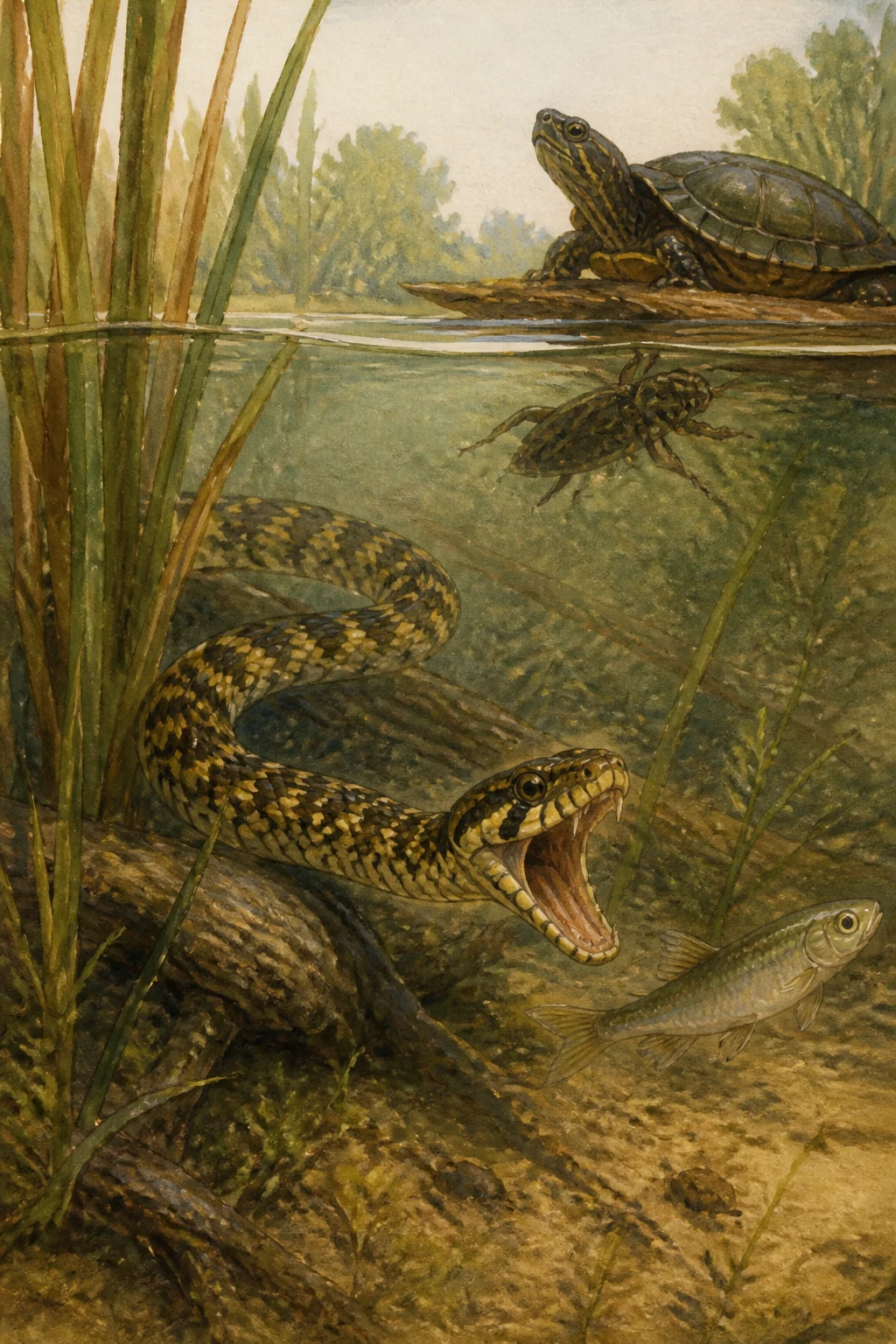
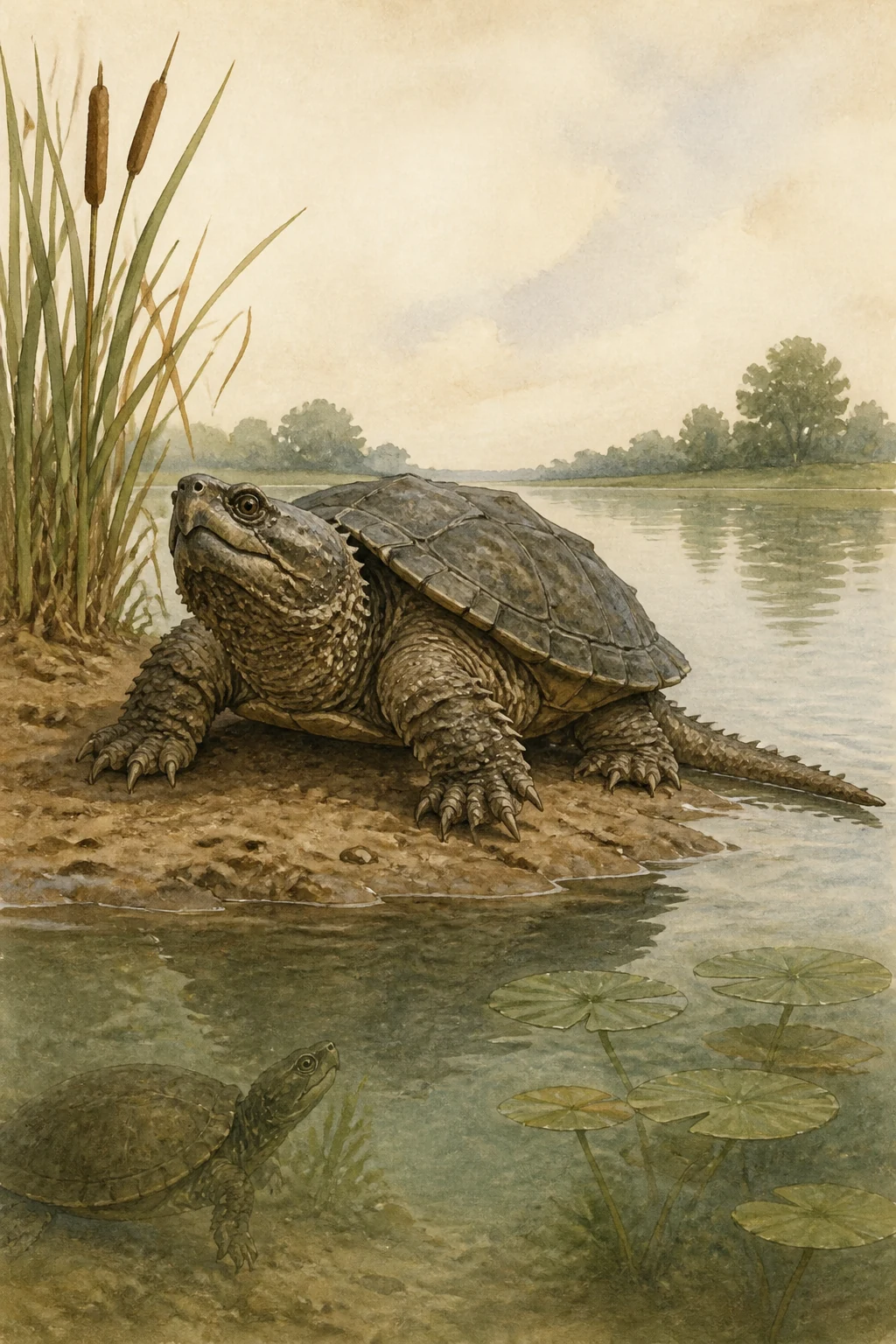
Že na pogled se je videlo, da je v sorodu z Blatnimi želvaki. Tako kot oni je imel zgornji in spodnji oklep, glavo, noge in rep pa je lahko potegnil vanj, kadar je hotel. Njegov oklep je bil siv, prav takšne barve kakor ilovnat breg, glava pa večja od glav Blatnih želvakov. Rep je imel dolg, luskast in koničast, sprednje noge pa velike in bradavičaste. Med prsti je imel lepe, močne plavalne kožice, prav kakor njegovi sorodniki Blatni želvaki.
Ko se je prvič naselil v ribniku, se je tamkajšnjim prebivalcem smilil in trudili so se, da bi se počutil domače. Lahko bi si pridobil veliko prijateljev in vsi sosedje bi ga lahko imeli radi, a je bil preveč zadirčen. Kadar je bila voda ravno prav topla in je imel poln želodec in je prejšnjo noč dobro spal in je bilo vse natanko tako, kot si je želel — ah, takrat je bil prav prijeten želvak in se je bil pripravljen nadvse prijazno pogovarjati s sosedi. Vse lepo in prav. Vsakdo je lahko dobre volje, kadar je vse natanko tako, kot mora biti, in kadar gre vse po njegovem. Toda zares prijetni so, veste, tisti, ki so prijazni tudi tedaj, ko gre kaj narobe.
Prvi ga je ogovoril Oče Blatni želvak. »Upam, da ti bo ribnik všeč,« je rekel. »Nam se zdi zelo domač in udoben.« »Hmf! Plitva lužica!« je odrezal novinec. »Vsakič, ko se potopim, z glavo butnem ob dno.«
»To je pa res neprijetno,« je vzkliknil Oče Blatni želvak. »Upam, da se potapljaš tam, kjer je dno mehko.« »Včasih se, včasih pa ne,« je odgovoril Hlastavi želvak. »Ne ljubi se mi počasi plavati na dno in ga preizkušati, potem pa se vračati gor, da bi se potopil. Kadar se hočem potopiti, se hočem potopiti in pika.«
»Da,« je rekel Oče Blatni želvak. »Vem, kako je, kadar te prime, da bi se potopil. Upam, da te glava ne bo preveč bolela in da se boš kmalu privadil naši vodi.« Razprl je prste in z močnimi zamahi odplaval, odrivajoč se od vode s plavalnimi kožicami na nogah.
»Hmf!« si je rekel Hlastavi želvak. »Lahko je govoriti, da se bom privadil tej vodi, ampak jaz se je nikoli ne bom. Že zdaj komaj vidim od bolečine na desni strani glave, kjer sem se udaril. Ali sem se udaril na levi? Čudno, da se ne morem spomniti!« Nato je odplaval v plitvino, se potegnil v oklep in tam ležal ter premišljeval, kako slabo se počuti, kako grozen je ribnik, kako slaba družba so njegovi sosedje in kako neprijeten je ta svet za Hlastave želvake.
Oče Blatni želvak je šel domov in ženi povedal vse, kar se je zgodilo. »Kakšen neprijeten možakar!« je rekla. »No, ampak saj je samec, samci pa so pogosto čudaški.«
»Jaz nisem bil nikoli,« je rekel njen mož. »O!« je rekla ona. In ker je bila modra žena, ni rekla ničesar več. Vedela pa je, da je gospod Blatni želvak postal precej prijetnejši, odkar se je poročil in se naučil bolj misliti na nekoga drugega kakor nase. Veste, na tem svetu so najbolj nesrečni prav tisti, ki preveč mislijo nase.
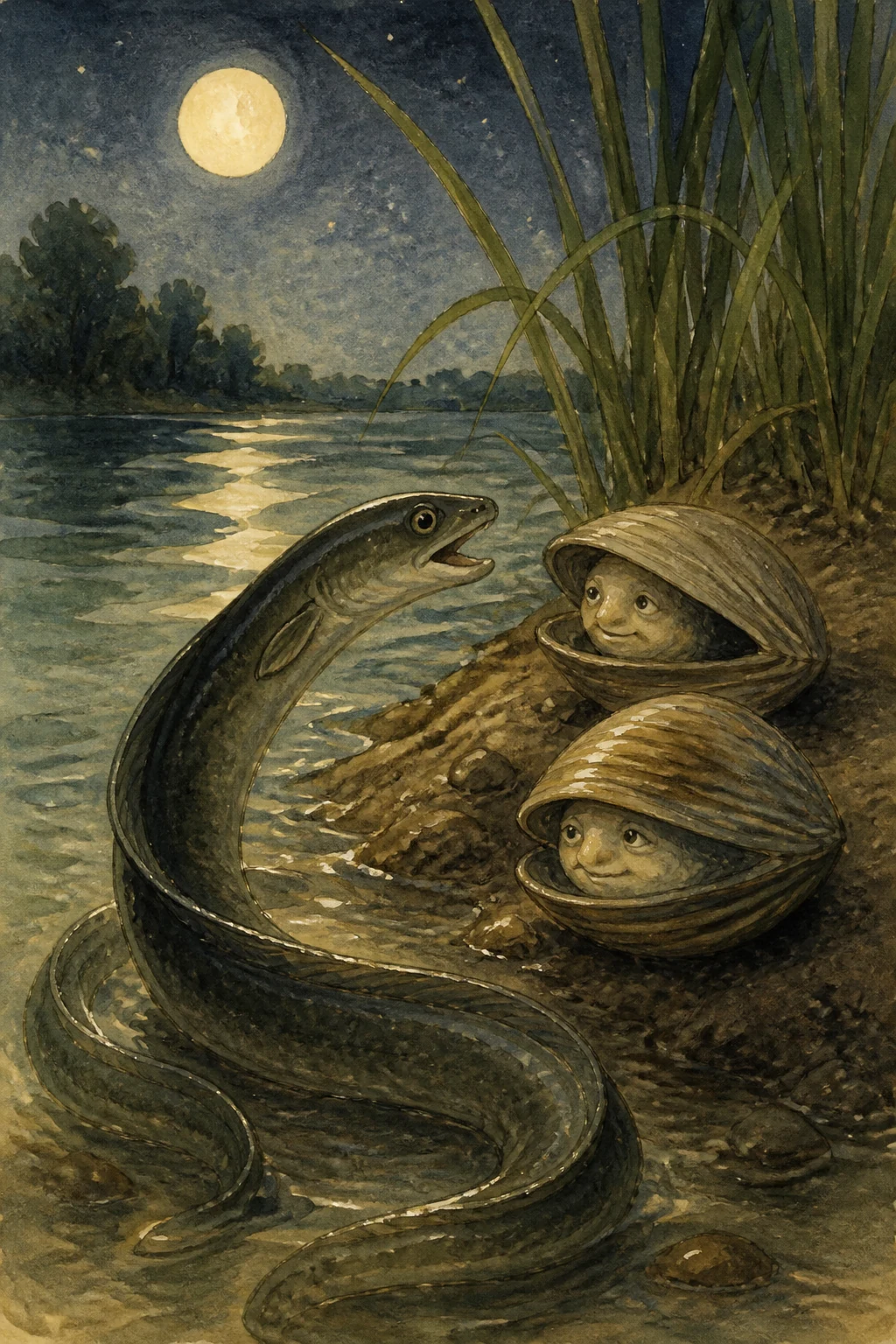
Tudi Jegulje so skušale biti prijazne in ko se je potopil na dno, so ga povabile, naj ostane malo pri njih na obisku. »Oprostiti nam moraš, ker te nismo prve obiskale,« so rekle. »Podnevi tako redko hodimo od doma.«
»Hmf!« je rekel Hlastavi želvak. »Prav dobro bi vam delo, če bi več hodile od doma. Nič čudnega, da imate slab vid, ko pa ves dan poležavate v blatu na temnem dnu ribnika. Ne, prav gotovo ne bom ostal. Lahko me obiščete kakor vsi drugi.«
Potem je odplaval in Školjkam povedal, kaj jim je rekel, ter se vedel, kakor da je prav ponosen na to, kar je bila v resnici strašna nevljudnost. »Dobro jim bo delo, če slišijo resnico,« je dejal. »Jaz vedno povem naravnost. Prav tako slabe so kakor Vodni gad. Nobene hrbtenice nimajo.«
Školjke so vljudno poslušale in molčale. Nikoli niso bile posebno zgovorne. Toda Hlastavi želvak se je motil, ko je rekel, da Jegulje in Vodni gad nimajo hrbtenice. V resnici so je imeli precej več kakor on, le da so jo nosili v notranjosti telesa, njegova pa je bila razprostrta v obliki oklepa, da jo je lahko videl vsakdo.
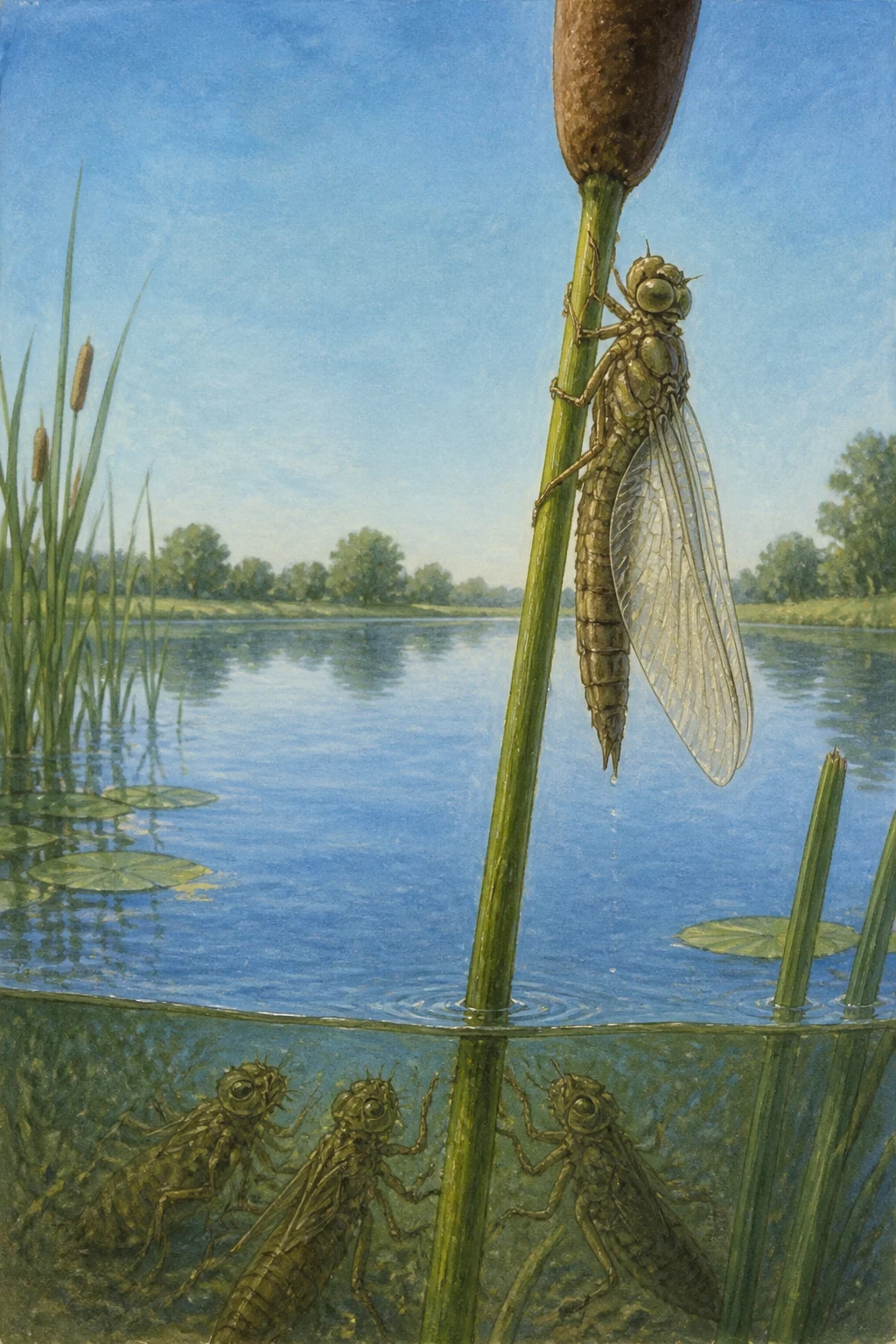
Niti poskušal se ni brzdati. Nekega dne se je razjezil, ker je Belostoma, Orjaški vodni hrošč, pojedel nekaj, kar je hotel imeti zase. Oči so mu žarele, roževinaste čeljusti so mu šklepetale in z dolgim, koničastim, luskastim repom je opletal tako, da ga je bilo groza gledati. »Ničvreden hrošč si,« je rekel. »Nič ne delaš, poješ pa več kakor kdorkoli tvoje velikosti tukaj. Nihče te ne mara in v ribniku ni ribice, ki bi se hotela kazati s teboj, če bi se temu le lahko izognila. Vse se poskrijejo, ko te zagledajo prihajati. Iz srca bom vesel, ko ti zrastejo krila in odletiš. Ne dovoli nobenemu od svojih prijateljev, da bi odlagal jajčeca v tem ribniku. Dovolj imam tvoje družine.«
Belostoma je bil zaradi tega seveda zelo prizadet. Ni bil priljubljen hrošč in mogoče bi si, če bi lahko izbiral, raje izbral, da bi bil Potočni rak ali Zet, kakor to, kar je bil. Kar pa zadeva očitek, da ni delal — zanj ni bilo nobenega dela, kako naj bi torej delal? Jesti je moral, sicer ne bi rasel, in ker je bil tudi Hlastavi želvak sam velik jedec, bi moral biti toliko pameten, da bi o tem molčal. Belostoma je Blatnim želvakom povedal, kaj mu je rekel Hlastavi želvak, in Oče Blatni želvak se je o tem pogovoril z njim.
Dotlej je bil Hlastavi želvak že boljše volje in nadvse prijazen. »Belostoma si takih reči ne bi smel zapomniti,« je rekel in premaknil eno od bradavičastih sprednjih nog. »Kadar sem jezen, pogosto rečem kaj, česar ne mislim resno; ampak jeza me potem takoj mine. Skoraj sem že pozabil na najin mali pogovor. Ne vidim razloga, da bi mu rekel, da mi je žal. Prav neumen je, da se toliko ukvarja s tem.« Veliko glavo je dvignil zelo visoko in se vedel, kakor da je res nekaj plemenitega, če si zloben in potem na to pozabiš. Prav tako smiselno bi bilo, če bi pričakoval, da ga bodo občudovali, ker ne je, kadar je sit, ali ker mirno leži, kadar je preutrujen za plavanje.
Ko je za to slišala Mama Blatna želva, ji je povsem zmanjkalo potrpljenja. »Vse, kar ga zanima,« je rekla, »je samo Hlastavi želvak, Hlastavi želvak, Hlastavi želvak. Kadar je dobre volje, misli, da bi morali biti tudi vsi drugi; kadar pa je slabe volje, mu ni mar, kako se počutijo drugi. Nikoli ne bo nič prijetnejši, dokler ne naredi česa dobrega za koga drugega, in prav nič ne kaže, da bi se to kdaj zgodilo.«
Pa vendar je prišel dan, ko so bili prebivalci ribnika veseli, da Hlastavi želvak živi med njimi. Dva dečka sta brodila ob robu ribnika, pljuskala z vodo in plašila vse, ki so bili v bližini. Zeti so pobledeli po vsem telesu, kakor se jim zgodi, kadar so zelo prestrašeni. Rumeno rjava žaba se je tako ustrašila, da je izpustila vso vodo, ki si jo je shranila za vlaženje kože v suhem vremenu. V telesu je imela velik žep, napolnjen z vodo, kajti če bi se ji koža posušila, ne bi mogla dihati skoznjo, in če ne bi nosila vode s seboj, sploh ne bi mogla ostati na kopnem.
Dečka sta celo obrnila Očeta Blatnega želvaka na hrbet in ga pustila na soncu, kjer je ležal in mahal z nogami po zraku, a ni bil dovolj močan, da bi se spet postavil nanje. Hlastavi želvak je dremal v globoki vodi, ko so prestrašene ribe priplavale proti njemu tako hitro, kolikor so jih le mogli ponesti repi. »Kaj pa je?« je vprašal.
»Dečka!« so zavpile. »Dečka! Tista grozna vrsta, ki pljuska in obrača želvake na hrbet.« »Hmf!« je rekel Hlastavi želvak. »To bom pa moral preveriti. Koliko jih je?«
»Dva!« so v en glas zavpili Zeti in Pisanci. »Jaz pa sem samo eden,« si je rekel Hlastavi želvak. »Nekdo mi mora pomagati. Hej, Belostoma,« je zaklical, ko je Orjaški vodni hrošč priplaval mimo. »Pomagaj mi pregnati tista dečka.«
»Z veseljem,« je rekel Belostoma, ki ni imel ničesar raje kakor takšno delo. Odpravila sta se proti kraju, kjer sta dečka brodila. Hlastavi želvak je z nogami s plavalnimi kožicami delal dolge, močne zamahe in Belostoma ga ni mogel dohajati. Hlastavi želvak je to opazil. »Skoči mi na hrbet,« je zaklical. »Saj si lahek. Dobro se drži.«
Belostoma je skočil na ilovnato obarvani oklep Hlastavega želvaka, ko pa je začutil, da drsi z njegovega zadnjega dela, je zasadil krempeljce v želvakov rep in se tako obdržal. Vedel je, da se želvak ne poškoduje tako zlahka, čeprav je zganjal velik hrup, kadar se je udaril v glavo. Takoj ko sta prišla blizu dečkov, je Hlastavi želvak čez svoj hrbtni oklep ogovoril Belostomo. »Zdaj pa zdrsni dol,« je rekel, »in preženi manjšega dečka. Nikar se ne ustavljaj in ne klepetaj s temi Pijavkami.«
Belostoma je torej zdrsnil z oklepa in zaplaval proti manjšemu dečku, iztegnil svojo čvrsto malo sesalno cevko in ga zbodel v nogo. Prav tedaj je Hlastavi želvak z roževinastimi čeljustmi stisnil stopalo večjega dečka. Voda je silno pljuskala in škropila, ko sta dečka stekla na breg, tri Pijavke, ki so se prisesale na njune noge, pa se niso utegnile odlepiti, zato sta jih odnesla na kopno in nihče jih ni nikoli več videl.
»Tako!« je rekel Hlastavi želvak. »To je opravljeno. Ne vem, kaj bi prebivalci ribnika brez naju, Belostoma, ko ne bi bila tu, da skrbiva zanje.«
»Vesel sem, da sem ravno prišel mimo,« je tiho rekel Orjaški vodni hrošč, »ampak odslej boš moral za vse skrbeti sam. Skoraj sem že pripravljen, da zapustim ribnik. Mislim, da bom šel jutri.«
»Jutri odhajaš!« je vzkliknil Hlastavi želvak. »Žal mi je. Seveda vem, da se ne moreš nikoli več vrniti, ampak pošlji svoje prijatelje sem odlagat jajčeca. Ne smemo ostati brez koga iz tvoje družine.«
»Hvala,« je rekel Belostoma in z ničimer ni pokazal, da se spominja precej drugačnih besed, ki mu jih je Hlastavi želvak prej namenil glede odhoda iz ribnika. In s tem je pokazal, da ni le pogumen hrošč, temveč tudi zelo moder.
»Hmf!« je rekel Hlastavi želvak. »Tamle je Oče Blatni želvak še vedno na hrbtu.« Pohitel je k njemu in ga porinil, da se je prevalil na noge. »O, hvala ti,« je vzkliknila Mama Blatna želva. »Jaz nisem bila dovolj močna, da bi to naredila.«
»Vedno rad pomagam sosedom,« je rekel Hlastavi želvak. »Prijeten dan, kajne? Ribam moram povedati, da sta dečka odšla. Ubogi malčki so bili skoraj preveč prestrašeni, da bi plavali.« In odšel je z resnično srečnim izrazom na obrazu.
»No, vidiš!« je rekla Mama Blatna želva možu. »Začel je pomagati drugim in zdaj jih ima rad in je zadovoljen. Saj sem ti vedno govorila!«
Izvirnik
076 THE SNAPPY SNAPPING TURTLE
Naslednje strani prikazujejo izvirno besedilo za primerjavo.
There was but one Snapping Turtle in the pond, and he was the only person there who had ever been heard to wish for another. He had not always lived there, and could just remember leaving his brothers and sisters when he was young. "I was carried away from my people," he said, "and kept on land for a few days. Then I was brought here and have made it my home ever since."
One could tell by looking at him that he was related to the Mud Turtles. He had upper and lower shells like them, and could draw in his head and legs and tail when he wanted to. His shells were gray, quite the color of a clay-bank, and his head was larger than those of the Mud Turtles. His tail was long and scaly and pointed, and his forelegs were large and warty. There were fine, strong webs between his toes, as there were between the toes of his relatives, the Mud Turtles.
When he first came to live in the pond, people were sorry for him, and tried to make him feel at home. He had a chance to win many friends and have all his neighbors fond of him, but he was too snappy. When the water was just warm enough, and his stomach was full, and he had slept well the night before, and everything was exactly as he wished it to be,--ah, then he was a very agreeable Turtle, and was ready to talk in the most gracious way to his neighbors. That was all very well. Anybody can be good-natured when everything is exactly right and he can have his own way. But the really delightful people, you know, are the ones who are pleasant when things go wrong.
It was a Mud Turtle Father who first spoke to him. "I hope you'll like the pond," said he. "We think it very homelike and comfortable."
"Humph! Shallow little hole!" snapped the one who had just come. "I bump my head on the bottom every time I dive."
"That is too bad," exclaimed the Mud Turtle Father. "I hope you dive where there is a soft bottom."
"Sometimes I do and sometimes I don't," answered the Snapping Turtle. "I can't bother to swim down slowly and try it, and then go back to dive. When I want to dive, I want to dive, and that's all there is to it."
"Yes," said the Mud Turtle Father. "I know how it is when one has the diving feeling. I hope your head will not trouble you much, and that you will soon be used to our waters." He spread his toes and swam strongly away, pushing against the water with his webbed feet.
"Humph!" said the Snapping Turtle to himself. "It is all very well to talk about getting used to these waters, but I never shall. I can hardly see now for the pain in the right side of my head, where I bumped it. Or was it the left side I hit? Queer I can't remember!" Then he swam to shallow water, and drew himself into his shell, and lay there and thought how badly he felt, and how horrid the pond was, and what poor company his neighbors were, and what a disagreeable world this is for Snapping Turtles.
The Mud Turtle Father went home and told his wife all about it. "What a disagreeable fellow!" she said. "But then, he is a bachelor, and bachelors are often queer."
"I never was," said her husband.
"Oh!" said she. And, being a wise wife, she did not say anything else. She knew, however, that Mr. Mud Turtle was a much more agreeable fellow since he had married and learned to think more of somebody else than of himself. It is the people who think too much of themselves you know, who are most unhappy in this world.
The Eels also tried to be friendly, and, when he dove to the bottom, called to him to stay and visit with them. "You must excuse us from making the first call," they said. "We go out so little in the daytime."
"Humph!" said the Snapping Turtle. "Do you good to get away from home more. No wonder your eyes are weak, when you lie around in the mud of the dark pond-bottom all day. Indeed, I'll not stay. You can come to see me like other people."
Then he swam away and told the Clams what he had said, and he acted quite proud of what was really dreadful rudeness. "It'll do them good to hear the truth," said he. "I always speak right out. They are as bad as the Water-Adder. They have no backbone."
The Clams listened politely and said nothing. They never did talk much. The Snapping Turtle was mistaken though, when he said that the Eels and the Water-Adder had no backbone. They really had much more than he, but they wore theirs inside, while his was spread out in the shape of a shell for everybody to see.
He did not even try to keep his temper. He became angry one day because Belostoma, the Giant Water-Bug, ate something which he wanted for himself. His eyes glared and his horny jaws snapped, and he waved his long, pointed, scaly tail in a way which was terrible to see. "You are a good-for-nothing bug," he said. "You do no work, and you eat more than any other person of your size here. Nobody likes you, and there isn't a little fish in the pond who would be seen with you if he could help it. They all hide if they see you coming. I'll be heartily glad when you get your wings and fly away. Don't let any of your friends lay their eggs in this pond. I've seen enough of your family."
Of course this made Belostoma feel very badly. He was not a popular bug, and it is possible that if he could have had his own way, he would have chosen to be a Crayfish or a Stickleback, rather than what he was. As for his not working--there was nothing for him to do, so how could he work? He had to eat, or he would not grow, and since the Snapping Turtle was a hearty eater himself, he should have had the sense to keep still about that. Belostoma told the Mud Turtles what the Snapping Turtle had said, and the Mud Turtle Father spoke of it to the Snapping Turtle.
By that time the Snapping Turtle was feeling better natured and was very gracious. "Belostoma shouldn't remember those things," said he, moving one warty foreleg. "When I am angry, I often say things that I do not mean; but then, I get right over it. I had almost forgotten my little talk with him. I don't see any reason for telling him I am sorry. He is very silly to think so much of it." He lifted his big head quite high, and acted as though it was really a noble thing to be ugly and then forget about it. He might just as sensibly ask people to admire him for not eating when his stomach was full, or for lying still when he was too tired to swim.
When the Mud Turtle Mother heard of this, she was quite out of patience. "All he cares for," said she, "is just Snapping Turtle, Snapping Turtle, Snapping Turtle. When he is good-natured, he thinks everybody else ought to be; and when he is bad-tempered he doesn't care how other people feel. He will never be any more agreeable until he does something kind for somebody, and I don't see any chance of that happening."
There came a day, though, when the pond people were glad that the Snapping Turtle lived there. Two boys were wading in the edge of the pond, splashing the water and scaring all the people who were near them. The Sticklebacks turned pale all over, as they do when they are badly frightened. The Yellow Brown Frog was so scared that he emptied out the water he had saved for wetting his skin in dry weather. He had a great pocket in his body filled with water, for if his skin should get dry he couldn't breathe through it, and unless he carried water with him he could not stay ashore at all.
The boys had even turned the Mud Turtle Father onto his back in the sunshine, where he lay, waving his feet in the air, but not strong enough to get right side up again. The Snapping Turtle was taking a nap in deep water, when the frightened fishes came swimming toward him as fast as their tails would take them. "What is the matter?" said he.
"Boys!" cried they. "Boys! The dreadful, splashing, Turtle-turning kind."
"Humph!" said the Snapping Turtle. "I'll have to see about that. How many are there?"
"Two!" cried the Sticklebacks and Minnows together.
"And there is only one of me," said the Snapping Turtle to himself. "I must have somebody to help me. Oh, Belostoma," he cried, as the Giant Water-Bug swam past. "Help me drive those boys away."
"With pleasure," said Belostoma, who liked nothing better than this kind of work. Off they started for the place where the boys were wading. The Snapping Turtle took long, strong strokes with his webbed feet, and Belostoma could not keep up with him. The Snapping Turtle saw this. "Jump onto my back," cried he. "You are a light fellow. Hang tight."
Belostoma jumped onto the Snapping Turtle's clay-colored shell, and when he found himself slipping off the back end of it, he stuck his claws into the Snapping Turtle's tail and held on in that way. He knew that he was not easily hurt, even if he did make a fuss when he bumped his head. As soon as they got near the boys, the Snapping Turtle spoke over his back-shell to Belostoma. "Slide off now," said he, "and drive away the smaller boy. Don't stop to talk with these Bloodsuckers."
So Belostoma slid off and swam toward the smaller boy, and he ran out his stout little sucking tube and stung him on the leg. Just then the Snapping Turtle brought his horny jaws together on one of the larger boy's feet. There was a great splashing and dashing as the boys ran to the shore, and three Bloodsuckers, who had fastened themselves to the boy's legs, did not have time to drop off, and were carried ashore and never seen again.
"There!" said the Snapping Turtle. "That's done. I don't know what the pond people would do, if you and I were not here to look after them, Belostoma."
"I'm glad I happened along," said the Giant Water-Bug quietly, "but you will have to do it all after this. I'm about ready to leave the pond. I think I'll go to-morrow."
"Going to-morrow!" exclaimed the Snapping Turtle. "I'm sorry. Of course I know you can never come back, but send your friends here to lay their eggs. We mustn't be left without some of your family."
"Thank you," said Belostoma, and he did not show that he remembered some quite different things which the Snapping Turtle had said before, about his leaving the pond. And that showed that he was a very wise bug as well as a brave one.
"Humph!" said the Snapping Turtle. "There is the Mud Turtle Father on his back." And he ran to him and pushed him over onto his feet. "Oh, thank you," cried the Mud Turtle Mother. "I was not strong enough to do that."
"Always glad to help my neighbors," said the Snapping Turtle. "Pleasant day, isn't it? I must tell the fishes that the boys are gone. The poor little fellows were almost too scared to swim." And he went away with a really happy look on his face.
"There!" said the Mud Turtle Mother to her husband. "He has begun to help people, and now he likes them, and is contented, I always told you so!"
Nadaljuj z branjem