Prevod
Približno miljo od Hudsona, v Coxsackieju, je stala koča Nicka Wolseyja, ki so ga v prejšnjem stoletju po naselbinah ob reki poznali kot lovca in nastavljavca pasti, moža zanesljivega strela, preudarnosti, vzdržljivosti in redkih besed. Dolga leta je v tej koči živel sam, le pes mu je delal družbo; ko pa je nekoč obiskal indijanski tabor v divjini, ga je očarala prikupnost ene izmed deklet v plemenu. Obisk je ponovil, nato pa si je vse pogosteje našel razlog, da se je odpravil v tabor; dekletovemu očetu je nosil darila in nazadnje pridobil njeno privolitev, da postane njegova žena. Opravili so preprost poročni obred plemena in Wolsey je Minamee odpeljal na svoj dom; toda poroko je prekinil skoraj tragičen dogodek. Čemeren mož, ki je dekle ljubil, a nikoli ni zbral poguma, da bi ji to priznal, je ob spoznanju, kakšna sreča je doletela Wolseyja, tako pobesnel od ljubosumja, da je planil nadenj z nožem in bi ga na mestu pokončal, če mu ne bi belčev zvesti lovski pes skočil za vrat in ga podrl na tla.
Wolsey je moža razorožil ter ga z brcami in klofutami pregnal do roba gozda, medtem ko se je vsa druščina na ves glas smejala tej sramotni kazni in jo odobravala. Minilo je leto ali še več. Wolsey in njegova indijanska žena sta bila srečna v svojem svobodnem in preprostem življenju; srečo jima je prinašal tudi njun otročiček. Wolsey je le redko za dalj časa zapustil kočo in navadno se je vračal, še preden se je znočilo. Nekega večera je opazil, da so trava in vejice v bližini hiše poteptane od stopal nekoga, ki je šel tod mimo; z ostrim očesom gozdnega človeka je razbral, da to niso bile ženine sledi.
»Kak lovec,« je dejal, »je zagledal hišo, ko je šel tod mimo, in ker je najbrž še nikoli ni videl, se je ustavil in pokukal vanjo.« Sled je namreč vodila do njegovega okna, od tam pa spet zavila v gozd. Nekaj dni pozneje je med vračanjem naletel na sveže stopinje in obraz mu je zasenčila temna slutnja. Ko se je približal vratom, se je spotaknil ob truplo svojega psa, ki je otrplo ležalo na tleh. »Kaj se je zgodilo, Minamee?« je vzkliknil in sunkoma odprl vrata. Žena mu je tiho odgovorila: »Oh, tiho! Otroka boš zbudil.«
Nick Wolsey je stopil v kočo in obstal, kakor bi se spremenil v marmor. Njegova žena Minamee je sedela na zlatem ognjišču, z razrezanim obrazom in rokami, polnimi podplutb, v raztrgani obleki, s steklenimi očmi in brezumnim nasmehom na ustnicah. V naročju je stiskala trup svojega dojenčka, čigar oblekica je bila prepojena s krvjo, glavica malega bitja pa je ležala na tleh ob njej. Tiho je brundala nad mrzlim truplom, kakor bi ga uspavala, in ko je Wolsey naposled našel besede, je le zašepetala: »Tiho! Zbudil ga boš.« Noč se je mukoma vlekla; zdanilo se je in njeno brundanje je postajalo vse tišje in tišje. A ves tisti dan se je nesrečna ženska zibala sem ter tja na tleh, njen mož pa se je v mukah zadrževal ob njej in jo zaman skušal potolažiti, ji obvezati rane ter izvedeti, kaj se je zgodilo. Nastopila je druga noč in očitno je bilo, da bo za Minamee zadnja. Moči so jo zapuščale, dokler ni dovolila, da so jo položili na ležišče iz kož, truplo otroka pa ji nežno vzeli iz naročja. Tedaj se ji je za nekaj kratkih minut povrnil razum in našla je besede, da je možu povedala, kako je Indijanec, čigar morilski napad je na poroki preprečil, prišel h koči, ustrelil psa, ki je planil ven, da bi branil dom, njo z udarci odgnal od vrat, otroka iztrgal iz posteljice, mu z nožem odsekal glavo in ji drobno truplo vrgel v naročje, nato pa odšel z besedami: »To je moje maščevanje. Zadoščeno mi je.« Še preden se je sonce spet pokazalo na vzhodu, je bila Minamee pri svojem otroku.
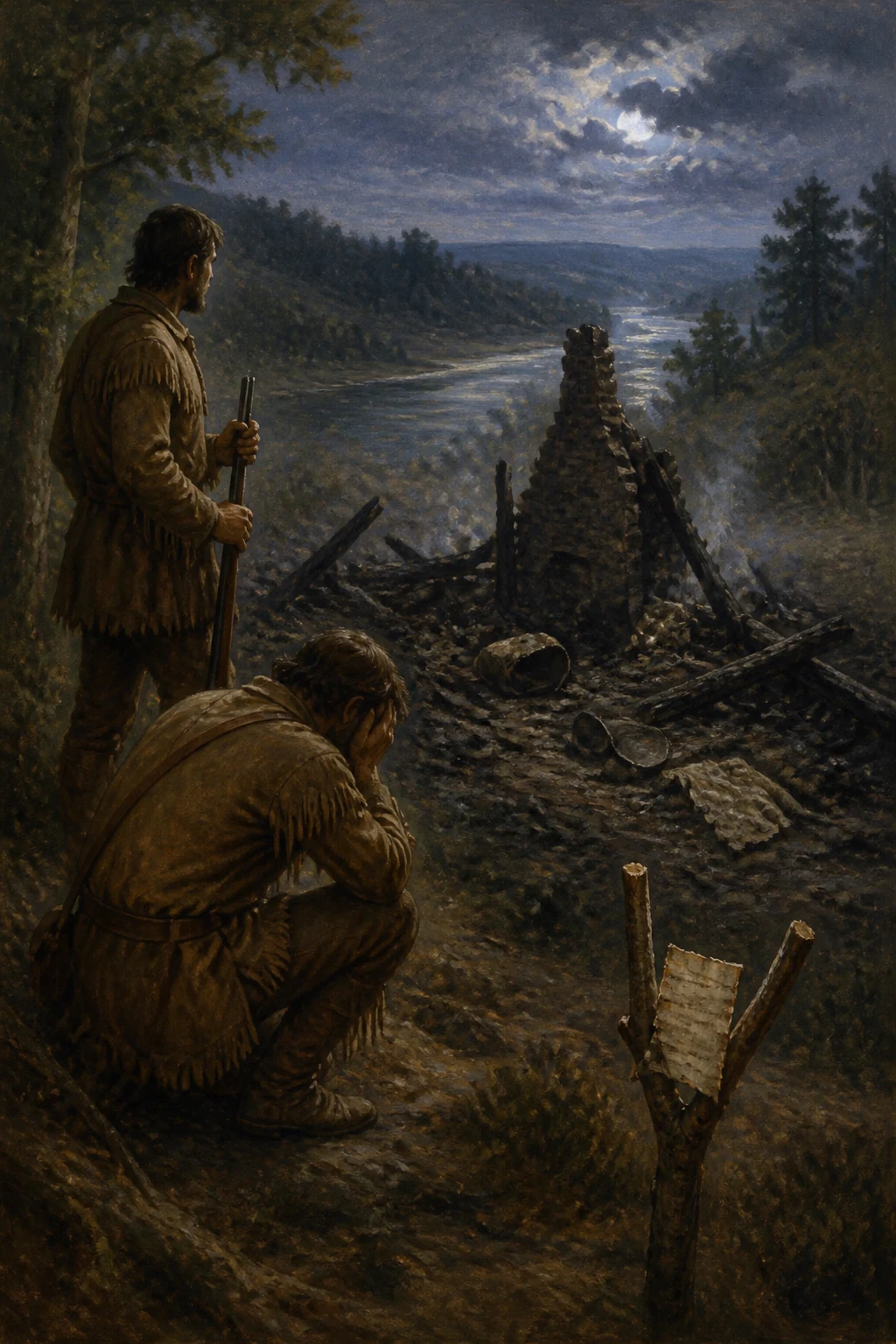
Wolsey je ure in ure sedel sredi razvalin svoje sreče in le njegovo dihanje je pričalo, da je živ. Ko je naposled vstal in odšel iz hiše, ni bilo ne solz ne krikov; osedlal je konja in odjezdil proti zahodu. Ob mraku je prispel v indijansko vas, kjer si je pridobil ženo, zbranemu plemenu povedal, kaj se je zgodilo, in zahteval, naj mu izročijo morilca. Njegovi zahtevi so brez pomisleka ugodili. Belec je tedaj stopil k trepetajočemu nesrečnežu, ki je trdno računal na zaščito svojih ljudi, in mu s hitrim zamahom in potegom vrvi iz surove kože privezal roke ob telo. Nato mu je vrgel zanko okoli vratu, njen konec privezal na sprednji lok sedla in se odpravil proti Hudsonu. Vso noč je jezdil, Indijanec pa je hodil in tekel konju za petami; naslednjega dne je prispel do svoje koče. Ujetnika je privezal k drevesu, nasekal precej mladih vrbovih šib in iz njih spletel veliko košaro, podobno zibelki. Vanjo je položil krivca z obrazom navzgor in ga tako čvrsto zvezal, da ni mogel premakniti niti prsta; nato je stopil v hišo, se vrnil s truplom Minamee in ga z obrazom navzdol položil na nesrečneža, ki ni mogel zatreti stoka groze, ko mu je strašno breme leglo na prsi. Wolsey je zvezal živega in mrtvo skupaj ter ju z zamahom svojih močnih rok zavihtel na konjev hrbet, kjer ju je pritrdil s toliko ovoji vrvi, da ju nič ne bi moglo premakniti. Nato je začel bičati konja, dokler ni uboga žival trepetala od jeze in bolečine; tedaj ji je snel povodec, jo še zadnjič udaril in žival je vsa penasta in prhajoča planila v divjino. Ko je izginila in ni bilo več slišati topota kopit, si je Nick Wolsey položil puško čez roko in za vedno zapustil svoj dom. Izročilo pa pravi, da se konj na svojem blaznem begu ni nikoli ustavil, temveč ga je v tihih nočeh še vedno slišati, kako kakor vihar drvi skozi gozdove ob Hudsonu in Mohawku; in ko topot švigne mimo, se zamolkel glas oglasi s kletvami, s prošnjami, nato pa z rezkim in strašnim smehom.
Izvirnik
About a mile back from the Hudson, at Coxsackie, stood the cabin of Nick Wolsey, who, in the last century, was known to the river settlements as a hunter and trapper of correct aim, shrewdness, endurance, and taciturn habit. For many years he lived in this cabin alone, except for the company of his dog; but while visiting a camp of Indians in the wilderness he was struck with the engaging manner of one of the girls of the tribe; he repeated the visit; he found cause to go to the camp frequently; he made presents to the father of the maid, and at length won her consent to be his wife. The simple marriage ceremony of the tribe was performed, and Wolsey led Minamee to his home; but the wedding was interrupted in an almost tragic manner, for a surly fellow who had loved the girl, yet who never had found courage to declare himself, was wrought to such a jealous fury at the discovery of Wolsey's good fortune that he sprang at him with a knife, and would have despatched him on the spot had not the white man's faithful hound leaped at his throat and borne him to the ground.
Wolsey disarmed the fellow and kicked and cuffed him to the edge of the wood, while the whole company shouted with laughter at this ignominious punishment, and approved it. A year or more passed. Wolsey and his Indian wife were happy in their free and simple life; happy, too, in their little babe. Wolsey was seldom absent from his cabin for any considerable length of time, and usually returned to it before the night set in. One evening he noticed that the grass and twigs were bent near his house by some passing foot that, with the keen eye of the woodman, he saw was not his wife's.
“Some hunter,” he said, “saw the house when he passed here, and as, belike, he never saw one before, he stopped to look in.” For the trail led to his window, and diverged thence to the forest again. A few days later, as he was returning, he came on the footprints that were freshly made, and a shadow crossed his face. On nearing the door he stumbled on the body of his dog, lying rigid on the ground. “How did this happen, Minamee?” he cried, as he flung open the door. The wife answered, in a low voice, “O Hush! you'll wake the child.”
Nick Wolsey entered the cabin and stood as one turned to marble. Minamee, his wife, sat on the gold hearth, her face and hands cut and blackened, her dress torn, her eyes glassy, a meaningless smile on her lips. In her arms she pressed the body of her infant, its dress soaked with blood, and the head of the little creature lay on the floor beside her. She crooned softly over the cold clay as if hushing it to sleep, and when Wolsey at length found words, she only whispered, “Hush! you will wake him.” The night went heavily on; day dawned, and the crooning became lower and lower; still, through all that day the bereft woman rocked to and fro upon the floor, and the agonized husband hung about her, trying in vain to give comfort, to bind her wounds, to get some explanation of the mystery that confronted him. The second night set in, and it was evident that it would be the last for Minamee. Her strength failed until she allowed herself to be placed on a couch of skins, while the body of her child was gently lifted from her arms. Then, for a few brief minutes, her reason was restored, and she found words to tell her husband how the Indian whose murderous attack he had thwarted at the wedding had come to the cabin, shot the dog that had rushed out to defend the place, beat the woman back from the door, tore the baby from its bed, slashed its head off with a knife, and, flinging the little body into her lap, departed with the words, “This is my revenge. I am satisfied.” Before the sun was in the east again Minamee was with her baby.
Wolsey sat for hours in the ruin of his happiness, his breathing alone proving that he was alive, and when at last he arose and went out of the house, there were neither tears nor outcry; he saddled his horse and rode off to the westward. At nightfall he came to the Indian village where he had won his wife, and relating to the assembled tribe what had happened, he demanded that the murderer be given up to him. His demand was readily granted, whereupon the white man advanced on the cowering wretch, who had confidently expected the protection of his people, and with the quick fling and jerk of a raw-hide rope bound his arms to his side. Then casting a noose about his neck and tying the end of it to his saddle-bow, he set off for the Hudson. All that night he rode, the Indian walking and running at the horse's heels, and next day he reached his cabin. Tying his prisoner to a tree, the trapper cut a quantity of young willows, from which he fashioned a large cradle-like receptacle; in this he placed the culprit, face upward, and tied so stoutly that he could not move a finger; then going into his house, he emerged with the body of Minamee, and laid it, face downward, on the wretch, who could not repress a groan of horror as the awful burden sank on his breast. Wolsey bound together the living and the dead, and with a swing of his powerful arms he flung them on his horse's back, securing them there with so many turns of rope that nothing could displace them. Now he began to lash his horse until the poor beast trembled with anger and pain, when, flinging off the halter, he gave it a final lash, and the animal plunged, foaming and snorting, into the wilderness. When it had vanished and the hoof-beats were no longer heard, Nick Wolsey took his rifle on his arm and left his home forever. And tradition says that the horse never stopped in its mad career, but that on still nights it can be heard sweeping through the woods along the Hudson and along the Mohawk like a whirlwind, and that as the sound goes by a smothered voice breaks out in cursing, in appeal, then in harsh and dreadful laughter.