Waltey
Bela košuta z Onote
124 The White Deer of Onota
Myths and Legends of Our Own Land · Charles M. SkinnerO besedilu
Bela košuta z Onote
- Vir
- Myths and Legends of Our Own Land
- Avtor
- Charles M. Skinner
- Jezik branja
- Slovenščina
- Jezik izvirnika
- English
- Čas branja
- 4 min branja
- Obseg
- 3 strani
- Naslov izvirnika
- 124 The White Deer of Onota
O izvirniku
Myths and Legends of Our Own Land
Obsežna zgodovinska zbirka ameriških legend, ki jih je Skinner zbral in avtorsko rekonstruiral. Bralni jezik je Slovenščina, izvirnik pa prihaja iz vira Myths and Legends of Our Own Land v jeziku English.
Besedilo
Bela košuta z Onote
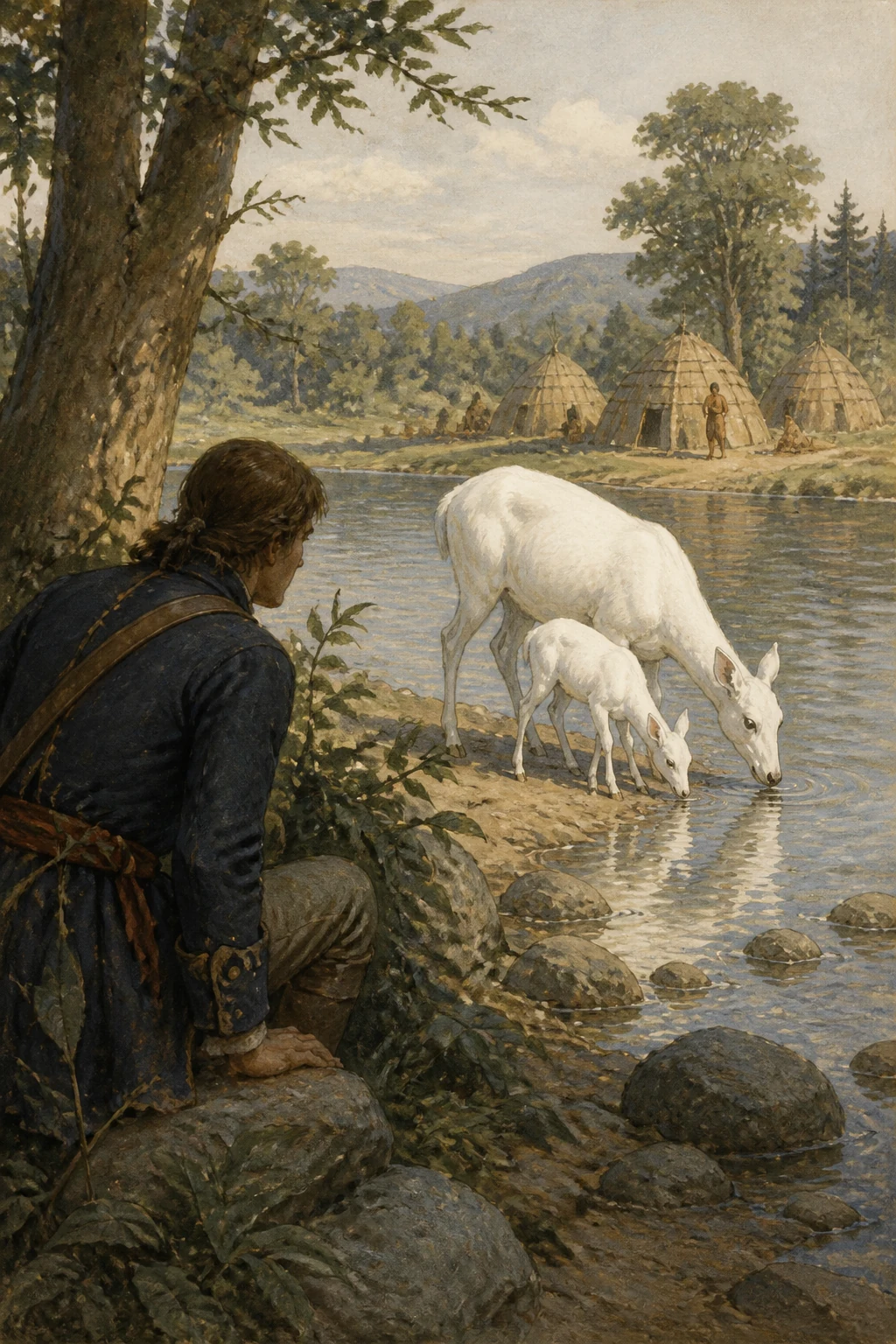
Ob mirni Onoti, v Berkshirskem hribovju, je živela skupina Indijancev in v času njihovega bivanja tam je bela košuta pogosto prihajala pit. Takšna žival je bila tako redka, da so njene obiske imeli za dobro znamenje, in noben lovec iz plemena je ni nikoli skušal ubiti. Prerok njihovega rodu je dejal: »Dokler bela košuta pije pri Onoti, lakota ne bo uničila Indijančevega pridelka, kuga se ne bo približala njegovemu bivališču in sovražnik ne bo opustošil njegove dežele.« In prerokba se je uresničevala. Poletje, ko je košuta prišla z mladičko, prav tako belo in graciozno, kot je bila sama, je prineslo veliko obilje. Ob izbruhu francosko-indijanske vojne so v berkshirsko pokrajino poslali mladega častnika po imenu Montalbert, da bi Indijance plemena Housatonic prepričal, naj napovejo sovražnost Angležem. Kot gost v vasi Onota je slišal za belo košuto. Razni pustolovci so si pridobili dragocene prijatelje, ko so se v francosko prestolnico vrnili z bogastvom in nenavadnimi predmeti iz Novega sveta. Celo Indijance so ugrabljali, da bi jih podarili kraljevim družinam, in mladi odposlanec je sklenil, da bo ob vrnitvi v domovino koža bele košute ena izmed trofej, ki mu bodo prislužile Ludvikov nasmeh.
Ponudil je plačilo zanjo — tolikšno, da bi z njim lahko kupil vse njihovo imetje in milje okoliške dežele, toda košuta jim je bila sveta in njeno žrtvovanje so zavrnili s tako ogorčenimi besedami, da je o tem modro nehal govoriti pred drugimi. V vasi je živel pijanec po imenu Wondo, ki je zabredel tako globoko, da bi za pijačo malone prodal svojo dušo. Častnik ga je odpeljal na samo in ga zalival z rumom, dokler mu ni obljubil, da mu bo pripeljal belo košuto. Lepa žival je bila ljudi tako vajena, da je Wondu pustila, da jo je ujel in odvedel k Montalbertu. Ko se je častnik prepričal, da ni nikogar v bližini, ji je zasadil meč v bok in nedolžno bitje se je zgrudilo. Snežno belo kožo, zdaj oškropljeno z rdečim, so naglo odrli in jo skrili med stvari v Montalbertovi prtljagi, nato pa se je odpravil proti Kanadi. Toda na poti je bil šele nekaj dni, ko je Wondo v navalu obupa in kesanja priznal svoj delež pri storjenem zločinu in so ga pri priči ubili.
S smrtjo košute se je končala tudi sreča. Sledile so vojne, slabe letine in odseljevanje, in v nekaj letih ob Onoti ni ostal niti en vigvam.
Ta legenda ima še nadaljevanje, povezano s preživetjem košutine bele mladičke. Angleški lovec, ki je s psom in puško prišel k jezeru, je na njegovem južnem bregu presenečen zagledal belo košuto. Žival se je sklonila, da bi pila, in prav tedaj je lovec prislonil puško k rami. Nenadoma se je razleglo tuljenje, tako glasno in dolgo, da je odmevalo po gozdu, košuta pa se je preplašila in zbežala kakor veter. Tulil je pes, in ker je ta žival ob divjadi navadno ravnala preudarno, je lovca obšel strah, da je njegovo podobo za tisti čas prevzela coprnica, ki je samotno živela v »severnih gozdovih« in o kateri se je govorilo, da se je prikazovala v mnogih podobah — kajti od časov čarovnic še ni minilo toliko let, da bi bil njihov vpliv pozabljen.
Mož je izvlekel šibiko in psa tako pretepel, da je ubogo bitje zdaj imelo dober razlog za tuljenje; nemara je namreč s tem tepel čarovnico. Nato je stekel do bajte osumljene ženske, sunkovito odprl vrata in zahteval, naj mu pokaže hrbet, kajti če je res spremenila svojo podobo, bi se moral vsak udarec, ki ga je zadal psu, poznati na njeni koži. Ko ji je pojasnil, kaj hoče, je starka zgrabila pripravo, ki ji je ponoči služila za konja, in z njenim lesenim koncem tako naglo usula udarce po njem, da bi psu, če bi bilo v njegovi naravi vsaj pol toliko zlobe kot v nekaterih ljudeh, ta prizor ogrel srce: to je bilo namreč hitro in ostro maščevanje za njegovo trpljenje. Lovec pa vse do konca ni mogel presoditi, ali je bil tepeža deležen zaradi njenega ogorčenja ali iz maščevalnosti.
Izvirnik
124 The White Deer of Onota
Naslednje strani prikazujejo izvirno besedilo za primerjavo.
Beside quiet Onota, in the Berkshire Hills, dwelt a band of Indians, and while they lived here a white deer often came to drink. So rare was the appearance of an animal like this that its visits were held as good omens, and no hunter of the tribe ever tried to slay it. A prophet of the race had said, “So long as the white doe drinks at Onota, famine shall not blight the Indian's harvest, nor pestilence come nigh his lodge, nor foeman lay waste his country.” And this prophecy held true. That summer when the deer came with a fawn as white and graceful as herself, it was a year of great abundance. On the outbreak of the French and Indian War a young officer named Montalbert was despatched to the Berkshire country to persuade the Housatonic Indians to declare hostility to the English, and it was as a guest in the village of Onota that he heard of the white deer. Sundry adventurers had made valuable friendships by returning to the French capital with riches and curiosities from the New World. Even Indians had been abducted as gifts for royalty, and this young ambassador resolved that when he returned to his own country the skin of the white deer should be one of the trophies that would win him a smile from Louis.
He offered a price for it--a price that would have bought all their possessions and miles of the country roundabout, but their deer was sacred, and their refusal to sacrifice it was couched in such indignant terms that he wisely said no more about it in the general hearing. There was in the village a drunken fellow, named Wondo, who had come to that pass when he would almost have sold his soul for liquor, and him the officer led away and plied with rum until he promised to bring the white doe to him. The pretty beast was so familiar with men that she suffered Wondo to catch her and lead her to Montalbert. Making sure that none was near, the officer plunged his sword into her side and the innocent creature fell. The snowy skin, now splashed with red, was quickly stripped off, concealed among the effects in Montalbert's outfit, and he set out for Canada; but he had not been many days on his road before Wondo, in an access of misery and repentance, confessed to his share of the crime that had been done and was slain on the moment.
With the death of the deer came an end to good fortune. Wars, blights, emigration followed, and in a few years not a wigwam was left standing beside Onota.
There is a pendant to this legend, incident to the survival of the deer's white fawn. An English hunter, visiting the lake with dog and gun, was surprised to see on its southern bank a white doe. The animal bent to drink and at the same moment the hunter put his gun to his shoulder. Suddenly a howl was heard, so loud, so long, that the woods echoed it, and the deer, taking alarm, fled like the wind. The howl came from the dog, and, as that animal usually showed sagacity in the presence of game, the hunter was seized with a fear that its form was occupied, for the time, by a hag who lived alone in the “north woods,” and who was reputed to have appeared in many shapes--for this was not so long after witch times that their influence was forgotten.
Drawing his ramrod, the man gave his dog such a beating that the poor creature had something worth howling for, because it might be the witch that he was thrashing. Then running to the shanty of the suspected woman he flung open her door and demanded to see her back, for, if she had really changed her shape, every blow that he had given to the dog would have been scored on her skin. When he had made his meaning clear, the crone laid hold on the implement that served her for horse at night, and with the wooden end of it rained blows on him so rapidly that, if the dog had had half the meanness in his nature that some people have, the spectacle would have warmed his heart, for it was a prompt and severe revenge for his sufferings. And to the last the hunter could not decide whether the beating that he received was prompted by indignation or vengeance.
Nadaljuj z branjem