Prevod
Kakor Grki so tudi rdečekožci gozdove in vodovja naselili z duhovi varuhi in mnogi izviri, h katerim ljudje danes zahajajo po zdravje, so bili znani že davno pred prihodom evropskih naseljencev; blagodejne učinke pitja njihove vode so pripisovali dobroti duhov varuhov. Prvi prišleki na te obale — ali bolje, prvi med njimi, ki so gojili takšna verovanja — so si domišljali, da bodo med drugimi blagoslovi te dežele našli tudi bajeslovni vrelec večne mladosti. Za Špance je bila Florida dežela obetov in skrivnosti. Nekje v njeni notranjosti naj bi stalo zlato mesto, ki mu je vladal kralj v oblačilih, bleščečih se od dragocenega prahu; pustolovci so mu pravili El Dorado ali Kraj pozlačenega moža. Tu, so govorili, bo mogoče najti eliksir življenja. Prelepi izvir Silver Spring blizu povirja reke Ocklawaha, katerega peščeno dno je jasno vidno osemdeset čevljev globoko, je veljal za izvir oživljajočih voda, toda čeprav je Ponce de Leon slišal zanj, se mu skozi džunglo nikoli ni uspelo prebiti do njega.
V Georgii, v domnevni deželi Chicora, sta bila sveti potok, ki je pomladil vsakogar, kdor se je okopal v njem, in izvir, tako čudovit, da ga skupina rdečekožcev, ki je na potovanju po naključju naletela nanj, ni mogla zapustiti in ostaja tam na veke.
Na otoku »Bimini«, enem izmed otokov Lucayos oziroma Bahamov, je bil še en tak vrelec. Med rekama Flint in Ocmulgee pa naj bi bil po pripovedovanju ljudstva Creek izvir življenja na otoku sredi močvirja, do katerega so dostop branili skoraj neprehodni blodnjaki — raj, v katerem so bile ženske lepše kot kjer koli drugje na zemlji.
Romantični in vraževerni Španci so tem pripovedkam verjeli ter leta in leta tratili čas in bogastvo za iskanje teh izvirov. In če so novi, osupljivi prizori tega zahodnega sveta pripravili Kolumba do tega, da se je »hvalil, da je našel kraj, kjer leži raj, se nam gotovo ne bo zdelo čudno, da je Ponce de Leon sanjal o odkritju vrelca mladosti«.
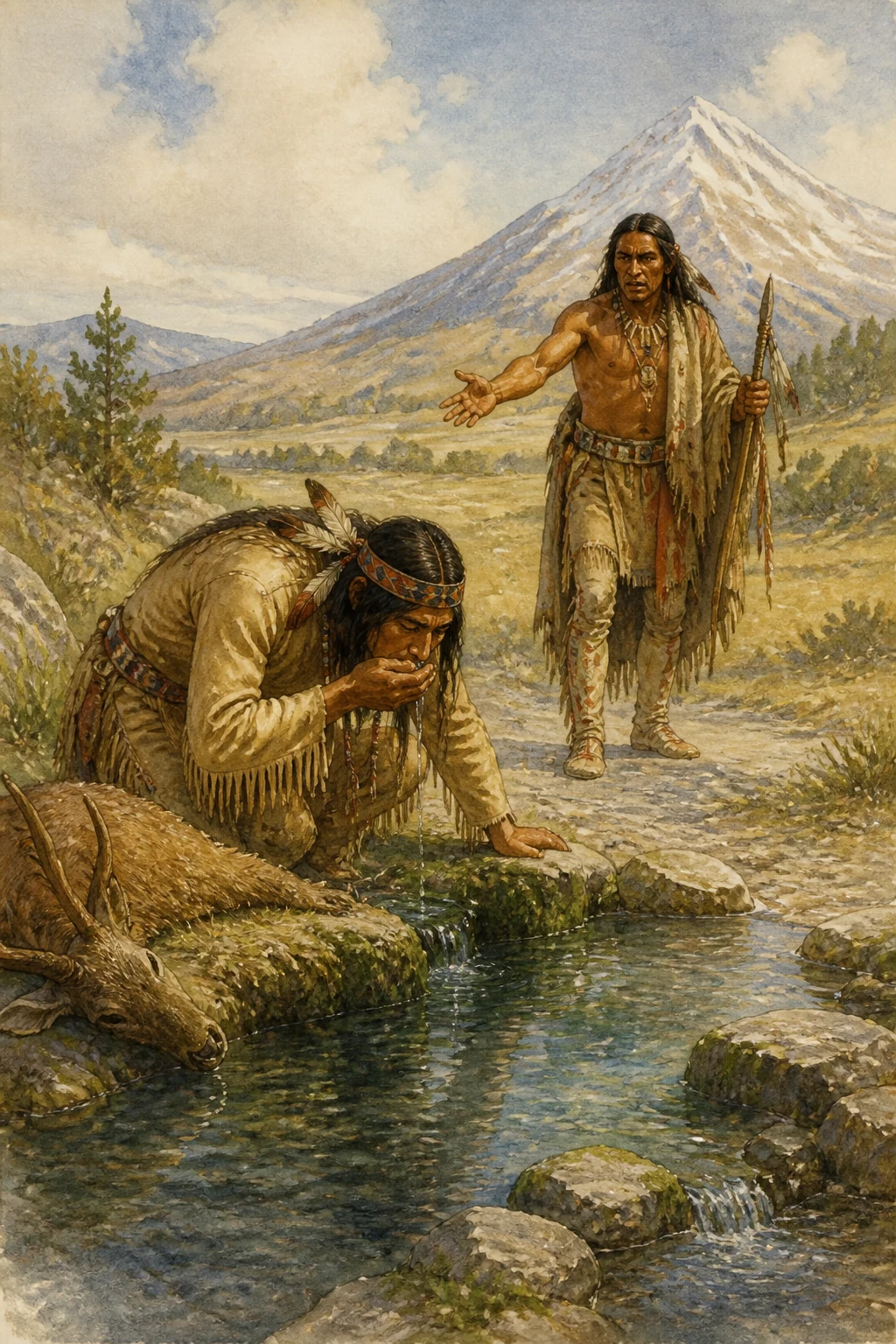
Apače iz Yume je eden njihovih vedeževalcev posvaril, naj nikoli ne stopijo v neki kanjon v gorovju Castle Dome v Arizoni, vendar je skupina med lovom na jelene pozabila na svarilo in se znašla med stenami iz rožnatega in belega fluorita, kjer je na koncu soteske žuborel izvir. Utrujeni in razgreti so polegli na trebuh, da bi pili, tedaj pa opazili, da je krušljivi kremen, ki je tvoril kotanjo izvira, poln zlatih kepic. Vneto so pobirali dragoceno snov, saj so vedeli, koliko biserov, nožev, puščic in odej bi jim Mehičani dali zanjo, nato pa so se skušali vrniti iz kanjona. Toda utrgal se je oblak in hitro naraščajoča voda je odnesla vse razen enega, ki je preživel, da je lahko povedal zgodbo. Belci so ta izvir večkrat iskali, a vselej zaman.
V jugozahodnem Kansasu, na griču četrt milje od reke Solomon, leži Sveta voda, zbrana v kotanji, široki trideset čevljev. Kadar se ob njenem robu zbere veliko ljudi, začne počasi naraščati. Tu sta se na poti z lova na bizone ustavila dva Indijanca iz ljudstva Pani in eden izmed njiju je nehote stopil na želvo, dolgo en jard. Pri priči je začutil, da ima noge prilepljene na pošastin hrbet, saj se kljub vsemu naprezanju ni mogel osvoboditi; bitje pa je okorno odracalo k tolmunu in se z njim vred potopilo. Tam še vedno prebiva želvji bog in požrešno golta bisere, puščice, uhane in pipe, ki jih mečejo vanj. Indijanci s to vodo mešajo svoje barve, nikoli pa je ne pijejo.
Poštni jezdec, ki prečka vročo arizonsko puščavo med kaktusi in čez luknje, v katerih se skrivajo škorpijoni, se nameni k Hudičevemu vodnjaku pod El Diablom — temnemu tolmunu, obdanemu z golimi skalami. Ko v noči prispe tja, se uleže in veter, ki šumi v pelinu, ga zaziblje v spanec. Ob zori ga prebudi prestrašeno rezgetanje njegovega konja; v hipu je povsem buden in se ozre naokrog. V skalni vdolbini čepi neznanec, zavit v razcapano odejo; morda je tudi on prispel ponoči. Jezdec si nasloni puško na koleno in ga pokliče, toda oni se niti ne zgane. Tedaj stopi k njemu, odgrne odejo in zagleda izsušeno truplo z obrazom, ki ga pozna — obrazom svojega brata. Komaj se tako srečata, že okoli njega zasuje toča puščic. Konja ni več. Apači, ki ne poznajo blagosti in nimajo usmiljenja, prežijo v vsaki vrzeli in za vsako skalo, ki ponuja zavetje. S puško jih klati drugega za drugim, ko se s puščicami na tetivah pokažejo iz skrivališč, in jih pošilja v prah; ko pa njegova zadnja krogla zadene srce rdečekožca, se vsi hkrati poženejo nanj ter ga z noži in sekiricami posekajo do smrti. Zato ima voda v Hudičevem vodnjaku še danes okus po krvi.
V gorovju Balsam na zahodu Severne Karoline je velik izvir, ki obeta osvežitev, toda brž ko se popotnik skloni nad vodo, se na dnu prikaže režeč se obraz, in bolj ko se sklanja, bolj se mu ta dviga naproti. Ta demon je tako ostuden, da si le malo gorjanov upa tu piti, in nočejo verjeti, da prikazen nastane zaradi oblike kotanje ali popačenega odseva njihovih lastnih obrazov. Pravijo, da je to obličje »prikazni«, kajti nekoč je v bližini živelo nenavadno lepo čerokeško dekle, ki je uživalo v tem, da je manj obdarjenim mladenkam speljevalo ljubimce. Bojevniki so bili ljubosumni drug na drugega, ženske pa nanjo, medtem ko se je ona — spogledljivka! — veselila zdrah, ki jih je povzročala. Napočil je dan poroke nekega lovca z dekletom iz njegovega plemena, toda ob določeni uri ženina ni bilo. Osramočena in prizadeta se je nevesta izmuznila iz vasi in ga začela iskati po gozdu, v rokah pa je nosila lok in puščice. Kmalu je našla lovca, ki je ležal pri nogah spogledljivke, ta pa je njegove besede poslušala s spodbudnimi nasmehi. Brez opozorila je zapuščeno dekle napelo lok, potegnilo puščico vse do osti in ljubimcu prestrelilo srce — nato pa je ob njegovem negibnem telesu rotilo Manituja, naj obraz njene tekmice spremeni v nekaj tako ostudnega, da se bo vsakdo, ki ga zagleda, prestrašil. Ob teh besedah je lepotica začutila, kako se ji obraz krči in guba; planila je k zrcalu izvira in pogledala vanj, a se takoj z gnusom odmaknila. Ko je spoznala, da je strašno obličje, ki bolšči vanjo iz vode, njeno lastno, je obupano kriknila, se vrgla v vodo in utonila.
Njen obraz — tako spremenjen, da razkriva zlo, ki se je nekoč skrivalo za njim — zre iz globine v pogumneža, ki gre mimo in pozna ta kraj kot Izvir prikazni.
Zdravilne lastnosti mineralnih izvirov pri Ballstonu in Saratogi so bile Indijancem dobro znane, izvir High Rock Spring, h kateremu so Mohavki leta 1767 prinesli sira Williama Johnsona, da bi mu ozdravili rano, pa so imenovali »zdravilni izvir Velikega duha«. Verjeli so namreč, da voda poskakuje in brbota zato, ker jo razburkavajo roke, ki niso človeške, in rdečekožci so ga globoko častili.
K izvirom pri Manitouju v Koloradu (glej »Razdelitev dveh plemen«) so se vselej približevali z darovi za manituja, ki je prebival v njih. Litijeve izvire pri Londonderryju v New Hampshiru so nekoč obiskovali Indijanci iz pokrajine ob Merrimacku ter s čaranjem in plesi skušali pridobiti naklonjenost zdravilnega duha, ki je živel v vodi. Na bližnjih poljih pogosto najdejo njihovo kamnito orodje in puščične osti.
Zdravilne lastnosti izvirov Milford Springs v New Hampshiru so se razodele v sanjah umirajočega dečka. V nekdanjih časih je čudodelen izvir tekel tudi blizu Marijinega kipa v White Marshu v Marylandu.
Biddeford Pool v Mainu je bil enkrat na leto čudodelen ribnik, kajti vsak bolnik, ki se je v njem okopal 26. junija, je ozdravel, saj je bil tega dne skupni praznik svetega Antelma in svetega Maksencija.
Nekoč je živel moder in miroljuben poglavar plemena Ute, ki je svojemu ljudstvu vselej svetoval, naj se ogiba vojne, ko pa se je postaral, so ga vročekrvneži odstavili in se spustili na planjave, da bi se spopadli z Arapahi. Prišla je novica, da so bili zaradi svoje zaletavosti poraženi. Starčeva žalost je bila tedaj tako silna, da mu je počilo srce. Toda tudi v smrti je ostal dobrotnik, kajti njegov duh je vstopil v zemljo in pri priči je iz nje bruhnila voda, ki ni nikoli nehala teči — vroči žvepleni izviri v Koloradu, Hot Sulphur Springs. Uteji so se pogosto hodili kopat v te izvire — in si zdravit revmo — preden so jih pregnali od tam.
Reka Spring v Arkansasu je ob izviru skoraj tako velika kot ob izlivu, saj izvir Mammoth Spring v gorovju Ozark, kjer se poraja, daje devetdeset tisoč galon vode na minuto in je zato morda največji na svetu. Tu so se pred tristo leti Indijanci zbrali na enomesečnem slavju, kajti Nitilita, hči poglavarja Wampahseesaha, naj bi se poročila z bojevnikom, ki je imel mnogo ponijev; sto jih je podaril v znamenje svoje ljubezni. Že več tednov ni deževalo in sredi najbujnejšega rajanja je prišla vest, da so vse reke presahnile. Nekaj mladeničev se je z vrči odpravilo k Misisipiju, da bi jih napolnili, petje in ples pa sta se v zaupanju, da pomoč prihaja, nadaljevala, dokler se moškim in ženskam od izčrpanosti niso začele šibiti noge. Nazadnje je Nitilita umrla in mož si je v divji žalosti treščil z glavo ob skalo ter prav tako izdihnil. Naslednji dan so lovci prinesli vodo, a poglavar, razjarjen zaradi njihove zamude, jih je ukazal pobiti v dar duhovom umrlih. Izkopali so velik grob in že začeli zadnje obrede, ko je v zemlji zagrmelo in se je stresla — razprla se je in trupla so izginila v breznu. Nato je iz jame privrel silen val vode in se peneč pognal po dolini. Wampahseesah, od žalosti, kesanja in strahu ves iz sebe, se je vrgel v hudournik in ta ga je odnesel v smrt. Rdečekožci so pozneje tam postavili jez in ob mraku pogosto sedeli pred njim ter, kot so trdili, opazovali obraze mrtvih, ki so zrli vanje skozi peno.
Med navalom na kalifornijska zlata polja v petdesetih letih devetnajstega stoletja je neka skupina izbrala pot ob reki Gila in se odpravila čez puščavo. Opoldanska temperatura je dosegala sto dvajset stopinj Fahrenheita, pot je bila posejana z ogrodji vozov ter okostji konj in ljudi, drugo noč po prečkanju Kolorada pa jim je zmanjkalo vode. Skupina se je zbrala na pesku pod Yumo; moški so razpravljali, ali bi se bilo pametno vrniti, ženske je navdajala tesnoba, otroci so jokali, konji pa sopli. Tedaj je pogovor potihnil, kajti iz enega od vozov se je zaslišala otroška molitev: »O, dobri nebeški Oče, vem, da sem bila poredna deklica, ampak tako sem žejna in mamica in očka in dojenček si tudi tako zelo želijo piti! Prosim, dobri Bog, daj nam vode in nikoli več ne bom poredna.« Eden od moških je iz srca rekel: »Bog naj to usliši!« Čez nekaj trenutkov je deklica zaklicala: »Mama, prinesi mi vode. Prinesi je za dojenčka in zame. Slišim jo teči.« Konji in mule so skoraj potrgali vprežne jermene, kajti malone pri njihovih nogah je iz peska privrel izvir — topel, a čist. Njihovih muk je bilo konec. Voda je tekla naprej, dvajset milj proti severu, na enem mestu pa se je razlila v jezero, široko dve milji in globoko dvajset čevljev. Ko se je izseljevanje dve leti pozneje preusmerilo na severno pot in čez zemeljsko ožino, je izvir New River Spring presahnil. Njegovo poslanstvo je bilo končano.
Izvirnik
Like the Greeks, the red men endowed the woods and waters with tutelary sprites, and many of the springs that are now resorted to as fountains of healing were known long before the settlement of Europeans here, the gains from drinking of them being ascribed to the beneficence of spirit guardians. The earliest comers to these shores--or, rather, the earliest of those who entertained such beliefs--fancied that the fabled fountain of eternal youth would be found among the other blessings of the land. To the Spaniards Florida was a land of promise and mystery. Somewhere in its interior was fabled to stand a golden city ruled by a king whose robes sparkled with precious dust, and this city was named for the adventurer--El Dorado, or the Place of the Gilded One. Here, they said, would be found the elixir of life. The beautiful Silver Spring, near the head of the Ocklawaha, with its sandy bottom plainly visible at the depth of eighty feet, was thought to be the source of the life-giving waters, but, though Ponce de Leon heard of this, he never succeeded in fighting his way to it through the jungle.
In Georgia, in the reputed land of Chicora, were a sacred stream that made all young again who bathed there, and a spring so delectable that a band of red men, chancing on it in a journey, could not leave it, and are there forever.
In the island of “Bimini,” one of the Lucayos (Bahamas), was another such a fountain.
Between the Flint and Ocmulgee Rivers the Creeks declared was a spring of life, on an island in a marsh, defended from approach by almost impenetrable labyrinths,--a heaven where the women were fairer than any other on earth.
The romantic and superstitious Spaniards believed these legends, and spent years and treasure in searching for these springs. And, surely, if the new and striking scenes of this Western world caused Columbus to “boast that he had found the seat of paradise, it will not appear strange that Ponce de Leon should dream of discovering the fountain of youth.”
The Yuma Apaches had been warned by one of their oracles never to enter a certain canon in Castle Dome range, Arizona, but a company of them forgot this caution while in chase of deer, and found themselves between walls of pink and white fluorite with a spring bubbling at the head of the ravine. Tired and heated, they fell on their faces to drink, when they found that the crumbling quartz that formed the basin of the spring was filled with golden nuggets. Eagerly gathering up this precious substance, for they knew what treasure of beads, knives, arrows, and blankets the Mexicans would exchange for it, they attempted to make their way out of the canon; but a cloudburst came, and on the swiftly rising tide all were swept away but one, who survived to tell the story. White men have frequently but vainly tried to find that spring.
In Southwestern Kansas, on a hill a quarter-mile from Solomon River, is the Sacred Water, pooled in a basin thirty feet across. When many stand about the brink it slowly rises. Here two Panis stopped on their return from a buffalo hunt, and one of them unwittingly stepped on a turtle a yard long. Instantly he felt his feet glued to the monster's back, for, try as he might, he could not disengage himself, and the creature lumbered away to the pool, where it sank with him. There the turtle god remains, and beads, arrows, ear-rings, and pipes that are dropped in, it swallows greedily. The Indians use the water to mix their paint with, but never for drinking.
The mail rider, crossing the hot desert of Arizona, through the cacti and over holes where scorpions hide, makes for Devil's Well, under El Diablo--a dark pool surrounded with gaunt rocks. Here, coming when the night is on, he lies down, and the wind swishing in the sage--brush puts him to sleep. At dawn he wakens with the frightened whinny of his horse in his ears and, all awake, looks about him. A stranger, wrapped in a tattered blanket, is huddled in a recess of the stones, arrived there, like himself, at night, perhaps. Poising his rifle on his knee, the rider challenges him, but never a sign the other makes. Then, striding over to him, he pulls away the blanket and sees a shrivelled corpse with a face that he knows--his brother. Hardly is this meeting made when a hail of arrows falls around. His horse is gone. The Apaches, who know no gentleness and have no mercy, have manned every gap and sheltering rock. With his rifle he picks them off, as they rise in sight with arrows at the string, and sends them tumbling into the dust; but, when his last bullet has sped into a red man's heart, they rise in a body and with knives and hatchets hew him to death. And that is why the Devil's Well still tastes of blood.
Among the Balsam Mountains of Western North Carolina is a large spring that promises refreshment, but, directly that the wayfarer bends over the water, a grinning face appears at the bottom and as he stoops it rises to meet his. So hideous is this demon that few of the mountaineers have courage to drink here, and they refuse to believe that the apparition is caused by the shape of the basin, or aberrated reflection of their own faces. They say it is the visage of a “haunt,” for a Cherokee girl, who had uncommon beauty, once lived hard by, and took delight in luring lovers from less favored maidens. The braves were jealous of each other, and the women were jealous of her, while she--the flirt!--rejoiced in the trouble that she made. A day fell for a wedding--that of a hunter with a damsel of his tribe, but at the hour appointed the man was missing. Mortified and hurt, the bride stole away from the village and began a search of the wood, and she carried bow and arrows in her hand. Presently she came on the hunter, lying at the feet of the coquette, who was listening to his words with encouraging smiles. Without warning the deserted girl drew an arrow to the head and shot her lover through the heart--then, beside his lifeless body, she begged Manitou to make her rival's face so hideous that all would be frightened who looked at it. At the words the beautiful creature felt her face convulse and shrivel, and, rushing to the mirror of the spring, she looked in, only to start back in loathing. When she realized that the frightful visage that glared up at her was her own, she uttered a cry of despair and flung herself into the water, where she drowned.
It is her face--so altered as to disclose the evil once hid behind it--that peers up at the hardy one who passes there and knows it as the Haunted Spring.
The medicinal properties of the mineral springs at Ballston and Saratoga were familiar to the Indians, and High Rock Spring, to which Sir William Johnson was carried by the Mohawks in 1767 to be cured of a wound, was called “the medicine spring of the Great Spirit,” for it was believed that the leaping and bubbling of the water came from its agitation by hands not human, and red men regarded it with reverence.
The springs at Manitou, Colorado (see “Division of Two Tribes”), were always approached with gifts for the manitou that lived in them.
The lithia springs of Londonderry, New Hampshire, used to be visited by Indians from the Merrimack region, who performed incantations and dances to ingratiate themselves with the healing spirit that lived in the water. Their stone implements and arrow-heads are often found in adjacent fields.
The curative properties of Milford Springs, New Hampshire, were revealed in the dream of a dying boy.
A miracle spring flowed in the old days near the statue of the Virgin at White Marsh, Maryland.
Biddeford Pool, Maine, was a miracle pond once a year, for whoso bathed there on the 26th of June would be restored to health if he were ill, because that day was the joint festival of Saints Anthelm and Maxentius.
There was a wise and peaceable chief of the Ute tribe who always counselled his people to refrain from war, but when he grew old the fiery spirits deposed him and went down to the plains to give battle to the Arapahoe. News came that they had been defeated in consequence of their rashness. Then the old man's sorrow was so keen that his heart broke. But even in death he was beneficent, for his spirit entered the earth and forthwith came a gush of water that has never ceased to flow--the Hot Sulphur Springs of Colorado. The Utes often used to go to those springs to bathe--and be cured of rheumatism--before they were driven away.
Spring River, Arkansas, is nearly as large at its source as at its mouth, for Mammoth Spring, in the Ozark Mountains, where it has its rise, has a yield of ninety thousand gallons a minute, so that it is, perhaps, the largest in the world. Here, three hundred years ago, the Indians had gathered for a month's feast, for chief Wampahseesah's daughter--Nitilita--was to wed a brave of many ponies, a hundred of which he had given in earnest of his love. For weeks no rain had fallen, and, while the revel was at its height, news came that all the rivers had gone dry. Several young men set off with jars, to fill them at the Mississippi, and, confident that relief would come, the song and dance went on until the men and women faltered from exhaustion. At last, Nitilita died, and, in the wildness of his grief, the husband smote his head upon a rock and perished too. Next day the hunters came with water, but, incensed by their delay, the chief ordered them to be slain in sacrifice to the manes of the dead. A large grave was dug and the last solemnities were begun when there was a roaring and a shaking in the earth--it parted, and the corpses disappeared in the abyss. Then from the pit arose a flood of water that went foaming down the valley. Crazed with grief, remorse, and fear, Wampahseesah flung himself into the torrent and was borne to his death. The red men built a dam there later, and often used to sit before it in the twilight, watching, as they declared, the faces of the dead peering at them through the foam.
During the rush for the California gold-fields in the '50's a party took the route by Gila River, and set across the desert. The noon temperature was 120, the way was strewn with skeletons of wagons, horses, and men, and on the second night after crossing the Colorado the water had given out. The party had gathered on the sands below Yuma, the men discussing the advisability of returning, the women full of apprehension, the young ones crying, the horses panting; but presently the talk fell low, for in one of the wagons a child's voice was heard in prayer: “Oh, good heavenly Father, I know I have been a naughty girl, but I am so thirsty, and mamma and papa and baby all want a drink so much! Do, good God, give us water, and I never will be naughty again.” One of the men said, earnestly, “May God grant it!” In a few moments the child cried, “Mother, get me water. Get some for baby and me. I can hear it running.” The horses and mules nearly broke from the traces, for almost at their feet a spring had burst from the sand-warm, but pure. Their sufferings were over. The water continued to flow, running north for twenty miles, and at one point spreading into a lake two miles wide and twenty feet deep. When emigration was diverted, two years later, to the northern route and to the isthmus, New River Spring dried up. Its mission was over.