Waltey
Razkol med plemenoma
230 The Division of Two Tribes
Myths and Legends of Our Own Land · Charles M. SkinnerO besedilu
Razkol med plemenoma
- Vir
- Myths and Legends of Our Own Land
- Avtor
- Charles M. Skinner
- Jezik branja
- Slovenščina
- Jezik izvirnika
- English
- Čas branja
- 3 min branja
- Obseg
- 3 strani
- Naslov izvirnika
- 230 The Division of Two Tribes
O izvirniku
Myths and Legends of Our Own Land
Obsežna zgodovinska zbirka ameriških legend, ki jih je Skinner zbral in avtorsko rekonstruiral. Bralni jezik je Slovenščina, izvirnik pa prihaja iz vira Myths and Legends of Our Own Land v jeziku English.
Besedilo
Razkol med plemenoma
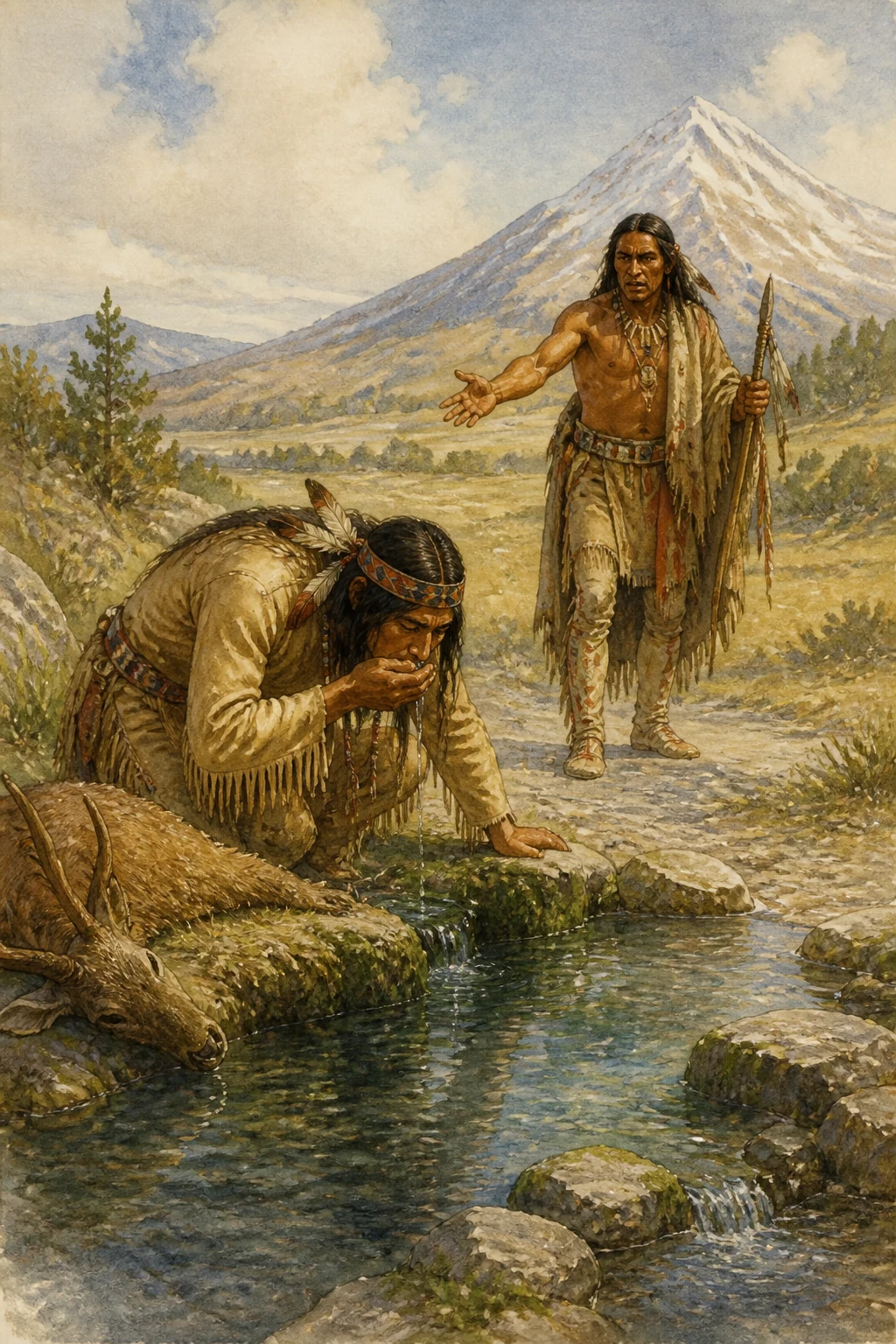
Ko so belci prvič prodrli v divjino ameriškega Zahoda, so našli plemeni Šošonov in Komančev v sporu, legenda o izvirih Manitouja pa pripoveduje, da se je njun razdor začel prav tam. Ta »Saratoga Zahoda«, ugnezdena v kotanji predgorja v senci veličastnega vrha Pike, je bila nekoč skupno zbirališče več rodov rdečekožcev. Tam so lahko varno zborovali, saj si noben Indijanec ni drznil izzvati jeze manituja, čigar dih se je iskril v »zdravilnih vodah«. Noben? Pač, eden. Pred stoletji sta se namreč neki Šošon in neki Komanč na poti z lova ustavila tu, da bi se napila. Šošon je imel pri lovu srečo; Komanč pa se je vračal praznih rok in slabe volje, ljubosumen na spretnost in srečo svojega tovariša. Šošon je odvrgel tolstega jelena, ki ga je na ramenih nosil domov, se sklonil nad izvir sladke vode in je najprej izlil prgišče na tla v dar duhu tega kraja, nato pa pritisnil ustnice k vodni gladini. Njegovemu spremljevalcu je zadostoval že najmanjši povod za prepir in začel ga je takole: »Zakaj tujec pije pri samem izviru, medtem ko se eden od njegovih gospodarjev zadovoljuje z vodo, ki odteka iz njega? Kako si Šošon drzne piti više od mene?«
Drugi je odgovoril: »Veliki duh daje vodo v izvir, da jo njegovi otroci lahko pijejo neomadeževano. Jaz sem Ausaqua, poglavar Šošonov, in pijem pri izviru. Šošon in Komanč sta brata. Naj pijeta skupaj.«
»Ne. Šošoni plačujejo davek Komančem in Wacomish vodi ta narod v vojno. Poglavar Šošonov je, kakor je poglavar svojega ljudstva.«
»Wacomish laže. Njegov jezik je razcepljen kakor kačji. Njegovo srce je črno. Ko je Veliki duh ustvaril svoje otroke, ni enemu rekel: ‘Pij tukaj,’ drugemu pa: ‘Pij tam,’ temveč je dal vodo, da bi jo lahko pili vsi.«
Drugi ni odgovoril, toda ko se je Ausaqua sklonil k brbotajoči gladini, se mu je Wacomish prikradel za hrbet, se vrgel nanj, mu potisnil glavo pod vodo in jo držal tam, dokler ni utonil. Ko je vlekel mrtvo telo iz izvira, je voda vzvalovala in iz mehurčkov se je dvignila para, ki je počasi dobila podobo častitljivega Indijanca z dolgimi belimi lasmi. Morilec je v njem prepoznal Waukaugo, očeta šošonskega in komanškega naroda, moža, čigar ime sta obe plemeni častili zaradi njegovega junaštva in dobrote. Obraz očaka je potemnel od jeze in s strašnim glasom je zaklical: »Prekleti izrodek mojega rodu! Danes si razdvojil najmogočnejši narod na svetu. Kri pogumnega Šošona kliče po maščevanju. Naj bo voda tvojega plemena smrdljiva in grenka v njihovih grlih.«
Nato je zavihtel gorjačo iz vapitijevega rogovja in z vso močjo udaril po glavi nesrečneža, ki se je strahoma krčil pred njim. Morilcu je razklalo glavo in brez življenja je omahnil v izvir, katerega voda še danes vzbuja slabost. Da pa bi za vselej ohranil spomin na Ausaquo, je manitu udaril po bližnji skali in iz nje je bruhnil studenec čudovito okusne vode. Trupli so našli in privrženci obeh lovcev so tistega dne začeli dolgo in uničujočo vojno, v katero so se vpletla še druga plemena, dokler si niso po vsej tisti pokrajini stali nasproti prebivalci gora in prebivalci ravnin.
Izvirnik
230 The Division of Two Tribes
Naslednje strani prikazujejo izvirno besedilo za primerjavo.
When white men first penetrated the Western wilderness of America they found the tribes of Shoshone and Comanche at odds, and it is a legend of the springs of Manitou that their differences began there. This “Saratoga of the West,” nestling in a hollow of the foot-hills in the shadow of the noble peak of Pike, was in old days common meeting-ground for several families of red men. Councils were held in safety there, for no Indian dared provoke the wrath of the manitou whose breath sparkled in the “medicine waters.” None? Yes, one. For, centuries ago a Shoshone and a Comanche stopped here on their return from a hunt to drink. The Shoshone had been successful; the Comanche was empty handed and ill tempered, jealous of the other's skill and fortune. Flinging down the fat deer that he was bearing homeward on his shoulders, the Shoshone bent over the spring of sweet water, and, after pouring a handful of it on the ground, as a libation to the spirit of the place, he put his lips to the surface. It needed but faint pretext for his companion to begin a quarrel, and he did so in this fashion: “Why does a stranger drink at the spring-head when one of the owners of the fountain contents himself with its overflow? How does a Shoshone dare to drink above me?”
The other replied, “The Great Spirit places the water at the spring that his children may drink it undefiled. I am Ausaqua, chief of Shoshones, and I drink at the head-water. Shoshone and Comanche are brothers. Let them drink together.”
“No. The Shoshone pays tribute to the Comanche, and Wacomish leads that nation to war. He is chief of the Shoshone as he is of his own people.”
“Wacomish lies. His tongue is forked, like the snake's. His heart is black. When the Great Spirit made his children he said not to one, 'Drink here,' and to another, 'Drink there,' but gave water that all might drink.”
The other made no answer, but as Ausaqua stooped toward the bubbling surface Wacomish crept behind him, flung himself against the hunter, forced his head beneath the water, and held him there until he was drowned. As he pulled the dead body from the spring the water became agitated, and from the bubbles arose a vapor that gradually assumed the form of a venerable Indian, with long white locks, in whom the murderer recognized Waukauga, father of the Shoshone and Comanche nation, and a man whose heroism and goodness made his name revered in both these tribes. The face of the patriarch was dark with wrath, and he cried, in terrible tones, “Accursed of my race! This day thou hast severed the mightiest nation in the world. The blood of the brave Shoshone appeals for vengeance. May the water of thy tribe be rank and bitter in their throats.”
Then, whirling up an elk-horn club, he brought it full on the head of the wretched man, who cringed before him. The murderer's head was burst open and he tumbled lifeless into the spring, that to this day is nauseous, while, to perpetuate the memory of Ausaqua, the manitou smote a neighboring rock, and from it gushed a fountain of delicious water. The bodies were found, and the partisans of both the hunters began on that day a long and destructive warfare, in which other tribes became involved until mountaineers were arrayed against plainsmen through all that region.
Nadaljuj z branjem