Prevod
V zavetnem kotičku kmečkega dvorišča, kjer je živa meja zadrževala mrzle vetrove, drevesa pa so dajala senco pred vročim poletnim soncem, je stalo mnogo čebeljih panjev. O trotih se sicer ni dalo povedati kaj prida, toda vse druge čebele so bile najmarljivejše med vsemi prebivalci dvorišča in so imele toliko dela, da so se le redkokdaj ustavile na klepet pri sosedih.
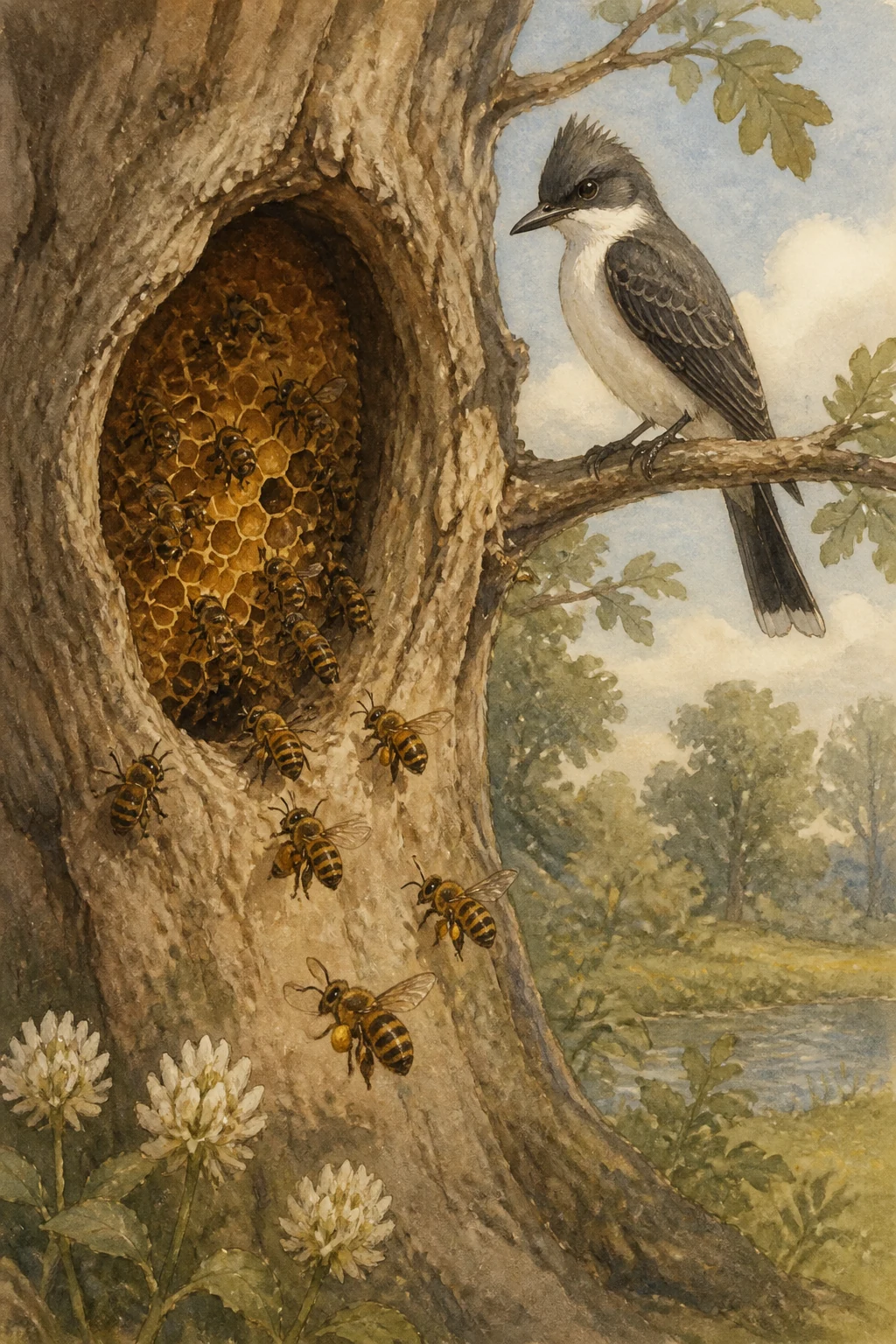
V vsakem panju oziroma domu je živelo več tisoč čebel in vsaka je imela svoje delo. Najprej je bila tu matica. Morda mislite, da biti kraljica pomeni ves čas se igrati, vendar ni tako, kajti zares dobra kraljica mora veliko vedeti in nenehno delati, tudi če je čebelja kraljica, ki ji pravimo matica. Matica je mati vseh čebeljih mladičkov in dneve preživlja z zaleganjem jajčec. Tako dragocena in pomembna je, da je prva dolžnost vseh drugih skrbeti zanjo.
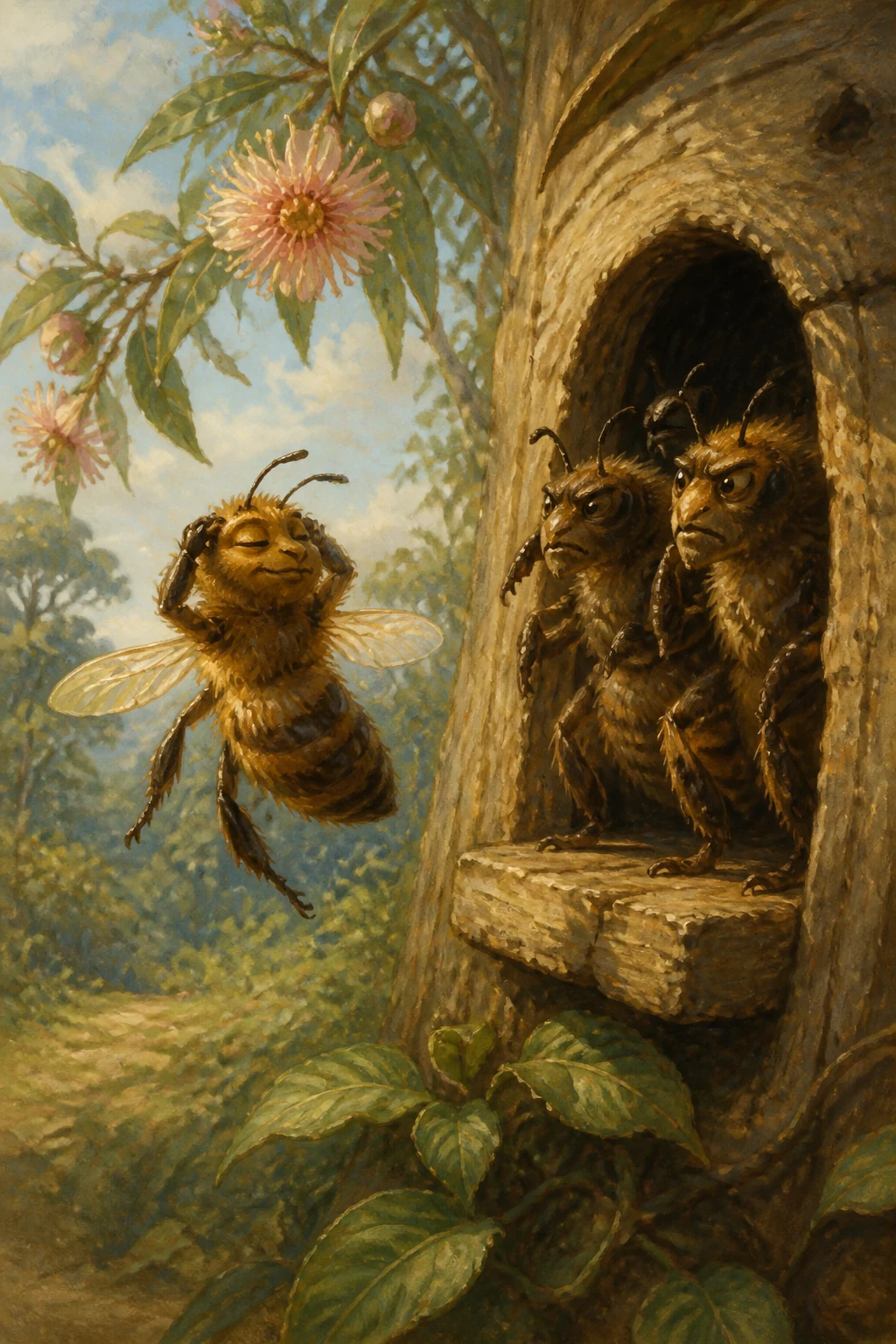
Troti so najkrepkejši in najpostavnejši med vsemi čebelami, vendar so leni, zelo, zelo leni. V panju jih nikoli ni veliko in kakor večina lenuhov dobršen del časa drugim dopovedujejo, kako naj delajo. Ne izdelujejo voska in ne spravljajo medu, in ker delavke nočejo, da bi jedli tisto, kar so shranile za zimo, ne živijo prav dolgo.
Večina čebel je delavk. Manjše so tako od matere matice kakor od trotov, naberejo pa ves med, izdelajo ves vosek, zgradijo satje in hranijo mladičke. Skrbijo za čistočo panja, kadar je zelo toplo, pa nekatere s krili pahljajo zrak, da ga ohladijo. Stražijo tudi pri vhodu v panj in odganjajo roparice, ki včasih pridejo krast njihov med.
V teh delavnih domovih nihče ne more dolgo živeti samo zase. Vsakdo pomaga komu drugemu in zato je življenje prijetno. Mati matica pogosto zaleže tudi po dva tisoč jajčec na dan. Večinoma so to jajčeca za delavke in jih odlaga v majhne celice zaležnega satja, ki je nekakšna otroška soba v panju. Nekaj je trotovskih jajčec in ta odlaga v velike celice. Jajčec za matice nikoli ne zalega, saj noče, da bi zrasle še druge matice. Med čebelami velja zakon, da sme v vsakem domu živeti le ena odrasla matica.
Delavke pa vedo, da bi se njihovi stari materi matici lahko kaj pripetilo, zato se včasih, ko odide proč, lotijo celice, v katero je zalegla jajčece za delavko, in podrejo voščene stene med njo in sosednjima celicama, da nastane zelo velik matičnik. Z močnimi čeljustmi odgriznejo vosek, nato pa z nožicami oblikujejo neravne robove. Ko se iz tega jajčeca izleže mladiček oziroma ličinka, je ne hranijo z neokusnim kruhom iz cvetnega prahu, medu in vode, kakor bi jo, če bi nameravale iz nje vzgojiti delavko ali trota. Namesto tega pripravijo tako imenovani matični mleček, ki je precej kisel, in z njim z vseh strani obdajo ličinko, ki je zdaj videti kakor majhen bel črviček.
Zaradi matičnega mlečka hitro raste in v petih dneh je že tako velika, da skoraj zapolni celico. Tedaj neha jesti, si sprede zapredek in v njem leži še približno dva dni in pol. Ko pride iz njega, ji pravimo buba. Šestnajst dni po tem, ko je bilo jajčece zaleženo, je mlada matica pripravljena, da pride iz svoje celice. Delavka potrebuje enaindvajset dni, da povsem odraste, trot pa petindvajset.
V panju ob cedri je mati matica postajala nemirna in sitna. Vedela je, da delavke vzgajajo mlade matice, in skušala je priti do matičnikov. Vedela je, da mlade matice, če bi ji to le uspelo, ne bi nikoli žive prišle na plano. Tudi delavke so to vedele, zato so jo vsakič, ko se je približala, odgnale.
Matične ličinke in bube so bile različno stare in ena od njih je bila zdaj že pripravljena zapustiti svojo celico. Slišale so jo klicati, naj jo spustijo ven, toda vedele so, da bi ena od njiju umrla, če bi se zdaj srečala z materjo matico. Zato je niso izpustile, temveč so ji čez izhod zgradile debelo voščeno steno in pustile le odprtinico, skozi katero so jo lahko hranile. Kadar je bila lačna, je pomolila ven jeziček in nanj so ji dale med.
Spraševala se je, zakaj je delavke ne spustijo ven, ko pa si tako zelo želi na prostost. Ni še vedela, da se matere matice ne razumejo dobro z mladimi maticami.
Delavke so se o tem pogovarjale med seboj. Ena od njih je bila zelo mehkega srca. »Res je žalostno,« je rekla, »da ubogo mlado matico puščamo zaprto v njeni celici. Ne vem, kako lahko prenašate njeno nenehno milo piskanje. Prepričana sem, da mora biti lepa. Še nikoli nisem videla lepšega jezička od tistega, ki ga pomoli ven po med.«
»Hm!« je rekla razumna stara delavka, ki je videla, kako se je izleglo že mnogo matic in odletelo že mnogo rojev. »Še veliko bolj bi ti bilo žal, če bi jo zdaj izpustile. To nikakor ne bi šlo.«
Dobrosrčna delavka na to ni odgovorila, se je pa o tem pogovorila s troti. »Resnično,« je rekla in si s sprednjima nožicama obrisala oči, »še grižljaja medu komaj naberem, ker kar naprej mislim nanjo.«
»Pa se obesi in izdeluj vosek,« je rekel neki trot. »Dan je sicer precej sončen, a nekaj bi vendarle morala početi, in če ne moreš nabirati medu, bi lahko delala vsaj to.« Prav po trotovsko. Sam ni nikoli nabiral medu ali izdeloval voska, pa vendar ni mogel gledati, kako delavka zapravlja čas.
Toda delavka se ni obesila in začela izdelovati voska. To je počela samo ob oblačnih dneh, poleg tega pa je bila ena tistih čebel, ki očitno mislijo, da ne bo nič prav, če ne bodo nehale delati in same pogledale, kaj se dogaja. Čakalo jo je obilo dela, a je bila preveč žalostna in zaskrbljena, da bi ga opravila. Lahko bi vedela, da njene prijateljice ravnajo prav, ko novo matico zadržujejo v celici, saj zgolj ubogajo zakon.
Mati matica je bila nemirna in sitna. Ni se mogla zbrati pri delu in polovico časa sploh ni vedela, ali zalega trotovsko jajčece ali jajčece za delavko. Kljub temu se ni zmotila in nobenega ni odložila v napačno celico. »Ne morem ostati tukaj z mlado matico,« je rekla. »Ne bom ostala tukaj. Prijateljice bom vzela s seboj in odletela.«
Kadar je srečala delavko, se je s tipalnicami dotaknila njenih in prijateljica je takoj natančno vedela, kako ji je pri srcu. Tako se je novica širila naokrog in kmalu so bile številne delavke prav tako nemirne kakor njihova mati matica. Včasih so se tako razburile, da je zrak v panju postal zelo vroč. Čez nekaj časa so se umirile in spet nabirale med. Pogosto so si šepetale. »Ali veš, kam gremo?« je vprašala ena.
»Pst!« se je glasil odgovor. »Vodnice prav zdaj iščejo primeren kraj.« »Ko bi le mati matica vedela, kam gremo,« je rekla prva. »Kako pa naj bi vedela?« je odvrnila druga. »Prav dobro veš, da ni zapustila panja, odkar je začela zalegati jajčeca. Glej, pravkar prihaja.«
»Ojoj!« je vzkliknila mati matica. »Tega ne bom nikoli prenesla. Prav zares ne. Pomislite, še v lastnem panju mi ne pustijo vladati! Delavke, ki stražijo matičnike, me odženejo, kadar koli se jim približam. Niti trenutka več ne ostanem.«
»Zakaj pa potem,« je rekel neki trot, kakor da mu je to šele zdaj prvič prišlo na misel, »ne odideš?« »Saj bom,« je rekla. »Boš šel z menoj?«
»Ne,« je odgovoril trot. »Ne maram selitev in opremljanja novega doma. Poleg tega mora nekdo ostati tukaj in skrbeti za delavke in mlado matico.«
Mati matica je odšla. »Ko sva bila oba mlada,« si je rekla, »bi šel z menoj kamor koli.« Trot pa si je mislil: »No, ali ni to čisto podobno materi matici! Ves čas je vedela, da prihajajo mlade matice in da bo morala oditi, zdaj pa zaradi tega zganja takšen vik in krik. Morala bi se spomniti, da tako veleva zakon.«
Res bi se morala spomniti, da tako veleva zakon, kajti v panju vse poteka po zakonu in nihče se ne bi smel pritoževati. Zakon skrbi za vse in nikomur ne dovoli, da bi dobil več, kakor mu po pravici pripada.
Še istega popoldneva je v njihovem domu nenadoma zavladal mir. Delavke, ki so bile zunaj, so se vrnile in poklepetale z drugimi. Medtem ko so čakale, je nekaj tistih, ki naj bi jih vodile, prišlo do vhoda v panj, zaploskalo s krili in dalo znamenje za odhod. Tedaj so vse, ki naj bi šle z materjo matico, pohitele skozi vhod in z njo zakrožile po zraku. »Zbogom!« so klicale. »Vzgojite toliko mladih matic, kolikor hočete. Nikoli več se ne vrnemo. Daleč, daleč proč gremo in ne bomo vam povedale, kam. V prelep kraj, v zares prelep kraj.«
»Kar naj gredo,« so rekli troti, ki so ostali doma. »Ali ni zdaj že čas, da izpustite mlado matico?« »Ne še,« je odgovorila delavka, ki je stala blizu vhoda. »Niti ene tipalnice ne bo pomolila iz celice, dokler ta roj ne izgine izpred oči.«
Pristopila je dobrosrčna delavka in si brisala oči. »Oh, uboga mati matica!« je rekla. »Tako se mi smili. Danes res ne morem nabirati medu, tako hudo mi je, ker je odšla.«
»Raje se loti dela,« je rekla njena prijateljica. »To je najboljše zdravilo na svetu za žalost. Poleg tega moraš poskrbeti, da ostaneš pri močeh.« »Oh, poskusila bom pojesti kaj iz satja,« je odgovorila, »do dela mi pa ni.«
»Bzzzt!« je rekla druga delavka. »Mislim, da si lahko, če moreš jesti, tudi zunaj poiščeš hrano, namesto da jemlješ med, ki smo ga spravile za zimo, ali hrano, ki jo bodo potrebovali otroci.«
Troti so se zahihitali. Zdelo se jim je povsem prav, da so sami leni, nikoli pa niso mogli prenašati pogleda na delavko, ki zapravlja čas. »Aha,« je nenadoma vzkliknil eden od njih, »kaj pa zdaj počne novi roj?«
Komaj je izgovoril te besede, je mati matica že spet prilezla v panj. »Kakšna strašna smola!« je rekla. »Ravno ko smo sedale na drevo, da bi si odpočile, je oblak zakril sonce.«
»Jaz se zaradi tega že ne bi vrnil,« je rekel neki trot. »Ne,« je lahkotno odvrnila, »prav verjamem, da se ne bi, jaz pa se. Ne upam si v nov dom, potem ko je oblak zakril sonce. Mislim, da je to slabo znamenje. Če bi nadaljevala pot, ne bi mogla pričakovati, da se bo izleglo eno samo jajčece. Jutri bomo poskusile znova.«
Vse druge so se vrnile z njo in v panju je bilo spet tesno in vroče. »Ojoj!« je rekla dobrosrčna delavka. »Ali ni žalostno, da niso mogle oditi?«
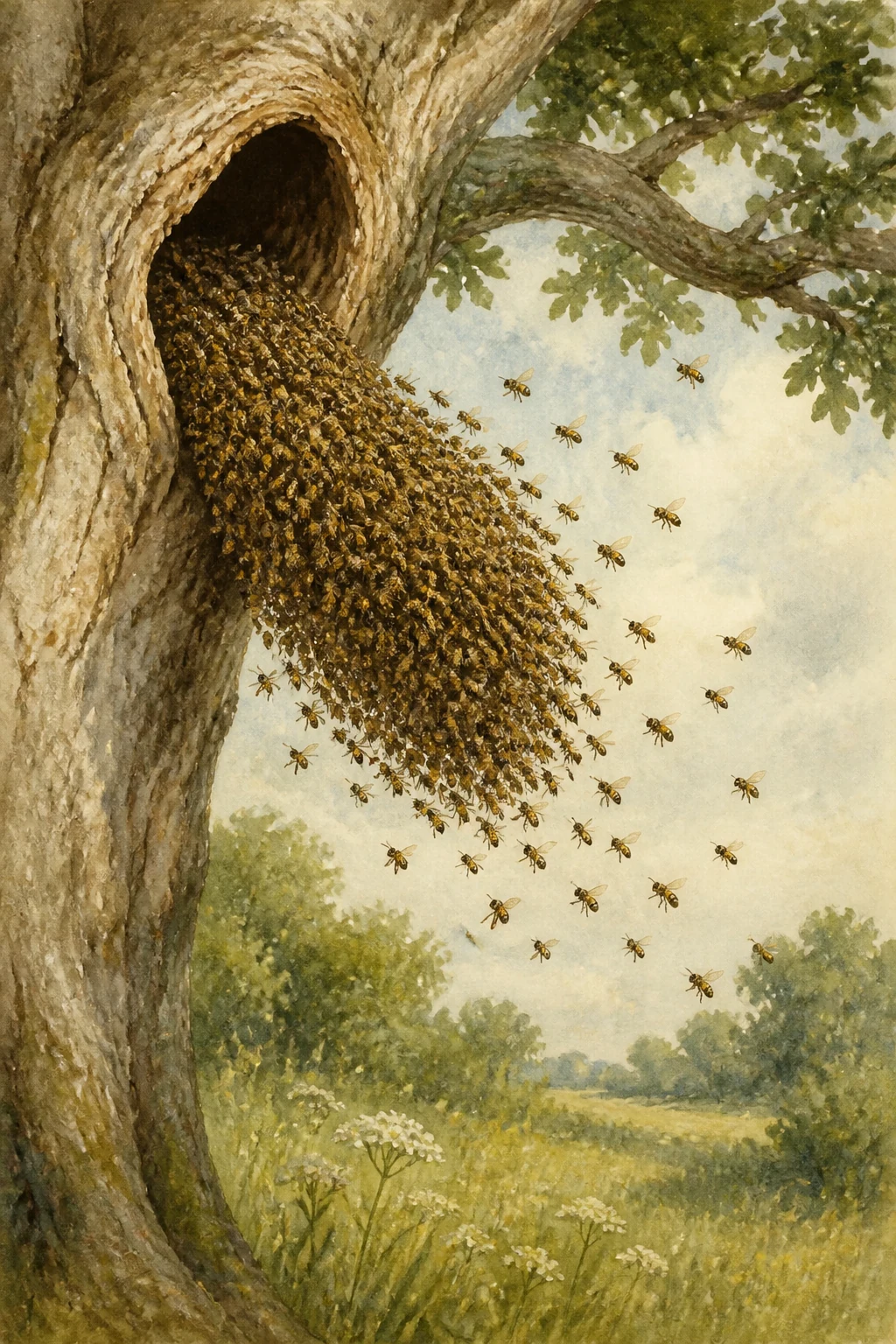
Naslednje jutro so se znova odpravile in bile prav tako vznemirjene kakor prejšnjikrat. Mati matica je bila ves čas sitna in nemirna, čeprav je med čakanjem zalegla devetsto triinsedemdeset jajčec, in to kljub vsem motnjam. »Dokler delam, ne mislim,« je rekla, »in nekaj vendar moram početi.« Tokrat je mati matica sedla na jablanovo vejo, druge pa so se je oprijele, dokler niso vse, ki so zapustile panj, visele na veji v velikem grozdu — tako velikem kakor majhna zeljna glava. Nameravale so si malo odpočiti, nato pa odleteti v novi dom, ki so ga izbrale njihove vodnice.
Medtem ko so visele tam, je pod drevo prišel kmet in nosil dolgo palico z žičnato košaro na zgornjem koncu. Čebelji grozd je nežno stresel vanjo, nato pa čebele preselil v prazen panj, ki je stal poleg njihovega starega doma.
»Zdaj,« so rekle delavke, ki so ostale v starem panju, »bomo izpustile novo matico, kajti mati matica se ne bo nikoli več vrnila.« Kmalu so pregrizle voščeno steno in jo spustile ven. Nato so se zbrale okrog nje, jo ljubkovale, se je dotikale s tipalnicami, ji stregle in ji pojasnjevale, zakaj je niso mogle izpustiti prej. Še vedno je bila nežno siva kakor vse mlade čebele, ko prvič pridejo iz celice, a to barvo je kmalu zamenjala črna, kakršno je nosilo njeno ljudstvo.
Delavke so letale ven in noter ter prinašale novice iz sosednjega panja. Tja niso smele, kajti zakon čebeli, ki živi v enem domu, ne dovoljuje obiskovati drugega, vendar so stare prijateljice srečevale v zraku ali med srkanjem medu. Izvedele so, da se je mati matica povsem odpovedala misli na življenje drugje in je bila zaposlena kakor nekoč. Kmet je v novi panj vstavil kos satja, da je lahko takoj začela gospodinjiti.
Novo matico so razvajali in jo zadrževali doma, dokler se ni okrepila in privadila gibanja. To ni trajalo dolgo. Potem je rekla, da si želi ogledati zunanji svet. »S teboj bomo šli,« so rekli troti, ki so bili v lepem vremenu vedno veseli izgovora za polet. Trdili so, da je v panju toliko hrupa in hitenja, da si podnevi nikoli ne morejo zares odpočiti.
Tako je mlada matica odletela daleč proč in prvič zagledala prelepi svet. Kako modro nebo! Kako zelena trava! Kako krasna drevesa, polna dišečih cvetov! Vse je vzljubila, brž ko je zagledala. »Ah,« je vzkliknila, »kako čudovito je živeti in videti vse to! Tako sem vesela, da sem se izlegla. Zdaj pa moram pohiteti domov, saj me čaka toliko dela.«
Bila je krasna mlada matica in vse čebele so bile ponosne nanjo. Pustile so ji početi vse, kar je hotela, dokler se le ni približevala matičnikom. Kmalu je začela delati tako, kakor je prej delala stara mati matica, in je bila po svoje zelo srečna. Rada bi odprla matičnike in preprečila, da bi se izlegle še druge matice, in tudi ko so ji povedale, da jo morajo zaradi zakona zadrževati proč, jih je še vedno hotela pregristi.
»Uboga mlada mati matica!« je vzdihnila dobrosrčna delavka. »Tako se mi smili, ko ji ne pustijo do matičnikov. Kako žalosten, žalosten je ta svet!« Toda ta svet nikakor ni žalosten. Lep je, sončen in srečen, in niti čebelje matice niti kdor koli drug ne bi smel misliti, da se mu godi krivica, če ne more storiti prav vsega, kar si želi. Zakon skrbi za velike in male in nič ne pomaga, če se kujamo, ker nečesa ne smemo, ko pa nas čaka toliko prijetnega dela in igre. In mlada mati matica je to vedela.
Izvirnik
In a sheltered corner of the farmyard, where the hedge kept off the cold winds and the trees shaded from hot summer sunshine, there were many hives of Bees. One could not say much for the Drones, but the others were the busiest of all the farmyard people, and they had so much to do that they did not often stop to visit with their neighbors.
In each hive, or home, there were many thousand Bees, and each had his own work. First of all, there was the Queen. You might think that being a Queen meant playing all the time, but that is not so, for to be a really good Queen, even in a Beehive, one must know a great deal and keep at work all the time. The Queen Bee is the mother of all the Bee Babies, and she spends her days in laying eggs. She is so very precious and important a person that the first duty of the rest is to take care of her.
The Drones are the stoutest and finest-looking of all the Bees, but they are lazy, very, very lazy. There are never many of them in a hive, and like most lazy people, they spend much of their time in telling the others how to work. They do not make wax or store honey, and as the Worker Bees do not wish them to eat what has been put away for winter, they do not live very long.
Most of the Bees are Workers. They are smaller than either the Queen Mother or the Drones, and they gather all the honey, make all the wax, build the comb, and feed the babies. They keep the hive clean, and when the weather is very warm, some of them fan the air with their wings to cool it. They guard the doorway of the hive, too, and turn away the robbers who sometimes come to steal their honey.
In these busy homes, nobody can live long just for himself. Everybody helps somebody else, and that makes life pleasant. The Queen Mother often lays as many as two thousand eggs in a day. Most of these are Worker eggs, and are laid in the small cells of the brood comb, which is the nursery of the hive. A few are Drone eggs and are laid in large cells. She never lays any Queen eggs, for she does not want more Queens growing up. It is a law among the Bees that there can be only one grown Queen living in each home.
The Workers, however, know that something might happen to their old Queen Mother, so, after she has gone away, they sometimes go into a cell where she has laid a Worker egg, and take down the waxen walls between it and the ones on either side to make a very large royal cell. They bite away the wax with their strong jaws and press the rough edges into shape with their feet. When this egg hatches, they do not feed the baby, or Larva, with tasteless bread made of flower-dust, honey, and water, as they would if they intended it to grow up a Worker or a Drone. Instead, they make what is called royal jelly, which is quite sour, and tuck this all around the Larva, who now looks like a little white worm.
The royal jelly makes her grow fast, and in five days she is so large as to nearly fill the cell. Then she stops eating, spins a cocoon, and lies in it for about two and a half days more. When she comes out of this, she is called a Pupa. Sixteen days after the laying of the egg, the young Queen is ready to come out of her cell. It takes twenty-one days for a Worker to become fully grown and twenty-five for a Drone.
In the hive by the cedar tree, the Queen Mother was growing restless and fussy. She knew that the Workers were raising some young Queens, and she tried to get to the royal cells. She knew that if she could only do that, the young Queens would never live to come out. The Workers knew this, too, and whenever she came near there, they made her go away.
The Queen Larvæ and Pupæ were of different ages, and one of them was now ready to leave her cell. They could hear her crying to be let out, but they knew that if she and the Queen Mother should meet now, one of them would die. So instead of letting her out, they built a thick wall of wax over the door and left only an opening through which they could feed her. When she was hungry she ran her tongue out and they put honey on it.
She wondered why the Workers did not let her out, when she wanted so much to be free. She did not yet know that Queen Mothers do not get along well with young Queens.
The Workers talked it over by themselves. One of them was very tender-hearted. "It does seem too bad," said she, "to keep the poor young Queen shut up in her cell. I don't see how you can stand it to hear her piping so pitifully all the time. I am sure she must be beautiful. I never saw a finer tongue than the one she runs out for honey."
"Humph!" said a sensible old Worker, who had seen many Queens hatched and many swarms fly away, "you'd be a good deal more sorry if we did let her out now. It would not do at all."
The tender-hearted Worker did not answer this, but she talked it over with the Drones. "I declare," said she, wiping her eyes with her forefeet, "I can hardly gather a mouthful of honey for thinking of her."
"Suppose you hang yourself up and make wax then," said one Drone. "It is a rather sunshiny day, but you ought to be doing something, and if you cannot gather honey you might do that." This was just like a Drone. He never gathered honey or made wax, yet he could not bear to see a Worker lose any time.
The Worker did not hang herself up and make wax, however. She never did that except on cloudy days, and she was one of those Bees who seem to think that nothing will come out right unless they stop working to see about it. There was plenty waiting to be done, but she was too sad and anxious to do it. She might have known that since her friends were only minding the law, it was right to keep the new Queen in her cell.
The Queen Mother was restless and fussy. She could not think of her work, and half the time she did not know whether she was laying a Drone egg or a Worker egg. In spite of that, she did not make any mistake, or put one into the wrong kind of cell. "I cannot stay here with a young Queen," said she. "I will not stay here. I will take my friends with me and fly away."
Whenever she met a Worker, she struck her feelers on those of her friend, and then this friend knew exactly how she felt about it. In this way the news was passed around, and soon many of the Workers were as restless as their Queen Mother. They were so excited over it at times that the air of the hive grew very hot. After a while they would become quiet and gather honey once more. They whispered often to each other. "Do you know where we are going?" one said.
"Sh!" was the answer. "The guides are looking for a good place now."
"I wish the Queen Mother knew where we are going," said the first.
"How could she?" replied the second. "You know very well that she has not left the hive since she began to lay eggs. Here she comes now."
"Oh dear!" exclaimed the Queen Mother. "I can never stand this. I certainly cannot. To think I am not allowed to rule in my own hive! The Workers who are guarding the royal cells drive me away whenever I go near them. I will not stay any longer."
"Then," said a Drone, as though he had thought of it for the first time, "why don't you go away?"
"I shall," said she. "Will you go with me?"
"No," said the Drone. "I hate moving and furnishing a new house. Besides, somebody must stay here to take care of the Workers and the young Queen."
The Queen Mother walked away. "When we were both young," she said to herself, "he would have gone anywhere with me."
And the Drone said to himself, "Now, isn't that just like a Queen Mother! She has known all the time that there would be young Queens coming on, and that she would have to leave, yet here she is, making the biggest kind of fuss about it. She ought to remember that it is the law."
Indeed she should have remembered that it was the law, for everything is done by law in the hive, and no one person should find fault. The law looks after them all, and will not let any one have more than his rightful share.
That same afternoon there was a sudden quiet in their home. The Workers who had been outside returned and visited with the rest. While they were waiting, a few who were to be their guides came to the door of the hive, struck their wings together, and gave the signal for starting. Then all who were going with the Queen Mother hurried out of the door and flew with her in circles overhead. "Good-bye!" they called. "Raise all the young Queens you wish. We shall never come back. We are going far, far away, and we shall not tell you where. It is a lovely place, a very lovely place."
"Let them go," said the Drones who stayed behind. "Now, isn't it time to let out the young Queen?"
"Not yet," answered a Worker, who stood near the door. "Not one feeler shall she put outside her cell until that swarm is out of sight."
The tender-hearted Worker came up wiping her eyes. "Oh, that poor Queen Mother!" said she. "I am so sorry for her. I positively cannot gather honey to-day, I feel so badly about her going."
"Better keep on working," said her friend. "It's the best thing in the world for that sad feeling. Besides, you should try to keep strong."
"Oh, I will try to eat something from the comb," was the answer, "but I don't feel like working."
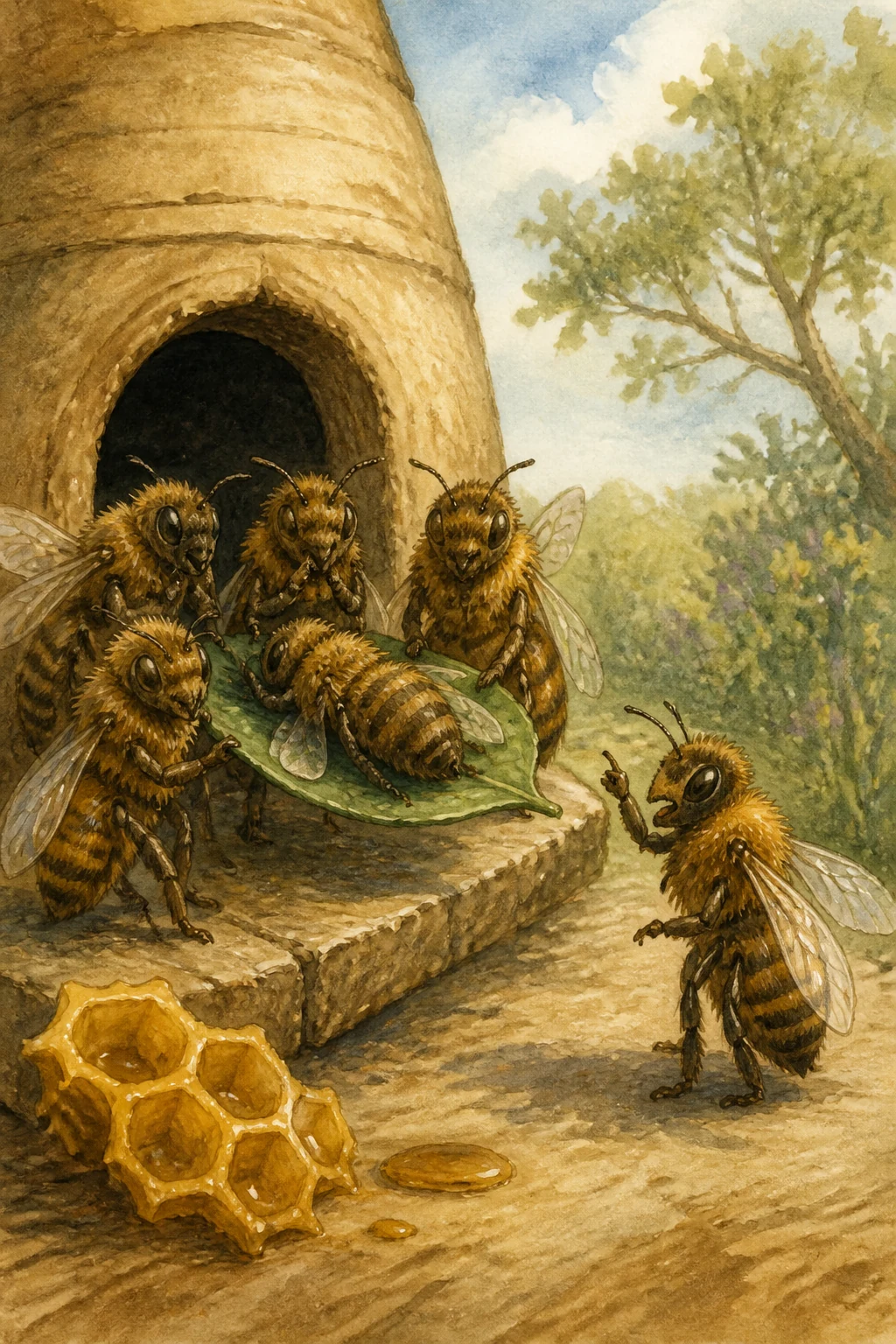
"Zzzt!" said the other Worker. "I think if you can eat, you can hunt your food outside, and not take honey we have laid up for winter or food that will be needed for the children."
The Drones chuckled. It was all right for them to be lazy, they thought, but they never could bear to see a Worker waste time. "Ah," cried one of them suddenly, "what is the new swarm doing now?"
The words were hardly out of his mouth when the Queen Mother crawled into the hive again. "Such dreadful luck!" said she. "A cloud passed over the sun just as we were alighting on a tree to rest."
"I wouldn't have come back for that," said a Drone.
"No," said she, in her airiest way, "I dare say you wouldn't, but I would. I dare not go to a new home after a cloud has passed over the sun. I think it is a sign of bad luck. I should never expect a single egg to hatch if I went on. We shall try it again to-morrow."
All the others came back with her, and the hive was once more crowded and hot. "Oh dear!" said the tender-hearted Worker, "isn't it too bad to think they couldn't go?"
The next morning they started again and were quite as excited over it as before. The Queen Mother had fussed and fidgeted all the time, although she had laid nine hundred and seventy-three eggs while waiting, and that in spite of interruptions. "Being busy keeps me from thinking," said she, "and I must do something." This time the Queen Mother lighted on an apple-tree branch, and the others clung to her until all who had left the hive were in a great mass on the branch,--a mass as large as a small cabbage. They meant to rest a little while and then fly away to the new home chosen by their guides.
While they were hanging here, the farmer came under the tree, carrying a long pole with a wire basket fastened to the upper end. He shook the clustered Bees gently into it, and then changed them into an empty hive that stood beside their old home.
"Now," said the Workers who had stayed in the old hive, "we will let out the new Queen, for the Queen Mother will never return."
It did not take long to bite away the waxen wall and let her out. Then they gathered around and caressed her, and touched their feelers to her and waited upon her, and explained why they could not let her out sooner. She was still a soft gray color, like all young Bees when they first come from the cell, but this soon changed to the black worn by her people.
The Workers flew in and out, and brought news from the hive next door. They could not go there, for the law does not allow a Bee who lives in one home to visit in another, but they met their old friends in the air or when they were sipping honey. They found that the Queen Mother had quite given up the idea of living elsewhere and was as busy as ever. The farmer had put a piece of comb into the new hive so that she could begin housekeeping at once.
The new Queen was petted and kept at home until she was strong and used to moving about. That was not long. Then she said she wanted to see the world outside. "We will go with you," said the Drones, who were always glad of an excuse for flying away in pleasant weather. They said there was so much noise and hurrying around in the hive that they could never get any real rest there during the daytime.
So the young Queen flew far away and saw the beautiful world for the first time. Such a blue sky! Such green grass! Such fine trees covered with sweet-smelling blossoms! She loved it all as soon as she saw it. "Ah," she cried, "what a wonderful thing it is to live and see all this! I am so glad that I was hatched. But now I must hurry home, for there is so much to be done."
She was a fine young Queen, and the Bees were all proud of her. They let her do anything she wished as long as she kept away from the royal cells. She soon began to work as the old Queen Mother had done, and was very happy in her own way. She would have liked to open the royal cells and prevent more Queens from hatching, and when they told her it was the law which made them keep her away, she still wanted to bite into them.
"That poor young Queen Mother!" sighed the tender-hearted Worker. "I am so sorry for her when she is kept away from the royal cells. This is a sad, sad world!" But this isn't a sad world by any means. It is a beautiful, sunshiny, happy world, and neither Queen Bees nor anybody else should think it hard if they cannot do every single thing they wish. The law looks after great and small, and there is no use in pouting because we cannot do one certain thing, when there is any amount of delightful work and play awaiting us. And the young Queen Mother knew this.