Waltey
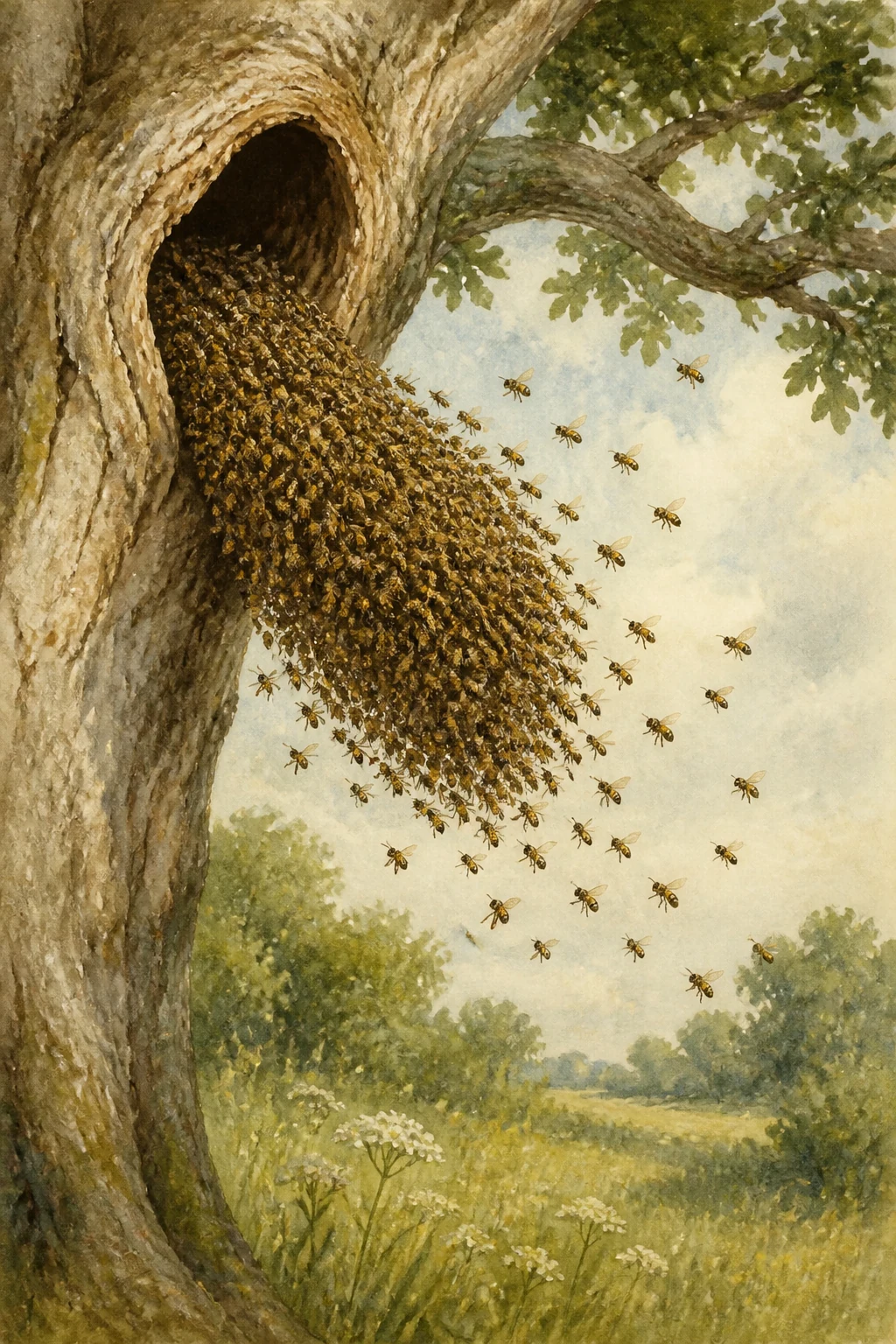
Čebelji roj zapusti drevo
059 A SWARM LEAVES THE BEE TREE
Živalske zgodbe Clare Dillingham Pierson · Clara Dillingham PiersonO besedilu
Čebelji roj zapusti drevo
- Vir
- Živalske zgodbe Clare Dillingham Pierson
- Avtor
- Clara Dillingham Pierson
- Jezik branja
- Slovenščina
- Jezik izvirnika
- English
- Čas branja
- 8 min branja
- Obseg
- 7 strani
- Naslov izvirnika
- 059 A SWARM LEAVES THE BEE TREE
O izvirniku
Živalske zgodbe Clare Dillingham Pierson
Devetindevetdeset avtorskih zgodb o živalih na kmetiji, travniku, v gozdu, ob ribniku in ponoči. Bralni jezik je Slovenščina, izvirnik pa prihaja iz vira Živalske zgodbe Clare Dillingham Pierson v jeziku English.
Besedilo
Čebelji roj zapusti drevo
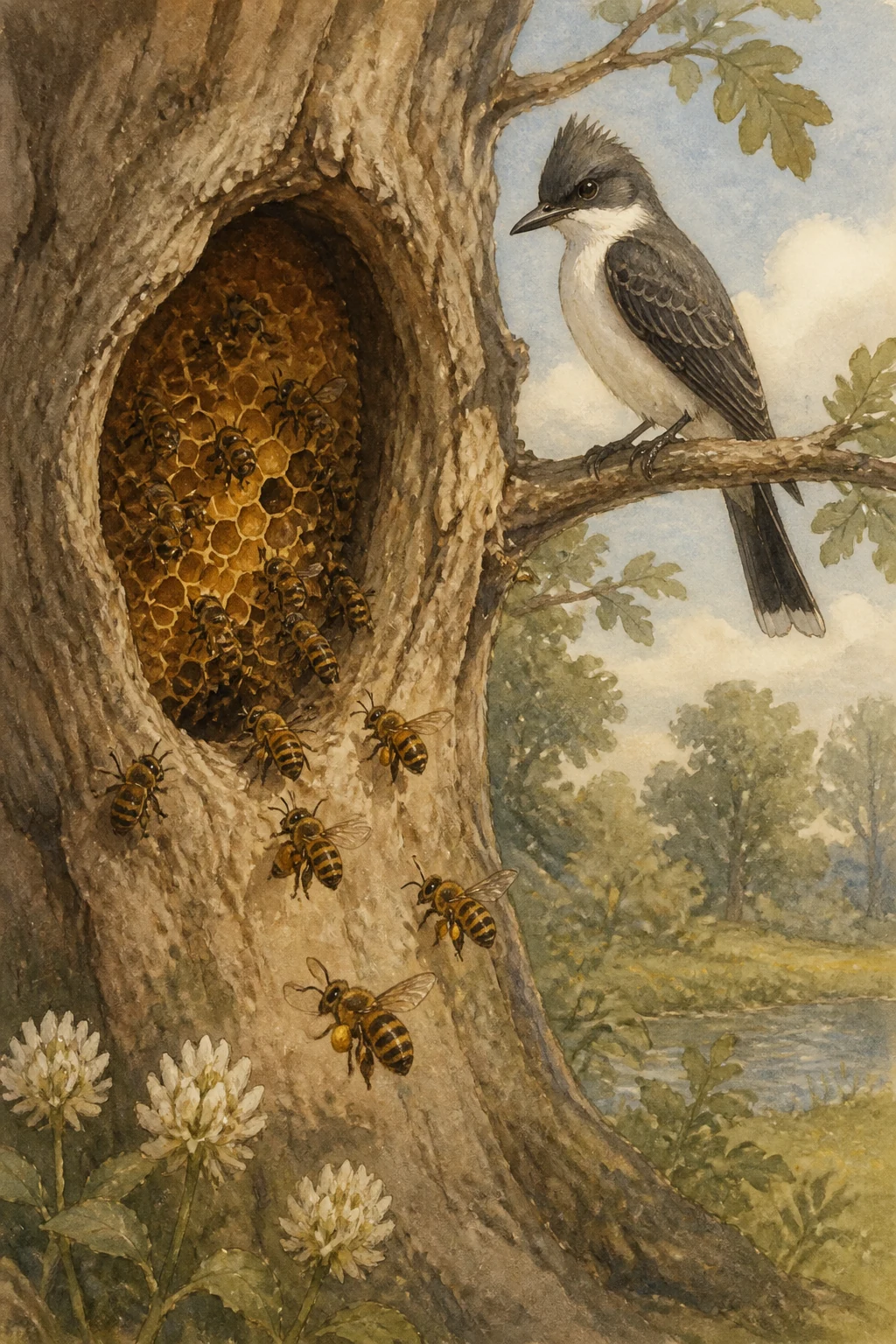
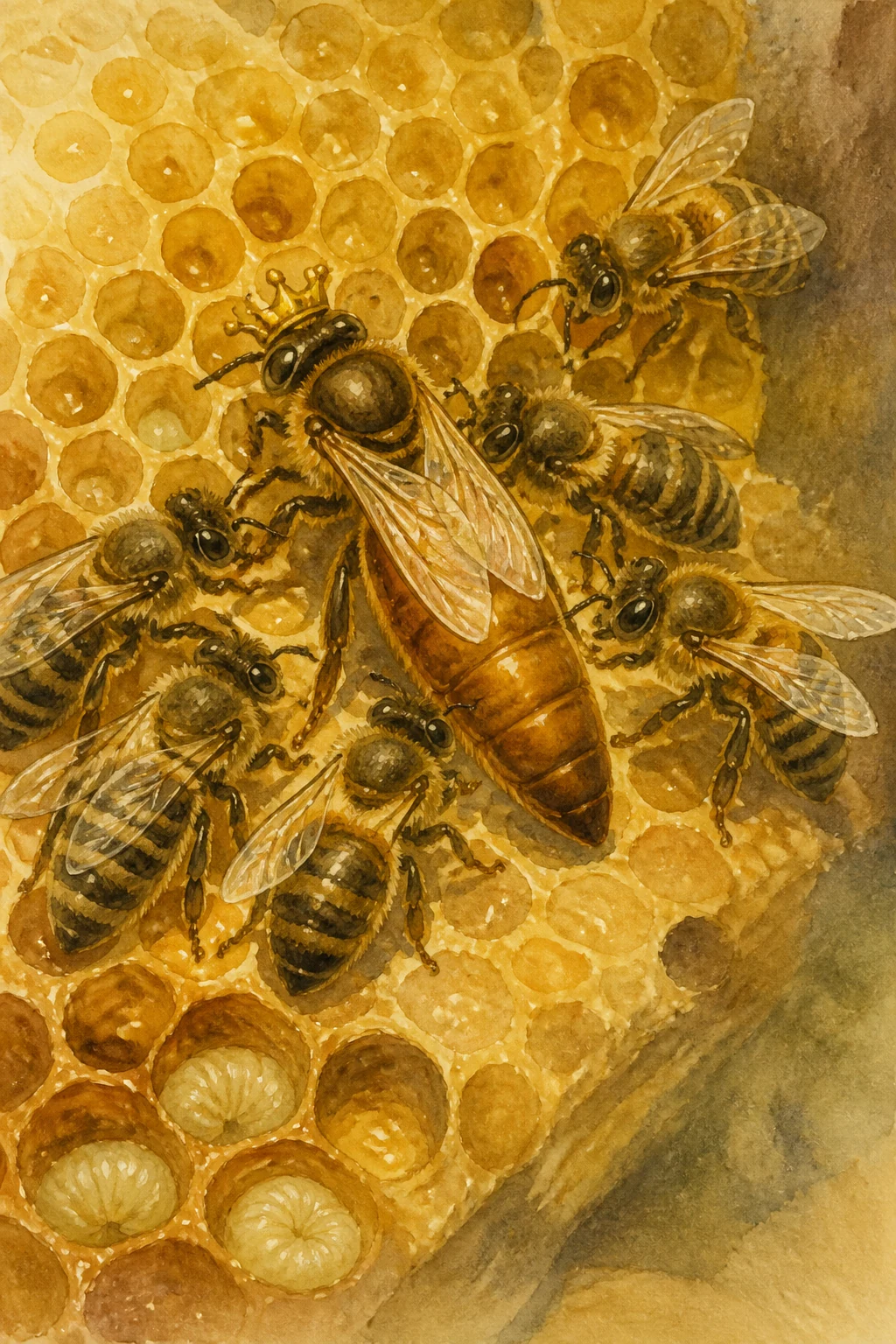
V starem čebeljem drevesu je postajalo zelo tesno in matica mati je bila vse bolj nemirna. Za to je imela veliko razlogov. V drevesu je bilo na tisoče celic, pripravljenih za njena jajčeca, in že dneve je pridno odlagala v vsako po eno. V večje celice je odlagala jajčeca, iz katerih naj bi se izlegli troti, v manjše pa jajčeca za delavke. Jajčec za matice ni odlagala nikoli. Morda med svojimi otroki ni hotela imeti nobene matice, kajti v enem roju nikoli ne moreta biti dve, in ko se izleže nova, mora matica mati oditi in si poiskati drug dom. Takšen je zakon med čebelami.
Delavke pa so vedele, da morajo ves čas odraščati tudi mlade matice. Kaj bi se zgodilo z rojem, če bi se matici materi kaj pripetilo in ne bi bilo nikogar, ki bi odlagal jajčeca? Ko je torej odložila več tisoč jajčec za delavke in je prišel čas, da se iz njih izležejo mladički, so se odločile, da jih bodo nekaj spremenile v mlade matice. In to sploh ni bilo težko. Ko so odletele po med, so si žepke na zadnjih nogah napolnile s cvetnim prahom, rumenim praškom, ki ga najdemo v cvetovih. Tega naj bi zmešale z medom in vodo ter iz njega naredile kruh za mladičke, ki so se zdaj že prebudili in so bili na dnu svojih celic videti kakor drobceni beli črvički. Nato so pripravile še nekaj hrane, podobne kiselkastemu želeju, in jo dale v nekaj celic za delavke, da bi jo drobceni beli črvički oziroma ličinke jedli. Ličinke, ki jedo ta žele, zrastejo v matice in lahko odlagajo jajčeca. Tiste, ki jedo navadni kruh, pa postanejo troti ali delavke, kakor jim je namenila mati.
Ko so bile ličinke stare pet ali šest dni, so jih delavke zaprle v celice in jih nehale hraniti. Ličinke so namreč imele še drugo delo, ne le jesti. Splesti so si morale zapredke in v njih ležati, dokler niso odrasle in bile pripravljene priti med starejše čebele. Ko ličinka oziroma čebelji mladiček dokonča svoj zapredek in leži v njem, ji pravimo buba, ko pa buba povsem odraste ter se pregrize skozi zapredek in vosek, ji pravimo trot, delavka ali matica.
Zdaj je bila matica mati nemirna. Slišala je mlade matice, kako piskajo v svojih celicah, in vedela je, da hočejo priti ven in jo pregnati. Hotela je priti do njih in utišati njihovo piskanje, a delavke so se ji postavile na pot in ji to preprečile. Vedele so, da ne bi bilo dobro, če bi se matica mati srečala s svojimi kraljevskimi otroki, in ko so ti poskušali priti ven, so delavke vhode v njihove celice prekrile z novo plastjo voska. Pustile so le luknjice, skozi katere so lahko pomolili jezičke, da so jih hranile.
Zaradi tega je bila matica mati še bolj nemirna. »Če ne smem s svojimi otroki ravnati, kakor sama hočem,« je rekla, »bom zapustila drevo.« In začela je kar najhitreje hoditi sem ter tja, veliko je govorila in od nestrpnosti je bila že skoraj vsa iz sebe. Delavke so videle, kako ji je pri srcu, in nekatere so se odločile, da pojdejo z njo. Ko se je katera od njih odločila oditi z matico materjo, je to pokazala tako, da je tudi sama začela nemirno hoditi sem ter tja in veliko govoriti, včasih pa je še silno hitro utripala s krili. Potem se je šla napit medu, kajti čebele si pred rojenjem medne želodčke napolnijo, kolikor se le da. Tu in tam se je matica mati umirila in človek bi skoraj pomislil, da si je premislila in ne bo odšla. Potem pa jo je nenadoma spet obšel nemir in vse delavke, ki so nameravale oditi z njo, so se vedle prav tako. Od vznemirjenja so se tako ogrele, da je zrak v drevesu postal prav vroč.
Naposled je matica mati presodila, da je čas za odhod. Njene spremljevalke so se v drevesu zbrale okoli nje in se za hip povsem umirile. Nekaj delavk je že prej krožilo okoli drevesa, zdaj pa so priletele k vhodu in poklicale. Tedaj so vse poletele ven in nekaj minut lebdele v zraku, nato pa posedle na bližnji grm, da bi si odpočile. Prva čebela se je oprijela grma, naslednja se je oprijela nje in tako naprej, dokler se niso vse tesno držale druga druge v temno rjavi, migetajoči gmoti.
O, kako srečna je bila tedaj matica mati! Počutila se je spet mlado in si mislila: »Kako me imajo rade, te moje ljube delavke!« Z nožicami si je gladila telo, da bi bila kar najlepša, in z zadovoljstvom opazila, kako vitka postaja. »Mislila sem že, da ne bom nikoli več letela,« je rekla, »pa je vendar tako čudovito. Mislim, da bom za nekaj časa odletela malo po svoje.«
In res je sama odletela ter se precej lahkomiselno pomenkovala z metuljem, ko sta ponjo prišli dve delavki. »Lahko se vrneta k drugim,« jima je kraljevsko rekla in jima pomignila s tipalkami. »Pridem čez čas.«
»Ne,« sta rekli, »takoj moraš z nama, sicer se bomo vse vrnile v čebelje drevo. Ostati moraš z nami. Svoj delež moraš opraviti, kakor je treba.« In morala je iti, saj je globoko v sebi vedela, da morajo matice ubogati zakon prav tako kakor vsi drugi.
Ko je z delavkami že nekaj časa visela na grmu, so se vrnile tiste, ki so odletele naprej iskat nov dom za roj, in dale znamenje, naj jim druge sledijo. Odletele so k staremu deblu blizu rečnega brega in tam se je začelo pravo delo. Skozi odprtino na enem koncu so zlezle v prostorno notranjost in se nemudoma lotile čiščenja.
»Če kaj zares rada počnem,« je rekla neka delavka, ko je pred vhod odvrgla iver strohnelega lesa, »je to čiščenje doma.« »Jaz tudi,« je rekla njena sestra. »Ampak kakšen vik in krik vedno zaženejo troti, kadar se lotimo česa takega! Lep bi bil naš dom, če bi zanj skrbeli oni!«
»Vesela sem, da ni nobeden prišel z nami sem,« je rekla prva delavka. »Najbrž so vedeli, da jih ne želimo zraven.« »No, no!« je rekla matica mati, ki je prišla do njiju. »Tako pa ne smeta govoriti. Morda bi vedve raje živeli brez trotov in morda bi oni raje živeli brez vaju; jaz pa potrebujem oboje in ne bom dovolila nobenega prepiranja.« Nato je z visoko dvignjeno glavo odšla, delavki pa sta nehali godrnjati. Vedeli sta, da ima prav, in navsezadnje je bila njuna matica, četudi je morala tudi sama ubogati zakone.
Nato so na topolovih popkih nabrale smolo in z njo zamazale vse razpoke in luknjice v stenah svojega doma. Odprto so pustile le mesto, kjer naj bi hodile noter in ven. S smolo so prevlekle tudi nekaj težkih kosov lesa, ki so ležali na tleh njihovega doma, in ko je bilo to delo opravljeno, je bilo vse urejeno in pripravljeno za pohištvo, se pravi za satje.
Veste, kakšno je satje, in veste tudi, kako čebele pridejo do voska, iz katerega ga izdelujejo. Če pa jih ne poznate pobliže in jih še niste videli pri delu, si ne morete predstavljati, kako marljiva bitja so. Matica mati je bila, brž ko so bile celice pripravljene in je lahko spet začela odlagati jajčeca, prav tako zadovoljna in srečna kakor nekoč.
Nekega dne, ko je zavila okoli vogala sata, je naletela na delavko, ki je bila videti žalostna in potrta. »No, kaj pa je narobe?« jo je prijazno vprašala. »Si bolna?«
»Ne,« je odgovorila delavka. »Nisem bolna in utrujena tudi ne, samo rada bi že bila pri koncu.« »Pri koncu česa?« je vprašala matica. »Dela! Kar naprej je treba čistiti dom, mazati stene s smolo, delati vosek, graditi satje, nabirati med, pripravljati kruh in žele ter hraniti mladičke. In ko bodo ti dovolj veliki, bodo morali čistiti dom, mazati stene s smolo, delati vosek, graditi satje, nabirati med, pripravljati kruh in žele ter hraniti mladičke. Rada bi vedela, kdaj bo tega konec in bodo čebele lahko čas preživljale z igro.«
»Nikoli,« je rekla matica mati, in to zelo nežno, saj je videla, da delavka ni pri pravi pameti. »Tega ne bo nikoli konec. Če vse življenje ne bi počela drugega, kakor se igrala, bi si kmalu želela umreti, in prav bi bilo tako, saj na tem svetu ni prostora za lenuhe. Saj veš, da troti čez čas umrejo, ker ničesar ne delajo, in prav je, da je tako.«
»Se svojih jajčec nikoli ne naveličaš?« je vprašala delavka. »Ne,« je odgovorila matica mati, »ne naveličam se jih. Veš, toliko stvari imam, o katerih lahko razmišljam, in vesele misli olajšajo delo. Pa tudi jajčeca niso vedno iste vrste, veš, in to je zame prijetna sprememba. Dala ti bom vodilo, ki si ga velja zapomniti: ‚Dokler je čebela zdrava, ji vestno opravljeno delo prinaša veselje.‘«
»Morda pa je prav to narobe z menoj,« je rekla delavka in dvignila povešeno glavo. »Zadnje čase sem bila pri delu nemarna, kadar sem mislila, da me nihče ne gleda. Poskusila bom po tvoje.«
Ko je odšla, se je matica mati sama pri sebi nasmehnila in rekla: »Ubogi otrok! Ko delo ni več v veselje, je življenje zares žalostno. Toda še vsaka ličinka bi morala vedeti, da ne sme delati nemarno, kadar je nihče ne gleda.«
Izvirnik
059 A SWARM LEAVES THE BEE TREE
Naslednje strani prikazujejo izvirno besedilo za primerjavo.
The old Bee tree was becoming very crowded and the Queen-Mother grew restless. There were many things to make her so. In the tree were thousands of cells made ready for her eggs, and she had been busy for days putting one in each. In the larger cells she laid eggs that would hatch out Drones, and in the smaller ones she laid Worker eggs. She never laid any Queen eggs. Perhaps she did not want any Queens among her children, for there can never be two Queens in one swarm, and when a new one is hatched, the Queen-Mother has to go away and find another home. That is a law among the Bees.
The Workers, however, knew that there must be young Queens growing up all the time. Supposing something should happen to the Queen-Mother, what would become of the swarm if there were nobody to lay eggs? So after she had laid several thousand Worker eggs, and it was time for the young ones to hatch, they decided to change some of the babies into young Queens. And this was easy enough. When they were out for honey, they filled the pockets on their hind legs with pollen, the yellow dust that is found in flowers. This was to be mixed with honey and water and made into bread for the babies, who were now awake, and looked like tiny white worms in the bottom of their cells. Then they made some that was almost like sour jelly, and put it in a few of the Worker cells for the tiny white worms, or Larvae, to eat. The Larvae that eat this jelly grow up to be Queens, and can lay eggs. Those that eat the common bread are either Drones or Workers, whichever their mother had planned them to be.
After the Larvae were five or six days old, the Workers shut them up in their cells and stopped feeding them. That was because the Larvae had other things to do than eat. They had to spin their cocoons, and lie in them until they were grown and ready to come out among the older Bees. When a Larva, or Bee baby, has finished its cocoon, and is lying inside, it is called a Pupa, and when a Pupa is full grown and has torn its way out of the cocoon and wax, it is called a Drone, or a Worker, or a Queen.
Now the Queen-Mother was restless. She could hear the young Queens piping in their cells, and she knew that they wanted to come out and drive her away. She wanted to get to them and stop their piping, but the Workers stood in her way and prevented her. They knew it would not be well for the Queen-Mother to meet her royal children, and when these children tried to come out the Workers covered the doors of their cells with another layer of wax, leaving little holes where they could put out their tongues and be fed.
This made the Queen-Mother more restless than ever. "If I cannot do as I wish to with my own children," she said, "I will leave the tree." And she began walking back and forth as fast as she could, and talked a great deal, and acted almost wild with impatience. The Workers saw how she felt, and part of them decided to go with her. When a Worker made up her mind to go with the Queen-Mother, she showed it by also acting wild and walking back and forth, and talking a great deal, sometimes fluttering her wings very fast. Then she would go for honey, because when Bees are about to swarm they fill their honey-pockets just as full as they can. At times the Queen-Mother would be quiet, and you might almost think that she had given up going. Then suddenly she would grow restless again, and all the Workers who were going with her would act as she did, and they would get so warm with excitement that the air in the tree became quite hot.
At last the Queen-Mother thought it time to start, and her followers came around her in the tree, and were very still for a minute. Several of the Workers had been flying in circles around the tree, and now they came to the doorway and called. Then all came out, and hovered in the air a few minutes before stopping to rest on a bush near by. When they rested, the first Bee held on to the bush, the next Bee held on to her, and that was the way they did until they were all clinging tightly together in a squirming, dark-brown mass.
Ah, then the Queen-Mother was happy! She felt that she was young again, and she thought, "How they love me, these dear Workers!" She stroked her body with her legs to make herself as fine as possible, and she noticed, with pleasure, how slender she was growing. "I had thought I should never fly again," she said, "yet this is delightful. I believe I will go off by myself for a little while."
So she flew off by herself and was talking rather airily to a Butterfly when two of the Workers came after her.
"You may return to the rest," she said in a queenly way, as she motioned to them with her feelers. "I will come by and by."
"No," said they, "you must come at once or we shall all go back to the Bee tree. You must stay with us. You must do your part as it should be done." And she had to go, for she knew in her heart that Queens have to obey the law as well as other people.
After she had hung with the Workers on the bush for some time, the ones who had gone ahead to find a new home for the swarm came back and gave the signal for the rest to follow. They went to an old log near the river-bank, and here they began the real work. Crawling through an opening at one end, they found a roomy place within, and commenced to clean house at once.
"If there is anything I do like," said a Worker, as she dropped a splinter of rotten wood outside the door, "it is house-cleaning."
"So do I," said her sister. "But what a fuss the Drones always make when we try to do anything of the sort! A pretty-looking home we'd have if they took care of it!"
"I'm glad none of them came with us to this place," said the first Worker. "I guess they knew they were not wanted."
"There, there!" said the Queen-Mother, coming up to where they were; "you must not talk in that way. It may be that you would rather do without Drones, and perhaps they would rather do without you; but I need you both and I will not have any quarreling." When she said this she walked away with her head in the air, and the Workers did not scold any more. They knew that she was right, and, after all, she was their Queen, even if she did have to obey the laws.
Next they got varnish from the buds of poplar trees and varnished over all the cracks and little holes in the walls of their home, leaving open only the place where they were to go in and out. They also covered with varnish a few heavy fragments of wood that lay on the floor of their home, and when this task was done it was all in order and ready for the furniture, that is, the comb.
You know how the comb looks, and you know how they get the wax from which to make it, but unless you are acquainted with the Bees, and have seen them at work, you have no idea what busy creatures they are. The Queen-Mother, as soon as the cells were ready and she could begin laying eggs again, was as contented and happy as ever.
One day, when she was walking around a corner of the comb, she ran against a sad and discouraged-looking Worker. "Why, what is the matter?" said she, kindly. "Are you sick?"
"No," answered the Worker. "I'm not sick and I'm not tired, only I want to get through."
"Through with what?" asked the Queen.
"With work! It is clean house, varnish the walls, make wax, build combs, get honey, make bread and jelly, and feed the babies. And when they get old enough they'll have to clean house, varnish the walls, make wax, build combs, get honey, make bread and jelly, and feed the babies. I want to know when it is going to stop, and Bees can spend their time in play."
"Never," said the Queen-Mother; and she spoke very gently, for she saw that the Worker was crazy. "It will never stop. If you had nothing to do but play all your life you would soon want to die, and you ought to, for there is no place in this world for idlers. You know that after a while the Drones die because they do nothing, and it is right they should."
"Don't you ever get tired of your eggs?" asked the Worker.
"No," answered the Queen-Mother, "I don't. You see, I have so much to think about, and happy thoughts make tasks light. And then, you know, it is not always the same kind of egg, and that makes a pleasant change for me. I will give you a motto to remember: 'As long as a Bee is well, work is pleasant when done faithfully.'"
"Perhaps that is the matter with me," said the Worker, raising her drooping head. "I have been careless lately when I thought nobody was looking. I will try your way."
When she had gone, the Queen-Mother smiled to herself and said: "Poor child! When work is no longer a pleasure, life is indeed sad. But any Larva should know better than to work carelessly when she is not watched."
Nadaljuj z branjem