Waltey
Čebele in kraljevi tiran
052 THE BEES AND THE KINGBIRD
Živalske zgodbe Clare Dillingham Pierson · Clara Dillingham PiersonO besedilu
Čebele in kraljevi tiran
- Vir
- Živalske zgodbe Clare Dillingham Pierson
- Avtor
- Clara Dillingham Pierson
- Jezik branja
- Slovenščina
- Jezik izvirnika
- English
- Čas branja
- 8 min branja
- Obseg
- 7 strani
- Naslov izvirnika
- 052 THE BEES AND THE KINGBIRD
O izvirniku
Živalske zgodbe Clare Dillingham Pierson
Devetindevetdeset avtorskih zgodb o živalih na kmetiji, travniku, v gozdu, ob ribniku in ponoči. Bralni jezik je Slovenščina, izvirnik pa prihaja iz vira Živalske zgodbe Clare Dillingham Pierson v jeziku English.
Besedilo
Čebele in kraljevi tiran
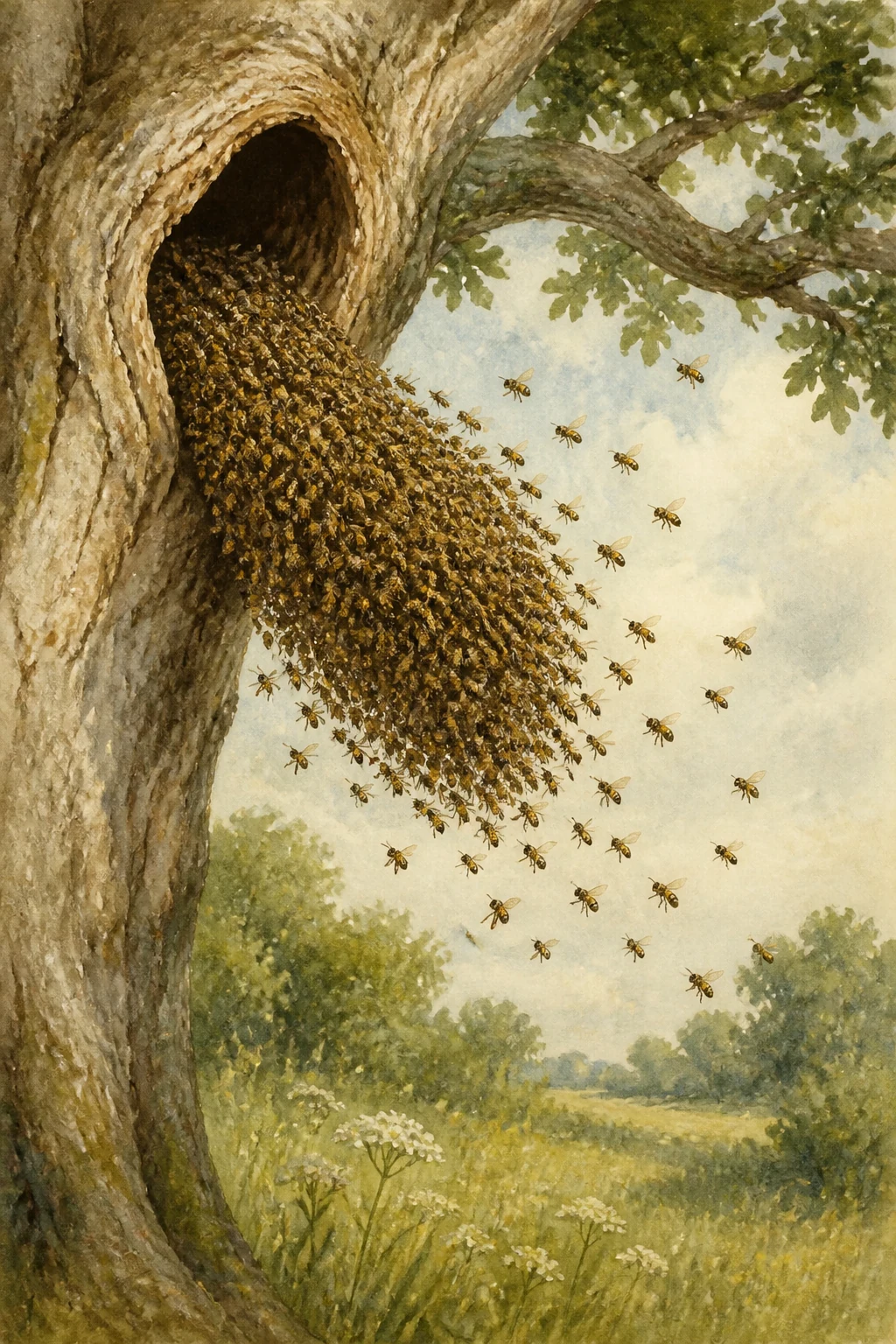
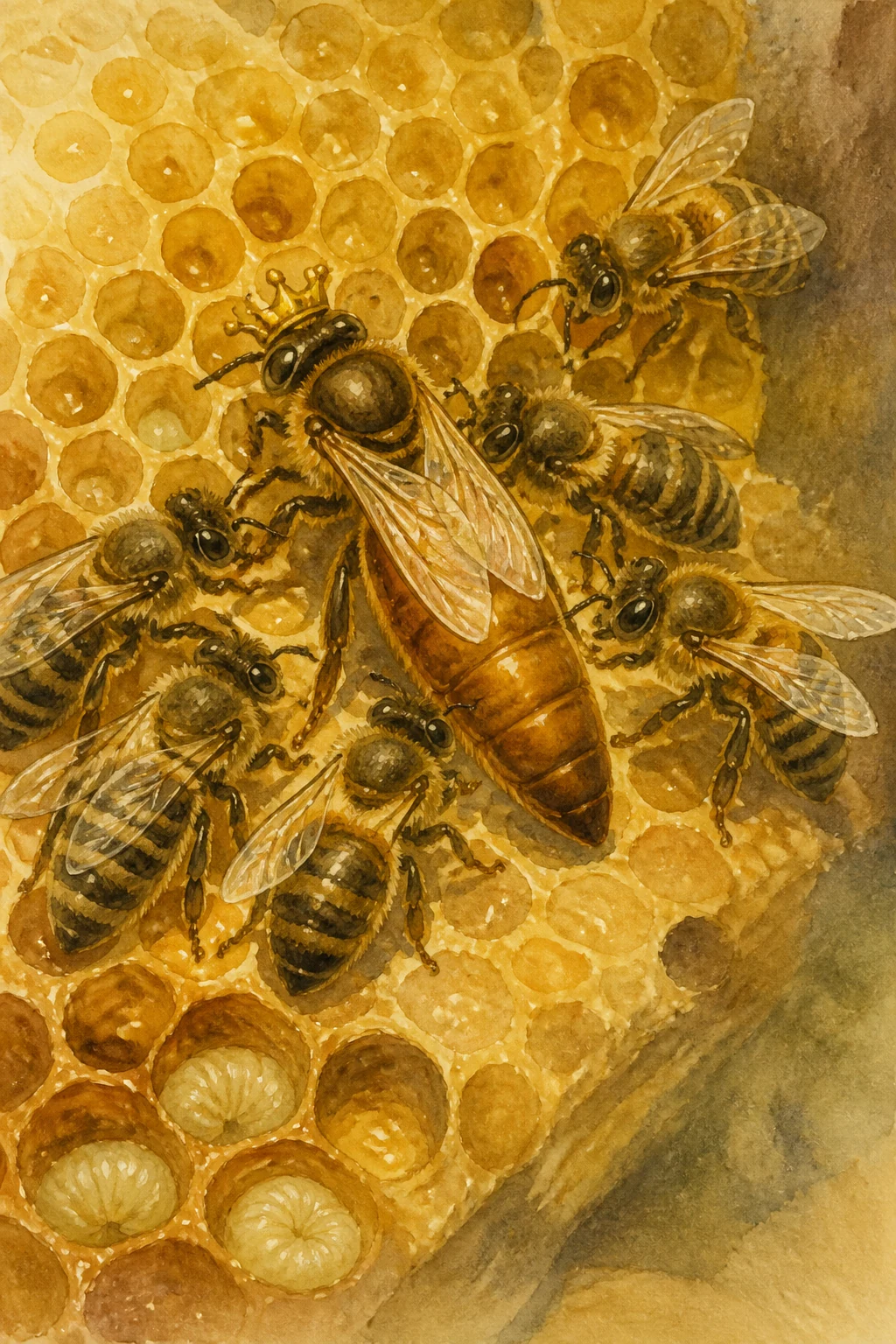
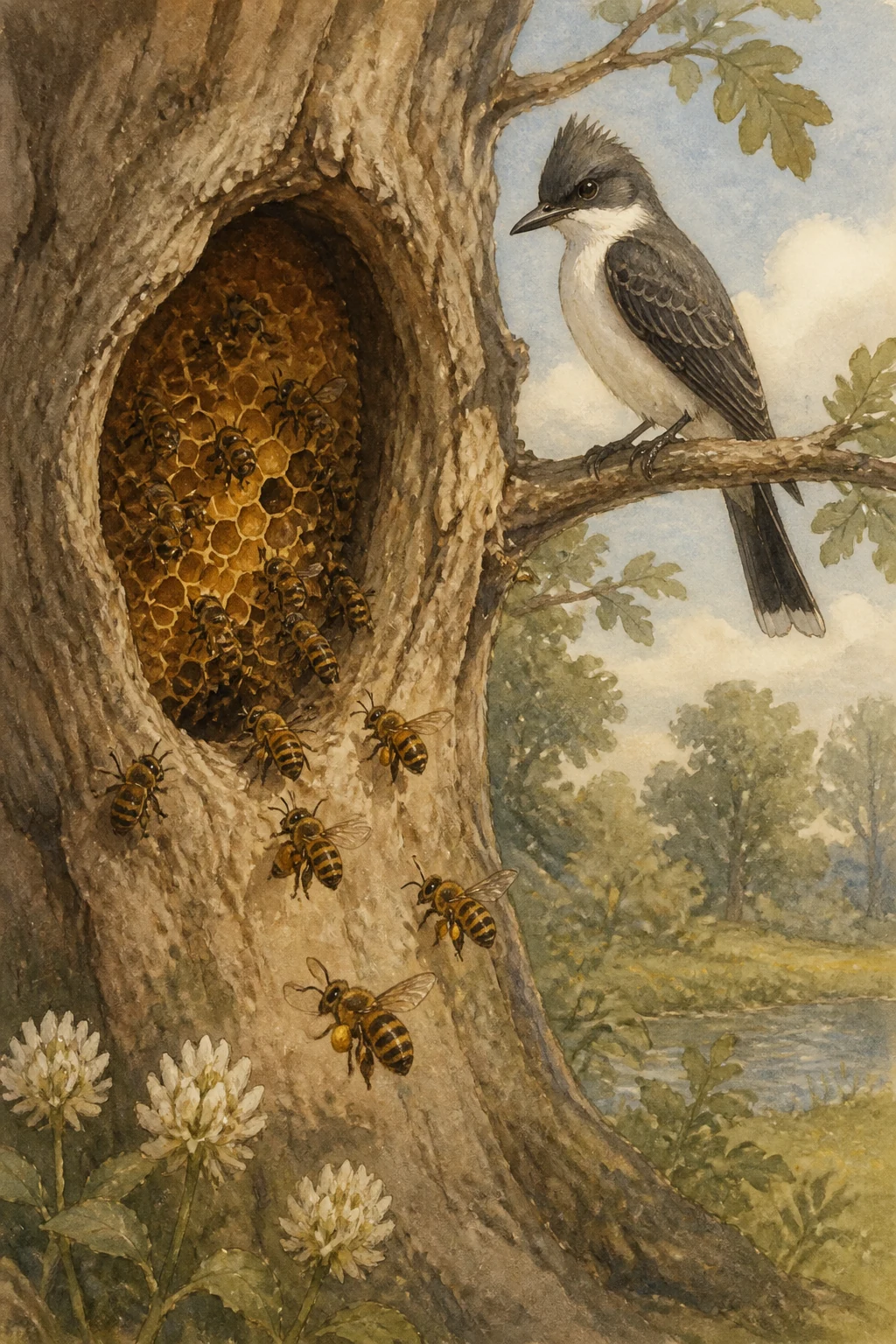
V gozdu je raslo veliko votlo drevo, v katerem je že dolga leta prebival roj čebel. Če bi ga pogledali pozimi, ne bi nikoli uganili, koliko medu je spravljenega v njem, poleti pa so čebele nenehno letale ven in noter in v drevesu je bilo zares živahno. Delavke so morale takrat nabirati med, graditi celice in skrbeti za številne otročičke matice matere. Matica mati je imela toliko dela z jajčeci, da se resnično ni mogla posvečati ničemur drugemu. Ko so bila jajčeca lepo položena v celice, so skrb zanje prevzele delavke in jim dodale obilo kruha, da bi imeli otročički kaj jesti, ko se izležejo. Seveda je bilo treba ta kruh tudi pripraviti in vse delavke so pomagale prinašati pelod oziroma cvetni prah, iz katerega so ga delale.
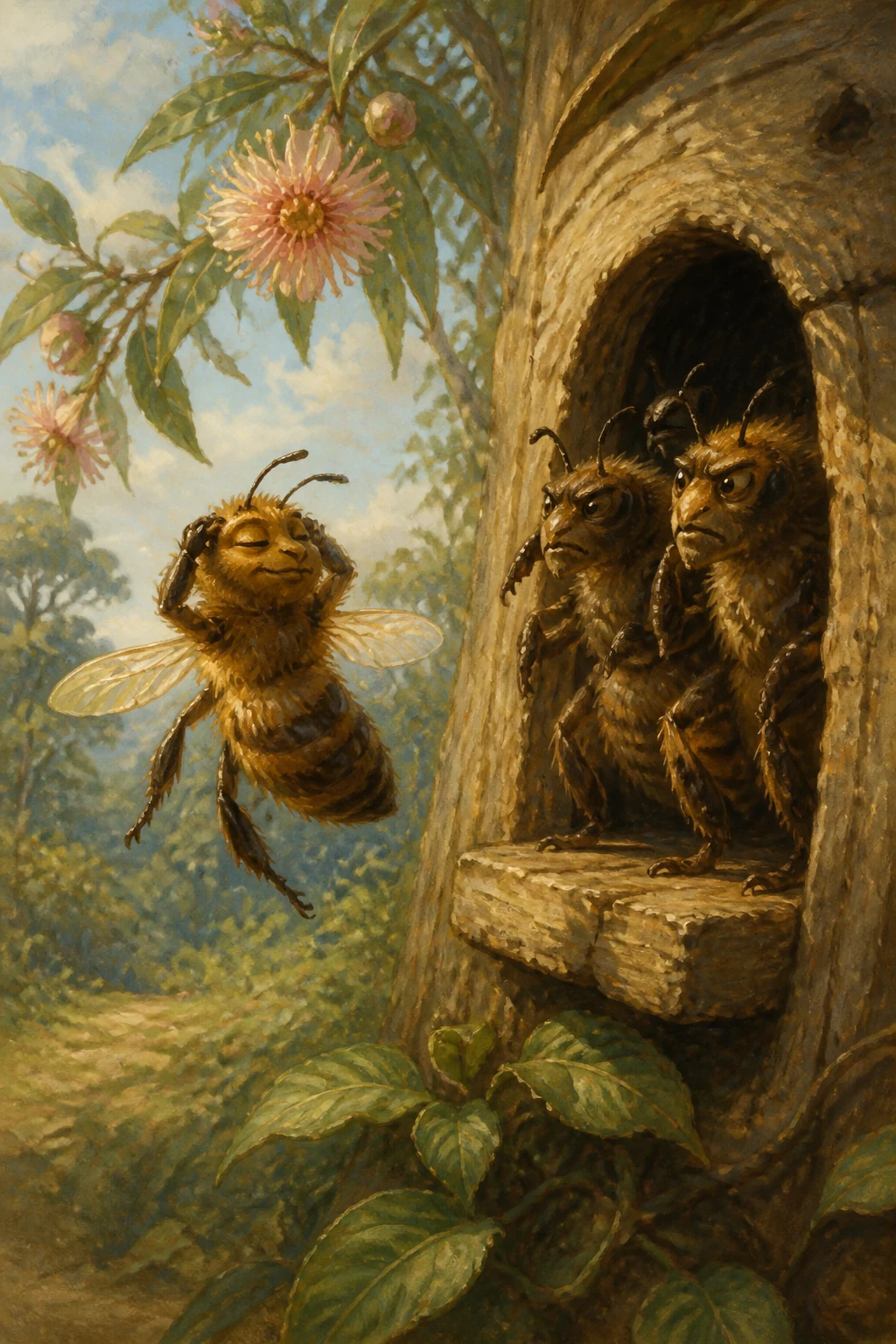
Troti niso počeli ničesar, prav ničesar, niti ene same stvari, razen morda tega, da so pazili na matico, kadar je odletela iz drevesa. Enkrat so to že storili, a tega je bilo davno, še preden je izlegla prvo jajčece, ko je bila še čisto mlada. Bili so postavni, veliki fantje, vsi črni in zlati, in če jih ne bi poznali, bi se vam nemara zdeli najprijetnejše čebele v drevesu. Seveda jih ne bi imeli več radi, ko bi izvedeli, kako leni so, saj nihče ni priljubljen samo zato, ker je lepega videza.
Troti so vedno našli kak izgovor za brezdelje in kakor mnogi drugi lenuhi so si želeli, da bi marljivi za hip odložili delo in poklepetali z njimi. »Kam se vam tako mudi?« so govorili. »Jutri bo spet dovolj medu, ki ga boste lahko nabrale. Zdaj pa se malo ustavite.«
Toda delavke so zmajale z rjavimi glavicami in nestrpno zabrenčale, ko so odgovarjale: »Jutrišnji med bomo nabirale, ko pride jutri, današnjega pa moramo nabrati danes.«
Tedaj so troti godrnjali in govorili, da tako ali tako ne razumejo, čemu bi spravljali toliko medu. Tudi v tem so bili podobni lenuhom po vsem svetu: naj se še tako pritožujejo nad pridobivanjem hrane, je zagotovo pojedo prav toliko kot vsi drugi. Včasih je lenuhi pojedo celo več kakor drugi, pa še najboljše si izbirajo.
Ob oblačnih dneh so delavke res ostale doma v drevesu, vendar ne zato, da bi se igrale. Oprijele so se sten in druga druge ter delale vosek. Za to je bilo potrebno veliko potrpljenja. Med nabiranjem medu so videle toliko zanimivih reči in srečale toliko prijateljev, da je bilo vse skupaj prav razburljivo; kadar pa so delale vosek, so morale dolgo, dolgo viseti, dokler se jim ni na telesih nabral v drobnih luskah. Tedaj so ga lahko postrgale in iz njega oblikovale šesterokotne celice, v katere so spravljale med ali pa so postale domovi za otročičke.
Nekega sončnega jutra je matica mati nehala leči jajčeca in vzkliknila: »Poslušajte! Ste slišale?« »Kaj?« so vprašale delavke in se zgrnile okoli nje.
»Tisti glas vendar,« je rekla. »Zvenelo je kakor ptica, ki kliče: ‘Kyrie! K-y-rie!’ In pred hipom se mi je zazdelo, da zunaj slišim brenčati delavko, a nobena ni priletela noter. Bojim se ...« Tu je umolknila.
»Česa se pa bojiš?« so vprašali troti, ki niso imeli drugega dela kot jesti in spati, zato so bili vedno pripravljeni govoriti o čemer koli. Največja težava z njimi je bila ta, da te, ko si se enkrat zapletel v pogovor, niso radi pustili oditi nazaj na delo.
»No,« je rekla matica mati, »nočem vas preplašiti, a zdelo se mi je, da je bil kraljevi tiran.« »Pa kaj, če je bil?« je rekel velik trot. »On je en sam, nas pa je cela množica.«
»Že,« je rekla matica mati, »a če začne prežati na drevo, nas prav kmalu morda ne bo več toliko. Živim že precej dlje kot vi in vem, kako se vedejo kraljevi tirani.«
To je bilo res, kajti matice dočakajo visoko starost, troti pa nikoli ne živijo dolgo, ker so tako leni. »No,« je rekel veliki trot, »temu moramo priti do dna. Poleti malo naokrog in poglej, ali je res kraljevi tiran,« je naročil neki delavki. »Preden ukrepamo, moramo vedeti, pri čem smo.«
»Kaj pa, če bi šel ti?« je odvrnila. »Koška na nogah imam polna peloda in nemudoma ga je treba predelati v kruh. Še nikoli nisem videla tako lačnih ličink, kot so te zadnje.«
»Ko bi le mogel iti,« je rekel veliki trot in odšepal s poti, da bi jo spustil mimo, »toda s peto nogo sem si pravkar stopil na tretjo in komaj se premikam.«
Ob teh besedah so se vse delavke nasmehnile in celo matica mati je morala obrniti glavo stran. Troti so bili videti nadvse resni. Ne bi se spodobilo, da bi se smejali svojemu bratu. Niso namreč hoteli, da bi se on smejal njim, kadar bi iskali izgovore, zakaj ostajajo doma. Delali so se celo, da ne slišijo delavke, ki je pripomnila, kako nenavadno je, da nekateri ne morejo uporabljati kril, če jih boli ena noga.
»Res je,« je rekla druga delavka, »in nenavadno je tudi, kako se nekateri prav dobro znajdejo na treh nogah, kadar je treba, drugi pa so tako nebogljeni, da ne morejo početi ničesar, če ne morejo uporabljati vseh šestih.«
Troti so se začeli pogovarjati med seboj. »Mislim, da bi moral ves roj planiti na kraljevega tirana, ga pičiti in pregnati,« je rekel eden. »Prav nobenega smisla nima, da mu dovolimo posedati pred našim domom in nas loviti, ko letamo ven in noter. Jaz pravim, da mu moramo napovedati vojno!« Med govorjenjem je bil videti silno bojevit, brenčal je in ob vsakem koraku trzal s tipalnicami.
»Natanko tako!« je vzkliknil drugi trot. »Če bi imel želo, bi jaz vodil napad. Tako pa bom morda koristen pri varovanju satja. Res velika škoda, da troti nimamo žel.« Če bi ga slišali govoriti, bi si mislili, da ga, ko bi dobil želo, kakršna imajo delavke, niti vse čebele v drevesu ne bi mogle odvrniti od boja.
Medtem ko so troti govorili o vojni, so nekatere delavke poslale k matici po nasvet. »Povej nam,« so jo vprašale, »kako naj preženemo kraljevega tirana. Naj ga poskusimo pičiti? Saj veš, da čebela umre, če koga piči, in tega ne bi rade storile, če se le lahko izognemo. Vendar bomo, če tako naročiš.«
Matica mati je odkimala. »S takimi rečmi me ne smete motiti,« je rekla. »Že s pripravljanjem jajčec imam dela čez glavo, ve pa morate skrbeti za roj. Nihče drug ne more opravljati mojega dela in jaz nimam časa za vaše.« Medtem ko je govorila, je izlegla sto sedemnajsto jajčece tistega dne in do večera bi jih verjetno izlegla več kot tisoč, tako da je imela povsem prav, ko je rekla, da nima časa za druge reči.
Delavke so se morale torej znajti same in sklenile so, da jih bo več hkrati poletelo ven in pogledalo, kje je kraljevi tiran. O tem, ali ga bodo napadle, se bodo odločile pozneje. Ko je ena dala znak, so čim bolj hkrati švignile iz drevesa.
Ko so se delavke vrnile z medom in pelodom, so se troti zgrnili okoli njih in jih zasuli z vprašanji. »Kje je? Kakšen je? Vas je skušal ujeti?« Delavke jim niso hotele odgovarjati, temveč so rekle: »Pojdite in se prepričajte sami. Me smo se vse vrnile žive.« Nato so se kakor običajno lotile dela.
»Ne razumem, kako so si upale iti ven,« je rekla čisto mlada čebela, ki je pravkar prišla iz zapredka in je bila še prešibka, da bi letela. »Pha!« je rekel veliki trot. »Mene že ne bi videla postopati po tem drevesu, če ne bi šepal.«
»Prav nič ne pomaga, če nehaš delati, tudi če te je strah,« je rekla ena od delavk. Pri tem se je nasmehnila in mimogrede nekaj zašepetala matici materi. Tudi matica mati se je nasmehnila.
»Zakaj pa vi troti ne greste po med?« je vprašala. »Gotovo ste že zelo lačni.« »Ne počutimo se prav dobro,« so odgovorili. »Morda bi bilo bolje za naše zdravje, če bi nekaj časa mirovali in hranili moči. Če bomo potrebovali hrano, bomo za kosilo vzeli nekaj medu iz satja.«
»Niti kapljice!« so vzkliknile delavke. »Če hočete, ostanite v drevesu zaradi svojega zdravja, toda na tako jasen in sončen dan si nikar ne drznite dotakniti medu, ki smo ga nabrale za zimo.« In vsakokrat, ko je kak trot skušal priti do hrane v satju, so ga pregnale.
Ubogi troti so preživeli težak dan in zvečer so bili tako lačni, da so komaj zaspali. Naslednje jutro so pokukali ven, nato pa naglo odleteli k cvetlicam na zajtrk. Ves dan so ostali zunaj in ko so se zvečer vrnili, so spet urno švignili v drevo.
»No, pa smo!« so rekli. »Ušli smo kraljevemu tiranu.« »Kateremu kraljevemu tiranu?« je vprašala delavka. »Tistemu, ki je bil včeraj tam zunaj,« so odgovorili troti. »Se je danes vrnil?«
»Včeraj ob drevesu ni bilo nobenega kraljevega tirana,« je rekla delavka. »Kaj!« so vzkliknili troti. »Ne,« je rekla matica mati, »zmotila sem se, ko sem mislila, da ga slišim. Delavke so mi to povedale, ko so se vrnile z nabiranja medu. Morda so vam pozabile povedati.«
Toda med govorjenjem so se ji oči navihano zasvetile, vse delavke so se nasmehnile in troti iz neznanega razloga niso vedeli, kaj naj rečejo.
Izvirnik
052 THE BEES AND THE KINGBIRD
Naslednje strani prikazujejo izvirno besedilo za primerjavo.
There was in the forest a great hollow tree where for years a swarm of Bees had made their home. To look at it in winter, one would never guess what a store of honey was sealed up within, but in summer the Bees were always passing in and out, and it was indeed a busy place. Then the Workers had to gather honey and build the cells and look out for the Queen-Mother's many babies. The Queen-Mother had so much care of her eggs that she could really do nothing but attend to them. After they were ready in their cells, the Workers took care of them, and tucked in a lot of bread for the babies to eat when they were hatched. Then there was the bread-making to be done also, and all the Workers helped bring the pollen, or flower-dust, out of which it was made.
The Drones didn't do anything, not a thing, not a single thing, unless it were taking care of the Queen when she flew away from the tree. They had done that once, but it was long ago, before she had laid an egg and while she was still quite young. They were handsome great fellows, all black and gold, and if you didn't know about them, you might have thought them the pleasantest Bees in the tree. Of course you would not care for them after finding how lazy they were, for people are never liked just because they are fine-looking.
The Drones always found some excuse for being idle, and like many other lazy people they wanted the busy ones to stop and visit with them. "What is the hurry?" they would say. "There will be more honey that you can get to-morrow. Stop a while now."
But the Workers would shake their brown heads and buzz impatiently as they answered, "We can get to-morrow's honey when to-morrow comes, but to-day's honey must be gathered to-day."
Then the Drones would grumble and say that they didn't see the sense of storing up so much honey anyway. That also was like lazy people the world over, for however much they scold about getting the food, they are sure to eat just as much as anybody else. Sometimes lazy people eat even more than others, and pick for the best too.
On cloudy days, the Workers did stay at home in the tree, but not to play. They clung to the walls and to each other and made wax. It took much patience to make wax. When they were gathering honey there was so much that was interesting to be seen, and so many friends to meet, that it was really quite exciting; but when they made wax they had to hang for a long, long time, until the wax gathered in flakes over their bodies. Then it was ready to scrape off and shape into six-sided cells to hold honey or to be homes for the babies.
One sunshiny morning the Queen-Mother stopped laying her eggs and cried: "Listen! did you hear that?"
"What?" asked the Workers, crowding around her.
"Why, that noise," she said. "It sounded like a bird calling 'Kyrie! K-y-rie!' and I thought I heard a Worker buzzing outside a minute ago, but no one has come in. I am afraid--" and here she stopped.
"Of what are you afraid!" asked the Drones, who, having nothing to do but eat and sleep, were always ready to talk about anything and everything. The great trouble with them was that if you once began to talk they did not like to have you leave and go to work.
"Why," said the Queen-Mother, "I don't want to alarm you, but I thought it was a Kingbird."
"Well, what if it was?" said a big Drone. "There is only one of him and there are a great many of us."
"Yes," said the Queen-Mother, "but there may not be so many of us very long if he begins to watch the tree. I have lived much longer than you and I know how Kingbirds act."
This was true, for Queens live to be very old, and Drones never live long because they are so lazy.
"Well," said the big Drone, "we must find out about this. Just fly around and see if it is a Kingbird," he said to a Worker. "We must know about things before we act."
"Suppose you should go," she replied. "I have my leg-pockets full of pollen, and it ought to be made into bread at once. I never saw Larvae so hungry as these last ones are."
"I only wish that I could go," said the big Drone, limping as he got out of her way; "but my fifth foot just stepped on my third foot, and I can hardly move."
When he said this, all the Workers smiled, and even the Queen-Mother had to turn away her head. The Drones looked as solemn as possible. It would not do for them to laugh at their brother. They did not want him to laugh at them when they made excuses for staying at home. They even pretended not to hear one of the Workers when she said that it was funny how some people couldn't use their wings if one of their feet hurt them.
"Yes," said another Worker, "and it is funny, too, how some people can get along very well on three legs when they have to, while others are too helpless to do anything unless they can use the whole six."
The Drones began to talk together. "I think that the whole swarm should fly at the Kingbird and sting him and drive him away," said one. "There is no sense in allowing him to perch outside our home and catch us as we pass in and out. I say that we should make war upon him!" He looked very fierce as he spoke, buzzing and twitching his feelers at every step.
"Exactly!" cried another Drone. "If I had a sting, I would lead the attack. As it is, I may be useful in guarding the comb. It is a great pity that Drones have no stings." You would have thought, to hear him speak, that if he had been given a sting like those of the Workers, not all the Bees in the tree could keep him from fighting.
While the Drones were talking about war, some of the Workers sent to their Queen for advice. "Tell us," they said, "how to drive away the Kingbird. Should we try to sting him? You know it kills a Bee to sting anybody, and we don't want to if we can help it, yet we will if you say so."
The Queen-Mother shook her head. "You must not bother me about such things," she said. "I have all that I can do to get the eggs ready, and you must look after the swarm. Nobody else can do my work, and I have no time to do yours." As she spoke, she finished the one hundred and seventeenth egg of that day's lot, and before night came she would probably have laid more than a thousand, so you can see she was quite right when she said she had no time for other things.
This left the Workers to plan for themselves, and they agreed that a number of them should fly out together and see where the Kingbird was. Then they could decide about attacking him later. When one gave the signal, they dashed out as nearly together as possible.
After the Workers returned with honey and pollen, the Drones crowded around them, asking questions. "Where is he? What does he look like? Did he try to catch you?" The Workers would not answer them, and said: "Go and find out for yourself. We all came back alive." Then they went about their work as usual.
"I don't see how they dared to go," said a very young Bee who was just out of her cocoon and was still too weak to fly.
"Pooh!" said the big Drone. "You wouldn't see me hanging around this tree if I were not lame."
"There is no use in stopping work even if you are scared," said one of the Workers. She smiled as she spoke, and whispered something to the Queen-Mother as she passed her. The Queen-Mother smiled also.
"Why don't you Drones go for honey?" she said. "You must be getting very hungry."
"We don't feel very well," they answered. "Perhaps it would be better for our health if we were to keep quiet for a while and save our strength. We will lunch off some of the honey in the comb if we need food."
"Not a bit of it!" exclaimed the Workers. "Stay in the tree if you want to for your health, but don't you dare touch the honey we have gathered for winter, when the day is clear and bright like this." And whenever a Drone tried to get food from the comb they drove him away.
The poor Drones had a hard day of it, and at night they were so hungry they could hardly sleep. The next morning they peeped out, and then rushed away to the flowers for their breakfast. They stayed out all day, and when they returned at night they rushed swiftly into the tree again.
"There!" they said; "we escaped the Kingbird."
"What Kingbird?" asked a Worker.
"The one who was there yesterday," answered the Drones. "Has he been back to-day?"
"There was no Kingbird near the tree yesterday," said the Worker.
"What!" cried the Drones.
"No," said the Queen-Mother, "I was mistaken when I thought I heard him. The Workers told me after they had been out for honey. Perhaps they forgot to tell you."
But her eyes twinkled as she spoke, and all the Workers smiled, and for some reason the Drones did not know what to say.
Nadaljuj z branjem