Prevod
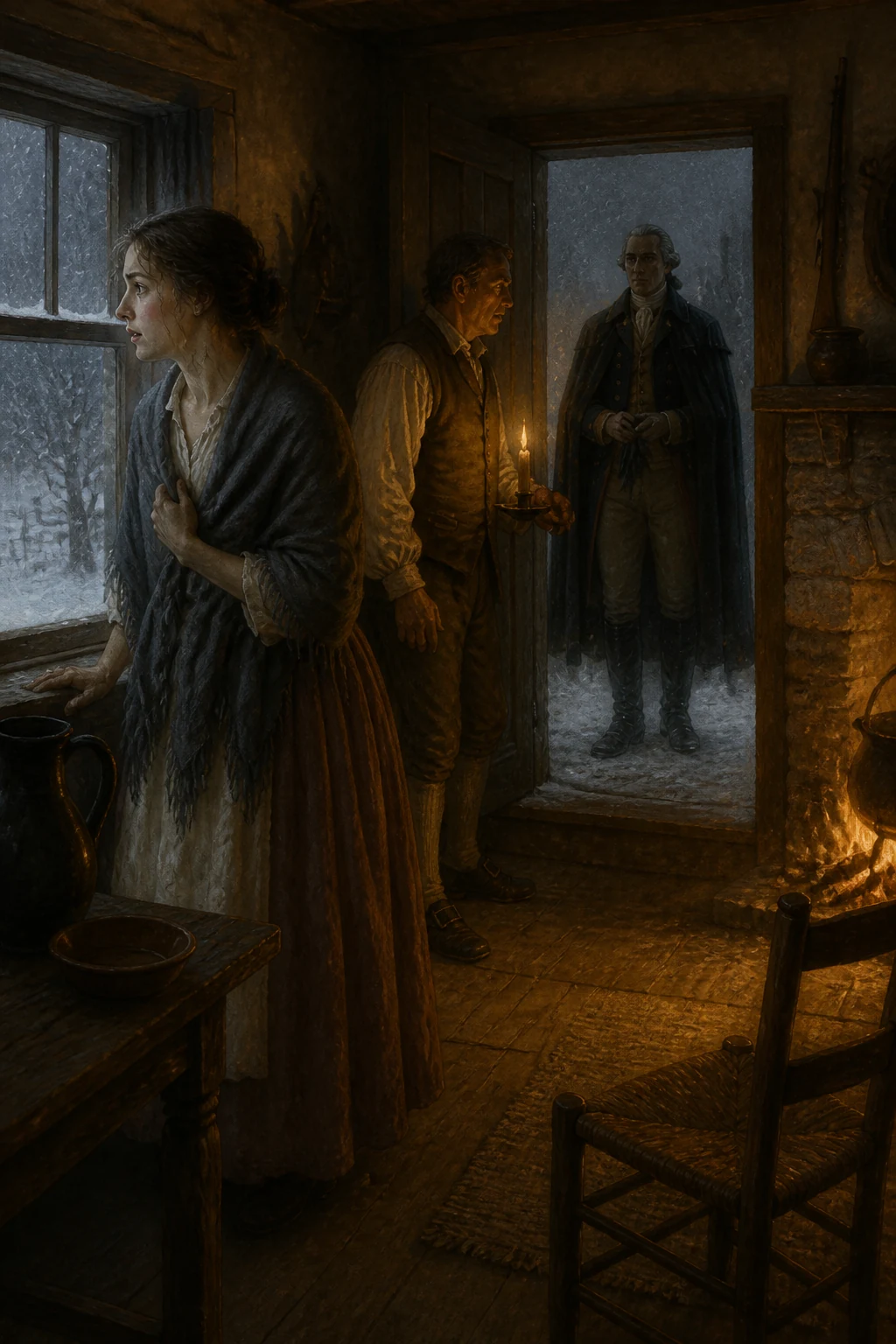
Pozimi leta 1779 je bil general Putnam z oddelkom slabo hranjenih in neplačanih vojakov nastanjen v Readingu v Connecticutu. Stanoval je pri Marvinovih in Mary, hči kmeta Marvina, si je utrla pot do srca tega robatega vojaka z izvrstnimi cmoki in poživljajočim napitkom flip. Zaupal ji je celo svoje skrivnosti, in ko je v neki stiski potreboval vohuna, jo je v šali vprašal, ali pozna kakšnega pogumnega fanta, ki bi mu lahko zaupal, da bo med britanske čete ponesel lažno sporočilo in tako odvrnil grozeči napad. Da, poznala je takšnega in jamčila je, da bo odnesel sporočilo, če bo s tem pomagal kolonialni vojski. Putnam ji je zagotovil, da bo to koristilo domoljubni stvari, in ji poleg tega obljubil nagrado; dekle je tedaj z nasmehom in iskrico v očeh vzelo pismo ter zapustilo sobo.
Ko je dnevna svetloba ugasnila na nebu, se je Mary izmuznila iz hiše, prečkala pašnik, stopila v grapo in na polju onkraj nje prišla do zavetja za živino. V hipu je iz sence stopila visoka postava in dekle se je prepustilo njenemu objemu. Poljubila sta se in za trenutek šepetaje spregovorila, nato pa je dekle svojega ljubega naglo vprašalo, ali bi odnesel pismo v britanski štab blizu Ridgefielda. Seveda bi ga. Toda ni ga smel prebrati in nikakor ni smel povedati, od koga ga je dobil. Mladenič je privolil brez vprašanj — zadostovalo je, da ga je prosila ona; potisnila mu je drobni listič v roko, mu zaželela srečno pot in ga še enkrat poljubila, nato pa sta se razšla — on se je odpravil po opravku, ona pa je šla prenočit k duhovnikovi hčeri v župnišče. Okoli desete ure je Putnama zmotil topot korakov in dva vojaka sta v njegovo sobo privedla visokega, čednega fanta. Ujetnika sta našla znotraj vojaških položajev, sta povedala, med pogovorom z neznano osebo, ki je v temi ušla stražarjevemu pogledu. Ob prijetju si je vtaknil košček papirja v usta in ga pogoltnil. Povedal je, da mu je ime Robert Lockwood, in ko je Putnam zahteval pojasnilo, kaj je brez dovoljenja počel v bližini tabora, je odvrnil, da ga veže obljuba, da tega ne bo povedal.
»Ste domoljub?« je vprašal general. »Rojalist sem. Z uporom ne soglašam. V tej vojni sem živel mirno in se držal ob strani.« Putnam je z dolgimi koraki hodil po sobi in dajal duška jezi z besedami, ki niso bile ne izbrane ne blage, saj so mu vohuni in ovaduhi, odkar je bil tam, povzročali veliko preglavic. Nato se je ustavil in rekel:
»Nocoj je bil nekdo z vami — eden mojih mož. Povejte mi ime tega izdajalca, pa vam bom prizanesel z življenjem, njega pa obesil pred vso vojsko.« Ujetnik je prebledel in sklonil glavo. Svoje obljube ni hotel prelomiti.
»Britanski vohun ste in ob sončnem vzhodu vas bom obesil!« je zarjovel Putnam. Mladenič ga je zaman prosil, naj mu da čas, da se obrne na Washingtona. Vztrajal je, da ni vohun in da se bo izkazalo, morda prepozno, da so storili strašno napako. Njegove besede so naletele na gluha ušesa: odvedli so ga in zvezali, in ko je naslednje jutro vzhajalo sonce, so nad njim izvršili sodbo vojaškega sodišča.
Opoldne se je Mary vrnila iz župnišča; oči so ji igrale in ob nasmehih so se ji ob ustih delale jamice. Stopila je k Putnamu in z malce predrznosti dejala: »Uspelo mi je, general. Sinoči sem našla fanta, ki je odnesel vaše sporočilo. Z njim sem se morala sestati na samem, saj je torijec in zato ne more priti v ta tabor. Revež ni niti slutil, da dela uslugo upornikom, saj ni vedel, kaj piše v pismu, in zavezala sem ga, naj ne pove, kdo mu ga je dal. Vidite, tako sem ga kaznovala, ker vztraja na kraljevi strani.«
General se je zasmejal in jo občudujoče pogledal. »Pogumno dekle ste,« je rekel, »in domnevam, da ste prišli po nagrado. No, kaj si želite?«
»Želim dovolilnico za Roberta Lockwooda. On je tisti rojalist, o katerem sem govorila, toda ne bo vas izdal, saj ni vojak; in — njegovi obiski me zelo osrečujejo.«
»To je vohun, ki ste ga danes zjutraj obesili,« je Putnamu na uho zašepetal pribočnik. »Dajte ji dovolilnico in ničesar ne povejte o tem, kar se je zgodilo.« General se je zdrznil, spremenil barvo in za hip obstal; nato je z naglo potezo podpisal dovolilnico, jo položil dekletu v roko, jo resnobno poljubil in gledal za njo, ko je z lahkimi koraki stekla iz hiše. Potem je odšel v spalnico, zaprl vrata in celo uro ostal sam. Odtlej o dogodku ni več govoril, ko pa so njegove čete kmalu zatem dobile ukaz za odhod, je skoraj prebledel, ko se je poslavljal od Mary Marvin in se srečal z njenim žalostnim, očitajočim pogledom, čeprav vse do zadnjega dne svojega življenja ni izvedel, ali je odkrila usodo Roberta Lockwooda ali ne.
Izvirnik
In the winter of 1779, General Putnam was stationed at Reading, Connecticut, with a band of ill-fed, unpaid troops. He was quartered at the Marvin house, and Mary, daughter of farmer Marvin, won her way to the heart of this rough soldier through the excellence of her dumplings and the invigorating quality of her flip. He even took her into his confidence, and, being in want of a spy in an emergency, he playfully asked her if she knew any brave fellow who could be trusted to take a false message into the British lines that would avert an impending attack. Yes, she knew such an one, and would guarantee that he would take the message if the fortunes of the colonial army would be helped thereby. Putnam assured her that it would aid the patriot cause, and, farther, that he would reward her; whereat, with a smile and a twinkling eye, the girl received the missive and left the room.
When daylight had left the sky, Mary slipped out of the house, crossed a pasture, entered a ravine, and in a field beyond reached a cattle shelter. On the instant a tall form stepped from the shadows and she sank into its embrace. There was a kiss, a moment of whispered talk, and the girl hurriedly asked her lover if he would carry a letter to the British headquarters, near Ridgefield. Of course he would. But he must not read it, and he must on no account say from whom he had it. The young man consented without a question--that she required it was sufficient; so, thrusting the tiny paper into his hand and bidding him God-speed, she gave him another kiss and they parted--he to go on his errand, she to pass the night with the clergyman's daughter at the parsonage. At about ten o'clock Putnam was disturbed by the tramping of feet and a tall, goodlooking fellow was thrust into his room by a couple of soldiers. The captive had been found inside the lines, they said, in consultation with some unknown person who had escaped the eye of the sentry in the darkness. When captured he had put a piece of paper into his mouth and swallowed it. He gave the name of Robert Lockwood, and when Putnam demanded to know what he had been doing near the camp without a permit he said that he was bound by a promise not to tell.
“Are you a patriot?” asked the general.
“I am a royalist. I do not sympathize with rebellion. I have been a man of peace in this war.”
Putnam strode about the room, giving vent to his passion in language neither choice nor gentle, for he had been much troubled by spies and informers since he had been there. Then, stopping, he said:
“Some one was with you to-night-some of my men. Tell me that traitor's name and I'll spare your life and hang him before the whole army.”
The prisoner turned pale and dropped his head. He would not violate his promise.
“You are a British spy, and I'll hang you at sunrise!” roared Putnam.
In vain the young man pleaded for time to appeal to Washington. He was not a spy, he insisted, and it would be found, perhaps too late, that a terrible mistake had been committed. His words were unheeded: he was led away and bound, and as the sun was rising on the next morning the sentence of courtmartial was executed upon him.
At noon Mary returned from the parsonage, her eyes dancing and her mouth dimpling with smiles. Going to Putnam, she said, with a dash of sauciness, “I have succeeded, general. I found a lad last night to take your message. I had to meet him alone, for he is a Tory; so he cannot enter this camp. The poor fellow had no idea that he was doing a service for the rebels, for he did not know what was in the letter, and I bound him not to tell who gave it to him. You see, I punished him for abiding by the king.”
The general laughed and gazed at her admiringly.
“You're a brave girl,” he said, “and I suppose you've come for your reward. Well, what is it to be?”
“I want a pass for Robert Lockwood. He is the royalist I spoke of, but he will not betray you, for he is not a soldier; and--his visits make me very happy.”
“The spy you hanged this morning,” whispered an aide in Putnam's ear. “Give her the pass and say nothing of what has happened.”
The general started, changed color, and paused; then he signed the order with a dash, placed it in the girl's hand, gravely kissed her, watched her as she ran lightly from the house, and going to his bedroom closed the door and remained alone for an hour. From that time he never spoke of the affair, but when his troops were ordered away, soon after, he almost blenched as he gave good-by to Mary Marvin, and met her sad, reproachful look, though to his last day he never learned whether or no she had discovered Robert Lockwood's fate.