Prevod
Ko se je začela lovska sezona, je nekaj Dakotov, ki so taborili blizu kraja, kjer stoji St. Paul, zapustilo svoje družine in prijatelje ter se odpravilo na sever. Ko so prispeli v drugo vas svojega plemena, so se tam za nekaj časa ustavili, da bi si odpočili. Eden izmed mož pa je, kakor se je pozneje izkazalo, ta čas izrabil sebi v škodo: vzljubil je dekle iz te severne skupnosti, se na poti proti jugu z njo poročil in jo odpeljal domov. To bi bilo povsem primerno, če ne bi bil že poročen. Prva žena je vedela, da si sme vsak bojevnik vzeti še drugo, če lahko preživlja obe; toda v njeni naravi je bila ženska močnejša od divjakinje, in ko se je mož vrnil z rdečelično žensko ob strani, je začutila, da njegove ljubezni ne bo nikoli več deležna. Mož je mlado ženo obsipal s pozornostjo, naj je pleme počivalo ali potovalo. Ko so selili tabor, je starejša hodila ali veslala za drugimi s svojim sinom, obetavnim dečkom desetih ali dvanajstih let.
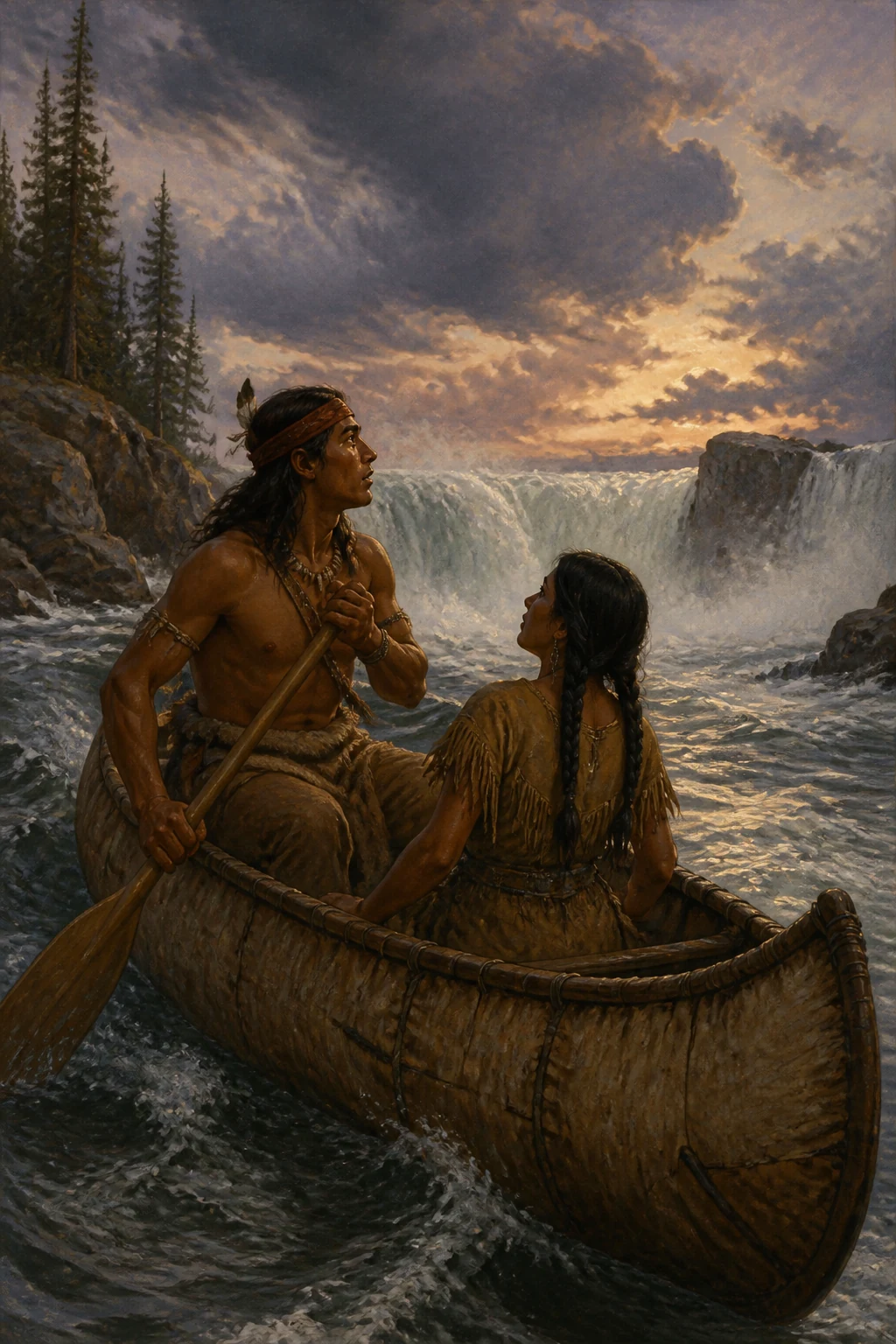
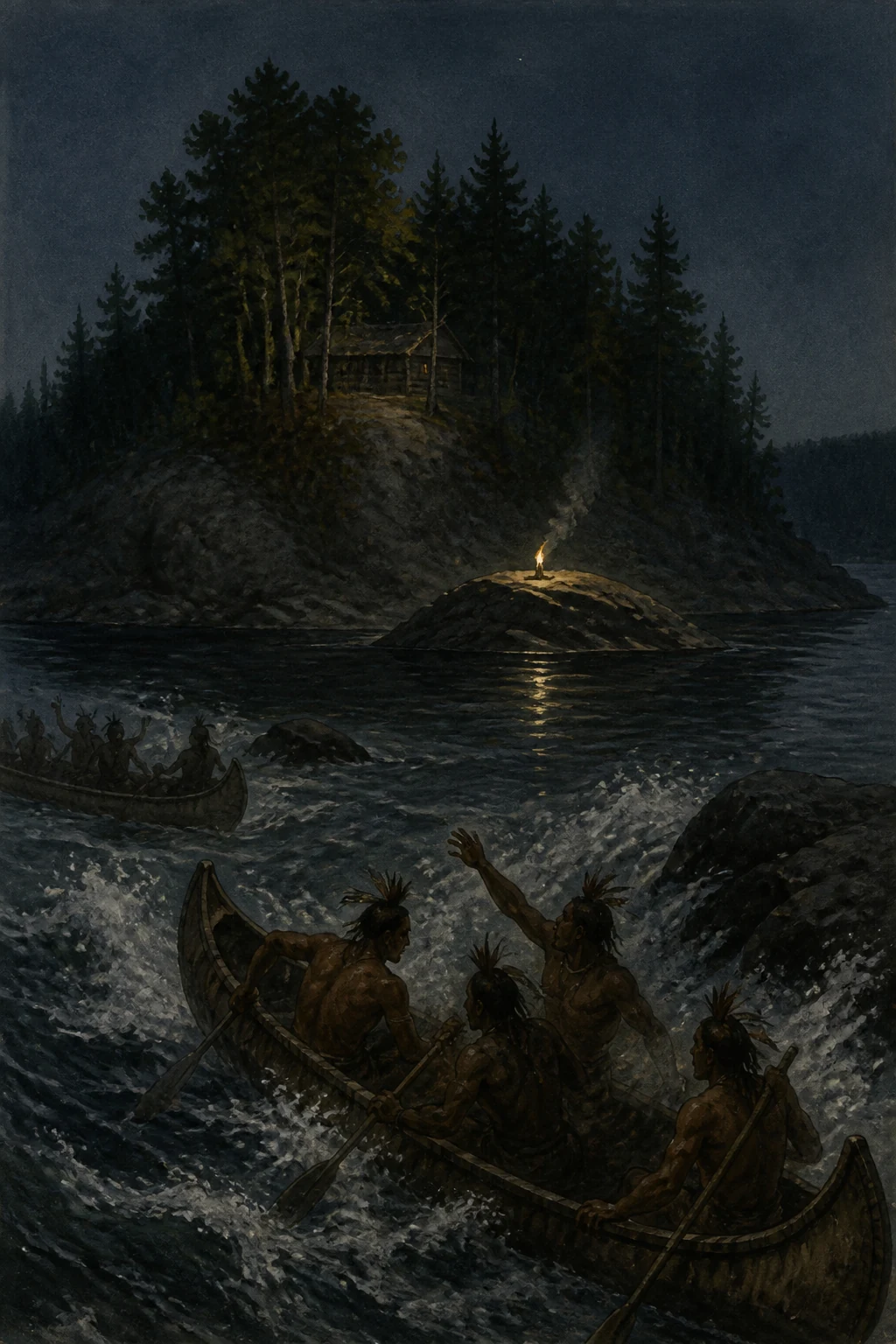
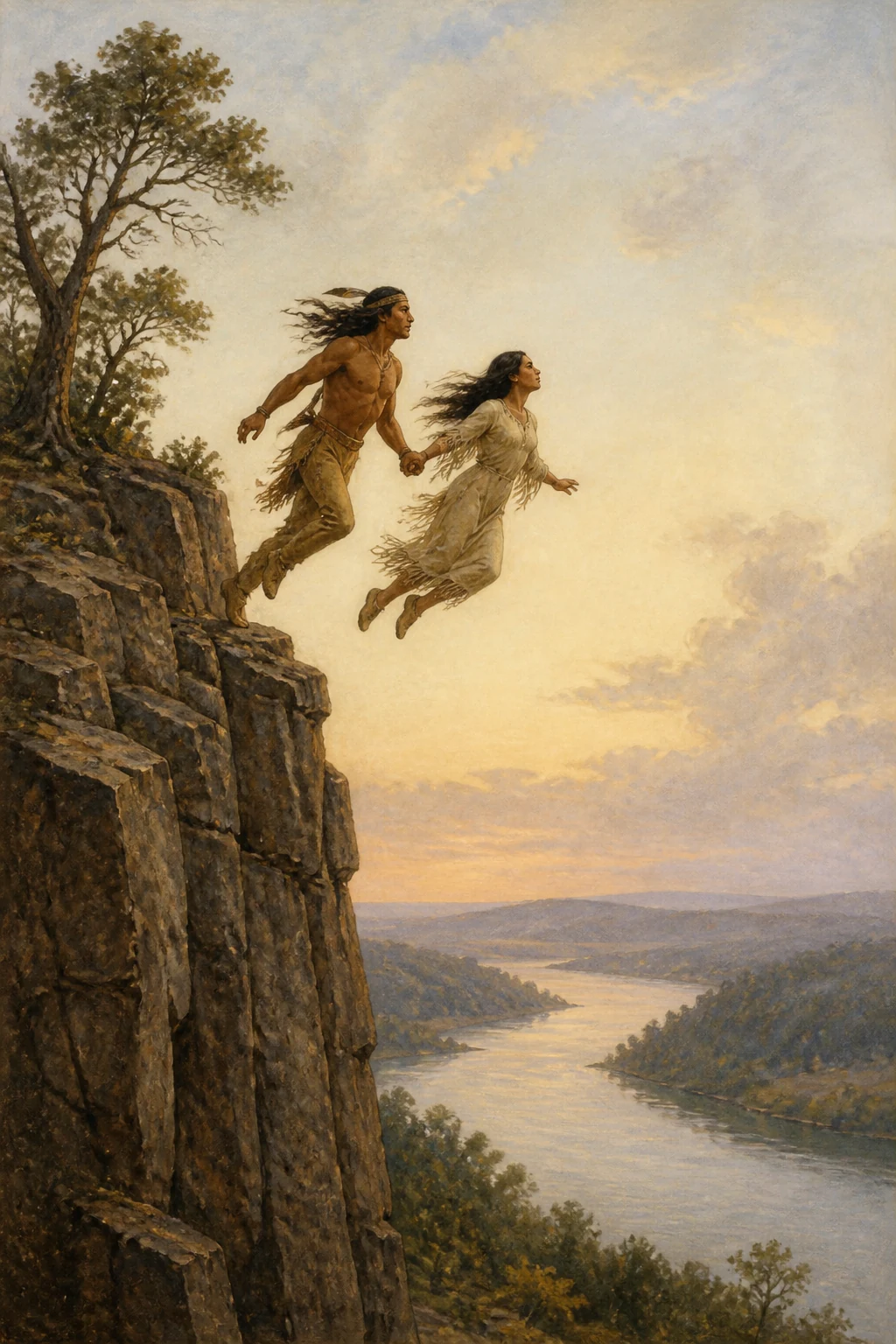
Ko so se po uspešnem lovu vračali po reki navzdol, je morala vsa skupina obiti brzice nad slapovi St. Anthony's Falls in čolne prenesti po kopnem. Medtem ko so drugi pripravljali čolne in tovor, da bi jih na rokah prenesli do vznožja slapov, je zapuščena žena izbrala trenutek, ko je nihče ni opazoval, in se s sinom vkrcala v enega od kanujev. Odveslala je do otoka, si nadela ves svoj nakit in dečka okrasila z biseri in perjem, kakor da bi bil bojevnik. Ko je mož opazil, da je ni med njimi, se je nekaj časa zaskrbljeno oziral naokrog, nato pa z grozo zagledal, kako se je od otoka podala v hiter tok. Otroka je posadila visoko v čolnu in z enakomernimi zamahi veslala po reki navzdol. Obupano jo je klical in ji mahal. Zdelo se je, da ga ne sliši, in tudi ko so se njegovim krikom pridružili drugi, ni obrnila glave. Za hip so tisti, ki so prisluhnili, zaslišali njeno smrtno pesem, nato pa so ju kipeči valovi skrili njihovim pogledom in mož na bregu se je z bolečim krikom zgrudil na tla.
Izvirnik
Several of the Dakotas, who had been in camp near the site of St. Paul, left their families and friends, when the hunting season opened, and went into the north. On their arrival at another village of their tribe, they stayed to rest for a little, and one of the men used the time to ill-advantage, as it fell out, for he conceived an attachment for a girl of this northern family, and on his way southward he wedded her and took her home with him. Proper enough to do, if he had not been married already. The first wife knew that any warrior might take a second, if he could support both; but the woman was stronger than the savage in her nature, and when her husband came back, with a red-cheeked woman walking beside him, she felt that she should never know his love again. The man was all attention to the young wife, whether the tribe tarried or travelled. When they shifted camp the elder walked or rowed behind with her boy, a likely lad of ten or twelve.
It was when they were returning down the river after a successful hunt that the whole company was obliged to make a carry around the quick water near the head of St. Anthony's Falls. While the others were packing the boats and goods for transportation by hand to the foot of the cataract, the forsaken wife chose a moment when none were watching to embark with her boy in one of the canoes. Rowing out to an island, she put on all her ornaments, and dressed the lad in beads and feathers as if he were a warrior. Her husband, finding her absent from the party, looked anxiously about for some time, and was horrified to see her put out from the island into the rapid current. She had placed the child high in the boat, and was rowing with a steady stroke down the stream. He called and beckoned franticly. She did not seem to hear him, nor did she turn her head when the others joined their cries to his. For a moment those who listened heard her death-song, then the yeasty flood hid them from sight, and the husband on the shore fell to the earth with a wail of anguish.