Prevod
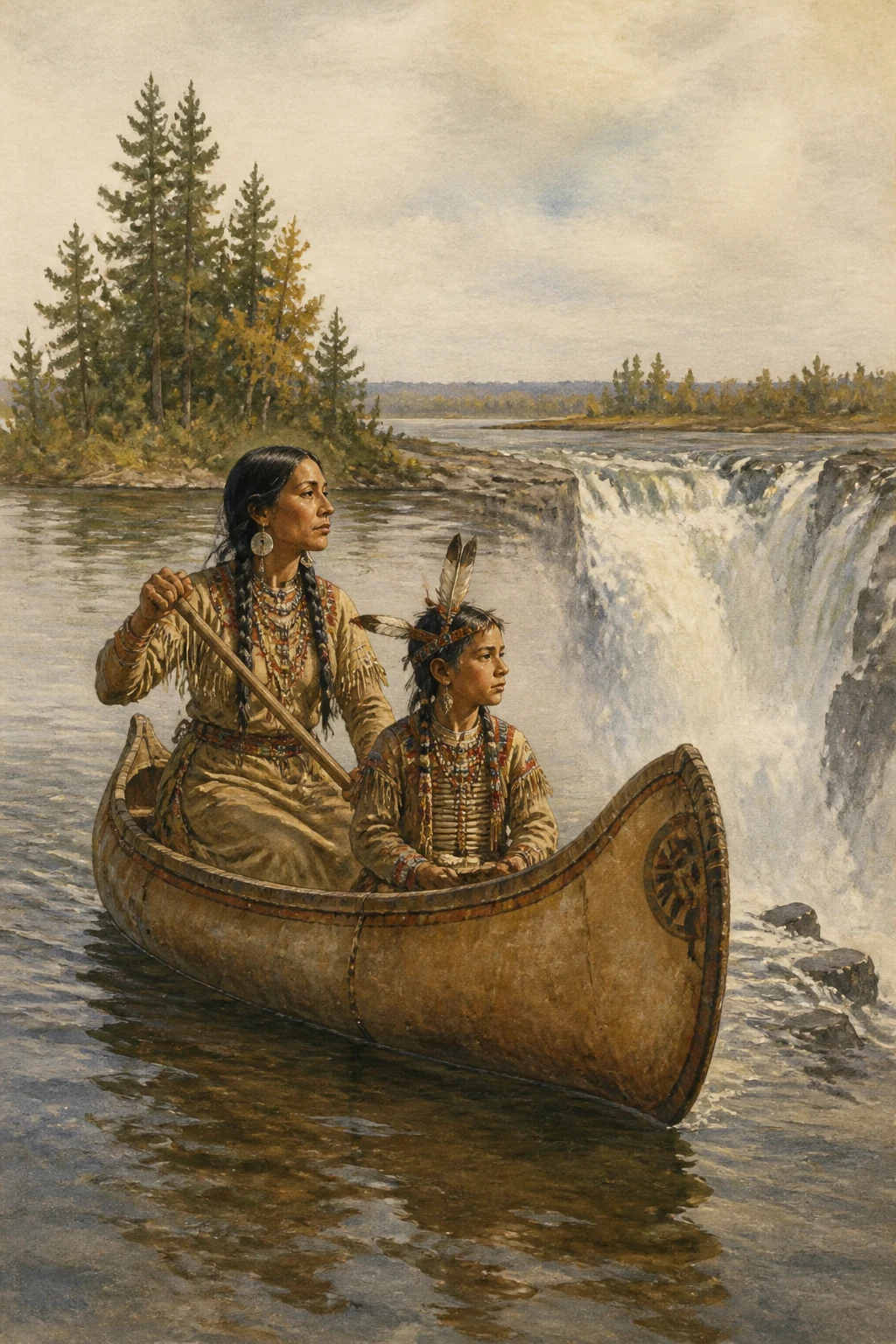
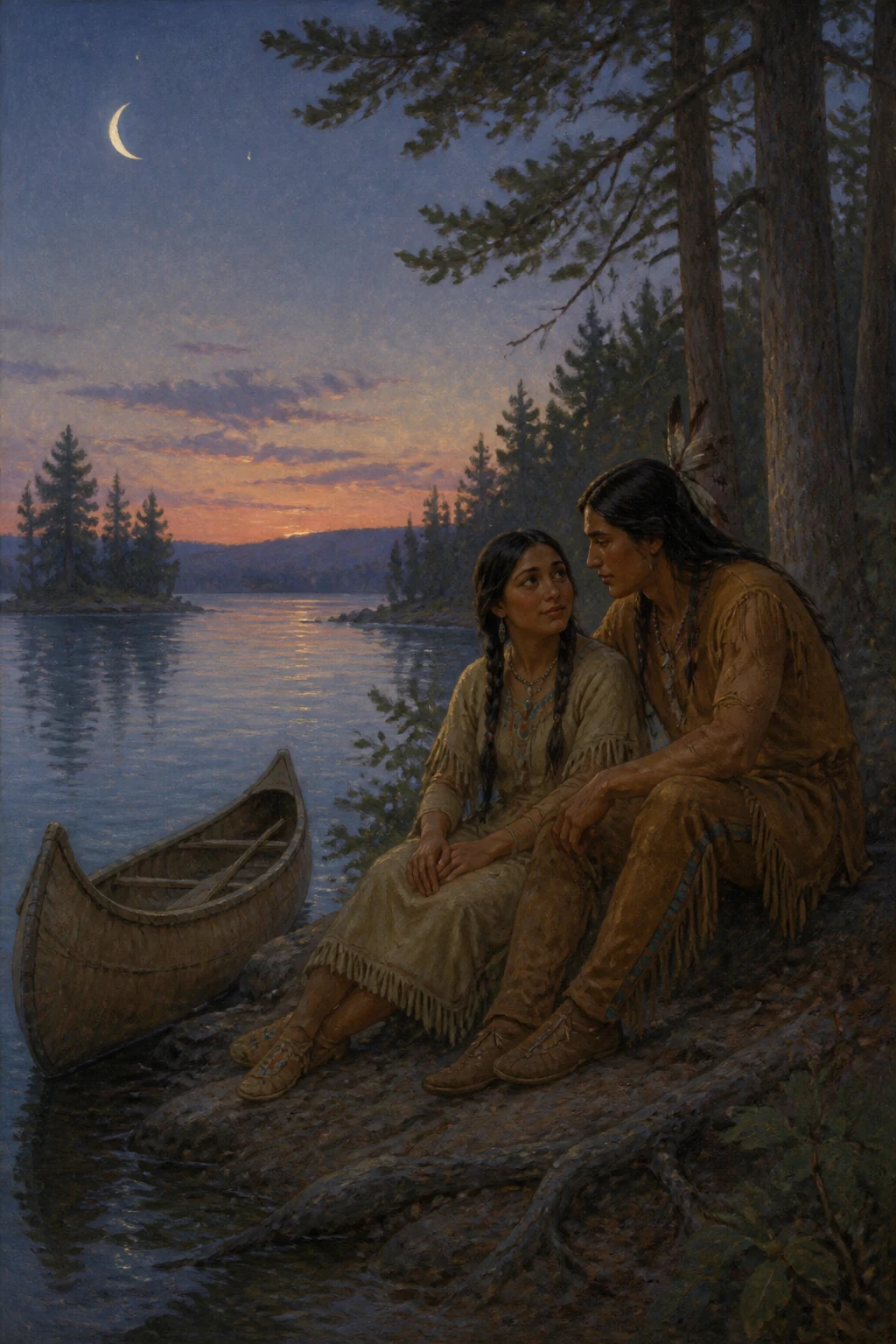
Ko se je Occuna, mlad pripadnik plemena Seneka, zaljubil v dekle, katerega koča je stala blizu današnjega mesta Cohoes, se je vedel prav tako, kot so se pozneje vedli Američani. Nabiral ji je poljsko cvetje; v somraku je igral na koščeno piščal in pel čustvene pesmi; z njo je pohajal po gričih in nabiral raztresene kristale kremena, za katere so Indijanci verjeli, da so solze ranjenih jelenov — razen na skali Diamond Rock v Lansingburghu, kjer so veljali za solze Monete, matere in žene, ki je izgubila svoje najdražje; ob lepem vremenu pa sta se s čolnom vozila po reki Mohawk nad brzicami. Rada sta se brezskrbno prepuščala toku, saj sta tako imela čas, da sta si zrla v oči in gradila gradove v oblakih, v katerih naj bi nekoč živela. Nekega večera pa sta se nenadoma zavedela nevarnosti, kajti tok ju je neopazno nosil vse dlje, dokler ju ni imel povsem v svoji oblasti. Zavesljaj ni več pomagal in gradovi v oblakih so se žalostno sesuli. Vzravnano sede sta začela svojo smrtno pesem takole:
Occuna: »Hči mogočnega bojevnika, Manitu me kliče s tega sveta. Slišim grmenje njegovega glasu; po reki vidim bliskanje njegovega pogleda; v oblakih in pršcu hodi po vodah.«
Dekle: »Tudi sam si bojevnik, o Occuna. Mar ni bila tvoja sekira že mnogokrat okopana v krvi? Je jelen kdaj ušel tvoji puščici ali se je bober izognil tvojemu lovu? Ne boš se bal stopiti pred Manituja.«
Occuna: »Manitu resnično spoštuje močne. Ko sem te izbral med ženskami našega plemena, sem obljubil, da bova skupaj živela in umrla. Gromovnik naju zdaj kliče. Pozdravljen, o duh Oriske, poglavarja nepremagljivih Senek! Bojevnik in hči bojevnika prihajata, da se ti pridružita na gostiji blaženih!«
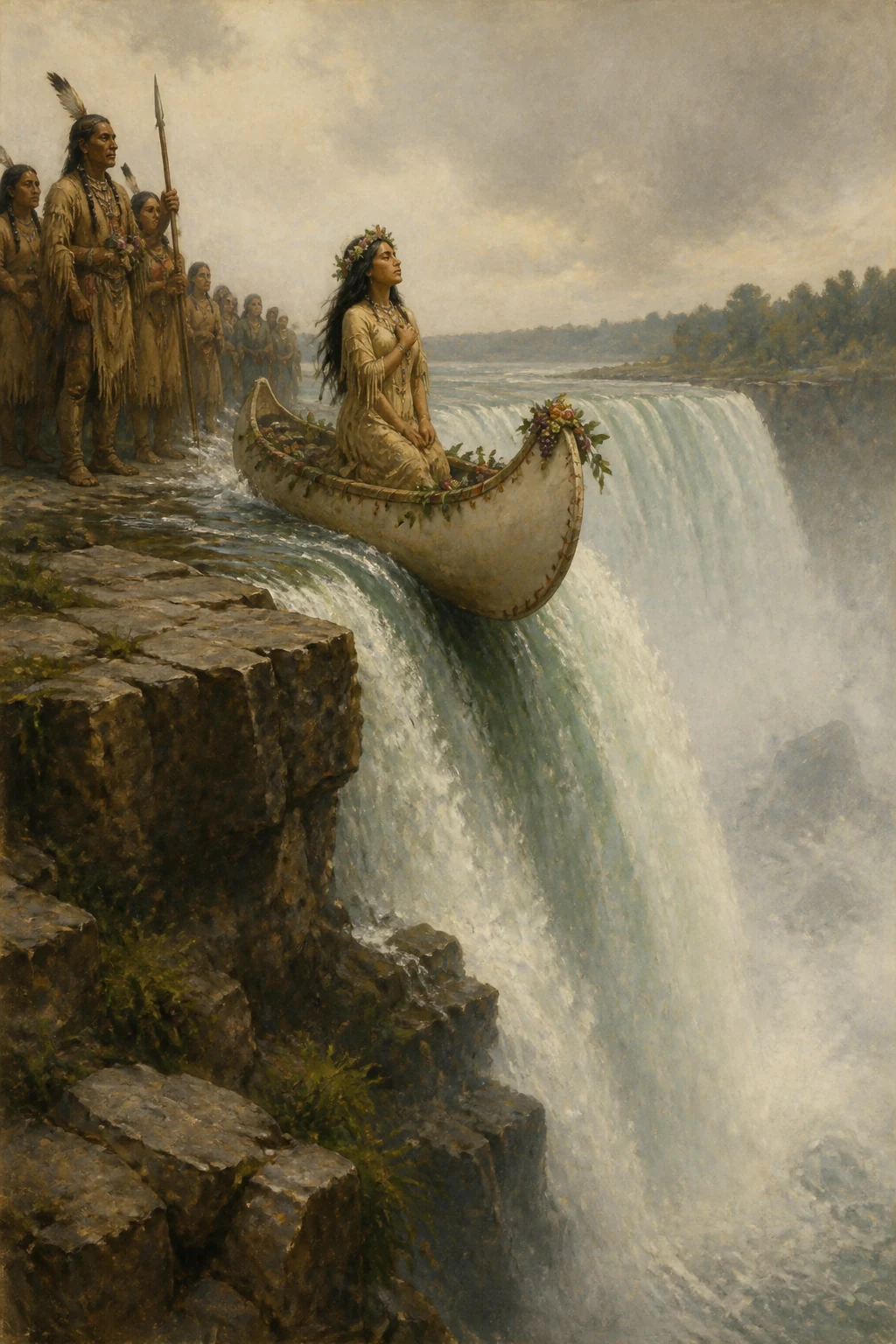
Čoln je šinil čez slap in Occuna je treščil ob skale pod njim ter bil pri priči mrtev; dekle pa je kakor po čudežu padlo mimo njih in vrtinčasti tok ga je odnesel v plitvino, kjer se je rešilo. Zaradi njegove moči in kreposti so mrtvega mladeniča razglasili za svetega. Njegovo pleme ga je povzdignilo nad lunina prostranstva, od koder je z veseljem gledal kraje svoje mladosti, v vojnih časih pa je prijateljem pošiljal prijetne sanje in obljube, medtem ko je sovražnika begal z zloveščimi znamenji. Kadar koli so pripadniki njegovega plemena šli mimo slapa, so se ustavili in se s kratkim obredom spomnili Occunove smrti.
Izvirnik
When Occuna, a young Seneca, fell in love with a girl whose cabin was near the present town of Cohoes, he behaved very much as Americans of a later date have done. He picked wild flowers for her; he played on the bone pipe and sang sentimental songs in the twilight; he roamed the hills with her, gathering the loose quartz crystals that the Indians believed to be the tears of stricken deer, save on Diamond Rock, in Lansingburgh, where they are the tears of Moneta, a bereaved mother and wife; and in fine weather they went boating on the Mohawk above the rapids. They liked to drift idly on the current, because it gave them time to gaze into each other's eyes, and to build air castles that they would live in in the future. They were suddenly called to a realization of danger one evening, for the stream had been subtly drawing them on and on until it had them in its power. The stroke of the paddle failed and the air castles fell in dismal ruin. Sitting erect they began their death-song in this wise:
Occuna: “Daughter of a mighty warrior, the Manitou calls me hence. I hear the roaring of his voice; I see the lightning of his glance along the river; he walks in clouds and spray upon the waters.”
The Maiden: “Thou art thyself a warrior, O Occuna. Hath not thine axe been often bathed in blood? Hath the deer ever escaped thine arrow or the beaver avoided thy chase? Thou wilt not fear to go into the presence of Manitou.”
Occuna: “Manitou, indeed, respects the strong. When I chose thee from the women of our tribe I promised that we should live and die together. The Thunderer calls us now. Welcome, O ghost of Oriska, chief of the invincible Senecas! A warrior and the daughter of a warrior come to join you in the feast of the blessed!”
The boat leaped over the falls, and Occuna, striking on the rocks below, was killed at once; but, as by a miracle, the girl fell clear of them and was whirled on the seething current to shoal water, where she made her escape. For his strength and his virtues the dead man was canonized. His tribe raised him above the regions of the moon, whence he looked down on the scenes of his youth with pleasure, and in times of war gave pleasant dreams and promises to his friends, while he confused the enemy with evil omens. Whenever his tribe passed the falls they halted and with brief ceremonials commemorated the death of Occuna.