Waltey
Niagara
022 Niagara
Myths and Legends of Our Own Land · Charles M. SkinnerO besedilu
Niagara
- Vir
- Myths and Legends of Our Own Land
- Avtor
- Charles M. Skinner
- Jezik branja
- Slovenščina
- Jezik izvirnika
- English
- Čas branja
- 4 min branja
- Obseg
- 3 strani
- Naslov izvirnika
- 022 Niagara
O izvirniku
Myths and Legends of Our Own Land
Obsežna zgodovinska zbirka ameriških legend, ki jih je Skinner zbral in avtorsko rekonstruiral. Bralni jezik je Slovenščina, izvirnik pa prihaja iz vira Myths and Legends of Our Own Land v jeziku English.
Besedilo
Niagara
Niagarski slap (pravilno se izgovarja Ni-ah-ga-ra) ali Oniahgarah je prav tako poguben, kot je očarljiv, lep in veličasten, in nesreče, ki se dogajajo tam, potrjujejo izročilo, da »Gromeča voda vsako leto terja dve žrtvi«. Še preden so belci prvič uzrli te slapove — in kakšne debele so potem razdirali o njih! — je veljalo, da tu vsako leto ugasneta dve življenji. To povprečje se je ohranilo po zaslugi moških in žensk, ki zaradi nesreče, nepremišljenosti ali obupa padejo v deročo vodo, medtem ko so na bregovih potekale krvave bitke, plovila pa je voda pognala čez rob, da so se na skalah raztreščila v trske.
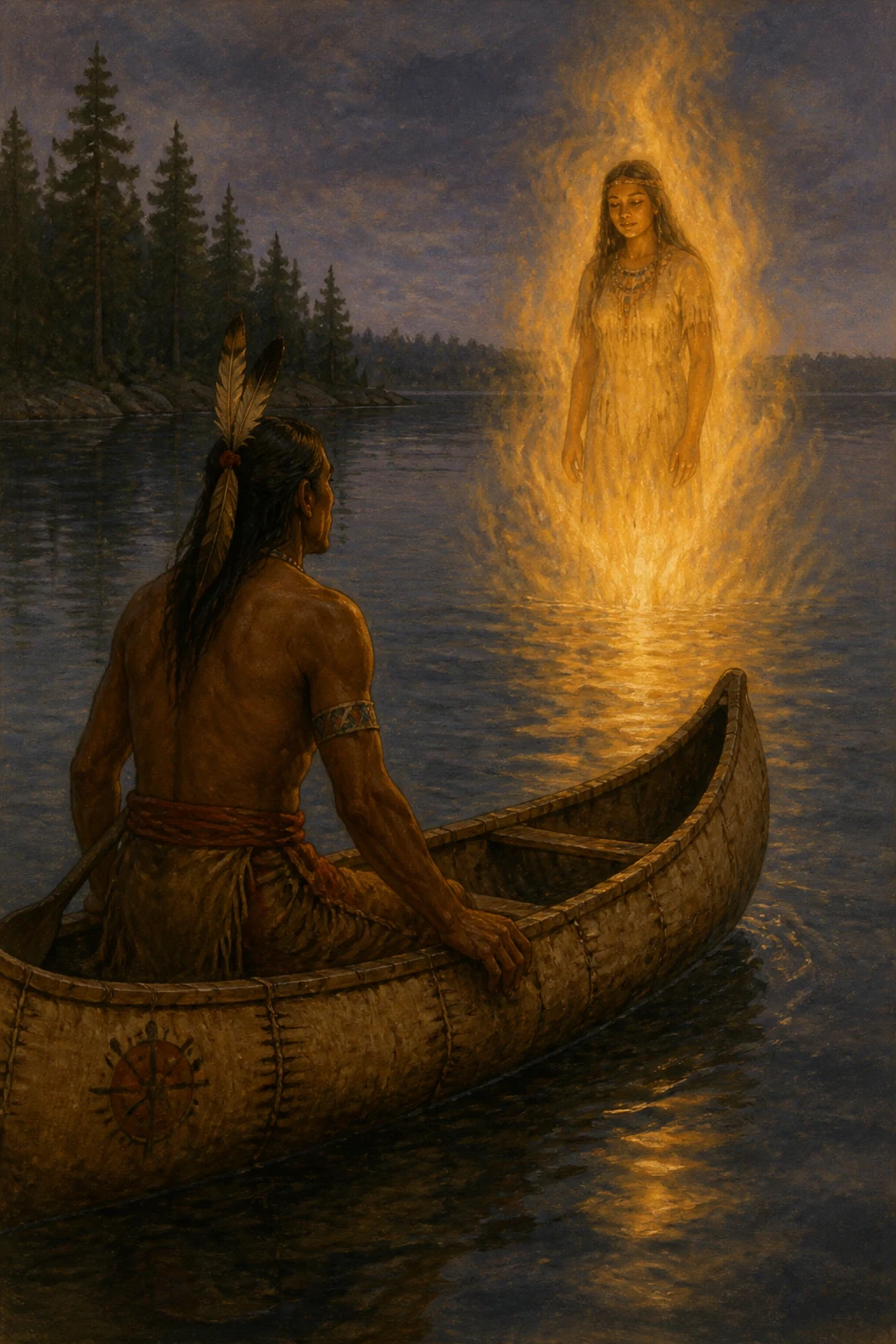
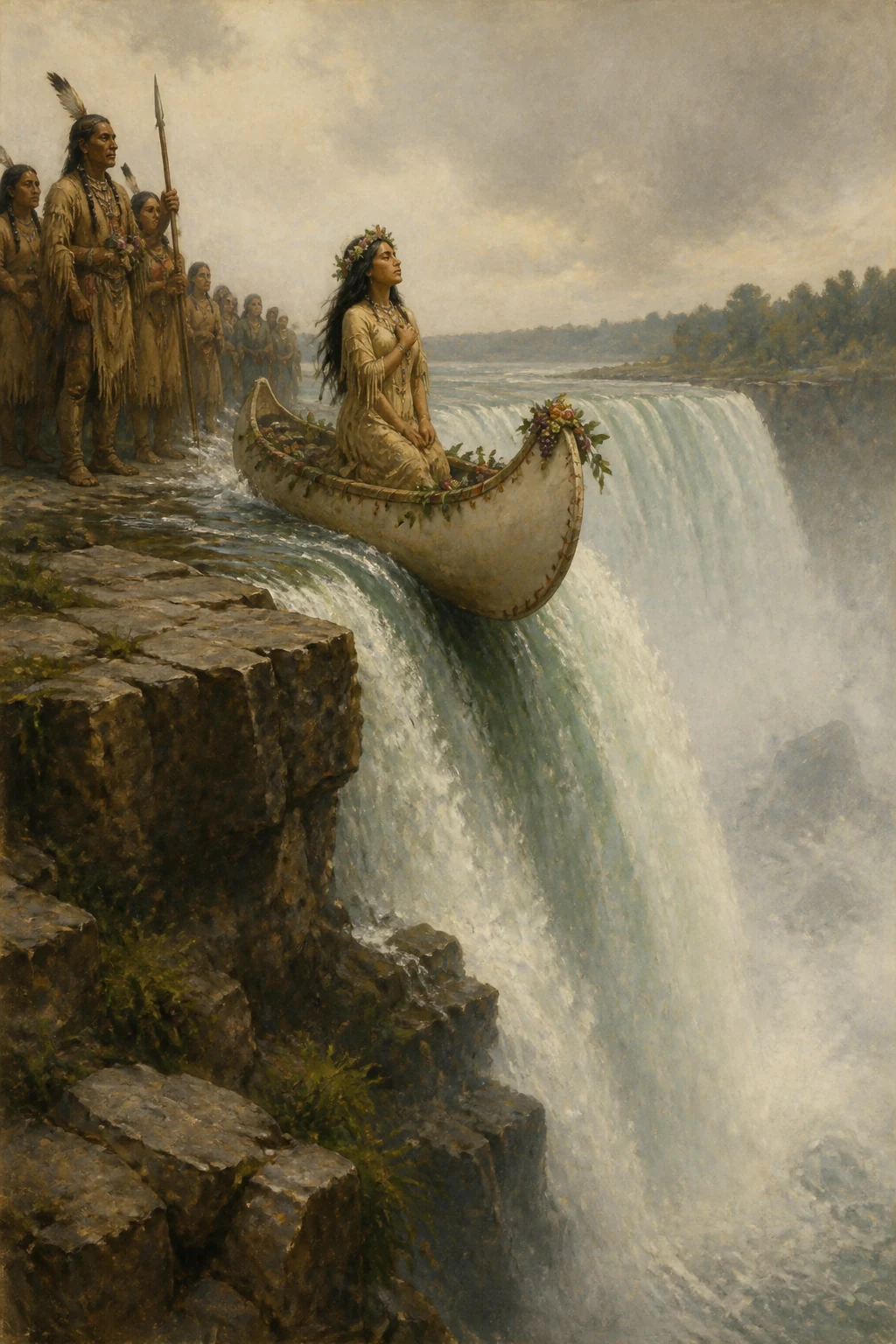
Govorili so, da je bučanje slapu glas mogočnega duha, ki prebiva v vodah, in v preteklih stoletjih so mu Indijanci vsako leto darovali žrtev. Ta žrtev je bila dekle iz plemena, ki so jo poslali čez slap v belem kanuju, okrašenem s sadjem in cvetjem. Dekleta so se potegovala za to čast, saj so bile Manitoujeve neveste v srečnih loviščih deležne posebne milosti. Zadnje zabeleženo žrtvovanje se je zgodilo leta 1679, ko so izbrali Lelawalo, hčer poglavarja Eagle Eye, kljub rotenju in ugovorom viteza La Salla, ki je skušal ljudi odvrniti od malikovanja z razlago krščanskega nauka. Na svoje ugovore je dobil nepričakovan odgovor: »Tvoje besede pričajo proti tebi. Praviš, da nam je Kristus dal zgled. Sledili mu bomo. Zakaj naj bi bila ena smrt vzvišena, naša žrtev pa grozljiva?« Pleme se je tako zbralo na bregu, da bi opazovalo odhod belega kanuja. Poglavar je vkrcanje spremljal s stoično mirnostjo, značilno za Indijanca, kadar ga opazujejo drugi, ko pa je malo plovilo zaneslo v tok, ga je premagala ljubezen: skočil je v svoj kanu in skušal dohiteti hčer. Že hip zatem nobenemu ni bilo več rešitve. Po smrti sta se spremenila v duhova čiste moči in dobrote ter živita v kristalnih nebesih tako globoko pod slapom, da jima je njegovo bučanje glasba: ona, deklica iz meglice; on, vladar slapu. V drugi različici legende sta glavna junaka zaljubljenec in njegova ljubljena. Nekaj let pozneje so se plemenski očak in vsi njegovi sinovi spustili čez slap, ko so jim belci zasegli zemljo, saj so imeli smrt rajši kakor beg ali vojno.
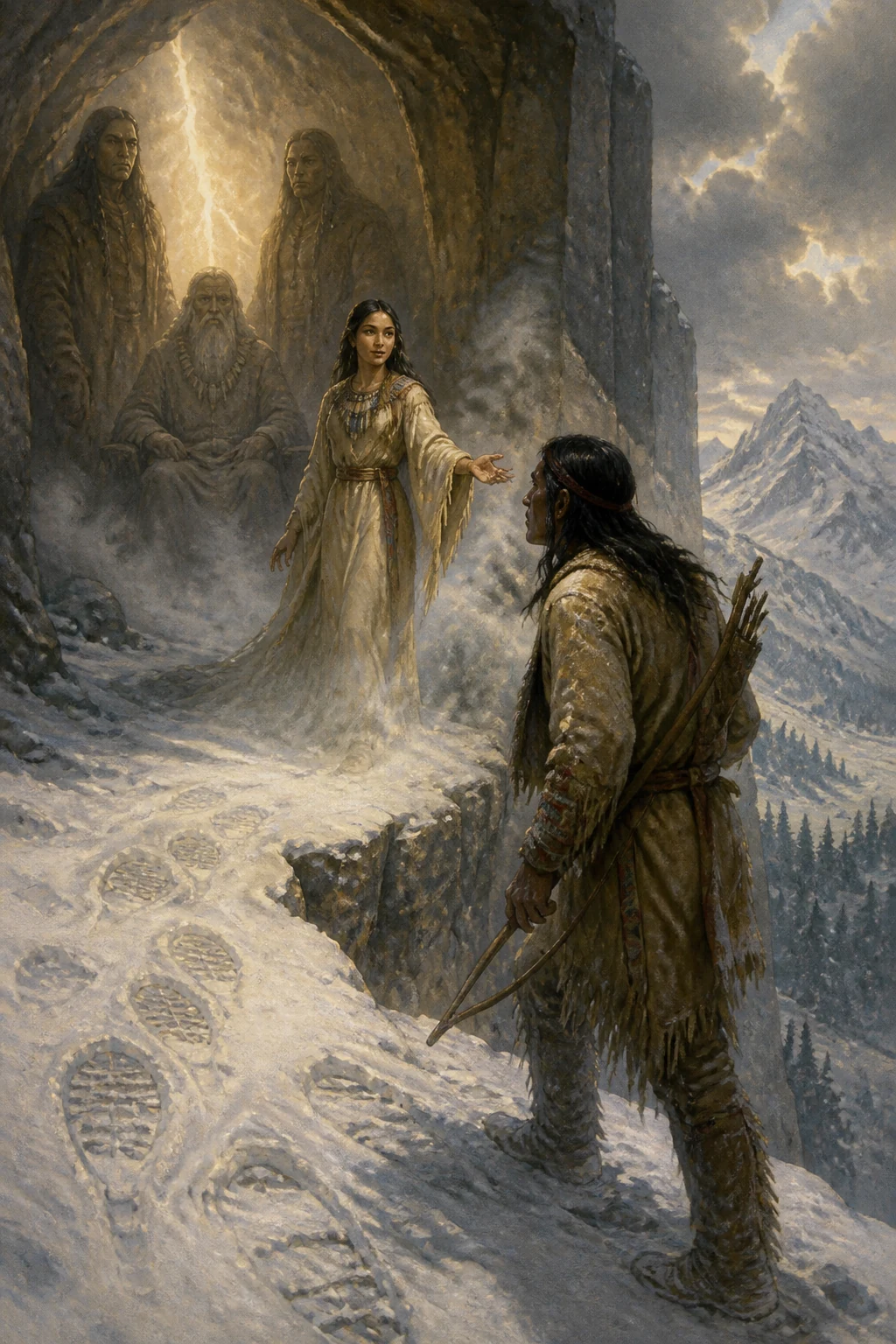
Okoli leta 200 so Kamniti velikani na svojem pohodu proti severu prebredli reko pod slapovi. Ta bitja so izvirala iz starodavnega rodu, in ko jih je leta 150 pretrganje mostu iz ovijalk čez Mississippi ločilo od sorodnikov, so zapustila tiste kraje. Prelaz Indian Pass v Adirondackih je nosil imena Otneyarheh, Kamniti velikani; Ganosgwah, Velikani, odeti v kamen; in Dayohjegago, Kraj, kjer se nevihtni oblaki bojujejo z Veliko kačo. Velikani in kače so veljali za škodljive stvaritve Hudobnega duha, bog Strele pa je stoječ na pečinah lovil oblake, jih razparal, iz njih trgal strele in jih lučal v pošasti. Ti ljudožerci so skoraj iztrebili Irokeze, saj so bili neznanske rasti in so se naredili skoraj nepremagljive, tako da so se vsak dan valjali po pesku, dokler njihovo meso ni postalo kakor kamen. Nosilec nebes, ki je z višav opazoval njihova zla dejanja, se je spustil na zemljo, preoblečen v enega izmed njih — pogosto je premišljeval na skali Manitou pri Vrtincu — in jih pod pretvezo, da jih bo popeljal v lepšo deželo, odvedel v dolino blizu Onondage. Nato je stopil na hrib nad njimi in jim lučal skale na glave, dokler niso vsi pomrli, razen enega, ki je pobegnil na sever. A ko je napočil čas, so v te kraje znova prišli novi otroci Kamnitih velikanov (Evropejci v verižnih oklepih?), ki jih je Veliki duh pokončal — nenavadno, prav tam, kjer naj bi našli znamenito prevaro, znano kot cardiffski velikan. Onondagi so verjeli, da je ta kip eden njihovih davnih sovražnikov.
Izvirnik
022 Niagara
Naslednje strani prikazujejo izvirno besedilo za primerjavo.
The cataract of Niagara (properly pronounced Nee-ah-gah-rah), or Oniahgarah, is as fatal as it is fascinating, beautiful, sublime, and the casualties occurring there justify the tradition that “the Thundering Water asks two victims every year.” It was reputed, before white men looked for the first time on these falls--and what thumping yarns they told about them!--that two lives were lost here annually, and this average has been kept up by men and women who fall into the flood through accident, recklessness or despair, while bloody battles have been fought on the shores, and vessels have been hurled over the brink, to be dashed to splinters on the rocks.
The sound of the cataract was declared to be the voice of a mighty spirit that dwelt in the waters, and in former centuries the Indians offered to it a yearly sacrifice. This sacrifice was a maiden of the tribe, who was sent over in a white canoe, decorated with fruit and flowers, and the girls contended for this honor, for the brides of Manitou were objects of a special grace in the happy hunting-grounds. The last recorded sacrifice was in 1679, when Lelawala, the daughter of chief Eagle Eye, was chosen, in spite of the urgings and protests of the chevalier La Salle, who had been trying to restrain the people from their idolatries by an exposition of the Christian dogma. To his protests he received the unexpected answer, “Your words witness against you. Christ, you say, set us an example. We will follow it. Why should one death be great, while our sacrifice is horrible?” So the tribe gathered at the bank to watch the sailing of the white canoe. The chief watched the embarkation with the stoicism usual to the Indian when he is observed by others, but when the little bark swung out into the current his affection mastered him, and he leaped into his own canoe and tried to overtake his daughter. In a moment both were beyond the power of rescue. After their death they were changed into spirits of pure strength and goodness, and live in a crystal heaven so far beneath the fall that its roaring is a music to them: she, the maid of the mist; he, the ruler of the cataract. Another version of the legend makes a lover and his mistress the chief actors. Some years later a patriarch of the tribe and all his sons went over the fall when the white men had seized their lands, preferring death to flight or war.
In about the year 200 the Stone Giants waded across the river below the falls on their northward march. These beings were descended from an ancient family, and being separated from their stock in the year 150 by the breaking of a vine bridge across the Mississippi, they left that region. Indian Pass, in the Adirondacks, bore the names of Otneyarheh, Stony Giants; Ganosgwah, Giants Clothed in Stone; and Dayohjegago, Place Where the Storm Clouds Fight the Great Serpent. Giants and serpents were held to be harmful inventions of the Evil Spirit, and the Lightning god, catching up clouds as he stood on the crags, broke them open, tore their lightnings out and hurled them against the monsters. These cannibals had almost exterminated the Iroquois, for they were of immense size and had made themselves almost invincible by rolling daily in the sand until their flesh was like stone. The Holder of the Heavens, viewing their evil actions from on high, came down disguised as one of their number--he used often to meditate on Manitou Rock, at the Whirlpool--and leading them to a valley near Onondaga, on pretence of guiding them to a fairer country, he stood on a hill above them and hurled rocks upon their heads until all, save one, who fled into the north, were dead. Yet, in the fulness of time, new children of the Stone Giants (mail-clad Europeans?) entered the region again and were destroyed by the Great Spirit,--oddly enough where the famous fraud known as the Cardiff giant was alleged to have been found. The Onondagas believed this statue to be one of their ancient foes.
Nadaljuj z branjem