Prevod
Nekoč je živela revna vdova, ki je imela eno samo hčerko. Deklica je bila tako dobra in blaga, da jo je imel rad vsakdo, ki jo je poznal. Nekega dne je šla v gozd nabirat drva. Bila je zelo žalostna, saj doma ni bilo več ničesar za pod zob, z materjo pa sta morali tako pogosto stradati.
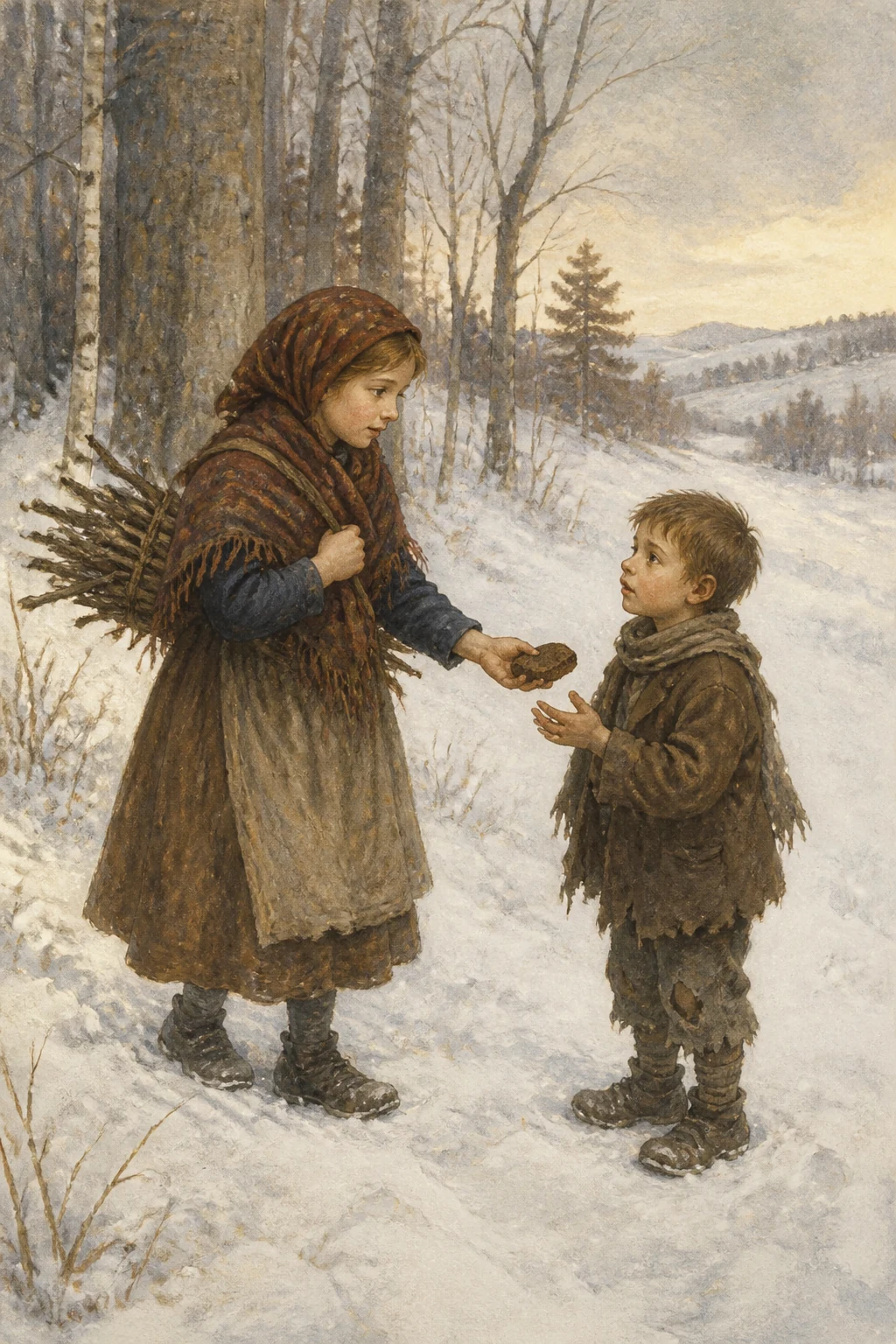
Nabrala je že sveženj dračja in se ravno odpravljala domov, ko je zagledala ubogo starko, ki je prav tako prišla v gozd po drva. Ženica je bila tako sključena in okorela, da jo je bilo žalostno gledati. Deklici se je zasmilila in želela ji je pomagati.
»Dobra ženica,« je rekla, »dovolite, da vam jaz naberem drva; gotovo se težko sklanjate.« Odložila je svoj sveženj in starki nabrala toliko drv, kolikor jih je ta lahko nesla. »Odnesla bi vam jih domov,« je rekla deklica, »toda mati me čaka in moram pohiteti, saj že zamujam.«
»Otrok,« je rekla starka, »dobro srce imaš in zaslužiš si nagrado.« Nato je izpod ogrinjala potegnila majhen železen lonček. »Vzemi ga,« je rekla. »To je čarobni lonček. Kadar si lačna, moraš samo reči: ‘Kuhaj, lonček, kuhaj, vročo kašo skuhaj,’ pa bo začel vreti in se polniti s sladko kašo. Ko je imaš dovolj, reci: ‘Nehaj, lonček, nehaj, kaša je že vroča,’ in nehal bo vreti.«
Deklica je morala besede večkrat ponoviti za njo, nato pa ji je starka izročila lonček in odkrevsala skozi gozd. Dekličino srce je prekipevalo od veselja ob misli, da z materjo nikoli več ne bosta lačni. Z lončkom v obeh rokah je stekla domov, kolikor hitro je mogla.
Ko je prišla domov, jo je mati vprašala, kje ima drva. »Domov sem prinesla nekaj boljšega od drv!« je vzkliknila deklica. »Drva naju samo grejejo, tole pa naju bo tudi nahranilo.« Lonček je postavila na mizo in rekla:
»Kuhaj, lonček, kuhaj, vročo kašo skuhaj.« Lonček je takoj začel brbotati in vreti in kmalu je bil tako poln sladke kaše, da je kipela čez rob. Vdova je pograbila žlico in nekaj kaše nadevala v skledo, toda bolj ko jo je zajemala, več je je bilo v lončku. Ko so bile polne vse sklede v hiši, je deklica rekla:
»Nehaj, lonček, nehaj, kaša je že vroča,« in lonček je pri priči nehal vreti. Vdova je bila presrečna zaradi zaklada, ki ga je deklica prinesla domov. »Pridi,« je vzkliknila, »sediva in jejva.«
»Da, draga mati,« je rekla deklica, »toda najprej bom odnesla nekaj kaše sosedom, ki so bili tako dobri do naju, ko nisva imeli ničesar.«
S kašo je napolnila velik kotliček in se odpravila z njim od hiše. A komaj je odšla, se je vdova začela spraševati, ali sta zase prihranili dovolj. To ji ni dalo miru, zato je rekla lončku:
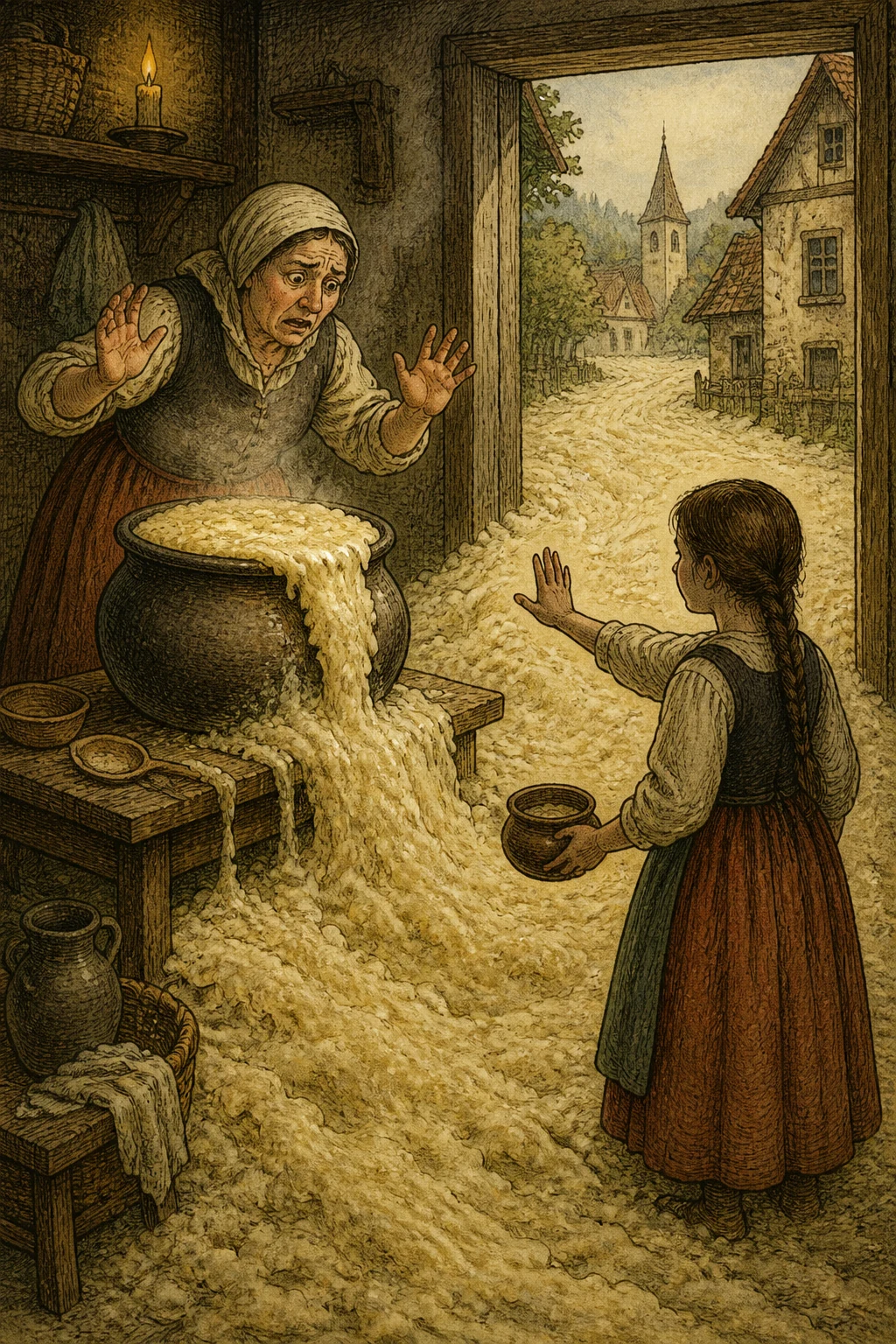
»Kuhaj, lonček, kuhaj, vročo kašo skuhaj.« Lonček je nemudoma začel brbotati in vreti. Kmalu je bil poln in kaša je začela teči čez rob. Vdova ga je hotela ustaviti, a je pozabila, kaj mora reči. »Dovolj!« je zavpila. »Nehaj! Nehaj!« Toda kaša je še naprej vrela in kipela čez rob lončka. Vdova je pograbila žlico in jo spet začela zajemati; zajemala je, kolikor hitro je mogla. Kmalu so bili polni vsi lonci in ponve v hiši, lonček pa je še kar kuhal kašo. V obupu ga je vdova zgrabila in vrgla pred vrata, toda kaša je v potoku tekla iz njega in se razlivala po cesti.
Deklica se je vračala domov, ko ji je nasproti pritekel potok kaše, in takoj je uganila, kaj se je zgodilo. Stekla je, kolikor hitro je mogla, in ko je prišla do kraja, kjer je ležal lonček, je zavpila:
»Nehaj, lonček, nehaj, kaša je že vroča.« Lonček je pri priči nehal vreti, toda dotlej je šlo v nič že toliko kaše, da bi z njo lahko nahranili vso okolico.
Od takrat si vdova ni nikoli več drznila ukazati lončku, naj kuha. Kadar sta si zaželeli kaše, mu je besede izrekla deklica. Odtlej pa z materjo nista nikoli več trpeli pomanjkanja, kajti kaša je bila tako slastna, da so jo ljudje prihajali kupovat od blizu in daleč.
Izvirnik
There was once a poor widow who had only one daughter, a child who was so good and gentle that everyone who knew her, loved her.
One day the child went into the forest to gather firewood, and she was very sad because there was nothing left in the house to eat, and because she and her mother were so often obliged to go hungry.
She had already gathered a bundle of sticks, and was about to go home, when she saw a poor old woman who had also come to the forest for wood. The woman was so bent and stiff that it was pitiful to see her. The child felt sorry for her and wished to help her.
“Good mother,” said she, “let me gather the wood for you; it must be hard for you to stoop.”
She put down her own load, and gathered for the old woman as much as she was able to carry. “I would take it home for you,” said the little girl, “but my mother is waiting for me, and I must make haste, for I am already late.”
“Child,” said the old woman, “you have a good heart, and you deserve to be rewarded.” She then drew out from under her cloak a little iron pot. “Take this,” she said. “It is a magic pot. Whenever you are hungry you have only to say—
“‘Boil little pot Till the porridge is hot,’
and it will begin to boil and fill up with sweet porridge. When you have had enough say—
“‘Cease little pot, The porridge is hot,’
and it will stop boiling.”
She made the child repeat the words after her several times, and she then gave her the pot and hobbled away through the forest.
The child was filled with joy at the thought that now she and her mother need never be hungry again. She ran home as fast as she could, carrying the pot with both hands.
When she came in her mother asked her where the wood was.
“I have brought home something better than wood,” cried the child. “The wood only warms us, but here is something that will feed us as well.” She set the pot upon the table and said:
“Boil little pot Till the porridge is hot.”
The pot at once began to bubble and boil, and soon it was full and brimming over with sweet porridge. The widow caught up a spoon and dipped some of the porridge out into a bowl, but the more she dipped out the more there was in it. When all the bowls in the house were full, the child said:
“Cease little pot, The porridge is hot,”
and at once the pot stopped boiling.
The widow was overjoyed at the treasure the little girl had brought home. “Come,” cried she, “let us sit down and eat.”
“Yes, dear mother,” said the child, “but first I will carry some of the porridge to the neighbors who were so kind to us when we had nothing.”
She filled a large kettle with porridge and started out with it, but no sooner had she gone than the widow began to wonder whether they had kept enough for themselves. She did not feel satisfied, so she said to the pot:
“Boil little pot Till the porridge is hot.”
Immediately the pot began to bubble and boil. Soon it was full and the porridge began to run over. The widow wished to stop it, but she had forgotten what to say. “Enough!” she cried. “Stop! Stop!” but the porridge still boiled up and over the edge of the pot. The widow caught up the spoon and again began dipping out the porridge; she dipped as fast as she could. Soon all the pots and pans in the house were full and still the pot continued to boil out porridge. In despair the widow seized the pot and threw it outside the door, but the porridge flowed out from it in a stream, and ran down the road.
The little girl was coming home when she met the stream of porridge, and at once she guessed what had happened. She ran as fast as she could and when she came to the place where the pot lay she cried:
“Cease little pot, The porridge is hot.”
At once the pot stopped boiling, but already enough porridge had been wasted to have fed the whole countryside.
After that the widow never again dared to tell the pot to boil. When they wished for porridge it was the child who spoke to it. But from then on she and her mother never lacked for anything, for the porridge was so delicious that people came from far and near to buy from them.