Waltey
Zvezdni dragulji
013 Star Jewels
Mother's Nursery Tales · Katharine PyleO besedilu
Zvezdni dragulji
- Vir
- Mother's Nursery Tales
- Avtor
- Katharine Pyle
- Jezik branja
- Slovenščina
- Jezik izvirnika
- English
- Čas branja
- 4 min branja
- Obseg
- 4 strani
- Naslov izvirnika
- 013 Star Jewels
O izvirniku
Mother's Nursery Tales
Štiriintrideset zgodovinskih literarnih priredb starejših pravljic, ki jih je Pyle tudi ilustrirala. Bralni jezik je Slovenščina, izvirnik pa prihaja iz vira Mother's Nursery Tales v jeziku English.
Besedilo
Zvezdni dragulji
Nekoč je na robu gozda živela deklica, ki ni imela nikogar razen svoje stare babice. Bili sta tako revni, da sta si komaj lahko kupili kaj hrane in oblačil.
»Nič ne skrbi, babica,« je govorila deklica. »Nekoč bom dovolj velika, da bom lahko delala, in takrat bom zaslužila toliko, da bom lahko kupila vse, kar potrebujeva, pa še drugim revežem bom lahko kaj dala.«
Nekega dne se je deklica odpravila v gozd nabirat dračje. Upala je, da ga bo v mestu onkraj hriba prodala za nekaj novčičev. Ker je nameravala ostati zdoma ves dan, je s seboj v gozd vzela košček črnega kruha, edino hrano, ki jima je še ostala.
Bila je zima in zrak je bil ledeno mrzel. Deklica se je zavila v svojo rutico in tekla, kolikor hitro je mogla. Bila je lačna, vendar je nameravala kos kruha prihraniti, dokler ne nabere dračja.
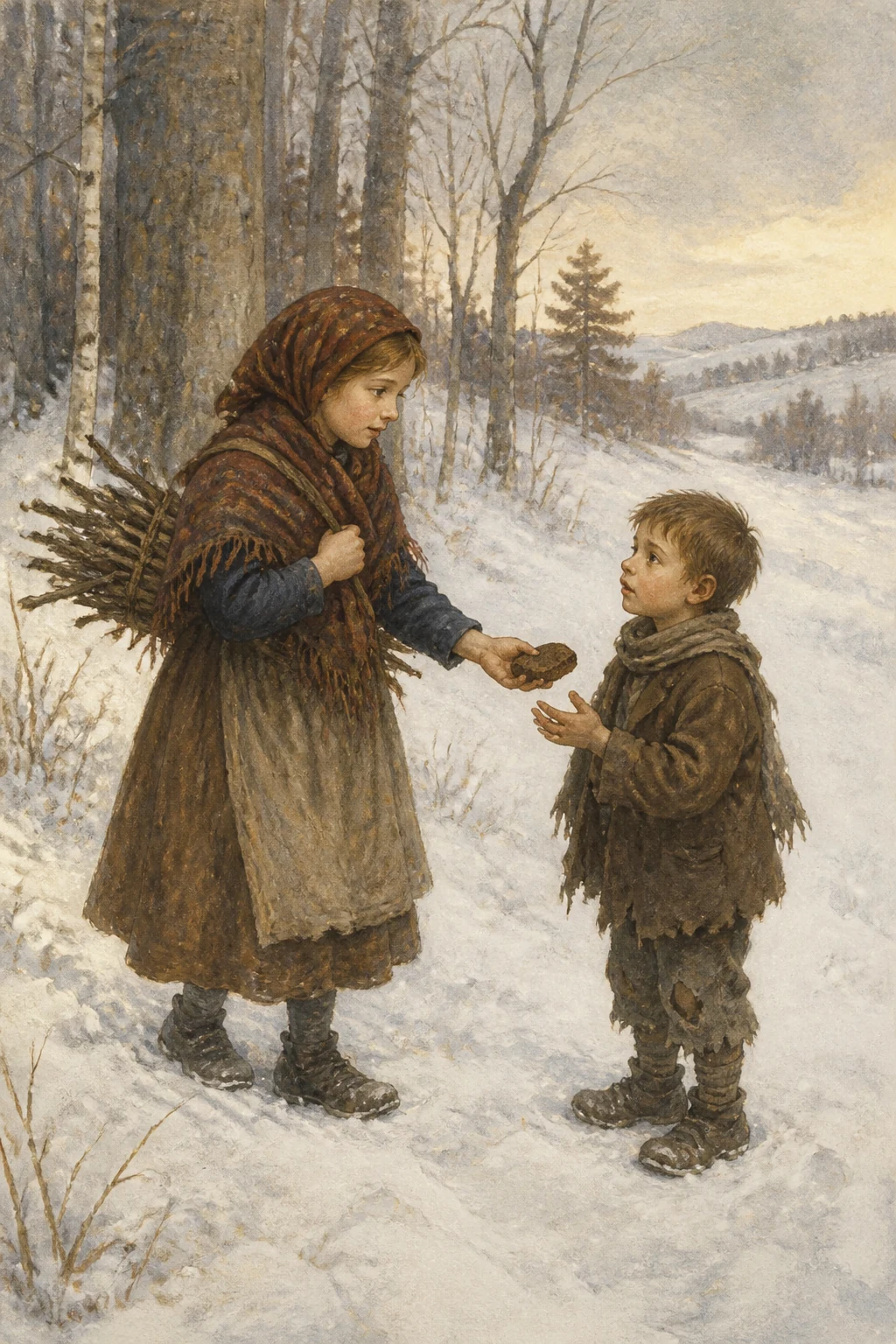
Ravno ko je prišla do roba gozda, je srečala dečka, ki je bil še manjši od nje in je bridko jokal. Deklica je imela dobro srce. Ustavila se je in ga vprašala, zakaj joka.
»Jokam,« je odgovoril, »ker sem lačen.« »Ali danes nisi še nič jedel?« ga je vprašala. »Ničesar nisem jedel in gotovo bom umrl od lakote, saj ne vem, kje bi dobil kaj hrane.«
Deklica je zavzdihnila. »Morda si bolj lačen kakor jaz,« je rekla, vzela kos kruha iz žepa in ga dala dečku. Nato je spet pohitela naprej.
Malo dlje je srečala drugo deklico, ki je bila videti še bolj nesrečna kakor deček, saj je bila skoraj povsem premražena. Z nje so visele razcapane obleke in skozi raztrganine je prosevala pomodrela koža.
»Ah,« je vzkliknila, »ko bi le imela tako toplo oblekico, kakršna je tvoja! Pomagaj mi, lepo te prosim, sicer bom gotovo umrla od mraza.« Dobrosrčno deklico je prevzelo usmiljenje. »Ni prav,« si je mislila, »da imam jaz obleko in ruto. Eno od njiju bom dala tej ubogi deklici.«
Slekla je obleko in jo dala deklici, nato pa si je ruto tesno ovila okoli ramen. Kljub ruti jo je zelo zeblo. Vendar je bila že blizu kraja, kjer je bilo mogoče nabrati dračje, in brž ko ga bo nabrala, bo stekla domov.
Pohitela je naprej, toda ko je prišla do kraja, kjer je bilo dračje, je zagledala starko, ki je tam že pobirala odpadle veje. Starka je bila tako sključena, revna in uboga, da je deklico ob pogledu nanjo zabolelo srce.
»Oh, oh!« je stokala starka. »Kako me bolijo moje uboge kosti! Ko bi le imela ruto, da bi si jo ovila okoli ramen, ne bi tako trpela.« Deklica je pomislila na svojo babico in na to, kako tudi ona včasih trpi, in starka se ji je zasmilila.
»Na,« je rekla, »vzemite mojo ruto,« jo snela z ramen in jo dala starki. Zdaj je stala sredi gozda z golimi rokami in rameni, oblečena le v svojo srajčko. Okoli nje je bril oster veter, vendar je ni zeblo. Ničesar ni jedla, vendar ni bila lačna. Njena lastna dobrota jo je nahranila in ogrela.
Nabrala je dračje in se odpravila domov. Mračilo se je že in skozi gole drevesne veje so sijale zvezde. Nenadoma je ob njej stal starec. »Daj mi nekaj svojega dračja,« je rekel, »kajti moje ognjišče je hladno, jaz pa sem prestar, da bi si sam nabiral drva.«
Deklica je zavzdihnila. Če mu da dračje, se bo morala ustaviti in ga nabrati še več. Kljub temu mu ni hotela odreči pomoči. »Vzemite ga,« je rekla, »v božjem imenu.«
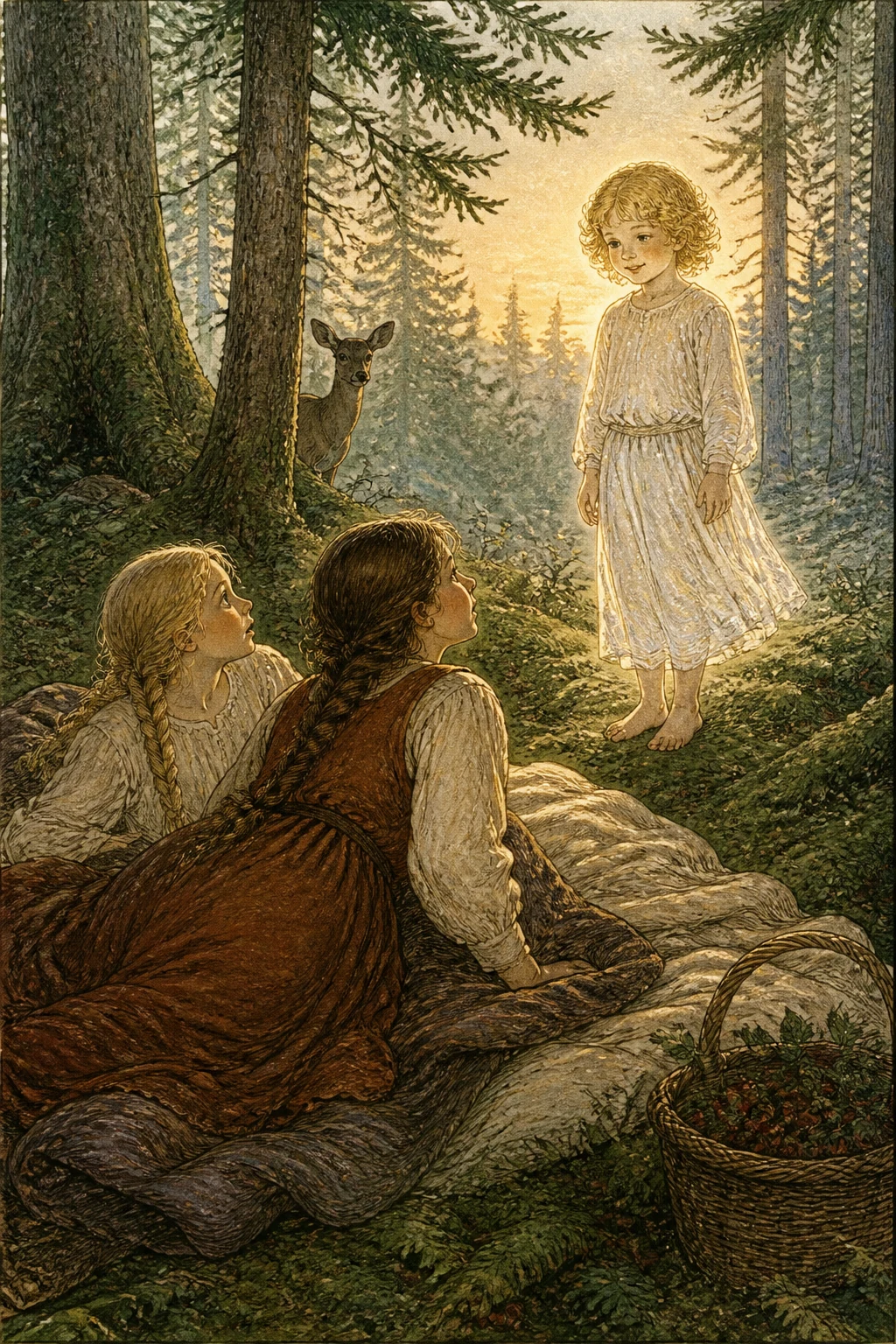
Komaj je to izrekla, je videla, da pred njo ne stoji starec, temveč bleščeč angel. »Nahranila si lačne,« je rekel angel, »oblekla si gole in pomagala tistim, ki so te prosili za pomoč. Ne boš ostala brez plačila. Poglej!«
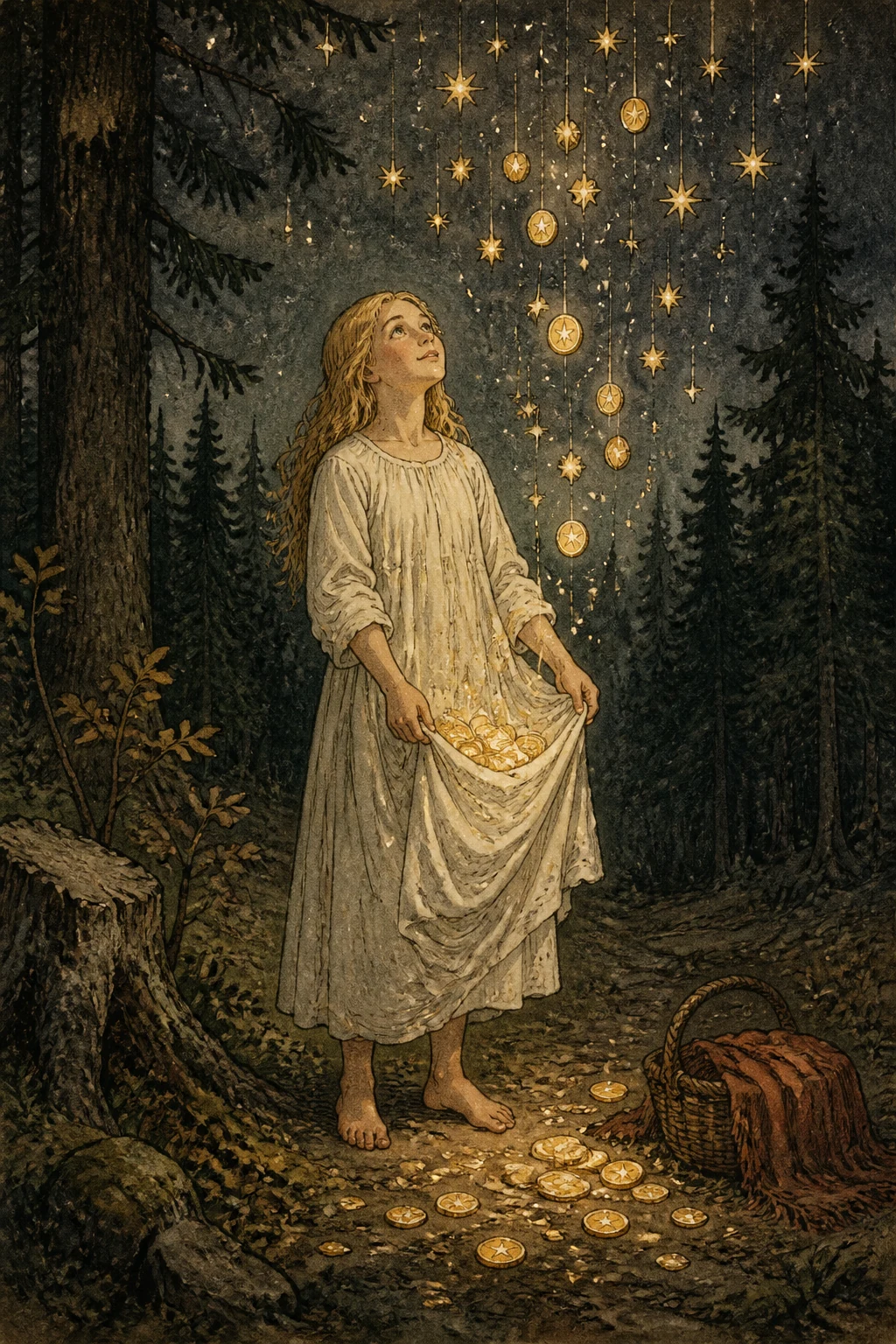
V hipu je deklico obdala svetloba in zazdelo se ji je, da skozi gole drevesne veje padajo vse zvezde z neba. Toda te zvezde so bile diamanti, rubini in drugi dragi kamni. Na debelo so prekrivali tla. »Poberi jih,« je rekel angel, »kajti tvoji so.«
Deklica jih je vsa začudena pobrala — toliko, kolikor jih je lahko nesla v spodnjem delu svoje srajčke. Ko se je spet ozrla okoli sebe, angela ni bilo več, zato je s svojim zakladom pohitela domov. Bilo ga je dovolj, da sta z njeno staro babico obogateli. Odtlej jima ni ničesar več manjkalo. Ne le da sta si lahko privoščili vse, kar sta si želeli, temveč sta lahko pomagali tudi številnim revežem. Tako nista bili le bogati, ampak so ju imeli radi vsi, ki so ju poznali.
Izvirnik
013 Star Jewels
Naslednje strani prikazujejo izvirno besedilo za primerjavo.
A little girl once lived all alone with her old grandmother upon the borders of a forest. They were so poor that they were scarcely able to buy food for their mouths, or clothes to cover them.
“Never mind, Granny,” the little girl would say. “Some day I will be big enough to work, and then I will earn so much that I will be able to buy everything that we need, and to give something to other poor folk as well.”
One day the child went off into the forest to gather fagots. These she hoped to sell for a few pennies in the town over beyond the hill. She was to be gone all day, so she took with her into the forest a bit of the black bread, which was all they had left to eat.
It was winter, and the air was bitterly cold. The child wrapped her little shawl about her, and ran on as fast as she could. She was hungry, but she intended to save her crust until after the fagots were gathered.
Just as she reached the edge of the forest she met a boy, even smaller than she herself, and he was crying bitterly.
The little girl had a tender heart. She stopped and asked the child why he was weeping.
“I am weeping,” he answered, “because I am hungry.”
“Have you had nothing to eat to-day?” she asked.
“I have had nothing, and I am like to starve, for I know not where to go for food.”
The little girl sighed. “You are, perhaps, hungrier than I,” she said, and she took the crust from her pocket and gave it to the boy. Then she again hurried on.
A little farther on, she met another child who was even more miserable-looking than the first, for this child seemed almost frozen with cold. Her clothing hung about her in rags, and her skin looked blue through the rents.
“Ah,” cried she, “if I had but a warm little dress like yours! Help me, I pray of you, or I will certainly die of cold.”
The good little girl was filled with pity. “It is not right,” thought she, “that I should have both a dress and a shawl. I will give one of them to this poor child.”
She took off her dress and gave it to the child, and then wrapped the shawl closely about her shoulders. In spite of the shawl she felt very cold. Still she was near the place where the fagots were to be found, and as soon as she had gathered them she would run home again.
She hastened on, but when she reached the place where the fagots were she saw an old woman already there, gathering up the fallen wood. The old woman was so bent and poor and miserable-looking that the little girl’s heart ached for her.
“Oh, oh!” groaned the old woman. “How my poor bones do ache. If I had but a shawl to wrap about my shoulders I would not suffer so.”
The child thought of her own grandmother, and of how she sometimes suffered, and she had pity on the old woman.
“Here,” said she, “take my shawl”; and slipping it from her shoulders she gave it to the old woman.
And now she stood there in the forest with her arms and shoulders bare, and with nothing on her but her little shift. The sharp wind blew about her, but she was not cold. She had eaten nothing, but she was not hungry. She was fed and warmed by her own kindness.
She gathered her fagots and started home again. It was growing dusk, and the stars shown through the bare branches of the trees. Suddenly an old man stood beside her. “Give me of your fagots,” said he, “for my hearth is cold, and I am too old to gather wood for myself.”
The little girl sighed. If she gave him the fagots she would have to stop to gather more. Still she would not refuse him. “Take them,” she said, “in heaven’s name.”
No sooner had she said this than she saw it was not an old man who stood before her, but a shining angel.
“You have fed the hungry,” said the angel, “you have clothed the naked, and you have given help to those who asked it. You shall not go unrewarded. See!”
At once a light shone around the child, and it seemed to her that all the stars of heaven were falling through the bare branches of the trees, but these stars were diamonds and rubies and other precious stones. They lay thick upon the ground. “Gather them together,” said the angel, “for they are yours.”
Wondering, the child gathered them together—all that she could carry in the skirt of her little shift.
When she looked about her again the angel was gone, but the child hastened home with her treasure. It was enough to make her and her old grandmother rich. From then on they lacked for nothing. They were not only able to have all they wished for, but to give to many who were poor. So they were not only rich, but beloved by all who knew them.
Nadaljuj z branjem