Prevod
Ko sta se kanadska žerjava poročila, sta si začela urejati lasten dom. Resda sta si prostor zanj izbrala že prej, vendar sta morala premisliti še o marsičem, in nekateri prijatelji so jima dejali, da bi bilo zelo nespametno graditi na tleh. »Gnezdom na tleh se pripeti toliko nesreč,« so govorili ti prijatelji. »Tu so vendar kače pa podgane in še veliko drugih, za katere si ne bi želela, da bi obiskovali vajine otroke. Poleg tega bi lahko kaj padlo nanj.«
Mlada zakonca sta se o vsem tem pogovorila in sklenila, da bosta gnezdo zgradila na drevesu. »Kač in podgan se ne bojiva,« sta rekla, »bala pa bi se, da bi kaj padlo na gnezdo.« Ko sta to rekla, sta se pogovarjala z že precej starim žerjavom.
»Nameravata graditi na drevesu?« je vprašal. »Draga mlada prijatelja, nikar. Samo pomislita: močan veter bi lahko odpihnil gnezdo in vse uničil. Storita, kar hočeta, le na drevesu ne gradita.« Nato je odletel.
»Ljubi bog!« je vzkliknila mlada gospa Žerjav. »Eden mi pravi, naj naredim to in nikoli tistega. Drugi mi pravi, naj naredim tisto in nikoli tega. Ker prijateljem ne morem ustreči, bom ustregla kar sebi.«
»In kateri prostor si izbrala?« je vprašal njen mož, ki mu je bilo vedno všeč vse, kar je storila. »Gradila bom na tleh,« je odločno rekla. »Če drevo pade, lahko zadene gnezdo, lahko pa ga tudi ne. Če pa zgradiva gnezdo na drevesu in drevo pade, bova gotovo treščila ob tla.«
»Kako modra si!« je vzkliknil njen mož. »Mislim, da se ljudje navadijo graditi na določen način in sčasoma začnejo verjeti, da noben drug način ne more biti pravi.« Iz tega vidimo, da je bil tudi gospod Žerjav moder.
Oba sta delala gnezdo ter prinašala koreninice in suho travo, da bi ga zgradila. Včasih sta šla plesat s prijatelji, in kadar sta šla, sta se večino časa priklanjala drug drugemu. Prav veliko jima ni bilo do teh plesov, saj ju je gnezdo tako zelo zaposlovalo. Zaradi dolgih nog sta ga morala zgraditi precej visoko nad tlemi. »Če bi bila raca,« je rekla gospa Žerjav, »bi lahko prav lepo sedela na gnezdu, toda s takšnimi nogami? Nikoli! Prav tako bi lahko sedela na dveh golih vejah, kot pa imela noge spodvite pod seboj.« Zato je preizkušala gnezdo, dokler ni bilo natanko tako visoko, kot so bile dolge njene noge.
Ko je bilo dovolj visoko, je vanj znesla dve sivi jajci z rjavimi pegami. Odtlej ni več plesala, temveč je stala z eno nogo na eni in drugo na drugi strani gnezda, njeno mehko telo pa je počivalo tik nad jajcema in ju grelo. To je bilo zelo utrudljivo delo, zato je včasih jajci pokril gospod Žerjav, medtem ko je ona odšla lovit ribe. Žerjavi so vedno zelo prijazni do svojih žena.
Veste, za oba je bilo to prvo gnezdo in vse se jima je zdelo novo in čudovito. Mislila sta, da tako lepega doma še nikoli ni bilo. Pogosto sta stala na tleh ob njem, ga s kljunoma drezala zdaj tu, zdaj tam in si govorila: »Samo poglej to lepo koreninico, ki sem jo vpletel,« ali: »Si opazil, kako lepo je videti tisti šop suhe trave tam, kamor sem ga položila?« Ko se je bližal čas, da se jajci izvalita, sta se komaj še lahko odtrgala od gnezda za toliko časa, da sta si poiskala hrano.
Nekega dne se je mladi gospod Žerjav vrnil domov ves vznemirjen. »Najinima sosedoma, žerjavoma, ki živita na drugi strani ribnika,« je rekel, »sta se danes zjutraj izvalila dva otroka.«
»Oh, kako sem vesela!« je vzkliknila njegova žena. »Kako sem vesela! Tisti jajci sta bili zneseni tik pred najinima, zato se morata tudi najini zdaj prav kmalu izvaliti.« »Tudi jaz sem pomislil na to,« je rekel. »Vendar se mi soseda zelo smilita, saj sem videl njuna otroka in sta strašansko grda — prav nič nista podobna staršema, ki sta kar čedna.«
»Sama ju moram videti,« je rekla njegova žena. »Če boš pokril jajci, medtem ko grem po hrano, bom še na hitro pokukala k njima. Kmalu se vrnem.« Z enakomernimi zamahi je poletela čez ribnik, ki ni bil prav širok, in prosila, ali sme pogledati mladička. Žerjavjih otrok namreč ni videla že od takrat, ko je bila sama majhna. Zdela sta se ji zelo grda in čudila se je, kako je lahko njuna mati tako vedra in vesela ob dveh tako razočarajočih otrocih. Izrekla je vse prijaznosti, ki jih je lahko povedala po pravici, nato si je poiskala nekaj za pod zob in odletela domov. »Zelo, zelo grda sta,« je rekla možu, »in to se mi zdi čudno. Vsi njuni starejši otroci so čedni.«
Komaj je to izrekla, že je v gnezdu zaslišala rahlo trkanje. Pogledala je in zagledala konico drobnega kljunčka, ki je prodirala skozi lupino enega izmed jajc. Stopila je na eno stran gnezda in opazovala, njen mož pa je stal na drugi, medtem ko se je njun prvorojenec počasi prebijal na svet. Nista si mu upala pomagati, ker sta se bala, da bi ga poškodovala, poleg tega pa so jima vsi drugi žerjavi povedali, da tega ne smeta storiti.
»Oh, poglej!« je vzkliknila mlada mati. »Kako ljubek kljunček!« »Ah!« je rekel mladi oče. »Si že kdaj videla tak vrat?« »Poglej te noge,« je vzkliknila. »Kako lep otrok je!«
»Prav tak je kot ti,« je rekel oče, »in tega sem vesel.« »Ah, ne,« je rekla ona. »Čisto tebi je podoben.« In začela je odstranjevati razbito jajčno lupino.
Kmalu je tudi druga žerjavja mladička pomolila kljunček na plano in mlada starša sta spet stala ob gnezdu ter občudovala svojega otroka. Nista se mogla odločiti, kateri je lepši, bila pa sta prepričana, da sta oba izjemna mladička. Še bolj kakor prej sta se jima smilila soseda na drugi strani ribnika, ki sta imela tako grda otroka. Izmenjaje sta pokrivala svoja še vlažna žerjavčka in bila zelo, zelo srečna.
Prej sta zlahka dobila vso hrano, ki sta jo potrebovala, saj sta dva delala za dva. Zdaj sta dva delala za štiri in zato je bilo precej težje. Za ples ni bilo časa in oče in mati sta nenehno delala, vendar sta bila srečnejša kot kdaj prej in nobeden od njiju se ne bi vrnil v stare brezskrbne dni za vso hrano v ribniku ali za vse plese na obrežju.
Žerjavčka sta lepo rasla. Puh so jima zamenjala peresa v tulcih, iz njih pa je zraslo lepo rjavkasto sivo perje, kakršno sta nosila njuna starša. Bila sta tudi pridna otroka in zelo lepo vzgojena. Pojedla sta vso hrano, ki sta jo dobila, in se nikoli nista pritoževala nad njo. Ko sta prvič zapustila gnezdo, sta prhutala in se prevračala ter se le s težavo učila hoditi. Oče muljnih želv, ki je bil v bližini, jima je povedal, da je tako zato, ker imata predolge noge in ker jih imata premalo.
»No,« je rekel bratec, ko se je pobral in skušal stati na eni nogi, medtem ko je drugo vlekel iz prepletene trave, »morda so res predolge, vendar jih imam prav gotovo dovolj. Kadar mislim na eno, nikoli ne vem, kaj bo storila druga.«
Vseeno ni minilo dolgo, preden sta znala hoditi in broditi po vodi in celo leteti. Tedaj sta spoznala druge prebivalce ribnika in se naučila ločiti zet od pisanca. Nista imela veliko tovarišev za igro. Predrzni mali vodomci so sedeli na vejah nad njunima glavama, divje race so se zibale ali plavale tik pod njunima kljunoma, ribji orli so jadrali nad njima in galebi so jima hripavo vreščali, ko so krožili nad ribnikom, vendar nihče od njih ni bil dolgonog in dostojanstven. Tistega, v čemer so druge ptice najbolj uživale, sama nista mogla početi, in včasih jima to ni bilo prav nič všeč. Nekega večera sta se pogovarjala o galebih, čeprav bi morala že spati, in oče jima je velel, naj nemudoma zatakneta glavi pod peruti, da ne bo slišal od njiju niti besedice več. Res sta zataknila glavi pod peruti, vendar sta kukala med perjem, in ko sta bila prepričana, da oče in mati spita, sta se tiho odkradla proč in začela načrtovati, kaj porednega bi ušpičila.
»Naveličal sem se biti priden,« je rekel bratec. »Galebi niso nikoli pridni. Vreščijo, grabijo, ugovarjajo in se imenitno zabavajo. Bodiva še midva poredna, kar tako, za zabavo.«
»Prav,« je rekla sestrica. »Kaj pa naj narediva?« »Prav v tem je težava,« je rekel. »Ne morem se domisliti ničesar porednega, kar bi si zares želel početi.« Oba sta nekaj časa stala na eni nogi in premišljevala. »Lahko bi pobegnila,« je rekla.
»Kam pa bi šla?« je vprašal. »Lahko bi šla na travnik,« je rekla. Tako sta se v mesečini odpravila na travnik, toda tam so vsi spali razen rega, ki se jima je brž umaknil s poti, ko ju je zagledal prihajati, saj je pomislil, da bi si morda rada privoščila pozno večerjo.
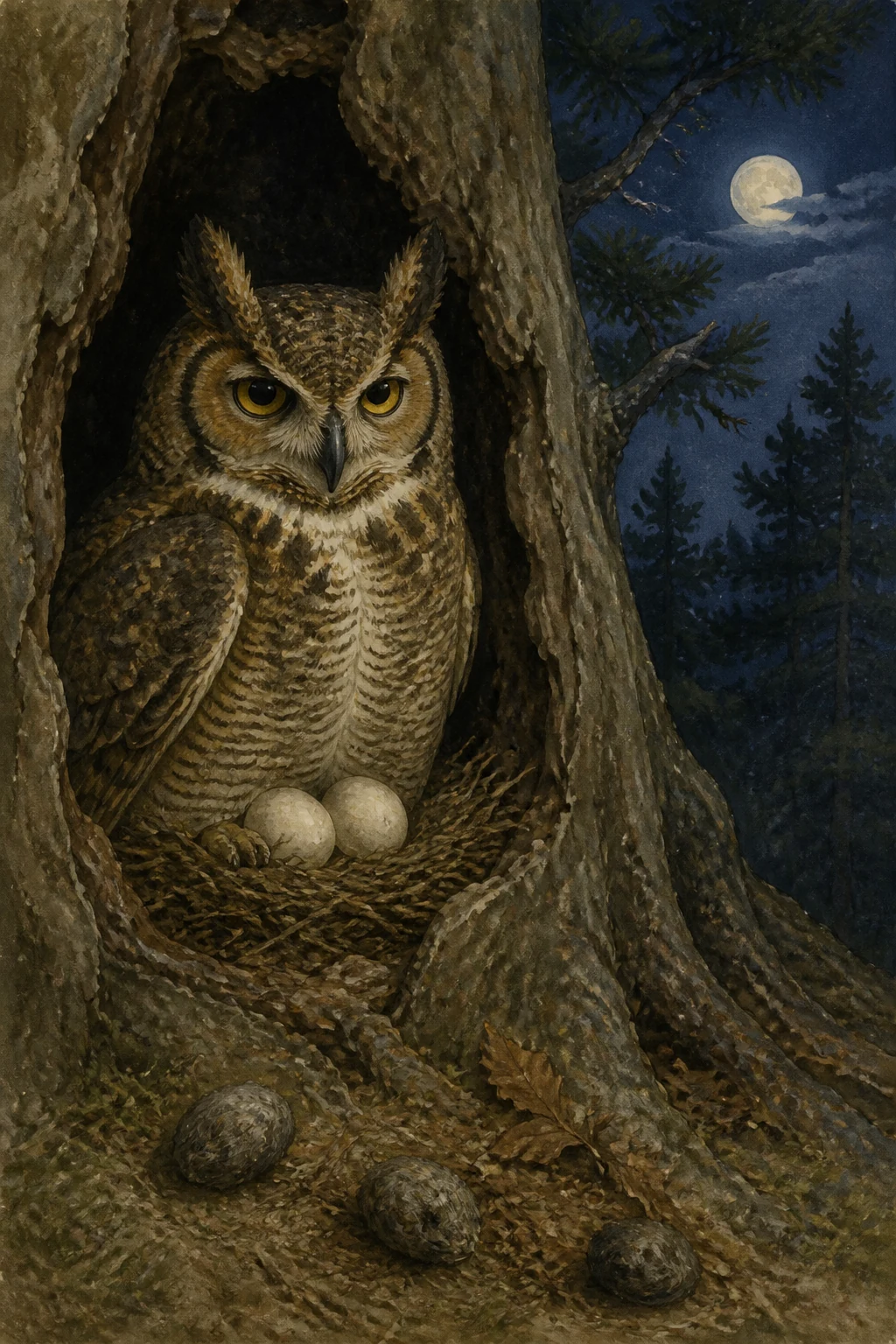
»To ni prav nič zabavno!« je rekel bratec. »Pojdiva v gozd.« Odšla sta v gozd in videla netopirje, ki so švigali med drevesi. Netopirji so letali tik ob žerjavčkih in ju prestrašili. Virginijska uharica je sedela na veji blizu njiju, strmela vanju z velikimi okroglimi očmi in govorila: »Kdo? Kdo? Hu-hu-uuu!« Bratec in sestrica sta se stisnila bliže skupaj in odgovorila: »Če dovolite, gospod, midva sva žerjavja otroka.«
Toda virginijska uharica je še naprej strmela vanju in govorila: »Kdo? Kdo? Hu-hu-uuu!« Nazadnje sta bila prepričana, da je gluha, in sta odgovarjala vse glasneje in glasneje.
Prišli so tudi skoviki, ju opazovali, se pripogibali, kakor da bi se smejali, kimali z glavami in se stresali. Tedaj sta bila žerjavčka prepričana, da se jima posmehujejo, zato sta zelo togo odkorakala proč. Ko ju sove niso več mogle videti, sta poletela proti kmečki hiši. Še vedno se nista prav nič zabavala, vendar sta nameravala poskušati še naprej, kajti čemu bi bila poredna, če se pri tem ne bi zabavala?
Šla sta mimo konj in krav, ki so spali na poljih, in videla rjavo svinjo, ki je ležala v ogradi, ob njej pa je spalo veliko rjavih pujskov in en bel pujsek. Nihče ni bil buden razen ovčarskega psa Collieja, ki je sedel na kmečkem dvorišču, molil smrček v zrak in lajal na luno.
»Pojdita proč!« je rekel žerjavčkoma, ki sta se sprehajala po dvorišču. »Pojdita proč! Lajati moram na luno in nočem nikogar v bližini.« Ker se nista odpravila dovolj hitro, da bi mu bilo prav, je planil proti njima, tekal okoli njiju in lajal nanju namesto na luno, dokler nista bila še kako vesela, da sta lahko poletela naravnost domov, tja, kjer sta oče in mati spala z glavama pod perutmi.
»Jima boš povedala?« je vprašal bratec. »Ne vem,« je odgovorila sestrica. Ko je prišlo jutro, sta bila videti utrujena, oče in mati pa sta bila zaradi njiju tako zaskrbljena, da sta jima povedala vso zgodbo.
»Ni nama bilo toliko do tega, kar sva počela,« sta rekla, »ampak mislila sva, da bo zabavno biti poreden.« Oče in mati sta se pomenljivo spogledala. »Veliko jih tako misli,« je nežno rekla mati. »Toda nazadnje se izkaže, da se motijo. V resnici je veliko bolj zabavno biti priden.«
»No, želim si, da nama galebi ne bi vreščali: ‘Pridnobici!’« je rekel bratec. »Kaj pa je to važno?« je vprašal oče. »Zakaj bi bilo žerjavu mar, kaj govori galeb?«
»Saj, jaz — jaz ne vem,« je zajecljal bratec. »Najbrž res ni nič važno.« Naslednji dan, ko sta žerjavčka stala na robu ribnika, sta blizu njiju priletela dva mlada galeba in zavreščala: »Pridnobici!«
Tedaj sta žerjavji bratec in sestrica dvignila glavi in vratova, odprla dolga kljuna in jima trobentaje odgovorila: »Poredneži!« »Tako!« sta rekla drug drugemu. »Zdaj smo si bot.«
Izvirnik
When the Sand-Hill Cranes were married, they began to work for a home of their own. To be sure, they had chosen a place for it beforehand, yet there were other things to think about, and some of their friends told them it would be very foolish to build on the ground. "There are so many accidents to ground nests," these friends said. "There are Snakes, you know, and Rats, and a great many other people whom you would not want to have look in on your children. Besides, something might fall on it."
The young couple talked this all over and decided to build in a tree. "We are not afraid of Snakes and Rats," they said, "but we would fear something falling on the nest." They were talking to quite an old Crane when they said this.
"Do you mean to build in a tree?" said he. "My dear young friends, don't do that. Just think, a high wind might blow the nest down and spoil everything. Do whatever you wish, but don't build in a tree." Then he flew away.
"Dear me!" exclaimed young Mrs. Crane, "one tells me to do this and never to do that. Another tells me to do that and never to do this. I shall just please myself since I cannot please my friends."
"And which place do you choose?" asked her husband, who always liked whatever she did.
"I shall build on the ground," she said decidedly. "If the tree falls, it may hit the nest and it may not, but if we build in the tree and it falls, we are sure to hit the ground."
"How wise you are!" exclaimed her husband. "I believe people get in a way of building just so, and come to think that no other way can be right." Which shows that Mr. Sand-Hill Crane was also wise.
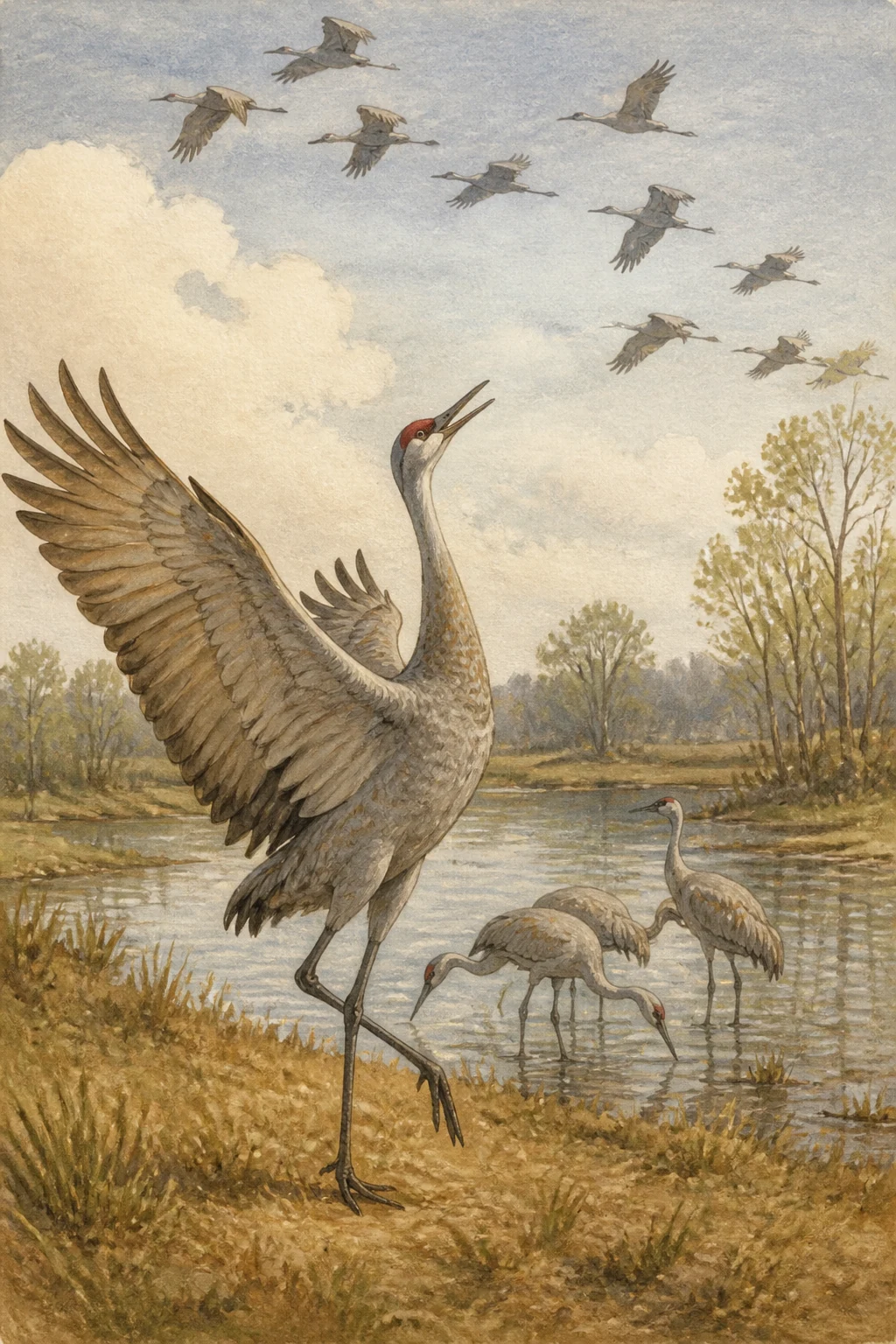
Both worked on the nest, bringing roots and dried grasses with which to build it up. Sometimes they went to dance with their friends, and when they did they bowed most of the time to each other. They did not really care very much about going, because they were so interested in the nest. This they had to build quite high from the ground, on account of their long legs. "If I were a Duck," said Mrs. Sand-Hill Crane, "it would do very well for me to sit on the nest, but with my legs? Never! I would as soon sit on two bare branches as to have them doubled under me." So she tried the nest until it was just as high as her legs were long.
When it was high enough, she laid in it two gray eggs with brown spots. After that she did no more dancing, but stood with a leg on either side of the nest, and her soft body just over the eggs to keep them warm. It was very tiresome work, and sometimes Mr. Crane covered the eggs while she went fishing. The Cranes are always very kind to their wives.
This, you know, was the first time that either had had a nest, and it was all new and wonderful to them. They thought that there never had been such a beautiful home. They often stood on the ground beside it, and poked it this way and that with their bills, and said to each other, "Just look at this fine root that I wove in," or, "Have you noticed how well that tuft of dried grass looks where I put it?" As it came near the time for their eggs to hatch, they could hardly bear to be away long enough to find food.
One day young Mr. Sand-Hill Crane came home much excited. "Our neighbors, the Cranes who live across the pond," said he, "had two children hatched this morning."
"Oh, how glad I am!" cried his wife. "How glad I am! Those eggs were laid just before ours, which must hatch very soon now."
"That is what I thought," said he. "I feel so sorry for them, though, for I saw their children, and they are dreadfully homely,--not at all like their parents, who are quite good-looking."
"I must see them myself," said his wife, "and if you will cover the eggs while I go for food, I will just peep in on them. I will hurry back." She flew steadily across the pond, which was not very wide, and asked to see the babies. She had never seen any Crane children, you know, since she herself was little. She thought them very ugly to look at, and wondered how their mother could seem bright and cheerful with two such disappointing children. She said all the polite things that she honestly could, then got something to eat, and flew home. "They are very, very homely," she said to her husband, "and I think it queer. All their older children are good-looking."
She had hardly said this when she heard a faint tapping sound in the nest. She looked, and there was the tip of a tiny beak showing through the shell of one egg. She stood on one side of the nest, watching, and her husband stood on the other while their oldest child slowly made his way out. They dared not help for fear of hurting him, and besides, all the other Cranes had told them that they must not.
"Oh, look!" cried the young mother. "What a dear little bill!"
"Ah!" said the young father. "Did you ever see such a neck?"
"Look at those legs," cried she. "What a beautiful child he is!"
"He looks just like you," said the father, "and I am glad of it."
"Ah, no," said she. "He is exactly like you." And she began to clear away the broken egg-shell.
Soon the other Crane baby poked her bill out, and again the young parents stood around and admired their child. They could not decide which was the handsomer, but they were sure that both were remarkable babies. They felt more sorry than ever for their neighbors across the pond, who had such homely children. They took turns in covering their own damp little Cranes, and were very, very happy.
Before this, it had been easy to get what food they wanted, for there had been two to work for two. Now there were two to work for four, and that made it much harder. There was no time for dancing, and both father and mother worked steadily, yet they were happier than ever, and neither would have gone back to the careless old days for all the food in the pond or all the dances on the beach.
The little Cranes grew finely. They changed their down for pin-feathers, and then these grew into fine brownish gray feathers, like those which their parents wore. They were good children, too, and very well brought up. They ate whatever food was given to them, and never found fault with it. When they left the nest for the first time, they fluttered and tumbled and had trouble in learning to walk. A Mud Turtle Father who was near, told them that this was because their legs were too long and too few.
"Well," said the brother, as he picked himself up and tried to stand on one leg while he drew the other foot out of the tangled grass, "they may be too long, but I'm sure there are enough of them. When I'm thinking about one, I never can tell what the other will do."
Still, it was not long before they could walk and wade and even fly. Then they met the other pond people, and learned to tell a Stickleback from a Minnow. They did not have many playmates. The saucy little Kingfishers sat on branches over their heads, the Wild Ducks waddled or swam under their very bills, the Fish Hawks floated in air above them, and the Gulls screamed hoarsely to them as they circled over the pond, yet none of them were long-legged and stately. The things that the other birds enjoyed most, they could not do, and sometimes they did not like it very well. One night they were talking about the Gulls, when they should have been asleep, and their father told them to tuck their heads right under their wings and not let him hear another word from them. They did tuck their heads under their wings, but they peeped out between the feathers, and when they were sure their father and mother were asleep, they walked softly away and planned to do something naughty.
"I'm tired of being good," said the brother. "The Gulls never are good. They scream, and snatch, and contradict, and have lots of fun. Let's be bad just for fun."
"All right," said his sister. "What shall we do?"
"That's the trouble," said he. "I can't think of anything naughty that I really care for."
Each stood on one leg and thought for a while. "We might run away," said she.
"Where would we go?" asked he.
"We might go to the meadow," said she. So they started off in the moonlight and went to the meadow, but all the people there were asleep, except the Tree Frog, and he scrambled out of the way as soon as he saw them coming, because he thought they might want a late supper.
"This isn't any fun!" said the brother. "Let's go to the forest."
They went to the forest, and saw the Bats flitting in and out among the trees, and the Bats flew close to the Cranes and scared them. The Great Horned Owl stood on a branch near them, and stared at them with his big round eyes, and said, "Who? Who? Waugh-ho-oo!" Then the brother and sister stood closer together and answered, "If you please, sir, we are the Crane children."
But the Great Horned Owl kept on staring at them and saying "Who? Who? Waugh-ho-oo!" until they were sure he was deaf, and answered louder and louder still.
The Screech Owls came also, and looked at them, and bent their bodies over as if they were laughing, and nodded their heads, and shook themselves. Then the Crane children were sure that they were being made fun of, so they stalked away very stiffly, and when they were out of sight of the Owls, they flew over toward the farmhouse. They were not having any fun at all yet, and they meant to keep on trying, for what was the good of being naughty if they didn't?
They passed Horses and Cows asleep in the fields, and saw the Brown Hog lying in the pen with a great many little Brown Pigs and one White Pig sleeping beside her. Nobody was awake except Collie, the Shepherd Dog, who was sitting in the farmyard with his nose in the air, barking at the moon.
"Go away!" he said to the Crane children, who were walking around the yard. "Go away! I must bark at the moon, and I don't want anybody around." They did not start quite soon enough to please him, so he dashed at them, and ran around them and barked at them, instead of at the moon, until they were glad enough to fly straight home to the place where their father and mother were sleeping with their heads under their wings.
"Are you going to tell them?" asked the brother.
"I don't know," answered the sister. When morning came, they looked tired, and their father and mother seemed so worried about them that they told the whole story.
"We didn't care so very much about what we did," they said, "but we thought it would be fun to be naughty."
The father and mother looked at each other in a very knowing way. "A great many people think that," said the mother gently. "They are mistaken after all. It is really more fun to be good."
"Well, I wish the Gulls wouldn't scream, 'Goody-goody' at us," said the brother.
"What difference does that make?" asked his father. "Why should a Crane care what a Gull says?"
"Why, I--I don't know," stammered the brother. "I guess it doesn't make any difference after all."
The next day when the Crane children were standing in the edge of the pond, a pair of young Gulls flew down near them and screamed out, "Goody-goody!"
Then the Crane brother and sister lifted their heads and necks and opened their long bills, and trumpeted back, "Baddy-baddy!"
"There!" they said to each other. "Now we are even."