Waltey
Mladiči rdečeglavega detla
050 THE RED-HEADED WOODPECKER CHILDREN
Živalske zgodbe Clare Dillingham Pierson · Clara Dillingham PiersonO besedilu
Mladiči rdečeglavega detla
- Vir
- Živalske zgodbe Clare Dillingham Pierson
- Avtor
- Clara Dillingham Pierson
- Jezik branja
- Slovenščina
- Jezik izvirnika
- English
- Čas branja
- 9 min branja
- Obseg
- 8 strani
- Naslov izvirnika
- 050 THE RED-HEADED WOODPECKER CHILDREN
O izvirniku
Živalske zgodbe Clare Dillingham Pierson
Devetindevetdeset avtorskih zgodb o živalih na kmetiji, travniku, v gozdu, ob ribniku in ponoči. Bralni jezik je Slovenščina, izvirnik pa prihaja iz vira Živalske zgodbe Clare Dillingham Pierson v jeziku English.
Besedilo
Mladiči rdečeglavega detla
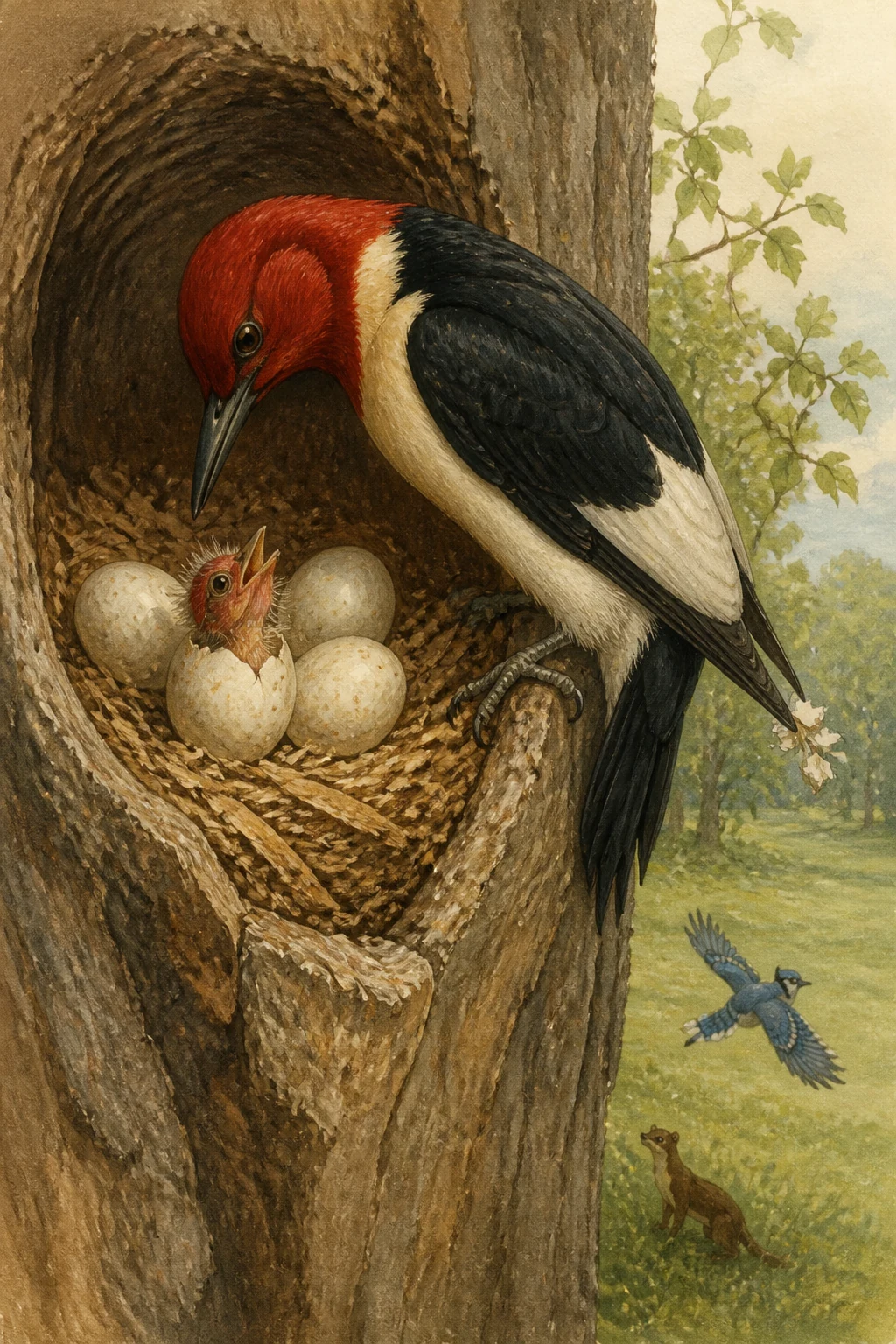
Gospa Rdečeglava detlovka je sklonila svojo lepo glavo in prisluhnila. »Da, res je! Prav zares!« je vzkliknila, ko je že drugič zaslišala rahli »trk-trk-trk« drobcenega kljunčka, ki je trkal po notranji strani jajčne lupine. Poskočila je na rob gnezda in se zazrla v štiri bela jajca, ki so ležala v njem. Kmalu se je trkanje spet oglasilo in opazila je, da se je eno od jajc malce premaknilo na svojem ležišču iz iveri.
»Torej je tole,« je vzkliknila. »Saj sem si mislila, da bo. Prepričana sem bila, da sem tega znesla prvega.« Ponosno je usločila vrat, ko je skozi razpoko v lupini pokukal kljun njenega najstarejšega otroka. Nihče drug ne bi znal ločiti enega jajca od drugega, a matere si takšne reči nekako zapomnijo. Morda prav zato, ker imajo svoje otroke tako rade, včasih vidijo malce ostreje in slišijo malce bolje kakor vsi drugi.
Kakor koli že, stala je in opazovala, kako drobni ptiček kruši lupino ter se rine skozi odprtino, ki si jo je naredil. Niti koščka lupine se ni dotaknila, dokler ni bil povsem zunaj, saj je vedela, da je za otroke vselej bolje, če si pomagajo sami, kadar le morejo. Tako se okrepijo in pripravijo na življenje. Ko se je mali rdečeglavi detel izkopal na prostost, je s kljunom pobrala koščke lupine in jih odnesla daleč od gnezda, preden jih je spustila na tla. Če bi storila, kar je bilo najlaže, in jih pustila pasti ob vznožje votlega drevesa, v katerem je živela, bi jih lahko opazila kakšna prežeča Podlasica ali Modra šoja in čakala na priložnost, da pride do njenih mladičkov. To pa bi bilo zanje zelo žalostno.
Pravkar izvaljeni ptiček je bil utrujen malček in najprej je malce zadremal. Tudi zeblo ga je, čeprav je bilo vreme lepo in sončno. Njegov puh je bil ves moker od vlage v jajcu in lahko si mislite, kako se je počutil, ko je po tako dolgem odraščanju v topli, prijetni lupini nenadoma ostal brez nje in vedel, da ga nikoli več ne bo obdajala. Tudi če bi bila spet cela, ga ne bi bilo več mogoče stlačiti vanjo, saj se je od trenutka, ko jo je zapustil, nenehno pretegoval in rasel. Zato imajo prebivalci kmečkega dvorišča moder pregovor: »Izvaljen piščanec se nikoli več ne vrne v lupino.«
Ko se je gospa Rdečeglava detlovka vrnila, je svojega drgetajočega malčka pokrila s puhastimi prsmi. Tam je spal, ona pa je čakala, kdaj se bo prikazal njen mož, in si mislila, kako vesel in ponosen bo, ko bo zagledal mladička. Bila sta mlad par in to je bil njun prvi otrok.
Kdo pa bi vedel, kaj so mislili drugi trije otroci, ki še niso predrli lupine? So se lahko spominjali časa, ko so začeli nastajati? So lahko sanjali o tem, kaj se bo zgodilo, ko se izvalijo? So sploh lahko mislili? Bila so drobna, nebogljena bitjeca, zvita v svojih lupinah, z vseh strani obdana s hrano. Nekoč so bila le črtice v rumeni jajčni tekočini. Zdaj pa so bila že skoraj pripravljena, da jo zapustijo in zaživijo polnejše, svobodnejše življenje, v katerem bodo lahko odpirala kljune, prhutala s perutmi ter stegovala noge in vratove. V lupini je bilo mirno in varno; zakaj bi jo zapustila? Ah, vendar so jo morala zapustiti, saj so bila zdrava in so rasla, in ko bodo enkrat zunaj, bodo nanjo povsem pozabila. Do takrat, ko bodo znala govoriti, in to bo prav kmalu, bodo pozabila vse, kar se je zgodilo, preden so se izvalila. Zato vam noben ptič nikoli ne more povedati, o čem je razmišljal v jajcu.
Ko so na svet prišle še tri sestrice mladega detla, sta imela oče in mati polno dela z iskanjem hrane zanje, zato so bili mladiči velikokrat sami. Kmalu so že poznali glasova svojih staršev, čeprav so tu in tam, preden so odprli oči, klic Drevesne žabe spodaj zamenjali za detlovega. In to ni bilo nič čudnega, saj oba pravita: »Krr-r-ruk! Krr-r-ruk!« Kadar je Drevesna žaba pela v svojem domovanju ob vznožju drevesa, so štirje detlovi otroci v gnezdilnem duplu visoko nad njeno glavo odpirali kljune, stegovali vratove in se čudili, zakaj jim v grla ne pade kak sočen, slasten grižljaj.
Ko so odprli oči, so imeli marsikaj videti. Vsaj njim se je zdelo tako. Mar ni bilo tu duplo v njihovem ljubem, suhem starem drevesu, štirikrat ali petkrat višje, kakor so sami lahko segli? Mati jim je povedala, kako sta ga z očetom izdolbla z ostrima, močnima kljunoma, ga spodaj naredila prostornega, na vrhu pa pustila vhod, ravno dovolj velik, da sta se lahko prebila skozenj. Del iveri sta odnesla proč, kakor je mati odnesla razbite lupine, del pa sta jih pustila na dnu dupla, da so otroci ležali na njih. »Trava, dlaka in puh se mi ne zdijo prava postelja za otroke,« je rekel oče. »Lepe mehke iveri so veliko boljše.«
In detlovim otrokom so bile iveri všeč. Igrali so se z njimi in se pretvarjali, da so ličinke, ki jih morajo ujeti s svojimi dolgimi, koščenimi jeziki; le pogoltnili jih seveda niso nikoli.
Ko jim je začelo rasti perje, je bilo zelo razburljivo. Dotlej jih je odeval puh, zdaj pa so jim skozi kožo začele bodeti drobcene peresne cevke in ni se bilo več tako prijetno stiskati drug k drugemu kakor prej. Tedaj pa je najstarejši v družini začel kazati tudi veliko napako. Bil je zelo nečimrn. Lahko si predstavljate, kako je bilo to žal njegovim staršem.
Vsako jutro, ko se je zbudil, si je najprej ogledal perje. Tisto na prsih je bilo belo, čez peruti pa je imel bel pas. Rep, hrbet in skoraj vse peruti so bili modročrni. Glava, vrat in grlo so bili škrlatno rdeči. Res pa je, da barve med rastjo perja še niso bile posebno žive, saj je bil med njim pomešan puh, peresne cevke pa so bile tako dobro vidne, da so bili mladi ptiči videti precej progasti.
Tudi sestrice so v istem času dobivale nove obleke in imele prav toliko razlogov za nečimrnost, pa vendar niso bile nečimrne. Bile so vesele — kdo pa ne bi bil? — in pogosto so si govorile: »Kako lepa postajaš!« Videti so bile natanko takšne kakor njihov brat, kajti pri detlih ni tako kakor pri mnogih drugih pticah: sinovi in hčere so oblečeni povsem enako.
Nečimrni mladi detel pa je imel veliko skrbi. Ni mu bilo dovolj, da bi pustil perju rasti kakor travi in listju, ne da bi ga opazoval. Kje pa! Vsako pero si je ogledal vsak dan, in to večkrat na dan. Če se mu je zazdelo, da ne raste tako hitro, kakor bi moralo, ga je to skrbelo. Rad bi mu pomagal hitreje rasti in včasih, kadar se mu je zdelo, da ga sestrice ne gledajo, je pero prijel s kljunom in ga povlekel. Zaradi tega seveda ni raslo nič hitreje, koža pa ga je prav pošteno bolela, toda kako naj bi to vedel? Še premalo časa je bil zunaj lupine, da bi bil moder.
Mučilo ga je tudi to, da ni mogel videti svojega rdečega perja. Obračal je glavo sem ter tja in napenjal oči, dokler ga niso bolele, ko si je skušal ogledati lastno glavo in vrat. To je bilo zelo nadležno. Zdelo se mu je, da bi bilo veliko lepše, če bi imel najsvetlejše perje na repu, kjer bi ga lahko videl, ali vsaj na prsih, in vprašal je mater, zakaj ne bi moglo biti tako.
»Nekoč sem poznala mladega detla,« je rekla, »ki ni razmišljal skoraj o ničemer drugem kakor o svoji lepoti. Bojim se, da v tem čudovitem velikem svetu ne bi nikoli videl ničesar drugega kot svoj ubogi mali rep, če bi smel na njem nositi rdeče perje.« Med govorjenjem je gledala skozi vhod, toda vedel je, da misli njega.
Tako je šlo naprej, dokler otroci niso bili pripravljeni na letenje. Tedaj so se začele vsakodnevne učne ure letenja, pristajanja, oprijemanja vej in trkanja po drevesnem lubju, da bi našli hrano. Naučili so se tudi, kako se opirati na toge repe, kadar plezajo po drevesih ali se ustavijo pri jedi, s kremplji zataknjenimi v lubje. Nato jih je gospa Rdečeglava detlovka naučila, kako na drevesih prepoznati najbolj zrele in najslajše sadeže, še preden jih pokusijo. To je nekaj, kar bi radi vedeli mnogi ljudje, a je gozdna skrivnost in nobena ptica je ne izda nikomur, ki ne zna leteti.
Nekega dne se je nečimrni mladi detel na poti iz sadovnjaka ustavil, da bi poklepetal s starim Sivim veveričkom. Morda Sivi veveriček ni več dobro videl in je zato detla zamenjal za nekoga povsem drugega. Govoril je o starem drevesu, v katerem je prebil prejšnjo zimo. »Mislim, da zdaj tam živi družina rdečeglavih detlov,« je rekel. »Enkrat ali dvakrat sem jih že srečal. Oče in mati sta imenitna in imata ljubke hčere, toda sin jima mora povzročati veliko preglavic. Eden tistih tepčkov je, ki gledajo svet skozi lastno perje.«
Ko je mladi rdečeglavi detel odletel, si je ponavljal: »Tepček, tepček, ki gleda svet skozi lastno perje.« In očeta je vprašal: »Skozi čigavo perje pa moram gledati?«
To je očeta zmedlo. »Skozi čigavo perje naj bi gledal?« je rekel. »Kaj hočeš povedati?« »No,« je odgovoril sin, »nekdo je rekel, da gledam svet skozi lastno perje, pa ne vem, kako naj dobim perje koga drugega.«
Kako se je oče nasmejal! »Ne vem, zakaj bi sploh moral gledati skozi kakršno koli perje,« je rekel. »Hotel je povedati, da toliko misliš na svoje perje, da ti ni mar za nič drugega; in res je tako. Če bi bilo namenjeno, da ves čas gledaš samega sebe, bi imel eno oko pod brado, drugo pa na zatilju. Pa ni tako! Oči imaš postavljene prav zato, da gledaš druge, in tam, kjer ti pomagajo iskati hrano.«
»Kako pogosto pa smem pogledati svoje perje?« je vprašal mladi detel. Prav tisti hip se je spraševal, kakšen je videti njegov rep, a je bil odločen, da ne bo obrnil glave.
Staremu detlu so se zaiskrile oči. »Rekel bi,« je dejal, »da si lahko, ker si še mlad in nimaš družine, za katero bi moral skrbeti, urediš perje zjutraj, popoldne in preden greš spat. Kadar je nevihta, boš moral seveda vzeti nepremočljivi premaz iz žepka pod repom in z njim namazati vsako pero posebej, kakor delajo vse ptice. To bi moralo zadostovati, razen če ti kaj razmrši perje.«
»Nič večkrat ga ne bom gledal,« je odločno rekel mladi rdečeglavi detel. »Ne dovolim, da me imajo za tepčka.« In držal je besedo.
Mati je zavzdihnila, ko je izvedela za spremembo. »Zelo sem vesela,« je rekla. »Ampak ali ni vedno tako? Z očetom sva mu govorila in govorila, pa ni nič zaleglo; potem pa nekdo drug reče, da je neumen in nečimrn, in glej ga!«
Izvirnik
050 THE RED-HEADED WOODPECKER CHILDREN
Naslednje strani prikazujejo izvirno besedilo za primerjavo.
Mrs. Red-headed Woodpecker bent her handsome head down and listened. "Yes, it is! It certainly is!" she cried, as she heard for a second time the faint "tap-tap-tap" of a tiny beak rapping on the inside of an egg shell. She hopped to one side of her nest and stood looking at the four white eggs that lay there. Soon the rapping was heard again and she saw one of them move a bit on its bed of chips.
"So it is that one," she cried. "I thought it would be. I was certain that I laid that one first." And she arched her neck proudly, as the beak of her eldest child came through a crack in the shell. Now nobody else could have told one egg from another, but mothers have a way of remembering such things, and it may be because they love their children so that sometimes their sight is a little sharper, and their hearing a little keener than anybody else's.
However that may be, she stood watching while the tiny bird chipped away the shell and squeezed out of the opening he had made. She did not even touch a piece of the shell until he was well out of it, for she knew that it is always better for children to help themselves when they can. It makes them strong and fits them for life. When the little Red-headed Woodpecker had struggled free, she took the broken pieces in her beak and carried them far from the nest before dropping them to the ground. If she had done the easiest thing and let them fall by the foot of the hollow tree where she lived, any prowling Weasel or Blue Jay might have seen them and watched for a chance to reach her babies. And that would have been very sad for the babies.
The newly hatched bird was a tired little fellow, and the first thing he did was to take a nap. He was cold, too, although the weather was fine and sunshiny. His down was all wet from the moisture inside the egg, and you can imagine how he felt, after growing for so long inside a warm, snug shell, to suddenly be without it and know that he could never again have it around him. Even if it had been whole once more, he could not have been packed into it, for he had been stretching and growing every minute since he left it. It is for this reason that the barn-yard people have a wise saying: "A hatched chicken never returns to his shell."
When Mrs. Red-headed Woodpecker came back, she covered her shivering little one with her downy breast, and there he slept, while she watched for her husband's coming, and thought how pleased and proud he would be to see the baby. They were a young couple, and this was their first child.
But who can tell what the other three children, who had not cracked the shell, were thinking? Could they remember the time when they began to be? Could they dream of what would happen after they were hatched? Could they think at all? They were tiny, weak creatures, curled up within their shells, with food packed all around them. There had been a time when they were only streaks in the yellow liquid of the eggs. Now they were almost ready to leave this for a fuller, freer life, where they could open their bills and flutter their wings, and stretch their legs and necks. It had been a quiet, sheltered time in the shell; why should they leave it? Ah, but they must leave it, for they were healthy and growing, and when they had done so, they would forget all about it. By the time they could talk, and that would be very soon, they would have forgotten all that happened before they were hatched. That is why you can never get a bird to tell you what he thought about while in the egg.
After the young Woodpecker's three sisters reached the outside world, the father and mother were kept busy hunting food for them, and they were alone much of the time. It was not long before they knew their parents' voices, although, once in a while, before they got their eyes open, they mistook the call of the Tree Frog below for that of the Woodpeckers. And this was not strange, for each says, "Ker-r-ruck! Ker-r-ruck!" and when the Tree Frog was singing in his home at the foot of the tree, the four Woodpecker children, in their nest-hollow far above his head, would be opening their bills and stretching their necks, and wondering why no juicy and delicious morsel was dropped down their throats.
When they had their eyes open there was much to be seen. At least, they thought so. Was there not the hollow in their dear, dry old tree, a hollow four or five times as high as they could reach? Their mother had told them how their father and she had dug it out with their sharp, strong bills, making it roomy at the bottom, and leaving a doorway at the top just large enough for them to pass through. Part of the chips they had taken away, as the mother had taken the broken shells, and part had been left in the bottom of the hollow for the children to lie on. "I don't believe in grass, hair, and down, as a bed for children," their father had said. "Nice soft chips are far better."
And the Woodpecker children liked the chips, and played with them, and pretended that they were grubs to be caught with their long and bony tongues; only of course they never swallowed them.
It was an exciting time when their feathers began to grow. Until then they had been clothed in down; but now the tiny quills came pricking through their skin, and it was not so pleasant to snuggle up to each other as it had once been. Now, too, the eldest of the family began to show a great fault. He was very vain. You can imagine how sorry his parents were.
Every morning when he awakened he looked first of all at his feathers. Those on his breast were white, and he had a white band on his wings. His tail and back and nearly the whole of his wings were blue-black. His head, neck, and throat were crimson. To be sure, while the feathers were growing, the colors were not very bright, for the down was mixed with them, and the quills showed so plainly that the young birds looked rather streaked.
The sisters were getting their new suits at the same time, and there was just as much reason why they should be vain, but they were not. They were glad (as who would not be?) and they often said to each other: "How pretty you are growing!" They looked exactly like their brother, for it is not with the Woodpeckers as with many other birds,--the sons and daughters are dressed in precisely the same way.
As for the vain young Woodpecker, he had many troubles. He was not contented to let his feathers grow as the grass and the leaves grow, without watching. No indeed! He looked at each one every day and a great many times every day. Then, if he thought they were not growing as fast as they should, he worried about it. He wanted to hurry them along, and sometimes, when his sisters did not seem to be looking, he took hold of them with his bill and pulled. Of course this did not make them grow any faster and it did make his skin very sore, but how was he to know? He had not been out of the shell long enough to be wise.
It troubled him, too, because he could not see his red feathers. He twisted his head this way and that, and strained his eyes until they ached, trying to see his own head and neck. It was very annoying. He thought it would have been much nicer to have the brightest feathers in a fellow's tail, where he could see them, or at any rate on his breast; and he asked his mother why it couldn't be so.
"I once knew a young Woodpecker," she said, "who thought of very little but his own beauty. I am afraid that if he had been allowed to wear his red feathers in his tail, he would never have seen anything else in this wonderful great world, but just his own poor little tail." She looked out of the doorway as she spoke, but he knew that she meant him.
Things went on in this way until the children were ready to fly. Then there were daily lessons in flying, alighting, clinging to branches, and tapping for food on the bark of trees. They learned, too, how to support themselves with their stiff tails when they were walking up trees or stopping to eat with their claws hooked into the bark. Then Mrs. Red-headed Woodpecker taught them how to tell the ripest and sweetest fruit on the trees before they tasted it. That is something many people would like to know, but it is a forest secret, and no bird will tell anyone who cannot fly.
It was on his way back from an orchard one day, that the vain young Woodpecker stopped to talk with an old Gray Squirrel. It may be that the Gray Squirrel's sight was not good, and so he mistook the Woodpecker for quite another fellow. He was speaking of an old tree where he had spent the last winter. "I believe a family of Red-headed Woodpeckers live there now," he said. "I have met them once or twice. The father and mother are fine people, and they have charming daughters, but their son must be a great trial to them. He is one of these silly fellows who see the world through their own feathers."
As the young Red-headed Woodpecker flew away, he repeated this to himself: "A silly fellow, a silly fellow, who sees the world through his own feathers." And he said to his father, "Whose feathers must I look through?"
This puzzled his father. "Whose feathers should you look through?" said he. "What do you mean?"
"Well," answered the son, "somebody said that I saw the world through my own feathers, and I don't see how I can get anybody else's."
How his father did laugh! "I don't see why you should look through any feathers," said he. "What he meant was that you thought so much of your own plumage that you did not care for anything else; and it is so. If it were intended you should look at yourself all the time, your eyes would have been one under your chin and the other in the back of your head. No! They are placed right for you to look at other people, and are where they help you hunt for food."
"How often may I look at my own feathers?" asked the young Woodpecker. He was wondering at that minute how his tail looked, but he was determined not to turn his head.
The old Woodpecker's eyes twinkled. "I should think," he said, "that since you are young and have no family to look after, you might preen your feathers in the morning and in the afternoon and when you go to sleep. Then, of course, when it is stormy, you will have to take your waterproof out of the pocket under your tail, and put it on one feather at a time, as all birds do. That would be often enough unless something happened to rumple them."
"I will not look at them any oftener," said the young Red-headed Woodpecker, firmly. "I will not be called a silly fellow." And he was as good as his word.
His mother sighed when she heard of the change. "I am very glad," said she. "But isn't that always the way? His father and I have talked and talked, and it made no difference; but let somebody else say he is silly and vain, and behold!"
Nadaljuj z branjem