Waltey
048 WHY MR. GREAT HORNED OWL HATCHED THE EGGS
048 WHY MR. GREAT HORNED OWL HATCHED THE EGGS
Živalske zgodbe Clare Dillingham Pierson · Clara Dillingham PiersonO besedilu
048 WHY MR. GREAT HORNED OWL HATCHED THE EGGS
- Vir
- Živalske zgodbe Clare Dillingham Pierson
- Avtor
- Clara Dillingham Pierson
- Jezik branja
- Slovenščina
- Jezik izvirnika
- English
- Čas branja
- 8 min branja
- Obseg
- 6 strani
- Naslov izvirnika
- 048 WHY MR. GREAT HORNED OWL HATCHED THE EGGS
O izvirniku
Živalske zgodbe Clare Dillingham Pierson
Devetindevetdeset avtorskih zgodb o živalih na kmetiji, travniku, v gozdu, ob ribniku in ponoči. Bralni jezik je Slovenščina, izvirnik pa prihaja iz vira Živalske zgodbe Clare Dillingham Pierson v jeziku English.
Besedilo
048 WHY MR. GREAT HORNED OWL HATCHED THE EGGS
Če je Klopotača podnevi kraljica gozda, je Virginijski uhar njegov kralj ponoči. Pravzaprav je od njiju on precej mogočnejši, saj vlada tako zraku kakor zemlji in lahko gre, kamor se mu zahoče, kača pa lahko gospoduje le tistim, ki živijo pri tleh ali so tako neprevidni, da pridejo k njej.
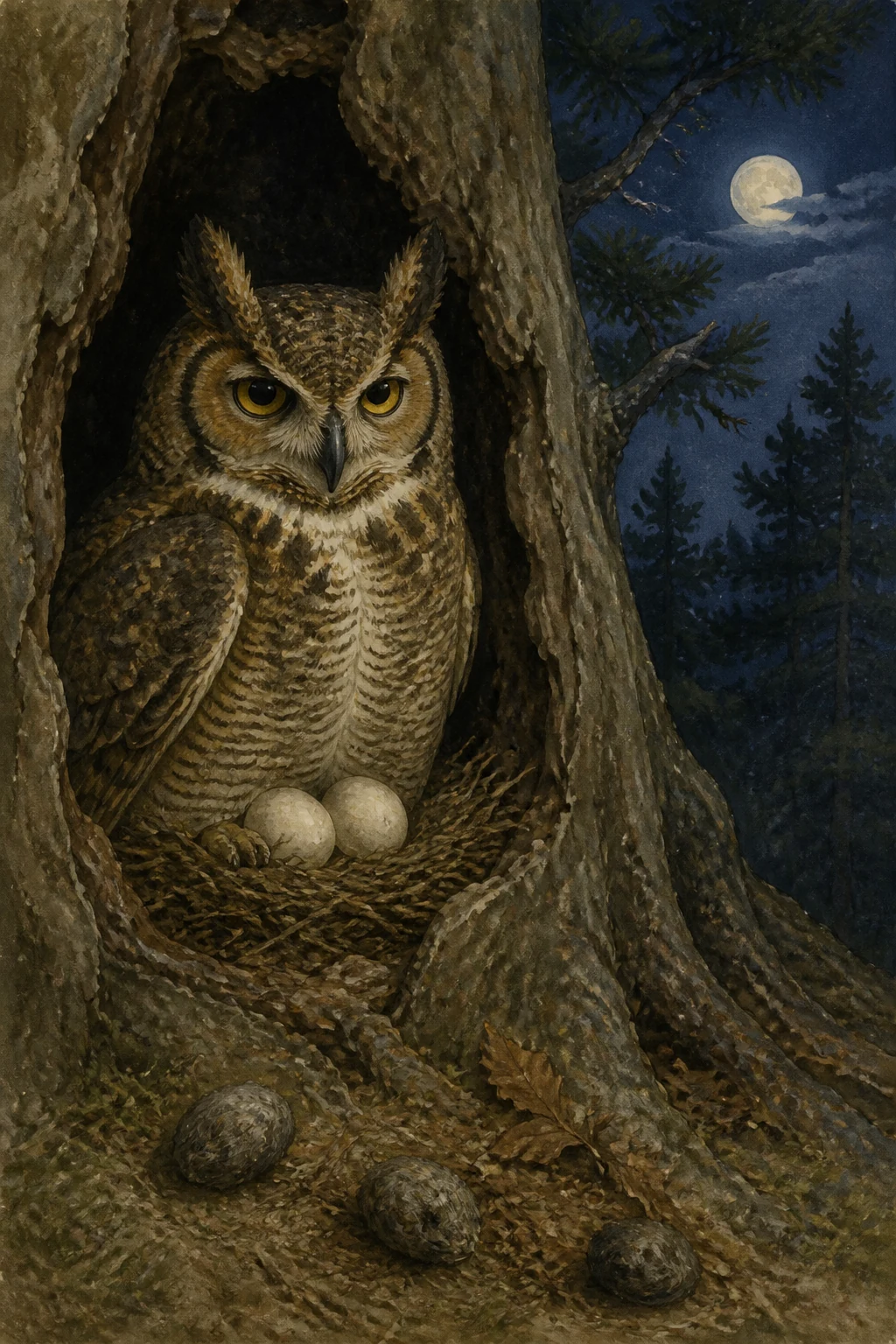
V gozdu je živel en sam par virginijskih uharjev. Prebivala sta v najgloblji senci in imela svoje veliko, okorno gnezdo v duplu visokega drevesa. Lahko bi šli stokrat mimo, pa ne bi nikoli uganili, da tam živijo sove, če ne bi na travi opazili okroglih izbljuvkov iz kosti in dlake. Tako požrešne so, da hrano pogoltnejo kar s kostmi vred. Nato se njihovi trpežni želodčki lotijo dela: vse koščke kosti in dlake zvijejo v kepice in jih pošljejo nazaj, da jih sove izbljuvajo skozi kljun na tla.
Virginijski uhar je bil zelo velika ptica. Vse telo mu je prekrivalo rjavo, zamolklo rumeno in belo perje. Celo noge in stopala je imel poraščene s perjem, tako da je bilo poleg njega videti le črne kremplje in črn, kljukast kljun. Da, ponoči ste lahko videli tudi njegove oči, čudovite velike oči, ki so videle v temi, podnevi, ko je počival, pa so bile zaprte. Njegova žena, ki je bila ponoči kraljica gozda, mu je bila povsem podobna, le večja je bila od njega. In tako je pri sovah: žena je vedno večja od moža.
Vsak večer, ko je sonce zašlo, sta Virginijski uhar in njegova žena prišla iz dupla in sedla na bližnjo vejo, kjer sta mežikala in čakala, da se dovolj stemni, da bosta lahko povsem jasno videla. Ko je svetloba ugašala, so črne pikice v njunih očeh postajale vse večje in večje, potem pa sta na svojih velikih, mehkih, neslišnih krilih odletela in v travi ter med vejami iskala večerjo, ki sta ji pravila zajtrk.
Gospa Sova ni smela biti dolgo zdoma, saj sta bili v gnezdu dve veliki, okrogli, beli jajci, ki se nista smeli ohladiti. Njen mož je večino noči preživel v zraku in ji pogosto prinesel domov kak slasten grižljaj. V resnici je bil dobrosrčen, čeprav drobnih ptičev o tem nikakor ne bi mogli prepričati. Včasih je njegova žena zavzdihnila in povedala, kako naveličana je nenehnega sedenja in kako vesela bo, ko se iz jajc izvalijo mladiči in bo lahko večkrat šla z njim. Kadar je začela govoriti o tem, se je Virginijski uhar pripravil na nov polet in ob odhodu rekel: »Res je hudo. Zelo se mi smiliš. Ampak mladičkov pač ne bi bilo, če ne bi vztrajala na gnezdu.« Vedno je bil ponosen na svoje otroke in imel se je za zelo dobrega moža. Morda je res bil; vendar ni nikoli sedel na gnezdo namesto svoje žene, da bi lahko šla na lov.
Neke noči, ko sta oba letala po gozdu in nad polji, se je vrnil k votlemu drevesu, da bi si odpočil. Pričakoval je, da bo tam našel gospo Sovo, saj se je odpravila domov pred njim. A je ni bilo in postal je precej nestrpen. »Rad bi vedel, kaj jo tako dolgo zadržuje,« je nejevoljno rekel. Čez nekaj časa je pogledal v gnezdo in zagledal veliki beli jajci. »To je sramota,« je rekel. »Najini lepi jajci se bosta ohladili, in če to poletje ne bova imela mladičkov, bo vsega kriva ona.«
Vidite, še tedaj mu očitno ni prišlo na misel, da bi lahko sam kaj storil, da bi ostali topli. Ko pa je naslednjič pogledal vanju, je eno operjeno nogo položil na okrogli jajci in presenečen ugotovil, kako hladni sta.
Ob tej misli se mu je perje na glavi kar postavilo pokonci. Tako se je prestrašil, da je pozabil na jezo, stopil naravnost v gnezdo in jajci pokril s svojimi prsmi. Kaj če sta bili že predolgo sami in se mladička v njiju nikoli ne bosta izvalila? Ali mu bo gospa Sova sploh kdaj odpustila, da je bil tako neumen? Začel se je spraševati, ali ga bo kdo od drugih videl. Zdelo se mu je tako smešno, da kralj gozda vali dve jajci, namesto da bi švigal naokrog v temi in strašil manjše ptice.
Pa tudi noč se mu je zdela tako dolga. Prej je bila vedno še prekratka in pogosto mu ni bilo všeč, da prihaja dan, saj je moral takrat spat. Bil je ves iz sebe, zato ni čudno, da je dvignil glavo in glasno zaklical: »Hu-hu-uuuu! Ua-hu!«, ko je z bližnjega drevesa zaslišal otožno stokanje in spoznal, da je v bližini njegov bratranec Ameriški skovik.
Ameriški skovik ga je slišal in takoj priletel na vejo ob duplu z gnezdom. Kljub otožnemu oglašanju je bil vesel droben ptič, in preden je sploh lahko spregovoril, se je moral prikloniti, pogledati za seboj, pokimati in se stresti, kakor ameriški skoviki vedno storijo, ko pristanejo. Nato je pogledal v drevo in zagledal svojega velikega bratranca, Virginijskega uharja, nočnega kralja gozda, kako sedi na jajcih in je videti silno, silno čemeren. Kako se je smejal! »Kaj pa je narobe?« je vprašal. »Ti ni bilo všeč, kako je tvoja žena valila jajci? Ali pa se je naveličala ždeti doma in te pripravila do tega, da ji pomagaš skrbeti za gnezdo?«
»Še preveč je narobe,« je zagodrnjal Virginijski uhar. »Ob mraku sva šla skupaj na lov, pa je še vedno ni domov. V gnezdo sem sedel šele, ko ni šlo drugače, toda postajalo je zelo hladno in za nič na svetu ne bi hotel, da se iz najinih jajc ne bi izvalila mladička. Uh-huu! Kako me bolijo noge!«
»No,« je rekel njegov bratranec, »res ti ni lahko. Si lačen?« Virginijski uhar je rekel, da je, zato je Ameriški skovik odšel na lov in mu prinesel hrano. »Vsako noč te bom prišel pogledat,« je rekel, »in ti prinesel kaj za pod zob. Bojim se, da se je tvoji ženi kaj zgodilo in da je ne bo več nazaj.«
Ko je odletel, mu je zaklical: »Res je hudo. Zelo se mi smiliš. Ampak mladičkov najbrž ne bi bilo, če ne bi vztrajal na gnezdu.«
Ta zadnja pripomba je Virginijskega uharja pošteno razjezila. »Kaj pa on ve o tem,« je rekel. »Če bi bil kdaj sam poskusil, bi se mu gotovo malo bolj smilil.« Potem pa je začel premišljevati: »Koga sem že slišal izreči prav te besede? Koga? Koga? Koga?«
Naenkrat se je Virginijski uhar spomnil, kolikokrat je prav to rekel svoji potrpežljivi ženi, in postalo mu je zelo neprijetno. V ušesih ga je ščemelo in pod perjem na obrazu ga je oblila nenavadna vročica. Morda pa se vendarle ni vedel prav lepo! Vedel je, da je celo takrat, ko ji je govoril, da se mu smili, v resnici mislil, kako po nepotrebnem tarna. No, če bi se le zdaj vrnila, bi bilo odslej vse drugače. Prestavil je težo in se nekoliko premaknil, da bi se udobneje namestil.
Če bi bila to zgolj zgodba, bi lahko rekli, da se je gospa Sova vrnila in da so bili vsi skupaj srečni; resnica pa je, da se ni nikoli vrnila in da nihče ni nikdar izvedel, kaj se ji je zgodilo. Tako je moral njen mož, nočni kralj gozda, sam greti jajci in vzrediti svoja mladička. Lahko si predstavljate, kako vesel je bil tisto noč, ko ju je prvič slišal trkati po notranji strani lupin, saj je tedaj vedel, da bo kmalu spet lahko svobodno lovil.
Še nikoli se ni izvalil lepši par otrok in njun oče je menil, da daleč prekašata vse njegove prejšnje mladiče. »Ko bi bila le gospa Sova tukaj, da bi ju videla! Kako lepo bi bilo!« je rekel. A če bi bila tam, ne bi nikoli okusil veselja ob njunem prvem tihem čivkanju in ju vsak dan pokrival z mehkim perjem na svojih prsih. Zdaj je pozabil na ves mučni čas, ko je sedel z bolečimi nogami in si želel, da bi se njegov bratranec prikazal s čim za pod zob. Kajti vedno je tako: kadar se trudimo za tiste, ki jih imamo radi, utrujenost kmalu pozabimo in ostane le sreča.
Pravijo, da je bil Ameriški skovik do svoje žene pozornejši, potem ko je moral njegov bratranec sam izvaliti mladička, in škoda je, da se istega nauka niso mogli naučiti še nekateri drugi gozdni prebivalci. Toda Virginijski uhar o tem ni nikoli pripovedoval, Ameriški skovik pa je ohranil njegovo skrivnost, in še danes je v gozdu veliko prebivalcev, ki o tem prav nič ne vedo.
Izvirnik
048 WHY MR. GREAT HORNED OWL HATCHED THE EGGS
Naslednje strani prikazujejo izvirno besedilo za primerjavo.
If the Rattlesnake is the king of the forest in the daytime, the Great Horned Owl is the king at night. Indeed, he is much the more powerful of the two, for he is king of air and earth alike and can go wherever he wishes, while the snake can only rule over those who live near the ground or who are so careless as to come to him there.
There was but one pair of Great Horned Owls in the forest, and they lived in the deepest shade, having their great clumsy nest in the hollow of a tall tree. You might have walked past it a hundred times and never have guessed that any Owls lived there, if you did not notice the round pellets of bone and hair on the grass. They are such hungry fellows that they swallow their food with the bones in it. Then their tough little stomachs go to work, rolling all the pieces of bone and hair into balls and sending them back to be cast out of the Owls' mouths to the ground.
The Great Horned Owl was a very large bird. His whole body was covered with brown, dull yellow, and white feathers. Even his feet and legs were covered, and all that you could see besides were his black claws and his black hooked bill. Yes, at night you could see his eyes, too, and they were wonderful great eyes that could see in the dark, but they were shut in the daytime when he was resting. His wife, who was the queen of the forest at night, looked exactly like him, only she was larger than he. And that is the way among Owls,--the wife is always larger than her husband.
Every night when the sun had gone down, the Great Horned Owl and his wife would come out of their hollow tree and sit blinking on a branch near by, waiting until it got dark enough for them to see quite plainly. As the light faded, the little black spots in their eyes would grow bigger and bigger, and then off they would go on their great soft, noiseless wings, hunting in the grass and among the branches for the supper which they called breakfast.
Mrs. Owl could not be gone very long at a time, for there were two large round white eggs in the nest which must not get cold. Her husband was on the wing most of the night, and he often flew home with some tender morsel for her. He was really a kind-hearted fellow, although you could never have made the small birds think so. Sometimes his wife would sigh and tell how tired she was of sitting still, and how glad she would be when the eggs were hatched and she could go more with him. When she began to speak of that, the Great Horned Owl would get ready for another flight and go off saying: "It is too bad. I am so sorry for you. But then, one would never have young Owlets if one didn't stick to the nest." He was always proud of his children, and he thought himself a very good husband. Perhaps he was; still he had never taken his place on the nest while his wife went hunting.
One night, after they had both been flying through forest and over field, he came back to the hollow tree to rest. He expected to find Mrs. Owl, for she had started home before he did. She was not there and he grew quite impatient. "I should like to know what keeps her so long," he said, fretfully. After a while he looked into the nest and saw the two big white eggs. "It is a shame," he said. "Our beautiful eggs will be chilled, and it will be all her fault if we have no Owlets this summer."
You see, even then he did not seem to think that he could do anything to keep them warm. But the next time he looked in, he put one feathered foot on the round eggs and was surprised to find how cool they were.
It fairly made his head feathers stand on end to think of it, and he was so frightened that he forgot to be cross, and stepped right in and covered them with his own breast. What if they had already been left too long, and the Owlets within would never hatch? Would Mrs. Owl ever forgive him for being so stupid? He began to wonder if any of the other fellows would see him. He thought it so absurd for the king of the forest to be hatching out a couple of eggs, instead of swooping around in the dark and frightening the smaller birds.
The night seemed so long, too. It had always been short enough before, and he had often disliked to have daylight come, for then he had to go to bed. He was very much upset, and it is no wonder that when he heard a doleful wail from a neighboring tree, and knew that his cousin, the Screech Owl, was near, he raised his head and called loudly, "Hoo-hoo-oooo! Waugh-hoo!"
The Screech Owl heard him and flew at once to a branch beside the nest hollow. He was a jolly little fellow in spite of his doleful call, and before he could talk at all he had to bend his body, look behind him, nod his head, and shake himself, as Screech Owls always do when they alight. Then he looked into the tree and saw his big cousin, the Great Horned Owl, the night king of the forest, sitting on the eggs and looking very, very grumpy. How he did laugh! "What is the matter?" said he. "Didn't you like your wife's way of brooding over the eggs? Or did she get tired of staying at home and make you help tend the nest?"
"Matter enough," grumbled the Great Horned Owl. "We went hunting together at twilight and she hasn't come home yet. I didn't get into the nest until I had to, but it was growing very cold and I wouldn't miss having our eggs hatch for anything. Ugh-whoo! How my legs do ache!"
"Well," said his cousin, "you are having a hard time. Are you hungry?"
The Great Horned Owl said that he was, so the Screech Owl went hunting and brought him food. "I will look in every night," he said, "and bring you a lunch. I'm afraid something has happened to your wife and that she will not be back."
As he flew away he called out, "It is too bad. I am very sorry for you. But then, I suppose you would never have the Owlets if you didn't stick to the nest."
This last remark made the Great Horned Owl quite angry. "Much he knows about it," he said. "I guess if he had ever tried it he would be a little more sorry for me." And then he began to think, "Who have I heard say those very words before? Who? Who? Who?"
All at once the Great Horned Owl remembered how many times he had said just that to his patient wife, and he began to feel very uncomfortable. His ears tingled and he felt a queer hot feeling under his face feathers. Perhaps he hadn't been acting very well after all! He knew that even when he told her he was sorry, he had been thinking she made a great fuss. Well, if she would only come back now, that should all be changed, and he shifted his weight and wriggled around into a more comfortable position.
Now, if this were just a story, one could say that Mrs. Owl came back and that they were all happy together; but the truth is she never did come, and nobody ever knew what became of her. So her husband, the night king of the forest, had to keep the eggs warm and rear his own Owlets. You can imagine how glad he was on the night when he first heard them tapping on the inside of their shells, for then he knew that he would soon be free to hunt.
A finer pair of children were never hatched, and their father thought them far ahead of all his other broods. "If only Mrs. Owl were here to see them, how lovely it would be!" he said. Yet if she had been there he would never have had the pleasure of hearing their first faint cheeps, and of covering them with his soft breast feathers as he did each day. He forgot now all the weary time when he sat with aching legs, wishing that his cousin would happen along with something to eat. For that is always the way,--when we work for those we love, the weariness is soon forgotten and only happiness remains.
It is said that the Screech Owl was more thoughtful of his wife after his cousin had to hatch the eggs, and it is too bad that some of the other forest people could not have learned the same lesson; but the Great Horned Owl never told, and the Screech Owl kept his secret, and to this day there are many people in the forest who know nothing whatever about it.
Nadaljuj z branjem