Prevod
Leta 1734 se je Joist Hite z ženo in sinovoma preselil iz Pensilvanije v Virginijo in pomagal ustanoviti naselbino ob reki Shenandoah, dvanajst milj južno od Woodstocka. Nekega jutra, ko sta dečka daleč od vasi nabirala jagodičevje, so ju presenetili Indijanci in ju naglo odvedli v divjino, še preden je vest o tem lahko dosegla njune bližnje. Aaron, starejši, je bil močan in krepke postave, z grobimi črnimi lasmi in zagorelim obrazom; njegov brat pa je bil droben in svetlopolt, z modrimi očmi in zlatimi kodri. Nedvomno so Indijanci prav zato, ker je bil značilen predstavnik osovražene bele rase, njega pretepali in brcali, krepkemu bratu pa prizanašali. Aaron je besnel ob nasilju nad svojim blagim bratom, a bil je zvezan in nemočen, zato ga je lahko le bodril, naj ostane pogumen in ne zaostaja.
Toda Peter je bil prešibak, da bi jim sledil, in prišel je dan, ko ni mogel več naprej. Rdečekožci so se nekaj trenutkov posvetovali, nato pa so se vsi umaknili razen enega, ki je položil puščico na lok. Otrokove oči so se razširile od strahu, Aaron pa je zaman trgal svoje vezi in kričal, da bo stopil na bratovo mesto. Toda nihče ni razumel njegovih besed in že naslednji trenutek je Peter mrtev obležal na tleh s puščico v srcu. Aaron je kriknil od sovraštva in obupa, nato pa se tudi sam nezavesten zgrudil. Ko se je zavedel, je ugotovil, da leži v koči iz vej, kjer zanj skrbi star Indijanec. Ta mu je v okorni angleščini povedal, da okreva po bolezni, ki je trajala več tednov, in da ga namerava pleme posvojiti. Ko je deček skušal ugovarjati, je na svoje začudenje spoznal, da ne more izustiti niti glasu, in od Indijanca izvedel, da mu je vročica vzela dar govora. Otopel in oslabel je pustil, da so ga oblekli v indijanska oblačila, namazali s sokom, ki mu je porjavil kožo, in da so ga morilci njegovega brata sprejeli medse kot enega svojih. Ko se je pogledal v tolmunu, je videl, da je po vsem videzu postal Indijanec. Sčasoma se je s to spremembo deloma sprijaznil, saj ni vedel in ni mogel vprašati, kje ležijo belske naselbine; zaradi videza in nezmožnosti govora ga njegovi bližnji ne bi prepoznali, rdečekožci z njim niso ravnali neprijazno, vsak deček pa ima rad svobodno življenje na prostem. Naučili so ga streljati z lokom, vendar so ga pustili zadaj, kadar so se odpravljali ropat belsko naselbino.
Minila so tri leta in Aaron, ki je zrasel v visokega, močnega mladeniča, je postal dober lovec, priljubljen v plemenu. Med svojim potepanjem so se vrnili v okolico Woodstocka in tam je Aaron na posvetu slišal, da načrtujejo napad na vas, kjer so živeli njegovi starši. S kretnjami jih je prosil, naj mu dovolijo z njimi, in ker so verjeli, da mu zdaj lahko zaupajo, niso ugovarjali. Čeprav se je naučil zadrževati svoja čustva, ni mogel zatreti solze, ko je zagledal svoj nekdanji dom in pomislil na nevarnost, ki mu je pretila. Ko bi le lahko posvaril vaščane! Indijanci so se umaknili v gozd, da bi si skuhali hrano tam, kjer dima ne bi bilo videti, Aaron pa se je zadržal na gozdnem robu in molil, da bi se mu ponudila priložnost. Njegova prošnja ni bila zaman. Skozi dišeči mrak sta prišli dve dekleti, ki sta gnali krave s pašnika. Ko sta se približali, se je Aaron pretvarjal, da ju ne vidi, z orožjem prilezel iz grmovja in se delal, kakor da skrivaj opazuje vas. Dekleti sta prišli skoraj do njega in zakričali, on pa je s hlinjenim presenečenjem planil v gozd in se vrnil v tabor. Indijanci niso ničesar slišali ali videli. Dekleti bosta gotovo posvarili vas.
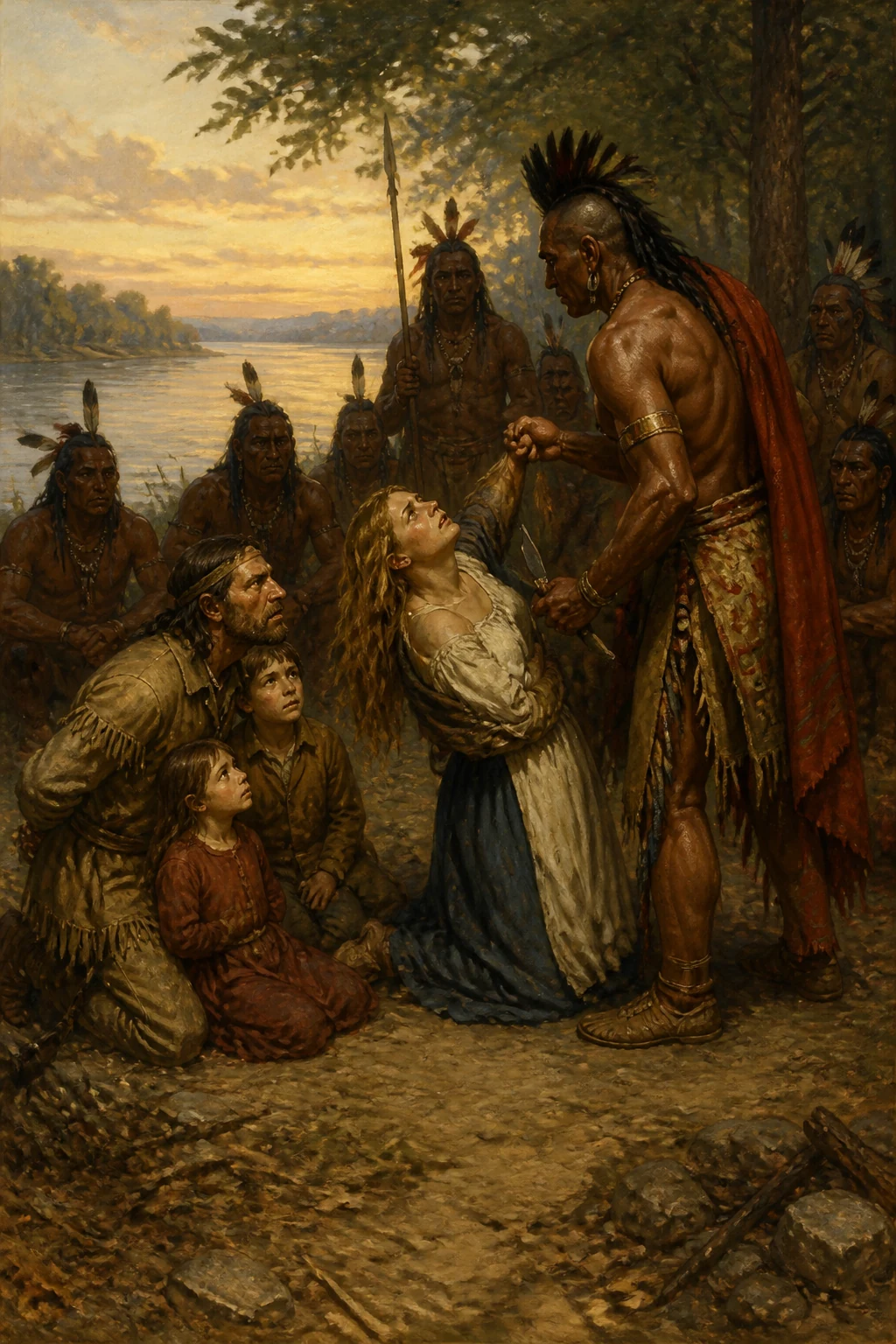
Luči v vasi so druga za drugo ugašale, in ko se je zdelo, da je vse potopljeno v spanec, so se rdečekoži napadalci priplazili do najbližje hiše — hiše Joista Hita. Hkrati so se dvignili in planili proti njej, toda v tistem trenutku je počil strel, neki Indijanec je padel in že nekaj sekund zatem so naseljenci, ki sta jih dekleti pravočasno posvarili, planili iz svojih skrivališč ter streljali v osuplo množico divjakov. Ti so se znova pognali proti gozdu in na tleh pustili ducat svojih ljudi. Aaron je mirno obstal blizu očetove hiše in ga je, kakor je upal, doletelo ujetništvo. Ko je videl, kako sta se njegova starša postarala od časa in žalosti, ni mogel zadržati solze; toda žalosti se je pridružila groza, ko mu je oče nepremično pogledal v oči, ne da bi ga prepoznal, nato pa začel polniti pištolo. »Ubili so moja sinova,« je rekel, »in jaz bom ubil njega. Privežite ga k tistemu drevesu.«
Zaman je mati prosila za milost; zaman so oči nemega dečka moledujoče iskale očetove. Ni se bal umreti in rade volje bi umrl, če bi s tem rešil naselbino; toda umreti od očetove roke! Tega ni mogel prenesti. Privezali so ga k drevesu in svetloba ognja mu je obsevala obraz.
Starec je z neomajno odločnostjo dvignil orožje in ga počasi nameril v dečkovo srce. Naval čustev je stresel ujetnikovo telo — v ta napor je vložil vso svojo življenjsko moč — nato pa je pretrgal triletni molk in zaklical: »Oče!« Trenutek zatem sta njegova starša ihtela od sreče in spet je lahko govoril z njima.
Izvirnik
It was in 1734 that Joist Hite moved from Pennsylvania to Virginia, with his wife and boys, and helped to make a settlement on the Shenandoah twelve miles south of Woodstock. When picking berries at a distance from the village, one morning, the boys were surprised by Indians, who hurried with them into the wilderness before their friends could be apprised. Aaron, the elder, was strong, and big of frame, with coarse, black hair, and face tanned brown; but his brother was small and fair, with blue eyes and yellow locks, and it was doubtless because he was a type of the hated white race that the Indians spent their blows and kicks on him and spared the sturdy one. Aaron was wild with rage at the injuries put upon his gentle brother, but he was bound and helpless, and all that he could do was to encourage him to bear a stout heart and not to fall behind.
But Peter was too delicate to keep up, and there came a day when he could go no farther. The red men consulted for a few moments, then all of them stood apart but one, who fitted an arrow to his bow. The child's eyes grew big with fear, and Aaron tore at his bonds, but uselessly, and shouted that he would take the victim's place, but no one understood his speech, and in another moment Peter lay dead on the earth, with an arrow in his heart. Aaron gave one cry of hate and despair, and he, too, sank unconscious. On coming to himself he found that he was in a hut of boughs, attended by an old Indian, who told him in rude English that he was recovering from an illness of several weeks' duration, and that it was the purpose of his tribe to adopt him. When the lad tried to protest he found to his amazement that he could not utter a sound, and he learned from the Indian that the fever had taken away his tongue. In the dulness and weakness of his state he submitted to be clothed in Indian dress, smeared with a juice that browned his skin, and greeted by his brother's slayers as one of themselves. When he looked into a pool he found that he had, to all intents, become an Indian. In time he became partly reconciled to this change, for he did not know and could not ask where the white settlements lay; his appearance and his inability to speak would prevent his recognition by his friends, the red men were not unkind to him, and every boy likes a free and out-door life. They taught him to shoot with bow and arrow, but they kept him back if a white settlement was to be plundered.
Three years had elapsed, and Aaron, grown tall and strong, was a good hunter who stood in favor with the tribe. They had roamed back to the neighborhood of Woodstock, when, at a council, Aaron overheard a plot to fall on the village where his parents lived. He begged, by signs, to be allowed to go with them, and, believing that he could now be trusted, they offered no objection. Stoic as he had grown to be, he could not repress a tear as he saw his old home and thought of the peril that it stood in. If only he could give an alarm! The Indians retired into the forest to cook their food where the smoke could not be seen, while Aaron lingered at the edge of the wood and prayed for opportunity. He was not disappointed. Two girls came up through the perfumed dusk, driving cows from the pasture, and as they drew near, Aaron, pretending not to see them, crawled out of the bush with his weapons, and made a show of stealthily examining the town. The girls came almost upon him and screamed, while he dashed into the wood in affected surprise and regained the camp. The Indians had heard and seen nothing. The girls would surely give the alarm in town.
One by one the lights of the village went out, and when it seemed locked in sleep the red marauders crept toward the nearest house--that of Joist Hite. They arose together and rushed upon it, but at that moment a gun was fired, an Indian fell, and in a few seconds more the settlers, whom the girls had not failed to put on their guard, were hurrying from their hiding-places, firing into the astonished crowd of savages, who dashed for the woods again, leaving a dozen of their number on the ground. Aaron remained quietly standing near his father's house, and he was captured, as he hoped to be. When he saw how his parents had aged with time and grief he could not repress a tear, but to his grief was added terror when his father, after looking him steadily in the eye without recognition, began to load a pistol. “They killed my boys,” said he, “and I am going to kill him. Bind him to that tree.”
In vain the mother pleaded for mercy; in vain the dumb boy's eyes appealed to his father's. He was not afraid to die, and would do so gladly to have saved the settlement; but to die by his father's band! He could not endure it. He was bound to a tree, with the light of a fire shining into his face.
The old man, with hard determination, raised the weapon and aimed it slowly at the boy's heart. A surge of feeling shook the frame of the captive--he threw his whole life into the effort--then the silence of three years was broken, and he cried, “Father!” A moment later his parents were sobbing joyfully, and he could speak to them once more.