Waltey
Jezdeci puščave
229 Riders of the Desert
Myths and Legends of Our Own Land · Charles M. SkinnerO besedilu
Jezdeci puščave
- Vir
- Myths and Legends of Our Own Land
- Avtor
- Charles M. Skinner
- Jezik branja
- Slovenščina
- Jezik izvirnika
- English
- Čas branja
- 5 min branja
- Obseg
- 4 strani
- Naslov izvirnika
- 229 Riders of the Desert
O izvirniku
Myths and Legends of Our Own Land
Obsežna zgodovinska zbirka ameriških legend, ki jih je Skinner zbral in avtorsko rekonstruiral. Bralni jezik je Slovenščina, izvirnik pa prihaja iz vira Myths and Legends of Our Own Land v jeziku English.
Besedilo
Jezdeci puščave
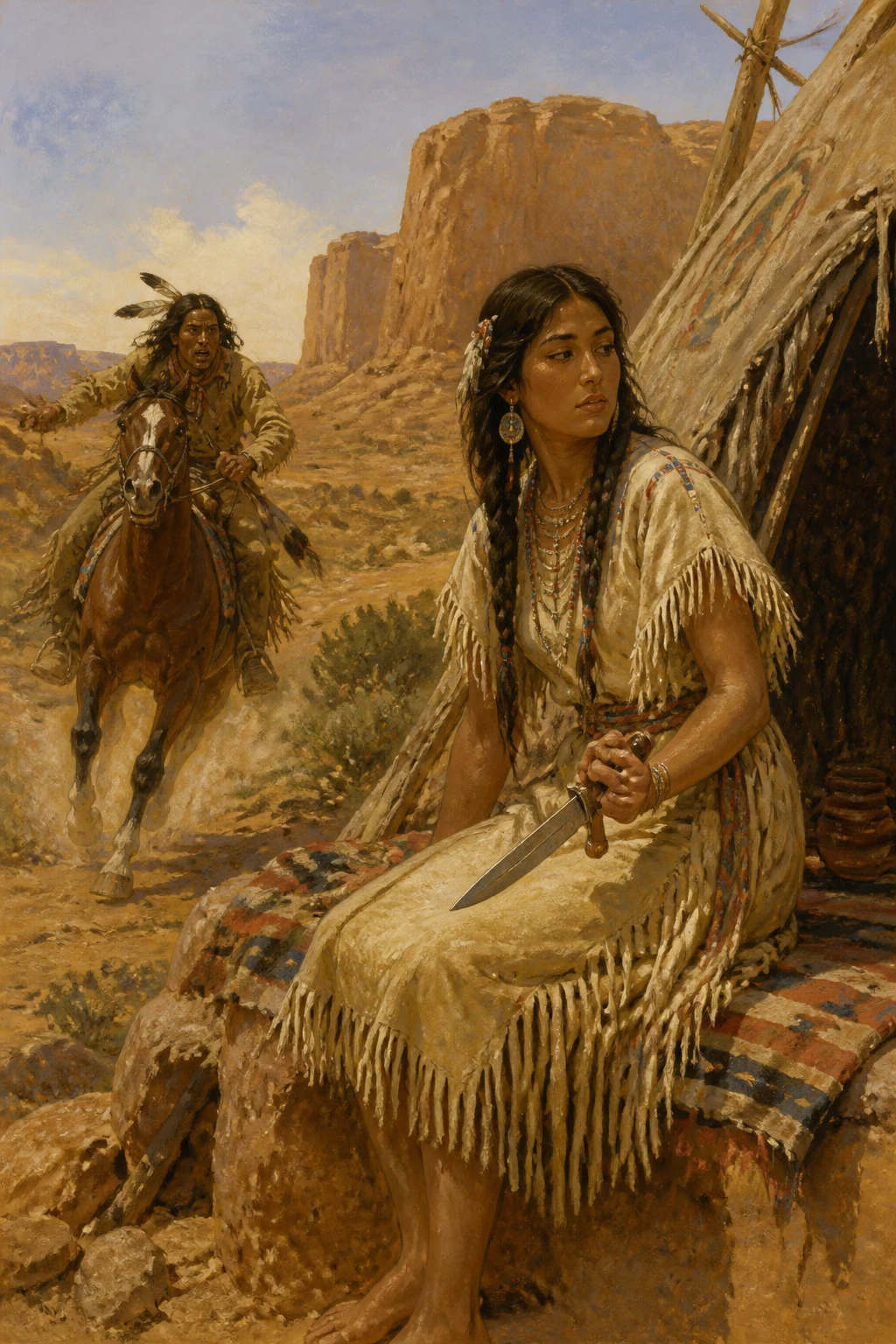
Med stebri iz peščenjaka v predgorju Kolorada je stala koča Ta-in-ga-roja (Prvi grom). Čeprav je bil uren na lovu in pogumen v boju, se je le redko odpravljal na pot s sosednjimi plemeni, saj je bil srečen v družbi svoje žene Zecane (Ptice). Da bi prodal bobrove kože in kože divjih ovac, je z njo pogosto hodil v trgovsko postojanko na meji Nove Mehike. Prav v tej utrdbi je neki španski trgovec zagledal lepo Zecano in sklenil, da si jo bo pridobil. Indijanca je poslal po opravkih globoko v osrčje gora ter mu obljubil, da bo žena do njegove vrnitve varno počivala v naselbini.
Na poti se je Ta-in-ga-ro ustavil pri izviru v Manitouju. Ko se je napil, je vanj vrgel bisere in vampum kot daritev njegovemu božanstvu. Brbotajoča voda je daritev izvrgla, in ko je strmel vanjo, pretresen nad tem zloveščim znamenjem, se je na gladini izoblikovala podoba — Zecanin obraz, spačen od bolečine. Stekel je h konju, oddirjal in se ni ustavil ne za počitek ne za jed, dokler ni dosegel postojanke. Španca ni bilo več. Tedaj se je obrnil proti predgorju, priganjal svojega izmučenega konja proti koči in nekega jasnega jutra prispel domov. Ob pogledu na ženo pred vrati in ob zvoku njenega petja ga je oblila radost. Ko jo je ogovoril, je brez zanimanja dvignila pogled, nato pa spet zapela. Ni ga prepoznala. Izgubila je razum.
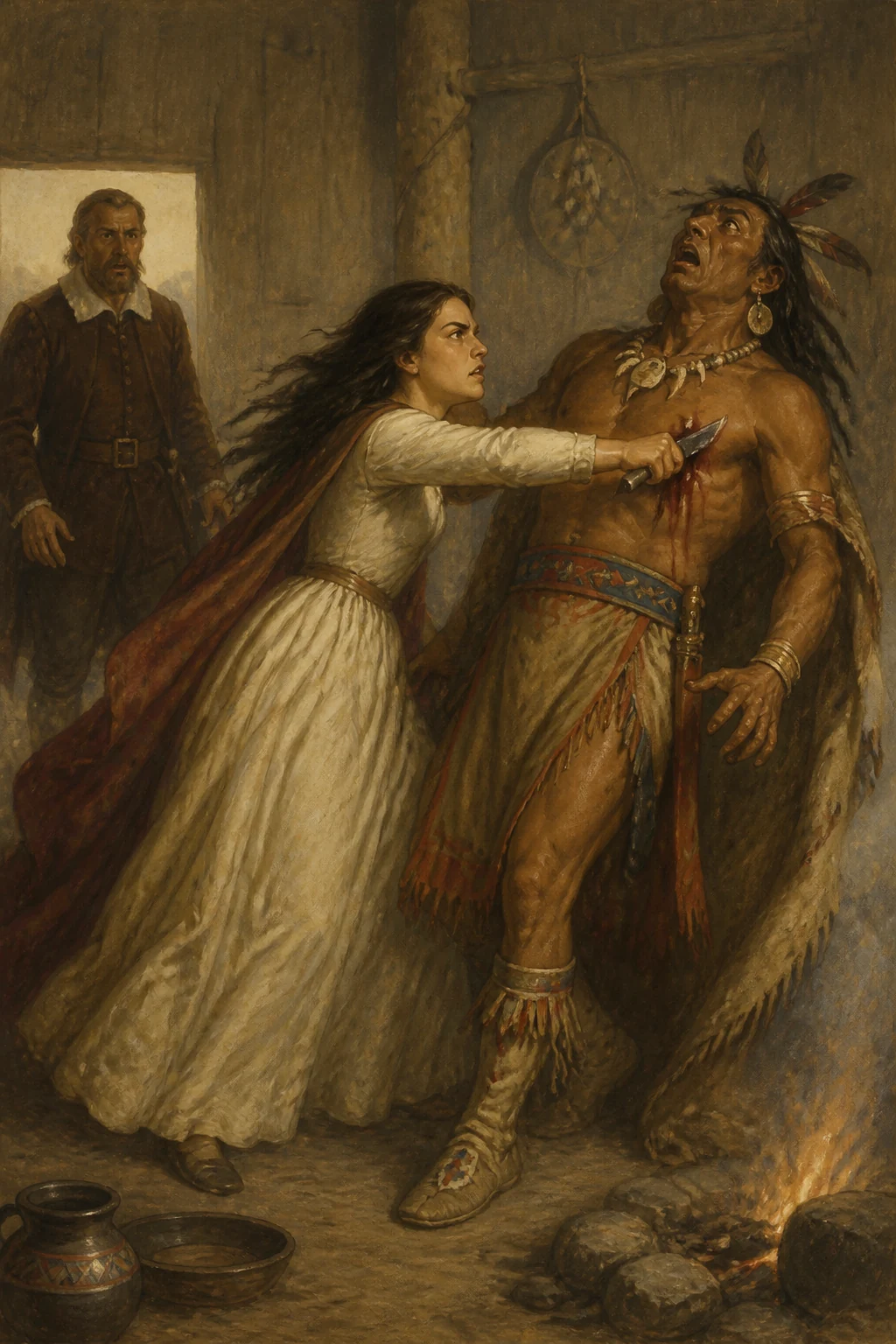
Ko je Ta-in-ga-ro iz njenega blebetanja izvedel za Špančevo izdajstvo, je njegov krik besa in žalosti za hip priklical njen blodni um nazaj. Z nenavadnim začudenjem in bolečino je pogledala moža ter mu izza pasu iztrgala nož. Še preden je lahko dojel njeno namero, si ga je zarila v srce in se mrtva zgrudila pred njegove noge. Ure in ure je stal tam ves otrpel, toda kmalu je spet prevladala njegova stoična indijanska narava. Pospravil je kočo in nakrmil konja, nato Zecanino telo zavil v bizonovo kožo ter od silne izčrpanosti prespal vso noč. Dve noči pozneje je Indijanec stal v senci neke sobe v trgovski utrdbi in opazoval spečega Španca. Nihče ni vedel, kako je prišel mimo straže.
V urah pred zoro je izdajalca prebudil pas, ki se mu je zategoval čez usta. Skočil je pokonci, da bi ga odtrgal, in tedaj začutil, kako se mu okoli vratu zadrguje laso. Zaman se je otepal. Čez nekaj trenutkov je imel zvezane roke in noge. Ta-in-ga-ro je z nizke strehe odmaknil nekaj trakov lubja, potisnil Španca skozi odprtino in ga spustil na tla zunaj ograde, katere del je bila tudi hiša. Nato je na žerjavici zanetil puščico, ovito v topolov puh, in jo izstrelil v kopico sena na dvorišču. V dimu in zmedi, ki sta nastala, njegovega bega ni opazil nihče razen stražarja, ki je zaspan korakal na straži zunaj četverokotnega sklopa poslopij. Stražar bi bil sprožil preplah, če se Indijanec ne bi pognal nanj kakor panter in ga z enim zamahom noža ubil.
Indijanec je pograbil Španca, ga privezal na konjev hrbet in se odpravil na pot ob njem. Tako sta potovala, dokler nista prišla do njegove koče. Tam je trgovca snel s konja in ga nahranil, toda roke in noge mu je pustil trdno zvezane ter se ni zmenil za njegova vprašanja in prošnje, naj ga izpusti. Pred vrata je privezal močnega, napol udomačenega konja, mu namestil leseno sedlo, s Španca porezal oblačila in ga posadil živali na hrbet. Ko ga je z jermeni iz jelenje kože pritrdil na sedlo, je Zecanino truplo vzel iz ovoja in ga privezal k ujetniku, z obrazom proti njegovemu obrazu.
Nato je izpustil konja, ki se je vzpenjal in prhal, da bi se otresel bremena, gledal, kako je planil v brezmejno puščavo, in se za njim pognal na svojem krepkem konju. Sprva je Španec omedlel; ko se je ovedel, se je skušal osvoboditi, toda z vsakim gibom se je le še tesneje stisnil k grozoti pred seboj. V opoldanski vročini ga je oblival znoj, iz brazd, ki so mu jih vezi vrezovale v meso, pa je kapljala kri. Ponoči je gol zmrzoval na hladnem zraku, in če je le za hip zatisnil oči in zadremal, ga je prebudila kletev, zakričana v uho. Ta-inga-ro mu je občasno dal piti, jesti pa nikoli, in tako so jezdili več dni. Nazadnje je lakota premagala njegov gnus; zasadil je zobe v mrtvo meso pred seboj in se gostil kakor mrliški demon.
Še naprej so jezdili in Ta-in-ga-ro ni bil nikoli daleč od svoje žrtve, nad katere trpljenjem se je naslajal, dokler mu ni nerazločen krik oznanil, da je Španec zblaznel. Tedaj, in šele tedaj, je zadržal konja in gledal za konjem z mrtvo in blaznim jezdecem, dokler niso izginili v rumeni praznini. Obrnil se je proč, a nikoli več ni poiskal svojega doma. Sem in tja, skozi grmičevje, čez pesek in slana tla planjav, blodijo prikazenski jezdeci, za vse večne čase.
Izvirnik
229 Riders of the Desert
Naslednje strani prikazujejo izvirno besedilo za primerjavo.
Among the sandstone columns of the Colorado foot-hills stood the lodge of Ta-in-ga-ro (First Falling Thunder). Though swift in the chase and brave in battle, he seldom went abroad with neighboring tribes, for he was happy in the society of his wife, Zecana (The Bird). To sell beaver and wild sheep-skins he often went with her to a post on the New Mexico frontier, and it was while at this fort that a Spanish trader saw the pretty Zecana, and, determining to win her, sent the Indian on a mission into the heart of the mountains, with a promise that she should rest securely at the settlement until his return.
On his way Ta-in-ga-ro stopped at the spring in Manitou, and after drinking he cast beads and wampum into the well in oblation to its deity. The offering was flung out by the bubbling water, and as he stared, distressed at this unwelcome omen, a picture formed on the surface--the anguished features of Zecana. He ran to his horse, galloped away, and paused neither for rest nor food till he had reached the post. The Spaniard was gone. Turning, then, to the foot-hills, he urged his jaded horse toward his cabin, and arrived, one bright morning, flushed with joy to see his wife before his door and to hear her singing. When he spoke she looked up carelessly and resumed her song. She did not know him. Reason was gone.
It was his cry of rage and grief, when, from her babbling, Ta-in-ga-ro learned of the Spaniard's treachery, that brought the wandering mind back for an instant. Looking at her husband with a strange surprise and pain, she plucked the knife from his belt. Before he could realize her purpose she had thrust it into her heart and had fallen dead at his feet. For hours he stood there in stupefaction, but the stolid Indian nature soon resumed its sway. Setting his lodge in order and feeding his horse, he wrapped Zecana's body in a buffalo-skin, then slept through the night in sheer exhaustion. Two nights afterward the Indian stood in the shadow of a room in the trading fort and watched the Spaniard as he lay asleep. Nobody knew how he passed the guard.
In the small hours the traitor was roused by the strain of a belt across his mouth, and leaping up to fling it off, he felt the tug of a lariat at his throat. His struggles were useless. In a few moments he was bound hand and foot. Lifting some strips of bark from the low roof, Ta-in-ga-ro pushed the Spaniard through the aperture and lowered him to the ground, outside the enclosure of which the house formed part. Then, at the embers of a fire he kindled an arrow wrapped in the down of cottonwood and shot it into a haystack in the court. In the smoke and confusion thus made, his own escape was unseen, save by a guardsman drowsily pacing his beat outside the square of buildings. The sentinel would have given the alarm, had not the Indian pounced on him like a panther and laid him dead with a knife-stroke.
Catching up the Spaniard, the Indian tied him to the back of a horse and set off beside him. Thus they journeyed until they came to his lodge, where he released the trader from his horse and fed him, but kept his hands and legs hard bound, and paid no attention to his questions and his appeals for liberty. Tying a strong and half-trained horse at his door, Ta-in-ga-ro placed a wooden saddle on him, cut off the Spaniard's clothes, and put him astride of the beast. After he had fastened him into his seat with deer-skin thongs, he took Zecana's corpse from its wrapping and tied it to his prisoner, face to face.
Then, loosing the horse, which was plunging and snorting to be rid of his burden, he saw him rush off on the limitless desert, and followed on his own strong steed. At first the Spaniard fainted; on recovering he struggled to get free, but his struggles only brought him closer to the ghastly thing before him. Noon-day heat covered him with sweat and blood dripped from the wales that the cords cut in his flesh. At night he froze uncovered in the chill air, and, if for an instant his eyes closed in sleep, a curse, yelled into his ear, awoke him. Ta-inga-ro gave him drink from time to time, but never food, and so they rode for days. At last hunger overbore his loathing, and sinking his teeth into the dead flesh before him he feasted like a ghoul.
Still they rode, Ta-in-ga-ro never far from his victim, on whose sufferings he gloated, until a gibbering cry told him that the Spaniard had gone mad. Then, and not till then, he drew rein and watched the horse with its dead and maniac riders until they disappeared in the yellow void. He turned away, but nevermore sought his home. To and fro, through the brush, the sand, the alkali of the plains, go the ghost riders, forever.
Nadaljuj z branjem