Waltey
Sončni ogenj v Sault Sainte Marie
200 The Sun Fire at Sault Sainte Marie
Myths and Legends of Our Own Land · Charles M. SkinnerO besedilu
Sončni ogenj v Sault Sainte Marie
- Vir
- Myths and Legends of Our Own Land
- Avtor
- Charles M. Skinner
- Jezik branja
- Slovenščina
- Jezik izvirnika
- English
- Čas branja
- 5 min branja
- Obseg
- 4 strani
- Naslov izvirnika
- 200 The Sun Fire at Sault Sainte Marie
O izvirniku
Myths and Legends of Our Own Land
Obsežna zgodovinska zbirka ameriških legend, ki jih je Skinner zbral in avtorsko rekonstruiral. Bralni jezik je Slovenščina, izvirnik pa prihaja iz vira Myths and Legends of Our Own Land v jeziku English.
Besedilo
Sončni ogenj v Sault Sainte Marie
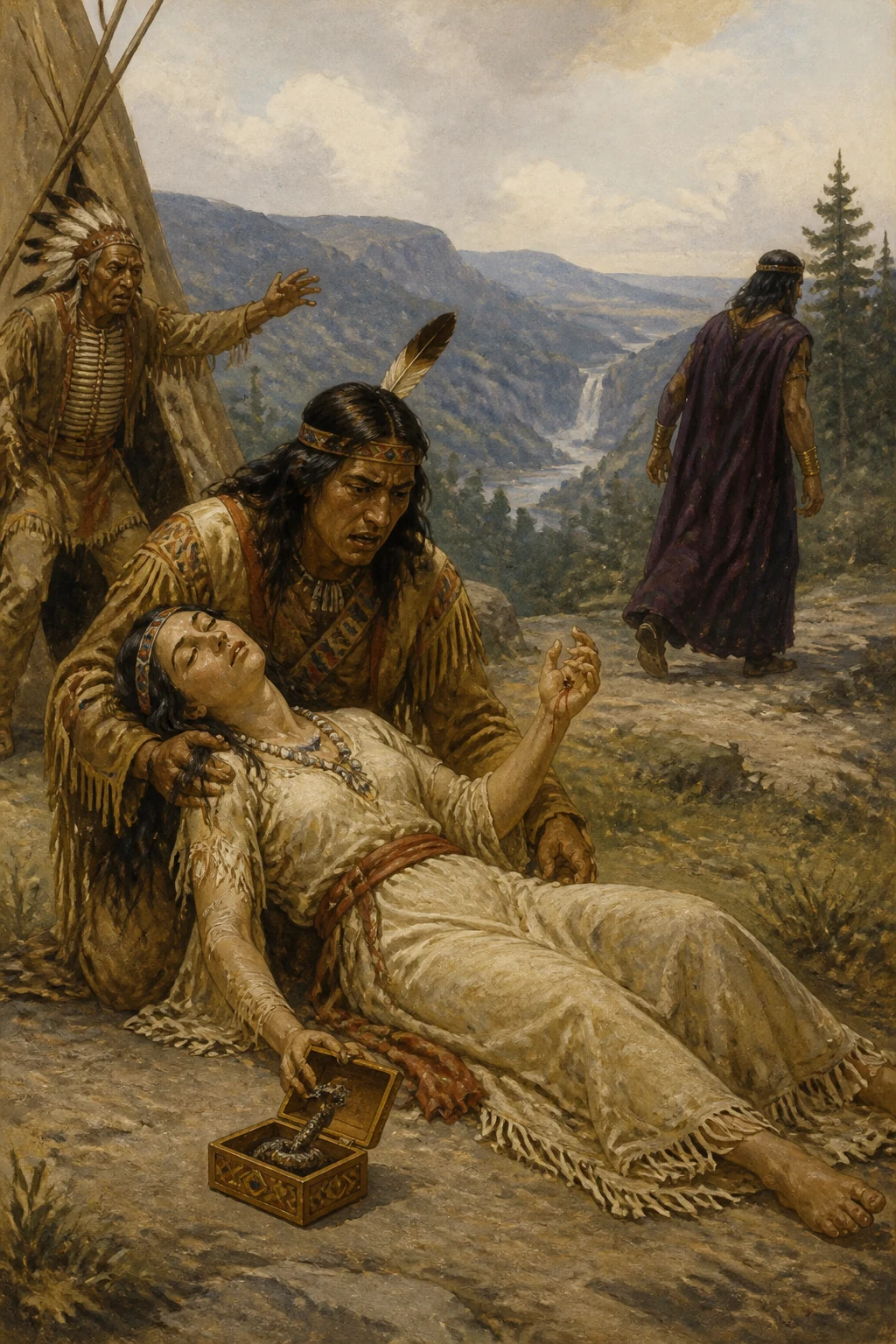
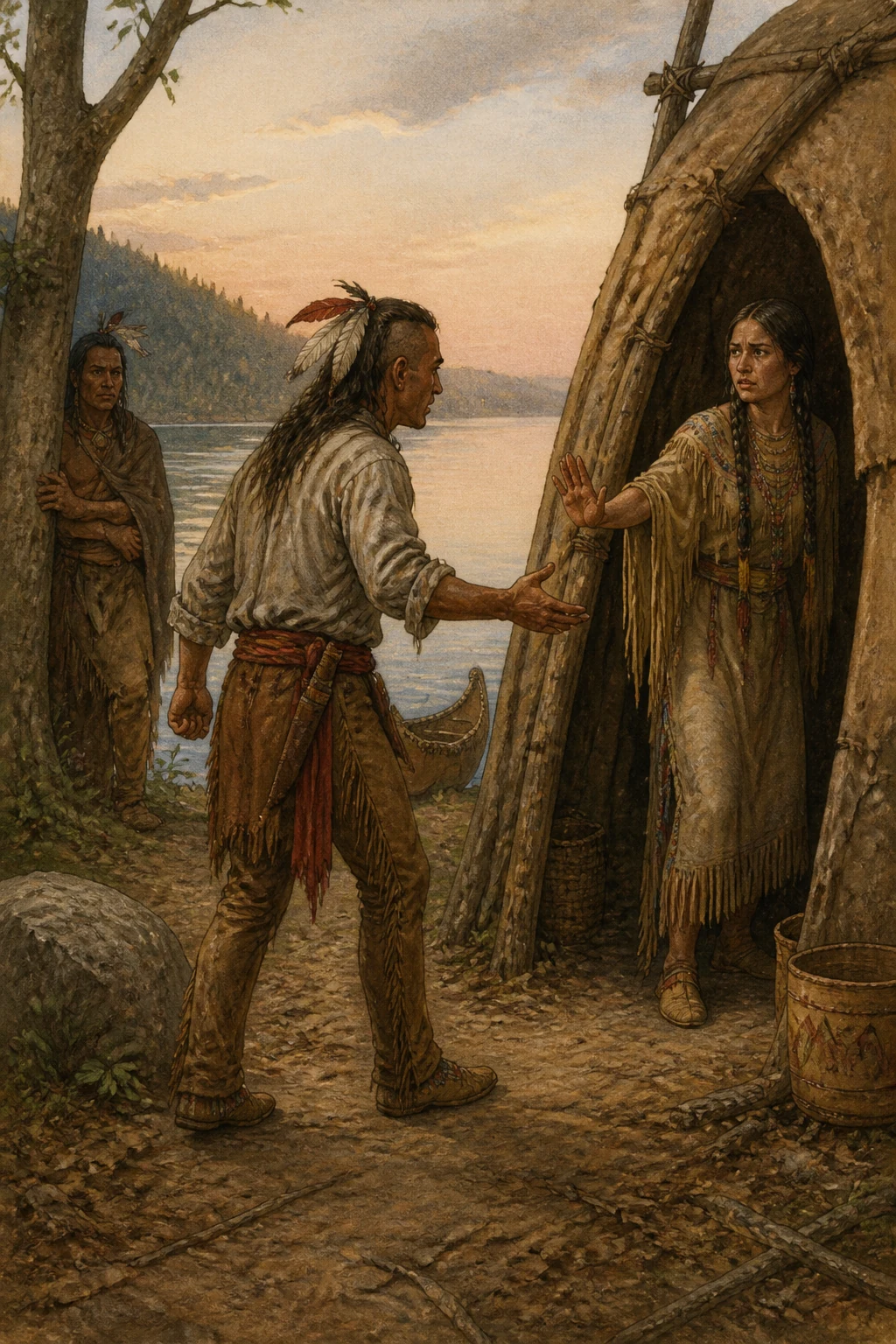
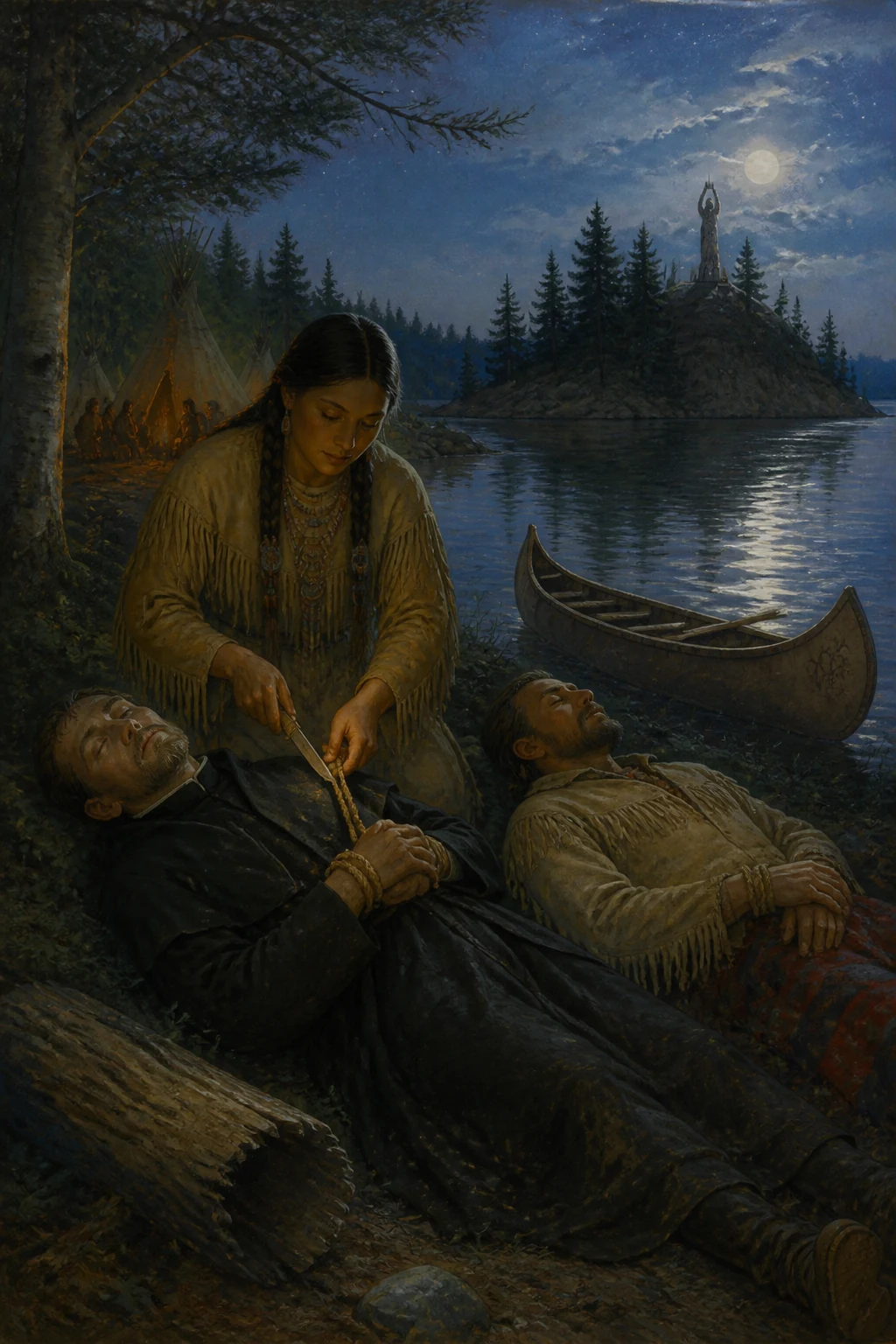
Pater Marquette je avgusta 1670 v spremstvu Greysolona Du Lhuta prispel v Sault Sainte Marie, kjer so ga sprejeli dovolj prijazno, vendar so ga Čipevci posvarili, naj se od tam vrne, kajti Odžibvejci, ki so živeli onkraj, so bili znani po svoji sovražnosti do Evropejcev. Njihov poglavar Bela vidra se je namreč odločil, da se bo z vojno maščeval za to, da je njegov oče zapustil njegovo mater. Oče je bil Francoz. Marquette, ki ga je navdihovalo njegovo poslanstvo in sta ga prevevala mladostni zanos ter vera, ki ga je varno vodila skozi neštete nevarnosti in stiske, ni hotel spremeniti svojih načrtov; drznil si je celo zatrditi, da lahko ukroti ošabnega poglavarja in ga privede h križu. Ob zori sta s svojim neustrašnim spremljevalcem odrinila v bojnem kanuju, ko pa sta prispela v tabor Bele vidre in povedala, čemu prihajata, so ju prijeli in zvezali, da bi naslednjega dne dočakala smrt. Poglavarjeva žena se je iz srčne dobrote zavzela za belca in prosila, naj jima prizanesejo. Zaman. Surovež jo je s udarcem podrl na tla. Tisto noč je njegova hči Wanena, ki je Du Lhuta že videla na trgovski postojanki in je v njej vzbudil nežna čustva, prišla k ujetnikoma, ko je tabor spal najtrdneje, jima prerezala vezi in ju po skriti stezi odpeljala do reke. Tam jima je velevala sesti v kanu in čoln usmerila proti Svetemu otoku. Tja so Odžibvejci prihajali polagat darove pred podobo Manituja, za katerega so verjeli, da tam prebiva. Menila je, da ju bodo tam zagotovo našli in rešili prijateljski rdečekožci, in po nekaj urah spanja ju je odpeljala v samotno globel, kjer je stal iz borovega debla grobo iztesan, šest čevljev visok kip, ovešen z ničevim okrasjem. Ko so stali pred njim, so zaslišali pritajene korake, in še preden so se mogli skriti, so bili Bela vidra in osem njegovih mož že pri njih. Du Lhut je med orožjem, ki je skupaj z drugimi darovi ležalo raztreseno ob vznožju kipa, pograbil gorjačo, odločen, da bo svoje življenje drago prodal. Duhovnik je izvlekel razpelo in molil. Dekle se je spustilo na tla, si potegnilo odejo čez glavo in začelo peti svojo smrtno pesem.
»Torej sta črni plašč in tat žensk prišla umret pred boga Indijancev?« se je porogljivo oglasil poglavar. »Če je taka Božja volja, bova umrla kljubujoč tvojemu bogu in tebi,« je odvrnil Marquette. »Vendar se smrti ne bojiva, in če bi Bog hotel, bi naju lahko rešil prav tako zlahka, kakor bi lahko uničil to ničvredno podobo.« Tiho je nekaj rekel Du Lhutu, nato pa samozavestno nadaljeval: »Izzivam tvojega boga, naj se postavi po robu mojemu. Svojega Boga bom prosil, naj pošlje ogenj z neba in sežge to reč. Če bo to storil, naju boš izpustil in postal kristjan?«
»Bom; toda če ti spodleti, umreš.« »In če zmagam, moraš odpustiti svoji hčeri.« Bela vidra je z godrnjanjem privolil. Sonce je stalo visoko in iz gozda izvabljalo začimbne vonjave; žuželka je zaspano brenčala in iz daljave je odmevalo ptičje petje. Wanena se ni zavedala, kaj se dogaja okoli nje; še naprej se je zibala sem ter tja, pela svojo smrtno pesem in čakala na udarec, ki jo bo položil pred očetove noge. Divjaki so se zbrali okoli podobe in jo napeto opazovali. Duhovnik je z zapovedovalno kretnjo dvignil razpelo, stopil tik h kipu in v čipevskem jeziku glasno zaklical: »V imenu Boga zapovedujem ognju, naj uniči tega malika!«
Na prsih kipa je zaplesala svetla pega. Postajala je slepeče svetla in se umirila. Nato se je iz suhe trave in perja, s katerima je bil kip okrašen, začel viti dim. Indijanci so osupli odskočili, in ko je rahla sapica razpihala iskre v plamen, so popadali na obraze in trepetali od strahu, kajti Marquette je razglasil: »Kakor moj Bog ravna s tem malikom, tako lahko ravna tudi z vami!«
Ko je Bela vidra nato dvignil pogled in zagledal manituja v plamenih, je vzkliknil: »Bog belega človeka je zmagal. Prizanesi nam, o mogočni vrač!« »Prizanesel vam bom, če obljubite, da boste sprejeli vero belcev in se dali krstiti.« Od strahu ukročeni rdečekožci so odložili orožje in pokleknili ob potoku, kjer je Marquette z dlanmi zajemal vodo, vsakega posebej krstil ter jim naložil moralne zapovedi, po katerih naj živijo. Wanena, ki je od same groze omedlela, ko je zagledala gorečega malika, je prišla k sebi; dodamo lahko še, da jo je duhovnik, ki jo je spreobrnil v krščansko vero, tudi poročil z Du Lhutom. Temu je sreča cvetela in po njem je dobilo ime mesto ob jezeru. Novica o zmagoslavju Boga belcev se je razširila daleč naokrog in Marquettovo misijonarsko delo je bilo odtlej lažje. Med vsemi navzočimi je le Du Lhut poznal patrovo skrivnost. Zatekel se je bil k pobožni prevari, ki so jo opravičevali tako njeni sadovi kakor nevarnost, v kateri se je znašel. Na razpelo je bilo pritrjeno zažigalno steklo in z njim je uničil malika.
Ob neki drugi priložnosti je Francoz po imenu Lyons podobno izkoristil nevednost domačinov: pri Dubuquu je zažgal potok, s tem osupnil Indijance in dosegel svoje. Niso vedeli, da je prej po vodi polil terpentin.
Izvirnik
200 The Sun Fire at Sault Sainte Marie
Naslednje strani prikazujejo izvirno besedilo za primerjavo.
Father Marquette reached Sault Sainte Marie, in company with Greysolon Du Lhut, in August, 1670, and was received in a manner friendly enough, but the Chippewas warned him to turn back from that point, for the Ojibways beyond were notoriously hostile to Europeans, their chief--White Otter--having taken it on himself to revenge, by war, his father's desertion of his mother. His father was a Frenchman. Inspired by his mission, and full of the enthusiasm of youth and of the faith that had led him safely through a host of dangers and troubles, Marquette refused to change his plans, and even ventured the assertion that he could tame the haughty Otter and bring him to the cross. At dawn he and his doughty henchman set off in a war-canoe, but, on arriving in White Otter's camp and speaking their errand, they were seized and bound, to await death on the morrow. The wife of the chief spoke, out of the kindness of her heart, and asked mercy for the white men. To no avail. The brute struck her to the ground. That night his daughter, Wanena, who had seen Du Lhut at the trading post and had felt the stir of a generous sentiment toward him, appeared before the prisoners when sleep was heaviest in the camp, cut their bonds, led them by an obscure path to the river, where she enjoined them to enter a canoe, and guided the boat to the Holy Isle. This was where the Ojibways came to lay offerings before the image of Manitou, whose home was there believed to be. There the friendly red men would be sure to find and rescue them, she thought, and after a few hours of sleep she led them into a secluded glen where stood the figure rudely carved from a pine trunk, six feet high, and tricked with gewgaws. As they stood there, stealthy steps were heard, and before they could conceal themselves White Otter and eight of his men were upon them. Du Lhut grasped a club from among the weapons that--with other offerings--strewed the earth at the statue's feet and prepared to sell his life dearly. The priest drew forth his crucifix and prayed. The girl dropped to the ground, drew her blanket over her head, and began to sing her death-song.
“So the black-coat and the woman-stealer have come to die before the Indian's god?” sneered the chief.
“If it be God's will, we will die defying your god and you,” replied Marquette. “Yet we fear not death, and if God willed he could deliver us as easily as he could destroy that worthless image.” He spoke in an undertone to Du Lhut, and continued, confidently, “challenge your god to withstand mine. I shall pray my God to send his fire from the sky and burn this thing. If he does so will you set us free and become a Christian?”
“I will; but if you fail, you die.”
“And if I win you must pardon your daughter.”
White Otter grunted his assent.
The sun was high and brought spicy odors from the wood; an insect hummed drowsily, and a bird-song echoed from the distance. Unconscious of what was being enacted about her, Wanena kept rocking to and fro, singing her death-song, and waiting the blow that would stretch her at her father's feet. The savages gathered around the image and watched it with eager interest. Raising his crucifix with a commanding gesture, the priest strode close to the effigy, and in a loud voice cried, in Chippewa, “In the name of God, I command fire to destroy this idol!”
A spot of light danced upon the breast of the image. It grew dazzling bright and steady. Then a smoke began to curl from the dry grass and feathers it was decked with. The Indians fell back in amazement, and when a faint breeze passed, fanning the sparks into flame, they fell on their faces, trembling with apprehension, for Marquette declared, “As my God treats this idol, so can he treat you!”
Then, looking up to see the manitou in flames, White Otter exclaimed, “The white man's God has won. Spare us, O mighty medicine!”
“I will do so, if you promise to become as white men in the faith and be baptized.” Tamed by fear, the red men laid aside their weapons and knelt at a brook where Marquette, gathering water in his hands, gave the rite of baptism to each, and laid down the moral law they were to live by. Wanena, who had fainted from sheer fright when she saw the idol burning, was restored, and it may be added that the priest who Christianized her also married her to Du Lhut, who prospered and left his name to the city of the lake. News of the triumph of the white men's God went far and wide, and Marquette found his missions easier after that. Du Lhut alone, of all those present, was in the father's secret. He had perpetrated a pious fraud, justified by the results as well as by his peril. A burning-glass had been fastened to the crucifix, and with that he had destroyed the idol.
Trading thus on native ignorance a Frenchman named Lyons at another time impressed the Indians at Dubuque and gained his will by setting a creek on fire. They did not know that he had first poured turpentine over it.
Nadaljuj z branjem