Prevod
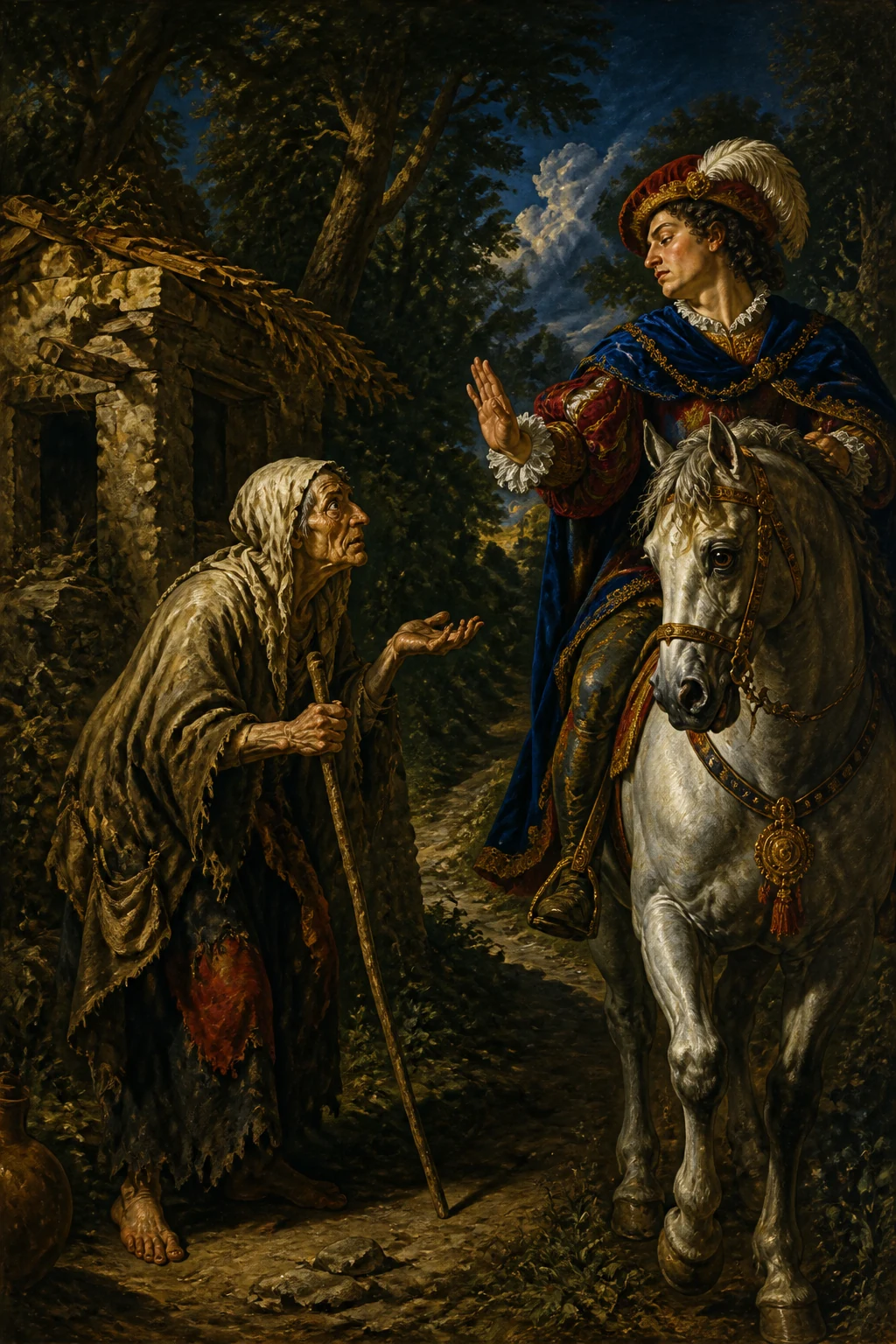
Lady Eleanore Rochcliffe je po smrti staršev sprejel v svojo družino njen daljni sorodnik, guverner kolonije Massachusetts Bay Shute, in prišla je v Ameriko, da bi se naselila pri njem. Pred vrata guvernerjeve rezidence Province House v Bostonu se je pripeljala v njegovi razkošni kočiji, v spremstvu konjenikov in stražarjev. Ko ji je guverner stopil naproti, je iz množice planil bled mladenič razmršenih las in se ji vrgel v prah pred noge, da bi ji s svojim telesom služil kot pručka. Njen ponosni obraz je razsvetlil prezirljiv nasmeh in iztegnila je roko, da bi ustavila guvernerja, ki je ravno zamahnil s palico po mladeniču.
»Ne udarite ga,« je rekla. »Kadar si ljudje sami želijo, da bi jih teptali, si to milost tudi zaslužijo.« Za trenutek je s svojo težo stopila na ležeče telo, »prispodoba plemstva, ki tepta človeško sočutje in naravne vezi med ljudmi«, in medtem ko je tako stala, je zvon na cerkvi South Church začel zvoniti pogrebu, ki je prav tedaj šel mimo. Množica se je zdrznila; nekateri so bili videti nejevoljni; lady Eleanore pa je ostala mirna in se je ob roki njegove ekscelence veličastno odpravila po hodniku. »Kdo je bil ta predrzni mladenič?« so vprašali guvernerjevega zdravnika, dr. Clarka.
»Gervase Helwyse,« je odgovoril zdravnik, »mladenič brez premoženja, a bistrega duha, vse dokler ni v Londonu spoznal te dame. Zaljubil se je vanjo, njen napuh in prezir pa sta ga spravila ob pamet.«
Nekaj večerov zatem so v čast guvernerjevi varovanki priredili ples in Province House se je napolnila z mestno smetano. Lady Eleanore je s svojo mogočno postavo, lepim obrazom, razkošno obleko in dragulji vzbujala občudovanje vseh zbranih. Ženske so si še posebej radovedno ogledovale njen plašč, saj se je razširila govorica, da ga je izdelalo umirajoče dekle in da ima čarobno moč: kdor si ga ogrne, je vsakič še lepši. Medtem ko so se gostje krepčali, se je v sobo prikradel mladenič s srebrnim kelihom in ga kleče ponudil lady Eleanore. Ko je pogledala navzdol, je prepoznala Helwysov obraz.
»Pijte to posvečeno vino,« je goreče dejal, »in ga podajte še gostom.« »Morda je zastrupljeno,« je zašepetal neki moški in že naslednji hip se je vino razlilo, Helwysa pa so grobo odvlekli proč.
»Prosim vas, gospodje, nikar ne poškodujte mojega ubogega občudovalca,« je rekla dama z zanjo nenavadno medlim in pokroviteljskim glasom. Helwyse se je iztrgal svojim prijemalcem, stekel nazaj in jo rotil, naj vrže plašč v ogenj. V odgovor si je del plašča dvignila nad glavo in z nasmehom rekla: »Zbogom. Spominjajte se me takšne, kakršno me vidite zdaj.«
Helwyse je žalostno zmajal z glavo in pustil, da so ga odvedli. Eleanore je bila vse bolj utrujena; na licih ji je gorela rdečica, njen smeh je bilo slišati vse redkeje. Dr. Clarke je guvernerju nekaj zašepetal na uho, da se je ta zdrznil in se preplašil. Oznanili so, da je treba zaradi nepredvidene okoliščine slavje nemudoma končati, in družba se je razšla. Nekaj dni pozneje je mesto zajela panika zaradi izbruha črnih koz, bolezni, ki je v tistih časih niso znali preprečiti in le redko pozdraviti ter je svoje žrtve štela v tisočih. Grobove so kopali v vrstah in vsako noč so na hitro zasipali sveža trupla. Pred vsako okuženo hišo je v opozorilo visela rdeča zastava in na Province House so jo izobesili najprej, saj je kuga prišla v mesto v plašču lady Eleanore. Ljudje so preklinjali njen napuh in kazali na zastave, češ da so njeni zmagoslavni prapori. Ko je bila epidemija na vrhuncu, se je v Province House pojavil Gervase Helwyse. Zdaj ni bilo nikogar, ki bi ga ustavil, in povzpel se je po stopnicah ter kukal iz sobe v sobo, dokler ni vstopil v zatemnjeno spalnico, kjer se je pod svileno odejo nekaj slabotno premaknilo in je medel glas zaprosil za vodo. Helwyse je razgrnil posteljne zavese in vzkliknil: »Fej! Kaj tak stvor, kot si ti, počne v sobi lady Eleanore?«
Postava na postelji je skušala skriti svoj iznakaženi obraz. »Ne glej me,« je zaklicala. »Prekleta sem zaradi napuha, v katerega sem se ogrinjala kakor v plašč. Maščevan si. Jaz sem Eleanore Rochcliffe.«
Blaznež je za hip obstrmel, nato pa je po hiši odjeknil njegov smeh. Smrtonosni plašč je ležal na stolu. Pograbil ga je in stekel na ulico, vihtel pa je tudi rdečo zastavo kuge. Kmalu zatem je drhal pred Province House prinesla lutko, ogrnjeno v plašč, in jo zažgala. Od tiste ure je bolezen pojemala in kmalu izginila, čeprav so grobovi in brazgotine še dolga leta ohranjali grenak spomin nanjo. Najnesrečnejše od vseh pa je bilo iznakaženo bitje, ki je tavalo med sencami Province House in nikoli ni pokazalo obraza, neljubljeno, osamljeno, bitje, ki so se mu vsi izogibali.
Izvirnik
Lady Eleanore Rochcliffe, being orphaned, was admitted to the family of her distant relative, Governor Shute, of Massachusetts Bay, and came to America to take her home with him. She arrived at the gates of Province House, in Boston, in the governor's splendid coach, with outriders and guards, and as the governor went to receive her, a pale young man, with tangled hair, sprang from the crowd and fell in the dust at her feet, offering himself as a footstool for her to tread upon. Her proud face lighted with a smile of scorn, and she put out her hand to stay the governor, who was in the act of striking the fellow with his cane.
“Do not strike him,” she said. “When men seek to be trampled, it is a favor they deserve.”
For a moment she bore her weight on the prostrate form, “emblem of aristocracy trampling on human sympathies and the kindred of nature,” and as she stood there the bell on South Church began to toll for a funeral that was passing at the moment. The crowd started; some looked annoyed; Lady Eleanore remained calm and walked in stately fashion up the passage on the arm of His Excellency. “Who was that insolent fellow?” was asked of Dr. Clarke, the governor's physician.
“Gervase Helwyse,” replied the doctor; “a youth of no fortune, but of good mind until he met this lady in London, when he fell in love with her, and her pride and scorn have crazed him.”
A few nights after a ball was given in honor of the governor's ward, and Province House was filled with the elect of the city. Commanding in figure, beautiful in face, richly dressed and jewelled, the Lady Eleanore was the admired of the whole assembly, and the women were especially curious to see her mantle, for a rumor went out that it had been made by a dying girl, and had the magic power of giving new beauty to the wearer every time it was put on. While the guests were taking refreshment, a young man stole into the room with a silver goblet, and this he offered on his knee to Lady Eleanore. As she looked down she recognized the face of Helwyse.
“Drink of this sacramental wine,” he said, eagerly, “and pass it among the guests.”
“Perhaps it is poisoned,” whispered a man, and in another moment the liquor was overturned, and Helwyse was roughly dragged away.
“Pray, gentlemen, do not hurt my poor admirer,” said the lady, in a tone of languor and condescension that was unusual to her. Breaking from his captives, Helwyse ran back and begged her to cast her mantle into the fire. She replied by throwing a fold of it above her head and smiling as she said, “Farewell. Remember me as you see me now.”
Helwyse shook his head sadly and submitted to be led away. The weariness in Eleanore's manner increased; a flush was burning on her cheek; her laugh had grown infrequent. Dr. Clarke whispered something in the governor's ear that made that gentleman start and look alarmed. It was announced that an unforeseen circumstance made it necessary to close the festival at once, and the company went home. A few days after the city was thrown into a panic by an outbreak of small-pox, a disease that in those times could not be prevented nor often cured, and that gathered its victims by thousands. Graves were dug in rows, and every night the earth was piled hastily on fresh corpses. Before all infected houses hung a red flag of warning, and Province House was the first to show it, for the plague had come to town in Lady Eleanore's mantle. The people cursed her pride and pointed to the flags as her triumphal banners. The pestilence was at its height when Gervase Helwyse appeared in Province House. There were none to stay him now, and he climbed the stairs, peering from room to room, until he entered a darkened chamber, where something stirred feebly under a silken coverlet and a faint voice begged for water. Helwyse tore apart the curtains and exclaimed, “Fie! What does such a thing as you in Lady Eleanore's apartment?”
The figure on the bed tried to hide its hideous face. “Do not look on me,” it cried. “I am cursed for my pride that I wrapped about me as a mantle. You are avenged. I am Eleanore Rochcliffe.”
The lunatic stared for a moment, then the house echoed with his laughter. The deadly mantle lay on a chair. He snatched it up, and waving also the red flag of the pestilence ran into the street. In a short time an effigy wrapped in the mantle was borne to Province House and set on fire by a mob. From that hour the pest abated and soon disappeared, though graves and scars made a bitter memory of it for many a year. Unhappiest of all was the disfigured creature who wandered amid the shadows of Province House, never showing her face, unloved, avoided, lonely.