Prevod
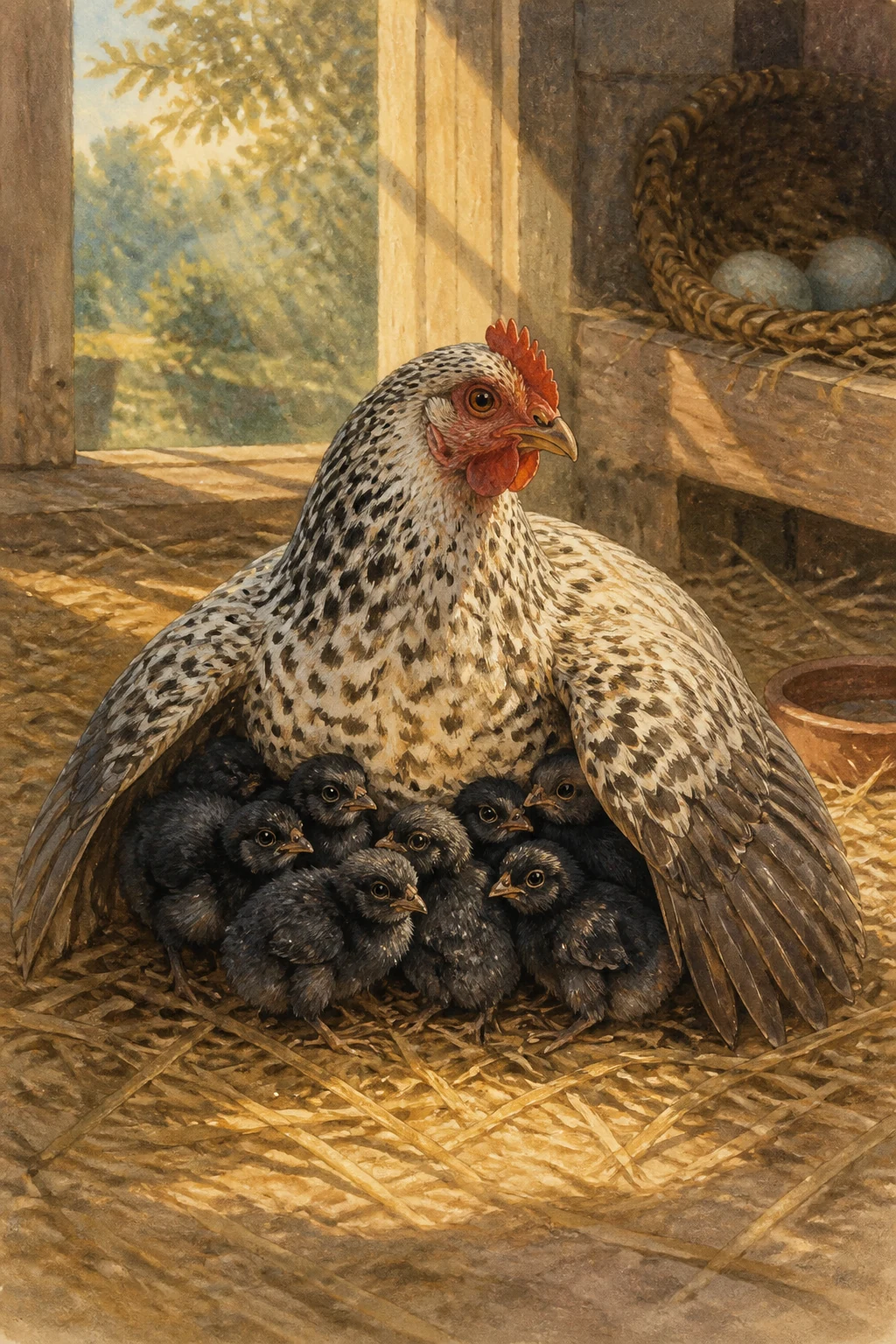
Minilo je že nekaj časa, odkar je dorkinška kokoš zapustila gnezdo s svojo malo zarodjo, ko so se materi šanghajskih piščancev začele hude skrbi.
Imela je dvanajst tako lepih piščancev, da bi jim težko našli enake: visokih, živahnih mladičev z dolgimi, lepo raščenimi nogami ter gostim puhom in perjem. Bila je zelo ponosna nanje, kakor bi bila upravičeno vsaka kokošja mati, in šanghajskemu petelinu je pogosto govorila: »Si že kdaj videl tako lepo družino? Poglej teh štiriindvajset nog, vse so tako dolge in ravne, pa niti enega peresca ni na njih.« Oči so se mu zasvetile in ponosno je iztegnil vrat, a vse, kar ji je kdaj rekel, je bilo: »Prav lepo se bodo obnesli, če se bodo le vedli tako lepo, kakor so videti.« Menil je, da otrok ne gre hvaliti v njihovi navzočnosti, in mislil je, da jih mati razvaja.
Morda je imel prav, kajti mali šanghajčki so kmalu spoznali, da so lepi, in želeli so, da bi vsi na kokošjem dvorišču opazili njihove noge. Seveda je bilo zelo nespametno, da so bili ponosni na kaj takega, toda ko je druga perutnina rekla: »Človek bi mislil, da vas zebe, ko pa na nogah nimate perja,« so odgovorili: »O, mi smo šanghajčki in v naši družini tam nikoli ne nosimo perja!« In to je bilo res, prav tako kakor je res, da imajo dorkinške kokoši dodatne prste in da imajo črne španske kokoši bele ušesne mečice.
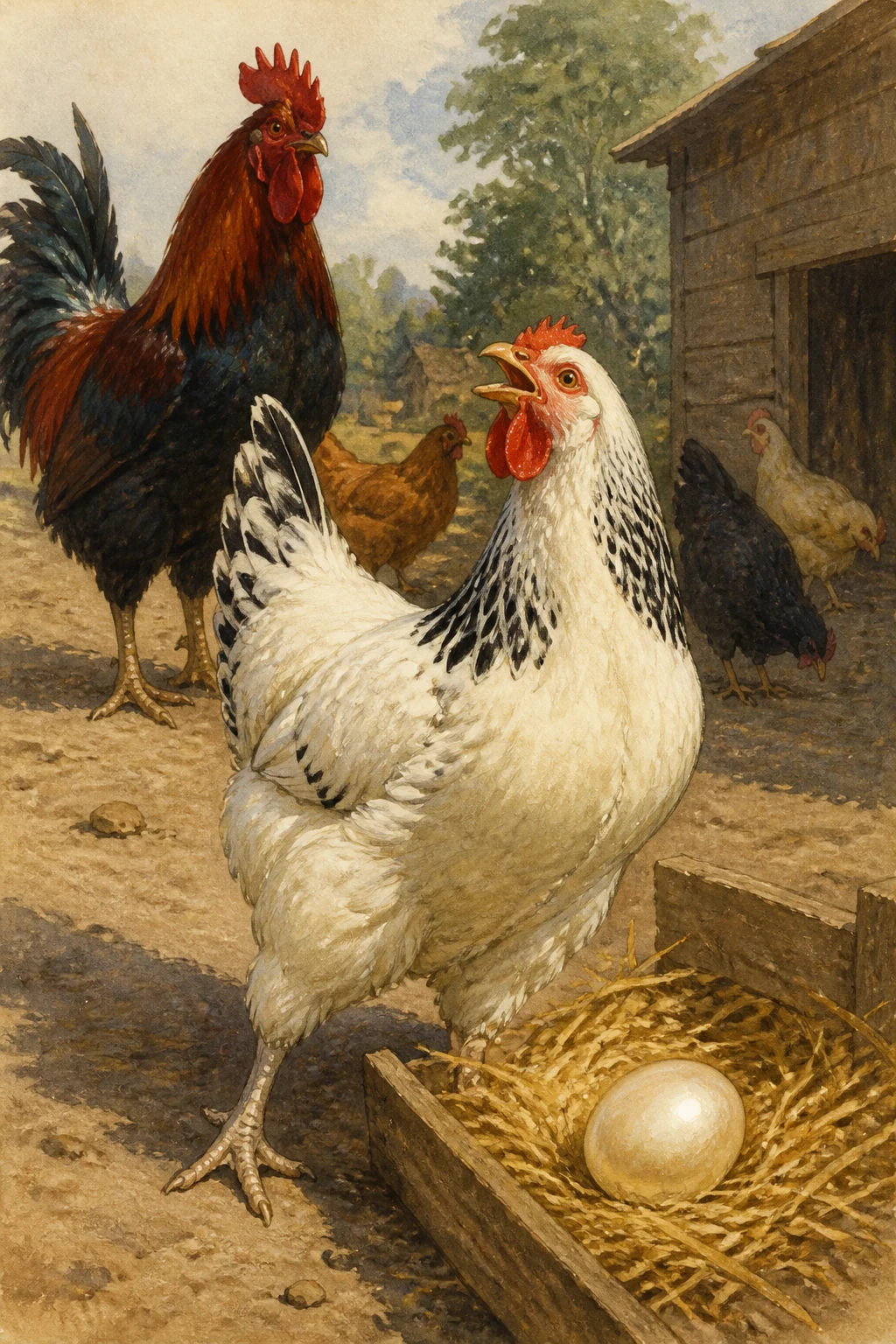
Šanghajska mati se je zdaj s svojo zarodjo potikala po poljih in na pšeničnem strnišču je bilo obilo hrane. Vsa perutnina je bila zdaj zunaj dvorišča in zaprli bi jo šele, ko bi pritisnil mraz. Zgodaj zjutraj so se odpravljali na pot v skupinah po šest do dvanajst, na čelu vsake pa je bil petelin. Izbiral je pot, po kateri naj bi šli; oprezal je za jastrebi na nebu, in če je katerega zagledal, je zaklical v opozorilo, da so kokoši pohitele k njemu. Petelini so gospodarji kokošjega dvorišča in določajo, kako naj tam vse poteka; toda ko jih vidite, kako vodijo jato po poljih — ah, tedaj veste, zakaj jih vsa perutnina uboga.
Prebivalci kmečkega dvorišča še vedno pripovedujejo o dnevu, ko je jastreb planil na enega od mladih dorkinčkov in bi ga odnesel, če ne bi predenj skočil črni španski petelin, ga kljuval, udarjal po njem z ostrogami in se bojeval tako dolgo, da jo je jastreb nazadnje z veseljem popihal. Petelini niso samo pogumni — tudi vljudni so, in kadar najdejo hrano, je ne pojedo, dokler ne pokličejo kokoši, naj pridejo in si jo razdelijo z njimi.
Lahko si mislite, kako lepo je bilo piščancem na strniščih. Zdaj so bili že tako veliki, da jim je ves puh prekrilo perje, in nekateri so se spraševali, ali nemara že čutijo, kako jim rastejo ostroge. A vse to so bile neumnosti, kakor jim je povedal neki pritlikavi petelin, saj ostroge začnejo rasti šele, ko je kokoš leto dni stara. Že dolgo so bili preveliki, da bi se ponoči stiskali pod materinim perjem, in še preden so odšli na strnišča, so se začeli učiti spanja na gredi. Naučili so se tudi sami drobiti hrano, kar je bilo materi v veliko pomoč. Saj veste, perutnina nima zob, in naj vzame še tako velik grižljaj, ga mora pogoltniti celega. Pomaga si lahko le tako, da kose pred jedjo raztrga z nogami ali jih razkljuva s kljunom.
Rumena pšenična zrna, ki so ležala povsod po polju, so bila odlična hrana in bi morala male šanghajčke porediti, da bi bili tako rejeni kakor gozdne kure, ki so se včasih prikradle iz gozdnega roba. Enajst piščancev iz zaroda je bilo prav lepo okroglih, eden pa je bil še vedno suh in pretegnjen. Mater je to zelo skrbelo in nikakor se ni mogla domisliti, kaj bi bilo narobe. Nekega dne je o tem spregovorila s črno špansko kokošjo, a ta še nikoli ni vzredila zaroda in je rekla, da se na skrb za piščance res ne spozna nič bolj, kakor če bi bila golobica. Potem je zaskrbljena mati stopila še do šanghajskega petelina. Poslušal je vse, kar mu je povedala, in se držal zelo modro.
»Mislim, da ni nič narobe,« je rekel. »Piščanec hitro raste, to je vse. Spominjam se, kako je bilo z menoj, preden mi je zraslo dolgo repno perje. Zelo suh sem bil, a poglej, kakšen lep korenjak sem zdaj.« Res ga je bilo vredno videti, kako se je dvigal nad drugo perutnino, na soncu zamahoval z močnimi perutmi in kikirikal. Njegovo perje je bilo čudovito in živo rdeča roža ter podbradki so kazali, da je zdrav. »Ah,« je pomislila šanghajska kokoš, »ko bi le moj piščanec zrasel v tako lepega petelina!« In ves preostali dan je ni več skrbelo.
Tisto noč je s svojo zarodjo prenočevala na stari jablani v kotu sadovnjaka, najbliže kokošjemu dvorišču. S starejšo perutnino je zletela nanjo, prhutala, lovila ravnotežje, kokodakala in se prerivala zdaj na eni, zdaj na drugi veji, piščanci pa so medtem stopali po poševni deski, ki jo je kmet prislonil ob eno nižjih vej. Perutnina vedno potrebuje veliko časa, da se namesti za noč. Menjavajo si mesta in se odrivajo, včasih pa se kakšna zaspana kokoš nagne predaleč in pade na tla, tako da mora potem začeti znova.
Sprva so se piščanci bali, da bodo popadali z vej, brž ko zaspijo, a kmalu so se naučili, da so njihove noge in noge vseh drugih ptic narejene tako, da se trdno oklepajo veje tudi med spanjem. Teža ptičjega telesa nad nogami skrči prste okoli veje in tam ostanejo, dokler jih ptica noče razkleniti.
Čez dolgo časa je vsa perutnina spala z glavami pod perutmi. Ovce, prašiči in krave so sanjali in celo konji so bili mirni v svojih stojiščih. V veliki beli kmečki hiši ni bilo videti niti ene luči, ko je dorkinški petelin zakikirikal v spanju. S tem je zbudil sebe in vso drugo perutnino. Potem so drugi petelini zakikirikali, ker je kikirikal on, in on je spet zakikirikal, ker so kikirikali oni, pa so spet zakikirikali oni, ker je on znova zakikirikal, piščanci pa so spraševali, ali ni že skoraj jutro, in matere so jim velele, naj ne klepetajo, temveč takoj zaspijo, da bo jutro prej prišlo.
Vse to je trajalo kar precej časa in šanghajska mati ni mogla več zaspati. V mesečini je prav razločno videla svojo zarod in eden od piščancev ni bil okrogel kakor drugi. Čepela je tam in skrbelo jo je zanj, dokler se ji ni nenadoma zazdelo — nikoli ni znala povedati, kako se je to zgodilo — da natanko ve, kaj je narobe.
Prhutnila je k njemu in ga dregnila pod perut. »Zbudi se,« je rekla. »Nekaj te hočem vprašati. Ali ješ pesek?« »Ne,« je zaspano odgovoril, »peska ne maram.«
»Ali te nisem učila, da ga moraš jesti?« je strogo vprašala. »Si, ampak ne maram ga, in zdaj, ko sem dovolj velik, da spim na drevesu, ga ne mislim več jesti. Tako!«
Pomislite samo, piščanec pa takole govori s svojo materjo! Z materjo, ki je znesla jajce, iz katerega se je izvalil; ki je vse tiste utrujajoče dneve in noči sedela v gnezdu, medtem ko je rasel v lupini; ki ga je grela pod svojim mehkim perjem; ki ga je naučila vsega, kar je znal, in bi se spopadla s katerim koli jastrebom, da bi ga rešila! Rada ga je imela, še preden je sploh vedel, da obstaja, in vse odtlej je živela zanj ter za njegovega brata in sestre.
Mati mu tedaj ni rekla ničesar več. Preostanek noči je prebedela in opazovala zvezde, luno ter prvi rožnati svit na vzhodnem nebu, ki je naznanjal, da se bliža jutro. Ko se je njen poredni piščanec začel premikati in čivkati, mu je rekla: »Nič več te ne bom silila jesti peska, če misliš, da si že prevelik, da bi ubogal mater. Samo to ti povem: nikoli ne boš močan, če ga ne boš jedel. Nisem ti povedala, zakaj, ker me nisi nikoli vprašal, in mislila sem, da boš ravnal, kakor je prav, tudi če ne poznaš razloga. Nimaš zob in zrnja, ki ga ješ, ne moreš prežvečiti, preden ga pogoltneš. Imaš pa močan želodec, in če ješ pesek, ta želodec, ki mu pravimo mlinček, drgne in pritiska drobne kamenčke ob zrnje, dokler ni dobro zmleto in pripravljeno, da tvojemu telesu da tolščo in moč.«
»Ampak ni dobrega okusa,« je odgovoril, »in raje jem kaj drugega. Ne verjamem, da je to pomembno, in ga vseeno ne bom jedel.« Šanghajska kokoš je zletela z drevesa in poklicala svoje piščance. Ni hotela izgubljati časa s pregovarjanjem. Kadar koli je tistega dne prišel v njeno bližino, je jedel vse razen peska. Dosegel je svoje, pa vendar ni bil srečen. Iz neznanega razloga ga ni nič več veselilo. Še ležanje pod grmovjem na prisojni strani mu ni bilo prijetno, in ko se je z bratom in sestrami valjal v prahu, tudi v tem ni užival.
Tako je šlo še precej dni, nazadnje pa je opazil, da je njegova senca na tleh le majhna črna lisa, medtem ko so imeli njegov brat in sestre velike, debele sence. Slišal je, kako ga je črni španski petelin imenoval pritlikavec, šanghajski petelin pa je rekel, da ne bo dočakal svojih ostrog. Ena od dorkinških piščančic se je pogovarjala s sestro in slišal jo je reči: »Si ga predstavljaš na čelu jate!« Potem se je zasmejala s kratkim, zlobnim kokodakajočim smehom.
Tisto noč, ko so drugi spali na jablani, je tiho odšel po poševni deski navzdol in jedel pesek. Naslednje jutro se je počutil bolje kot že dolgo ne, zato ga je pojedel še malo, ko ni bilo nikogar v bližini. Ni hotel, da bi drugi vedeli, da je spoznal svojo zmoto. Vsako jutro si je ogledal svojo senco in bila je vse debelejša. A še vedno ni bil srečen in vedel je, da zato, ker ni povedal svoji potrpežljivi stari materi. Pa tako rad bi ji povedal. Nekega dne jo je slišal, kako je njegovemu bratu naročila, naj poje več peska, brat pa je rekel, da mu njegov okus ni všeč. Tedaj je končno spregovoril.
»Tudi če ti ni všeč, ga lahko ješ. Čuden bi bil svet, če nam ne bi bilo treba početi neprijetnih reči. Pravkar sem sklenil, da je tistim, ki nočejo storiti česa težkega, kadar bi morali, nazadnje najteže. Ko bi le ubogal mater in jedel pesek, ko mi je naročila, in ne bom ti pustil, da bi bil tako neumen, kakor sem bil jaz.«
Prav tedaj je slišal, kako je nekdo rekel o njem: »V kako lepega korenjaka raste! Zdaj mi je pa zares všeč.« Bila je dorkinška piščančica, ki se mu je smejala. Stekel je za kobilico in tudi ona je stekla za isto kobilico, pa sta trčila drug v drugega in kobilica je ušla, tako da sta morala seveda skupaj odtavati in si poiskati kaj za pod zob, odtlej pa sta postala velika prijatelja.
Šanghajska kokoš je ljubeče gledala za njim in dvignila eno nogo v zrak. »Zdaj,« je rekla, »sem popolnoma srečna.«
Izvirnik
It was some time after the Dorking Hen had come off the nest with her little brood, that the mother of the Shanghai Chickens began to have so much trouble.
She had twelve as fine Chickens as you could find anywhere: tall, wide-awake youngsters with long and shapely legs and thick down and feathers. She was very proud of them, as any Hen mother might well be, and often said to the Shanghai Cock, "Did you ever see so fine a family? Look at those twenty-four legs, all so long and straight, and not a feather on one of them." His eyes would shine and he would stretch his neck with pride, but all he ever said to her was, "They will do very well if they only behave as well as they look." He did not believe in praising children to their faces, and he thought their mother spoiled them.
Perhaps he was right, for the little Shanghais soon found out that they were good-looking, and they wanted everybody in the poultry-yard to notice their legs. It was very foolish, of course, to be proud of such things, but when the other fowls said, "We should think you would be cold without feathers on your legs," they answered, "Oh, we are Shanghais, and our family never wear feathers there!" And that was true, just as it is true that the Dorkings have extra toes, and that the Black Spanish fowls have white ears.
The Shanghai mother was now roaming the fields with her brood, and there was rich picking in the wheat-stubble. All the fowls were out of the yard now, and would not be shut up until cold weather. Early in the morning they would start out in parties of from six to a dozen, with a Cock at the head of each. He chose the way in which they should go; he watched the sky for Hawks, and if he saw one, gave a warning cry that made the Hens hurry to him. The Cocks are the lords of the poultry-yard and say how things shall be there; but when you see them leading the way in the fields,--ah, then you know why all the fowls obey them.
The farmyard people still tell of the day when a Hawk swooped down on one of the young Dorkings and would have carried him off if the Black Spanish Cock had not jumped out, and pecked him and struck at him with his spurs, and fought, until the Hawk was glad to hurry away. The Cocks are not only brave--they are polite, too, and when they find food they will not eat it until they have called the Hens to come and share with them.
You can imagine what good times the Chickens had in the stubble-fields. They were so old now that their down was all covered with feathers, and some of them wondered if they couldn't feel their spurs growing. Still, that was all nonsense, as a Bantam told them, because spurs do not start until the fowl is a year old. They had long been too large to cuddle under their mother's feathers at night, and had taken their first lessons in roosting before they went to the stubble-fields. They had learned to break up their own food, too, and that was a great help to their mother. Fowls, you know, have no teeth, and no matter how big a mouthful one takes he has to swallow it whole. The only way they can help themselves is to break the pieces apart with their feet or peck them apart with their bills before eating them.
The yellow grains of wheat that lay everywhere in the field were fine food, and should have made the little Shanghais as fat as the Grouse who sometimes stole out from the edge of the forest. Eleven of the brood were quite plump, but one Chicken was still thin and lank. His mother was very much worried about him and could not think what was the matter. She spoke of it to the Black Spanish Hen one day, but the Black Spanish Hen had never raised a brood, and said she really didn't know any more about the care of Chickens than if she were a Dove. Then the anxious mother went to the Shanghai Cock about it. He listened to all she said and looked very knowing.
"I don't think there is anything the matter," said he. "The Chick is growing fast, that is all. I remember how it was with me before I got my long tail-feathers. I was very thin, yet see what a fine-looking fellow I am now." He was really a sight worth seeing as he towered above the other fowls, flapping his strong wings in the sunshine and crowing. His feathers were beautiful, and the bright red of his comb and wattles showed that he was well. "Ah," thought the Shanghai Hen, "if my Chicken could only become such a fine-looking Cock!" And she didn't worry any more all day.
That night she and her brood roosted in the old apple-tree in the corner of the orchard nearest the poultry-yard. She flew up with the older fowls and fluttered and lurched and squawked and pushed on first one branch and then another, while the Chickens were walking up a slanting board that the farmer had placed against one of the lower branches. It always takes fowls a long time to settle themselves for the night. They change places and push each other, and sometimes one sleepy Hen leans over too far and falls to the ground, and then has to begin all over again.
At first the Chickens had feared that they would tumble off as soon as they were asleep, but they soon learned that their feet and the feet of all other birds are made in such a way that they hang on tightly even during sleep. The weight of the bird's body above hooks the toes around the branch, and there they stay until the bird wishes to unhook them.
After a long time, all the fowls were asleep with their heads under their wings. The Sheep, Pigs, and Cows were dreaming, and even the Horses were quiet in their stalls. There was not a light to be seen in the big white farmhouse, when the Dorking Cock crowed in his sleep. That awakened him and all the other fowls as well. Then the other Cocks crowed because he did and he crowed again because they did, and they crowed again because he had crowed again, and the Chickens asked if it were not almost morning, and their mothers told them not to talk but to go to sleep at once and make morning come more quickly.
All of this took quite a while, and the Shanghai mother could not sleep again. She could see her brood quite plainly in the moonlight, and one of them was not plump like the rest. She roosted there and worried about him until suddenly (she could never tell how it happened) she seemed to know just what was the matter.
She flew down beside him and poked him under his wing. "Wake up," she said. "I want to ask you something. Do you eat gravel?"
"No," he answered sleepily, "I don't like gravel."
"Didn't I bring you up to eat it?" she asked sternly.
"Yes, but I don't like it, and now that I am old enough to roost in a tree I don't mean to eat any more. So!"
Just imagine a Chicken talking to his mother in that way! His mother, who had laid the egg from which he was hatched; who had sat upon the nest through all the weary days and nights while he was growing inside his shell; who had cuddled him under her soft feathers; who had taught him all he knew, and would have fought any hawk to save him! She had begun to love him before he even knew that he was, and had lived for him and his brother and sisters ever since.
The mother said nothing more to him then. She spent the rest of the night watching the stars and the moon and the first rosy flush of the eastern sky which told that morning was near. Then she said to her naughty Chicken, as he began to stir and cheep, "I shall never try to make you eat gravel if you think you are too big to mind your mother. I shall just tell you this, that you will never be strong unless you do. I have not told you why, because you never asked, and I supposed you would do as you ought without knowing the reason. You have no teeth, and you cannot chew the grain you eat before it is swallowed. You have a strong stomach, and if you eat gravel this stomach or gizzard will rub and press the tiny stones against the grain until it is well broken up and ready to make into fat and strength for your body."
"But it doesn't taste good," he replied, "and I'd rather eat other things. I don't believe it matters, and I won't eat it anyway."
The Shanghai Hen flew down from the tree and clucked to her Chickens. She would not waste time talking to him. Whenever he came near her that day, he ate everything but gravel. He had his own way and yet he was not happy. For some reason, nothing seemed to be any fun. Even lying under the bushes on the sunshiny side was not comfortable, and when he wallowed in the dust with his brothers and sisters he didn't enjoy that.
Things went on this way for a good many days, and at last he saw that his shadow was only a small black spot on the ground, while his brothers and sisters had big fat shadows. He heard the Black Spanish Cock call him a Bantam, and the Shanghai Cock say that he wouldn't live until his spurs grew. One of the Dorking Chickens was talking to her sister, and he heard her say, "Imagine him at the head of a flock!" Then she laughed, a mean, cackling little laugh.
That night, when the rest were asleep in the apple-tree, he walked softly down the slanting board and ate gravel. The next morning he felt better than he had in a long time, so when there was nobody around he ate some more. He didn't want anyone else to know that he had found out his mistake. Every morning he looked at his shadow, and it grew fatter and fatter. Still he was not happy, and he knew it was because he had not told his patient old mother. He wanted to tell her, too. One day he heard her telling his brother to eat more gravel, and the brother said he didn't like the taste of it. That made him speak at last.
"Suppose you don't like it, you can eat it. Queer world it would be if we didn't have to do unpleasant things. I've just made up my mind that the people who won't do hard things, when they ought to, have the hardest times in the end. Wish I'd minded my mother and eaten gravel when she told me to, and I'm not going to let you be as foolish as I was."
Just then he heard somebody say of him, "What a fine-looking fellow he is growing to be! I like him ever so much now."
It was the Dorking Chicken who had laughed at him. He ran after a Grasshopper, and she ran after the same Grasshopper, and they ran against each other and the Grasshopper got away, so of course they had to wander off together to find something to eat, and after that they became great friends.
The Shanghai Hen looked lovingly after him and raised one foot in the air. "Now," she said, "I am perfectly happy."