Waltey
Črni španski piščanci
085 THE BLACK SPANISH CHICKENS
Živalske zgodbe Clare Dillingham Pierson · Clara Dillingham PiersonO besedilu
Črni španski piščanci
- Vir
- Živalske zgodbe Clare Dillingham Pierson
- Avtor
- Clara Dillingham Pierson
- Jezik branja
- Slovenščina
- Jezik izvirnika
- English
- Čas branja
- 10 min branja
- Obseg
- 8 strani
- Naslov izvirnika
- 085 THE BLACK SPANISH CHICKENS
O izvirniku
Živalske zgodbe Clare Dillingham Pierson
Devetindevetdeset avtorskih zgodb o živalih na kmetiji, travniku, v gozdu, ob ribniku in ponoči. Bralni jezik je Slovenščina, izvirnik pa prihaja iz vira Živalske zgodbe Clare Dillingham Pierson v jeziku English.
Besedilo
Črni španski piščanci
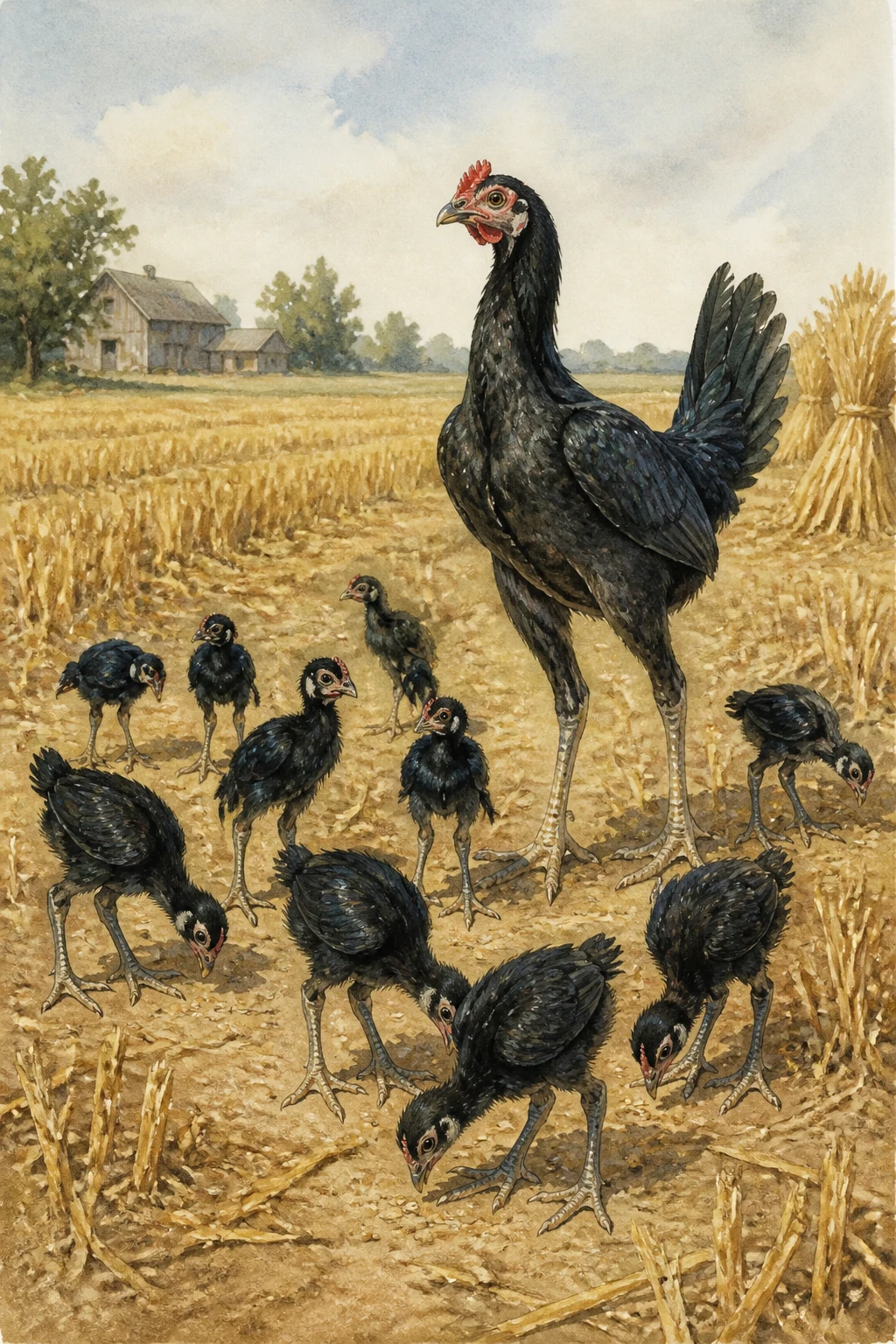
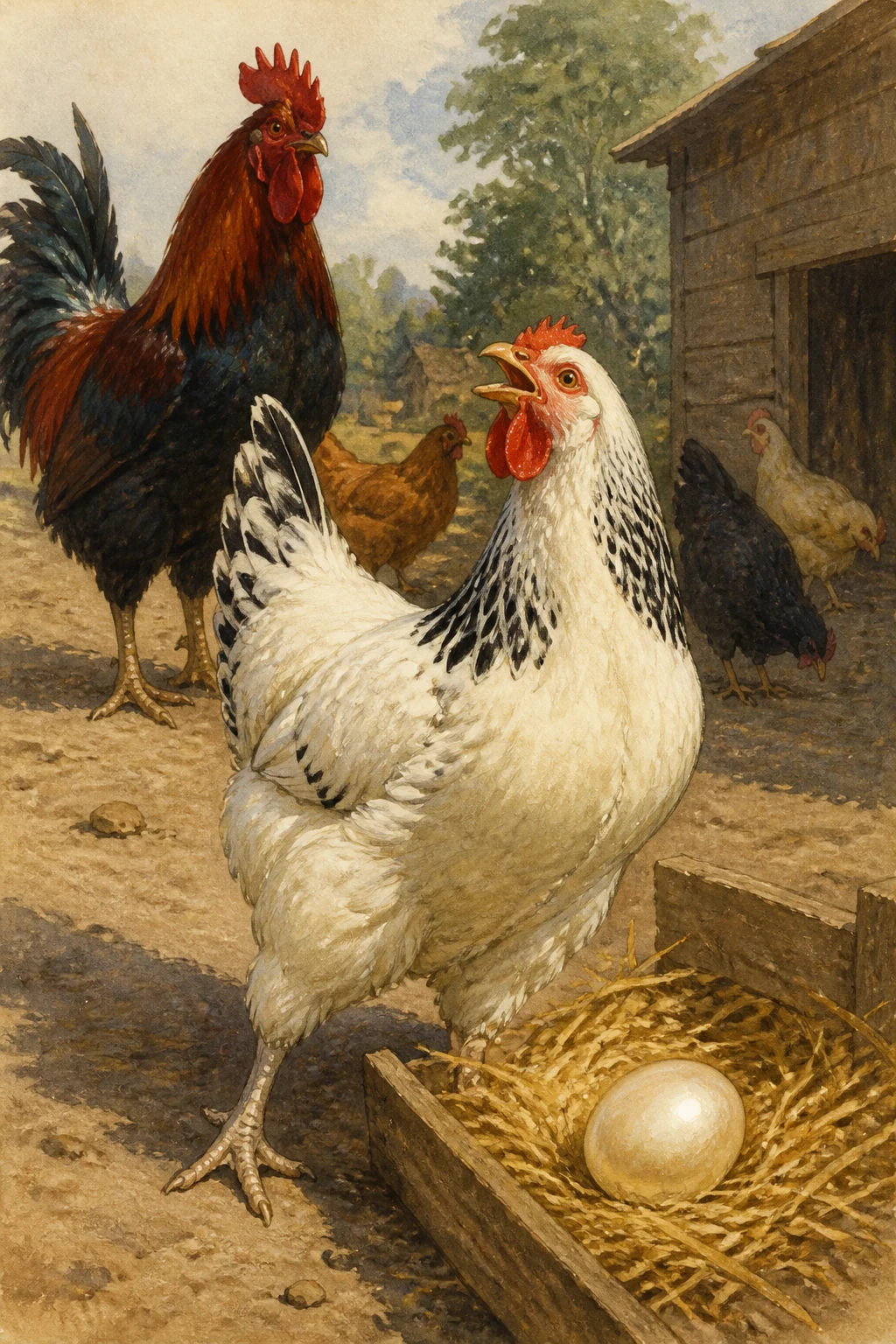
Ko je Lisasta kokoš hotela valiti, je ni bilo mogoče odvrniti od te zamisli, saj je bila zelo trmasta kokoš. Kmetova žena se je dolgo trudila in ji zapirala dostop zdaj do enega, zdaj do drugega gnezdišča, nazadnje pa je popustila, ji pripravila lepo gnezdo in vanj položila trinajst jajc. Bila so jajca črnih španskih kokoši, vendar Lisasta kokoš tega ni vedela. Kokoši, ki so jih znesle, niso marale valiti, zato ne bi bilo nobenega črnega španskega piščanca, če ne bi kakšna druga kokoš opravila dela, ki so ga same pustile nedokončanega. Vedno ravnajo tako in ljudje so se tega že navadili. Zdaj nikomur več ne pride na misel, da bi od črne španske kokoši pričakoval, naj vali, čeprav se ne zdi prav, da kokoš noče vzrejati piščancev. Kaj pa, če tudi nje ne bi bil nihče hotel vzrediti?
Pa vendar črne španske kokoši o tem govorijo zelo razumno. »Znesle bomo veliko jajc,« pravijo, »izvaliti pa jih bodo morale nekatere navadne kokoši.« Svoj delež dela na kmečkem dvorišču opravijo, le da vztrajajo pri tem, da si ga izberejo same.
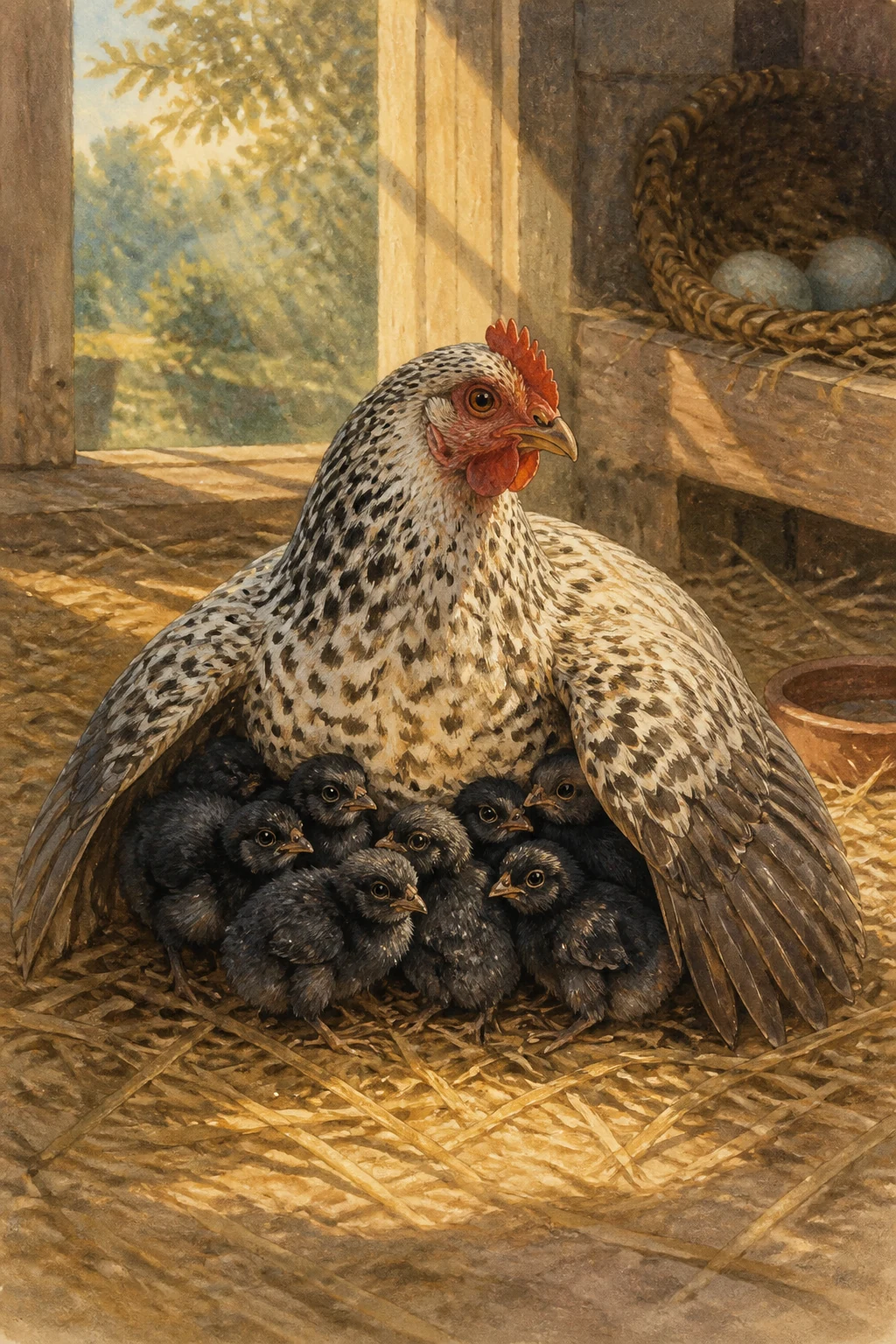
Ko je Lisasta kokoš zapustila gnezdo z enajstimi črnimi piščanci — iz dveh jajc se ni izvalilo nič — ni bila povsem srečna. »Želela sem si, da bi bili lisasti,« je rekla, »pa ni lisast niti eden od vsega zaroda.« Zato je v svojem kokošnjaku postajala tako nemirna in nezadovoljna, čeprav je bil prostoren in čist ter je dobivala dovolj hrane in pijače. Povsem srečna je bila le ponoči, ko so bili vsi varno pod njenimi perutmi. A koliko opravka je bilo vselej, preden so se namestili!
Ko so sončni žarki skozi drevje prodirali vse bolj poševno, je bilo piščancem vse manj do tekanja naokrog. Njihove drobne nožice so bile utrujene in radi so se stisnili na travo v senci kokošnjaka. Lisasta kokoš jih je tedaj pogosto s kokodakanjem vabila, naj pridejo noter in si odpočijejo, vendar jim je bilo na prostem bolj všeč. Tudi Lisasta kokoš bi bila rada zunaj, a jo je kmet zadrževal v kokošnjaku. Vedel je, kaj je najbolje za kokoši z majhnimi piščanci, pa tudi, kaj je najbolje za nežno mlado solato in redkvice na njegovem vrtu.
Ko je sonce skoraj zašlo, je Lisasta kokoš zakokodakala svoj klic k spanju, ki se je precej razlikoval od njenega klica k hrani ali opozorila pred kraguljem, in mali črni piščanci so stekli med prečkami ter zlezli pod njeno perje. Z vsakim piščancem, ki se je ugnezdil pod njo, je bila Lisasta kokoš videti debelejša in debelejša in debelejša. Včasih ji je kak mali navihanec splezal na hrbet in obtičal tam, ona pa je obračala glavo zdaj na eno, zdaj na drugo stran, ga gledala najprej z enim, nato z drugim okroglim rumenim očesom in ga ves čas oštevala. Oštevanje ni nikoli nič pomagalo, vendar je rekla, da mora pač nekaj storiti, z desetimi drugimi otroki pod perutmi pa vendar ne more vstati in ga stresti s hrbta.
Ves čas, ko so se nameščali za noč, so se piščanci pogovarjali z zaspanim piskljanjem in tu in tam je kateri pomolil glavo med perjem ter Lisasti kokoši povedal, da ga nekdo odriva. Tedaj je bila še bolj zmedena in je kokodakala še glasneje. Včasih so piščanci stekli ven še po kak grižljaj koruzne kaše ali nekaj kapljic vode. Med njimi je bil mali navihanec, ki je vselej hotel piti ravno takrat, ko bi moral že zaspati. Lisasta kokoš je govorila, da potrebuje požirek vode dlje, da mu steče po grlu, kakor bi ona potrebovala, da bi popila celo posodo. Seveda je to res trajalo kar nekaj časa, saj ni mogel pohiteti s požiranjem. Piti je moral kakor vse ptice: kljun je napolnil z vodo in ga nato dvignil, dokler mu ni zadnja kapljica spolzela v želodec.
Ko je bilo vseh enajst naposled varno spravljenih za noč, je bila Lisasta kokoš utrujena, vendar srečna. »Dobri otroci so,« si je pogosto rekla, »čeprav so črni španski piščanci. Tudi če bi bili lisasti, bi bili lahko prav tako navihani; vseeno pa si želim, da bi te imenitne črne španske kokoši z belimi ušesnimi mečicami same vzrejale svoje zarode. Ni mi všeč, da moram biti nadomestna mati piščancem drugih kokoši.« Nato je z vekami prekrila oči, zadremala in sanjala, da so vsi lisasti kakor ona.
Prišel je dan, ko so kokošnjak dvignili in so lahko šli, kamor so hoteli. Zelenjavni vrt je zdaj obdajala ograja, cvetlične gredice pa mreža, a ostalo je še veliko drugih čudovitih krajev, kjer so lahko s praskanjem iskali hrano, ščipali nežno mlado zelenje, pobirali droben pesek, ki ga potrebuje vsak piščanec, in se valjali v prahu. Tedaj so črni španski piščanci spoznali drugo perutnino, ki je dotlej še niso srečali. Šanghajskega petelina so se nekoliko bali, ker je govoril tako osorno, dorkinške kokoši in petelini pa so jim bili všeč. Toda največ so opazovali in občudovali Črnega španskega petelina in Črno špansko kokoš ter govorili o njiju. Na kmetiji je bilo veliko perutnine brez rodovnih imen in tudi Lisasta kokoš je bila med njimi. Tam so živeli dlje kot drugi in jim ni bilo prav nič všeč, da so se na perutninsko dvorišče priseljevali novi prebivalci. Pa tudi to je bilo nadležno, da so morale starejše kokoši valiti jajca, ki so jih znesle prišlekinje.
Pravijo, da je zato Lisasta kokoš zapustila enajst malih črnih španskih piščancev, potem ko je bila že nekaj časa zunaj kokošnjaka. Nekega dne so bili zelo navihani in neposlušni, zato je odkorakala in jih prepustila samim sebi, sama pa je začela vzrejati lastno družino v skrivnem gnezdu pod kopico slame.
Ko se je znočilo, enajst malih črnih španskih piščancev ni vedelo, kaj naj stori. Šli so iskat svoj stari kokošnjak, vendar so ga že dali drugi kokoši in njeni družini. Tavali so naokrog, videti zelo majhni in osamljeni, ter si želeli, da bi bili ubogali Lisasto kokoš in dosegli, da bi jih imela rajši. Nazadnje so našli star zaboj za krompir, ki jih je spominjal na kokošnjak in se jim je zato zdel kar domačen. Na tleh je stal obrnjen na glavo, oni pa so bili preveliki, da bi zlezli med prečkami njegovih stranic, zato so se znašli, kakor so vedeli in znali, ter se stisnili na vrhu zaboja. Če v bližini ne bi bilo kupa kamenja, jim to ne bi uspelo, saj peresa na njihovih perutih še niso bila dovolj velika, da bi jim pomagala vzleteti. Najpogumnejši piščanec je šel prvi. Previdno je stopal s kamna na kamen, dokler ni dosegel najvišjega, na njem nekaj časa lovil ravnotežje, iztegoval vrat proti zaboju za krompir in ga gledal, kakor da bo vsak hip skočil, nato pa je bilo videti, da si je premislil in se odločil, da vendarle ne bo.
Piščanci na tleh so rekli, da ga je strah, on pa je odvrnil, da ga ni nič bolj strah kakor njih. Čez nekaj časa je vendarle skočil — to je bil čuden, neroden skok, poln mahanja in vreščanja, a pristal je tam, kjer je hotel. Potem je bil on na vrsti, da se smeji drugim, medtem ko so negotovo prestopali na najvišjem kamnu. Brez Lisaste kokoši so bili zelo osamljeni in vsak piščanec je hotel biti sredi skupine, da bi ga drugi greli z vseh strani.
Nekdo se je zasmejal najbolj navihanemu piščancu in mu rekel, da lahko stoji na hrbtu zaboja za krompir, ne da bi ga kdo ošteval, on pa je našobil kljun in dejal: »To bi bila pa res zabava! Na hrbtu Lisaste kokoši sem stal samo zato, da sem jo pripravil do oštevanja.« Prav nezaslišano je, da je govoril take reči, a rekel je natanko to.
Tisto noč so spali na varnem in se prebudili šele, ko so petelini zakikirikali kmalu po polnoči. Nato so spali do sončnega vzhoda, in ko so šanghajske in dorkinške kokoši in petelini prišli z jablane, kjer so prenočevali, so se črni španski piščanci pretegnili, zapiskali in si ogledali perje, da bi videli, koliko jim je zraslo čez noč. Potem so se prerivali in prepirali za zajtrk.
Vsak večer so se vrnili spat na zaboj za krompir. Nazadnje so lahko skočili na svoja mesta, ne da bi prej splezali na kup kamenja, in to je bil velik dan. O njem so govorili še dolgo potem, ko bi morali že spati, in še vedno so klepetali, ko se je oglasil Šanghajski petelin: »Če se vi, črni španski piščanci, ne boste umirili in nas pustili spati, bo po vas prišla kakšna sova ali podlasica, jaz pa je bom še vesel!«
To je piščance prestrašilo in povsem so utihnili. Črna španska kokoš pa je postala nemirna. Šepetala je Črnemu španskemu petelinu in mu ni pustila zaspati, dokler ji ni obljubil, da se bo spopadel z vsakomer, ki bi skušal katerega od piščancev odnesti z zaboja za krompir.
Naslednji večer je z zaboja za krompir kar naprej padal zdaj en, zdaj drug piščanec. Izgubili so potrpljenje in drug drugemu govorili takšne reči:
»Porinil si me! Saj dobro veš, da si me!« »Ja, on je pa mene!« »Pa te nisem!« »Pa si me!« »Tudi če sem te, si nisem mogel pomagati!« Šanghajski petelin se je strašansko razjezil, ker so tako ropotali, in celo Črni španski petelin je izgubil potrpljenje. »Morda ste res moji otroci,« je rekel, »vendar lepega vedenja niste podedovali po meni. Ali ni na vsej kmetiji nobenega drugega kraja, kjer bi lahko spali, razen tega starega zaboja?«
»Tukaj hočemo spati,« je odgovoril piščanec na tleh. »Prostora je dovolj, če me le ti ne bi odrivali.« Nato je poletel gor, se oprijel roba in se prerival, dokler ni z zaboja padel drug piščanec.
»No, to je pa že preveč!« je rekel Črni španski petelin. In povedal bi še marsikaj, če ne bi Črna španska kokoš prhutnila z jablane pogledat, kaj se dogaja. Ko je videl izraz v njenih očeh, se je odločil, da se vrne na svojo vejo.
»Za vse ni prostora,« je rekla Črna španska kokoš. »Eden bo moral spati drugje.« »Pa je prostor,« so ji ugovarjali piščanci. »Vedno smo spali tukaj.«
»Ni prostora,« je še enkrat rekla Črna španska kokoš. »Kako vam raste perje?« »Odlično,« so rekli. »Kaj pa noge?« »Zelo velike postajajo,« se je glasil odgovor.
»Mislite, da bi vas Lisasta kokoš še lahko vse pokrila s perutmi, če bi zdaj poskusila?« Piščanci so se spogledali in zasmejali. Menili so, da bi jih lahko pokrile šele tri Lisaste kokoši.
»Nekoč pa vas je,« je rekla Črna španska kokoš. Ničesar več ni dodala. Samo pogledala je zaboj za krompir, nato njih in spet zaboj za krompir. Potem je odšla.
Čez nekaj časa je eden od piščancev rekel: »Morda pa tam res ni prostora za vse nas.« Navihanec je dejal: »Če hočete vi, mali piščanci, spati tam, kar dajte. Jaz sem za kaj takega že prevelik.« Nato je šel po poševni deski do jablanove veje in se namestil poleg mladih šanghajskih piščancev. Morali bi videti, kako lepo mu je to uspelo. Prsti so se mu ovili okoli veje, kakor da bi že od nekdaj posedal na njej, in s prav imenitnim izrazom si je potisnil glavo pod perut. Kmalu so prišli tudi njegovi bratci in sestrice ter ga slišali, kako govori enemu svojih novih sosedov: »O, seveda, jablane so mi veliko ljubše, ko pa sem bil še piščanec, sem spal na zaboju za krompir.«
»Samo poslušaj ga!« je zašepetal Črni španski petelin. »Pa še nima niti enega repnega peresa, ki bi bilo vredno omembe!« »Nič zato,« je odgovorila Črna španska kokoš. »Naj se igrajo, da so odrasli, če se hočejo. Še prekmalu bodo res.« Zavzdihnila je, potisnila glavo pod perut in se namestila za noč. Ko je videla svoje otroke prenočevati na drevesu, se je počutila staro.
Izvirnik
085 THE BLACK SPANISH CHICKENS
Naslednje strani prikazujejo izvirno besedilo za primerjavo.
When the Speckled Hen wanted to sit there was no use in trying to talk her out of the idea, for she was a very set Hen. So, after the farmer's wife had worked and worked, and barred her out of first one nesting-place and then another, she gave up to the Speckled Hen and fixed her a fine nest and put thirteen eggs into it. They were Black Spanish eggs, but the Speckled Hen did not know that. The Hens that had laid them could not bear to sit, so, unless some other Hen did the work which they left undone, there would have been no Black Spanish Chickens. This is always their way, and people have grown used to it. Now nobody thinks of asking a Black Spanish Hen to sit, although it does not seem right that a Hen should be unwilling to bring up chickens. Supposing nobody had been willing to bring her up?
Still, the Black Spanish Hens talk very reasonably about it. "We will lay plenty of eggs," they say, "but some of the common Hens must hatch them." They do their share of the farmyard work, only they insist on choosing what that share shall be.
When the Speckled Hen came off the nest with eleven Black Chickens (two of the eggs did not hatch), she was not altogether happy. "I wanted them to be speckled," said she, "and not one of the whole brood is." That was why she grew so restless and discontented in her coop, although it was roomy and clean and she had plenty given her to eat and drink. She was quite happy only when they were safely under her wings at night. And such a time as they always had getting settled!
When the sunbeams came more and more slantingly through the trees, the Chickens felt less and less like running around. Their tiny legs were tired and they liked to cuddle down on the grass in the shadow of the coop. Then the Speckled Hen often clucked to them to come in and rest, but they liked it better in the open air. The Speckled Hen would also have liked to be out of the coop, yet the farmer kept her in. He knew what was best for Hens with little Chickens, and also what was best for the tender young lettuce and radishes in his garden.
When the sun was nearly down, the Speckled Hen clucked her come-to-bed cluck, which was quite different from her food cluck or her Hawk cluck, and the little Black Chickens ran between the bars and crawled under her feathers. Then the Speckled Hen began to look fatter and fatter and fatter for each Chicken who nestled beneath her. Sometimes one little fellow would scramble up on to her back and stand there, while she turned her head from side to side, looking at him with first one and then the other of her round yellow eyes, and scolding him all the time. It never did any good to scold, but she said she had to do something, and with ten other children under her wings it would never do for her to stand up and tumble him off.
All the time that they were getting settled for the night the Chickens were talking in sleepy little cheeps, and now and then one of them would poke his head out between the feathers and tell the Speckled Hen that somebody was pushing him. Then she would be more puzzled than ever and cluck louder still. Sometimes, too, the Chickens would run out for another mouthful of cornmeal mush or a few more drops of water. There was one little fellow who always wanted something to drink just when he should have been going to sleep. The Speckled Hen used to say that it took longer for a mouthful of water to run down his throat than it would for her to drink the whole panful. Of course it did take quite a while, because he couldn't hurry it by swallowing. He had to drink, as all birds do, by filling his beak with water and then holding it up until the last drop had trickled down into his stomach.
When the whole eleven were at last safely tucked away for the night, the Speckled Hen was tired but happy. "They are good children," she often said to herself, "if they are Black Spanish. They might be just as mischievous if they were speckled; still, I do wish that those stylish-looking, white-eared Black Spanish Hens would raise their own broods. I don't like to be hatch-mother to other Hens' chickens." Then she would slide her eyelids over her eyes, and doze off, and dream that they were all speckled like herself.
There came a day when the coop was raised and they were free to go where they chose. There was a fence around the vegetable garden now and netting around the flower-beds, but there were other lovely places for scratching up food, for nipping off tender young green things, for picking up the fine gravel which every Chicken needs, and for wallowing in the dust. Then the Black Spanish Chickens became acquainted with the other fowls whom they had never met before. They were rather afraid of the Shanghai Cock because he had such a gruff way of speaking, and they liked the Dorkings, yet the ones they watched and admired and talked most about were the Black Spanish Cock and Hen. There were many fowls on the farm who did not have family names, and the Speckled Hen was one of these. They had been there longer than the rest and did not really like having new people come to live in the poultry-yard. It was trying, too, when the older Hens had to hatch the eggs laid by the newcomers.
It is said that this was what made the Speckled Hen leave the eleven little Black Spanish Chickens after she had been out of the coop for a while. They had been very mischievous and disobedient one day, and she walked off and left them to care for themselves while she started to raise a family of her own in a stolen nest under the straw-stack.
When night came, eleven little Black Spanish Chickens did not know what to do. They went to look for their old coop, but that had been given to another Hen and her family. They walked around looking very small and lonely, and wished they had minded the Speckled Hen and made her love them more. At last they found an old potato-crate which reminded them of a coop and so seemed rather homelike. It stood, top down, upon the ground and they were too big to crawl through its barred sides, so they did the best they could and huddled together on top of it. If there had not been a stone-heap near, they could not have done that, for their wing-feathers were not yet large enough to help them flutter. The bravest Chicken went first, picking his way from stone to stone until he reached the highest one, balancing himself awhile on that, stretching his neck toward the potato-crate, looking at it as though he were about to jump, and then seeming to change his mind and decide not do so after all.
The Chickens on the ground said he was afraid, and he said he wasn't any more afraid than they were. Then, after a while, he did jump, a queer, floppy, squawky kind of jump, but it landed him where he wanted to be. After that it was his turn to laugh at the others while they stood teetering uncertainly on the top stone. They were very lonely without the Speckled Hen, and each Chicken wanted to be in the middle of the group so that he could have others to keep him warm on all sides.
Somebody laughed at the most mischievous Chicken and told him he could stand on the potato-crate's back without being scolded, and he pouted his bill and said: "Much fun that would be! All I cared about standing on the Speckled Hen's back was to make her scold." It is very shocking that he should say such things, but he did say exactly that.
They slept safely that night, and only awakened when the Cocks crowed a little while after midnight. After that they slept until sunrise, and when the Shanghais and Dorkings came down from the apple-tree where they had been roosting, the Black Spanish Chickens stirred and cheeped, and looked at their feathers to see how much they had grown during the night. Then they pushed and squabbled for their breakfast.
Every night they came back to sleep on the potato-crate. At last they were able to spring up into their places without standing on the stone-pile, and that was a great day. They talked about it long after they should have been asleep, and were still chattering when the Shanghai Cock spoke: "If you Black Spanish Chickens don't keep still and let us sleep," said he, "some Owl or Weasel will come for you, and I shall be glad to have him!"
That scared the Chickens and they were very quiet. It made the Black Spanish Hen uneasy though, and she whispered to the Black Spanish Cock and wouldn't let him sleep until he had promised to fight anybody who might try to carry one of the Chickens away from the potato-crate.
The next night first one Chicken and then another kept tumbling off the potato-crate. They lost their patience and said such things as these to each other:
"You pushed me! You know you did!"
"Well, he pushed me!"
"Didn't either!"
"Did too!"
"Well, I couldn't help it if I did!"
The Shanghai Cock became exceedingly cross because they made so much noise, and even the Black Spanish Cock lost his patience. "You may be my children," said he, "but you do not take your manners from me. Is there no other place on this farm where you can sleep excepting that old crate?"
"We want to sleep here," answered the Chicken on the ground. "There is plenty of room if those fellows wouldn't push." Then he flew up and clung and pushed until some other Chicken tumbled off.
"Well!" said the Black Spanish Cock. And he would have said much more if the Black Spanish Hen had not fluttered down from the apple-tree to see what was the matter. When he saw the expression of her eyes he decided to go back to his perch.
"There is not room for you all," said the Black Spanish Hen. "One must sleep somewhere else."
"There is room," said the Chickens, contradicting her. "We have always roosted on here."
"There is not room," said the Black Spanish Hen once more. "How do your feathers grow?"
"Finely," said they.
"And your feet?"
"They are getting very big," was the answer.
"Do you think the Speckled Hen could cover you all with her wings if she were to try it now?"
The Chickens looked at each other and laughed. They thought it would take three Speckled Hens to cover them.
"But she used to," said the Black Spanish Hen. She did not say anything more. She just looked at the potato-crate and at them and at the potato-crate again. Then she walked off.
After a while one of the Chickens said: "I guess perhaps there isn't room for us all there."
The mischievous one said: "If you little Chickens want to roost there you may. I am too large for that sort of thing." Then he walked up the slanting board to the apple-tree branch and perched there beside the young Shanghais. You should have seen how beautifully he did it. His toes hooked themselves around the branch as though he had always perched there, and he tucked his head under his wing with quite an air. Before long his brothers and sisters came also, and heard him saying to one of his new neighbors, "Oh, yes, I much prefer apple-trees, but when I was a Chicken I used to sleep on a potato-crate."
"Just listen to him!" whispered the Black Spanish Cock. "And he hasn't a tail-feather worth mentioning!"
"Never mind," answered the Black Spanish Hen. "Let them play that they are grown up if they want to. They will be soon enough." She sighed as she put her head under her wing and settled down for the night. It made her feel old to see her children roosting in a tree.
Nadaljuj z branjem