Prevod
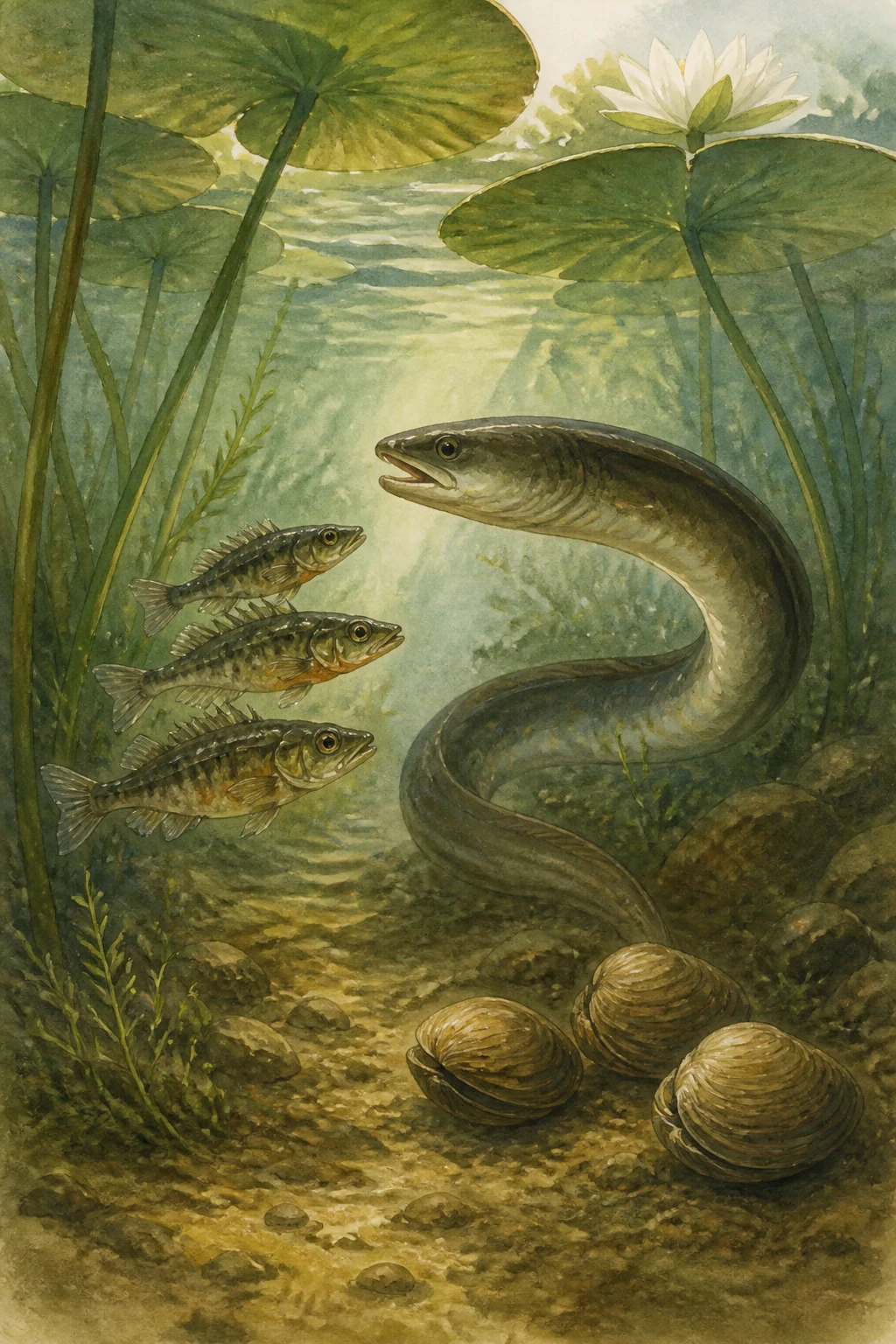
Jegulje in školjke so si bile tako različne, kot so si bitja sploh lahko. Ne le po videzu, temveč tudi po tem, kako so uživale življenje. Školjke so bile okroglolične, vsaka udobno nameščena v svoji lupini, ki jo je lahko po mili volji odpirala in zapirala. Nikoli si niso želele živeti kje drugje ali se podati čez rob svojih z biserovino obloženih lupin.
Jegulje pa so bile dolge, vitke in spolzke, na pogled še bolj podobne kačam kakor ribam. Vendar so novim znancem vselej skrbno pojasnile, da s kačami niso niti v sorodu. »Res je,« so govorile, »da plavuti ne nosimo tako kot večina rib, ampak navsezadnje je to le stvar okusa. Če bi jih nosile tako, bi nam bile strašansko napoti.« In prav takšne so bile jegulje — svojim prijateljem so bile vedno pripravljene vse pojasniti.
Bile so velike klepetulje. Govorile so o sebi in svojih prijateljih in prijateljih svojih prijateljev, pa o ribniku in vremenu in o tem, kakšno je blato, in kako je bilo vse skupaj včeraj in kako bo najbrž jutri, in ali res tako mislite in zakaj? Vodni gad je rad rekel, da je od vseh prebivalcev ribnika najlaže obiskovati prav njih, saj moraš le molčati in biti videti nadvse zavzet. Morda so bile tudi zato s školjkami tako dobre prijateljice.
Školjke so bile namreč tiha družina. Če školjka ni bila res prav zelo razburjena, ni nikoli rekla nič več kot »Da«, »Ne« ali »Res?« Bile so odlične poslušalke in med najbolj priljubljenimi prebivalci ribnika. Kdor je bil v stiski, se je zaupal školjkam, one pa so tako prijazno rekle »Res?« ali »Ah«, da je obiskovalec zagotovo odšel potolažen. Drugi, ki so potrebovali nasvet, so prišli k njim, razgrinjali svoje načrte in pripovedovali, kaj bi radi storili, školjke pa so rekle »Da«. Obiskovalci so nato odšli povsem odločeni in govorili: »Res nismo vedeli, kaj naj storimo, dokler se nismo pogovorili s školjkami, ampak one se popolnoma strinjajo z nami.« Školjke so znale tudi odlično čuvati skrivnosti, in ker so jegulje kar naprej izdajale skrivnosti, je bilo to še kako dobrodošlo.
Mama jegulja je bila sitna. To je celo sama priznala. In kadar jo je kaj težilo, je govorila in govorila in govorila, dokler se je niso naveličali poslušati še njeni lastni otroci. Zdaj jo je skrbela voda v ribniku.
»Mislim, da še zdaleč ni več tako čista kot lani,« je rekla, »in blato postaja naravnost umazano. V naši družini smo glede tega zelo izbirčni in mislim, da se bomo morda morali preseliti. Ampak selitve me je pošteno groza. Pri tako veliki družini, kot je moja, je s tem toliko dela, gospod jegulja pa mi pri otrocih prav nič ne pomaga.«
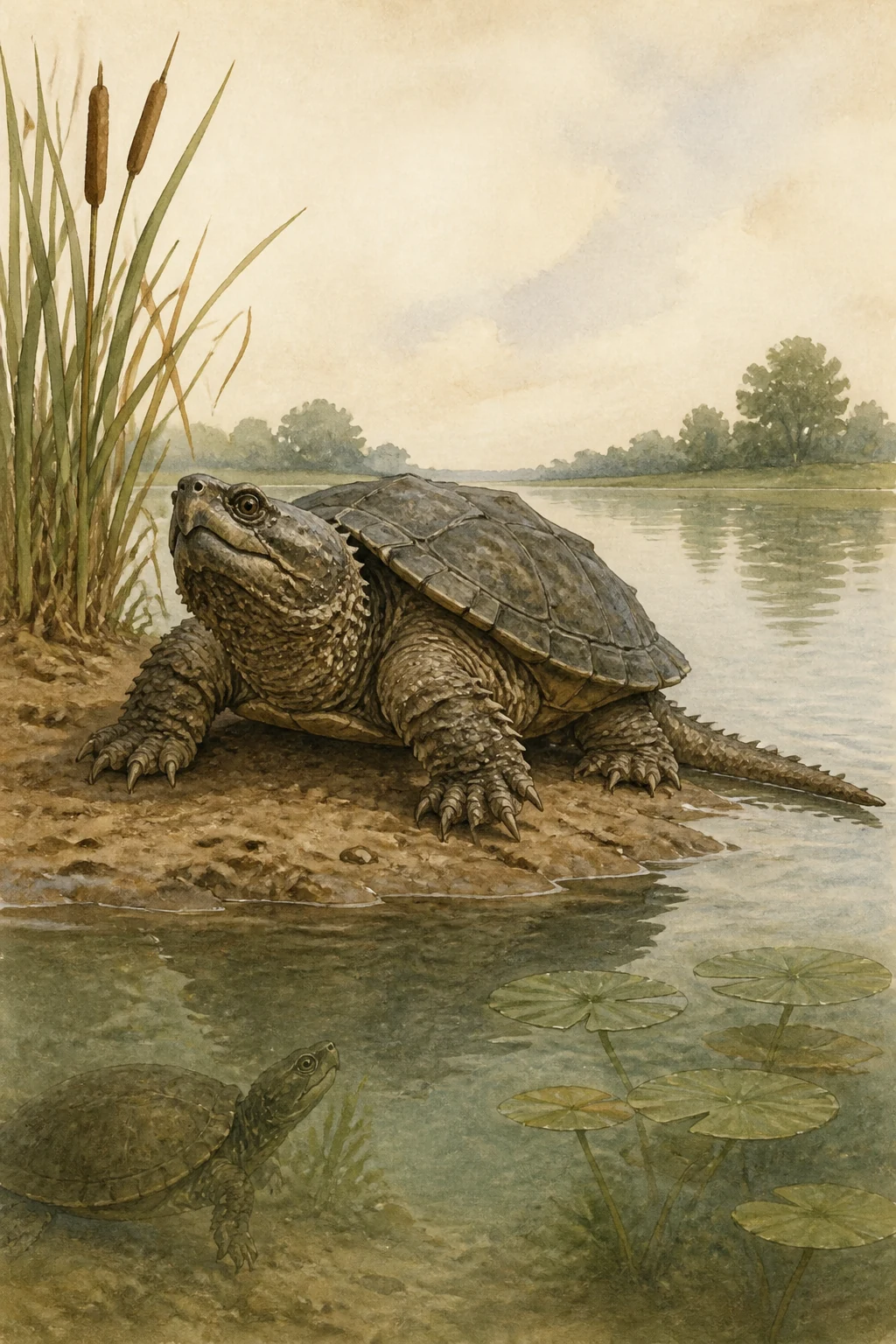
To je govorila mami blatni želvi, male jegulje pa so se medtem zvijale vse naokrog nje. Nato so jo začele nadlegovati, naj vendar že odrinejo, dokler jim ni ukazala, naj nemudoma odplavajo in se gredo igrat z mladimi pezdirki. »Bojim se, da bom morala oditi,« je rekla, »pa čeprav samo zaradi otrok. Rada bi, da vidijo kaj sveta. V tem ribniku je tako dolgočasno. Ste bili vi že kdaj zunaj njega?« je vprašala in se nenadoma obrnila h gospe blatni želvi.
»O, seveda,« je odgovorila ta. »Kar pogosto grem ven in eden mojih sinov je šel na zelo dolgo potovanje na travnik. Šel je z nekimi dečki. Bilo je nadvse razburljivo.«
»Je to tisti s tistim — nenavadnim hrbtnim oklepom?« je vprašala mama jegulja. »Da,« je prijazno odvrnila mama blatna želva. »Zelo skromen je in o tem ne govori rad, jaz pa sem pravzaprav kar zadovoljna. Nekateri potujejo, pa se jim potem prav nič ne pozna. Človek ne bi nikoli uganil, da so sploh odšli od doma (mama jegulja se je spraševala, ali misli njo), pri njem pa je drugače. Na njem se poznajo sledovi širnega sveta.«
Mama jegulja se je nekoliko nelagodno zvila. »Mislim, da vam bom vendarle morala povedati,« je rekla. »Za trdno sem se odločila, da odidemo. Gospodu jegulji se zdi to neumno in bi raje ostal tukaj, jaz pa sem prepričana, da lahko najdemo boljši kraj, in misliti moramo na otroke. Misli, da mu je zanje prav toliko mar kot meni, pa bi jih bil vseeno pripravljen za vedno pustiti tukaj. Tu se je izvalil in zdi se mu, da je ribnik popoln. Včasih se pogovarjava o tem in takrat mu rečem: ‘Gospod jegulja, kje bi bili zdaj ti otroci, če ne bi bilo mene?’«
»In kaj vam potem odgovori?« je vprašala mama blatna želva. »Nič,« je odvrnila mama jegulja in se odločno zvila. »Saj nima kaj reči. Da, zagotovo se bomo preselili. Čakam samo še na primerno noč. Ne sme biti presvetla, sicer bi nas videli kopenski prebivalci; pa tudi pretemna ne, sicer mi ne bi videli njih. In trava mora biti rosna. Nikakor se ne smemo posušiti, veste, sicer bi vsi zboleli. Ampak prosim, draga gospa želva, nikomur ne govorite o tem. Ko pride čas, bi raje odšla potiho.«
Mama blatna želva si je torej zapomnila, da je to skrivnost, in ni povedala nikomur razen očetu blatni želvi, ta pa o tem ni govoril z nikomer razen z želvo grizavko.
»Ste rekli, da je to skrivnost?« je vprašala želva grizavka. »Da,« je rekel oče blatna želva. »Velika skrivnost je.« »Hm!« je rekla želva grizavka. »Zakaj pa ste potem povedali meni?«
Še istega dne, ko je oče zet prišel iskat devetnajst ali dvajset svojih pogrešanih otrok, mu je mama jegulja povedala za svoje načrte. »Mislila sem, da vas bo to zanimalo,« je rekla, »ampak nikomur drugemu ne bom omenila.«
»Lahko ste prepričani, da o tem ne bom govoril,« je rekel. In najbrž res ne bi povedal nikomur, če ne bi pozabil na obljubo in se o tem pogovarjal s polži. Pozabil je tudi povedati, da je to skrivnost, zato so polži brez zadržkov govorili o tem z raki in ličinkami mladoletnic.
Ličinke mladoletnic so se kmalu zatem igrale s paglavci in ena je nekaj zašepetala paglavcu naravnost pred vsemi drugimi, čeprav je prav dobro vedela, da je to nevljudno. »Glej, da nikoli ne poveš naprej,« je rekla na glas.
»M-m!« je odgovoril paglavec in vsi so vedeli, da to pomeni »Ne«, tudi če ne bi videli, kako je z zadnjimi nožicami zamahnil vstran. Seveda ni mogel odkimati, saj za kaj takega ni imel pravega vratu.
Potem so si hoteli skrivnosti pripovedovati še drugi paglavci in ličinke mladoletnic, zato so si kar naprej šepetali in glasno govorili: »Glej, da nikoli ne poveš naprej.« Kadar je ličinka mladoletnice kaj povedala paglavcu, je rekla: »Jegulje se bodo odselile.« Kadar pa je paglavec zaupal skrivnost ličinki mladoletnice, je samo premikal ustnice in govoril: »Ši-ši, ši-ši, ši-ši-ši. Samo pretvarjam se, veš.« Vendar je vedno na glas dodal: »Glej, da ne poveš naprej.« In ličinka mladoletnice je odgovorila: »M-m!«
Mama jegulja je spregovorila tudi z največjim žabcem in ga prosila, naj zanjo opazuje travo ter ji pove, kdaj bo dovolj rosna za selitev. Bal se je, da bi pozabil, zato je povedal svoji sestri in jo prosil, naj ga spomni. Njo pa je bilo strah, da bi pozabila, zato je o tem govorila s svojim prijateljem, zeleno-rjavim žabcem. Rumeno-rjavi žabec je pozneje rekel, da je izvedel od nje.
Neke noči ni bilo ne pretemno ne presvetlo, trava pa je bila vsa mokra od rose. Tedaj je mama jegulja rekla otrokom: »Zdaj se pa nehajte zvijati in me poslušajte, prav vsi! Preselili se bomo, ker je tukajšnje blato tako umazano. Odhajate v širni svet in hočem, da si zapomnite vse, kar boste občutili in videli. Morda nikoli več ne boste imeli take priložnosti.«
Male jegulje so bile tako vznemirjene, da niso mogle biti pri miru, zato je morala počakati, da so se nehale zvijati. Ko so se umirile, je nadaljevala. »Vse jegulje gremo — vaši strici in tete in bratranci in sestrične — vi otroci pa se morate držati starejših. Pazite, kam se zvijate, in ne lezite drugim na rep.«
Prva je zlezla iz vode in se elegantno zvila po bregu navzgor, čeprav je bil tam precej strm. »Po tej poti sem šla,« je rekla, »ker sem imela občutek, da moramo prav tod.« Ob teh besedah je čvrsto stisnila usta. Gospodu jegulji se je zdela druga pot boljša. Da so prišle do obale, so se morale prebiti skozi množice prebivalcev ribnika, saj so vsi ostali budni in jih opazovali. Starejši so klicali: »Zbogom, pogrešali vas bomo!« in mahali s plavutmi, nogami ali repi, s čimer je bilo pač najpriročneje. Mlajši so dražili male jegulje in jih skušali zadržati; govorili so jim, koliko zabave bodo zamudile in da si bodo gotovo še želele nazaj v ribnik. Ko so prilezle na breg, so jih tam čakale žabe in blatne želve, zato je minilo še precej časa, preden so se lahko odpravile na pot. Ena od malih jegulj je manjkala in mama se je morala vrniti ponjo. Ugotovila je, da jo neki navihani mladi zet drži za rep.
Ko so bile naposled vse skupaj na bregu, je oče jegulja vprašal ženo: »Si prepričana, da žerjavi in ribji orli ne vedo za našo selitev? Kajti če vedo —«
»Vem,« je rekla. »Grozno bi bilo, če bi izvedeli; pa še tako pozni smo z odhodom. Zdaj se bomo morali ustaviti pri prvi vodi, ki jo najdemo, naj nam bo všeč ali ne.« Mirno je obležala in razmišljala. »Občutek imam,« je rekla, »da bi morali v to smer.« In tako so se podale tja ter kar se da previdno vlekle svoje rumene trebuhe po tleh, medtem ko je bilo njihove temnozelene hrbte z dolgimi obrobami hrbtnih plavuti v travi komaj opaziti. Še dobro, da so imele tako mastno in debelo kožo, kajti včasih so morale čez hrapava mesta, ki so jih strašno odrgnila in celo privzdignila drobne luske v koži, dolge obrobe trebušnih plavuti pa so se jim obrabile in skoraj scefrale. »Če bi imele luske na zunanji strani,« je rekel njihov oče, »tako kot druge ribe, vam jih ne bi več veliko ostalo.«
Mama jegulja je bila zelo utrujena in ni dosti govorila. Njene prijateljice so se začele bati, da je zbolela. Naposled je spregovorila: »Ne razumem,« je rekla, »kako so vsi izvedeli, da se bomo preselili.«
»Saj nisi nikomur povedala?« je vprašal gospod jegulja. »Seveda ne!« je rekla; in v to je res verjela. Toliko je namreč govorila, da se ni mogla več spomniti, kaj vse je rekla. Pri tistih, ki preveč govorijo, je vedno tako.
Izvirnik
The Eels were as different from the Clams as people well could be. It was not alone that they looked unlike, but that they had such different ways of enjoying life. The Clams were chubby people, each comfortably settled in his own shell, which he could open or shut as he chose. They never wanted to live anywhere else, or to get beyond the edges of their own pearl-lined shells.
The Eels were long, slender, and slippery people, looking even more like snakes than they did like fishes. They were always careful to tell new acquaintances, though, that they were not even related to the snakes. "To be sure," they would say, "we do not wear our fins like most fishes, but that is only a matter of taste after all. We should find them dreadfully in the way if we did." And that was just like the Eels--they were always so ready to explain everything to their friends.
They were great talkers. They would talk about themselves, and their friends, and the friends of their friends, and the pond, and the weather, and the state of the mud, and what everything was like yesterday, and what it would be likely to be like to-morrow, and did you really think so, and why? The Water-Adder used to say that they were the easiest people in the pond to visit with, for all one had to do was to keep still and look very much interested. Perhaps that may have been why the Clams and they were such good friends.
The Clams, you know, were a quiet family. Unless a Clam was very, very much excited, he never said more than "Yes," "No," or "Indeed?" They were excellent listeners and some of the most popular people in the pond. Those who were in trouble told the Clams, and they would say, "Indeed," or "Ah," in such a nice way that their visitor was sure to leave feeling better. Others who wanted advice would go to them, and talk over their plans and tell them what they wanted to do, and the Clams would say, "Yes," and then the visitors would go away quite decided, and say, "We really didn't know what to do until we spoke to the Clams about it, but they agree with us perfectly." The Clams were also excellent people to keep secrets, and as the Eels were forever telling secrets, that was all very well.
Mother Eel was fussy. She even said so herself. And if a thing bothered her, she would talk and talk and talk until even her own children were tired of hearing about it. Now she was worrying over the pond water.
"I do not think it nearly so clean as it was last year," she said, "and the mud is getting positively dirty. Our family are very particular about that, and I think we may have to move. I do dread the moving, though. It is so much work with a family the size of mine, and Mr. Eel is no help at all with the children."
She was talking with Mother Mud Turtle when she said this, and the little Eels were wriggling all around her as she spoke. Then they began teasing her to go, until she told them to swim away at once and play with the young Minnows. "I'm afraid I shall have to go," said she, "if only on account of the children. I want them to see something of the world. It is so dull in this pond. Were you ever out of it?" she asked, turning suddenly to Mrs. Mud Turtle.
"Oh, yes," answered she. "I go quite often, and one of my sons took a very long trip to the meadow. He went with some boys. It was most exciting."
"Is that the one with the--peculiar back-shell?" asked Mother Eel.
"Yes," replied Mother Mud Turtle sweetly. "He is very modest and does not care to talk about it much, but I am really quite pleased. Some people travel and show no sign of it afterward. One would never know that they had left home (Mother Eel wondered if she meant her), but with him it is different. He shows marks of having been in the great world outside."
Mother Eel wriggled a little uneasily. "I think I must tell you after all," she said. "I have really made up my mind to go. Mr. Eel thinks it foolish, and would rather stay here, but I am positive that we can find a better place, and we must consider the children. He thinks he cares as much for them as I do, yet he would be willing to have them stay here forever. He was hatched here, and thinks the pond perfect. We get to talking about it sometimes, and I say to him, 'Mr. Eel, where would those children be now if it were not for me?'"
"And what does he say then?" asked the Mud Turtle Mother.
"Nothing," answered Mother Eel, with a smart little wriggle. "There is nothing for him to say. Yes, we shall certainly move. I am only waiting for the right kind of night. It must not be too light, or the land people would see us; not too dark, or we could not see them. And then the grass must be dewy. It would never do for us to get dry, you know, or we should all be sick. But please don't speak of this, dear Mrs. Turtle. I would rather leave quietly when the time comes."
So the Mud Turtle Mother remembered that it was a secret, and told nobody except the Mud Turtle Father, and he did not speak of it to anybody but the Snapping Turtle.
"Did you say that it was a secret?" asked the Snapping Turtle.
"Yes," said the Mud Turtle Father, "It is a great secret."
"Humph!" said the Snapping Turtle. "Then why did you tell me?"
That same day when the Stickleback Father came to look for nineteen or twenty of his children who were missing, Mother Eel told him about her plans. "I thought you would be interested in hearing of it," she said, "but I shall not mention it to anybody else."
"You may be sure I shall not speak of it," said he. And probably he would not have told a person, if it had not been that he forgot and talked of it with the Snails. He also forgot to say that it was a secret, and so they spoke freely of it to the Crayfishes and the Caddis Worms.
The Caddis Worms were playing with the Tadpoles soon after this, and one of them whispered to a Tadpole right before the others, although he knew perfectly well that it was rude for him to do so. "Now, don't you ever tell," said he aloud.
"Uh-uh!" answered the Tadpole, and everybody knew that he meant "No," even if they hadn't seen him wave his hindlegs sidewise. Of course, not having the right kind of neck for it, he couldn't shake his head.
Then the other Tadpoles and Caddis Worms wanted to tell secrets, and they kept whispering to each other and saying out loud, "Now don't you ever tell." When a Caddis Worm told a Tadpole anything, he said, "The Eels are going to move away." And when a Tadpole told a secret to a Caddis Worm, he just moved his lips and said, "Siss-el, siss-el, siss-el-siss. I'm only making believe, you know." But he was sure to add out loud, "Now don't you tell." And the Caddis Worm would answer, "Uh-uh!"
The Eel Mother also spoke to the Biggest Frog, asking him to watch the grass for her and tell her when it was dewy enough for moving. He was afraid he might forget it, and so told his sister and asked her to help him remember. And she was afraid that she might forget, so she spoke to her friend, the Green Brown Frog, about it. The Yellow Brown Frog afterward said that he heard it from her.
One night it was neither too dark nor too light, and the dew lay heavy on the grass. Then Mother Eel said to her children, "Now stop your wriggling and listen to me, every one of you! We shall move because the mud here is so dirty. You are going out into the great world, and I want you to remember everything you feel and see. You may never have another chance."
The little Eels were so excited that they couldn't keep still, and she had to wait for them to stop wriggling. When they were quiet, she went on. "All the Eels are going--your uncles and aunts and cousins--and you children must keep with the older ones. Be careful where you wriggle to, and don't get on anybody else's tail."
She led the way out of the water and wriggled gracefully up the bank, although it was quite steep at that place. "I came this way," she said, "because I felt more as though this was the way to come." She closed her mouth very firmly as she spoke. Mr. Eel had thought another way better. They had to pass through crowds of pond people to reach the shore, for everybody had kept awake and was watching. The older ones cried out, "Good-bye; we shall miss you," and waved their fins or their legs, or their tails, whichever seemed the handiest. The younger ones teased the little Eels and tried to hold them back, and told them they'd miss lots of fun, and that they guessed they'd wish themselves back in the pond again. When they got onto the shore, the Frogs and the Mud Turtles were there, and it was a long time before they could get started on their journey. One of the little Eels was missing, and his mother had to go back for him. She found that a mischievous young Stickleback had him by the tail.
When at last they were all together on the bank, the Eel Father said to his wife, "Are you sure that the Cranes and Fish Hawks don't know about our moving? Because if they did--"
"I know," she said. "It would be dreadful if they found out; and we have been so late in getting started. We shall have to stop at the very first water we find now, whether we like it or not." She lay still and thought. "I have a feeling," said she, "that we should go this way." So that way they went, dragging their yellow bellies over the ground as carefully as they could, their dark green backs with their long fringes of back fins hardly showing in the grass. It was a good thing that their skin was so fat and thick, for sometimes they had to cross rough places that scraped it dreadfully and even rumpled the tiny scales that were in it, while their long fringes of belly fins became worn and almost ragged. "If your scales were on the outside," said their father, "like those of other fishes, you wouldn't have many left."
Mother Eel was very tired and did not say much. Her friends began to fear that she was ill. At last she spoke, "I do not see," she said, "how people found out that we were to move."
"You didn't tell anybody?" said Mr. Eel.
"No indeed!" said she; and she really believed it. That was because she had talked so much that she couldn't remember what she did say. It is always so with those that talk too much.