Prevod
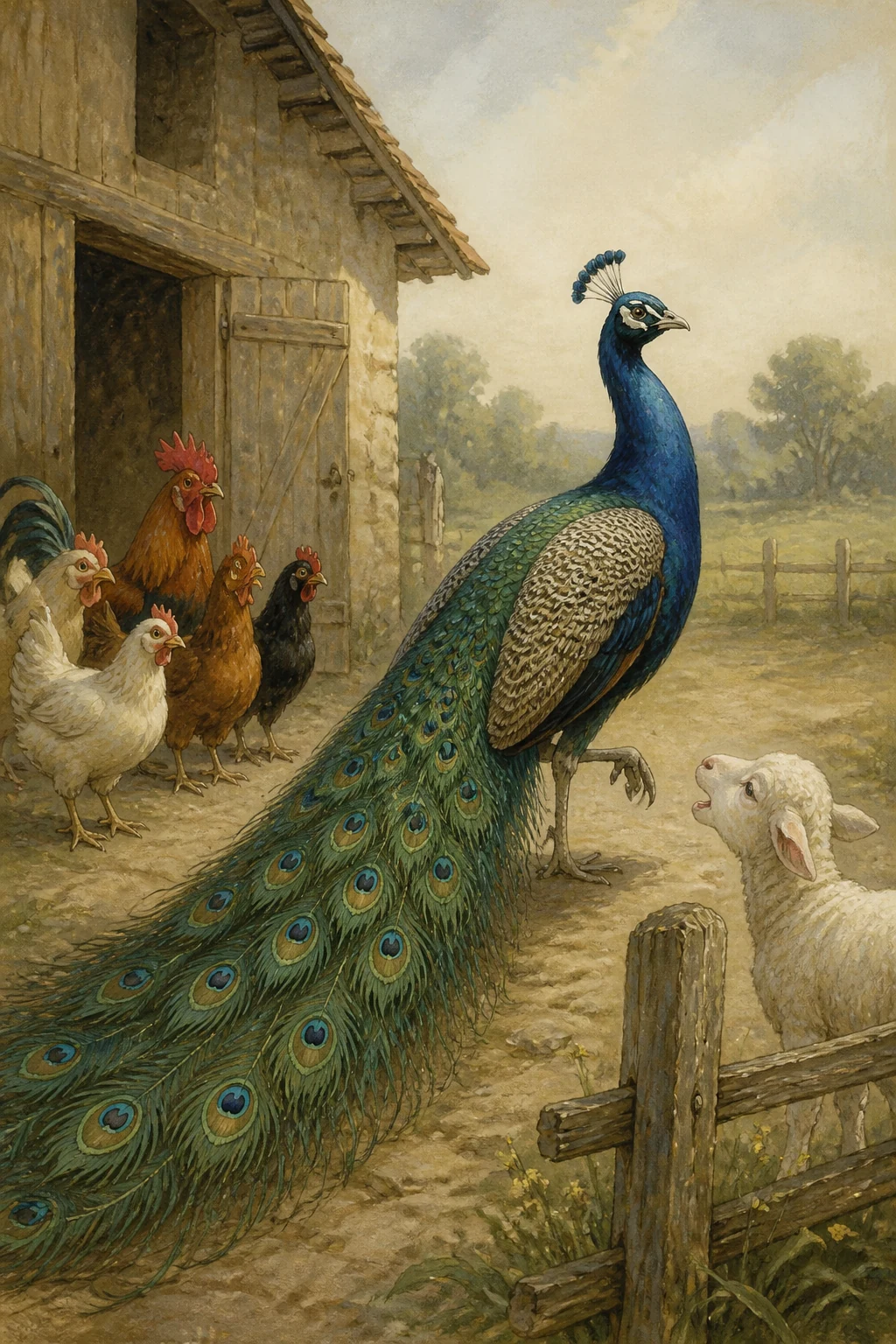
»No,« je rekel Puran, »prav rad bi vedel, kaj nas še čaka! Lansko pomlad je bila Bela pujsa, čeprav smo imeli dotlej na kmetiji samo črne in rjave prašiče. Potem so prišle Race, ker si jih je zaželel eden od kmetovih sinov. Nato še Pav, da bi ugodili kmetovi ženi. Zdaj pa so tu Pegatke za drugega kmetovega sina. Družba tukaj ni več takšna, kot je bila nekoč, in čeprav so nekateri prišleki morda prav prijetni, moram reči, da so mi bili ljubši dobri stari mirni časi.«
»Meni pa se zdi čudovito,« je zakokodakala vedra mala Pritlikava kokoš. »Toliko izveš o svetu zunaj, in za takšne, kot sem jaz, ki ostajamo doma, je to dobro. Belo pujso smo vsi vzljubili, še preden je bila tukaj dva dni, in moji otroci imajo Račke zelo radi. Tudi jaz rada vidim, da so skupaj, kajti ko sem jim odločno povedala, da moji Piščanci ne smejo plavati, so jih nehali dražiti in postali nadvse prijetni tovariši pri igri.«
»Kaj pa bi rekla o Pavu?« je vprašal Šanghajski petelin, ki z njim nikoli ni bil v prijateljskih odnosih, čeprav, po pravici povedano, Šanghajski petelin ni bil več tako godrnjav kot nekoč.
»Hm — hm — no,« je rekla Pritlikava kokoš, ki je skušala o drugih ne govoriti neprijetnih reči, razen kadar je bilo res nujno, »on — on je vsekakor lep, čeprav ne morem reči, da ga rada poslušam peti.«
Ob tem se je zasmejala vsa perutnina in celo Puranu se je okrog kljuna zarisal droben nasmeh na tisti strani, kjer mu viseči podbradek ni zakrival obraza. Ko so Pure na nasmejani strani videle, da je dobre volje, so se začele smehljati tudi same; potem pa so se nasmehnile še Pure na drugi strani, ki dotlej niso bile prepričane, ali si to smejo privoščiti. In vsem skupaj je to zelo dobro delo.
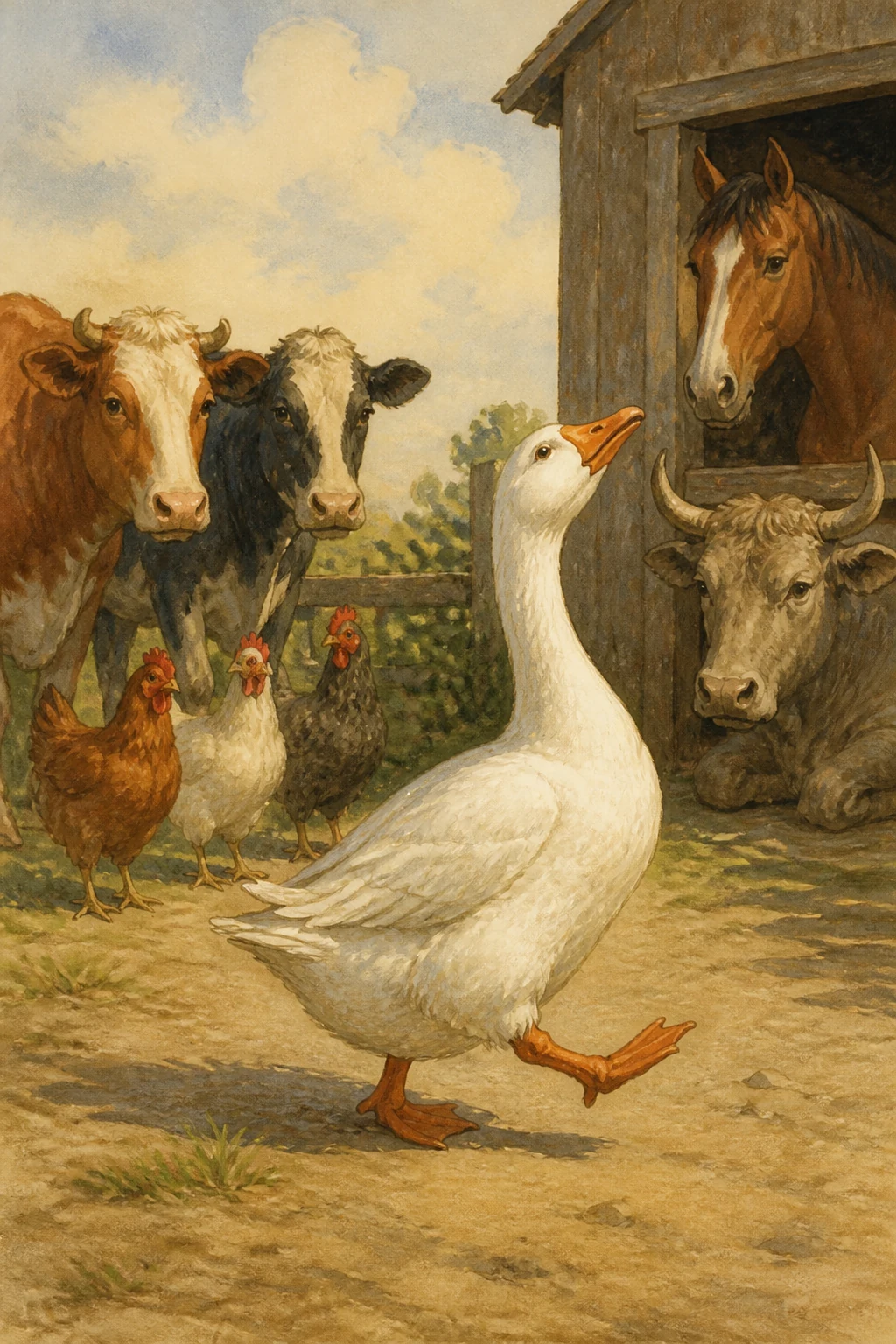
»Jaz Pegatk nisem videla,« je rekla ena od Gosi. »Ko so prišle, smo plavale. Kakšne so videti? So lepo oblečene? Ne bomo jih obiskale, če niso iz naše družbe.« Od zadnjega puljenja perja v tisti sezoni je minilo že nekaj časa in Gosi so bile zdaj iz dneva v dan bolj prevzetne.
»Res so prav posebne,« je rekla Črna španska kokoš, »in nikakor niso videti navadne. Rekla bi, da so izrazito imenitne.« Ob tem so se Gosi spogledale in prikimale. Vedno so govorile o imenitnosti, čeprav, če bi jih kdo vprašal, morda ne bi znale povedati, kaj s to besedo pravzaprav mislijo. »Po postavi so precej podobne majhnim Puram,« je dodala Črna španska kokoš, »perje pa imajo temno modrikasto sivo in vse posuto z okroglimi belimi pikami. Na vrhu glave ne nosijo nobenega perja. Ko sem zagledala prvo, sem pomislila, da ga je gotovo izgubila v kakšni nesreči, ko pa so prišle še druge, sem vedela, da mora biti to v njihovi družini navada.«
»In po postavi so nam podobne?« so v en glas vprašale Pure. Upale so, da bo Črna španska kokoš morda tudi zanje rekla, da so videti imenitne, vendar ni.
»Zelo so vam podobne,« je odvrnila. »Pravzaprav se mi zdi, da so omenile nekaj o sorodstvu z vašo družino, čeprav nisem prepričana. Se spomniš, dragi?« je rekla in se obrnila k Črnemu španskemu petelinu.
»Seveda,« je odgovoril. »Pegatka z oranžnimi nogami je rekla, da je njihova družina v sorodu tako s Purani kot s Pavi in da jih veseli, ker so tukaj našli člane obeh družin.«
»Gluglu-gluglu-gluglu,« je Puran zaklical Puram. »Naše sorodnike morate obiskati takoj, ko boste utegnile. Jaz bom šel pozneje. Preden obiščem tujce, vedno počakam, da o njih izvem kaj več. Takšen pač sem.« Ni pa pomislil, da bi bili tujci zelo osamljeni, če bi vsi čakali tako dolgo kot on.
Potem so se razkropili iskat hrano, Pure in njihovi otroci pa so se odpravili poiskat Pegatke. »Prisluhnimo,« je rekla ena, »pa jih bomo morda slišali, kako se pogovarjajo.« Obstali so z visoko dvignjenimi glavami, nagnjenimi malo vstran. Zaslišali so hripav glas, ki je govoril: »Ka-mak! Ka-mak!« Ker nobeden od njihovih starih prijateljev ni nikoli rekel »Ka-mak!«, so takoj vedeli, da je to eden od prišlekov. Šli so okrog vogala ovčjega hleva in jih tam našli: samca pegatke in dve samici. Ena od Pegatk je imela oranžne noge, druga dva pa temne, sivorjave.
»Dobro jutro,« so rekle Pure. »Ste vi Pegatke?« »Smo,« je rekla tista z živobarvnimi nogami, »vi pa ste Purani, kajne?«
»Me smo Pure,« so rekle, »in to so naši otroci. Puranu se ni zdelo, da bi danes zjutraj zmogel priti z nami, vendar bo prišel pozneje. V času Kobilic se je zelo utrudil in si še vedno ni povsem opomogel.«
»To je pa res škoda,« je vljudno rekel Samec pegatke. »Upamo, da bo kmalu bolje. To je naporen čas za vse Purane — toliko tekanja sem ter tja, pa še stegovanje vratu vsakokrat, ko se približa kakšna Kobilica.«
»Morda se je nekoliko prenajedel,« je rekla ena od Pur. »Nekaj časa nas je kar skrbelo zanj. Tako slabo je spal in sanjalo se mu je, da ga nekdo preganja. Vedno ima dober tek in saj veste, kako je, kadar je naokrog toliko hrane. Človek je kar ne more pustiti pri miru.«
Tako so kramljali o tem in onem in se med obiskom sprehajali. Pegatke so bile bolj nemirne in vihrave od Pur in so celo med govorjenjem stekle za kakšnim slastnim grižljajem, ki jim je pravkar padel v oči. Pure so seveda povedale, kako jih veseli, da so se Pegatke priselile k njim, in da upajo, da jim bo novi dom všeč. Vsi prebivalci kmečkega dvorišča so ga imeli za nadvse prijeten kraj.
»O, da,« je vzkliknila Pegatka z živobarvnimi nogami, »seveda je zelo prijetno, toda ko bi le lahko videli kmetijo, ki smo jo zapustili.« »Kako! Je bila boljša od te?« so vprašali Purančki in se zgrnili okrog nje. Tako so bili presenečeni, da so pozabili, kako so jim matere naročile, da morajo biti zelo tihi, če hočejo iti zraven, in jih pripravile do tega, da so vsi skupaj ponovili: »Male Purane naj se vidi, ne pa sliši.«
»Boljša? Dragi moji, še primerjati ju ni mogoče. Razumem, da se nekomu, ki je vedno živel tukaj, to lahko zdi prav lepo, toda če si poznal kaj boljšega, se je težko zadovoljiti s tem.«
»Vseeno sem prepričana, da bomo tukaj zelo srečni,« je rekla druga Pegatka, tista z rjavimi nogami. »Vsi so videti tako vedri in prijetni. Meni je tukaj zares zelo všeč.«
»To nas veseli,« so v en glas rekli Purani. »Zdaj pa res moramo iti. Bojimo se, da smo se že predolgo zadržali. Puran se bo spraševal, ali sploh še pridemo nazaj. Na svidenje.«
Ko so odhajali iskat Purana, je ena Pura rekla drugi: »Gotovo je težko priti sem, če si prej živel na tisti kmetiji.« »Da,« je odvrnila druga, »najbrž tukaj sploh ne vemo, kaj je pravo udobje.«
Ko jih je Puran vprašal o Pegatkah in o tem, kako jim je všeč novi dom, so Pure zavzdihnile in odgovorile: »Oh, najbrž toliko, kolikor je na tej kmetiji sploh mogoče uživati.« Purana je ta odgovor nekoliko presenetil, vendar ni rekel ničesar. Ko pa je kljuval koruzo, ki se je pravkar razsula s tovora, ki sta ga vlekla Vola, je pomislil: »Ko bi le imeli boljšo koruzo za pod zob. Ta nima čisto pravega okusa.«
Ko so Gosi srečale Pegatke, so začele govoriti o tem, kako prijetno je živeti na tako lepi kmetiji. »Ah,« je rekla Pegatka z živobarvnimi nogami, »ko bi le lahko videle tisto, ki smo jo zapustili, ko smo prišli sem. Bila je tako drugačna.«
Drugima dvema Pegatkama je bilo ob takšnem govorjenju neprijetno in sta prestopali z ene noge na drugo. Potem je Samec rekel nekaj o sončnem jesenskem vremenu in o dobrih sosedih in — in — Gosan pa je spet spregovoril o kmetiji. »Ni vse tako, kot bi si želeli,« je rekel, »vseeno pa ima nekaj dobrih strani. Tu je več kopališč, ki so pozimi prijetno hladna.«
»Ko bi le zanjo bolje skrbeli,« je rekla Siva gos. »Pred časom sem se prav grozno namučila, ko sem se skušala prebiti skozi luknjo v ograji. Ne spomnim se več, kaj je bilo narobe z luknjo, in morda tega nikoli nisem vedela, ampak kmet bi moral takšne reči popraviti. Še več dni me je bolel vrat in za vse je bil kriv on.«
Od takrat so Gosi našle napako skoraj v vsem, kadar pa niso imele ničesar določenega, nad čimer bi godrnjale, so vzdihovale, ker je bilo »vse tako drugačno, kot bi lahko bilo«. Kmalu so celo spomladanski Piščanci, Goske in Račke govorili enako in perutninsko dvorišče je postalo nadvse turoben kraj. Pritlikava kokoš je bila tam edina zares vedra ptica in tako se je naveličala poslušati vzdihovanje in godrnjanje drugih, da je pogosto smuknila med letvami ograje in šla k Voloma na prijeten klepet.
Nekega dne je vsa razburjena prifrfotala k njima. »Ali sem videti že skoraj nora?« je vprašala. »Tako se namreč počutim. Od zadnje nevihte so Pegatke zaprte z nami in dala bi polovico svojih repnih peres, ko bi le nikoli ne prišle sem. Tista z oranžnimi nogami v ničemer ne vidi nič dobrega, in vse naše mirne, razumne ptice to že tako dolgo poslušajo, da začenjajo verjeti, da je ta kmetija prav beden kraj.«
»Kaj pa počnejo?« je vprašal Levi vol, ki je Pritlikavo kokoš vedno rad poslušal. »Počnejo?« je rekla in stresla svojo drobno, ljubko glavico. »Skoraj ničesar ne počnejo. Prav v tem je težava, najhujše pa so mlade ptice. Saj veste, kako je bilo nekoč ob hranjenju? Vsi smo prhutali in se prerivali, da bi prvi prišli do hrane. Kakšna Kokoš je pograbila največji kos, druge pa so jo potem podile iz enega kota v drugega in ji niso pustile, da bi odščipnila in pogoltnila en sam grižljaj, dokler ga ni delila z njimi. Prav zabavno je bilo in nikoli nismo pustili niti drobtinice. Kaj pa mislite, da je zdaj?«
»Niti predstavljati si ne moreva,« sta v en glas vzkliknila Vola. »No, vsi nekaj časa postavajo na eni nogi in samo jaz jem. Potem nekdo reče: ‘Le kakšna je ta hrana? Je kaj boljša od prejšnje?’ Drugi zastoka: ‘Oh, ali je že spet čas za jed?’ ali pa: ‘Najbrž moram nekaj pojesti, da ohranim moč.’ Nato zaslišim Pegatko z živobarvnimi nogami: ‘Ka-mak! Ka-mak! Vse to je tako drugačno, tako zelo drugačno od tistega, česar sem bila vajena.’ Samec in druga samica iz njene družine sta čisto prijetna, če ju le dobiš proč od nje.«
»Kakšna neumnost!« sta skupaj vzkliknila Vola, in to zanju precej ostro. »Želim si,« je zelo počasi rekla Pritlikava kokoš, kot bi resno mislila vsako besedo, »želim si, da bi se tista z živobarvnimi nogami vrnila tja, kjer je bilo ‘tako drugače’. Morda bi se potem moji prijatelji spet začeli vesti po starem.«
»Od kod pa je prišla?« je vprašal Desni vol. »Zdi se mi, da sem nedavno nekje videl Pegatko z živobarvnimi nogami.« Močno je premišljeval, tako močno, da je pogoltnil prežvek, ne da bi se tega sploh zavedel.
»Ali ni bilo tam, kamor sva zadnjič peljala tisti tovor kamenja?« je vprašal Levi vol in skušal pomagati bratu. Vedel je, kako neprijetno je, če se človek česa takega ne more spomniti.
»Res je bilo tam!« je vzkliknil Desni vol. »In zelo revna kmetija je to. Tudi Pegatka je bila ista. Pa toliko govori o tem, kako drugače je bilo! Seveda je bilo drugače kot tukaj, ampak drugačno je lahko marsikaj in na marsikateri način. Hm-hm! Mislim, da bom prav kmalu spregovoril z nezadovoljno Pegatko, ti pa poskrbi, da bodo takrat poslušale tudi druge ptice.«
Čeprav ni hotel povedati ničesar več, je Pritlikava kokoš po njegovem pogledu videla, da namerava Pegatkinemu pritoževanju narediti konec, in je zato odšla boljše volje. Desni vol je nato vrnil prežvek v usta in ga začel žvečiti, kot da se ni nič zgodilo. Brat ga je slišal, kako se tu in tam pridušeno zasmeje in zamrmra: »Drugače!«
Kadar se je Desni vol tisto noč prebudil in slišal Pegatki, ki sta se pogovarjali v temi, se je spet tiho zasmejal sam pri sebi. Samec pegatke je trdno spal, samici pa sta med sončnim zahodom in vzhodom vedno veliko govorili, še posebno, če se je pripravljalo k dežju. Drugi so menili, da bi lahko več govorili podnevi, potem pa bili tiho, ko bi njihovi sosedje radi spali. Onidve sta trdili, da se vselej spomnita toliko reči, ki jih morata povedati, takoj ko se odpravita na prenočišče, in da bi jih, če bi čakali do jutra, morda več kot polovico pozabili.
Že naslednji dan se je Desnemu volu ponudila priložnost, ki jo je čakal. Z bratom sta bila vprežena v sani za prevoz kamenja in so ju pustili stati ob perutninskem dvorišču. »Dober dan,« je rekel. »Je Pegatka z živobarvnimi nogami tukaj?«
»Sem,« je odgovorila in prišla k letvam ograje. »Pravkar greva proti tvojemu nekdanjemu domu,« je rekel, »s tem tovorom kamenja. Bi rada poslala kakšno sporočilo svojim prijateljem?«
Pegatki je postalo precej neprijetno in prestopala je z ene noge na drugo. »Povej jim, da sem dobro,« je rekla. »Bom,« je po svoji prisrčni navadi odvrnil Desni vol. »Potrudil se bom povedati vsem. Mislim, da mi bo tudi uspelo, saj na tistem dvorišču ni bilo videti veliko prebivalcev. Rac ali Gosi sploh nisem videl. Ali tam živi kakšna?«
»Ne,« je rekla Pegatka. Kazalo je, da se ne more domisliti ničesar več, čeprav dolgo ni nihče spregovoril. »Seveda ne!« je vzkliknil Desni vol. »Kako neumno od mene, da sploh sprašujem. Na tisti kmetiji ni ne potoka ne reke.«
Pegatka še vedno ni rekla ničesar. »Kamenje voziva za njihov novi hlev,« je rekel Desni vol. »Ali pa bi moral morda reči kar za njihov hlev. Težko bi namreč rekli, da ga že imajo, čeprav najbrž tiste slabo zbite lope uporabljajo za hleve. Čudim se, da lahko kdo preživi zimo na takšnem prepihu; pa vendar je dom vedno dom in zato ga imajo vsi radi. Veseli smo, da je tvoja družina pri nas, ne le zato, da odganjate Vrane — to je bilo namreč eno od opravil Pegatk —, ampak tudi zato, ker vam bo tu udobneje. Na vseh svojih poteh še nikoli nisem videl tako dobre kmetije, kot je ta, tista, ki ste jo zapustili, pa je bila res tako drugačna! Na svidenje.«
Preostanek popoldneva na perutninskem dvorišču ni bilo veliko pogovora, čeprav je bila večina ptic videti srečnejša kot že mnogo dni. Ko je prišel čas za večerjo, je Dorkinška kokoš pograbila največje kose hrane, druge pa so jo podile iz kota v kot prav kakor v starih časih. Pojedle so prav vsak drobec in nihče se ni zasmejal, ko je Šanghajski petelin rekel, da mu je lepo vreme zbudilo večji tek. Dan je bil v resnici mračen in hladen, vendar so nehali razmišljati, koliko bolje bi jim bilo, ko bi le živeli kje drugje. Takoj ko so nehali misliti na to, so lahko opazili, kako lepo zanje skrbijo doma. In čeprav v resnici nihče ni pogledal v nebo ali pomislil na vreme, so imeli vsi občutek, da je gotovo sijalo sonce.
Morda sta bila Samec pegatke in druga Pegatka najsrečnejša od vseh, saj dotlej nista vedela, kaj naj storita ali rečeta, kadar je tista z živobarvnimi nogami govorila o svojem nekdanjem domu. Zdaj se je vse skupaj zdelo kot šala, vendar Pegatka od tistega dne Desnega vola ni nikoli marala. Druge ptice so bile do nje enako prijazne kot prej, saj so vedele, da je žalostno biti tako nezadovoljen, vedele pa so tudi, da jih nikoli ne bi mogla onesrečiti, če same ne bi bile tako nespametne, da so ji to dopustile.
Izvirnik
"Well," said the Gobbler, "I should like to know what next! Last spring it was the White Pig, when we had never had any but black and brown ones on the place. Next it was Ducks, because one of the farmer's boys wanted them. Then it was the Peacock, to please the farmer's wife. Now it is Guinea Fowls for the farmer's other son. Society isn't what it used to be here, and while some of the new people may be very pleasant, I must say that I preferred the good old quiet days."
"I think it is lovely," cackled the cheerful little Bantam Hen. "One hears so much of the world outside, and for people like myself, who stay at home, that is a good thing. Everybody loved the White Pig before she had been here two days, and my children are very fond of the Ducklings. I like to have them together, too, for after I had told them positively that my Chickens could not go in swimming, they stopped teasing and became most delightful playmates."
"What would you say about the Peacock?" asked the Shanghai Cock, who had never been friendly with him, although, to tell the truth, the Shanghai Cock was not so grumpy as he used to be.
"Er--er--well," said the Bantam Hen, who tried not to say unpleasant things about people unless she really had to, "he--he is certainly beautiful, although I can't say that I am fond of hearing him sing."
This made all the fowls laugh, even the Gobbler looking a little smiling around the beak on the side where his hanging wattle did not hide his face. When the Hen Turkeys on the smiling side saw that he was pleased, they began to smile too; and then the Hen Turkeys on the other side, who hadn't been sure that it was safe for them to do so, smiled also. And it did them all a great deal of good.
"I didn't see the Guinea Fowls," said one of the Geese. "We were swimming when they came. How do they look? Are they handsomely dressed? We shall not call upon them unless they are our kind of people." It was some time since their last plucking for the season, and the Geese were growing more airy every day now.
"They are really very peculiar," said the Black Spanish Hen, "and not at all common-looking. I should call them decidedly genteel." Here the Geese looked at each other and nodded. They were always talking about being genteel, although if you had asked them, they might not have been able to tell what they meant by the word. "They are shaped quite like small Hen Turkeys," added the Black Spanish Hen "and their feathers are a dark bluish-gray with round white spots all over them. They do not wear any feathers on top of their heads. When I saw the first one, I thought she must have lost hers in an accident, but after the others came up, I knew it must be the custom in their family."
"And they are shaped like us?" asked the Hen Turkeys all together. They were thinking that perhaps the Black Spanish Hen would call them genteel-looking also, but she didn't.
"Very much like you," she replied. "In fact, I think they said something about being related to your family, although I am not sure. Do you remember, dear?" she said, turning to the Black Spanish Cock.
"Certainly," he answered. "The Guinea Hen with the orange-colored legs said that their family was related to both the Turkeys and the Peacocks, and that they were pleased to see members of those families here."
"Gobble-gobble-gobble," called the Gobbler to the Hen Turkeys. "You must call upon our relatives as soon as you can. I will go later. I always wait to find out more about strangers before calling. It is my way." He didn't stop to think that if everybody waited as long as he did, the strangers would be very lonely.
After this, they scattered to feed, and the Hen Turkeys and their children looked for the Guinea Fowls. "Listen," said one, "and we may hear them talking to each other." They stood still, with their heads well up and turned a little to one side. They heard a harsh voice saying, "Ca-mac! Ca-mac!" and as none of their old friends ever said "Ca-mac!" they knew at once that it was one of the newcomers. They walked around the corner of the Sheep-shed, and there found them, a Guinea Cock and two Guinea Hens. One of the Guinea Hens had orange-colored legs, while the others had dark grayish-brown ones.
"Good-morning," said the Hen Turkeys. "Are you the Guinea Fowls?"
"We are," said the one with the bright-colored legs, "and you are the Turkeys, are you not?"
"We are the Hen Turkeys," said they, "and these are our children. The Gobbler didn't feel that he could come with us this morning, but he will come later. He got very tired in Grasshopper season and is hardly over it yet."
"That is too bad," said the Guinea Cock politely. "We hope he will soon be better. It is a hard time for all Turkeys--so much running to and fro, besides the stretching of the neck whenever a Grasshopper comes near."
"Perhaps he overate somewhat," said one of the Hen Turkeys. "We were quite worried about him for a time. He slept so poorly and dreamed that he was being chased. He always has a good appetite, and you know how it is when there is so much food around. One cannot let it alone."
So they chatted on about one thing and another, and walked as they visited. The Guinea Fowls were more fussy and restless than the Turkeys, and even when they were speaking would run after some dainty bit of food that had just caught their eyes. Of course the Hen Turkeys said how glad they were to have the Guinea Fowls come there to live, and hoped that they would enjoy their new home. All of the farmyard people thought it a most delightful place.
"Oh, yes," cried the Guinea Hen with the bright-colored legs, "it is very pleasant, of course, but I wish you could see the farm we left."
"Why! Was it better than this?" asked the Turkey Chicks, crowding around her. They were so surprised that they forgot their mothers' telling them that if they came they must be very quiet, and making them all repeat together, "Little Turkeys should be seen and not heard."
"Better? My dears, it was not to be spoken of in the same breath. I understand that when one has always lived here, this may seem very nice, but when one has known better things, it is hard to be contented."
"Still, we shall be very happy here, I am sure," said the other Guinea Hen, the one with the brown legs. "People all seem so bright and pleasant. I like it very much indeed."
"We are glad of that," said the Turkeys all together. "We really must be going. We fear we have stayed too long already. The Gobbler will wonder if we are never coming back. Good-morning."
As they walked off to look for him, one Hen Turkey said to another, "It must be hard to come here after living on that farm."
"Yes," was the answer, "I suppose that we don't really know what comfort is here."
When the Gobbler asked them about the Guinea Fowls, and how they were enjoying their new home, the Hen Turkeys sighed and answered, "Oh, as well as they can enjoy this farm, we suppose." The Gobbler was a little surprised by this reply, but he said nothing, and as he pecked at the corn which had just been spilled from the load the Oxen were drawing, he thought, "I wish we could have better corn to eat. This does not taste quite as it should."
When the Geese met the Guinea Fowls, they began to speak of the pleasure of living on such a fine farm. "Ah," said the Guinea Hen with the bright-colored legs, "how I wish you might see the one we left when we came here. It was so different."
The other Guinea Fowls looked uncomfortable when she spoke in this way, and stood first on one foot and then on the other. Then the Cock said something about the sunshiny fall weather, and the good neighbors, and--and----
The Gander spoke again of the farm. "It is not all that we could wish," said he; "still there are some good things about it. There are several swimming places which are fine and cold in winter."
"If it were only better cared for," said the Gray Goose. "I had a dreadful time a while ago, when I tried to get through a hole in the fence. I don't remember what was the matter with the hole, and perhaps I never knew, but the farmer should have such things fixed. My neck was lame for days afterward, and he was wholly to blame."
After this, the Geese found fault with almost everything, and when there was no one thing to grumble about, they sighed because, "It was so different from what it might be." It was not long before even the spring Chickens, the Goslings, and the Ducklings were speaking in the same way, and the poultry-yard was a most doleful place. The Bantam Hen was the only really cheerful fowl there, and she got so tired of hearing the rest sigh and grumble, that she often slipped between the pickets of the fence and went to have a comfortable chat with the Oxen.
One day she fluttered toward them in a most excited manner. "Do I look nearly crazy?" said she. "I feel so. Ever since our last storm, the Guinea Fowls have been shut in with us, and I would give half of my tail-feathers if they had never come here. That one with the orange-colored legs can't see good in anything, and all of our steady, sensible fowls have heard it until they begin to believe that this farm is a wretched place."
"What do they do?" asked the Nigh Ox, who always enjoyed hearing the Bantam Hen talk.
"Do?" said she, shaking her dainty little head. "They don't do much of anything. That is what is the matter, and the young fowls are the worst of all. You know how it used to be at feeding time? We all fluttered and squabbled for the first chance at the food. Some Hen got the biggest piece, and then the rest would chase her from one corner to another, and not give her a chance to break and swallow any of it until she would share with them. It was great fun, and we never left a scrap uneaten. Now, what do you think?"
"Can't imagine," exclaimed the Oxen in one breath.
"Well, they all stand around on one foot for a while, and I am the only one eating. Then somebody says, 'I wonder if this is any better than the last we had.' Another will groan, 'Oh, is it time to eat again?' or, 'Suppose I must eat something to keep up my strength.' Then I hear the bright-legged Guinea Hen say, 'Ca-mac! Ca-mac! This is all so different, so very different from what I have been used to.' The Cock and the other Hen of that family are nice enough if you only get them away from her."
"What nonsense!" exclaimed the Oxen together, and they spoke quite sharply for them.
"I wish," said the Bantam Hen very slowly, and as though she meant every word--"I wish the bright-legged one were back where it was 'so different.' Perhaps then my friends would begin to act like themselves."
"Where did she come from?" asked the Off Ox. "It seems to me that I saw a bright-legged Guinea Hen somewhere not long ago." He thought very hard, so hard that he swallowed his cud without knowing he did so.
"Wasn't it at the place where we took that load of stone the other day?" asked the Nigh Ox, trying to help his brother. He knew how disagreeable it is not to be able to recall anything of that sort.
"It was," cried the Off Ox; "and a very poor farm it is. It was the same Hen too. Talk about its being different! I should say it was different from this place, but there are a good many ways of being different. Um-hum! I think I will talk with the discontented Guinea Hen before long, and I want you to see that the other fowls are listening when I do."
Although he would say nothing more, the Bantam Hen saw from the look in his eyes that he meant to stop the Guinea Hen's complaining, so she went away feeling happier. Then the Off Ox unswallowed his cud and began to chew it as though nothing had happened. His brother heard him chuckle once in a while, and say, "Different!" under his breath.
When the Off Ox awakened from time to time during that night and heard the Guinea Hens talking in the dark, he chuckled again to himself. The Guinea Cock was a sound sleeper, but the Hens always talked a great deal between sunset and sunrise, and especially if it were about to rain. Other people thought that they might talk more in the daytime and then keep quiet when their neighbors wanted to sleep. They declared that they always remembered so many things to say as soon as they went to roost, and that if they waited until morning they might forget more than half.
The very next day, the Off Ox had the chance he wanted. He and his brother were yoked to the stone-boat and left standing by the poultry-yard. "Good-afternoon," said he. "Is the bright-legged Guinea Hen here?"
"I am," she answered, coming close to the pickets.
"We are just going over to your old home," said he, "with this load of stone. Have you any messages to send to your friends?"
The Guinea Hen looked rather uncomfortable, and stood first on one foot and then the other. "Tell them I am well," said she.
"I will," said the Off Ox, in his hearty way. "I will try to tell them all. I think I can, too, for there did not seem to be many people in that farmyard. I didn't see Ducks or Geese at all. Are there any living there?"
"No," said the Guinea Hen. She did not seem to think of anything else to say, although nobody spoke for a long time.
"Of course not!" exclaimed the Off Ox. "How stupid of me to ask. There is no brook or river on that farm."
Still the Guinea Hen said nothing.
"We are dragging stone for their new barn," said the Off Ox. "Or perhaps I should say for their barn. One could hardly say that they have any yet, although I suppose they use those loosely built sheds for barns. I wonder people can spend a winter where there are such drafts; still, home is always home, and people love it for that reason. We are glad to have your family with us, not only to keep away the Crows (which was part of the Guinea Fowls' work), but because you will be more comfortable. I've never yet in all my travels seen so good a farm as this, and the one you left was so different! Good-bye."
There was not much talking in the poultry-yard the rest of the afternoon, although most of the fowls looked happier than they had for many days. When supper-time came, the Dorking Hen snatched the biggest pieces of food, and the others chased her from corner to corner in quite the old way. Every scrap was eaten, and nobody laughed when the Shanghai Cock said that the fine weather had given him a better appetite. It was really a dark and chilly day, but they had stopped thinking how much better off they would be if they only lived somewhere else. As soon as they stopped thinking that, they could see how well they were cared for at home. And so, although nobody had really looked at the sky or thought about the weather, everybody had a feeling that the sun must have been shining.
Perhaps the Guinea Cock and the other Guinea Hen were the happiest of all, for they had not known what to do or say when the bright-legged one talked about her old home. It all seemed like a joke now, yet she never liked the Off Ox after that day. The other fowls were as nice to her as ever, for they knew it was a sad thing to be so discontented, and they knew, also, that if they had not been foolish enough to let her, she could never have made them unhappy.