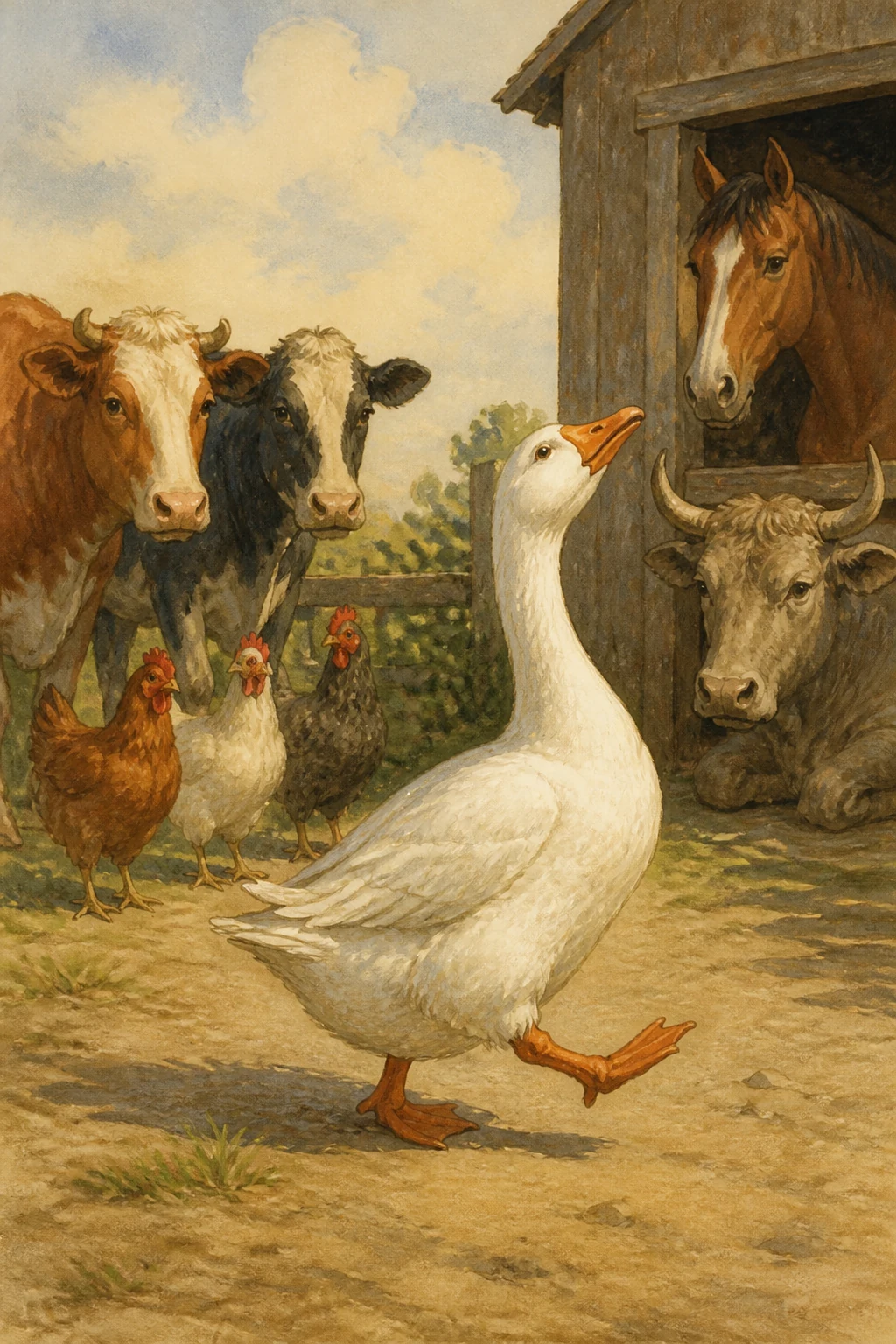
Waltey
Gos, ki je hotela vse po svoje
012 THE GOOSE WHO WANTED HER OWN WAY
Živalske zgodbe Clare Dillingham Pierson · Clara Dillingham PiersonO besedilu
Gos, ki je hotela vse po svoje
- Vir
- Živalske zgodbe Clare Dillingham Pierson
- Avtor
- Clara Dillingham Pierson
- Jezik branja
- Slovenščina
- Jezik izvirnika
- English
- Čas branja
- 8 min branja
- Obseg
- 7 strani
- Naslov izvirnika
- 012 THE GOOSE WHO WANTED HER OWN WAY
O izvirniku
Živalske zgodbe Clare Dillingham Pierson
Devetindevetdeset avtorskih zgodb o živalih na kmetiji, travniku, v gozdu, ob ribniku in ponoči. Bralni jezik je Slovenščina, izvirnik pa prihaja iz vira Živalske zgodbe Clare Dillingham Pierson v jeziku English.
Besedilo
Gos, ki je hotela vse po svoje
Težko bi bilo reči, katera družina je najpomembnejša med prebivalci kmečkega dvorišča. Nobena žival ni tako modra kakor Collie, gospodarjev pes, in vsi drugi ga imajo radi ter ga ubogajo, kadar ga pošljejo ponje na pašnik ali da jih odžene k vodi. Vendar svojih dni ne preživlja ne v hlevu ne na polju, temveč prihaja le z gospodarjem ali tu in tam na obisk.
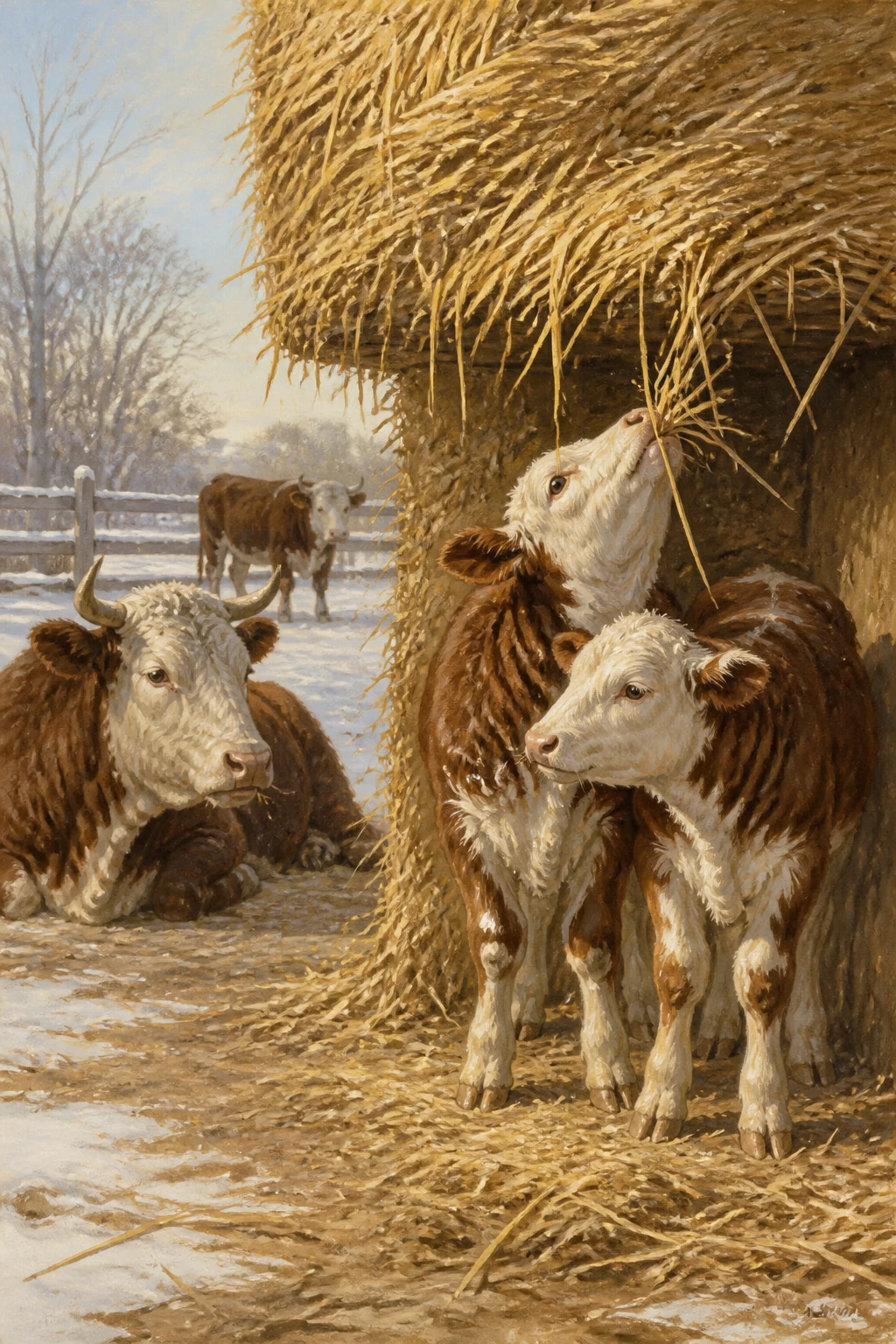
Morda se spominjate, kako sta bila Podvezna kača in stara Rega voditelja na travniku in kako so se v gozdu vsi ozirali po Svizcu. Bili so potrpežljivi in stari, in deloma prav zato, ker so bili stari in so imeli za premišljevanje o življenju na voljo toliko let, so bili tudi zelo modri. Na kmečkem dvorišču so bili najpotrpežljivejši in najstarejši Voli in k njim so se zatekale vse živali, kadar so bile v stiski.
Tu so bili tudi Konji, lepe, krepke živali, ki so vedno komu pomagale in večji del leta delale ves dan. Skozi visoko žito so vlekli žetveni stroj in tam, kjer je zjutraj valovela zlata pšenica, so ob sončnem zahodu ležali povezani snopi požetega žita, strnišče pa je bilo pripravljeno za perjad. Bili so marljivi prebivalci dvorišča in včasih so pozimi radi spomnili sosede, koliko dela so opravili.
Potem so bile tu še Krave, sestre Volov. Velike so in veliko jih je, vendar niso tako modre, kar je prav lahko razumeti. Na kmetiji jim ni treba početi drugega kakor dajati mleko za izdelovanje masla in sira ter za gospodarjeve otroke. Noben kmet ne bi mogel shajati brez svojih Krav, vendar te ne delajo tako kakor njihovi bratje. Tako lagodno živijo, da se ne naučijo prav veliko. Veste, kadar ljudje delajo, morajo misliti, in kadar premislijo dovolj koristnih misli, postanejo modri. To je eden izmed mnogih razlogov, zakaj je tako nespametno lenariti.
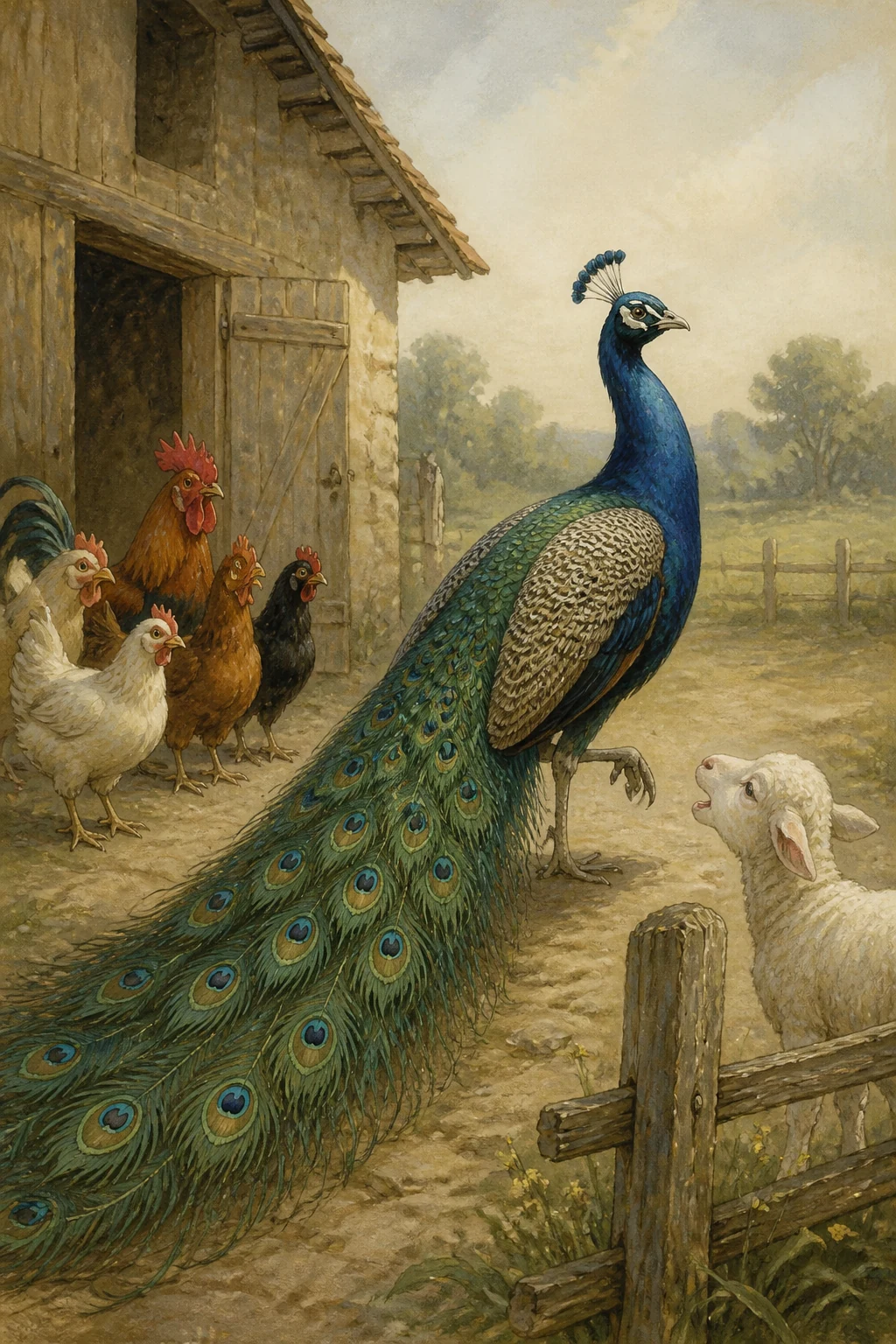
Res bi bilo težko reči, katera družina na kmečkem dvorišču je najpomembnejša, prav nič težko pa ni povedati, katera ima samo sebe za najpomembnejšo. Če vprašate katerokoli Gos, vam bo povedala, da je ena sama iz njihove jate vredna toliko kot pet Konj ali ducat Krav. Nihče drug vam ne bi rekel česa takega, in če bi to omenili paru Rjavcev, Sivcu ali celo najmlajšemu Žrebičku v hlevu, bi vam odgovorili le z glasnim konjskim krohotom. Krave bi se nasmehnile in odvrnile: »Kakšna gos pa je, da govori kaj takega!«
Na kmetiji je že od nekdaj živela jata Gosi in njihovi sosedje so se tako navadili njihovih čudaških navad, da se ob njihovem šopirjenju le nasmehnejo, in še to prav dobrodušno. Celo nekoliko se jim smilijo, kadar ostanejo brez perja, čeprav je Levi vol nekoč rekel, da bi bile Gosi, ko jih ne bi tu in tam oskubili, res preveč prevzetne, da bi se dalo živeti z njimi.
Morda je imel Levi vol prav, kajti potem ko so vso zimo nosile svoje perje, zares dvigajo glave više kot kdaj prej in razglašajo, kaj mislijo in kaj bi storile, zato je dobro, da jih kdo spomni, da si tudi one služijo kruh kakor vsi njihovi sosedje. Gospodinja Gosi nikoli ne oskubi, dokler ne pride toplo vreme. Tedaj jim pobere vse mehko, kratko perje, ki so ga nosile čez zimo, in potem so videti zares razcapane. Pred mnogimi leti so se morale Gosi odreči tudi dolgim repnim in perutnim peresom, ki so jih prirezali v pisalna peresa, toda te Gosi o tem niso vedele ničesar, na dvorišču pa tudi ni bilo nikogar, ki bi bil dovolj star, da bi se tega spominjal in jim povedal. Zato so menile, da se jim že s tem, ko morajo dati perje s prsi, godi huda krivica.
»Sssss!« je rad rekel Gosak. »Če gospodarjevi fantje že morajo imeti pernate blazine, da na njih polagajo glave, zakaj si pa ne vzgojijo svojega perja?«
»Hm!« je nekoč rekel Levi vol. »Če že moraš jesti oves, zakaj si ga pa ne pridelaš sam?« Toda Gosak se je že zibal proč in se pretvarjal, da ga ni slišal.
Pozimi se Gosi najbolj šopirijo. Takrat, ko Konjem natikajo vprežno opremo, govorijo druga drugi: »Ljubi bog! Ali ne bi bilo strašno, če bi si morale tako služiti kruh?« In včasih, ko je vprega privezana k stebru ob hiši, se v gosjem redu zazibljejo mimo, z Gosakom na čelu, in rečejo Konjem: »Slišale smo, da morate odpeljati voz drv v mesto. Kako neprijetno. Upamo, da se ne boste preveč utrudili. Me gremo pa k reki na prijetno mrzlo kopel. Na svidenje.« Potem odkorakajo z visoko dvignjenimi glavami, in brž ko jim obrnejo hrbet, se Konji spogledajo in tiho zasmejejo. Vedo namreč, da ni na svetu nič boljšega od dobrega, poštenega, trdega dela, pa naj bo kakršnokoli že.
Vsako zimo Gosi pozabijo, da jih bo treba oskubiti, in vsako pomlad so presenečene, ko izgubijo perje. Pred jesenjo jih oskubijo štirikrat in ti štirje dogodki si sledijo tako blizu skupaj, da se jih od enega do drugega spominjajo celo one. Človek bi mislil, da tedaj ne bodo več tako prevzetne, toda namesto da bi rekle: »Seveda si tudi me služimo kruh — zakaj si ga pa ne bi?« govorijo: »No, da, gospodinji res odstopimo nekaj svojega perja, kadar si ga zaželi. Najbrž bi temu, da ji vzgajamo perje, lahko rekli delo, vendar nam to ne vzame veliko časa in je nekaj povsem drugega kakor vleči tovore in se utrujati kakor Konji in Voli. Gojiti perje je gosposko.«
Ničesar si ne zapomnijo za dolgo, zato bodo napako, ki so jo že enkrat storile, najbrž ponavljale spet in spet. Poleg tega ne znajo ločevati pomembnih stvari od malenkosti in niso srečne, če ne more biti vedno vse po njihovem. In veste, da tega ne more nihče pričakovati. Vse to izvira iz tega, da se jim ne ljubi temeljito premišljevati, in včasih jim nakoplje obilo težav, kakor tistega dne, ko Siva gos ni hotela skozi dvoriščna vrata.
To je bilo kmalu po tistem, ko sta Gosak in njegova žena izvalila sedem Gosličev in sta jih takoj peljala k potoku. Za vso jato je bil to srečen dan. Gosak in mama Gos sta se veselila, ker so njuni otroci varno prišli iz lupin in ker jima ne bo več treba s skrčenimi nogami sedeti na gnezdu. Gosaki so dobri očetje, saj polovico časa pokrivajo jajca, medtem ko mama Gos počiva. Druge Gosi niso bile le ponosne na Gosliče, temveč so se veselile tudi tega, da bosta Gosak in mama Gos spet lahko hodila z njimi naokrog. Zelo so ju pogrešale.
Vrata, ki so vodila z dvorišča na travnik, so bila na stežaj odprta in vse Gosi razen Sive so skoznje sledile Gosaku. Siva gos je skušala zlesti skozi majhno luknjo v ograji čisto blizu vrat. Vanjo je stlačila glavo in iztegnila vrat na travniško stran ograje, dlje pa ni mogla, čeprav je rinila tako dolgo, da se ji je že vrtelo.
»Počakajte me,« je zavpila. »Počakajte me-e!« »Pohiti vendar,« je rekel Gosak. »Saj hitim,« je zavpila in se uprla z vso močjo, toda ker je bila luknja v ograji tako majhna, ni prišla nič dlje kot prej.
»Pojdi skozi vrata,« je rekel Levi vol, ki se je pasel v bližini. »Sssss!« je odrezavo rekla Siva gos. »Raje grem tukaj skozi. To pot sem si izbrala.«
»O!« je rekel Levi vol. »Oprosti! Potem pa le pojdi tam skozi!« »Mi gremo naprej,« je zaklical Gosak. »Bi že počakali, a Gosličem se mudi na prvo kopel. Pridi, kakor hitro moreš.«
Siva gos se je še bolj trudila, da bi šla po poti, ki si jo je izbrala, vendar se je pri tem le tako zasopla, da je morala leči in počiti. Nekoč se ji je zazdelo, da sliši smeh, a ko je pogledala Levega vola, ki je bil edini v bližini, je ta ležal z zaprtimi očmi in resnobno prežvekoval, zato je sklenila, da se je najbrž zmotila.
Spodaj pri potoku je preostala jata veselo gagala in videla je vseh sedem Gosličev, kako plavajo z Gosmi in Gosakom. »Oh,« je vzkliknila, »ko bi le bila z njimi! Ne razumem, kaj je narobe s to luknjo v ograji. Gospodar bi jo moral povečati.«
Rinila je, se hudovala in razburjala, dokler je ni bolel vrat in ni bila tako utrujena, da ne bi mogla plavati, tudi če bi imela priložnost, zato je sedla, da bi si odpočila. Spomnila se je sicer, kaj ji je rekel Levi vol, a če ni mogla iti tako, kakor si je zamislila, potem pač sploh ne bo šla. Odpravila se je v hlev, da bi si poiskala hladen, senčen kotiček, in sklonila glavo, ko je prestopila prag visokih vhodnih vrat.
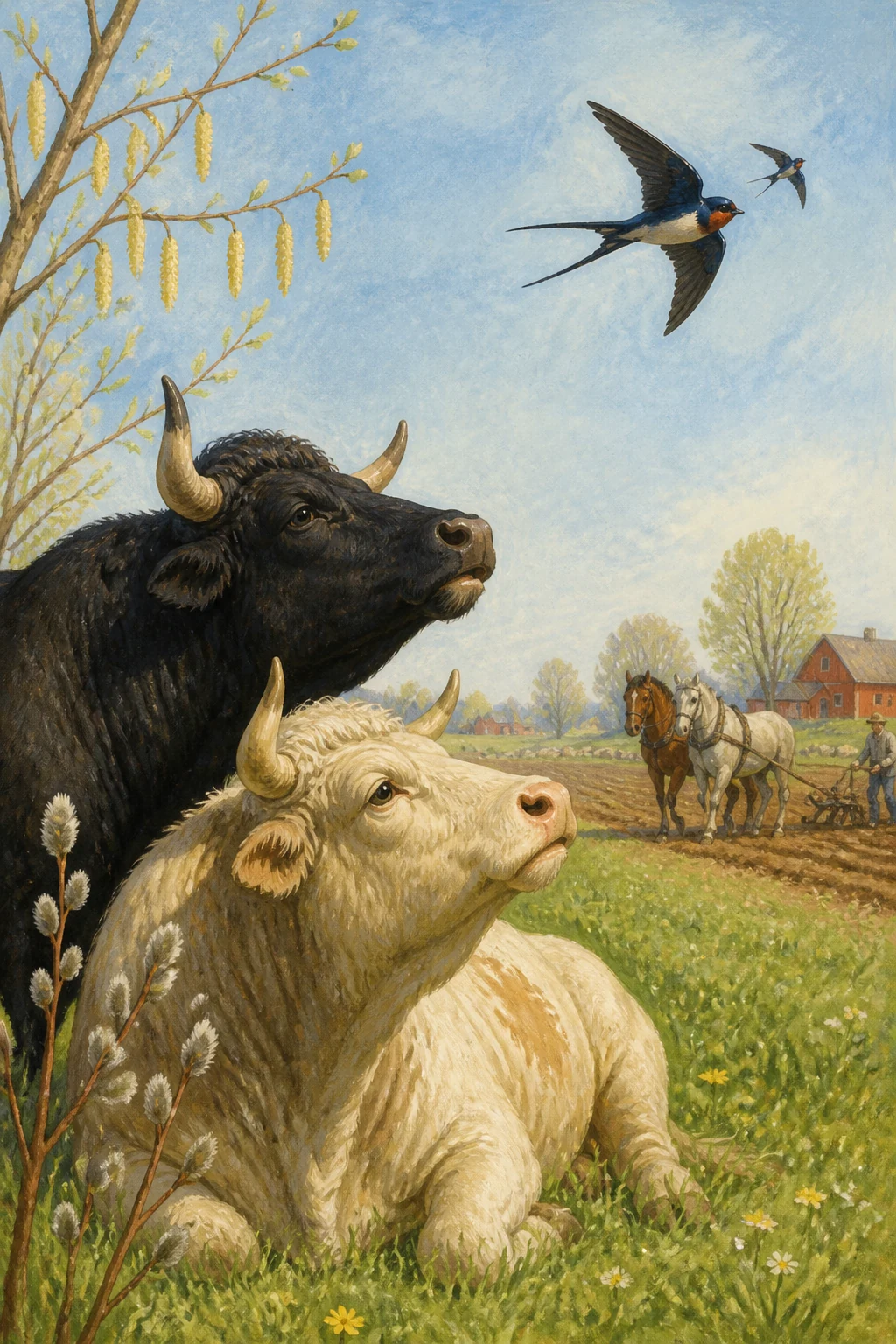
»Zakaj pa si to naredila?« je začivkala Lastovka. »Ker se nočem z glavo zaleteti v podboj nad vrati,« je odvrnila. »Vedno naredim tako. Vsa naša jata dela tako.«
»Čiv-čiv-čiv-čiii,« se je zasmejala Lastovka, švignila proč in sedla na ograjo ob Levem volu. »Zakaj pa Siva gos ne plava z drugimi?« je vprašala.
»Ker svojega debelega telesa ne more zriniti skozi tisto luknjo v ograji,« je rekel Levi vol in ob tem zamahnil z repom proti njej. »Zakaj pa potem ne gre skozi vrata?« je vprašala Lastovka.
»Ker pravi, da gre raje po drugi poti, in če ne more po tisti, potem sploh ne bo šla.« »In zato zamuja vso zabavo?« je rekla Lastovka.
»Prav vso,« je odgovoril Levi vol, »ampak saj veš — prava gos je!«
Izvirnik
012 THE GOOSE WHO WANTED HER OWN WAY
Naslednje strani prikazujejo izvirno besedilo za primerjavo.
It would be hard to tell which family is the most important among the farmyard people. There is no one animal so wise as Collie, the farmer's dog, and all the rest love him and mind him when he is sent to bring them up from the pasture or to drive them to the water. Still, he does not spend his days in barn or field and only comes with his master or for a visit now and then.
You may remember how the Garter Snake and the old Tree Frog were the leaders in the meadow, and how in the forest all looked up to the Ground Hog. These people were patient and old, and partly because they were old and had had many years in which to think about life, they were very wise. In the farmyard the Oxen were the most patient and the oldest, and it was to them that all the animals went when they were in trouble.
There were also the Horses, fine strong creatures, always helping somebody else and working all day during most of the year. They drew the reaper through the tall grain, and where in the morning had been a field of waving golden wheat, at sunset were bundles or sheaves of gathered grain, and the stubble was ready for the fowls. They were busy people; and sometimes during the winter they liked to remind their neighbors how much they had done.
Then again, there were the Cows, who are the sisters of the Oxen. They are large and there are many of them, yet they are not so wise, and that is easily understood. All that they have to do on the farm is to give milk for the butter-and cheese-making, and for the farmer's children to drink. No farmer could get along without his Cows, but they do not work like their brothers. They have so easy a time that they do not learn much. You know, when people work, they have to think, and when people think enough useful thoughts it makes them wise. That is one of the many reasons why it is so foolish to be lazy.
Truly, it would be hard to say which farmyard family is the most important, but there is no trouble at all in telling which family think themselves the most so. If you ask any Goose, she will tell you that one of their flock is worth five Horses or a dozen Cows. Nobody else would tell you this, and if you should speak of it to the span of Bays, or the Dappled Gray, or even the youngest Colt in the stable, they would answer you only with a hearty Horse laugh. The Cows would smile and reply, "What a Goose she was to say that!"
There has always been a flock of Geese on the farm, and their neighbors are so used to their queer ways that they only smile when the Geese put on airs, and it is a good-natured smile, too. They even feel rather sorry for them when they lose their feathers, although the Nigh Ox once said that if it were not for being plucked once in a while, the Geese would really be too airy to live with.
Perhaps the Nigh Ox was right in what he said, for certainly after they have worn their feathers all winter, they hold their heads higher than ever, and tell what they think and what they would do, and it is well they should be reminded that they work for a living like all their neighbors. The farmer's wife never plucks the Geese until warm weather comes. Then she takes all the soft, short feathers that they have worn through the winter, and this leaves them looking very ragged indeed. There was a time, years ago, when Geese had to give up their long tail-and wing-feathers to be whittled into pens, but these Geese didn't know about that, and there was nobody in the farmyard old enough to remember it and tell them, so they thought they had a pretty hard time in even giving up their breast feathers.
"Sssss!" the Gander used to say, "if the farmer's boys must have feather pillows on which to lay their heads, why do they not grow their own feathers?"
"Humph!" said the Nigh Ox once; "If you must have oats to eat, why don't you grow the oats?" But the Gander was already waddling away and pretended not to hear him.
It is in the winter that the Geese put on the most airs. Then, when the Horses are being harnessed, they say to each other, "Dear me! Wouldn't it be dreadful to work in that way for a living?" And sometimes, when the team is hitched to a post by the farmhouse, they waddle past in a single line with the Gander at the head, and say to the Horses: "Hear you have to take a load of wood to town. It's too bad. Hope you won't get very tired. We are going to the river for a nice cold swim. Good-bye." Then they march off with their heads held high, and as soon as their backs are turned, the Horses look at each other and laugh softly. They know that there is nothing in the world better than good, honest, hard work, no matter of what kind it is.
Every winter the Geese forget about having to be plucked, and every spring they are surprised to lose their feathers. They are plucked four times before fall comes, and these four times come so near together that even they can remember from one to another. You would think that then they would not be so airy, but instead of saying, "Of course we work for our living--why shouldn't we?" they say, "Why, yes, we do let the farmer's wife have some of our feathers when she wants them. We suppose you might call it work to grow feathers for her, still it does not take much of our time, and it is quite different from drawing loads and getting tired as the Horses and Oxen do. Growing feathers is genteel."
They do not remember anything long, and so, when they have made a mistake once, they are likely to make the same mistake over and over again. Then, too, they cannot tell big things from little things, and they are not happy unless they can have their own way all the time. And you know that nobody can be sure of that. It all comes of their not being willing to think hard, and sometimes it makes them a great deal of trouble, as it did on the day when the Gray Goose would not go through the farmyard gate.
This was soon after the Gander and his wife had hatched their brood of seven Goslings, and they were taking them at once to the brook. It was a happy day for all the flock. The Gander and the Mother Goose were glad because their children were safely out of the shell, and because they would no longer have to sit with cramped legs on the nest. Ganders are good fathers, for they cover the eggs half of the time, while the Mother Goose is resting. The other Geese were not only proud of the Goslings, but they were glad to have the Gander and the Mother Goose free to go around with them again. They had missed them very much.
The gate from the farmyard into the meadow stood wide open, and all the Geese except the Gray one followed the Gander through. The Gray Goose tried to go through a small hole in the fence very near the gate. She squeezed her head into it and stretched her neck on the meadow side of the fence, but she could not get any farther, although she pushed until she was dizzy.
"Wait for me," she cried. "Wait for me-ee!"
"Hurry, then," said the Gander.
"I am hurrying," she cried, and she pushed with all her strength, but since the hole in the fence was so small, she did not get any farther than before.
"Go through the gateway," said the Nigh Ox, who was grazing near by.
"Sssss!" said the Gray Goose stiffly. "I would rather go through here. I have chosen to go this way."
"Oh!" said the Nigh Ox, "excuse me! Do go through there by all means!"
"We are going on," called the Gander; "we would wait, but the Goslings are in a hurry to take their first bath. Come as soon as you can."
The Gray Goose tried harder than ever to go the way that she had chosen, but it only made her so out of breath that she had to lie down and rest. Once she thought she heard somebody laugh, yet when she looked at the Nigh Ox, who was the only person around, he was lying with closed eyes and solemnly chewing his cud, so she decided that she must have been mistaken.
Down by the brook the rest of the flock were cackling merrily, and she could see the seven Goslings swimming with the Geese and the Gander. "Oh," she cried, "how I wish I were with them! I don't see what is the matter with this hole in the fence. The farmer ought to make it bigger."
She pushed and scolded and fussed until her neck was sore and she was too tired to swim if she had a chance, so she sat down to rest. She did remember what the Nigh Ox had said; still, if she couldn't go as she had planned, she wouldn't go at all. She walked into the barn to find a cool and shady place, lowering her head as she stepped over the threshold of the high front door.
"What did you do that for?" twittered a Swallow.
"Because I don't want to hit my head on the top of the doorway;" she replied. "I always do so. All of our flock do so."
"Tittle-ittle-ittle-ee," laughed the Swallow, as she darted away and alighted on the fence by the Nigh Ox. "Why isn't the Gray Goose in swimming with the rest?" asked she.
"Because she can't push her fat body through that hole in the fence," said the Nigh Ox, switching his tail toward it as he spoke.
"Why doesn't she go through the gateway, then?" asked the Swallow.
"Because she says she would rather go the other way, and that if she can't go that way, she won't go at all."
"And she is missing all that fun?" said the Swallow.
"All of it," answered the Nigh Ox, "but then, you know, she is such a Goose!"
Nadaljuj z branjem