Waltey
Bahavi pav
016 THE BRAGGING PEACOCK
Živalske zgodbe Clare Dillingham Pierson · Clara Dillingham PiersonO besedilu
Bahavi pav
- Vir
- Živalske zgodbe Clare Dillingham Pierson
- Avtor
- Clara Dillingham Pierson
- Jezik branja
- Slovenščina
- Jezik izvirnika
- English
- Čas branja
- 10 min branja
- Obseg
- 8 strani
- Naslov izvirnika
- 016 THE BRAGGING PEACOCK
O izvirniku
Živalske zgodbe Clare Dillingham Pierson
Devetindevetdeset avtorskih zgodb o živalih na kmetiji, travniku, v gozdu, ob ribniku in ponoči. Bralni jezik je Slovenščina, izvirnik pa prihaja iz vira Živalske zgodbe Clare Dillingham Pierson v jeziku English.
Besedilo
Bahavi pav
Prebivalci kmečkega dvorišča ne bodo nikoli pozabili Pavovega prihoda; ali bolje, nikoli ne bodo pozabili prvega dne, ki ga je preživel med njimi. Prišel je zvečer, ko se je vsa perjad že spravila spat, njihovi štirinožni prijatelji pa so udobno dremali po kotičkih travnikov in pašnikov, zato ga do naslednjega jutra ni videl nihče.
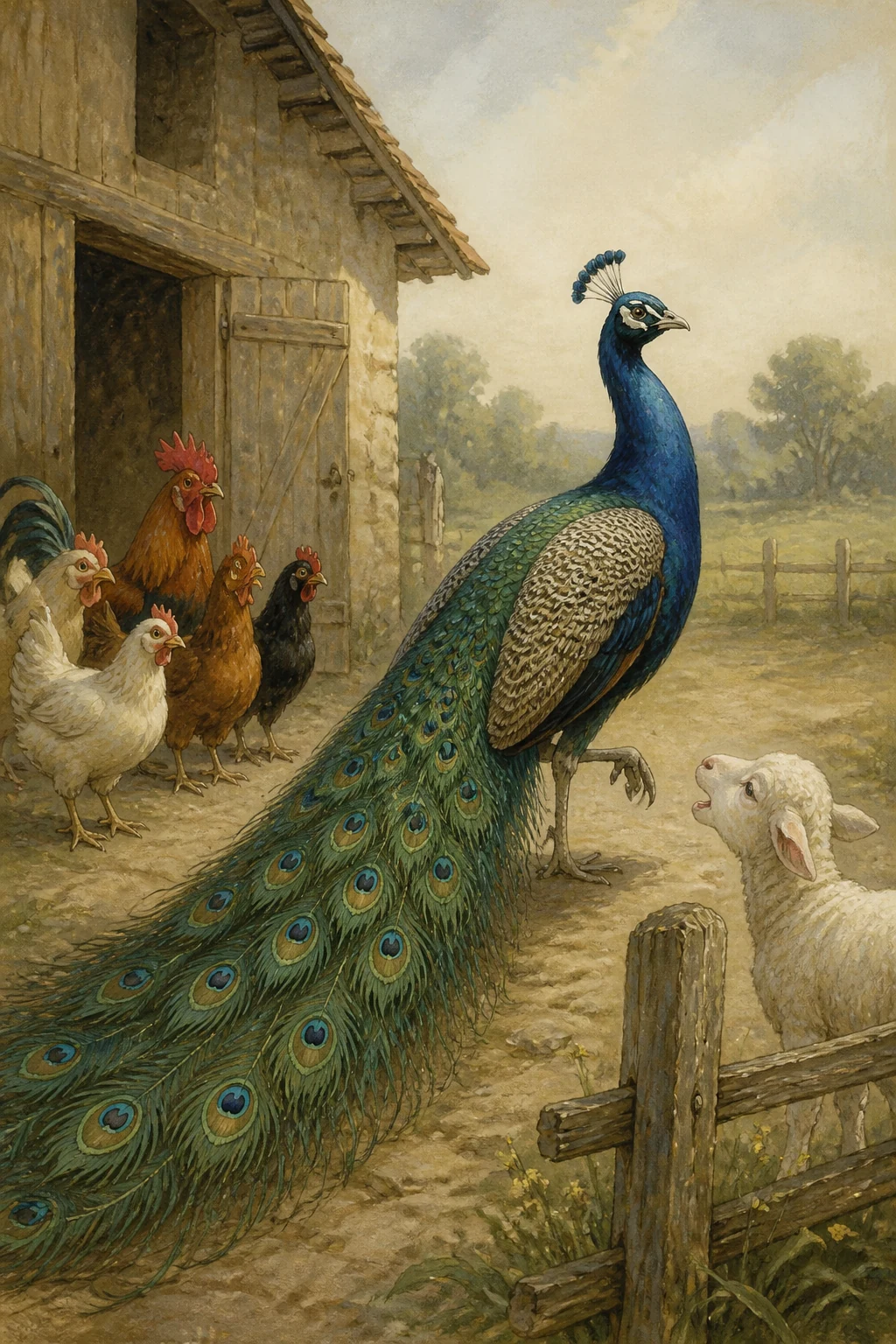
Lahko si mislite, kako so se začudili, ko se je čez dvorišče ponosno sprehodil velik, prelep zelenomodri ptič z visoko dvignjeno glavo in za seboj vlekel svoje razkošno vlečko. Perjad se je ravno odpravljala na vsakdanji sprehod, pa je obstala, z eno nogo v zraku, in strmela in strmela in strmela. Niso hoteli biti nevljudni, le tako zelo so bili presenečeni, da sploh niso pomislili, kaj počnejo. Večina jih je mislila, da spijo in sanjajo, in sanje so bile tako lepe, da se niso hoteli premakniti, da jih ne bi pretrgali. Pava niso še nikoli videli in niti vedeli niso, da tak ptič sploh obstaja.
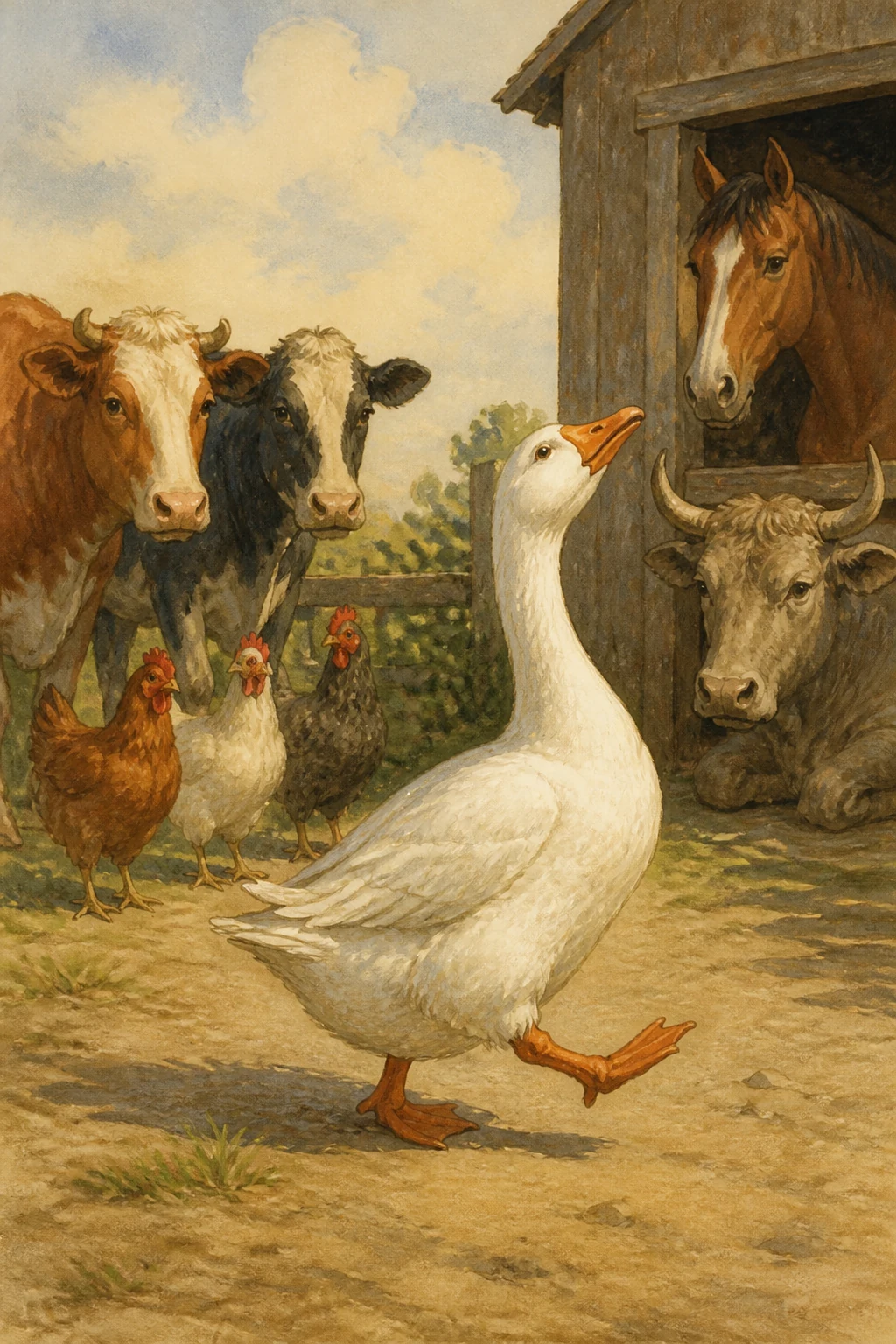
Jagnje ob pašniški ograji je poklicalo mamo. »Bee-beee!« je zavpilo. »Eden od oblačnih ptičev se sprehaja po dvorišču.« Mislilo je na nevihtno noč, ko so se vse Ovce in Jagnjeta stiskali skupaj na travniku, opazovali oblake in si domišljali, da so to ptice, ki jim iz kljunov padajo svetleči se črvi.
Tedaj je Pav, ki je odlično razumel ovčji jezik, dejal: »Paon! Nisem oblačni ptič. Pav sem.« To je izrekel zelo ošabno, kakor da je biti Pav nekaj najimenitnejšega na svetu, veliko imenitnejšega kakor imeti dom na nebu in prinašati plohe, ki osvežujejo žejne prebivalce zemlje.
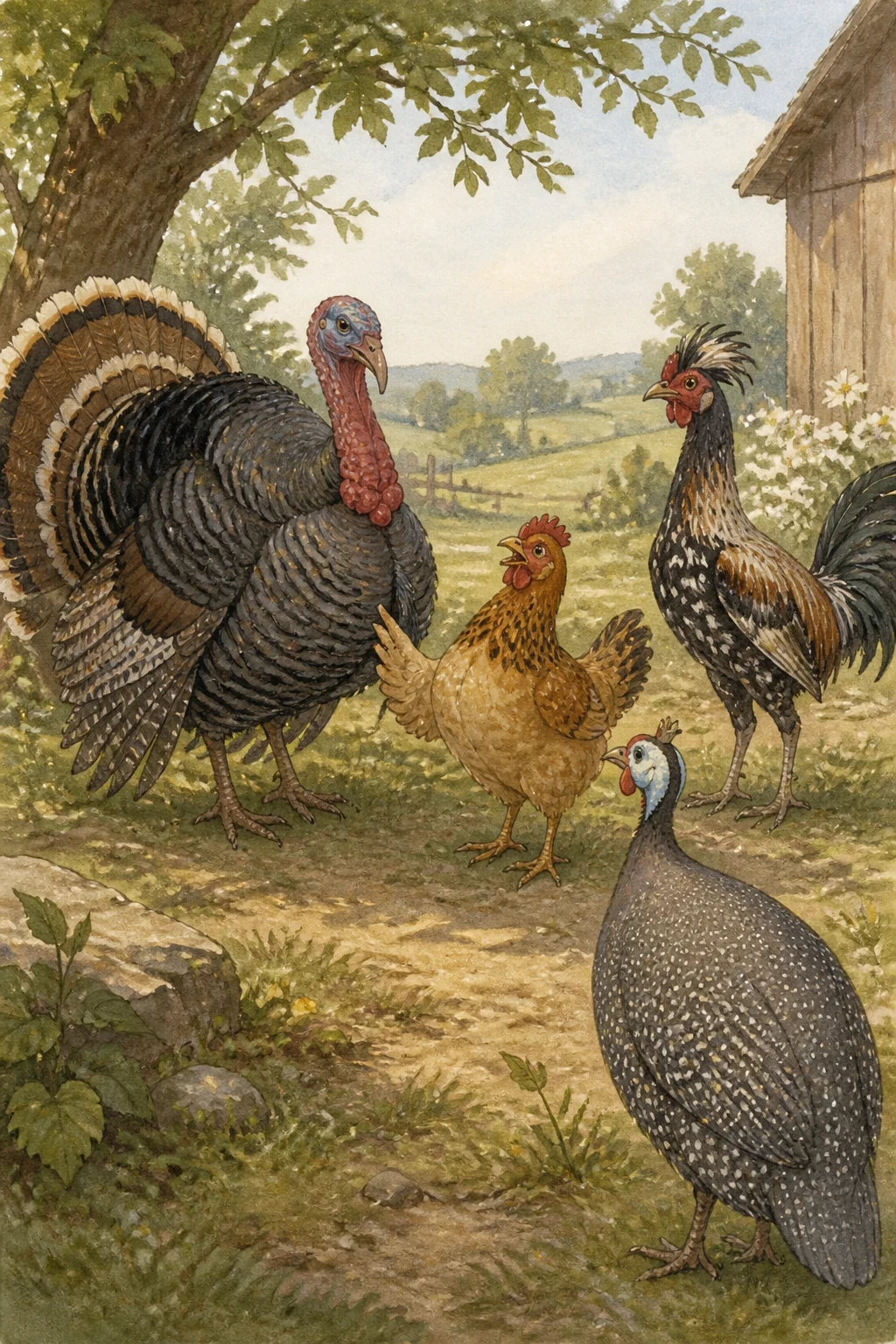
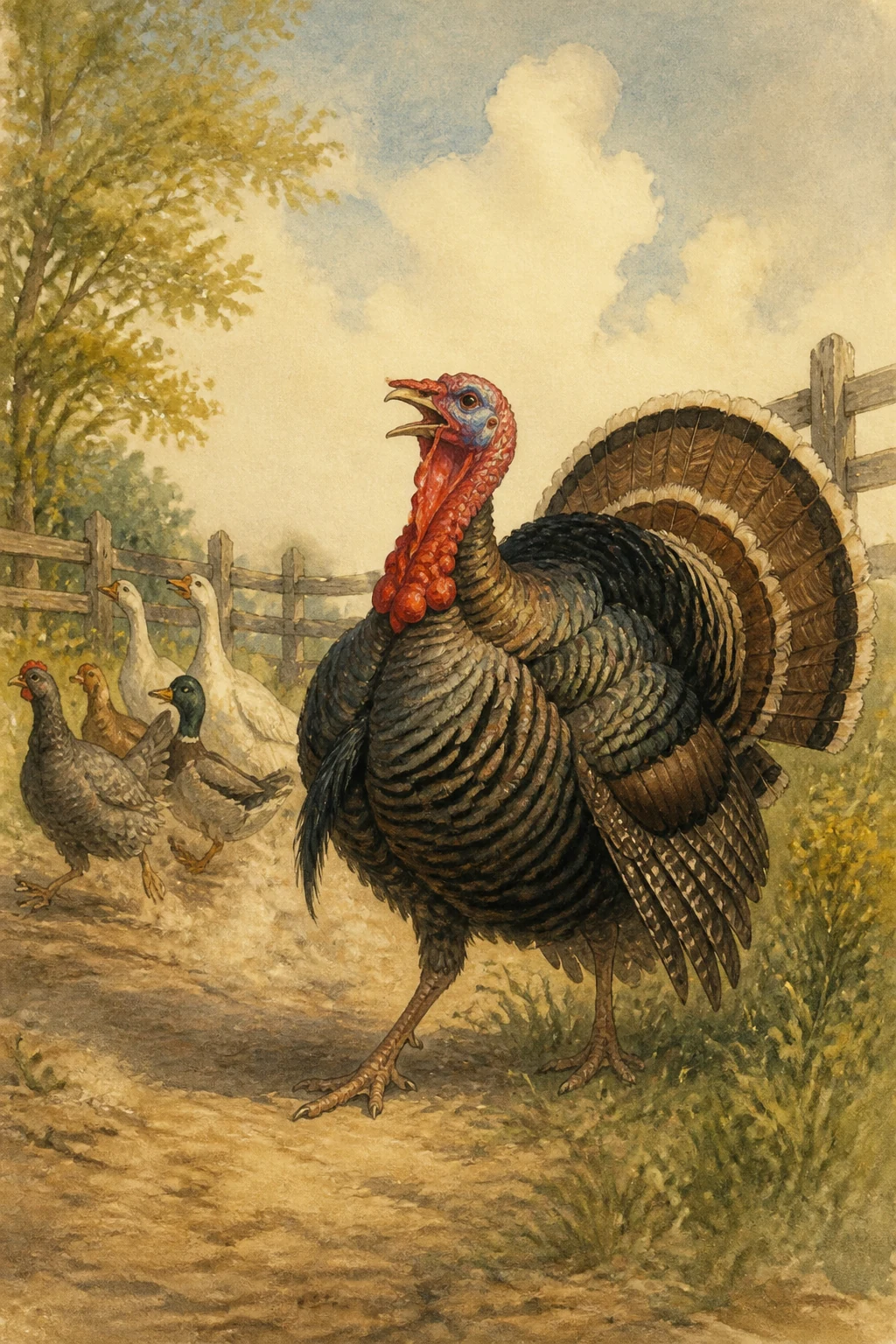
Puran ni nikoli prenesel, da bi kdo v njegovi navzočnosti tako govoril, zato je sklenil prišleku pokazati, kako pomemben je sam. Vzravnal je vrat in izbočil prsi; zbral je misli in napel kožne mišice, da se mu je perje postavilo pokonci; nato je povesil peruti, da sta se s konicami dotaknili tal; potem pa je počasi razprl rep. »Pffff!« je dejal. »Nisem Pav. Puran sem.«
Pure so se ponosno spogledale. Tudi same so se ga nekoliko bale, vendar jim je bilo všeč, da prišleku kaže, kako pomembni so Purani. Njihovi otroci so se spogledovali in šepetali: »Ali ni naš Puran imeniten? Stavim, da je Pavu zdaj žal, da se je tako šopiril.«
Toda ni bilo videti, da bi bilo Pavu kaj žal. Stal je in jih vse molče opazoval, oni pa so se spraševali, o čem neki premišljuje. Tedaj je Raček, ki je stal blizu njega, vzkliknil: »Poglejte njegovo vlečko! O, poglejte njegovo vlečko!« Vsi so pogledali in videli, kako se vsa tista prelepa dolga peresa dvigajo v zrak. Vse više in više so se dvigala in se obenem razpirala, dokler ni za njegovim telesom zrasel čudovit velik krog, ki je segal visoko nad njegovo glavo. Puranov razprti rep je bil ob njem videti tako majhen kakor golobje jajce ob gosjem.
»Paon!« je dejal Pav. »Nisem Puran. Pav sem.« »Pffff!« je dejal Puran. Nato se je obrnil k Puram. »Drage moje,« je rekel, »mislim, da je čas, da gremo naprej. Otrokom ne smemo dovoliti, da si ogledujejo vsakega pritepenega ptiča in se pogovarjajo z njim. Pri tem ne moremo biti nikoli dovolj izbirčni.« Nato je ponosno odkorakal, pohlevne Pure so mu sledile, otroci pa so zaostajali. Tako radi bi ostali in gledali Pava, in zdelo se jim je, da imajo Rački in Goske veliko več sreče kakor oni.
Gosi so bile nad prišlekom navdušene in upale so, da se bo spoprijateljil z njimi. Želele so si, da bi znal plavati, a že na prvi pogled je bilo jasno, da ne zna. Ni imel čednega, čolniču podobnega telesa, kakršnega imajo plavalci, pa tudi plavalne kožice med prsti ne. Gosak je opazil, da ima prav nenavadno grde noge. Sklenil je, da si bo to zapomnil in ob priliki omenil Gosem, ko bodo hvalile Pavovo vlečko.
Racak je Pava prvi vljudno nagovoril. »Veseli nas, da smo vas spoznali, gospod,« je dejal. »Boste dolgo pri nas?« »Hvala,« je odgovoril Pav. »Prišel sem, da ostanem.«
»Upamo, da vam bo tu všeč. Žal mi je, da ne plavate. Zelo bi bili veseli vaše družbe, če bi. Oprostite nam, če odidemo k potoku. Že tako smo pozni.« Z vso svojo družino je odracal proti vodi. »Zares postaven fant,« je prisrčno dejal. »Še moji bratranci, Mlakarji, nimajo tako lepega leska na vratnem perju.« Racak je bil prijazen in dobrosrčen možak in nikoli ga ni motilo, če je bil kdo lepši od njega.
Tudi Gosi so si želele čim prej k vodi, a prej so morale nekaj vprašati. Najprej so naročile Gosaku, naj vpraša, pa jim je odvrnil, da naj kar same vprašajo, če jih zanima. Nato so se obotavljale in si prigovarjale: »Ti ga vprašaj. Jaz ne morem.« Nazadnje je stopila naprej Siva Gos in dejala: »Oprostite, gospod. Rekli ste, da boste ostali pri nas, in rade bi vedele, ali delate za svoj kruh.«
»Jaz, da bi delal!« je vzkliknil. »Paon! Nikoli. Kmet me je povabil sem, da sem lep, to je vse.« »Kako nas to veseli,« so zagagale Gosi in Gosak jim je pritegnil. »Toliko tukajšnjih prebivalcev dela. Zelo dobri so, a prav nič imenitni, saj razumete.«
»Ve pa ničesar ne delate?« je vprašal Pav. »Mislil sem, da Gosi gojite perje za pernice in blazine. Zdi se mi, da ste precej oskubljene. Ali vas niso skubli?«
Gosi je to spravilo v veliko zadrego. »No, da,« so dejale, »tu in tam, kadar je toplo, res odstopimo kmetici nekaj perja, ampak to je vendar nekaj čisto drugega kakor pravo delo, veste.«
»Morda,« je dejal Pav. »Če hočejo kaj mojega perja, lahko počakajo, da se zamenja. Tedaj boste videle, kako me cenijo, saj vsakič, ko najdejo pero iz moje vlečke — ne iz repa, prosim lepo; rep ima vsaka ptica, jaz pa imam vlečko — ga previdno odnesejo v hišo, da iz njega naredijo omelo za prah za sprejemnico. Nikoli ne oddam drugega kakor odvrženo perje. Tako zelo, zelo lep sem, da mi ni treba delati.«
To je na Gosi napravilo velik vtis. »Vesele smo, da vas poznamo. Zelo počaščene, verjemite!« Pav je priklonil svojo čopasto glavo, one pa svoje glave brez čopkov in brez prave pameti, nato pa so odšle k reki. Pavu so se zdele nadvse prijetne, ker so ga občudovale, njim pa se je on zdel nadvse imeniten znanec, ker ni delal. Vse to je bilo zelo nespametno, a na svetu so vedno tudi nespametneži, veste, in veliko bolje je, da nas njihove neumnosti zabavajo in da se nam malo smilijo, kakor da bi se zaradi njih jezili in postali čemerni. Tako so mislile tudi šanghajske, črne španske, dorkinške in bantamske kokoši. Do prišleka so bile dovolj vljudne, vendar se niso podile za njim. Piščanci so se radi smejali, kadar je Pav zaklical: »Paon! Paon!« Njegov glas je bil hripav in neprijeten in res se jim je zdelo smešno, da iz tako lepega grla prihajajo tako strašni glasovi.
Črni Španski Petelin je Piščance zaradi tega ostro pokaral. »Zelo nevljudno je,« je dejal, »če se komu smejite zaradi nečesa, za kar ni sam kriv. Kako bi vam bilo všeč, če bi za vami hodilo Jagnje in blejalo: ‘Poglejte tega Piščanca! Samo dve nogi ima! Hej, ti mali dvonožec, kako sploh hodiš?’ Prav tako grdo je, če se smejite njegovemu hripavemu glasu, saj ni sam kriv zanj. Če bi govoril nespametne in neumne reči, bi se mu smeli smejati, ker bi to lahko spremenil, če bi se potrudil. Nikoli več naj vas ne slišim, da se smejite, kadar reče samo ‘Paon’.«
Piščanci so ubogali Črnega Španskega Petelina, saj so vedeli, da ima prav in da tudi sam ni nikoli nevljuden. Pa tudi vse, kar jim je povedal, so si dobro zapomnili.
Nekega dne je Pav sam stal na ograji. Tam je prebil večino časa. Navadno je stal s hrbtom proti dvorišču, tako da so mimoidoči lahko videli njegovo vlečko, ne pa tudi njegovih nog. Mimo je prišla druščina mlade perjadi iz vseh družin. Mame so jim dovolile, da gredo sami naokrog, in ustavili so se, da bi si ogledali Pava.
»Resnično mislim, da imate najlepši rep, gospod,« je rekla Račka in ob teh besedah vstran pomignila s svojim majhnim, koničastim repkom. »Prosim, reci mu vlečka,« je dejal Pav. »Lepa je in zelo sem ponosen nanjo. Ne more vsakemu ptiču zrasti takšna vlečka.«
»O, seveda ne!« se je zahihital vesel mali bantamski Piščanček. »Meni bi zrasla v hipu, če bi le mogla.« Ob tem so se zasmejali tudi vsi drugi mladi ptiči, saj so si predstavljali, kako smešen bi bil mali rjavi bantamček, če bi za seboj vlačil tolikšno goro perja.
Pav se ni niti nasmehnil. Saj tako ali tako nikoli ni razumel šale. Ves čas je toliko razmišljal o sebi, da ni mogel dojeti, kaj je smešno. Zdaj se je odkašljal in ogovoril bantamskega Piščančka.
»Upam, da ne misliš, da mi je vlečka zrasla v hipu,« je dejal. »Dolgo, dolgo je trajalo, čeprav sem skrbel, da so vsa peresa rasla hkrati.«
»Poglejte njegov čopek!« je s tenkim glasom vzkliknil mlad Puranček. Pav je obrnil glavo, da so si ga lahko bolje ogledali. »Na tak čopek si lahko ponosen,« je dejal. »Sam še nisem videl lepšega. Ste opazili, kako lep vrat imam?«
»Očarljiv!« »Čudovit!« »Prelep!« so vzklikali mladi ptiči. Prav tedaj je s strehe skednja priletel eden od razvajenih golobjih otrok in sedel poleg Pava.
»Kako grde noge imate!« je vzkliknil Golobček. »Ali vas ni strašno sram zaradi njih?« Mladim ptičem se je to zdelo nevljudno. Nobeden od njih ne bi rekel česa takega. Pav se je zelo razjezil. »Vem, da moje noge niso tako lepe, kakor bi lahko bile,« je dejal, »a to še ni razlog, da bi se jih sramoval. Nisem sam kriv, da imam takšne noge. Takšne imamo v naši družini. Ne sramujem se reči, za katere nisem sam kriv.«
Mladim ptičem je bilo po tem tako neprijetno, da so odšli, Golobček pa je odletel nazaj v golobnjak. Nekaj časa ni nihče spregovoril. Nato je Goska, ki je slišala svojo mamo govoriti o Pavu, dejala: »Jaz pa mislim, da je lahko ponosen na svojo vlečko in čopek in vrat in — in na vse!«
»Na vse razen na noge,« se je zahihital bantamski Piščanček, »in saj veš, zanje ni sam kriv.« »Le zanima me, ali je sam zaslužen za svojo vlečko in čopek in vrat in — in za vse drugo,« je rekel mlad Puranček.
Vsi so obstali. »Na to pa nismo pomislili!« so vzkliknili. »Na to pa nismo pomislili!« »Pojdimo vprašat Slepega Konja,« je rekla Račka. »Moj dober prijatelj je in ve skoraj vse.«
Odkorakali in odracali so k Slepemu Konju in Račka mu je povedala, kaj jih bega. Slepi Konj se je od srca zasmejal. »Torej je Pav ponosen, da sta mu zrasla tako lepa vlečka in čopek, svojih grdih nog pa se ne sramuje, ker ni sam kriv zanje! Pav nima razloga ne za ponos ne za sram. Ima natanko takšno telo, kakršno mu je bilo dano, in niti enega peresa ne bi mogel pripraviti do tega, da bi raslo drugače, pa naj bi se še tako trudil.«
»Potem pa ne vem, na kaj je sploh lahko kdo ponosen,« je žalostno dejala Goska; veste, tudi sama si je želela biti na kaj ponosna. »Bodi ponosna na tisto, kar si sama storila,« je nežno dejal Slepi Konj. »Bodi ponosna, da skrbiš za čistočo, da govoriš resnico ali da prijazno govoriš tudi takrat, ko gre kaj narobe. Dovolj je priložnosti za dober ponos, če že kdo mora biti ponosen.«
Izvirnik
016 THE BRAGGING PEACOCK
Naslednje strani prikazujejo izvirno besedilo za primerjavo.
The farmyard people will never forget the coming of the Peacock; or rather they will never forget the first day that he spent with them. He came in the evening after all the fowls had gone to roost, and their four-legged friends were dozing comfortably in meadow and pasture corners, so nobody saw him until the next morning.
You can imagine how surprised they were when a beautiful great fowl of greenish-blue strutted across the yard, holding his head well in the air and dragging his splendid train behind him. The fowls were just starting out for their daily walks, and they stopped and held one foot in the air, and stared and stared and stared. They did not mean to be rude, but they were so very much surprised that they did not think what they were doing. Most of them thought they were asleep and dreaming, and the dream was such a beautiful one that they did not want to move and break it off. They had never seen a Peacock and did not even know that there was such a fowl.
A Lamb by the pasture fence called to his mother. "Ba-baa!" cried he. "One of the cloud-birds is walking in the farmyard." He was thinking of the night of the storm, when all the Sheep and Lambs huddled together in the meadow and watched the clouds, and thought that they were birds and dropped shining worms from their beaks.
Then the Peacock, who understood the Sheep language perfectly, said, "Paon! I am no cloud-bird. I am a Peacock." He said this in a very haughty way, as though to be a Peacock were the grandest thing in the world, far better than having one's home in the sky and bringing showers to refresh the thirsty earth-people.
The Turkey Gobbler never could stand it to have others speak in that way when he was around, so he thought he would show the newcomer how important he was. He drew up his neck and puffed out his chest; he pulled his skin muscles by thinking about them, and that made his feathers stand on end; next he dropped his wings until their tips touched the ground; then he slowly spread his tail. "Pffff!" said he. "I am no Peacock. I am a Turkey Gobbler."
The Hen Turkeys looked at each other with much pride. They were a little afraid of him themselves, but they liked to have him show the newcomer that Turkeys are important people. Their children looked at each other and murmured, "Isn't the Gobbler fine though? Guess the Peacock will wish now that he hadn't put on airs."
But the Peacock did not seem to feel at all sorry. He stood and looked at them all without saying a word, and they all wondered what he was thinking. Then a Duckling who stood near him exclaimed, "Look at his train! Oh, look at his train!" Everybody looked and saw all those beautiful long feathers rising into the air. Up and up they went, and spreading as they rose, until there was a wonderful great circle of them back of his body and reaching far above his head. The Gobbler's spread tail looked as small beside this as a Dove's egg would beside that of a Goose.
"Paon!" said the Peacock. "I am no Turkey Gobbler. I am a Peacock."
"Pffff!" said the Gobbler. Then he turned to the Hen Turkeys. "My dears," he said, "I think it is time that we walked along. The children should not be allowed to see and speak with any stray fowl that comes along. We cannot be too particular about that." Then he stalked off, with the meek Hen Turkeys following and the children lagging behind. They did so want to stay and see the Peacock, and they thought the Ducklings and Goslings were much luckier than they.
The Geese were delighted with the newcomer, and hoped he would be quite friendly with them. They wished he were a swimmer, but of course they could tell with one look that he was not. He did not have the trim, boat-shaped body that swimmers have, and then, his feet were not webbed. The Gander noticed that they were remarkably homely feet. He thought he would remember this and speak of it to the Geese some time when they were praising the Peacock's train.
The Drake was the first to speak politely to the Peacock. "We are glad to meet you, sir," he said. "Will you be with us long?"
"Thank you," answered the Peacock. "I have come to stay."
"We hope you will like it here. I'm sorry to see you do not swim. We should be very glad of your company if you did. You will excuse us if we go on to the brook. We are late already." He and all of his family waddled away to the water. "A fine-looking fellow," said he heartily. "Even my cousins, the Mallard Ducks, have not such a beautiful sheen on their neck feathers." The Drake was a kind, warm-hearted fellow, and it never troubled him to know that other people were handsomer than he.
The Geese were eager to reach the water, too, but they could not leave without asking one question. First they told the Gander to ask it, but he replied that if they wanted to know, they should ask it for themselves. Then they hung back and said to each other, "You ask him. I can't." At last the Gray Goose stepped forward, saying, "Excuse us, sir. You said that you were to stay with us, and we wish to know if you work for your living."
"I work!" cried he. "Paon! Never. The farmer invited me here to be beautiful, that is all."
"We are so glad," cackled the Geese, and the Gander joined with them. "So many of the people here work. They are very good, but not at all genteel, you understand."
"And don't you do anything?" asked the Peacock. "I thought Geese grew feathers for beds and pillows. It seems to me you look rather ragged. Haven't you been plucked?"
This was very embarrassing to the Geese. "Why, yes," they said, "we do let the farmer's wife have some feathers once in a while, when the weather is warm, but that is very different from really working, you know."
"Perhaps," said the Peacock. "If they want any of my feathers, they can wait until I moult. Then you will see how much they think of me, for whenever they find one of my train feathers (not tail, if you please; every bird has a tail, but I have a train) they carry it carefully into the house to be made into a duster for the parlor. I never give away any but my cast-off plumage. I am so very, very beautiful that I do not have to work."
This impressed the Geese very much. "We are glad to know you. Quite honored, we assure you!"
The Peacock bowed his crested head, and they bowed their uncrested and very silly ones, and then they went to the river. The Peacock thought them most agreeable, because they admired him, and they thought him the best sort of acquaintance, because he didn't work. It was all very foolish, but there are always foolish people in the world, you know, and it is much better to be amused by it and a little sorry for them, than for us to lose our tempers and become cross about it. That was the way the Shanghais, Black Spanish, Dorking, and Bantam fowls felt. They were polite enough to the newcomer, but they did not run after him. The Chickens used to laugh when the Peacock uttered his cry of "Paon! Paon!" His voice was harsh and disagreeable, and it did seem so funny to hear such dreadful sounds coming from such a lovely throat.
The Black Spanish Cock reproved the Chickens sharply for this. "It is very rude," said he, "to laugh at people for things they cannot help. How would you like to have a Lamb follow you around and bleat, 'Look at that Chicken! He has only two legs! Hello, little two-legs; how can you walk?' It is just as bad for you to laugh at his harsh voice, because he cannot help it. If he should say foolish and silly things, you might laugh, because he could help that if he tried. Don't ever again let me hear you laughing when he is just saying 'Paon.'"
The Chickens minded the Black Spanish Cock, for they knew he was right and that he did not do rude things himself. They remembered everything he said, too.
One day the Peacock was standing on the fence alone. He did this most of the time. He usually stood with his back to the farmyard, so that people who passed could see his train but not his feet. A party of young fowls of all families came along. Their mothers had let them go off by themselves, and they stopped to look at the Peacock.
"I do think you have the most beautiful tail, sir," said a Duckling, giving her own little pointed one a sideways shake as she spoke.
"Please call it my train," said the Peacock. "It is beautiful and I am very proud of it. Not every fowl can grow such a train as that."
"Oh, dear, no!" giggled a jolly little Bantam Chicken. "I'd grow one in a minute if I could."
This made all the other young fowls laugh, for they thought how funny the little brown Bantam would look dragging around a great mass of feathers like that.
The Peacock did not even smile. He never understood a joke anyway. He was always so busy thinking about himself that he couldn't see the point. Now he cleared his throat and spoke to the Bantam Chicken.
"I hope you don't think that I grew my train in a minute," said he. "It took me a long, long time, although I kept all the feathers going at once."
"Look at his crest!" exclaimed one young Turkey in his piping voice.
The Peacock turned his head so that they could see it more plainly. "That is a crest to be proud of," he said. "I have never seen a finer one myself. Have you noticed the beauty of my neck?"
"Charming!" "Wonderful!" "Beautiful!" exclaimed the young fowls. Just then one of the spoiled Dove children flew down from the barn roof and sat beside the Peacock.
"What homely feet you have!" this Squab exclaimed. "Are you not dreadfully ashamed of them?"
The young fowls thought this rude. Not one of them would have said it. The Peacock became very angry. "I know my feet are not so handsome as they might be," he said, "but that is no reason why I should be ashamed of them. I couldn't help having that kind of feet. They run in my family. I don't feel ashamed of things I can't help."
The young fowls felt so uncomfortable after this that they walked away, and the Squab flew back to the Dove-cote. For a time nobody spoke. Then a Gosling, who had heard her mother talk about the Peacock, said, "I should think he would be proud of his train, and his crest, and his neck, and--and everything!"
"Everything except his feet," giggled the Bantam Chicken, "and you know he couldn't help having them."
"I wonder if he could help having his train, and his crest, and his neck, and--and everything?" said a young Turkey.
They all stopped where they were. "We never thought of that!" they cried. "We never thought of that!"
"Let's go and ask the Blind Horse," said a Duckling. "He is a good friend of mine, and he knows almost everything."
They stalked and waddled over to the Blind Horse, and the Duckling told him what was puzzling them. The Blind Horse laughed very heartily. "So the Peacock is proud of having grown such a fine train and crest, but he isn't ashamed of his homely feet, because he couldn't help having those! There is no reason for either pride or shame with the Peacock. He has just such a body as was given him, and he couldn't make one feather grow differently if he tried."
"I don't see what anybody can be proud of, then," said a Gosling sadly; for, you see, she wanted to be proud of something.
"Be proud of what you have done yourself," said the Blind Horse gently. "Be proud of keeping clean, or of telling the truth, or of speaking pleasantly when things go wrong. There are plenty of chances to be proud in a good way, if one must be proud."
Nadaljuj z branjem