Prevod
Največji žabec je iztegnil štiri prste na desni sprednji nogi. Nato je iztegnil štiri prste na levi sprednji nogi. Potem je iztegnil pet prstov na desni zadnji nogi. Nazadnje pa je iztegnil še štiri prste na levi zadnji nogi. Nato je iztegnil vseh sedemnajst prstov hkrati. Moral bi jih imeti osemnajst, kakor njegovi prijatelji in sosedje, toda z osemnajstim se je pred mnogimi, mnogimi leti nekaj zgodilo. Nihče od prebivalcev ribnika ni vedel, kaj se mu je zgodilo, a nekaj se mu je, in kadar so ga Paglavci nadlegovali, naj jim pove, kaj, jih je le gledal s svojimi velikimi očmi in rekel: »Otroci moji, ta zgodba je preveč žalostna, da bi jo pripovedoval.«
Ko je Največji žabec iztegnil vse prste, je pretegnil še noge in pomigal z ustnicami. Čisto, čisto malo je pomolil glavo iz blata in zagledal Pisančico, ki je plavala mimo. »Dober dan!« je rekel. »Je že čas, da vstanemo?«
»Čas!« je vzkliknila Pisančica in ga gledala z odprtimi usti. »Pa še kako! Saj vodna kreša že raste!« Vsakdo, ki živi v ribniku, pa ve, da je takrat, ko začne rasti vodna kreša, čas, da se zbudijo vsi zimski zaspanci. Največji žabec je zlezel iz blata in začel drezati sem ter tja po kraju, kjer je prebil mrzle dni. »Zbudite se!« je govoril. »Zbudite se! Zbudite se!« Voda je potemnela in se skalila, ker je dvignil toliko blata, ko pa se je spet začela bistriti, je videl, kako iz tistega dela ribniškega dna vsepovsod kukajo glave njegovih prijateljev. Sedem se jih je vso zimo stiskalo tik ob njem. »Pridite ven!« je zaklical. »Pomlad je tu in zdaj ni čas, da bi žabe spale.«
»Spale! Nikakor ne!« je vzkliknila njegova sestra, starejša in marljiva žaba, ter zaplavala k bregu in zlezla nanj. Pojedla je prav vsak grižljaj hrane, ki ga je našla med potjo, saj ne ona ne kdo drug od njih ni zaužil niti grižljaja že od prejšnje jeseni.
Mlajše žabe so ji sledile skozi toplejšo plitvo vodo, dokler niso bile deloma že na suhem. V vsakem ribniku je vedno kak Največji žabec. Vse mlade žabe so premišljevale, kako lepo bi bilo postati Največji žabec, pa čeprav v čisto majhni luži, saj bi potem lahko drugim ukazovale, kaj naj počnejo. Zdaj so gledale svojega vodjo in vsaka si je rekla: »Morda bom nekoč jaz začela koncert.«
Največji žabec je našel udobno mesto in sedel. Svojih osem sprednjih prstov je obrnil navznoter, kakor se spodobi lepo vzgojenim žabam, in vsi njegovi prijatelji so svojih osem sprednjih prstov prav tako obrnili navznoter. Svojih devet zadnjih prstov je obrnil navzven, vsi njegovi prijatelji pa so navzven obrnili svojih deset zadnjih prstov. Mlad Rumenorjavi žabec je rekel: »Ko le ne bi imel tistega nadležnega petega prsta na levi zadnji nogi! Tako mi je v napoto! Poleg tega pa je tako imenitno, če imaš zadnji nogi različni.« Govoril je ravno dovolj glasno, da ga je Največji žabec slišal. Po tej pripombi bi vsakdo vedel, da je mlad in nespameten, kajti kdor je moder, ve, da so noge, ušesa in telesa najlepši prav takšni, kakršni so bili ustvarjeni.
Zdaj je Največji žabec pogoltnil veliko zraka, z njim napolnil vrečki na obeh straneh vratu, odprl velika usta in zakvakal: »Žabe! Žabe! Žabe! Žabe! Žabe! Žabe! Žabe! Žabe!« In vsi drugi so prav tako dolgo kot on peli: »Žabe! Žabe! Žabe!« Slišali so jih Galebi in slišale so jih Pižmovke in vsi so bili srečni, ker je prišla pomlad.
Lepa mlada Zelenorjava žaba, ki se doslej še nikoli ni počutila odraslo, je poskušala peti z drugimi, a ni imela močnega glasu, zato je prav rada odnehala in se začela pogovarjati s Sestro Največjega žabca. »Ali si ne želiš, da bi lahko peli tako glasno kakor oni?« je vprašala.
»Ne,« je odgovorila Sestra Največjega žabca. »Raje sedim na bregu in premišljujem o svojih pomladnih opravilih. Saj veš, najprej delo, potem veselje!«
»O!« je rekla Zelenorjava žaba. »Torej nočeš peti, dokler ne opraviš svojega dela?« »Lahko si povsem prepričana, da takrat nočem peti,« je odgovorila starejša žaba. »Preveč sem utrujena. Poleg tega pa si, ko so jajčeca odložena, nimam več čemu želeti peti.«
»Zakaj ne?« je vprašala Zelenorjava žaba. »Ne razumem, kaj to spremeni.« »To,« je modro rekla starejša žaba, »je zato, ker si mlada in še nikoli nisi odlagala jajčec. Pravi čas za petje je, preden odložimo jajčeca. Tudi potem še malo pojemo, a le zato, ker drugi to pričakujejo od nas, ne pa zato, ker bi si še vedno enako želele peti.« Ko je povedala vse to, kar je bilo za žabo zelo veliko besed naenkrat, je zaprla svoja velika usta in spustila veke čez oči.
Zelenorjava žaba je hotela postaviti še eno vprašanje, a bila je lepo vzgojena in je vedela, da je nevljudno ogovoriti žabo, ki nima odprtih oči. Zato je tudi sama zaprla oči in skušala premisliti, kakšen bi bil odgovor. Ko jih je spet odprla, je Sestra Največjega žabca že odskakljala proč, na njenem mestu pa je sedel Rumenorjavi žabec, isti čedni mladenič, ki mu je bil eden od prstov v napoto. Pošteno se je zdrznila, ko ga je zagledala tako blizu sebe, in ni se mogla domisliti ničesar, kar bi rekla, zato ga je le gledala s svojimi velikimi lepimi očmi in prste na sprednjih nogah obrnila še malo bolj navznoter. Tako jih je pogledal in opazil, kako lepe so, čeprav jih seveda ni premaknila zato.
Rumenorjavi žabec je skočil še malo bliže in zapel, kolikor glasno je mogel: »Žabe! Žabe! Žabe! Žabe! Žabe! Žabe! Žabe! Žabe!« Tedaj je vedela, da poje samo zanjo, in bila je neizmerno srečna. Zelo hitro je požirala zrak, saj ji je od premišljevanja, kaj naj odgovori, kar zmanjkovalo sape. Sestro Največjega žabca je hotela vprašati, kaj naj reče, če bi kdo pel samo njej. Vedela je, da se mu lahko umakne že z enim samim velikim skokom in pljuskom v vodo. Ni hotela oditi, a se je pretvarjala, da hoče, in skočila malo proč od njega.
Vendar je vedel, da se le pretvarja, saj ni skočila dlje, kot je dolgo travno steblo. Zato ji je sledil in pel naprej. Ker je vedela, da mora nekaj reči, je preprosto odprla usta in zapela prve besede, ki so ji prišle na misel; zapela pa je: »Jajčeca! Jajčeca! Jajčeca! Jajčeca! Jajčeca! Jajčeca! Jajčeca! Jajčeca!« Po naključju je bilo to natanko tisto, kar bi morala zapeti, zato je vedel, da ji je všeč. Dolgo, dolgo sta ostala skupaj in on je pel veliko in zelo glasno, ona pa malo in zelo tiho.
Čez nekaj časa se je spomnila, da je zdaj odrasla žaba in da jo čakajo pomladna opravila, zato mu je rekla: »Res moram odložiti nekaj jajčec. Grem v vodo.«
»Potem grem tudi jaz,« je rekel. In naredila sta dva velika skoka ter pristala z dvema velikima pljuskoma. Zelenorjava žaba je štiri dni odlagala jajčeca in Rumenorjavi žabec je bil ves ta čas ob njej ter skrbel zanje, potem ko jih je odložila. Prekrivala jih je nekakšna zelena želatina, zaradi katere so se držala skupaj in plavala na vodi v majhnih kupčkih. Žabam se je to zdelo dobro, saj bo tako vsak Paglavec, ko se izleže, imel v bližini tovariše za igro.
Nekega dne, ko so bila vsa jajčeca že odložena in so lepo rasla (žabja jajčeca namreč rastejo, dokler niso Paglavci pripravljeni, da si pregrizejo pot na prosto), je Zelenorjava žaba sedela sama na bregu ribnika in k njej je prišla Sestra Največjega žabca. Okrog ustnih kotičkov ji je igral nenavaden nasmešek. Žabe imajo imenitna usta za smehljanje, a nasmeh mora biti zelo širok, da se raztegne čez vsa usta, zato se jim, kadar se le malo nasmehnejo, privihajo samo kotički. »Kako rastejo tvoja jajčeca?« je vprašala.
»Oh,« je žalostno odgovorila Zelenorjava žaba, »ne vem, katera so moja.« »To je pa čisto podobno mladi žabi,« je rekla Sestra Največjega žabca. »Ali obstaja kak razlog, da bi morala vedeti, katera so tvoja? Saj nisi ptica, da bi jih morala greti, niti Norka, da bi morala hraniti svoje otroke. Sonce bo poskrbelo, da se izležejo, potem pa si bodo sami poiskali vso hrano, ki jo potrebujejo.«
»Mislim,« je rekla Zelenorjava žaba, »da so bila moja jajčeca malo boljša od drugih.« »Da,« je zakvakala Sestra Največjega žabca, »vsaka žaba tako misli.«
»In želela sem skrbeti za svoje Paglavce,« je zavzdihnila Zelenorjava žaba. »Zakaj?« je vprašala Sestra Največjega žabca. »Ali se Paglavca ne moreš veseliti, če nisi sama odložila jajčeca, iz katerega se je izlegel? Jaz že dan po tem, ko odložim jajčeca, ne prepoznam nobenega več. Toliko jih plava naokrog, da se gotovo pomešajo. A jaz se pač znajdem, kakor najbolje znam.«
»Kako?« je vprašala Zelenorjava žaba, že nekoliko vedrejšega obraza. »Oh, plavam naokrog in si ogledujem vsa jajčeca, in kadar v njih zagledam Paglavce, ki se premikajo, si mislim: ‘Ti so morda moji!’ Ko se izvalijo, pomagam vsakemu, ki potrebuje pomoč. Kaj malo bi bila vredna žaba, ki ne bi mogla imeti rada tujih Paglavcev!«
»Mislim, da bom tudi jaz tako ravnala,« je rekla Zelenorjava žaba. »In potem,« je dodala, »mi bo v veliko tolažbo, če bo kateri siten ali nevljuden, da si bom lahko rekla: ‘Še dobro, da ne vem, ali je moj.’«
»Da,« je rekla Sestra Največjega žabca. »Bratu pogosto rečem, da se mi smilijo tisti, ki morajo vzgajati svoje otroke. Veliko prijetneje je pustiti, da odraščajo po svoje, potem pa posvojiti najboljše. Ali veš, da sem se že skoraj odločila, da si moja hči? Moj brat je danes zjutraj rekel, da se mu zdiš podobna meni.«
Izvirnik
The Biggest Frog stretched the four toes of his right forefoot. Then he stretched the four toes of his left forefoot. Next he stretched the five toes of his right hindfoot. And last of all he stretched the four toes of his left hindfoot. Then he stretched all seventeen toes at once. He should have had eighteen toes to stretch, like his friends and neighbors, but something had happened to the eighteenth one a great many years before. None of the pond people knew what had happened to it, but something had, and when the Tadpoles teased him to tell them what, he only stared at them with his great eyes and said, "My children, that story is too sad to tell."
After the Biggest Frog had stretched all his toes, he stretched his legs and twitched his lips. He poked his head out of the mud a very, very little way, and saw a Minnow swimming past. "Good day!" said he. "Is it time to get up?"
"Time!" exclaimed the Minnow, looking at him with her mouth open. "I should say it was. Why, the watercress is growing!"
Now every one who lives in a pond knows that when the watercress begins to grow, it is time for all the winter sleepers to awaken. The Biggest Frog crawled out of the mud and poked this way and that all around the spot where he had spent the cold weather. "Wake up!" he said. "Wake up! Wake up!" The water grew dark and cloudy because he kicked up so much mud, but when it began to clear again he saw the heads of his friends peeping up everywhere out of that part of the pond bottom. Seven of them had huddled close to him all winter. "Come out!" he cried. "The spring is here, and it is no time for Frogs to be asleep."
"Asleep! No indeed!" exclaimed his sister, an elderly and hard-working Frog, as she swam to the shore and crawled out on it. She ate every bit of food that she found on the way, for neither she nor any of the others had taken a mouthful since the fall before.
The younger Frogs followed through the warmer shallow water until they were partly out of it. There is always a Biggest Frog in every pond. All the young Frogs thought how fine it would be to become the Biggest Frog of even a very small puddle, for then they could tell the others what to do. Now they looked at their leader and each said to himself, "Perhaps some day I shall begin the concert."
The Biggest Frog found a comfortable place and sat down. He toed in with his eight front toes, as well-bred frogs do, and all his friends toed in with their eight front toes. He toed out with his nine back toes, and all his friends toed out with their ten back toes. One young Yellow Brown Frog said, "How I wish I did not have that bothersome fifth toe on my left hindfoot! It is so in the way! Besides, there is such a style about having one's hind feet different." He spoke just loud enough for the Biggest Frog to hear. Any one would know from this remark that he was young and foolish, for when people are wise they know that the most beautiful feet and ears and bodies are just the way that they were first made to be.
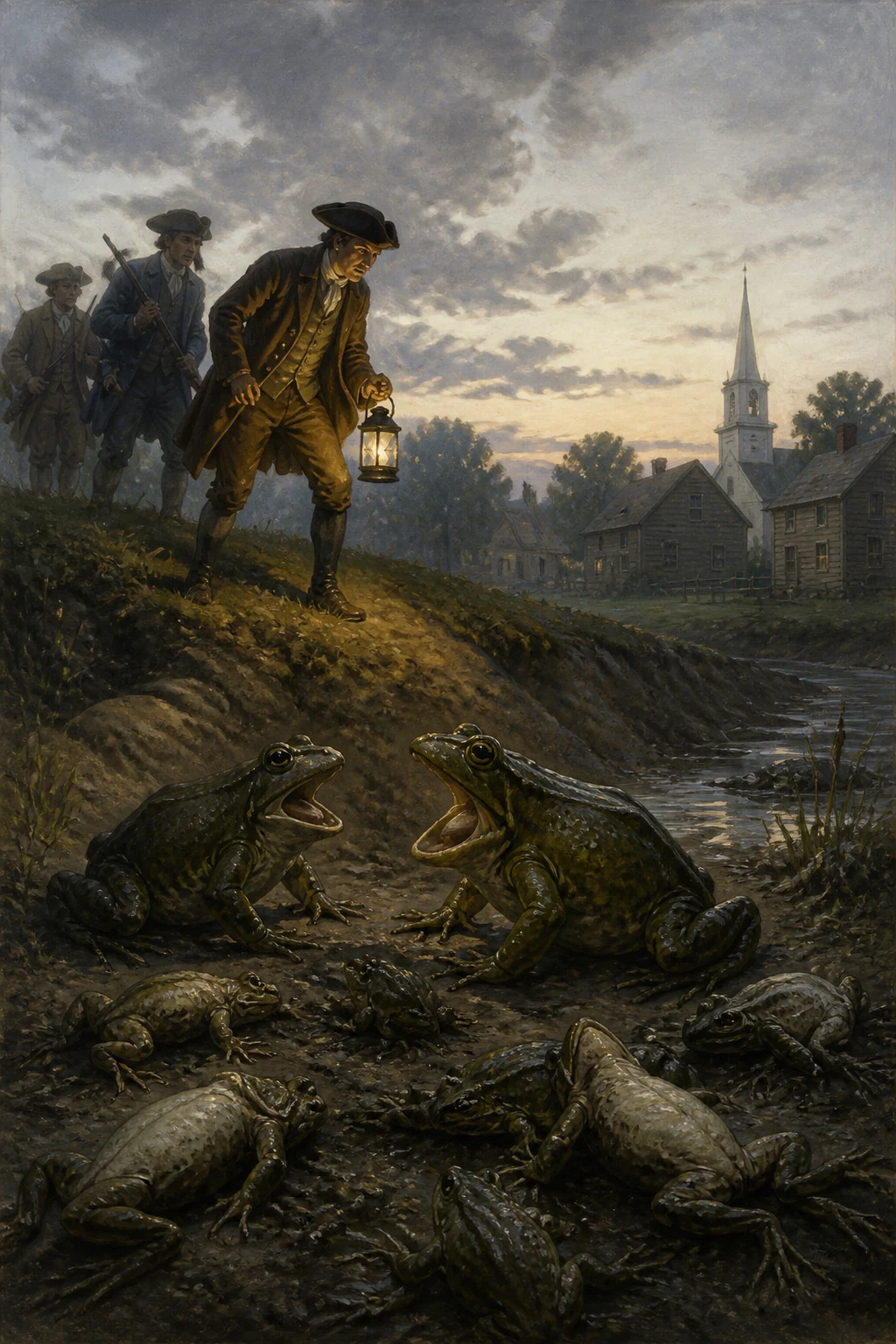
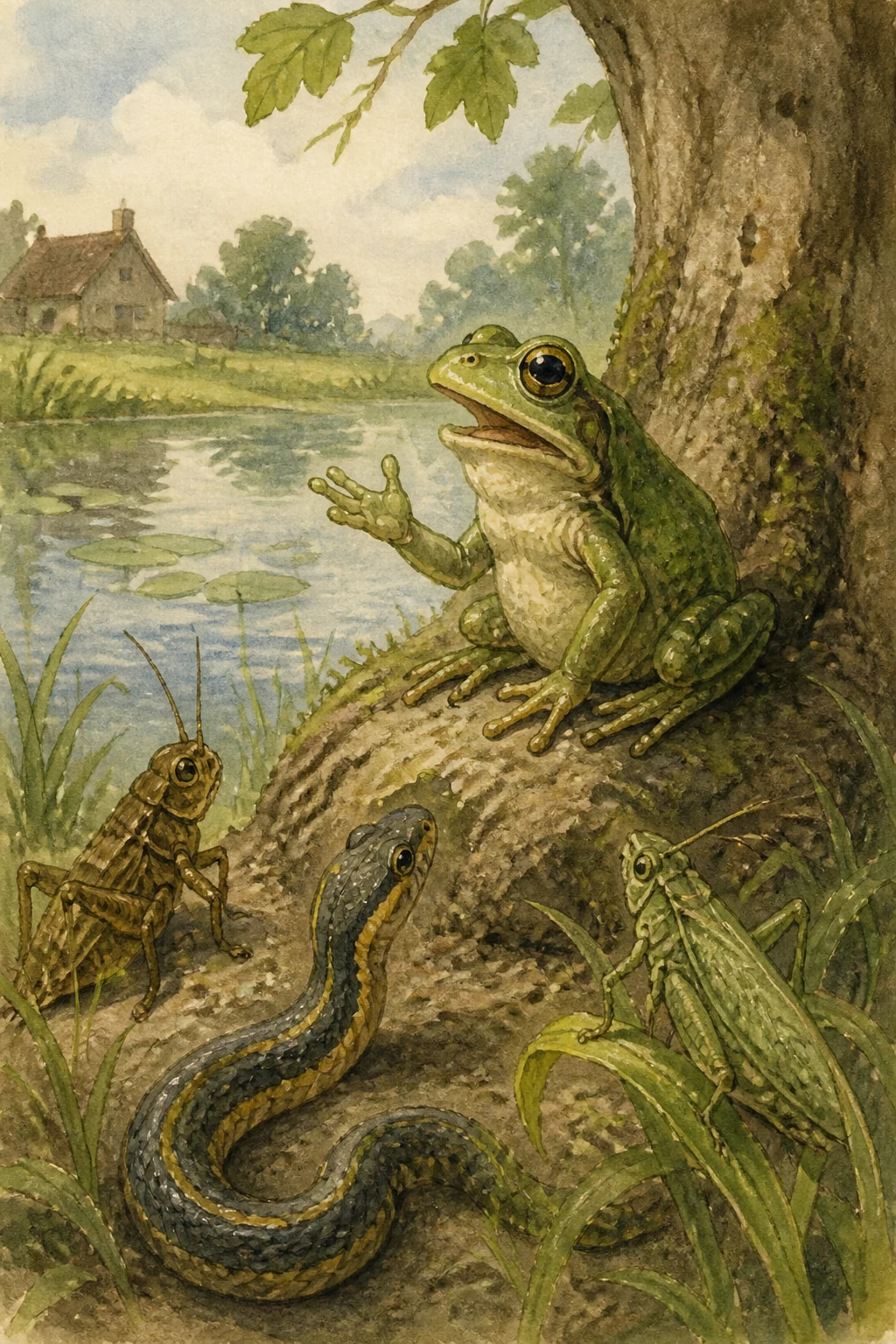
Now the Biggest Frog swallowed a great deal of air, filled the sacs on each side of his neck with it, opened his big mouth, and sang croakily, "Frogs! Frogs! Frogs! Frogs! Frogs! Frogs! Frogs! Frogs!" And all the others sang, "Frogs! Frogs! Frogs!" as long as he. The Gulls heard it, and the Muskrats heard it, and all were happy because spring had come.
A beautiful young Green Brown Frog, who had never felt grown-up until now, tried to sing with the others, but she had not a strong voice, and was glad enough to stop and visit with the Biggest Frog's Sister. "Don't you wish we could sing as loudly as they can?" said she.
"No," answered the Biggest Frog's Sister. "I would rather sit on the bank and think about my spring work. Work first, you know, and pleasure afterward!"
"Oh!" said the Green Brown Frog. "Then you don't want to sing until your work is done?"
"You may be very sure I don't want to sing then," answered the older Frog. "I am too tired. Besides, after the eggs are laid, there is no reason for wanting to sing."
"Why not?" asked the Green Brown Frog. "I don't see what difference that makes."
"That," said the older Frog wisely, "is because you are young and have never laid eggs. The great time for singing is before the eggs are laid. There is some singing afterward, but that is only because people expect it of us, and not because we have the same wish to sing." After she had said all this, which was a great deal for a Frog to say at once, she shut her big mouth and slid her eyelids over her eyes.
There was another question which the Green Brown Frog wanted very much to ask, but she had good manners and knew that it was impolite to speak to any Frog whose eyes were not open. So she closed her own eyes and tried to think what the answer would be. When she opened them again, the Biggest Frog's Sister had hopped away, and in her place sat the Yellow Brown Frog, the same handsome young fellow who had found one of his toes in the way. It quite startled her to find him sitting so close to her and she couldn't think of anything to say, so she just looked at him with her great beautiful eyes and toed in a little more with her front feet. That made him look at them and see how pretty they were, although of course this was not the reason why she had moved them.
The Yellow Brown Frog hopped a little nearer and sang as loudly as he could, "Frogs! Frogs! Frogs! Frogs! Frogs! Frogs! Frogs! Frogs!" Then she knew that he was singing just for her, and she was exceedingly happy. She swallowed air very fast because she seemed to be out of breath from thinking what she should answer. She had wanted to ask the Biggest Frog's Sister what she should say if any one sang to her alone. She knew that if she wanted to get away from him, all she had to do was to give a great jump and splash into the water. She didn't want to go away, yet she made believe that she did, for she hopped a little farther from him.
He knew she was only pretending, though, for she hadn't hopped more than the length of a grass-blade. So he followed her and kept on singing. Because she knew that she must say something, she just opened her mouth and sang the first words that she could think of; and what she sang was, "Eggs! Eggs! Eggs! Eggs! Eggs! Eggs! Eggs! Eggs!" As it happened, this was exactly what she should have sung, so he knew that she liked him. They stayed together for a long, long time, and he sang a great deal and very loudly, and she sang a little and very softly.
After a while she remembered that she was now a fully grown Frog and had spring work to do, and she said to him, "I really must lay some eggs. I am going into the water."
"Then I will go too," said he. And they gave two great leaps and came down with two great splashes.
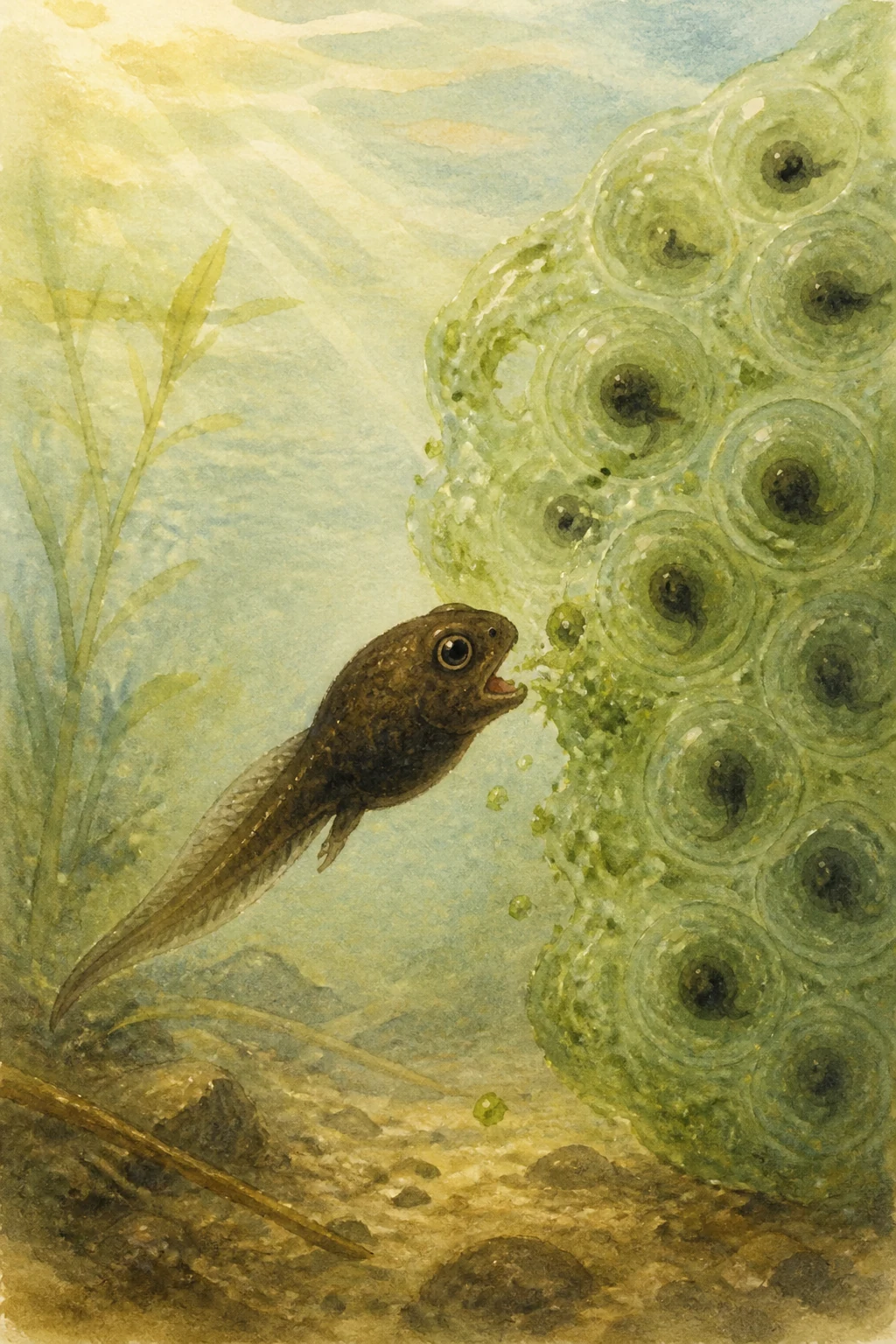
The Green Brown Frog laid eggs for four days, and the Yellow Brown Frog stayed with her all that time and took care of the eggs after she had laid them. They were covered with a sort of green jelly which made them stick to each other as they floated in little heaps on the water. The Frogs thought that a good thing, for then, when the Tadpoles hatched, each would have playmates near.
One day, after the eggs were all laid and were growing finely (for Frogs' eggs grow until the Tadpoles are ready to eat their way out), the Green Brown Frog sat alone on the bank of the pond and the Biggest Frog's Sister came to her. She had a queer smile around the corners of her mouth. Frogs have excellent mouths for smiling, but it takes a very broad smile to go way across, so when they smile a little it is only at the corners. "How are your eggs growing?" she asked.
"Oh," answered the Green Brown Frog sadly, "I can't tell which ones they are."
"That's just like a young Frog," said the Biggest Frog's Sister. "Is there any reason why you should know which ones they are? It isn't as though you were a bird and had to keep them warm, or as though you were a Mink and had to feed your children. The sun will hatch them and they will feed themselves all they need."
"I think," said the Green Brown Frog, "that my eggs were a little better than the rest."
"Yes," croaked the Biggest Frog's Sister, "every Frog thinks that."
"And I wanted to have my own Tadpoles to look after," sighed the Green Brown Frog.
"Why?" asked the Biggest Frog's Sister. "Can't you take any comfort with a Tadpole unless you laid the egg from which he was hatched? I never know one of my own eggs a day after it is laid. There are such a lot floating around that they are sure to get mixed. But I just make the best of it."
"How?" asked the Green Brown Frog, looking a little more cheerful.
"Oh, I swim around and look at all the eggs, and whenever I see any Tadpoles moving in them I think, 'Those may be mine!' As they are hatched I help any one who needs it. Poor sort of Frog it would be who couldn't like other people's Tadpoles!"
"I believe I'll do that way," said the Green Brown Frog. "And then," she added, "what a comfort it will be if any of them are cross or rude, to think, 'I'm glad I don't know that they are mine.'"
"Yes," said the Biggest Frog's Sister. "I often tell my brother that I pity people who have to bring up their own children. It is much pleasanter to let them grow up as they do and then adopt the best ones. Do you know, I have almost decided that you are my daughter? My brother said this morning that he thought you looked like me."