Waltey
Zgodba drevesne žabe
032 THE TREE FROG'S STORY
Živalske zgodbe Clare Dillingham Pierson · Clara Dillingham PiersonO besedilu
Zgodba drevesne žabe
- Vir
- Živalske zgodbe Clare Dillingham Pierson
- Avtor
- Clara Dillingham Pierson
- Jezik branja
- Slovenščina
- Jezik izvirnika
- English
- Čas branja
- 6 min branja
- Obseg
- 5 strani
- Naslov izvirnika
- 032 THE TREE FROG'S STORY
O izvirniku
Živalske zgodbe Clare Dillingham Pierson
Devetindevetdeset avtorskih zgodb o živalih na kmetiji, travniku, v gozdu, ob ribniku in ponoči. Bralni jezik je Slovenščina, izvirnik pa prihaja iz vira Živalske zgodbe Clare Dillingham Pierson v jeziku English.
Besedilo
Zgodba drevesne žabe
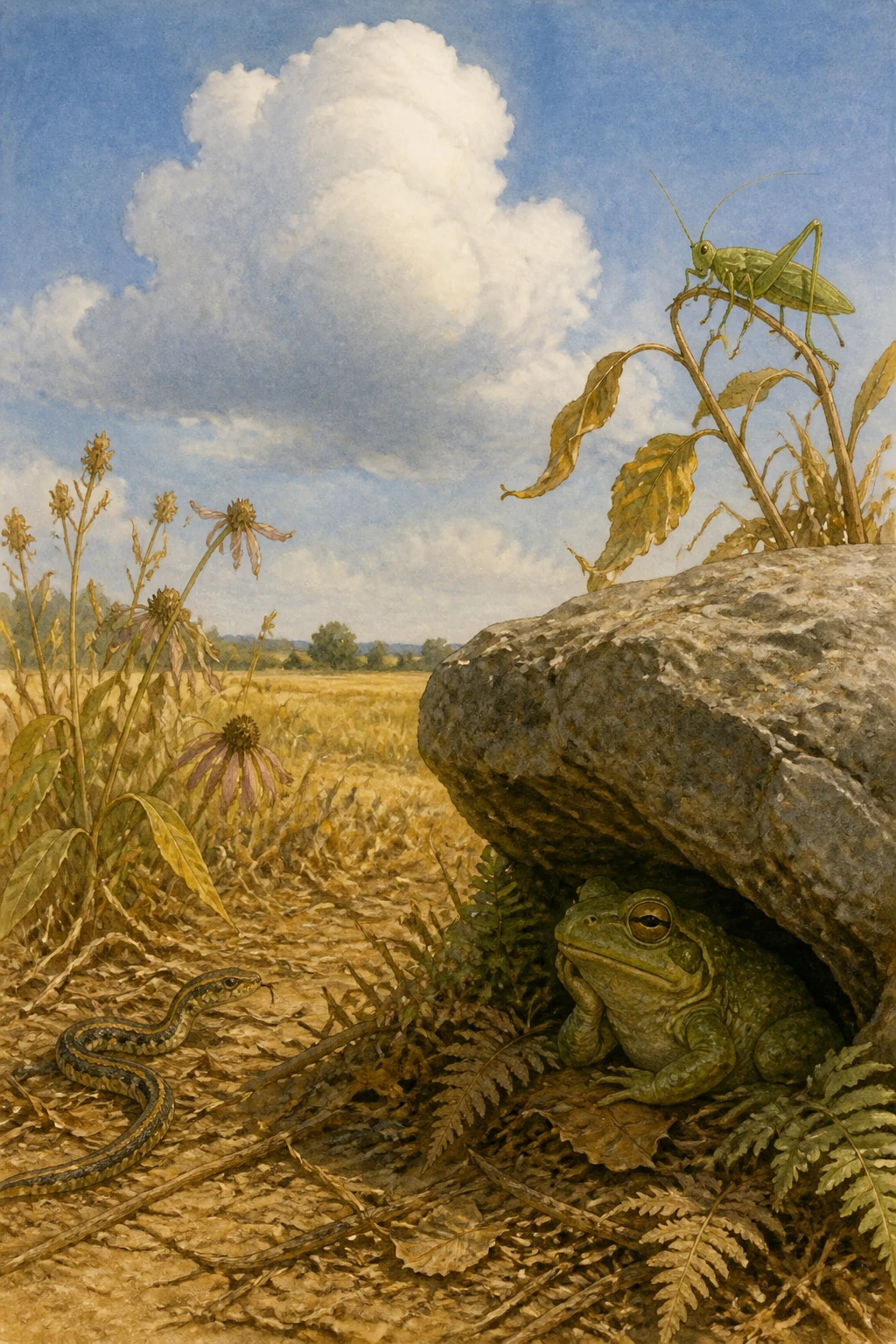
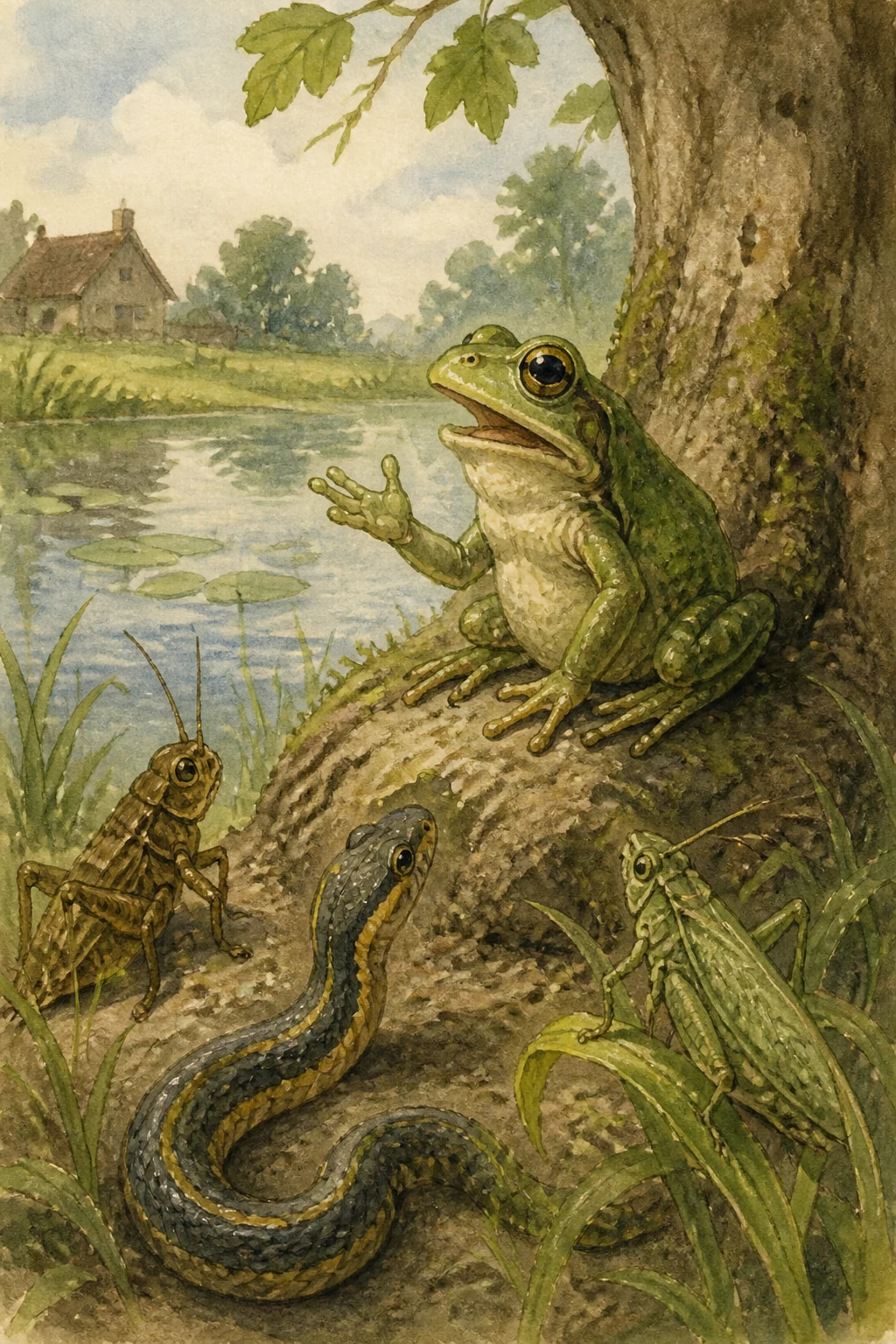
Na vsem travniku ni bilo nikogar, ki bi znal pripovedovati tako zanimive zgodbe kakor stari Drevesni žabec. Niti kača Podveznica, ki je bila tam že najdlje, niti stari Čriček, ki je nekoč živel na kmečkem dvorišču, nista znala pripovedovati tako razburljivih zgodb kakor on. Vse čudovite reči, o katerih je pripovedoval, so se mu zgodile, preden je prišel na travnik, ko je bil še mlad žabec. Nihče od njegovih prijateljev ga takrat še ni poznal, a bil je poštenjak in vsi so bili prepričani, da je vse, kar pove, res. Sicer pa je že moralo biti res, saj si vendar nihče ne bi mogel kar iz glave izmisliti tako nenavadnih zgodb!
Ko je prvič prišel v svoj dom ob brestu, je bil zelo suh in videti je bilo, kakor da je prebolel bolezen. Dolgotipalčne kobilice, ki so živele v bližini, so pravile, da reglja v spanju, to pa, kot veste, ni nekaj, kar bi počeli zdravi in srečni žabci.
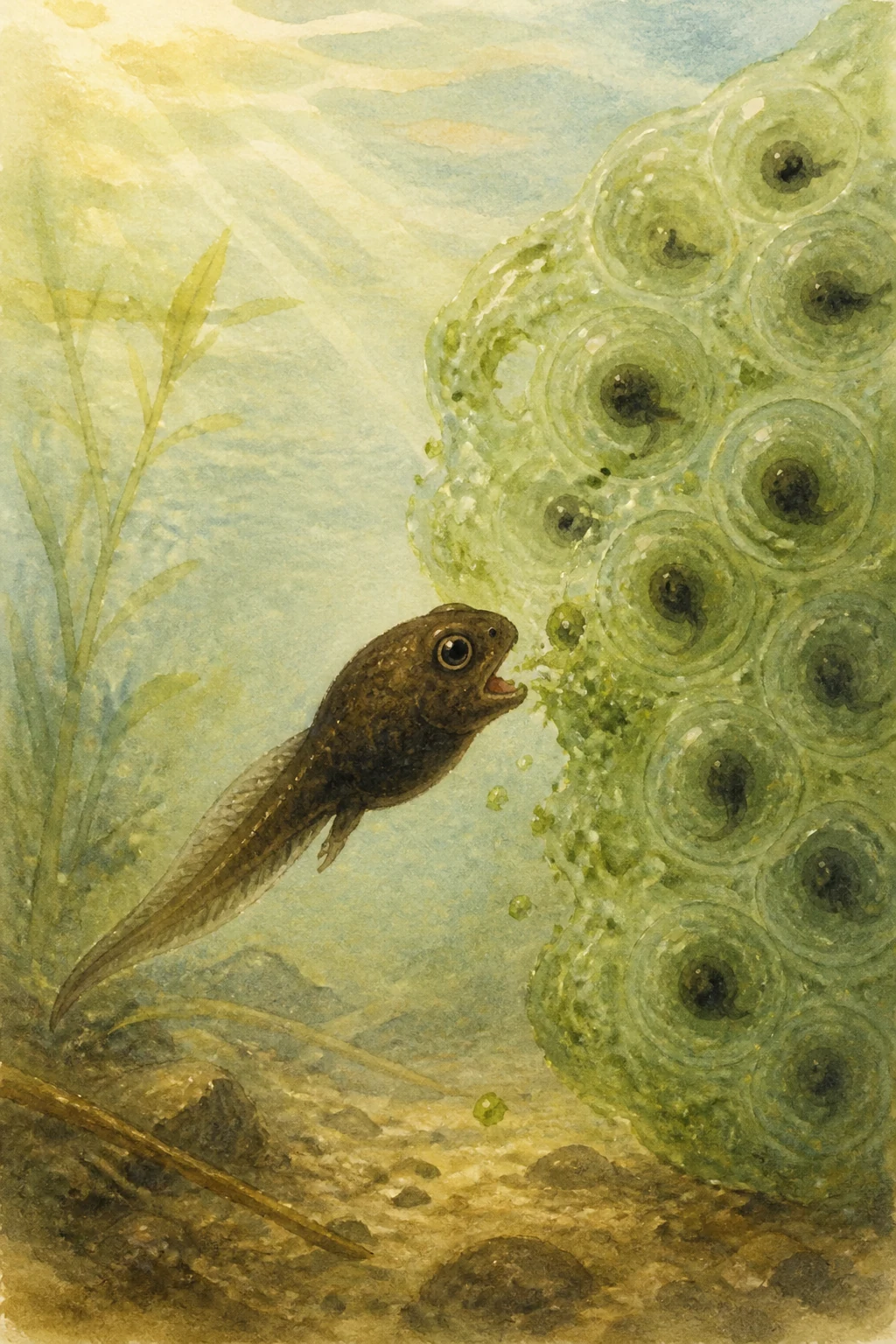
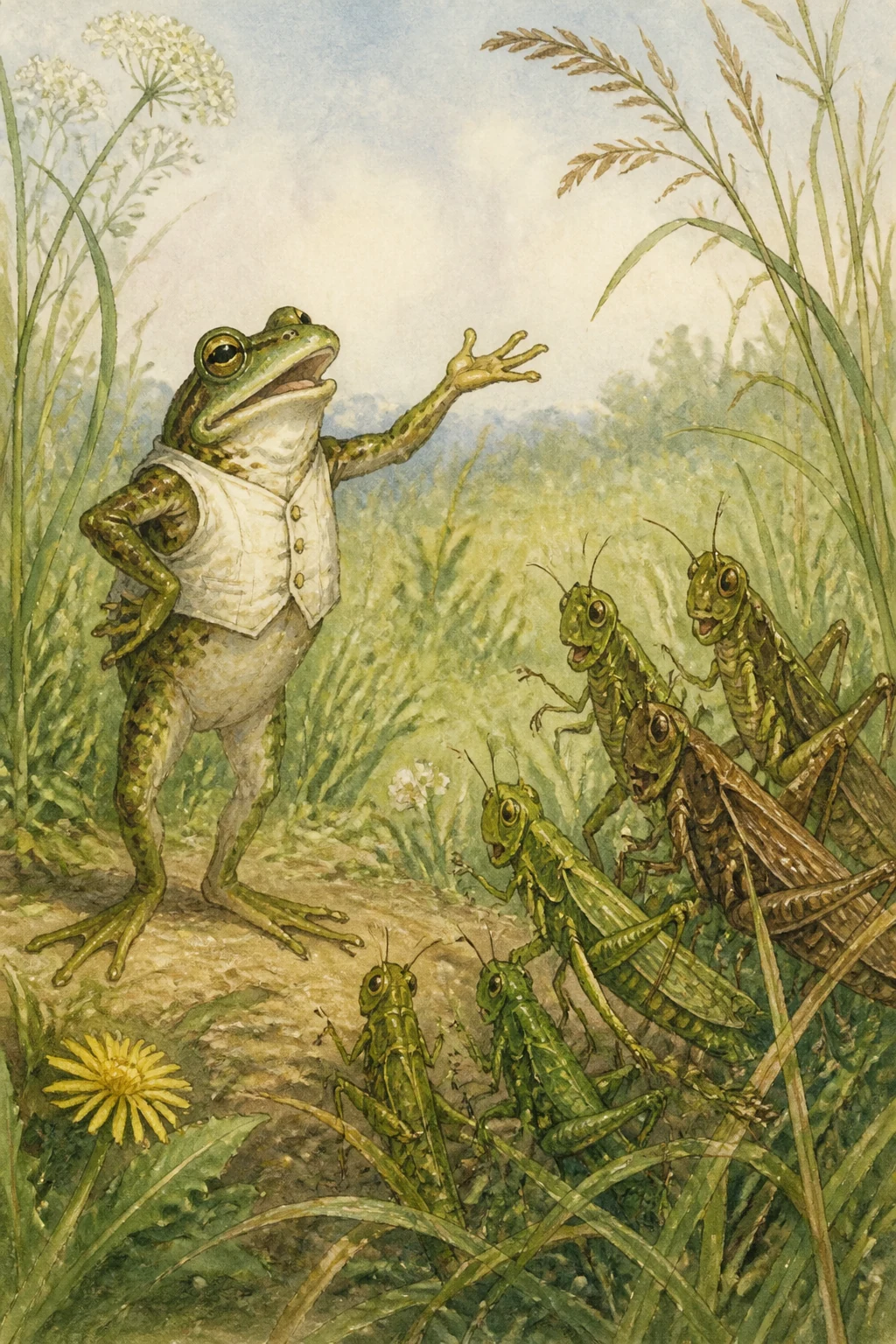
Nekega dne, ko se je okoli njega zbralo veliko prebivalcev travnika, jim je povedal svojo zgodbo. »Ko sem bil še majhen,« je rekel, »sem bil močan in zdrav in sem lahko skočil dlje od vsakega drugega žabca moje velikosti. Izvalil sem se v ribniku za kmečko hišo in si, kakor vsak drug žabec, pregrizel pot iz jajčeca v vodo. Morda bi moral reči: kakor vsak drug paglavec, saj sem življenje seveda začel kot paglavec. Igral sem se in jedel s svojimi brati in sestrami, pa se mi še sanjalo ni, kakšne težave me čakajo, ko odrastem. Vsem se nam je mudilo postati žabci in pogosto smo se pogovarjali o tem, kaj bomo počeli in kako daleč bomo potovali, ko bomo odrasli.
»Oh, kako srečni smo bili takrat! Spominjam se dneva, ko so mi začele rasti zadnje noge, in kako so se drugi paglavci v vodi gnetli okoli mene ter plavali čisto ob meni, da bi otipali drobni izboklinici, iz katerih naj bi zrasli nogi. Sprednje noge so mi zrasle šele pozneje, ti izboklinici pa sta se pojavili tik pred repom.«
»Repom!« je vzkliknil mladi Čriček, ves začuden. »Saj vendar nimaš repa!« »Imel sem ga, ko sem bil paglavec,« je rekel Drevesni žabec. »Imel sem čudovit, gibek repek, s katerim sem plaval po ribniku. A ko so moje noge postajale večje in močnejše, je rep postajal manjši in šibkejši, dokler ni povsem izginil. Ko repa ni bilo več, sem imel štiri krepke noge in sem lahko dihal tako skozi nos kakor skozi kožo. Blazinice na konicah mojih prstov so bile lepljive, tako da sem lahko splezal na drevo, in tedaj sem bil pripravljen oditi na pot. Nekaj drugih žabcev se je odpravilo z menoj, a so se spotoma ustavili in nazadnje sem ostal sam.
»Bil sem drzen mladenič, in ko sem tam zgoraj med drevesi zagledal veliko belo reč, sem sklenil pogledati, kaj je. Na dvorišču ob njej je stala velika rdeča reč, toda bela mi je bila bolj všeč. Skakal sem naprej, kolikor hitro sem mogel, saj takrat še nisem bil dovolj pameten, da bi me bilo strah. Prišel sem čisto blizu obeh in zagledal nenavadna velika bitja, ki so hodila v rdečo reč in iz nje — v skedenj, kakor sem pozneje izvedel, da se mu reče. Največja bitja so imela štiri noge in nekatera tudi rogove. Manjša bitja so imela le dve nogi za hojo in še dva nekakšna uda, s katerima so dvigovala in prenašala stvari. Najbolj čudno pa je bilo, da so manjša bitja očitno pripravila večja do tega, da so naredila vse, kar so hotela od njih. Nekatera so morala celo pomagati pri njihovem delu. Morda mi ne boste verjeli, toda govorim vam resnico. Videl sem dve večji bitji, privezani k velikemu tovoru posušene trave, ki sta ga vlekli v skedenj.
»Kot si lahko mislite, sem dolgo ostal tam in opazoval ta nenavadna bitja pri delu. Nato sem se odpravil proti beli reči in izvedel, da je to kmečka hiša. Tu je bilo še več dvonožnih bitij, a oblečena so bila drugače kakor tista v skednju. Ob hiši so rasle živopisane cvetlice in zlezel sem mednje. Tam sem počival do sončnega zahoda, nato pa začel svojo večerno pesem. Medtem ko sem pel, je iz hiše prišla ena od ljudi in me našla. Pobrala me je in odnesla noter. Oh, kako me je bilo strah! Srce mi je razbijalo, kakor da bo počilo, in na vse kriplje sem se trudil, da bi ji ušel. Nič mi ni storila, a izpustiti me tudi ni hotela.
»Dala me je v zelo nenavadno ječo. Sprva, ko me je položila na kamen v vodi, nisem vedel, da sem zaprt. Poskusil sem odskakljati proč in — bum! — z glavo sem treščil ob nekaj. A ko sem se umaknil, nisem videl nobene stene. Poskušal sem znova in znova in se vsakič udaril v glavo. Resnico vam povem, prijatelji: tiste stene so bile iz nečesa, skozi kar se je dalo videti.«
»Neverjetno!« so vzkliknili vsi prebivalci travnika. »Res neverjetno!« »Na vrhu,« je nadaljeval Drevesni žabec, »pa je bilo čez vhod v mojo ječo nekaj belega. Na dnu sta bila voda in kamen, od dna do vrha pa je segala lestev. Tam sem moral preživeti večino poletja. Hrane sem imel dovolj, toda kdor je bil nekoč svoboden, ne more biti srečen v ječi. Prežal sem na priložnost in trikrat sem ušel, ko vratca niso bila povsem zaprta. Dvakrat so me ujeli in vrnili vanjo. Ob lepem vremenu sem seveda splezal na vrh lestve, kadar se je bližal dež, pa sem se spustil nazaj dol. Vsakič, ko sem šel gor ali dol, so tista strašna bitja približala obraze moji ječi in slišal sem hrumenje, ki je pomenilo, da govorijo in se smejijo.
»Ko sem zadnjič ušel, sem se skril blizu hišnih vrat, in čeprav so me iskali in iskali, me niso našli. Ko so nehali iskati, je veter odpihnil vrata, da so se odprla, jaz pa sem odskakljal ven.«
»Ne more biti!« je vzkliknila Kobilica. »Pa je! Odskakljal sem ven in jo skozi travo ucvrl, kolikor hitro sem mogel. Vi, ki niste bili nikoli zaprti, si ne morete predstavljati, kako srečen sem bil. Zdelo se mi je, da je dovolj že samo pretegniti noge, pa bom ves iz sebe od veselja. No, prišel sem naravnost sem in vsi ste bili prijazni z menoj, a še dolgo nisem mogel spati, ne da bi sanjal, da sem spet v ječi, in ob tem sem regljal v spanju.«
»Slišala sem te,« je vzkliknila Dolgotipalčna kobilica, »in spraševala sem se, kaj je narobe.« »Še preveč je bilo narobe,« je rekel Drevesni žabec. »Še zdaj se mi koža izsuši, če pomislim na to. In, prijatelji, vašo prijaznost vam lahko najbolje poplačam tako, da vam povem: nikoli, nikoli, nikoli, nikoli ne hodite blizu kmečke hiše.«
In vsi so odgovorili: »Nikoli ne bomo.«
Izvirnik
032 THE TREE FROG'S STORY
Naslednje strani prikazujejo izvirno besedilo za primerjavo.
In all the meadow there was nobody who could tell such interesting stories as the old Tree Frog. Even the Garter Snake, who had been there the longest, and the old Cricket, who had lived in the farm-yard, could tell no such exciting tales as the Tree Frog. All the wonderful things of which he told had happened before he came to the meadow, and while he was still a young Frog. None of his friends had known him then, but he was an honest fellow, and they were sure that everything he told was true: besides, they must be true, for how could a body ever think out such remarkable tales from his own head?
When he first came to his home by the elm tree he was very thin, and looked as though he had been sick. The Katydids who stayed near said that he croaked in his sleep, and that, you know, is not what well and happy Frogs should do.
One day when many of the meadow people were gathered around him, he told them his story. "When I was a little fellow," he said, "I was strong and well, and could leap farther than any other Frog of my size. I was hatched in the pond beyond the farm-house, and ate my way from the egg to the water outside like any other Frog. Perhaps I ought to say, 'like any other Tadpole,' for, of course, I began life as a Tadpole. I played and ate with my brothers and sisters, and little dreamed what trouble was in store for me when I grew up. We were all in a hurry to be Frogs, and often talked of what we would do and how far we would travel when we were grown.
"Oh, how happy we were then! I remember the day when my hind legs began to grow, and how the other Tadpoles crowded around me in the water and swam close to me to feel the two little bunches that were to be legs. My fore legs did not grow until later, and these bunches came just in front of my tail."
"Your tail!" cried a puzzled young Cricket; "why, you haven't any tail!"
"I did have when I was a Tadpole," said the Tree Frog. "I had a beautiful, wiggly little tail with which to swim through the waters of the pond; but as my legs grew larger and stronger, my tail grew littler and weaker, until there wasn't any tail left. By the time my tail was gone I had four good legs, and could breathe through both my nose and my skin. The knobs on the ends of my toes were sticky, so that I could climb a tree, and then I was ready to start on my travels. Some of the other Frogs started with me, but they stopped along the way, and at last I was alone.
"I was a bold young fellow, and when I saw a great white thing among the trees up yonder, I made up my mind to see what it was. There was a great red thing in the yard beside it, but I liked the white one better. I hopped along as fast as I could, for I did not then know enough to be afraid. I got close up to them both, and saw strange, big creatures going in and out of the red thing--the barn, as I afterward found it was called. The largest creatures had four legs, and some of them had horns. The smaller creatures had only two legs on which to walk, and two other limbs of some sort with which they lifted and carried things. The queerest thing about it was, that the smaller creatures seemed to make the larger ones do whatever they wanted them to. They even made some of them help do their work. You may not believe me, but what I tell you is true. I saw two of the larger ones tied to a great load of dried grass and pulling it into the barn.
"As you may guess, I stayed there a long time, watching these strange creatures work. Then I went over toward the white thing, and that, I found out, was the farm-house. Here were more of the two-legged creatures, but they were dressed differently from those in the barn. There were some bright-colored flowers near the house, and I crawled in among them. There I rested until sunset, and then began my evening song. While I was singing, one of the people from the house came out and found me. She picked me up and carried me inside. Oh, how frightened I was! My heart thumped as though it would burst, and I tried my best to get away from her. She didn't hurt me at all, but she would not let me go.
"She put me in a very queer prison. At first, when she put me down on a stone in some water, I did not know that I was in prison. I tried to hop away, and--bump! went my head against something. Yet when I drew back, I could see no wall there. I tried it again and again, and every time I hurt my head. I tell you the truth, my friends, those walls were made of something which one could see through."
"Wonderful!" exclaimed all the meadow people; "wonderful, indeed!"
"And at the top," continued the Tree Frog, "was something white over the doorway into my prison. In the bottom were water and a stone, and from the bottom to the top was a ladder. There I had to live for most of the summer. I had enough to eat; but anybody who has been free cannot be happy shut in. I watched my chance, and three times I got out when the little door was not quite closed. Twice I was caught and put back. In the pleasant weather, of course, I went to the top of the ladder, and when it was going to rain I would go down again. Every time that I went up or down, those dreadful creatures would put their faces up close to my prison, and I could hear a roaring sound which meant they were talking and laughing.
"The last time I got out, I hid near the door of the house, and although they hunted and hunted for me, they didn't find me. After they stopped hunting, the wind blew the door open, and I hopped out."
"You don't say!" exclaimed a Grasshopper.
"Yes, I hopped out and scrambled away through the grass as fast as ever I could. You people who have never been in prison cannot think how happy I was. It seemed to me that just stretching my legs was enough to make me wild with joy. Well, I came right here, and you were all kind to me, but for a long time I could not sleep without dreaming that I was back in prison, and I would croak in my sleep at the thought of it."
"I heard you," cried the Katydid, "and I wondered what was the matter."
"Matter enough," said the Tree Frog. "It makes my skin dry to think of it now. And, friends, the best way I can ever repay your kindness to me, is to tell you to never, never, never, never go near the farm-house."
And they all answered, "We never will."
Nadaljuj z branjem