Prevod
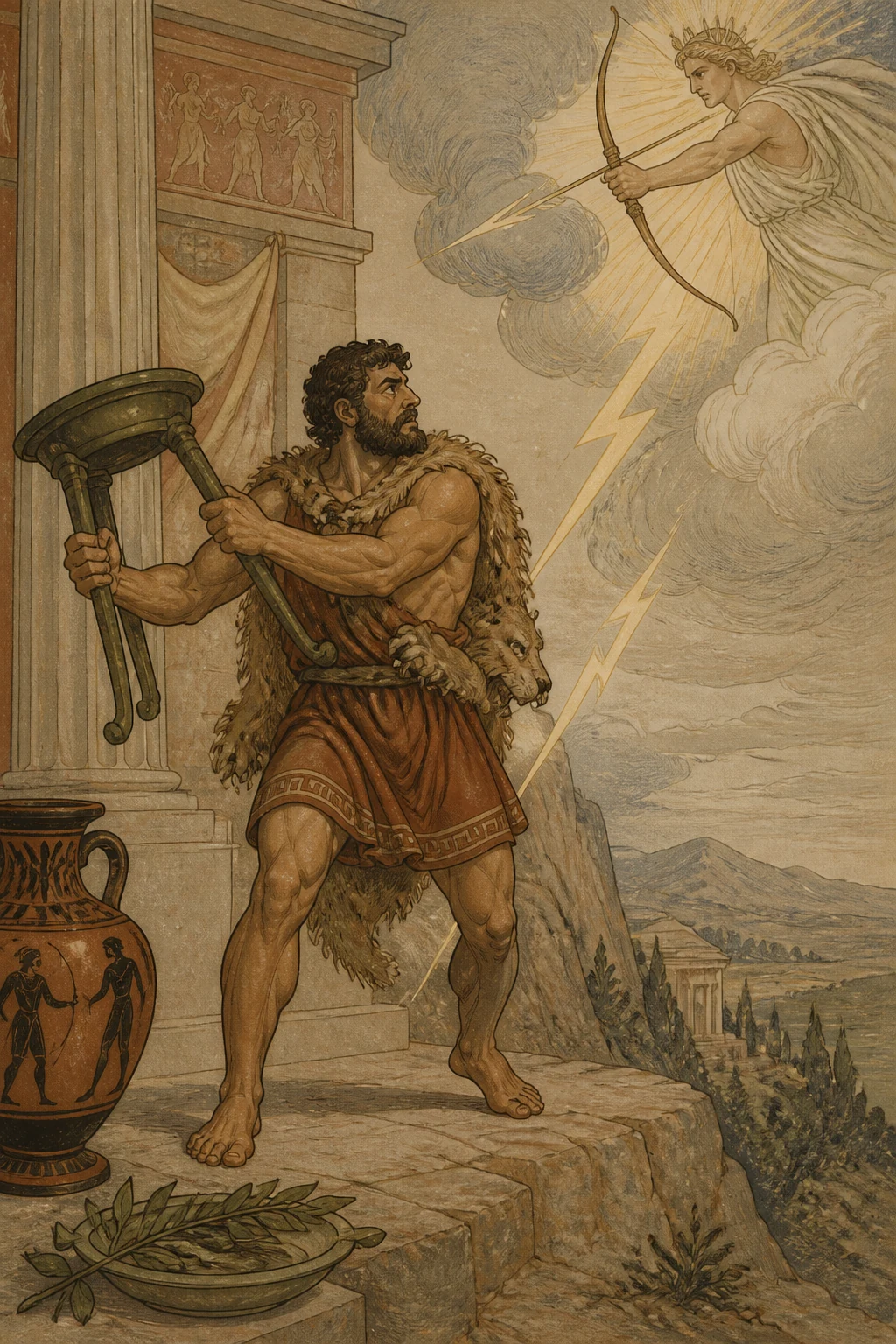
1. Oeneus, king of Calydon, was the first to receive a vine plant from Dionysus. He married Althaea, daughter of Thestius, and fathered Toxeus, whom he himself killed for leaping over the ditch; besides him, he had Thyreus and Clymenus, and a daughter, Gorge, whom Andraemon married, and Deianira, whom Althaea is said to have borne to Dionysus. Deianira drove a chariot and practised the arts of war, and Heracles wrestled with Achelous for her hand.
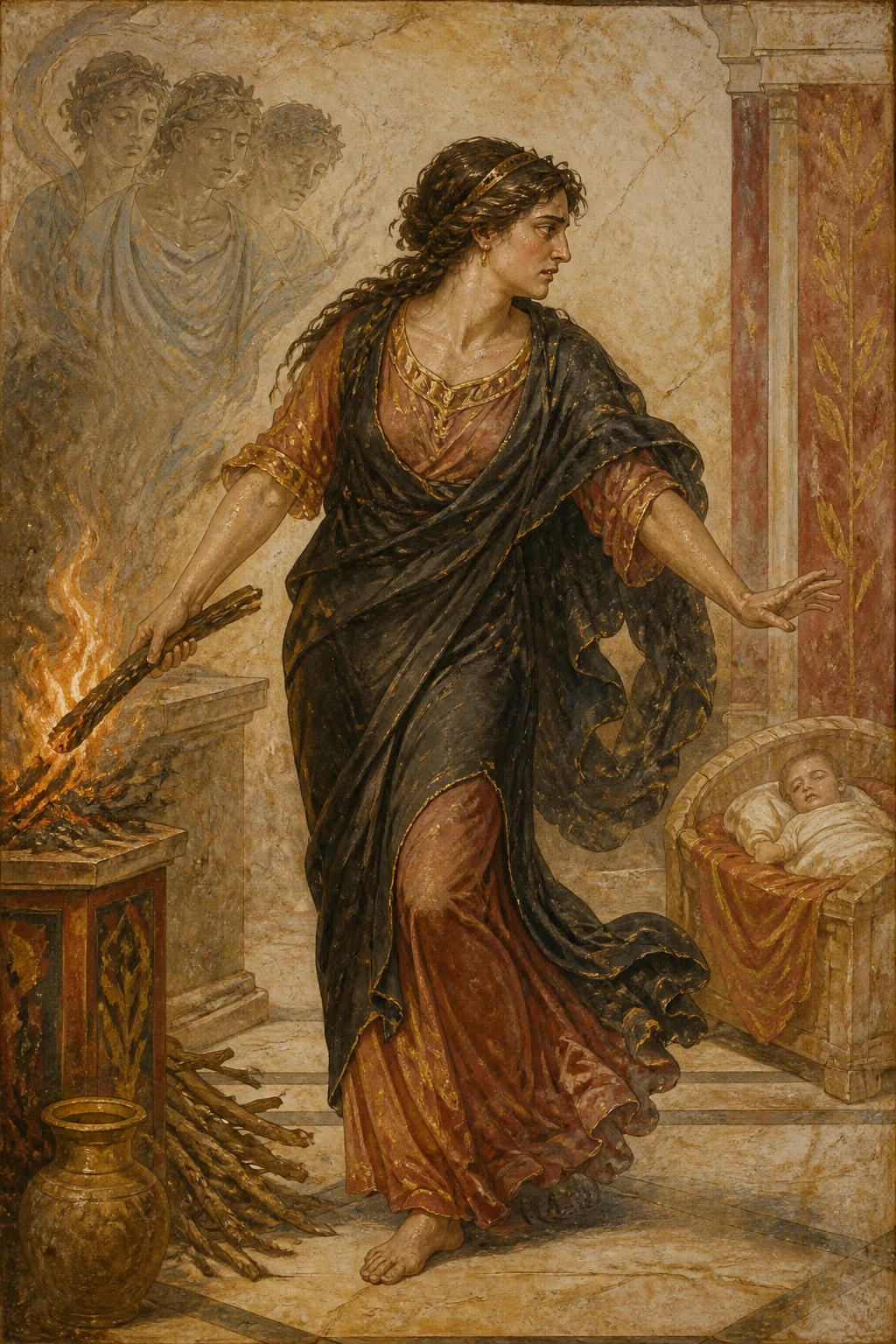
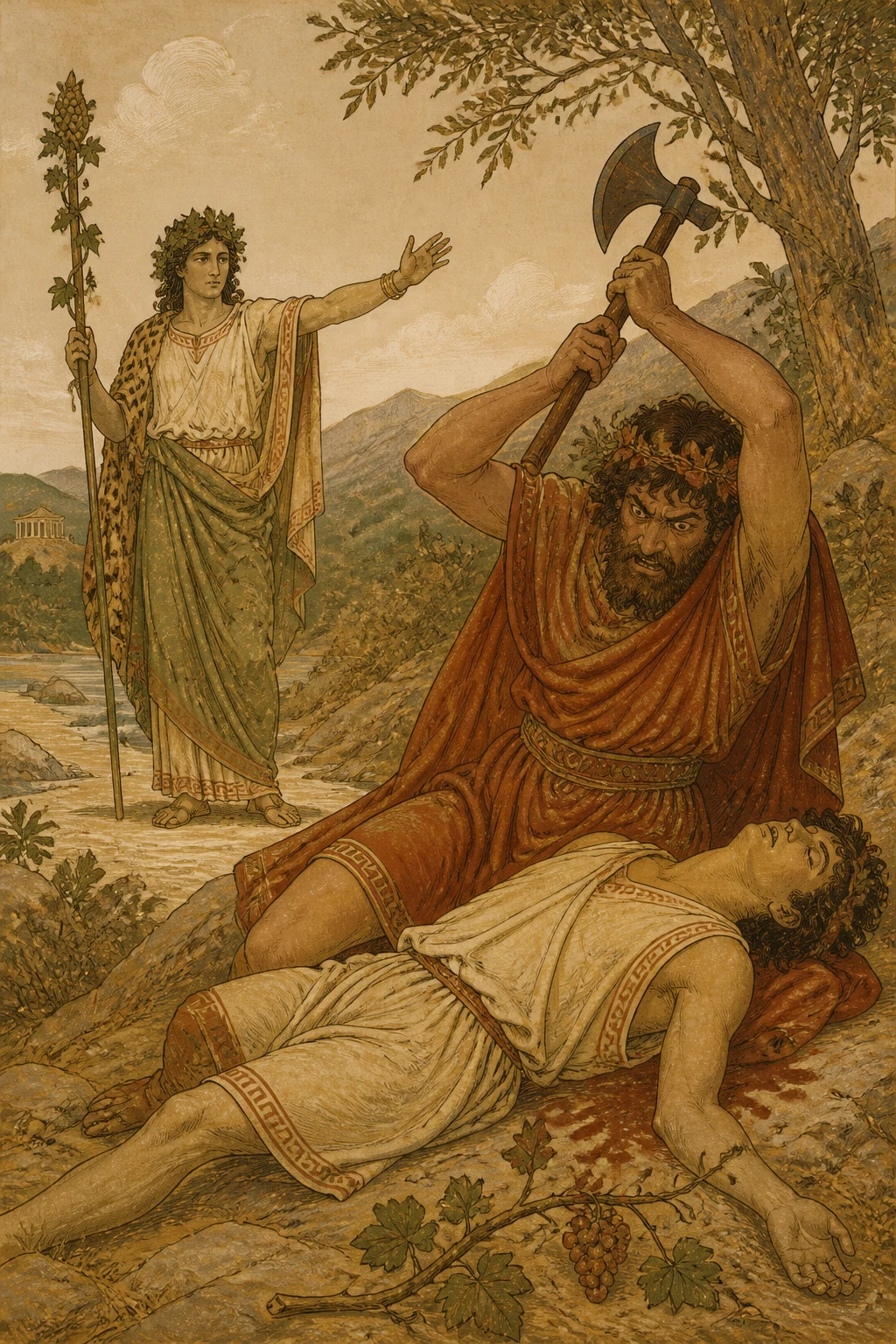
2. Althaea also bore Oeneus a son, Meleager, though they say that his father was Ares. When he was seven days old, the Fates are said to have appeared and declared that Meleager would die when the brand burning on the hearth had been consumed. On hearing this, Althaea took up the brand and laid it in a chest. Meleager grew into a brave man, invulnerable to wounds, but met his death in the following way. When the year's crops had ripened in the country, Oeneus offered the first fruits to all the gods, but forgot Artemis alone. In her anger she sent a boar of extraordinary size and strength, which made the land impossible to sow and destroyed the cattle and anyone it encountered. To hunt this boar, Oeneus summoned all the finest men in Greece and promised to give its hide as a prize to whoever killed the beast. Those who assembled for the boar hunt were these: Meleager, son of Oeneus, and Dryas, son of Ares, both from Calydon; Idas and Lynceus, sons of Aphareus, from Messene; Castor and Polydeuces, sons of Zeus and Leda, from Lacedaemon; Theseus, son of Aegeus, from Athens; Admetus, son of Pheres, from Pherae; Ancaeus and Cepheus, sons of Lycurgus, from Arcadia; Jason, son of Aeson, from Iolcus; Iphicles, son of Amphitryon, from Thebes; Pirithous, son of Ixion, from Larissa; Peleus, son of Aeacus, from Phthia; Telamon, son of Aeacus, from Salamis; Eurytion, son of Actor, from Phthia; Atalanta, daughter of Schoeneus, from Arcadia; and Amphiaraus, son of Oicles, from Argos. The sons of Thestius came with them as well. Once they had gathered, Oeneus entertained them for nine days. On the tenth, Cepheus, Ancaeus, and some of the others disdained to go hunting with a woman. But Meleager, though married to Cleopatra, daughter of Idas and Marpessa, wished to have children by Atalanta as well, and compelled them to join her in the hunt. When they surrounded the boar, Hyleus and Ancaeus were killed by the beast, and Peleus accidentally struck Eurytion dead with his javelin. Atalanta was the first to hit the boar, shooting it in the back, and Amphiaraus struck it next, in the eye. Meleager killed it with a blow to the flank, then took the hide and gave it to Atalanta.
But the sons of Thestius, thinking it a disgrace that a woman should receive the prize of valour when men were present, took the hide from her, saying that it belonged to them by right of kinship if Meleager chose not to keep it.
3. Enraged, Meleager killed the sons of Thestius and gave the hide to Atalanta. Grieving over the loss of her brothers, Althaea set fire to the brand, and Meleager died at once. Some, however, say that Meleager did not die in this way. According to them, the sons of Thestius disputed possession of the hide on the grounds that Iphiclus had struck the first blow, and war broke out between the Curetes and the Calydonians. Meleager went out to fight and killed some of the sons of Thestius, whereupon Althaea cursed him, and in his anger he remained at home. When the enemy was already approaching the walls and the citizens were begging him to come to their aid, his wife at last prevailed upon him to go out. He killed the remaining sons of Thestius and died fighting. After Meleager's death, Althaea and Cleopatra hanged themselves, and the women who mourned over his body were transformed into birds.
4. After Althaea's death, Oeneus married Periboea, daughter of Hipponous. The author of the Thebaid says that Oeneus received her as a prize of war when Olenus was conquered. Hesiod, however, says that after she had been seduced by Hippostratus, son of Amarynceus, her father Hipponous sent her from Olenus in Achaea to Oeneus, who lived far away in Greece, with instructions to put her to death.
5. Others say that Hipponous, on discovering that his own daughter had been seduced by Oeneus, sent her to him pregnant. By her Oeneus had a son, Tydeus. Peisander, however, says that Tydeus was born to Gorge, for by the will of Zeus Oeneus had fallen in love with his own daughter. Tydeus grew into a brave man, but was exiled for murder. According to some, he had killed Alcathous, the brother of Oeneus; according to the author of the Alcmaeonid, he had killed the sons of Melas, who were plotting against Oeneus—Pheneus, Euryalus, Hyperlaus, Antiochus, Eumedes, Sternops, Xanthippus, and Sthenelaus; but according to Pherecydes, he had killed his own brother Olenias.
When Agrius brought charges against him, Tydeus fled to Adrastus at Argos, married his daughter Deipyle, and fathered Diomedes. Later, Tydeus marched against Thebes with Adrastus and died of a wound inflicted by Melanippus.
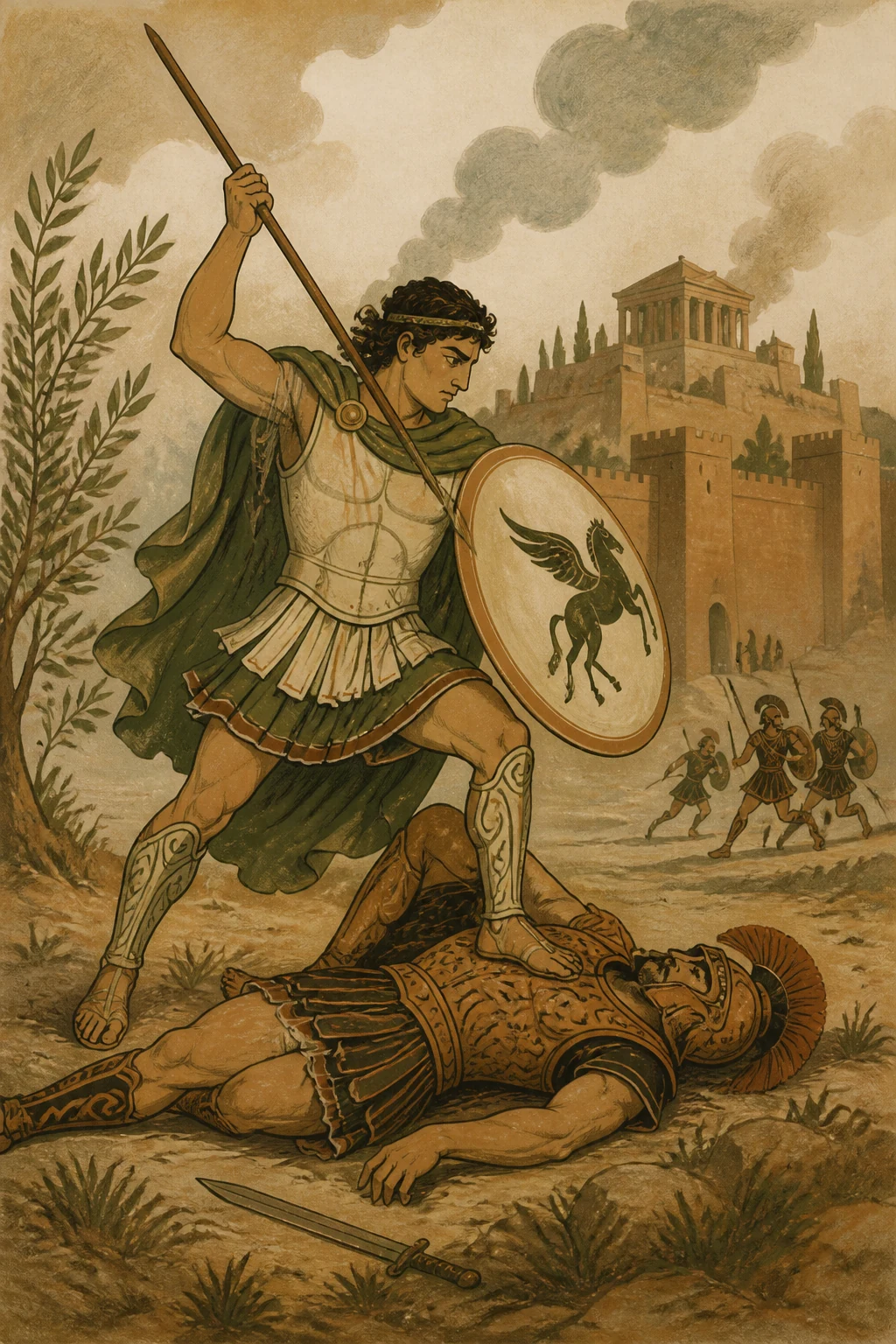
6. The sons of Agrius—Thersites, Onchestus, Prothous, Celeutor, Lycopeus, and Melanippus—took the kingdom from Oeneus and gave it to their father. They also imprisoned Oeneus and tormented him while he was still alive. Later, Diomedes secretly came from Argos with Alcmaeon and killed all the sons of Agrius except Onchestus and Thersites, who had already fled to the Peloponnese. Since Oeneus was old, Diomedes gave the kingdom to Andraemon, who had married Oeneus's daughter, and took Oeneus with him to the Peloponnese.
But the surviving sons of Agrius lay in wait near the Hearth of Telephus in Arcadia and killed the old man. Diomedes brought his body to Argos and buried it where the city now called Oenoe takes its name from him. He married Aegialia, daughter of Adrastus—or, as some say, of Aegialeus—and marched against both Thebes and Troy.