Waltey
Antigona in maščevanje epigonov
Apolodorjeva knjižnica · ApolodorO besedilu
Antigona in maščevanje epigonov
- Vir
- Apolodorjeva knjižnica
- Avtor
- Apolodor
- Jezik branja
- English
- Jezik izvirnika
- Ancient Greek
- Čas branja
- 5 min branja
- Obseg
- 4 strani
- Naslov izvirnika
- Book 3 chapter 7
O izvirniku
Apolodorjeva knjižnica
Strnjen zemljevid grških mitov, rodov, junakov in pošasti. Bralni jezik je English, izvirnik pa prihaja iz vira Apolodorjeva knjižnica v jeziku Ancient Greek.
Besedilo
Antigona in maščevanje epigonov
1. Creon, on assuming the kingship of Thebes, cast out the Argive dead unburied, proclaimed that no one was to bury them, and posted guards. But Antigone, one of the daughters of Oedipus, secretly stole away the body of Polynices and buried it. When she was discovered, Creon had her shut up alive in the tomb itself. Adrastus came to Athens and took refuge at the altar of Mercy, where he laid a suppliant’s branch and begged that the dead be buried. The Athenians marched with Theseus, captured Thebes, and gave the dead to their families for burial. As the funeral pyre of Capaneus was burning, Evadne, his wife and the daughter of Iphis, threw herself upon it and was burned with him.
2. Ten years later, the sons of those who had perished, known as the Epigoni, resolved to march against Thebes, wishing to avenge their fathers’ deaths.
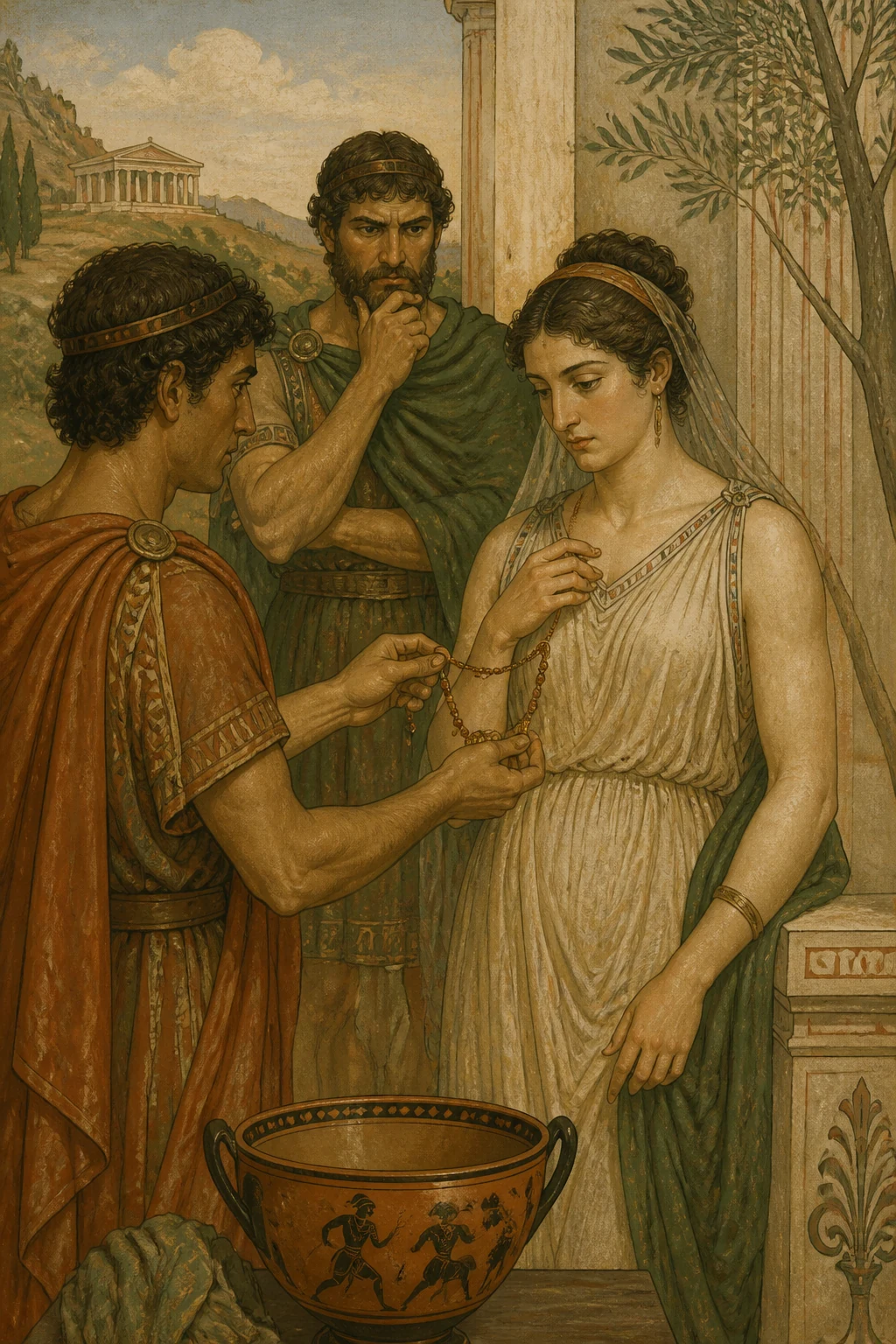
When they consulted the oracle, the god foretold victory if Alcmaeon led them. Alcmaeon was unwilling to lead the expedition before punishing his mother, but nevertheless joined the campaign; for Eriphyle had received the robe from Thersander, the son of Polynices, and had persuaded her sons also to go to war. They chose Alcmaeon as their commander and made war on Thebes. Those who took part in the expedition were Alcmaeon and Amphilochus, sons of Amphiaraus; Aegialeus, son of Adrastus; Diomedes, son of Tydeus; Promachus, son of Parthenopaeus; Sthenelus, son of Capaneus; Thersander, son of Polynices; and Euryalus, son of Mecisteus.
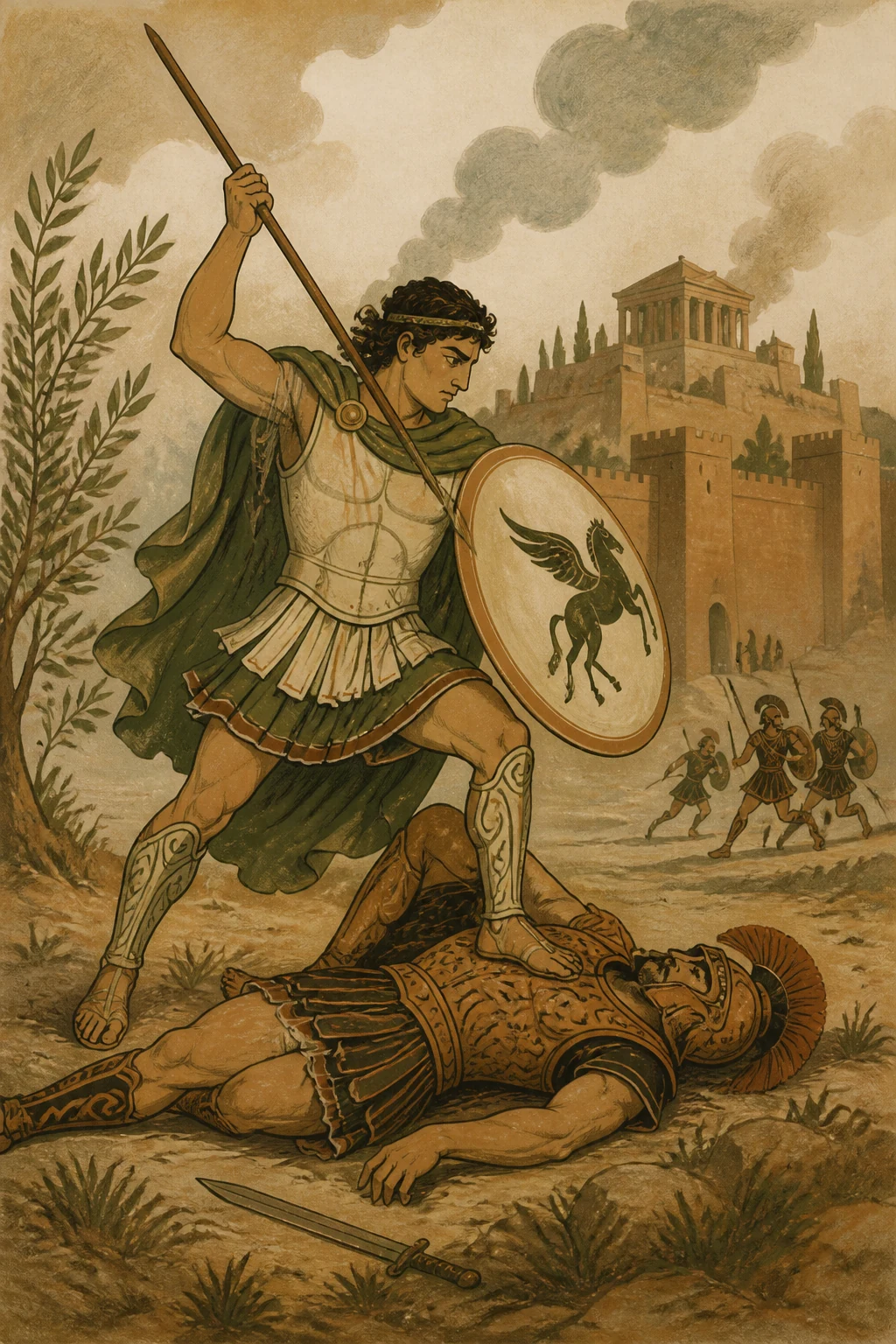
3. They first ravaged the surrounding villages, and then, when the Thebans advanced under the command of Laodamas, the son of Eteocles, they fought bravely. Laodamas killed Aegialeus, but Alcmaeon killed Laodamas.
After his death, the Thebans fled together within their walls. Tiresias advised them to send a herald to the Argives to negotiate a truce, while they themselves fled. Accordingly, they sent a herald to the enemy, put their children and wives into wagons, and fled the city. At night they reached the spring called Tilphussa, and Tiresias drank from it and died there. The Thebans traveled a long way, founded the city of Hestiaea, and settled there.
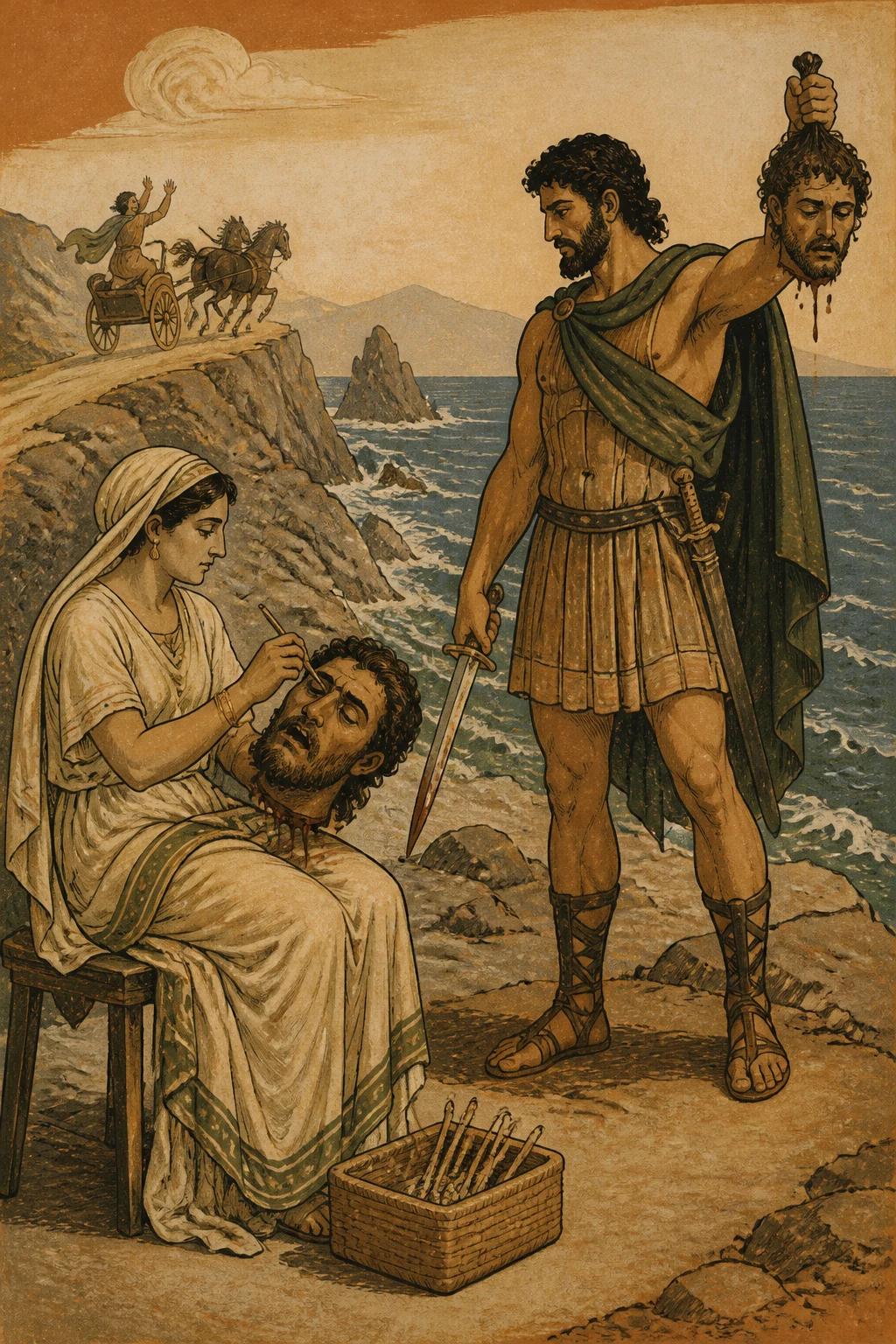
4. When the Argives later learned that the Thebans had fled, they entered the city, gathered the plunder, and demolished the walls. They sent a portion of the spoils to Apollo at Delphi, together with Manto, the daughter of Tiresias; for they had vowed to dedicate to him the finest of the spoils if they captured Thebes.
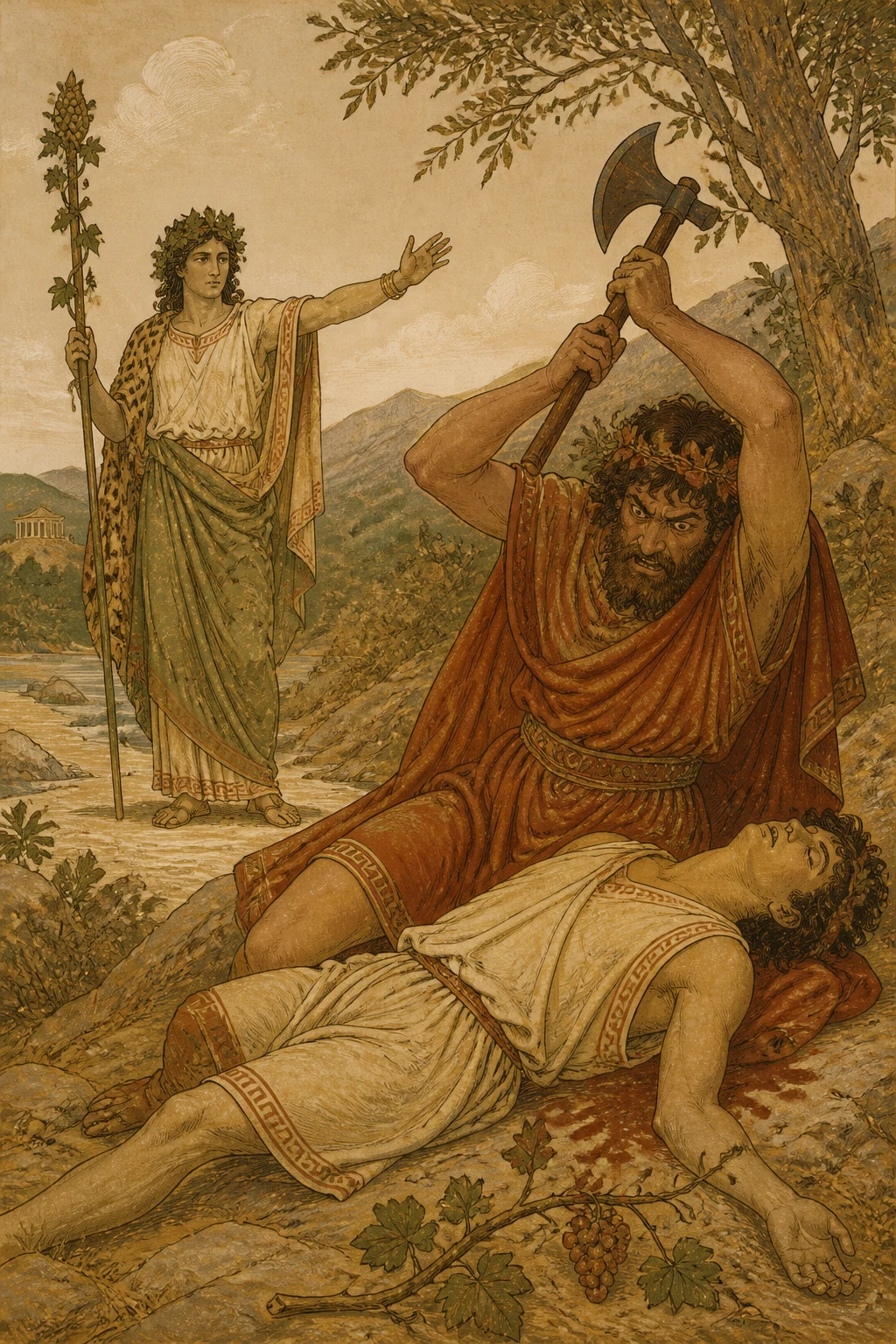
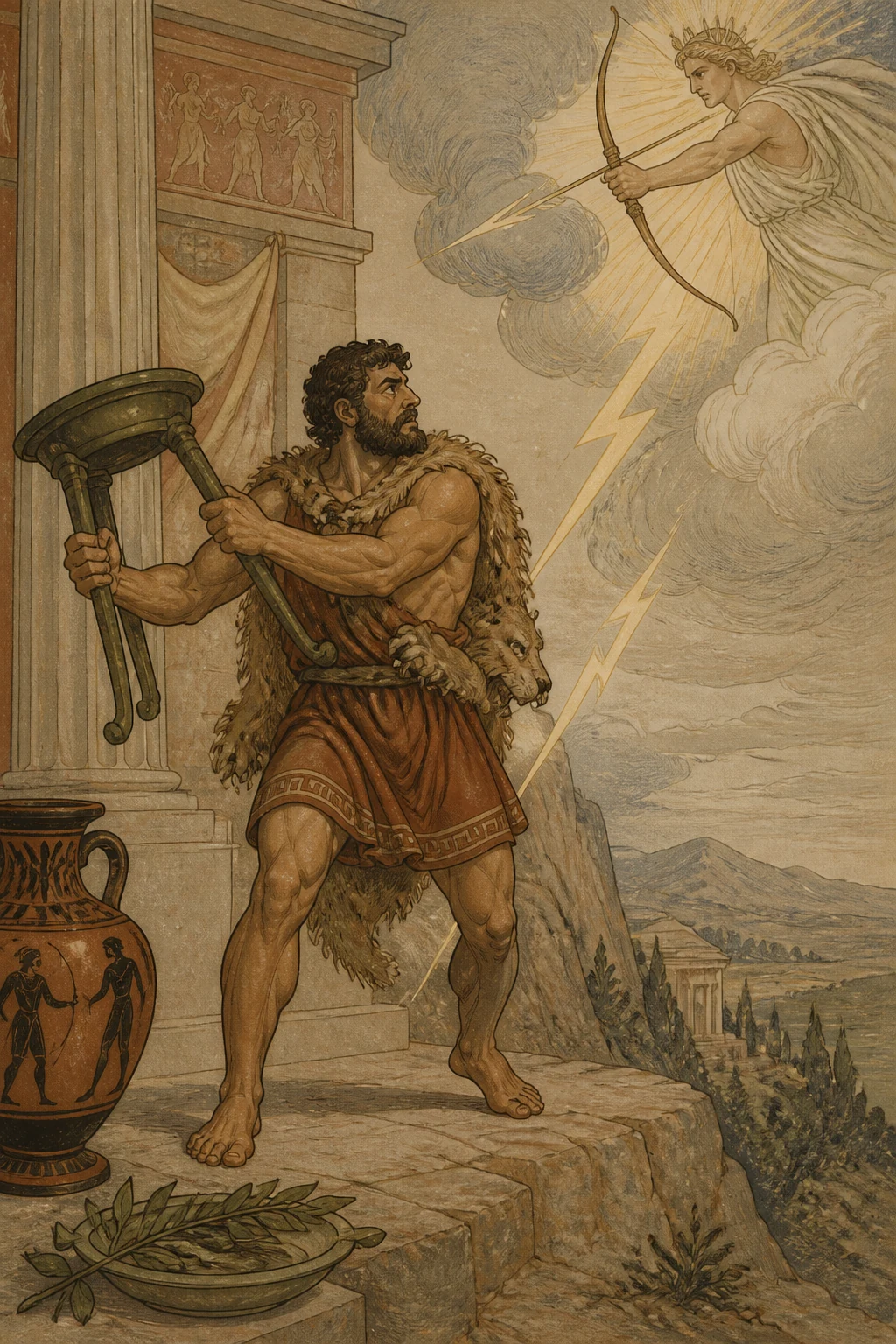
5. After the capture of Thebes, Alcmaeon learned that his mother Eriphyle had accepted gifts to send him too to war. His anger grew still greater, and, with Apollo’s sanction, he killed her. Some say that he killed Eriphyle with the help of his brother Amphilochus, others that he did it alone. But a Fury pursued Alcmaeon for his mother’s murder, and, driven mad, he went first to Oicles in Arcadia, and from there to Phegeus in Psophis. After Phegeus had purified him, Alcmaeon married his daughter Arsinoe and gave her both the necklace and the robe. Later, when the land became barren on his account, the god instructed him to go to Achelous and be purified anew by him. He first went to Oeneus in Calydon and was received as his guest; then he came to the Thesprotians, but was driven from their country. At last he reached the springs of Achelous, was purified by him, and married his daughter Callirrhoe. He founded a settlement on the land that Achelous had formed by depositing silt, and lived there. Later, Callirrhoe desired to possess the necklace and the robe, and said that she would not live with him unless she received them. Alcmaeon therefore went to Psophis and told Phegeus that an oracle had declared he would be freed from his madness when he took the necklace and the robe to Delphi and dedicated them there. Phegeus believed him and gave them to him. But a servant revealed that Alcmaeon was taking them to Callirrhoe, and, at Phegeus’s command, his sons ambushed and killed him. When Arsinoe reproached them, the sons of Phegeus put her into a chest, carried her to Tegea, and gave her to Agapenor as a slave, falsely accusing her of Alcmaeon’s murder.
6. When Callirrhoe learned of Alcmaeon’s death, she asked Zeus, who was her lover, to make the sons she had borne to Alcmaeon full-grown, so that they might avenge their father’s murder. The boys suddenly became grown men and set out to avenge their father. At that same time, Phegeus’s sons, Pronous and Agenor, were taking the necklace and the robe to Delphi to dedicate them, and were staying with Agapenor, as were Alcmaeon’s sons, Amphoterus and Acarnan. After killing their father’s murderers, Alcmaeon’s sons went to Psophis, entered the palace, and killed Phegeus and his wife.
They were pursued as far as Tegea, but the Tegeans and some Argives came to their aid and saved them, putting the men of Psophis to flight.
7. After reporting these events to their mother, they went to Delphi and dedicated the necklace and the robe at the command of Achelous. Then they traveled to Epirus, gathered settlers, and founded Acarnania. Euripides, however, says that during his madness Alcmaeon had two children by Manto, the daughter of Tiresias: a son, Amphilochus, and a daughter, Tisiphone. He took the infants to Corinth and gave them to Creon, king of the Corinthians, to bring up. Tisiphone grew exceptionally beautiful, and Creon’s wife sold her, fearing that Creon might make her his wife. Alcmaeon bought her and kept her as a maidservant, not knowing that she was his own daughter. Later, he came to Corinth to reclaim his children and recovered his son as well. In accordance with Apollo’s oracles, Amphilochus founded Amphilochian Argos.
Izvirnik
Book 3 chapter 7
Naslednje strani prikazujejo izvirno besedilo za primerjavo.
Source ID: apollodorus_bib_3_7 Citation: Apollodorus, Bibliotheca 3.7 1. Κρέων δὲ τὴν Θηβαίων βασιλείαν παραλαβὼν τοὺς τῶν Ἀργείων νεκροὺς ἔρριψεν ἀτάφους, καὶ κηρύξας μηδένα θάπτειν φύλακας κατέστησεν. Ἀντιγόνη δέ, μία τῶν Οἰδίποδος θυγατέρων, κρύφα τὸ Πολυνείκους σῶμα κλέψασα ἔθαψε, καὶ φωραθεῖσα ὑπὸ Κρέοντος αὐτοῦ τῷ τάφῳ ζῶσα ἐνεκρύφθη. Ἄδραστος δὲ εἰς Ἀθήνας ἀφικόμενος ἐπὶ τὸν ἐλέου βωμὸν κατέφυγε, καὶ ἱκετηρίαν θεὶς ἠξίου θάπτειν τοὺς νεκρούς. οἱ δὲ Ἀθηναῖοι μετὰ Θησέως στρατεύσαντες αἱροῦσι Θήβας καὶ τοὺς νεκροὺς τοῖς οἰκείοις διδόασι θάψαι. τῆς Καπανέως δὲ καιομένης πυρᾶς, Εὐάδνη, ἡ Καπανέως μὲν γυνὴ θυγάτηρ δὲ Ἴφιος, ἑαυτὴν ἐμβαλοῦσα συγκατεκαίετο.
2. μετὰ δὲ ἔτη δέκα οἱ τῶν ἀπολομένων παῖδες, κληθέντες ἐπίγονοι, στρατεύειν ἐπὶ Θήβας προῃροῦντο, τὸν τῶν πατέρων θάνατον τιμωρήσασθαι βουλόμενοι. καὶ μαντευομένοις αὐτοῖς ὁ θεὸς ἐθέσπισε νίκην Ἀλκμαίωνος ἡγουμένου. ὁ μὲν οὖν Ἀλκμαίων ἡγεῖσθαι τῆς στρατείας οὐ βουλόμενος πρὶν τίσασθαι τὴν μητέρα, ὅμως στρατεύεται· λαβοῦσα γὰρ Ἐριφύλη παρὰ Θερσάνδρου τοῦ Πολυνείκους τὸν πέπλον συνέπεισε καὶ τοὺς παῖδας στρατεύεσθαι. οἱ δὲ ἡγεμόνα Ἀλκμαίωνα ἑλόμενοι Θήβας ἐπολέμουν. ἦσαν δὲ οἱ στρατευόμενοι οἵδε· Ἀλκμαίων καὶ Ἀμφίλοχος Ἀμφιαράου, Αἰγιαλεὺς Ἀδράστου, Διομήδης Τυδέως, Πρόμαχος Παρθενοπαίου, Σθένελος Καπανέως, Θέρσανδρος Πολυνείκους, Εὐρύαλος Μηκιστέως.
3. οὗτοι πρῶτον μὲν πορθοῦσι τὰς πέριξ κώμας, ἔπειτα τῶν Θηβαίων ἐπελθόντων Λαοδάμαντος τοῦ Ἐτεοκλέους ἡγουμένου γενναίως μάχονται. καὶ Λαοδάμας μὲν Αἰγιαλέα κτείνει, Λαοδάμαντα δὲ Ἀλκμαίων. καὶ μετὰ τὸν τούτου θάνατον Θηβαῖοι συμφεύγουσιν εἰς τὰ τείχη. Τειρεσίου δὲ εἰπόντος αὐτοῖς πρὸς μὲν Ἀργείους κήρυκα περὶ διαλύσεως ἀποστέλλειν, αὐτοὺς δὲ φεύγειν, πρὸς μὲν τοὺς πολεμίους κήρυκα πέμπουσιν, αὐτοὶ δὲ ἀναβιβάσαντες ἐπὶ τὰς ἀπήνας τέκνα καὶ γυναῖκας ἐκ τῆς πόλεως ἔφευγον. νύκτωρ δὲ ἐπὶ τὴν λεγομένην Τιλφοῦσσαν κρήνην παραγενομένων αὐτῶν, Τειρεσίας ἀπὸ ταύτης πιὼν αὐτοῦ τὸν βίον κατέστρεψε. Θηβαῖοι δὲ ἐπὶ πολὺ διελθόντες πόλιν Ἑστιαίαν κτίσαντες κατῴκησαν.
4. Ἀργεῖοι δὲ ὕστερον τὸν δρασμὸν τῶν Θηβαίων μαθόντες εἰσίασιν εἰς τὴν πόλιν, καὶ συναθροίζουσι τὴν λείαν, καὶ καθαιροῦσι τὰ τείχη. τῆς δὲ λείας μέρος εἰς Δελφοὺς πέμπουσιν Ἀπόλλωνι καὶ τὴν Τειρεσίου θυγατέρα Μαντώ· ηὔξαντο γὰρ αὐτῷ Θήβας ἑλόντες τὸ κάλλιστον τῶν λαφύρων ἀναθήσειν. 5. μετὰ δὲ τὴν Θηβῶν ἅλωσιν αἰσθόμενος Ἀλκμαίων καὶ ἐπʼ αὐτῷ δῶρα εἰληφυῖαν Ἐριφύλην τὴν μητέρα μᾶλλον ἠγανάκτησε, καὶ χρήσαντος Ἀπόλλωνος αὐτῷ τὴν μητέρα ἀπέκτεινεν. ἔνιοι μὲν λέγουσι σὺν Ἀμφιλόχῳ τῷ ἀδελφῷ κτεῖναι τὴν Ἐριφύλην, ἔνιοι δὲ ὅτι μόνος. Ἀλκμαίωνα δὲ μετῆλθεν ἐρινὺς τοῦ μητρῴου φόνου, καὶ μεμηνὼς πρῶτον μὲν εἰς Ἀρκαδίαν πρὸς Ὀικλέα παραγίνεται, ἐκεῖθεν δὲ εἰς Ψωφῖδα πρὸς Φηγέα. καθαρθεὶς δὲ ὑπʼ αὐτοῦ Ἀρσινόην γαμεῖ τὴν τούτου θυγατέρα, καὶ τόν
τε ὅρμον καὶ τὸν πέπλον ἔδωκε ταύτῃ. γενομένης δὲ ὕστερον τῆς γῆς διʼ αὐτὸν ἀφόρου, χρήσαντος αὐτῷ τοῦ θεοῦ πρὸς Ἀχελῷον ἀπιέναι καὶ παρʼ ἐκεῖνον παλινδικίαν λαμβάνειν, τὸ μὲν πρῶτον πρὸς Οἰνέα παραγίνεται εἰς Καλυδῶνα καὶ ξενίζεται παρʼ αὐτῷ, ἔπειτα ἀφικόμενος εἰς Θεσπρωτοὺς τῆς χώρας ἀπελαύνεται. τελευταῖον δὲ ἐπὶ τὰς Ἀχελῴου πηγὰς παραγενόμενος καθαίρεταί τε ὑπʼ αὐτοῦ καὶ τὴν ἐκείνου θυγατέρα Καλλιρρόην λαμβάνει, καὶ ὃν Ἀχελῷος προσέχωσε τόπον κτίσας κατῴκησε. Καλλιρρόης δὲ ὕστερον τόν τε ὅρμον καὶ τὸν πέπλον ἐπιθυμούσης λαβεῖν, καὶ λεγούσης οὐ συνοικήσειν αὐτῷ εἰ μὴ λάβοι ταῦτα, παραγενόμενος εἰς Ψωφῖδα Ἀλκμαίων Φηγεῖ λέγει τεθεσπίσθαι τῆς μανίας ἀπαλλαγὴν ἑαυτῷ, τὸν ὅρμον ὅταν εἰς Δελφοὺς κομίσας ἀναθῇ καὶ τὸν πέπλον. ὁ δὲ πιστεύσας δίδωσι μηνύσαντος δὲ θεράποντος ὅτι
Καλλιρρόῃ ταῦτα λαβὼν ἐκόμιζεν, ἐνεδρευθεὶς ὑπὸ τῶν Φηγέως παίδων ἐπιτάξαντος τοῦ Φηγέως ἀναιρεῖται. Ἀρσινόην δὲ μεμφομένην οἱ τοῦ Φηγέως παῖδες ἐμβιβάσαντες εἰς λάρνακα κομίζουσιν εἰς Τεγέαν καὶ διδόασι δούλην Ἀγαπήνορι, καταψευσάμενοι αὐτῆς τὸν Ἀλκμαίωνος φόνον. 6. Καλλιρρόη δὲ τὴν Ἀλκμαίωνος ἀπώλειαν μαθοῦσα, πλησιάζοντος αὐτῇ τοῦ Διός, αἰτεῖται τοὺς γεγεννημένους παῖδας ἐξ Ἀλκμαίωνος αὐτῇ γενέσθαι τελείους, ἵνα τὸν τοῦ πατρὸς τίσωνται φόνον. γενόμενοι δὲ ἐξαίφνης οἱ παῖδες τέλειοι ἐπὶ τὴν ἐκδικίαν τοῦ πατρὸς ἐξῄεσαν. κατὰ τὸν αὐτὸν δὲ καιρὸν οἵ τε Φηγέως παῖδες Πρόνοος καὶ Ἀγήνωρ, εἰς Δελφοὺς κομίζοντες ἀναθεῖναι τὸν ὅρμον καὶ τὸν πέπλον, καταλύουσι πρὸς Ἀγαπήνορα, καὶ οἱ τοῦ Ἀλκμαίωνος παῖδες Ἀμφότερός τε καὶ Ἀκαρνάν·
καὶ ἀνελόντες τοὺς τοῦ πατρὸς φονέας, παραγενόμενοί τε εἰς Ψωφῖδα καὶ παρελθόντες εἰς τὰ βασίλεια τόν τε Φηγέα καὶ τὴν γυναῖκα αὐτοῦ κτείνουσι. διωχθέντες δὲ ἄχρι Τεγέας ἐπιβοηθησάντων Τεγεατῶν καί τινων Ἀργείων ἐσώθησαν, εἰς φυγὴν τῶν Ψωφιδίων τραπέντων. 7. δηλώσαντες δὲ τῇ μητρὶ ταῦτα, τόν τε ὅρμον καὶ τὸν πέπλον ἐλθόντες εἰς Δελφοὺς ἀνέθεντο κατὰ πρόσταξιν Ἀχελῴου. πορευθέντες δὲ εἰς τὴν Ἤπειρον συναθροίζουσιν οἰκήτορας καὶ κτίζουσιν Ἀκαρνανίαν. Εὐριπίδης δέ φησιν Ἀλκμαίωνα κατὰ τὸν τῆς μανίας χρόνον ἐκ Μαντοῦς Τειρεσίου παῖδας δύο γεννῆσαι, Ἀμφίλοχον καὶ θυγατέρα Τισιφόνην, κομίσαντα δὲ εἰς Κόρινθον τὰ βρέφη δοῦναι τρέφειν Κορινθίων βασιλεῖ Κρέοντι, καὶ τὴν μὲν Τισιφόνην διενεγκοῦσαν εὐμορφίᾳ ὑπὸ τῆς Κρέοντος γυναικὸς ἀπεμποληθῆναι, δεδοικυίας μὴ
Κρέων αὐτὴν γαμετὴν ποιήσηται. τὸν δὲ Ἀλκμαίωνα ἀγοράσαντα ταύτην ἔχειν οὐκ εἰδότα τὴν ἑαυτοῦ θυγατέρα θεράπαιναν, παραγενόμενον δὲ εἰς Κόρινθον ἐπὶ τὴν τῶν τέκνων ἀπαίτησιν καὶ τὸν υἱὸν κομίσασθαι. καὶ Ἀμφίλοχος κατὰ χρησμοὺς Ἀπόλλωνος Ἀμφιλοχικὸν Ἄργος ᾤκισεν.
Nadaljuj z branjem