Prevod
When Prince Durvati was born, the firstborn of the great Ramasinda, renowned among the monarchs of India, conqueror of divs, monsters, and genies; when, I say, this prince was born, thought was given to educating him suitably, so that he might not disgrace his lineage, composed entirely of heroes and conquerors. Instead of entrusting the tender infant to affectionate women, they placed him in the care of certain Hyrcanian amazons, no less warlike than those of Libya, who formed part of the royal guard; and these masculine women undertook to wean and rear Durvati, hardening his body and soul for the practice of war. These amazons followed the custom of drying up and flattening their breasts with ointments and plasters; and when the child instinctively sought the warmth of a woman's bosom, he found only the smoothness and metallic chill of a breastplate. The sole comfort his nurses allowed him was to nestle against the flank of a tame tigress, who sometimes, as though in play, would swipe at the little prince with her claws; and the amazons said this was good, for Durvati was thus becoming familiar with blood and pain, the inseparable companions of glory.
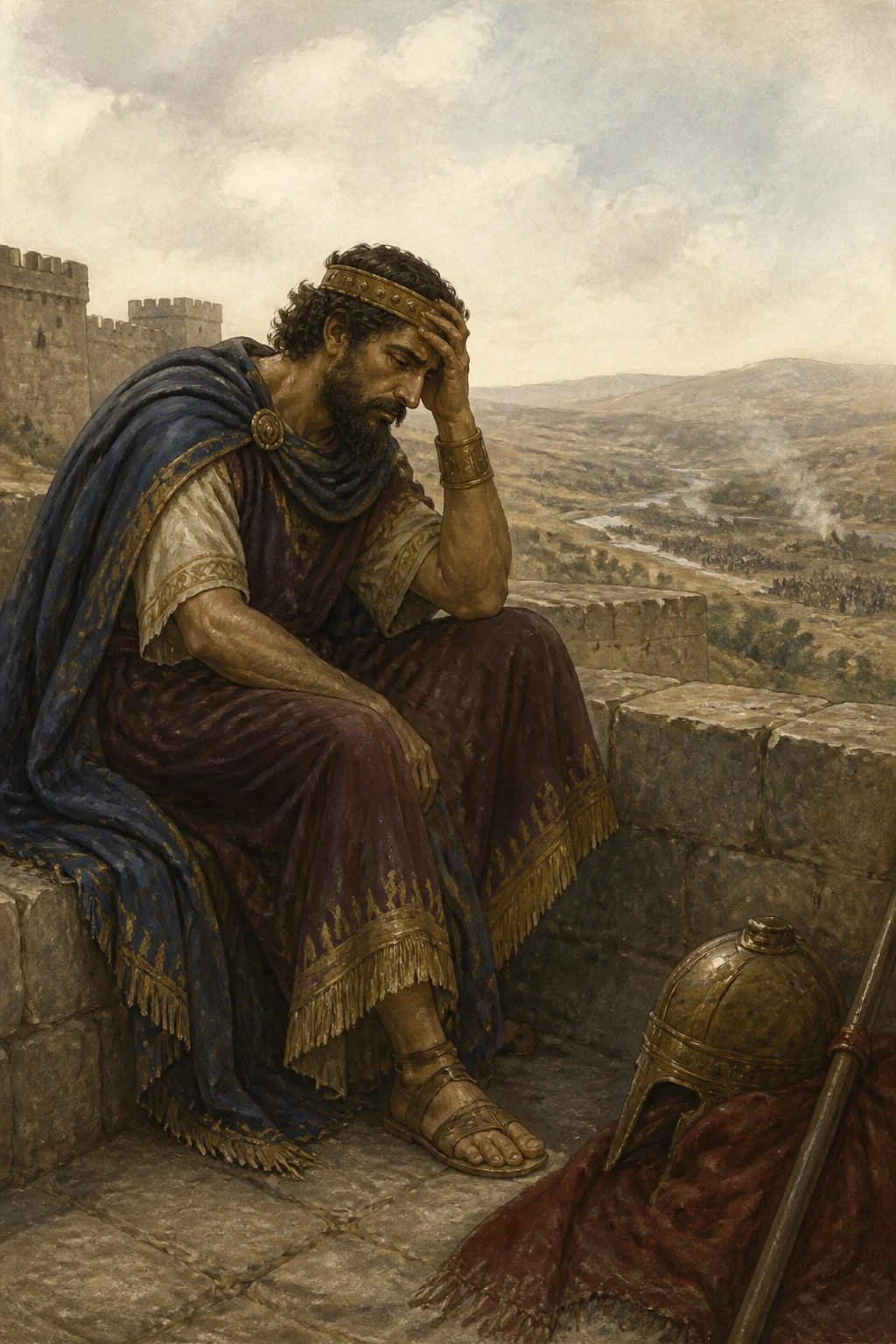
At eighteen, sturdy, splendid, and spirited, the prince first went into battle beside the king, who was invading the region of Sogdiana and Bactriana to bring it under his rule. Durvati stood erect upon an elephant bearing on its back a formidable tower manned by archers; a covering of double-thick leather protected the beast's body, and sharp golden lances gleamed upon its tusks. A picked force of black warriors armed with clubs surrounded the prince, and when battle was joined, Durvati shuddered as he felt the enormous feet of the warlike elephant, trumpeting with fury, sink into human bodies, burst ribs, crush bellies, and trample skulls, reducing them to a shapeless, bloody, quivering mass. At the end of one particularly fierce battle, Durvati ventured to ask his father, the great king, whether those crushed people suffered greatly, and whether it pleased Brahma that people should suffer. And Ramasinda, angered by the question, which seemed to him a sign of weakness in the novice warrior, answered only with the words of a sacred hymn: “Behold before you the fate of those who have been; behold before you the fate of those who shall be. The mortal ripens like grain, and like grain is born again.” Ramasinda had scarcely uttered these words when an arrow cleaved the air and lodged, quivering, in the king's back. Durvati rushed toward his father, only to catch him dying in his arms. After tearing the king's killer to pieces, the troops proclaimed Durvati king, shouting that the country must be put to fire and sword, and that the new king would know how to accomplish so lofty an undertaking.—That night, the orphan fell into a leaden sleep and dreamed strange things. His father's sorrowful end appeared before him once more; he felt the wetness of the blood flowing from the wound and the wetness of the tears that he himself, Durvati, had not dared shed before the army, but which now flowed freely, soaking his clothes. And as he thus gave vent to his grief, he seemed to feel a gentle, pleasing warmth upon his breast, like a delicious weight, while something as fine as silk brushed his face. It seemed to him to be a snow-white dove, with a rosy beak, a neck of blue-green Byzantine enamels, and kind, loving black eyes, which, softly cooing, murmured a mysterious phrase into his ear. Its cooing soothed the prince's anguish and plunged him into an utter, restorative oblivion.—On waking, he cried out in surprise. Lying beside him, her forehead resting upon his breast, was a very young woman, heavenly in her beauty, with a white bosom, a rosy mouth, dark hair loose as a bird's plumage, and black eyes; and when the astonished Durvati asked who this wondrous creature was, he was told that she was a captive, a slave whose beauty had singled her out as royal booty, and that had King Ramasinda not been killed, she would now be in his tent rather than Durvati's.
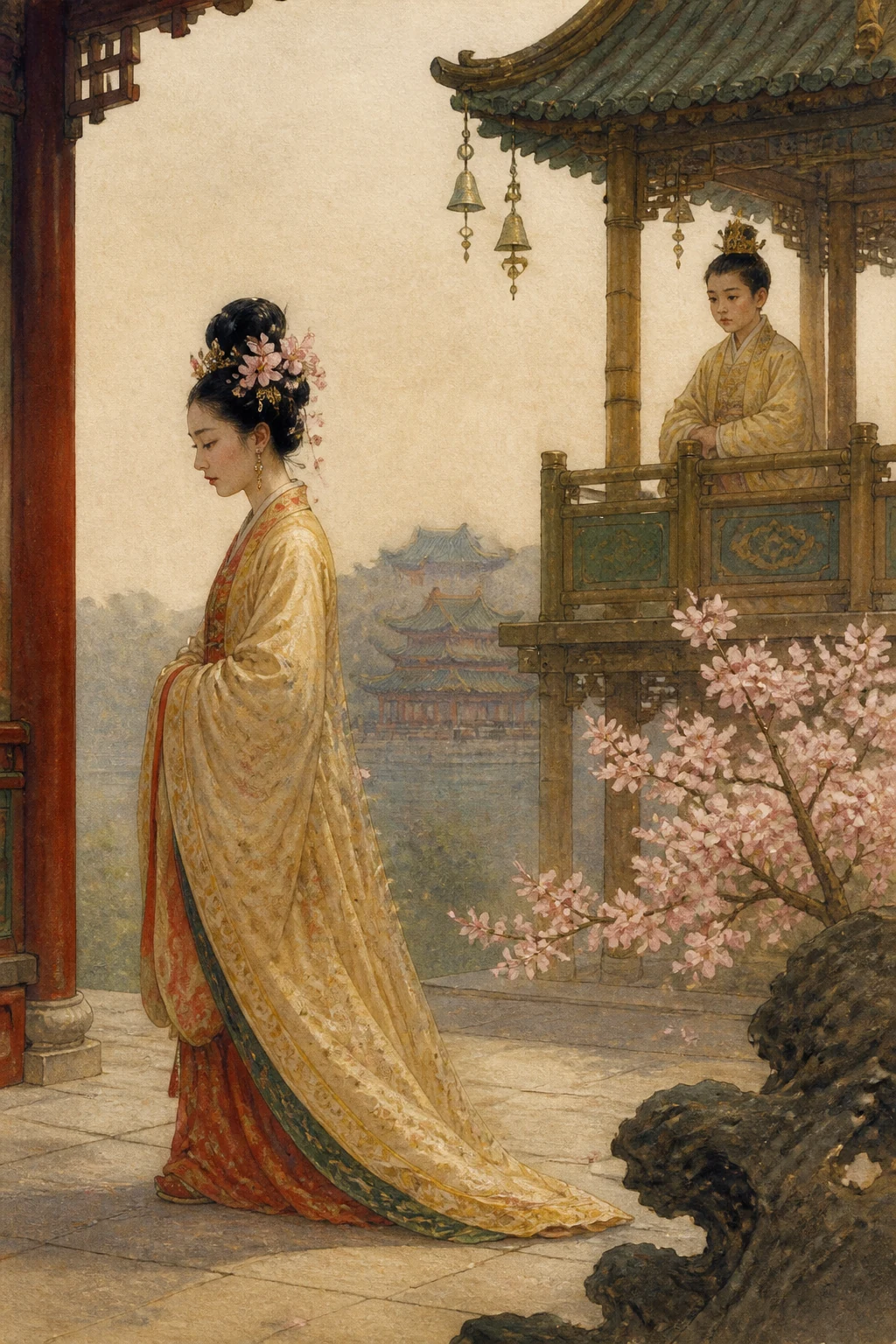
He was young, and never had the fire that transforms and perpetuates living beings burned in his heart. At that very moment he felt it with such force that everything but the captive was blotted from his mind. Forgetting plans of conquest and dominion, he established his court in the nearest city and spent his days entranced by delightful conversation. Let no one suppose, however, that Durvati surrendered himself to indolence and debauchery. On the contrary: almost always possessed of an exquisite delicacy, he loved the captive with chaste rapture, in the manner taught by the kandas, or Vedic hymns—with the atman, which means breath or spirit—repeating those sacred words: “Truly, what we love in a woman is not the woman, but the spirit; and whoever seeks in a woman more than the spirit shall be forsaken by Brahma.”—Remembering that on the first night she had been near him he had dreamed of a dove nestling against him and cooing, Durvati called her Paloma—Dove—and Paloma everyone called her.
What most enchanted Durvati in Paloma, and what justified that name, was her tenderness, her gentleness, her compassion, her sweet nature, so different from that of those fierce warriors, devoid of womanly attributes, in whose hands the young king had been raised; and as he grew more intimate with Paloma, spent more time with her, and became more attached to her, as they passed the long summer afternoons together beside crystalline lakes and beneath broad-canopied trees, the thought of cruelty and slaughter became ever more repugnant to him, and he found it ever harder to send his hosts into battle again. Having won his confidence, and using the freedom affection grants, Paloma painted the devastation of war for him in all its dreadful colors, and assured him that everyone had a right to live and a duty to love one another, so as to lessen the evils that beset mortals on earth.
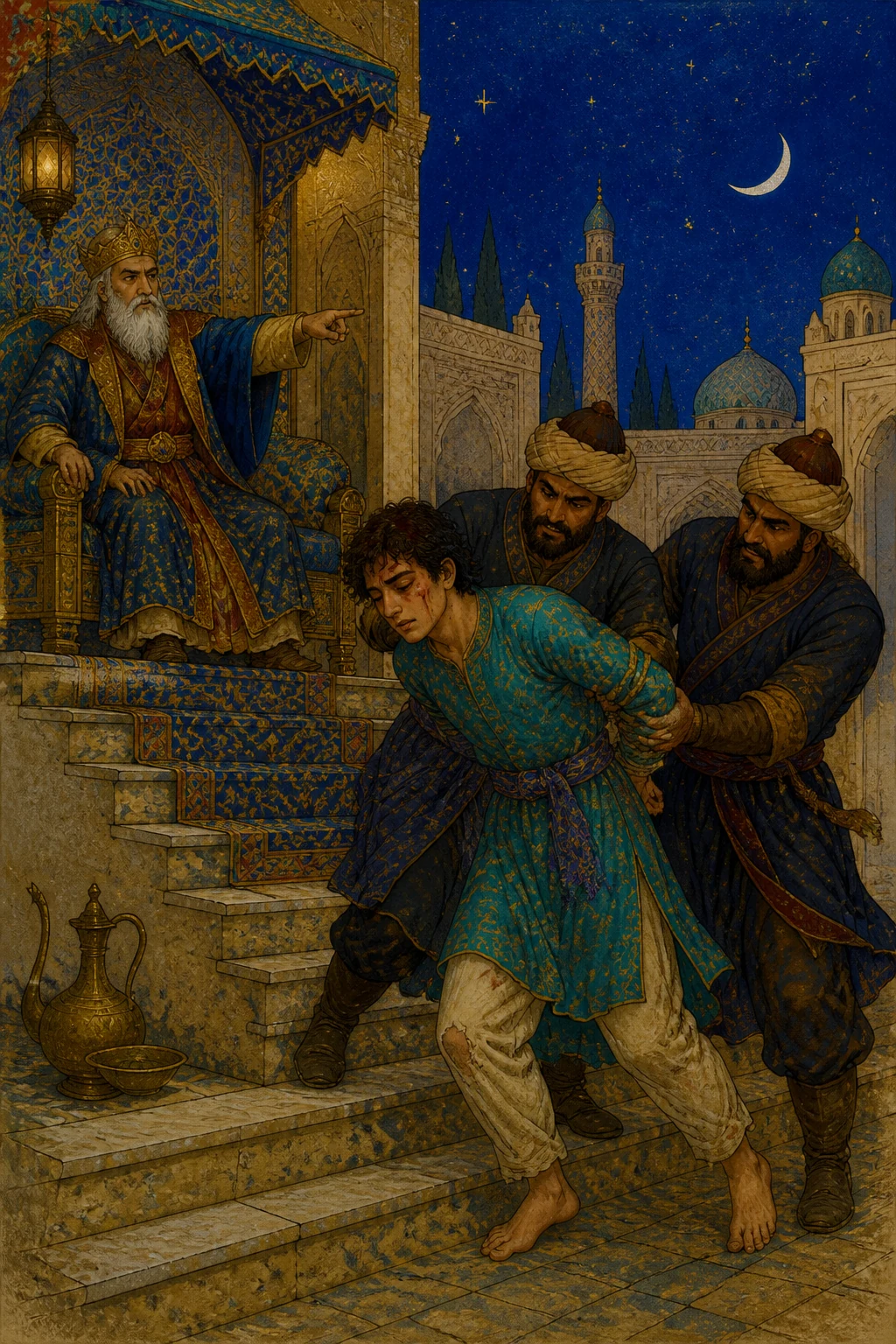
Unfortunately, not every soldier of Durvati's had his own Paloma; furious at their inactivity, they harassed and oppressed the inhabitants, and the country rose in indignation, crying for independence or death. The commanders, companions of the victorious Ramasinda and lovers of battle, cursed and reviled the enchantress who held the king in thrall, and longed for the moment when they could arm their war elephants and fling themselves upon plunder and glory.—The secret conspiracy against the favorite took shape when grave news spread: in defiance of all rites, customs, and laws, of the honor of his name and the heroic traditions of his race, Durvati intended to raise that woman to the throne and then return to the banks of the Ganges, abandoning the land won by the might of his arms, restoring its inhabitants to freedom, and taking neither an inch of territory nor a sheep from another man's flock. The news spread through the troops, and curses and imprecations were heard against the effeminate king who dishonored and debased them. His reason must have been deranged, and that witch, a follower of the magi, must have given the young hero some potion or baleful herb to make him forget his royal dignity and the duties of his exalted office, which chiefly consisted in war. Now convinced that they had discovered the cause of Durvati's decline and derangement, the amazons and the commanders joined forces, and one night, moving stealthily, they surprised Paloma and carried her off from the royal chamber itself.—History has never succeeded in establishing her fate; neither Durvati's heartrending laments, nor his entreaties, nor his threats could persuade her abductors to restore her to him. Only, in the face of the young king's insistence, and perhaps wishing to mock him, they devised the notion of placing a tame dove in his bed while he slept, with the captive's ring about its neck: a dove with snowy plumage, an iridescent blue-green neck, a rosy beak, and black eyes, loving and innocent...
It is not known whether Durvati understood the mockery, or whether he truly supposed that the sweet, cooing bird was the atman, or spirit, of his beloved.—What is certain is that, pretending to attribute the event to a miracle, he summoned his hosts and informed them that this transmigration of his beloved, transformed into a dove, meant that Brahma desired perpetual peace, peace shining like a white dawn over the world; and that he was resolved to uphold this decree, beheading without delay anyone who opposed it or raised difficulties of any kind.—And indeed, throughout Durvati's reign, not a drop of human blood was shed.