Prevod
We Westerners think we invented loyalty to monarchs, and we ascribe the growth of this singular sentiment to Christian ideas, confusing the feelings we ought to have for God, the supreme Cause and highest Good, with those whose object is a man born of woman. I do not know whether a sentiment is made better or worse by being ancient, but I do know that loyalty to monarchs is as old as the oldest forms of worship, and in support of this opinion I shall recall what befell the utterly devoted Prejaspes.
Cyrus had been a glorious and just sovereign, but his son and successor Cambyses, as he acquired a taste for the wine of absolute power, began to show the symptoms of the peculiar intoxication caused by that terrible liquor, distilled from human sweat, blood, and tears. He believed himself the centre of life and the eye of the world, and his invasion of Egypt did much to swell his pride and persuade him that his will acknowledged neither law nor restraint. Under the Pharaoh Amasis, that kingdom had attained a dazzling splendour of civilization; the Persian conquered and subdued it, entering in triumph the magnificent cities on the banks of the Nile, filled with palaces, terraced gardens, obelisks, pyramids, sphinxes, and colossi of porphyry and basalt. Master of Egypt, and seeing his name engraved in hieroglyphs on the pedestals of shrine-bearing statues and the columns of temples, Cambyses thought himself not a mortal but a divinity like Osiris, and the Egyptians prostrated themselves before that conqueror with the golden tiara, that pale face come out of the East. Only one class resisted paying worship to Cambyses: the priests. Religion alone held firm amid the general abasement, and for that very reason Cambyses was bent on humbling and defeating it, on satirizing it and, as we would say today, making a laughingstock of it. He missed no opportunity to mock the worship paid to gods with animal heads, so ridiculous in the eyes of a worshipper of Light, Fire, and the eternal Sun; and if he happened upon some ceremony of the Egyptian religion, he devised buffooneries to deride it. He happened to return unexpectedly to Memphis during the festival of the sacred bull Apis; bursting into the temple, he ordered the bovine god brought before him at once, and, drawing his scimitar, struck it a blow intended for its belly but landing in its thigh. “This god that bleeds and bellows is worthy of you,” he shouted at the Egyptians, who stood aghast at the desecration. Then the high priest, raising his hands to the vault of heaven, prophesied that the impious man who had wounded the god Apis would receive the same wound. Cambyses had the prophet flogged to death, but the prophecy remained engraved in the minds of the Egyptians as a hope, and in the king’s as a vague terror.
Among Cambyses’ servants was his steward Prejaspes, a brave man who would have flung himself into the fire for his monarch. Prejaspes saw in Cambyses the embodiment of the divine on earth, and believed an act supremely good or supremely evil according to whether it pleased or displeased Cambyses. Yet alongside such resolute self-abnegation there lived in Prejaspes’ soul a natural instinct for truthfulness and honesty, which taught him to discern the moral worth of actions and understand their consequences, at least where his own conduct was concerned. The one notion Prejaspes could not grasp was that, if there is a moral rule governing human actions, that rule binds princes as much as, or more than, their subjects; and when the commands of princes contradict that rule, obedience is owed to the rule alone. Prejaspes did not see it so, and indeed, through an excess of nobility of spirit, supposed that his blood, his entire life, and his immortal soul belonged to Cambyses.
Now Cambyses, knowing his steward’s unconditional loyalty, asked him one day what his subjects said of their king. And since Prejaspes had observed that drinking made the monarch furious and excitable, he answered with the best of intentions, firmly and respectfully: “My lord, they consider you a brave and great sovereign, but say that you are overfond of wine.” The answer did not please Cambyses, precisely because it gave off the acrid scent of truth; he knitted his thick, jet-black brows, and a flash passed through his eyes like the gleam of a dagger drawn from its sheath. Yet he made not the slightest objection—a very bad sign—and went on speaking pleasantly to his steward.
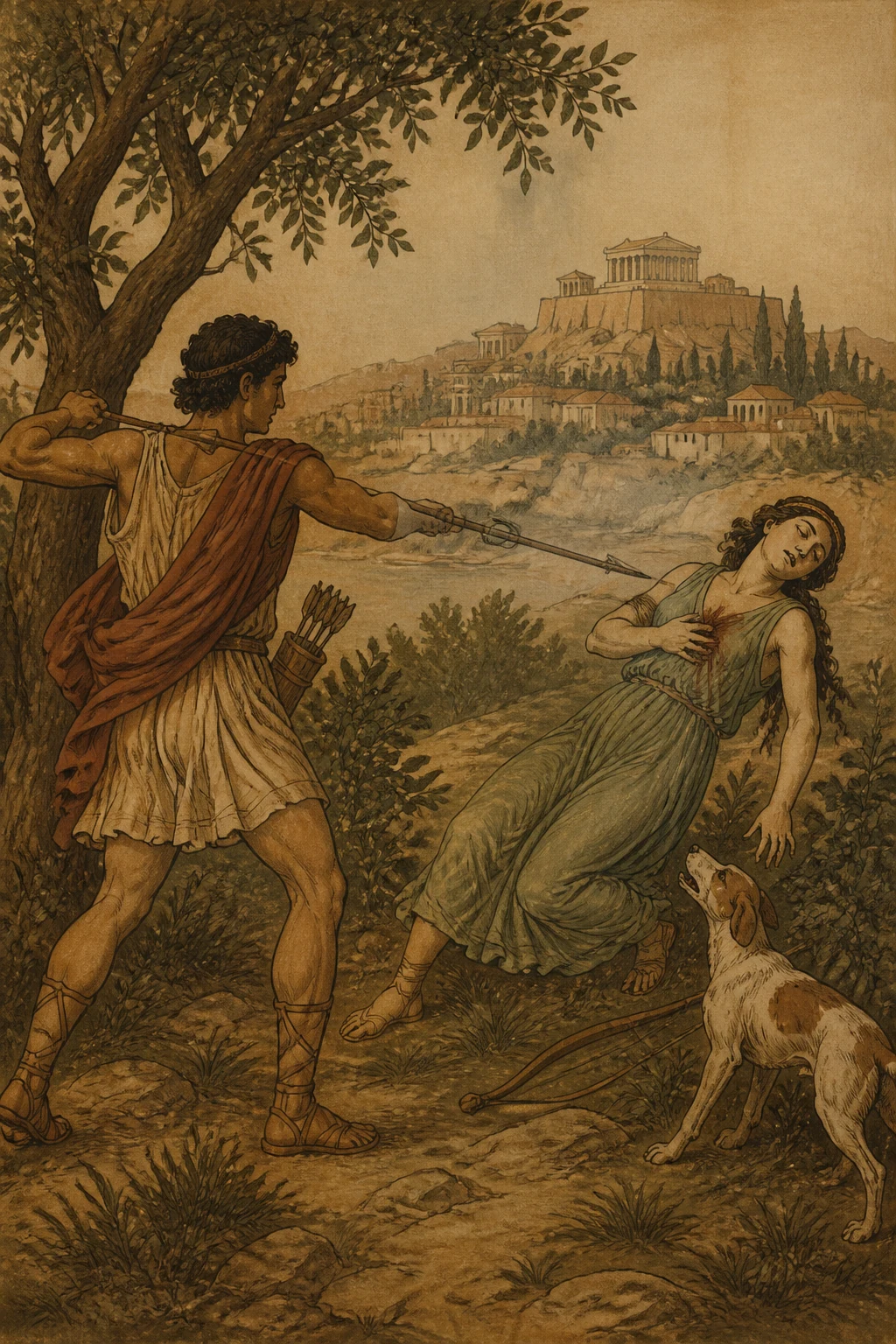
About a week later, on rising from table, at the hour when Cambyses was accustomed to stroll through the gardens, amusing himself by shooting sharp arrows at the little birds, he summoned Prejaspes and Prejaspes’ son, the palace’s chief cupbearer; and when they stood before him, he said cheerfully to Prejaspes: “Do you know, I have been thinking about my subjects’ remarks on my fondness for wine. They may well believe me some sort of madman, and suppose that excessive drinking has clouded my senses, dimmed my eyes, and weakened this arm that laid Egypt like a carpet beneath my feet. Would you believe it? I myself have grown uneasy, and I mean to make a test. Come now! Have your son stand over there, facing me... Set him squarely, pull his arms back to bare his chest... So... I shall draw my bow and shoot... If I plant the point in the very centre of his heart, you will admit that my subjects are mistaken and Cambyses retains all his faculties unimpaired.”
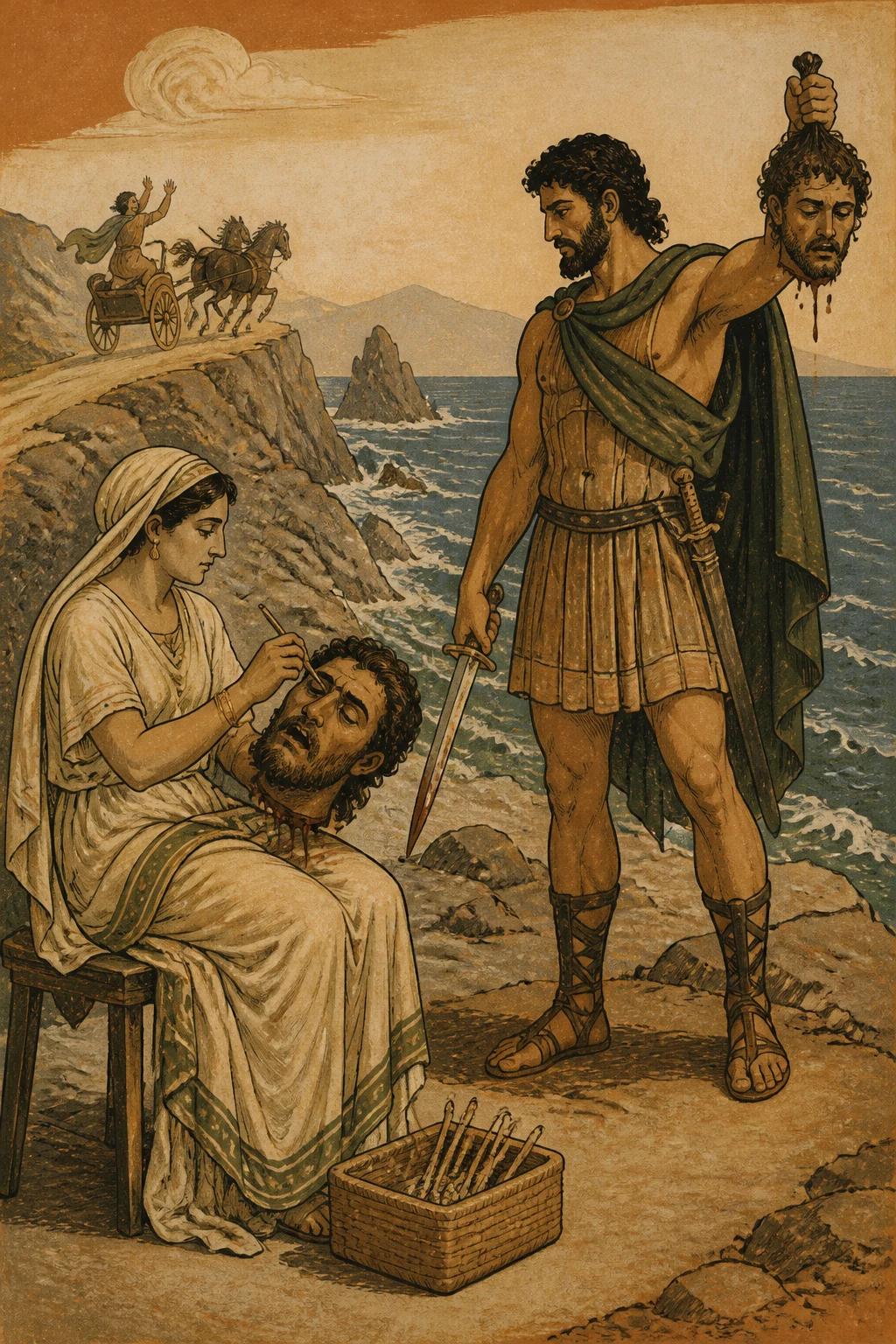
Prejaspes obeyed in silence. A deep trembling shook his limbs; great drops of icy sweat appeared at the roots of his hair; dizziness darkened his sight. Yet he was still sustained by the chimerical hope that this was a savage jest, and nothing more. Cambyses drew his bow, took careful, leisurely aim, and plucked the string; a whistle tore through the air, and Prejaspes’ son spun round and fell in a heap to the ground. “Ho!” cried Cambyses. “My carvers, here... Open that fellow’s chest and see whether the arrowhead has pierced the very middle of his heart.” It was still beating faintly when they presented it to Cambyses, with the arrow planted in its centre, not a hair’s breadth astray. The king burst into delighted laughter and turned to the stricken Prejaspes, asking him good-humouredly: “Well? Can I shoot? Can I hit the mark? Do you know a better archer than your king?” Prejaspes took half a minute or so to answer the royal jest. He stood motionless, and his enormously dilated eyes could not turn away from that bleeding heart, still warm—the heart of his dear son, whose faint, dying contractions seemed with every passing second to say to him in mystery: “Father, avenge me.” To tear out that very arrow and drive it into Cambyses’ breast! Oh, what bliss, what joy!... Suddenly Prejaspes came to himself: this was the king, his king, his master, the arbiter of his fate, the image of the eternal Sun on earth...! And, biting his lip in desperation, he uttered this courtly reply: “My lord, the god Apollo shoots no better than you...” Then, bowing to the ground, he withdrew to writhe alone, to bite his hands and wound his face and cover his hair with ashes.
And in Cambyses’ presence, Prejaspes hid his tears. Faithful as a dog, he remained ever at his side. Once the first dreadful grief had passed, one might have said that he loved him all the more now that blood and sacrifice lay between them. He was beside him on the day when Cambyses, mounting hastily to put down a rebellion, wounded himself with his own scimitar in the thigh, where he had wounded the god Apis; and at his bedside when the wound turned gangrenous and carried him to the grave. It was Prejaspes who anointed the corpse with fragrant nard and cinnamon, and set the golden tiara upon its cold, rigid temples.