Prevod
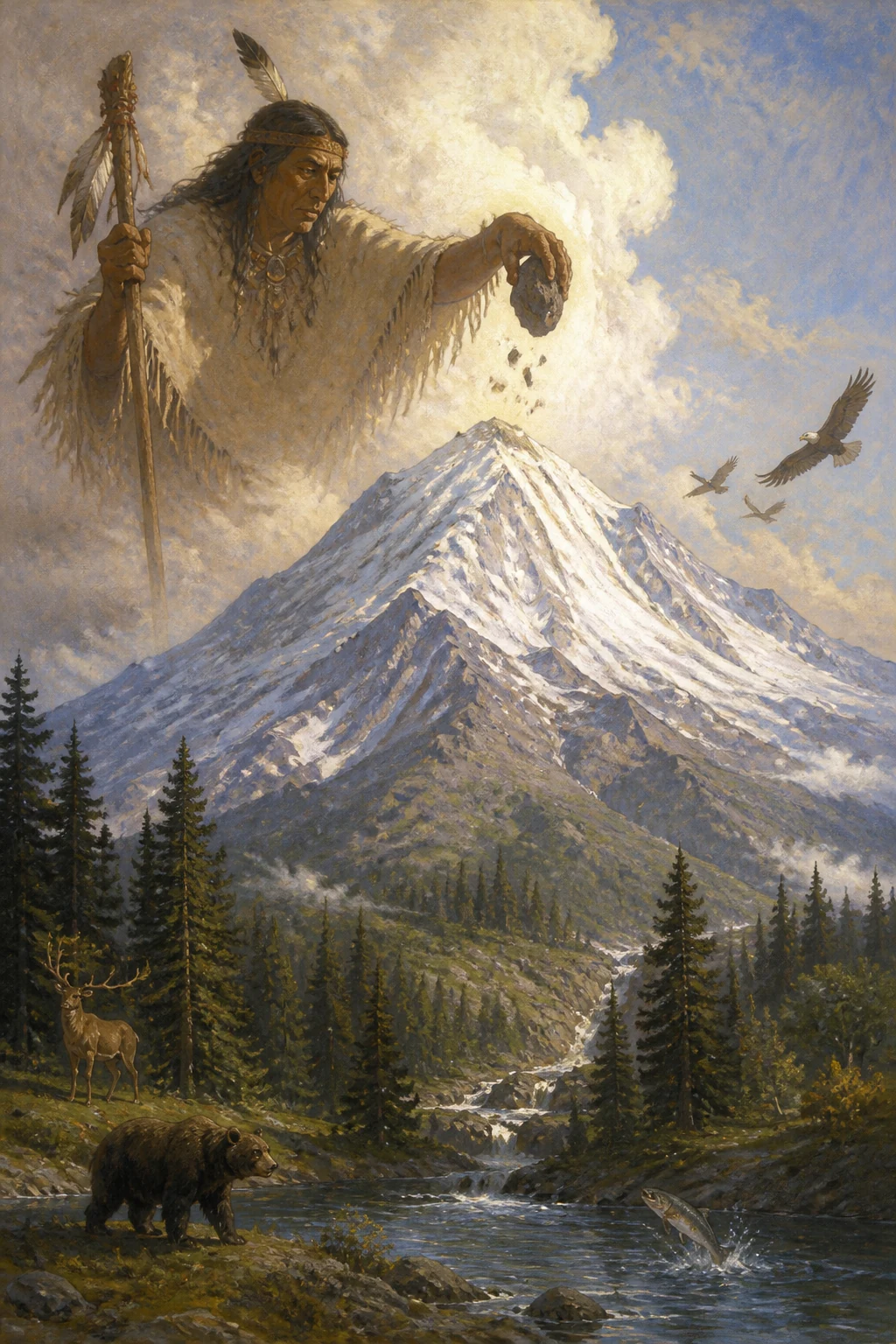
Gora Tacoma je bila za ljudstvo Siwash (Sauvage) s severozahoda od nekdaj kraj, ki so ga obdali z vraževernim spoštovanjem. V njihovih mitih je bila zatočišče zadnjega človeka, ko je Whulge po dolgotrajnem deževju tako narasel, da so njegove vode prekrile zemljo. Vsi drugi ljudje so utonili. Valovi so zasledovali moža, ko se je vzpenjal, in se dvigali vse više, dokler mu niso segli do kolen, do pasu, do prsi. Upanje je že skoraj ugasnilo in čutil je, da ga bo naslednji val pahnil v črni ocean, ki je besnel okoli njega, ko se ga je eden izmed tamanousov na vrhu usmilil in mu stopala spremenil v kamen. Vihar je ponehal in vode so se umaknile. Mož je še vedno stal tam, s stopali, zraščenimi z vrhom, in žaloval, ker se ni mogel spustiti tja, kjer je bil zrak blag in so se odpirali cvetovi. Prišel je Duh vseh stvari in mu velel zaspati; ko je zaprl oči, mu je iztrgal eno izmed reber in ga spremenil v žensko. Ko je bil mož osvobojen skale, se je prebudil, se ves vesel obrnil k ženski in jo popeljal na morsko obalo, kjer sta si v zavetju gozda ustvarila dom. Tam se je človeški rod znova rodil.
V poznejših letih je na obali Whulga živel indijanski skopuh — redka prikazen —, ki je sušil losose in v trakove narezano meso, ki ga ni porabil, ter ga prodajal svojim rojakom za hiaquo — vampum pacifiških plemen. Več ko si je nabral tega zaklada, več si ga je želel — prav kakor da bi šlo za dolarje. Nekega dne je med lovom na pobočjih gore Tacoma pogledal po njenih snežiščih, ki so se vzpenjala v nebo, in namesto da bi izkazal čast tamanousu, božanstvu gore, je le zavzdihnil: »Ko bi le mogel dobiti še več hiaque!«
V ušesu mu je zazvenel glas: »Si upaš v moje votline z zakladi?« »Upam si!« je vzkliknil skopuh. Skale, sneg in gozdovi so besede tako naglo vrnili v donečih odmevih, da je zvenelo, kakor da se gora smeje. Veter se je spet dvignil, da bi možu zašepetal skrivnost v uho, in ta se je z wapitijevim rogom, ki mu je služil za kramp in lopato, začel vzpenjati proti vrhu. Naslednje jutro je dosegel rob kraterja in med hitenjem navzdol po strmini šel mimo skale v podobi lososa, nato mimo druge, oblikovane kakor korenina kamasa, in kmalu še mimo tretje, podobne wapitijevi glavi. »Tamanous mi je spregovoril!« je vzkliknil ob pogledu nanje.
Ob vznožju wapitijeve glave je začel kopati. Pod snegom je naletel na kamnite skorje, ki so votlo donele, in kmalu privzdignil kamnito ploščo, pod katero se je skrivala votlina, do vrha polna školjk, lepših, dragocenejših in številnejših, kakor si je slikal v najdrznejših upih. Do ramen je zaril roke vanje — smejal se je in jih božal, si ovijal nize okoli rok, pasu in vratu ter si z njimi polnil dlani. Nato se je, težko obložen, odpravil proti domu.
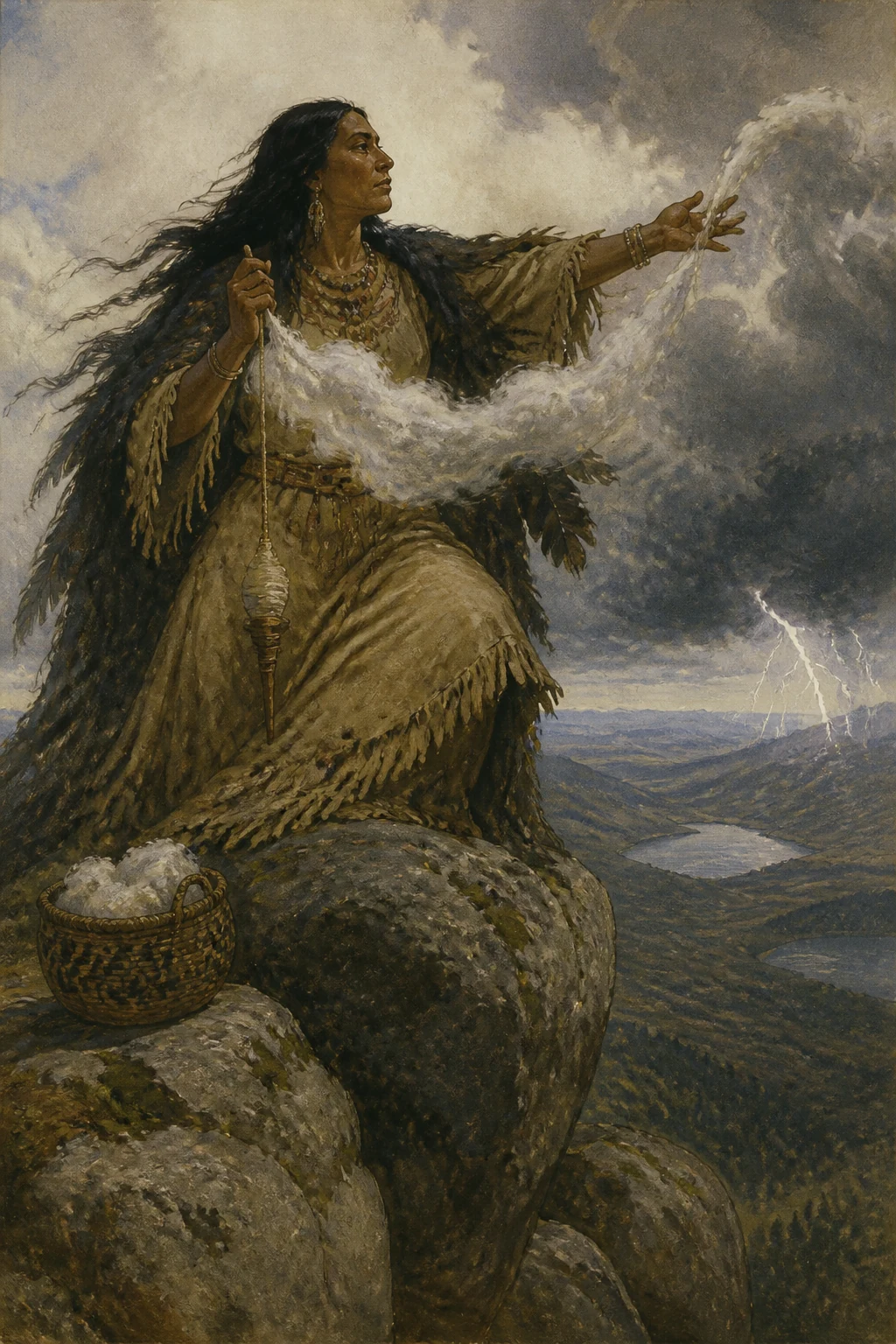
V svoji vnemi, da bi odnesel zaklad, kamnitim tamanousom v kraterju ni daroval niti enega niza hiaque, in komaj se je začel spuščati po zahodnem pobočju gore, že so ga začeli bičati vetrovi. Jezni bog se je ovil v vrtinčast stolp oblakov in planil nadenj, za seboj pa vlekel temo. Zdelo se je, da iz viharja po njem grabijo roke: trgale so mu zaklad in v obupu je odvrgel en niz v daritev. Vihar je za hip ponehal, ko pa se je znova zgrnil nadenj s krikom, bliskom in hrumenjem, je izpustil še enega. Tako se je ob vsakem zatišju spuščal niže in dosegel gozd ravno tedaj, ko mu je zadnjo pest bogastva iztrgalo iz rok in jo razneslo v vetru. Strt v srcu in telesu se je nezavesten zgrudil na kup mahu. Čez čas se je prebudil, okorno vstal in nadaljeval pot.
Med spanjem se je mož spremenil. Lasje so se mu sprijeli in mu segali do kolen; sklepi so mu škripali; zaloga hrane je pošla; toda nabral je čebulice kamasa, se nasitil in svet se mu je zazdel svež in dober. Ozrl se je proti Tacomi ter občudoval sijaj njenega snega in lepoto njene oblike, za bogastvo v njenem kraterju pa mu ni bilo več mar. Med spuščanjem se mu je gozd zdel tuj, toda ob sončnem zahodu je dosegel svoj vigvam, kjer je postarana ženska pripravljala lososa. Žena in mož sta se prepoznala, čeprav je on spal, ona pa žalovala dolga leta. Od veselja, da je spet doma, je skopuh izkopal vse zaklade, ki jih je bil skril, ter delil svoje bogastvo in modrost z vsakomer, ki ju je potreboval. Spoznal je, da so življenje, ljubezen in narava dovolj, in nikoli več ni izzival tamanousa.
Izvirnik
Mount Tacoma has always been a place of superstitious regard among the Siwash (Sauvage) of the Northwest. In their myths it was the place of refuge for the last man when the Whulge was so swollen after long rain that its waters covered the earth. All other men were drowned. The waves pursued the one man as he climbed, rising higher and higher until they came to his knees, his waist, his breast. Hope was almost gone, and he felt that the next wave would launch him into the black ocean that raged about him, when one of the tamanouses of the peak, taking pity on him, turned his feet to stone. The storm ceased, and the waters fell away. The man still stood there, his feet a part of the peak, and he mourned that he could not descend to where the air was balmy and the flowers were opening. The Spirit of all Things came and bade him sleep, and, after his eyes were closed, tore out one of his ribs and changed it to a woman. When lifted out of the rock the man awoke, and, turning with delight to the woman, he led her to the sea-shore, and there in a forest bower they made their home. There the human race was recreated.
On the shore of the Whulge in after years lived an Indian miser--rare personage--who dried salmon and jerked the meat that he did not use, and sold it to his fellow-men for hiaqua--the wampum of the Pacific tribes. The more of this treasure he got, the more he wanted--even as if it were dollars. One day, while hunting on the slopes of Mount Tacoma, he looked along its snow-fields, climbing to the sky, and, instead of doing homage to the tamanous, or divinity of the mountain, he only sighed, “If I could only get more hiaqua!”
Sounded a voice in his ear: “Dare you go to my treasure caves?”
“I dare!” cried the miser.
The rocks and snows and woods roared back the words so quick in echoes that the noise was like that of a mountain laughing. The wind came up again to whisper the secret in the man's ear, and with an elk-horn for pick and spade he began the ascent of the peak. Next morning he had reached the crater's rim, and, hurrying down the declivity, he passed a rock shaped like a salmon, next, one in the form of a kamas-root, and presently a third in likeness of an elk's head. “'Tis a tamanous has spoken!” he exclaimed, as he looked at them.
At the foot of the elk's head he began to dig. Under the snow he came to crusts of rock that gave a hollow sound, and presently he lifted a scale of stone that covered a cavity brimful of shells more beautiful, more precious, more abundant than his wildest hopes had pictured. He plunged his arms among them to the shoulder--he laughed and fondled them, winding the strings of them about his arms and waist and neck and filling his hands. Then, heavily burdened, he started homeward.
In his eagerness to take away his treasure he made no offerings of hiaqua strings to the stone tamanouses in the crater, and hardly had he begun the descent of the mountain's western face before he began to be buffeted with winds. The angry god wrapped himself in a whirling tower of cloud and fell upon him, drawing darkness after. Hands seemed to clutch at him out of the storm: they tore at his treasure, and, in despair, he cast away a cord of it in sacrifice. The storm paused for a moment, and when it returned upon him with scream and flash and roar he parted with another. So, going down in the lulls, he reached timber just as the last handful of his wealth was wrenched from his grasp and flung upon the winds. Sick in heart and body, he fell upon a moss-heap, senseless. He awoke and arose stiffly, after a time, and resumed his journey.
In his sleep a change had come to the man. His hair was matted and reached to his knees; his joints creaked; his food supply was gone; but he picked kamas bulbs and broke his fast, and the world seemed fresh and good to him. He looked back at Tacoma and admired the splendor of its snows and the beauty of its form, and had never a care for the riches in its crater. The wood was strange to him as he descended, but at sunset he reached his wigwam, where an aged woman was cooking salmon. Wife and husband recognized each other, though he had been asleep and she a-sorrowing for years. In his joy to be at home the miser dug up all his treasure that he had secreted and gave of his wealth and wisdom to whoso needed them. Life, love, and nature were enough, he found, and he never braved the tamanous again.