Prevod
Indijanci Pima iz Arizone pripovedujejo, da je bil oče vseh ljudi in živali metulj Cherwit Make (stvarnik zemlje), ki je prhutaje priletel iz oblakov do Modrih pečin ob sotočju rek Verde in Salt ter iz lastnega znoja ustvaril ljudi. Ko so se ljudje namnožili, so postali sebični in prepirljivi, zato se je Cherwitu Makeju njegovo delo zagnusilo in sklenil je, da jih bo vse utopil. Toda najprej jim je z glasom severnega vetra naročil, naj bodo pošteni in naj živijo v miru. Preroka Suho, ki je razlagal ta glas, so imeli za norca, ker je poslušal veter, toda naslednjo noč je prišel vzhodni veter in ponovil zapoved ter ji dodal grožnjo, da jih bo vladar nebes vse pokončal, če se ne poboljšajo.
Spet so se posmehovali in naslednjo noč jih je posvaril zahodni veter. A tudi to tretje svarilo je bilo zaman. Četrto noč je prišel južni veter. Suhi je zašepetal na uho, da je bil edinole on dober in da bo rešen, ter mu velel, naj iz smrekove smole napravi votlo kroglo, v kateri bo lahko plaval, dokler bo trajal vesoljni potop. Suha in njegova žena sta se nemudoma odpravila nabirat smolo, ki sta jo talila in oblikovala, dokler nista izdelala velike, okrogle barke. Obtežila sta jo s posodami, polnimi oreškov, želodove moke in vode, ter z medvedjim mesom in divjačino.
Na določeni dan sta Suha in njegova žena s skalne police, na kateri je počivala barka, otožno zrla v zelene doline, poslušala petje žanjcev in vzdihovala ob misli, da bo vsa ta lepota kmalu opustošena. Tedaj se je iz oblaka iztegnila ognjena roka in z gromkim treskom udarila po Modrih pečinah. To je bilo znamenje. Z vseh strani so naglo pridrveli oblaki in dež se je ulil. Suha in njegova žena sta se umaknila v svojo voščeno kroglo ter zaprla vhod. Nato ju je več dni premetavalo in valjalo po morju, ki je postajalo vse globlje. Zaloge so jima že skoraj pošle, ko se je barka ustavila; v njeno steno sta prebila odprtino in stopila ven.
Ob njunih nogah je rasel kaktus opuncija in požrešno sta jedla njegove rdeče plodove, toda povsod okoli njiju ni bilo ničesar razen vode. Ko se je znočilo, sta se vrnila v barko in zaspala — za eno noč, mesec, leto, morda celo stoletje, kajti ko sta se prebudila, je voda izginila, doline je prekrivalo zelenje, po gozdovih pa je odmevalo ptičje petje. Presrečni par se je spustil z gorovja Superstition, na katerem je obtičala barka, in odšel v njegove doline, kjer sta živela tisoč let ter postala prastarša velikega plemena.
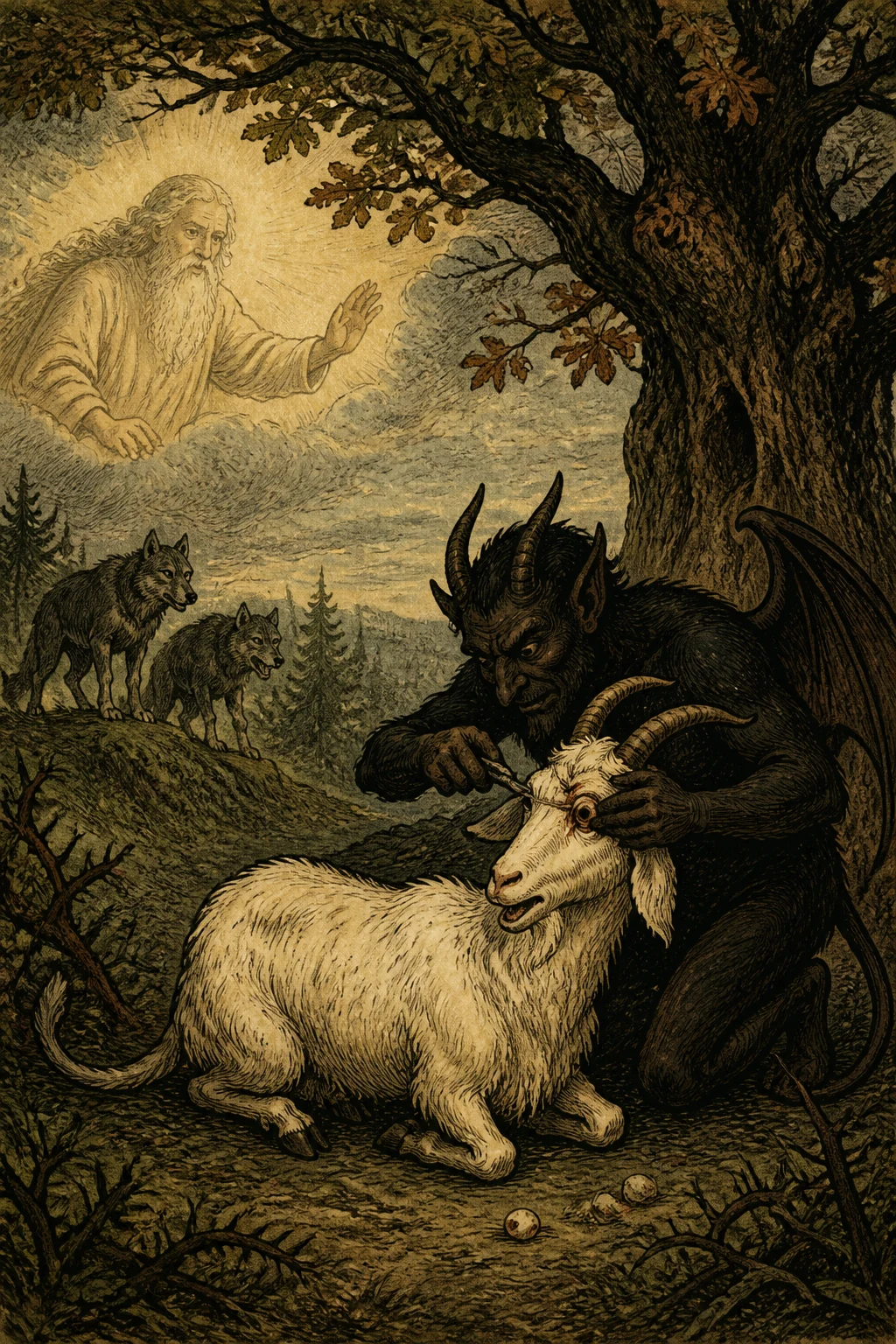
Toda zlo ni povsem izginilo. V gorah je živel Hauk, hudič, ki jima je kradel hčere in pobijal sinove. Nekega dne, ko so ženske predle lan in kaktusova vlakna, moški pa spravljali koruzo, se je Hauk spustil v naselje in ugrabil še eno Suhovo hčer. Očak, čigar potrpežljivost je bila izčrpana do skrajnosti, se je tedaj zaobljubil, da bo hudiča ubil. Prežal je nanj, da bi videl, po kateri poti prihaja v dolino. Neslišno mu je sledil v gorovje Superstition; v kaktusovo vino, ki naj bi mu ga postregla njegova hči, je primešal omamilo. Ko ga je Hauk popil, je Suha stopil iz skrivališča in omamljenemu hudobcu razbil glavo.
Nekaj hudičevih možganov se je raztreslo naokrog in postalo seme novega zla, vendar je bilo po Haukovi smrti na svetu manj hudobije kot poprej. Suha je svoje ljudstvo naučil graditi hiše iz nežgane opeke, kopati z lopatami, namakati zemljo, tkati blago in se izogibati vojnam. Toda na smrtni postelji jim je prerokoval, da bodo zaradi bogastva postali ošabni, lakomni po tujih deželah in da bodo vojskovali za dobiček. Ko bo prišel ta čas, bo nastopil še en potop in nihče se ne bo rešil — hudobni bodo izginili, dobri pa bodo zapustili zemljo in živeli na soncu. Pime tako trdno verjamejo tej prerokbi, da ne prečkajo gorovja Superstition, kajti tam sedi Cherwit Make in čaka, da njihova hudobija doseže vrhunec, da bo na zemljo spustil mogočno morje, ki ga zadržuje pregrada za gorovjem.
Izvirnik
The Pima Indians of Arizona say that the father of all men and animals was the butterfly, Cherwit Make (earth-maker), who fluttered down from the clouds to the Blue Cliffs at the junction of the Verde and Salt Rivers, and from his own sweat made men. As the people multiplied they grew selfish and quarrelsome, so that Cherwit Make was disgusted with his handiwork and resolved to drown them all. But first he told them, in the voice of the north wind, to be honest and to live at peace. The prophet Suha, who interpreted this voice, was called a fool for listening to the wind, but next night came the east wind and repeated the command, with an added threat that the ruler of heaven would destroy them all if they did not reform.
Again they scoffed, and on the next night the west wind cautioned them. But this third warning was equally futile. On the fourth night came the south wind. It breathed into Suha's ear that he alone had been good and should be saved, and bade him make a hollow ball of spruce gum in which he might float while the deluge lasted. Suha and his wife immediately set out to gather the gum, that they melted and shaped until they had made a large, rounded ark, which they ballasted with jars of nuts, acorn-meal and water, and meat of bear and venison.
On the day assigned Suha and his wife were looking regretfully down into the green valleys from the ledge where the ark rested, listening to the song of the harvesters, and sighing to think that so much beauty would presently be laid waste, when a hand of fire was thrust from a cloud and it smote the Blue Cliffs with a thunder-clang. It was the signal. Swift came the clouds from all directions, and down poured the rain. Withdrawing into their waxen ball, Suha and his wife closed the portal. Then for some days they were rolled and tossed on an ever-deepening sea. Their stores had almost given out when the ark stopped, and breaking a hole in its side its occupants stepped forth.
There was a tuna cactus growing at their feet, and they ate of its red fruit greedily, but all around them was naught but water. When night came on they retired to the ark and slept--a night, a month, a year, perhaps a century, for when they awoke the water was gone, the vales were filled with verdure, and bird-songs rang through the woods. The delighted couple descended the Superstition Mountains, on which the ark had rested, and went into its valleys, where they lived for a thousand years, and became the parents of a great tribe.
But the evil was not all gone. There was one Hauk, a devil of the mountains, who stole their daughters and slew their sons. One day, while the women were spinning flax and cactus fibre and the men were gathering maize, Hauk descended into the settlement and stole another of Suha's daughters. The patriarch, whose patience had been taxed to its limit, then made a vow to slay the devil. He watched to see by what way he entered the valley. He silently followed him into the Superstition Mountains; he drugged the cactus wine that his daughter was to serve to him; then, when he had drunk it, Suha emerged from his place of hiding and beat out the brains of the stupefied fiend.
Some of the devil's brains were scattered and became seed for other evil, but there was less wickedness in the world after Hauk had been disposed of than there had been before. Suha taught his people to build adobe houses, to dig with shovels, to irrigate their land, to weave cloth, and avoid wars. But on his death-bed he foretold to them that they would grow arrogant with wealth, covetous of the lands of others, and would wage wars for gain. When that time came there would be another flood and not one should be saved--the bad should vanish and the good would leave the earth and live in the sun. So firmly do the Pimas rely on this prophecy that they will not cross Superstition Mountains, for there sits Cherwit Make--awaiting the culmination of their wickedness to let loose on the earth a mighty sea that lies dammed behind the range.