Prevod
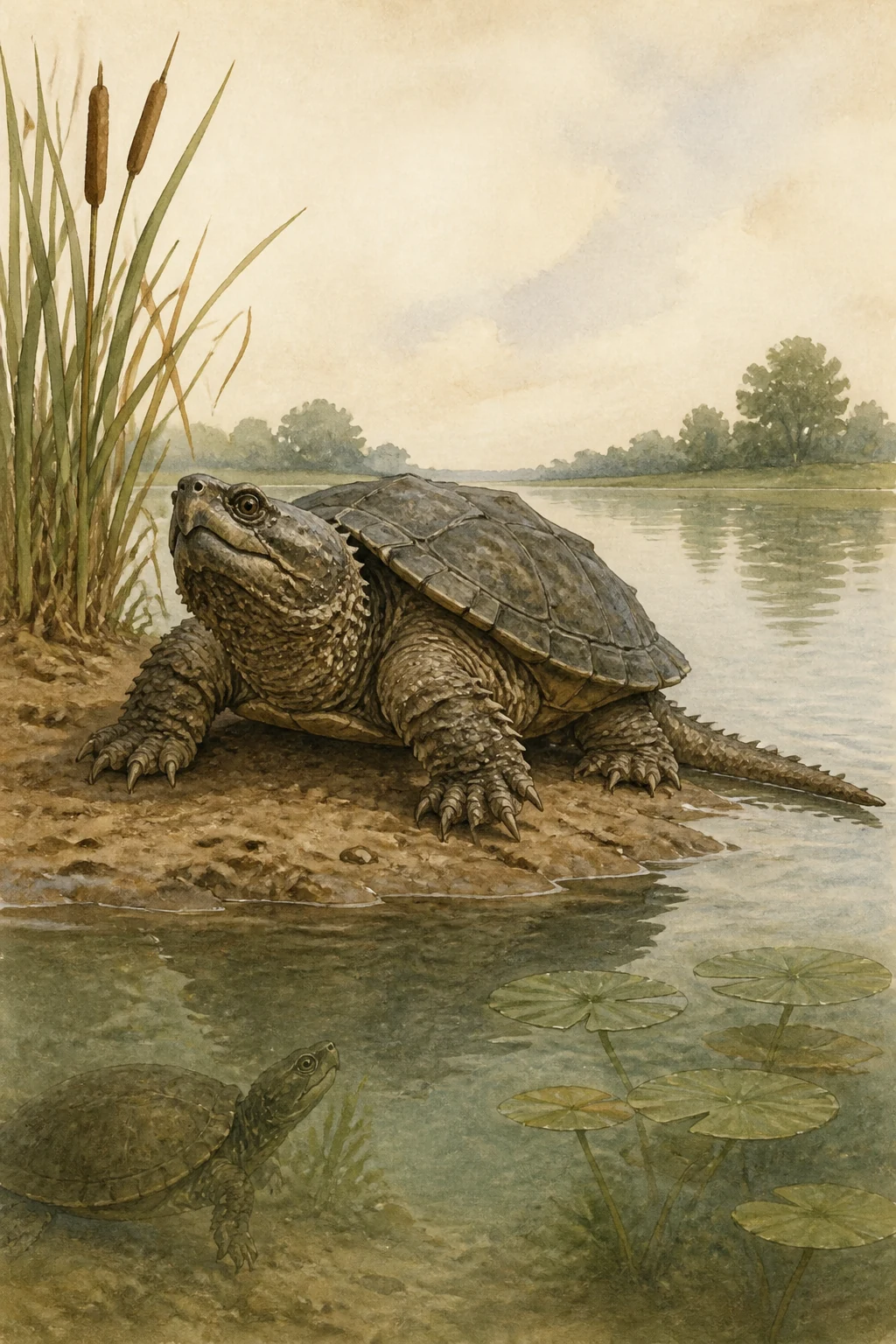
Nihče med prebivalci ribnika ni bil tako osamljen kakor vodne kače. Želvak hlastavec je bil veliko sam vse do tistega dne, ko sta z Belostomo pregnala dečke. Potem so ga sosedje začeli bolje razumeti in tudi godrnjal je manj, tako da so ga tisti, ki so nosili oklep, kmalu prav vzljubili.
Belostoma ni imel veliko prijateljev med drobnimi prebivalci, med večjimi pa le peščico. Govorili so, da je krut in da ima grdo navado zbadati s svojim krepkim sesalnim rilčkom. Toda Belostomi ni bilo mar; dejal je: »Orjaška vodna stenica ne živi vselej v vodi. Kmalu bom dobil krila, zapustil vodo in se oženil. Potem bom odletel na poročno potovanje. Gospa Belostoma gre lahko z menoj, če ji bo do tega, ko bo tu odložila jajčeca. Jaz bom šel v vsakem primeru. In prhutal bom in opletal okrog luči, zbadal ljudi, ki me bodo nadlegovali, in se imel prav lepo.« Takšen je bil Belostoma. Zbadal je tiste, ki so ga nadlegovali, potem pa vselej rekel, da bi ga pač lahko pustili pri miru. In morda je imel celo prav.
Z vodnimi kačami je bilo drugače. Bile so čisto dobrodušne, pa vendar so jih obiskovali in našli doma samo blatni želvaki in želvak hlastavec. Drobni prebivalci brez oklepov so se jih bali, školjke in ribniški polži pa tako in tako niso nikogar obiskovali. Pisanci so govorili, da kač še videti ne morejo — tako grde gobce imajo in tako naglo se premikajo. Večje ribe so se jih izogibale zaradi svojih otrok, ki so bili še drobni in nežni.
Človek bi si mislil, da bi se lahko dobro spoprijateljile s kanadskimi žerjavi, ribjimi orli in drugimi obrežnimi družinami, toda kadar so ti prišli na obisk, kač nikoli ni bilo doma. Govorilo se je, da se jih kače bojijo.
Rumenorjavi žabec si je želel, da bi se kače kdaj prestrašile, pošteno prestrašile: tako zelo, da bi jih mrzel srh spreletel po hrbtu od glave prav do konice repa. »Želim si,« je dejal, »da bi bil ta mrzli srh tako močan, da bi jim segel skoz in skoz, prav do trebuha. Trebuh je pri njih tako in tako le sprednja stran hrbta,« je dodal, »saj so tako tenke.« Seveda je bila to strašna želja, toda govorilo se je, da je neka vodna kača rumenorjavega žabca nekoč tako prestrašila, da si nikoli ni povsem opomogel, in zato je tako čutil.
Vodne kače so bile nedvomno najbistrejše prebivalke ribnika in med njimi je bila mama kača, ki je bila tako zelo bistra, da so ji pravili »Bistra vodna kača«. Zmogla je skoraj vse in tega se je dobro zavedala. O tem je tudi govorila, kar ni bilo prav nič okusno in je bil eden od razlogov, da je niso imeli bolj radi. Znala je zelo hitro plavati, lesti, drseti, se z repom oprijemati stvari, viseti z drevesne veje, dvigniti glavo visoko v zrak, skakati, švigati, se poganjati in se potapljati. Vse to so znale tudi druge kače iz njene družine, toda njej je šlo za spoznanje bolje.
Nekega dne je v zelo graciozni drži visela nad ribnikom, z repom, lahkotno ovitim okrog vrbove veje. V plitvini pod njo sta bila želvak hlastavec in oče blatni želvak. Njen vitki, viličasti jezik je švigal iz odprtega gobčka in spet vanj. To je počela skoraj ves čas. »Prav pride pri otipavanju stvari,« je rekla, »pa tudi od nekdaj se mi zdi, da mi lepo pristoji.« V mirni vodi pod seboj je videla svoj odsev in opazila, kako lepo temno rjava barva njenega hrbta prehaja v belino trebuha. Vidite, ni bila samo bistra, ampak tudi nečimrna.
Želvak hlastavec je bil tistega dne slabe volje in je prišel pogledat, ali bi mu pogovor z njo morda izboljšal razpoloženje. Blatni želvak pa se je naveličal otrok, ki so se kobacali okrog njega, in gospe blatne želve, ki je pripovedovala, koliko težav ima z iskanjem prave hrane.
Bistra vodna kača je najprej spregovorila o vremenu. »Obrežnim prebivalcem mora biti strašansko vroče,« je rekla. »Pomislita, vse leto morajo nositi isto perje in letati naokrog po soncu, da najdejo hrano za svoje otroke.«
»Ah, da,« je dejal blatni želvak. »Kako si morajo želeti oklepov!« »Hm!« je godrnjal želvak hlastavec. »Čemu? Da bi z njimi leteli? Naj pridejo z otroki plavat, če jim je vroče in so utrujeni.«
Vodna kača se je zasmejala po kačje in pokazala ostre zobe. »Slišala sem,« je rekla, »da divje race, kadar pripeljejo svoje otroke sem plavat, ne odpeljejo vselej domov toliko račk, kolikor so jih pripeljale.«
Želvak hlastavec se je nenadoma silno zatopil v svojo bradavičasto desno sprednjo nogo in videti je bilo, da je sploh ni slišal. Blatni želvak se je nasmehnil. »Slišala sem,« je nadaljevala, »da mlade račke, kadar se potopijo z glavo naprej, skoraj zagotovo spet pridejo na površje, kadar pa se potopijo z nogami naprej, jih ni nikoli več nazaj.«
»Kaj hočeš s tem reči?« je vprašal želvak hlastavec, in to prav zadirčno. »Oh, nič,« je odvrnila vodna kača, zibala glavo sem ter tja in si ogledovala luske na telesu.
»Vem, kaj hočeš reči,« je dejal želvak hlastavec, »in tudi ti veš, kaj hočeš reči, ampak nekaj moram jesti, in če plavam pod vodo, raček pa vesla tik nad menoj in mi vtakne nogo v gobec, ga utegnem pogoltniti, še preden utegnem pomisliti.«
Vodna kača je videla, da ga je s svojimi besedami razjezila, zato je začela govoriti o nečem drugem. »Mislim, da race razvajajo svoje otroke,« je rekla. »Toliko cirkusa zganjajo okrog njih, pa niso niti približno tako bistri kot moji. Moji se vendar izležejo takoj, ko odložim jajčeca, in se nemudoma odpravijo na lov. Nobenega dela ni z njimi.«
»Jaz se za svoje nikoli ne bojim,« je dejal blatni želvak, »čeprav njihova mama pravi, da ni varno, če vsi hkrati spijo, kakor to počnejo na deblu na soncu.«
»Saj tudi ni,« je odločno rekla kača. »Jaz nikoli ne zatisnem oči. Nobena od nas vodnih kač jih ne. Nihče nam ne more očitati, da si zatiskamo oči pred nevarnostjo.« Oči ne bi mogle zapreti, tudi če bi hotele, ker niso imele vek, toda tega ni omenila. »Kako so nekateri neumni,« je rekla.
»Večina,« sta pripomnila želvaka. »Vsi,« je rekla, »razen nas vodnih kač in želvakov. Celo nekateri želvaki se mi zdijo malce čudni, kaj pravita?«
»Tudi midva sva že pomislila na to,« je dejal blatni želvak. »Prav gotovo so,« je pritrdil želvak hlastavec, ki je postajal že veliko boljše volje. »Kaj sta rekla?« je vprašala kača, ki je bila kakor vse njeno sorodstvo nekoliko naglušna.
»Av!« je vzkliknil želvak hlastavec. »Av! Av!« »Kaj pa je?« je vprašal blatni želvak. Nato je še sam začel udarjati po vodi s svojim kratkim, krepkim repom in vzklikati: »Av!«
Dva poredna mlada hrbtoplovca sta tiho priplavala na hrbtih in želvaka zbodla v repa. Potem sta odplavala ter se z naglimi zamahi svojih dlakavih veslastih nog hitro poganjala skozi vodo.
»A-a-ah!« je vzkliknil želvak hlastavec in se vzvratno zaril v blato, saj je vedel, da ni na svetu nič boljšega za pike kot fino, mehko blato. »A-a-ah!« je vzkliknil blatni želvak. »Ko bi le lahko z glavo dosegel rep ali vsaj z eno od zadnjih nog!«
»Z glavo dosegel rep?« je z najslajšim glasom vprašala vodna kača. »Nič lažjega.« Ovila se je okrog vrbove veje v novo graciozno držo in nežno prijela konico svojega repa med zobe.
»Hm!« je godrnjal želvak hlastavec, potegnil rep iz blata in odplaval. »Pfej!« je dejal blatni želvak in odplaval za njim.
»Kako nevljudna je!« sta govorila. »Kar naprej skuša pokazati, koliko bolj bistra je od drugih. Midva sva že raje neumna in vljudna.«
Čez nekaj časa je želvak hlastavec dejal: »Ampak saj veš, midva nisva neumna.« »Seveda ne,« je odvrnil blatni želvak, »niti čudna nisva.«
Izvirnik
None of the pond people were alone more than the Water-Adders. The Snapping Turtle was left to himself a great deal until the day when he and Belostoma drove away the boys. After that his neighbors began to understand him better and he was less grumpy, so that those who wore shells were soon quite fond of him.
Belostoma did not have many friends among the smaller people, and only a few among the larger ones. They said that he was cruel, and that he had a bad habit of using his stout sucking tube to sting with. Still, Belostoma did not care; he said, "A Giant Water-Bug does not always live in the water. I shall have my wings soon, and leave the water and marry. After that, I shall fly away on my wedding trip. Mrs. Belostoma may go with me, if she feels like doing so after laying her eggs here. I shall go anyway. And I shall flutter and sprawl around the light, and sting people who bother me, and have a happy time." That was Belostoma's way. He would sting people who bothered him, but then he always said that they need not have bothered him. And perhaps that was so.
With the Water-Adders it was different. They were good-natured enough, yet the Mud Turtles and Snapping Turtle were the only ones who ever called upon them and found them at home. The small people without shells were afraid of them, and the Clams and Pond Snails never called upon any one. The Minnows said they could not bear the looks of the Adders--they had such ugly mouths and such quick motions. The larger fishes kept away on account of their children, who were small and tender.
One might think that the Sand-Hill Cranes, the Fish Hawks, and the other shore families would have been good friends for them, but when they called, the Adders were always away. People said that the Adders were afraid of them.
The Yellow Brown Frog wished that the Adders could be scared, badly scared, some time: so scared that a chilly feeling would run down their backs from their heads clear to the tips of their tails. "I wish," said he, "that the chilly feeling would be big enough to go way through to their bellies. Their bellies are only the front side of their backs, anyway," he added, "because they are so thin." Of course this was a dreadful wish to make, but people said that one of the Adders had frightened the Yellow Brown Frog so that he never got over it, and this was the reason he felt so.
The Water-Adders were certainly the cleverest people in the pond, and there was one Mother Adder who was so very bright that they called her "the Clever Water-Adder." She could do almost anything, and she knew it. She talked about it, too, and that showed bad taste, and was one reason why she was not liked better. She could swim very fast, could creep, glide, catch hold of things with her tail, hang herself from the branch of a tree, lift her head far into the air, leap, dart, bound, and dive. All her family could do these things, but she could do them a little the best.
One day she was hanging over the pond in a very graceful position, with her tail twisted carelessly around a willow branch. The Snapping Turtle and a Mud Turtle Father were in the shallow water below her. Her slender forked tongue was darting in and out of her open mouth. She was using her tongue in this way most of the time. "It is useful in feeling of things," she said, "and then, I have always thought it quite becoming." She could see herself reflected in the still water below her, and she noticed how prettily the dark brown of her back shaded into the white of her belly. You see she was vain as well as clever.
The Snapping Turtle felt cross to-day, and had come to see if a talk with her would not make him feel better. The Mud Turtle was tired of having the children sprawl around him, and of Mrs. Mud Turtle telling about the trouble she had to get the right kind of food.
The Clever Water-Adder spoke first of the weather. "It must be dreadfully hot for the shore people," she said. "Think of their having to wear the same feathers all the year and fly around in the sunshine to find food for their children."
"Ah yes," said the Mud Turtle. "How they must wish for shells!"
"Humph!" said the Snapping Turtle. "What for? To fly with? Let them come in swimming with their children, if they are warm and tired."
The Water-Adder laughed in her snaky way, and showed her sharp teeth. "I have heard," she said, "that when the Wild Ducks bring their children here to swim, they do not always take so many home as they brought."
The Snapping Turtle became very much interested in his warty right foreleg, and did not seem to hear what she said. The Mud Turtle smiled. "I have heard," she went on, "that when young Ducks dive head first, they are quite sure to come up again, but that when they dive feet first, they never come up."
"What do you mean?" asked the Snapping Turtle, and he was snappy about it.
"Oh, nothing," replied the Water-Adder, swinging her head back and forth and looking at the scales on her body.
"I know what you mean," said the Snapping Turtle, "and you know what you mean, but I have to eat something, and if I am swimming under the water and a Duckling paddles along just above me and sticks his foot into my mouth, I am likely to swallow him before I think."
The Water-Adder saw that he was provoked by what she had said, so she talked about something else. "I think the Ducks spoil their children," said she. "They make such a fuss over them, and they are not nearly so bright as my children. Why, mine hatch as soon as the eggs are laid, and go hunting at once. They are no trouble at all."
"I never worry about mine," said the Mud Turtle, "although their mother thinks it is not safe for them all to sleep at once, as they do on a log in the sunshine."
"It isn't," said the Adder decidedly. "I never close my eyes. None of us Adders do. Nobody can ever say that we close our eyes to danger." They couldn't shut their eyes if they wanted to, because they had no eyelids, but she did not speak of that. "How stupid people are," she said.
"Most of them," remarked the Turtles.
"All of them," she said, "except us Adders and the Turtles. I even think that some of the Turtles are a little queer, don't you?"
"We have thought so," said the Mud Turtle.
"They certainly are," agreed the Snapping Turtle, who was beginning to feel much better natured.
"What did you say?" asked the Adder who, like all her family, was a little deaf.
"Ouch!" exclaimed the Snapping Turtle. "Ouch! Ouch!"
"What is the matter?" asked the Mud Turtle. Then he began to slap the water with his short, stout tail, and say "Ouch!"
Two naughty young Water-Boatmen had swum quietly up on their backs, and stung the Turtles on their tails. Then they swam away, pushing themselves quickly through the water with swift strokes of their hairy oar-legs.
"Ah-h-h!" exclaimed the Snapping Turtle, and he backed into the mud, knowing that fine, soft mud is the best thing in the world for stings.
"Ah-h-h!" exclaimed the Mud Turtle, "if I could only reach my tail with my head, or even with one of my hind feet!"
"Reach your tail with your head?" asked the Water-Adder in her sweetest voice. "Nothing is easier." And she wound herself around the willow branch in another graceful position, and took the tip of her tail daintily between her teeth.
"Humph!" said the Snapping Turtle, and he pulled his tail out of the mud and swam away.
"Ugh!" said the Mud Turtle, and he swam away with the Snapping Turtle.
"What a rude person she is!" they said. "Always trying to show how much more clever she is than other people. We would rather be stupid and polite."
After a while the Snapping Turtle said, "But then, you know, we are not stupid."
"Of course not," replied the Mud Turtle, "not even queer."