Prevod
Nenavadna zabloda, ki se je zapisala v zgodovino kot salemsko čarovništvo, je bila le odsev sorodne blaznosti v Starem svetu, ki je niso izkoreninili, dokler se število njenih žrtev ni povzpelo v tisoče. Že to, da so ljudi obtoževali, da se pajdašijo s Satanom, da bi trpinčili soljudi in strmoglavili sile pravičnosti, je osupljivo; da so svojo krivdo tudi priznavali, pa je nedoumljivo, čeprav zgodovina vsake množične zablode kaže, da ta šibke duhove tako prevzame, da izgubijo oblast nad seboj, in da se lahko prazna blodnja širi kakor črne koze.
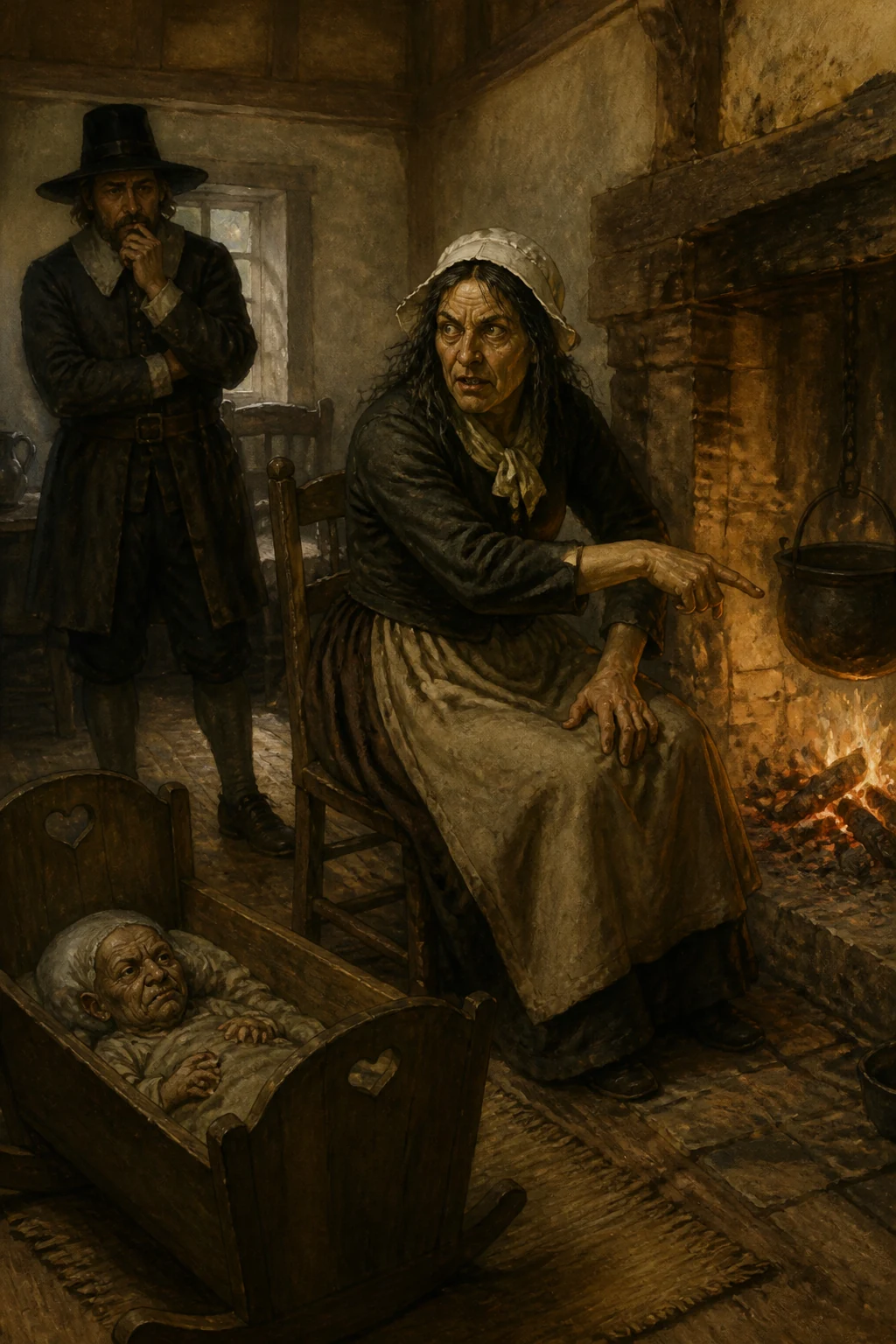
Tako je bilo leta 1692, ko je čarovniška blaznost, ki bi jo bilo mogoče ustaviti s pravočasnim šeškanjem, izbruhnila v Danversu v Massachusettsu; prva žrtev je bila vihrava Irka po imenu Glover, kmalu pa je zajela tudi sosednji Salem. Hudodelstva, ki so jih pripisovali čarovnicam, so bila navadno malenkostna, njihovim tožnikom pa ni nikoli prišlo na misel, da je med njihovimi domnevnimi močmi in neznatnimi dejanji protislovje ali da je čudno, da so tiste, ki bi lahko živele v kraljevskem razkošju, tako bedno revne. Pripisovali so jim bolečine in tegobe, propadanje pridelkov in bolezni živine; otroci so se pritoževali, da jih zbadajo s trni in bucikami (bucike še vedno hranijo v Salemu), in če so histerična dekleta v svojem zmedenem govorjenju izrekla ime kake slabotne starke, so jo s tem pravzaprav obsodila na smrt. Beseda enajstletnega otroka je zadostovala, da so čarovnico obesili, sežgali ali utopili.
Giles Corey, neoporečen osemdesetletnik, je bil obsojen na srednjeveško peine forte et dure: telo so mu zdrobili pod težo skal in tramov. Na sodišču se ni hotel izreči o krivdi, in ko so nanj polagali tramove, je samo zavpil: »Še več teže!« Senca nesrečne žrtve je še leta strašila na kraju usmrtitve in se vselej prikazala, da bi ljudi posvarila pred nesrečami. Po uradni obsodbi so obesili tudi petletnega otroka in psa. Gallows Hill blizu Salema je bil priča številnim žalostnim tragedijam, stari brest, ki je do leta 1876 stal na bostonski zelenici Boston Common, pa naj bi služil za vislice čarovnicam in kvekerjem. Kdor je bil en dan tožnik, je bil naslednji dan že jetnik, in niti duhovščina ni bila varna.
Nekaterim je uspelo pobegniti, denimo modrookemu dekletu iz Wenhama, ki ji je ljubimec pomagal razbiti leseno ječo, jo varno odpeljal onkraj Merrimaca in ji našel dom med kvekerji; pa gospodični Wheeler iz Salema, ki je postala sumljiva in so jo bratje naglo spravili v čoln, odveslali okoli rta Cape Ann ter jo varno nastanili v »čarovniški hiši« v Pigeon Covu. Mnogi pa so raje zbežali v druga mesta, kakor da bi tvegali obtožbo, ki je navadno pomenila smrt.
Ko so aretirali ženo Philipa Englisha, je tudi sam zaprosil, da bi smel deliti njeno usodo, in po posredovanju prijateljev so oba premestili v Boston, kjer sta bila čez dan lahko na prostosti, če sta se vsak večer vrnila v ječo. Tik preden naj bi ju odpeljali nazaj v Salem na sojenje, sta šla v cerkev in poslušala častitega Joshuo Moodyja, ki je pridigal o besedah: »Kadar vas bodo preganjali v enem mestu, bežite v drugo.« Dobri duhovnik ni le pridigal o dobroti, temveč jo je tudi udejanjal, in tisto noč so se vrata njune ječe odprla. S priporočilnim pismom guvernerja Phippsa za newyorškega guvernerja Fletcherja sta se odpravila v tisto naselbino in tam ostala v varnem in gostoljubnem zavetju, dokler se prebivalcem Salema ni vrnil razum; tedaj sta se vrnila. Gospa English je kmalu zatem umrla zaradi posledic krutega ravnanja in tesnobe, in čeprav so gospoda Moodyja večinoma hvalili, ker je namesto zakona uveljavil zdravo pamet in pravičnost, so ga nekateri verski gorečneži tako vztrajno preganjali, da se je preselil v Plymouth.
Po tedanjem verovanju je čarovnica ali čarovnik s Satanom sklenil pogodbo, s katero je v dar dobil nadnaravno moč, v zameno pa je moral po smrti svojo dušo izročiti hudobcu. Listino je podpisal s svojo krvjo, pogodbo pa so potrdili s strašnimi obredi. Satan je nato svojemu zavezniku dal duha pomočnika v podobi psa, opice, mačke ali druge živali, navadno majhne in črne, včasih pa tudi hudička, ki svoje podobe sploh ni prikrival. Hranjenje teh »duhov pomočnikov« s čarovničino krvjo je angleška zakonodaja prepovedovala in ga štela za težko kaznivo dejanje; vendar so jih tako hranili na skrivaj in z njihovo pomočjo je čarovnica lahko priklicala viharje, uničila pridelke, povzročila splave, pohabila živino, podirala hiše ter povzročala bolečine, krče in bolezni. Če je hotela komu škodovati, je izdelala glineno ali voščeno podobo po njegovem obličju, in vse poškodbe in ponižanja, ki jih je prizadejala lutki, je občutil tudi začarani človek; nož ali iglo, zabodeno v voščeno telo, je živo telo ostro občutilo, ne glede na to, kako daleč je bilo. Če je podobo položila v tekočo vodo, na vroče sonce ali blizu ognja, je živo meso hiralo, kakor se je podoba talila ali raztapljala, in človek, na katerega je tako delovala, je umrl. To verovanje je še vedno razširjeno med črnci, ki jih prežemajo vudujska praznoverja Juga. Čarovnica je imela tudi moč jezditi na vetrovih, navadno na metli, potem ko je metlo ali sebe namazala s čarobnim mazilom; zbiranje brezbožnih na njihovih sabatih v močvirjih, polnih kač, ali na samotnih gorskih vrhovih pa so do potankosti opisovali tisti, ki so trdili, da so to videli. Včasih so vso noč kokodakale in blebetale pred hišami duhovnikov in samo ob božiču jih je njihova moč zapustila. Srečanja so bila namenjena divjim in nespodobnim orgijam, iz občevanja demonov s čarovnicami pa so se rojevale krastače in kače.
Seveda so obtoževali tudi Indijance, saj so ti priznavali obstoj dobrih in zlih duhov, njihovi vrači pa so zdravili z zaklinjanjem v prepričanju, da s tem iz bolnikov izganjajo hudiče; v zgodnji zgodovini dežele so beli naseljenci rdečemu človeku pripisovali moči, ki so komaj kaj zaostajale za močmi vzhodnjaških in evropskih čarovnikov srednjega veka. Cotton Mather je odkril povezavo med Satanom in Indijanci ter trdil, da so nekatere Algonkine že od otroštva urili za powahe, powwowe oziroma čarovnike, ki so si z odrekanjem hrani in spanju ter z opravljanjem obredov pridobili jasnovidnost in sposobnost občevanja z bogovi in duhovi. Zaradi stroge discipline so postali žrtve živčne razdraženosti, odgovornost zaklinjanja pa je na njihove duhove učinkovala podobno kakor plini iz razpoke v Delfih na Apolonove preročiške svečenice; njihovi znaki blaznosti ali besnenja so veljali za božansko ali peklensko obsedenost. Ko so Johna Gibba, Škota, ki je zblaznel zaradi verske zanesenosti, njegovi naveličani rojaki poslali čez morje v to deželo, so ga Indijanci pozdravili kot mogočnejšega čarovnika od vseh svojih; umrl je leta 1720, oni pa so ga občudovali in se ga bali zaradi domačnosti z duhovi iz Hobbomocka (pekla), ki naj bi jo razkrivali njegovo blodno govorjenje in nenavadne norčije. Dva indijanska služabnika častitega gospoda Purvisa iz Salema, ki sta skušala z urokom odkriti čarovnico, so usmrtili kot čarovnika. Divjaki, ki salemskemu čarovništvu niso pripisovali večjega pomena, kakor si ga je zaslužilo, so bili osupli nad njegovimi smrtonosnimi posledicami, in zaradi te blaznosti so Angleži morda izgubili nekaj vpliva nad domačini. »Veliki duh Francozom ne pošilja čarovnic,« so govorili. Barrow Hill blizu Amesburyja naj bi bil zbirališče indijanskih vračev in čarovnic; pozno ponoči je z njegovega vrha sijala svetloba ognjev, čeznjo pa so švigale senčne postave. Starci pravijo, da je te luči pozimi še vedno mogoče videti, sodobni dvomljivci pa trdijo, da je šlo za severni sij.
Toda vera v čarovnice ni zamrla niti potem, ko so se prebivalci Salema spametovali. V dolini Merrimaca je hudič še mnogo let zatem pridobival privržence: botro Mose iz vasi Rocks, ki se je zvrnila po stopnicah, ko so na večerni zabavi nekaj milj stran ubili velikega hrošča, ki je pred tem zaletaval v obraze zbranih; botro Whitcher iz Ameshuryja, katere statve so ropotale noč in dan še po njeni smrti; botro Sloper iz West Newburyja, ki je odšla domov šepajoča takoj zatem, ko je neki mož zasadil sekiro v tram hiše, ki jo je začarala, a si je povrnila moč in pridobila boljši sloves, ko je leta 1794 priplavala do prevrnjenega čolna in rešila dva izmed ljudi, ki so bili v nevarnosti; botra Nicholsa iz vasi Rocks, ki je »uročil« sosedovega sina in ga prisilil, da je tekel po eni strani hiše navzgor, po slemenu in po drugi strani navzdol ter »s svojim čudnim početjem silno vznemirjal družino«; Susie Martin, prav tako iz Rocksa, ki so jo obesili kljub njenim pobožnostim v ječi, čeprav je vrv tako poplesavala, da je niso mogli zavezati, dokler ni vrana nad njihovimi glavami zaklicala, naj uporabijo šibo, in so z njo izvršili sodbo; ter botro Morse z vogala ulic Market in High v Newburyportu, katere košare in lonci so nenehno poplesavali po hiši in ki so jo videli »letati okoli sonca, kakor da bi bila prerezana na dvoje ali kakor da bi hudič skrival njen spodnji del«. Hrib pod Eastonom v Pensilvaniji, imenovan Hexenkopf (Čarovničina glava), so nemški naseljenci opisovali kot nočno zbirališče čudnih žensk, ki so se vrtele po njegovem vrhu v »sklenjenih plesih« in pele z globokimi glasovi, pomešanimi s strašnim smehom. Potem ko so eno od teh žensk v okrožju Williams kaznovali, ker je začarala konja, vrednega dvajset dolarjev, so njihovi sabati potekali tiše. Mama Rinkle, katere »skalo« kažejo ob Wissahickonu v Filadelfiji, je »pila roso iz želodovih kapic in imela zlobni pogled«. Juan Perea iz San Matea v Novi Mehiki je s svojimi pajdaši v podobi ognjene krogle letal na srečanja v gorah. Med temi izleti je svoje oči pustil doma in uporabljal oči kake živali. Ker mu je pes požrl oči, ko jih je nekoč malomarno pustil na mizi, je moral odtlej vedno nositi mačje. Še v tem stoletju so starko, ki je živela v koči na hudsonskih Palisadah, imeli za krivo krajevnih neurij in nesreč. Še leta 1889 so dva Indijanca ljudstva Zuni obesili na zidu stare španske cerkve blizu njunega puebla v Arizoni, ker naj bi med sušo odpihnila deževne oblake. Menili so tudi, da je bilo nekaj srhljivega v dogodku, po katerem je vzpetina blizu Falls Villagea v Connecticutu dobila ime Gallows Hill, saj so nekega jutra na drevesu blizu njenega vrha našli obešenega neznanega črnca.
Moll Pitcher, uspešna čarovnica in vedeževalka iz starega Lynna, je nastopala v danes pozabljenih pesmih, igrah in romanih. Živela je v koči ob vznožju High Rocka, kamor se k njej po nasvet niso zatekali le ugledni ljudje, temveč tudi tisti, ki so snovali lopovske naklepe in so želeli vnaprej izvedeti, kako se bodo izšli. Marsikatero ladjo je posadka zapustila tik pred izplutjem, ker je plovbi napovedala nesrečo. Bila je srednje rasti, z veliko glavo, razmršenimi lasmi, dolgim nosom in predirljivimi črnimi očmi. Palice, ki jih je nosila s seboj, so bile odrezane z leske, ki je segala čez potok, v katerem je neporočena mati utopila svojega otroka. Dekle, ki je prišlo k njej po novice o svojem ljubem, je izgubilo razum, ko je čarovnica iz zlobnega vzgiba z divjo dramatičnostjo opisala njegovo smrt. Nekega dne je pogrešana ladja naglo priplula v pristanišče in sunek veselja, ki ga je dekle doživelo, ko jo je mornar stisnil v objem, ji je povrnil izgubljeni razum. Ko je Moll Pitcher umrla, je ob njej bedela hčerkica ženske, ki ji je povzročila toliko gorja.
John oziroma Edward Dimond, ded Moll Pitcher, je bil dobrohoten čarovnik. Kadar so ladje v hudem viharju ali ponoči skušale vpluti v pristanišče Marblehead, je njihove posadke osupnil doneč glas, ki je kakor trobenta odmeval z neba, jasno slišen nad tuljenjem in sikanjem še tako hudega neurja, ter jim veleval, kako naj usmerijo plovbo, da bodo dosegle mirne vode. To je bil Dimondov glas, ki je prihajal z njegovega mesta na vaškem pokopališču, več milj stran. V nemirnem vremenu je vedno odšel tja in med korakanjem sem ter tja med grobovi kričal ukaze ladjam, ki jih je videl s pomočjo skrivnostne moči. Kadar so k njemu po nasvet prišli tatovi, jih je začaral in prisilil, da so vrnili svoj plen, ali pa jih pripravil do tega, da so nemočno tavali po ulicah s težkimi bremeni.
»Stara mama Redd iz Marbleheada je znala sladko mleko v pinji spremeniti v plesen.« Ker je bila čarovnica, in to razvpita, je znala mleko tudi sesiriti, še preden je priteklo iz krave, in ga nato spremeniti v modro volno. Imela je zlobni pogled in, če je hotela, je njen pogled ali dotik lahko ohromil kakor mrtvoud. Samo zaželeti si je morala, da bi v zibelki našli krvavo mesarsko sekiro, pa je otročiček v njej umrl, vse mesto pa ji je pripisovalo nadloge vsakdanjih gospodinjskih opravil in poslov. Njen zoprni sloves jo je pripeljal v smrt od rok someščanov, ki jih je »mučila« neskončna vrsta čudnih dogodkov: ladje so se prikazovale tik pred brodolomom in izginjale ljudem pred očmi; može so videvali hoditi po vodi, potem ko so jih že lepo pokopali; slišali so, kako veter izgovarja imena mornarjev, obsojenih, da se nikoli več ne vrnejo; po ulicah so se slišali koraki in glasovi, preden naj bi umrli pomembni ljudje; nekega moža je lovilo truplo v svoji krsti; drugega je zasledoval hudič v kočiji, ki so jo vlekli štirje beli konji; mlada ženska, ki je od ljubega pravkar prejela v dar nekaj lepih rib, je osupla videla, kako se je razblinil v zraku, naslednje jutro pa ji je strlo srce, ko je izvedela, da je umrl na morju. Celo v oddaljenem Amesburyju se je hudičeva moč kazala v prikazni moža, ki je hodil po cestah z glavo pod pazduho, in v muhavosti mlina na veter, ki ga je mlinar vselej ustavil ob sončnem zahodu, ta pa se je ob polnoči sam od sebe spet zagnal. Očitno je bil že skrajni čas, da se znebijo mame Redd.
Margaret Wesson, »stara Meg«, je živela v Gloucestru, dokler je leta 1745 ni pokončal strel, izstreljen med obleganjem Louisburga, petsto milj stran. Dva vojaka iz Gloucestra je pred obzidjem francoskega mesta nadlegovala vrana, ki je letala nad njima in okoli njiju, hripavo krakala ter se ni menila ne za kamenje ne za strele, dokler jima ni prišlo na misel, da ptica ne more biti nihče drug kakor stara Meg v drugi podobi. Ker srebrne krogle veljajo za učinkovito sredstvo zoper čarovniško zlo, sta z uniform odrezala dva srebrna gumba in ju izstrelila v vrano. Prvi strel ji je zlomil nogo, ob drugem pa je mrtva padla na tla. Ko sta se vrnila v Gloucester, sta izvedela, da je stara Meg padla in si zlomila nogo v trenutku, ko sta streljala na vrano, in da je kmalu zatem umrla. Pregledali so njeno telo in iz njenega mesa odstranili prav tista gumba, ki sta ju pri Louisburgu izstrelila v vrano.
Ko je neki prebivalec New Havena jezdil proti domu — to je bilo v času dogajanja v Salemu — je ob glavi svojega konja zagledal ženske postave, ki so si zavzeto šepetale in brez vsakršnega napora držale korak s kasom njegove živali. »V imenu Boga, povejte mi, kdo ste,« je zaklical popotnik, in ob božjem imenu so izginile. Naslednji dan so nevidne roke stresale njegov sadovnjak in metale sadje na tla. Prašiči so tekali po okolici na zadnjih nogah; otroci so kričali, da jih nekdo zbada z bucikami; neki mož se je valjal po tleh, kakor da ga kdo potiska, in morali so paziti nanj, da ne bi zlezel v ogenj; ko so gospodinje pekle kruh, je bil tako poln dlak kakor hrana v mestnem penzionu; ko so kuhale mehko milo, je teklo iz kotla in po tleh kakor lava; kamni so padali skozi dimnike in razbijali lončeno posodo. Eden od kmetov je odrezal uho prašiču, ki je hodil po zadnjih nogah, in kmalu zatem se je prikazala čudaška starka iz soseščine z enim ušesom povitim, kar je tamkajšnje ljudi prepričalo, da je tegobe povzročila ona. Ko je neka ženska pripravljala pepeliko, je ta začela poskakovati; v lonec so ustrelili s puško in nenadoma se je vse umirilo. Zjutraj so čarovnico našli mrtvo na tleh njene hiše. Toda smrt jo je naredila le še hujšo, saj se je preselila v zapuščeno hišo blizu svoje in tam vsako noč divje rajala; slišale so se gosli, bliskale so luči, letelo je kamenje, kriki pa so ljudem celo daleč stran znova in znova pošiljali mrzle srhe po telesu. Nazadnje so prebivalci poskusili hišo porušiti in v mesto se je vrnil mir.
Na začetku tega stoletja je koščena starka, znana kot teta Woodward, živela sama v brunarici v Minot Cornerju v Mainu in uživala v strahospoštovanju prebivalcev tega odmaknjenega kraja. Zaradi nje so se ponoči le malo gibali zunaj, neko ubogo dekle pa je živelo v smrtnem strahu, da ga bo s skrivnostnimi veščinami čez noč spremenila v belega konja. Eden od prebivalcev jo je od svoje hiše odganjal s podkvijo, pribito na vrata, drugi pa je njenim urokom jemal moč tako, da je na pragu hranil vejo »okroglega lesa«. Ponoči je strašila v veliki, štirioglati hiši, kjer je bilo pogosto slišati jok duha umorjenega dojenčka, podnevi pa je uročila zaloge in posodje sosedov ter njihovo smetano spreminjala v pinjenec. »Stric« Blaisdell je prihitel v naselbino povedat kmetom, da je teta Woodward sredi ceste splezala na njegove sani in da jih njegovi štirje pari volov niso mogli premakniti niti za palec, ko pa je skočila z njih, je en sam par brez truda povlekel tovor lesa. Pa vendar je umrla v svoji postelji.
Izvirnik
The extraordinary delusion recorded as Salem witchcraft was but a reflection of a kindred insanity in the Old World that was not extirpated until its victims had been counted by thousands. That human beings should be accused of leaguing themselves with Satan to plague their fellows and overthrow the powers of righteousness is remarkable, but that they should admit their guilt is incomprehensible, albeit the history of every popular delusion shows that weak minds are so affected as to lose control of themselves and that a whimsey can be as epidemic as small-pox.
Such was the case in 1692 when the witchcraft madness, which might have been stayed by a seasonable spanking, broke out in Danvers, Massachusetts, the first victim being a wild Irishwoman, named Glover, and speedily involved the neighboring community of Salem. The mischiefs done by witches were usually trifling, and it never occurred to their prosecutors that there was an inconsistency between their pretended powers and their feeble deeds, or that it was strange that those who might live in regal luxury should be so wretchedly poor. Aches and pains, blight of crops, disease of cattle, were charged to them; children complained of being pricked with thorns and pins (the pins are still preserved in Salem), and if hysterical girls spoke the name of any feeble old woman, while in flighty talk, they virtually sentenced her to die. The word of a child of eleven years sufficed to hang, burn, or drown a witch.
Giles Corey, a blameless man of eighty, was condemned to the mediaeval peine forte et dure, his body being crushed beneath a load of rocks and timbers. He refused to plead in court, and when the beams were laid upon him he only cried, “More weight!” The shade of the unhappy victim haunted the scene of his execution for years, and always came to warn the people of calamities. A child of five and a dog were also hanged after formal condemnation. Gallows Hill, near Salem, witnessed many sad tragedies, and the old elm that stood on Boston Common until 1876 was said to have served as a gallows for witches and Quakers. The accuser of one day was the prisoner of the next, and not even the clergy were safe.
A few escapes were made, like that of a blue-eyed maid of Wenham, whose lover aided her to break the wooden jail and carried her safely beyond the Merrimac, finding a home for her among the Quakers; and that of Miss Wheeler, of Salem, who had fallen under suspicion, and whose brothers hurried her into a boat, rowed around Cape Ann, and safely bestowed her in “the witch house” at Pigeon Cove. Many, however, fled to other towns rather than run the risk of accusation, which commonly meant death.
When the wife of Philip English was arrested he, too, asked to share her fate, and both were, through friendly intercession, removed to Boston, where they were allowed to have their liberty by day on condition that they would go to jail every night. Just before they were to be taken back to Salem for trial they went to church and heard the Rev. Joshua Moody preach from the text, “If they persecute you in one city, flee unto another.” The good clergyman not only preached goodness, but practised it, and that night the door of their prison was opened. Furnished with an introduction from Governor Phipps to Governor Fletcher, of New York, they made their way to that settlement, and remained there in safe and courteous keeping until the people of Salem had regained their senses, when they returned. Mrs. English died, soon after, from the effects of cruelty and anxiety, and although Mr. Moody was generally commended for his substitution of sense and justice for law, there were bigots who persecuted him so constantly that he removed to Plymouth.
According to the belief of the time a witch or wizard compacted with Satan for the gift of supernatural power, and in return was to give up his soul to the evil one after his life was over. The deed was signed in blood of the witch and horrible ceremonies confirmed the compact. Satan then gave his ally a familiar in the form of a dog, ape, cat, or other animal, usually small and black, and sometimes an undisguised imp. To suckle these “familiars” with the blood of a witch was forbidden in English law, which ranked it as a felony; but they were thus nourished in secret, and by their aid the witch might raise storms, blight crops, abort births, lame cattle, topple over houses, and cause pains, convulsions, and illness. If she desired to hurt a person she made a clay or waxen image in his likeness, and the harms and indignities wreaked on the puppet would be suffered by the one bewitched, a knife or needle thrust in the waxen body being felt acutely by the living one, no matter how far distant he might be. By placing this image in running water, hot sunshine, or near a fire, the living flesh would waste as this melted or dissolved, and the person thus wrought upon would die. This belief is still current among negroes affected by the voodoo superstitions of the South. The witch, too, had the power of riding winds, usually with a broomstick for a conveyance, after she had smeared the broom or herself with magic ointment, and the flocking of the unhallowed to their sabbaths in snaky bogs or on lonely mountain tops has been described minutely by those who claim to have seen the sight. Sometimes they cackled and gibbered through the night before the houses of the clergy, and it was only at Christmas that their power failed them. The meetings were devoted to wild and obscene orgies, and the intercourse of fiends and witches begot a progeny of toads and snakes.
Naturally the Indians were accused, for they recognized the existence of both good and evil spirits, their medicine-men cured by incantations in the belief that devils were thus driven out of their patients, and in the early history of the country the red man was credited by white settlers with powers hardly inferior to those of the oriental and European magicians of the middle ages. Cotton Mather detected a relation between Satan and the Indians, and he declares that certain of the Algonquins were trained from boyhood as powahs, powwows, or wizards, acquiring powers of second sight and communion with gods and spirits through abstinence from food and sleep and the observance of rites. Their severe discipline made them victims of nervous excitement and the responsibilities of conjuration had on their minds an effect similar to that produced by gases from the rift in Delphos on the Apollonian oracles, their manifestations of insanity or frenzy passing for deific or infernal possession. When John Gibb, a Scotchman, who had gone mad through religious excitement, was shipped to this country by his tired fellow-countrymen, the Indians hailed him as a more powerful wizard than any of their number, and he died in 1720, admired and feared by them because of the familiarity with spirits out of Hobbomocko (hell) that his ravings and antics were supposed to indicate. Two Indian servants of the Reverend Mr. Purvis, of Salem, having tried by a spell to discover a witch, were executed as witches themselves. The savages, who took Salem witchcraft at its worth, were astonished at its deadly effect, and the English may have lost some influence over the natives in consequence of this madness. “The Great Spirit sends no witches to the French,” they said. Barrow Hill, near Amesbury, was said to be the meeting-place for Indian powwows and witches, and at late hours of the night the light of fires gleamed from its top, while shadowy forms glanced athwart it. Old men say that the lights are still there in winter, though modern doubters declare that they were the aurora borealis.
But the belief in witches did not die even when the Salem people came to their senses. In the Merrimac valley the devil found converts for many years after: Goody Mose, of Rocks village, who tumbled down-stairs when a big beetle was killed at an evening party, some miles away, after it had been bumping into the faces of the company; Goody Whitcher, of Ameshury, whose loom kept banging day and night after she was dead; Goody Sloper, of West Newbury, who went home lame directly that a man had struck his axe into the beam of a house that she had bewitched, but who recovered her strength and established an improved reputation when, in 1794, she swam out to a capsized boat and rescued two of the people who were in peril; Goodman Nichols, of Rocks village, who “spelled” a neighbor's son, compelling him to run up one end of the house, along the ridge, and down the other end, “troubling the family extremely by his strange proceedings;” Susie Martin, also of Rocks, who was hanged in spite of her devotions in jail, though the rope danced so that it could not be tied, but a crow overhead called for a withe and the law was executed with that; and Goody Morse, of Market and High Streets, Newburyport, whose baskets and pots danced through her house continually and who was seen “flying about the sun as if she had been cut in twain, or as if the devil did hide the lower part of her.” The hill below Easton, Pennsylvania, called Hexenkopf (Witch's head), was described by German settlers as a place of nightly gathering for weird women, who whirled about its top in “linked dances” and sang in deep tones mingled with awful laughter. After one of these women, in Williams township, had been punished for enchanting a twenty-dollar horse, their sabbaths were held more quietly. Mom Rinkle, whose “rock” is pointed out beside the Wissahickon, in Philadelphia, “drank dew from acorn-cups and had the evil eye.” Juan Perea, of San Mateo, New Mexico, would fly with his chums to meetings in the mountains in the shape of a fire-ball. During these sallies he left his own eyes at home and wore those of some brute animal. It was because his dog ate his eyes when he had carelessly put them on a table that he had always afterward to wear those of a cat. Within the present century an old woman who lived in a hut on the Palisades of the Hudson was held to be responsible for local storms and accidents. As late as 1889 two Zuni Indians were hanged on the wall of an old Spanish church near their pueblo in Arizona on a charge of having blown away the rainclouds in a time of drouth. It was held that there was something uncanny in the event that gave the name of Gallows Hill to an eminence near Falls Village, Connecticut, for a strange black man was found hanging, dead, to a tree near its top one morning.
Moll Pitcher, a successful sorcerer and fortune-teller of old Lynn, has figured in obsolete poems, plays, and romances. She lived in a cottage at the foot of High Rock, where she was consulted, not merely by people of respectability, but by those who had knavish schemes to prosecute and who wanted to learn in advance the outcome of their designs. Many a ship was deserted at the hour of sailing because she boded evil of the voyage. She was of medium height, big-headed, tangle-haired, long-nosed, and had a searching black eye. The sticks that she carried were cut from a hazel that hung athwart a brook where an unwedded mother had drowned her child. A girl who went to her for news of her lover lost her reason when the witch, moved by a malignant impulse, described his death in a fiercely dramatic manner. One day the missing ship came bowling into port, and the shock of joy that the girl experienced when the sailor clasped her in his arms restored her erring senses. When Moll Pitcher died she was attended by the little daughter of the woman she had so afflicted.
John, or Edward, Dimond, grandfather of Moll Pitcher, was a benevolent wizard. When vessels were trying to enter the port of Marblehead in a heavy gale or at night, their crews were startled to hear a trumpet voice pealing from the skies, plainly audible above the howling and hissing of any tempest, telling them how to lay their course so as to reach smooth water. This was the voice of Dimond, speaking from his station, miles away in the village cemetery. He always repaired to this place in troublous weather and shouted orders to the ships that were made visible to him by mystic power as he strode to and fro among the graves. When thieves came to him for advice he charmed them and made them take back their plunder or caused them to tramp helplessly about the streets bearing heavy burdens.
“Old Mammy Redd, of Marblehead, Sweet milk could turn to mould in churn.”
Being a witch, and a notorious one, she could likewise curdle the milk as it came from the cow, and afterward transform it into blue wool. She had the evil eye, and, if she willed, her glance or touch could blight like palsy. It only needed that she should wish a bloody cleaver to be found in a cradle to cause the little occupant to die, while the whole town ascribed to her the annoyances of daily housework and business. Her unpleasant celebrity led to her death at the hands of her fellow-citizens who had been “worrited” by no end of queer happenings: ships had appeared just before they were wrecked and had vanished while people looked at them; men were seen walking on the water after they had been comfortably buried; the wind was heard to name the sailors doomed never to return; footsteps and voices were heard in the streets before the great were to die; one man was chased by a corpse in its coffin; another was pursued by the devil in a carriage drawn by four white horses; a young woman who had just received a present of some fine fish from her lover was amazed to see him melt into the air, and was heart-broken when she learned next morning that he had died at sea. So far away as Amesbury the devil's power was shown by the appearance of a man who walked the roads carrying his head under his arm, and by the freak of a windmill that the miller always used to shut up at sundown but that started by itself at midnight. Evidently it was high time to be rid of Mammy Redd.
Margaret Wesson, “old Meg,” lived in Gloucester until she came to her death by a shot fired at the siege of Louisburg, five hundred miles away, in 1745. Two soldiers of Gloucester, while before the walls of the French town, were annoyed by a crow, that flew over and around them, cawing harshly and disregarding stones and shot, until it occurred to them that the bird could be no other than old Meg in another form, and, as silver bullets are an esteemed antidote for the evils of witchcraft, they cut two silver buttons from their uniforms and fired them at the crow. At the first shot its leg was broken; at the second, it fell dead. On returning to Gloucester they learned that old Meg had fallen and broken her leg at the moment when the crow was fired on, and that she died quickly after. An examination of her body was made, and the identical buttons were extracted from her flesh that had been shot into the crow at Louisburg.
As a citizen of New Haven was riding home--this was at the time of the goings on at Salem--he saw shapes of women near his horse's head, whispering earnestly together and keeping time with the trot of his animal without effort of their own. “In the name of God, tell me who you are,” cried the traveller, and at the name of God they vanished. Next day the man's orchard was shaken by viewless hands and the fruit thrown down. Hogs ran about the neighborhood on their hind legs; children cried that somebody was sticking pins into them; one man would roll across the floor as if pushed, and he had to be watched lest he should go into the fire; when housewives made their bread they found it as full of hair as food in a city boarding-house; when they made soft soap it ran from the kettle and over the floor like lava; stones fell down chimneys and smashed crockery. One of the farmers cut off an ear from a pig that was walking on its hind legs, and an eccentric old body of the neighborhood appeared presently with one of her ears in a muffle, thus satisfying that community that she had caused the troubles. When a woman was making potash it began to leap about, and a rifle was fired into the pot, causing a sudden calm. In the morning the witch was found dead on her floor. Yet killing only made her worse, for she moved to a deserted house near her own, and there kept a mad revel every night; fiddles were heard, lights flashed, stones were thrown, and yells gave people at a distance a series of cold shivers; but the populace tried the effect of tearing down the house, and quiet was brought to the town.
In the early days of this century a skinny old woman known as Aunt Woodward lived by herself in a log cabin at Minot Corner, Maine, enjoying the awe of the people in that secluded burg. They moved around but little at night, on her account, and one poor girl was in mortal fear lest by mysterious arts she should be changed, between two days, into a white horse. One citizen kept her away from his house by nailing a horseshoe to his door, while another took the force out of her spells by keeping a branch of “round wood” at his threshold. At night she haunted a big, square house where the ghost of a murdered infant was often heard to cry, and by day she laid charms on her neighbors' provisions and utensils, and turned their cream to buttermilk. “Uncle” Blaisdell hurried into the settlement to tell the farmers that Aunt Woodward had climbed into his sled in the middle of the road, and that his four yoke of oxen could not stir it an inch, but that after she had leaped down one yoke of cattle drew the load of wood without an effort. Yet she died in her bed.