Prevod
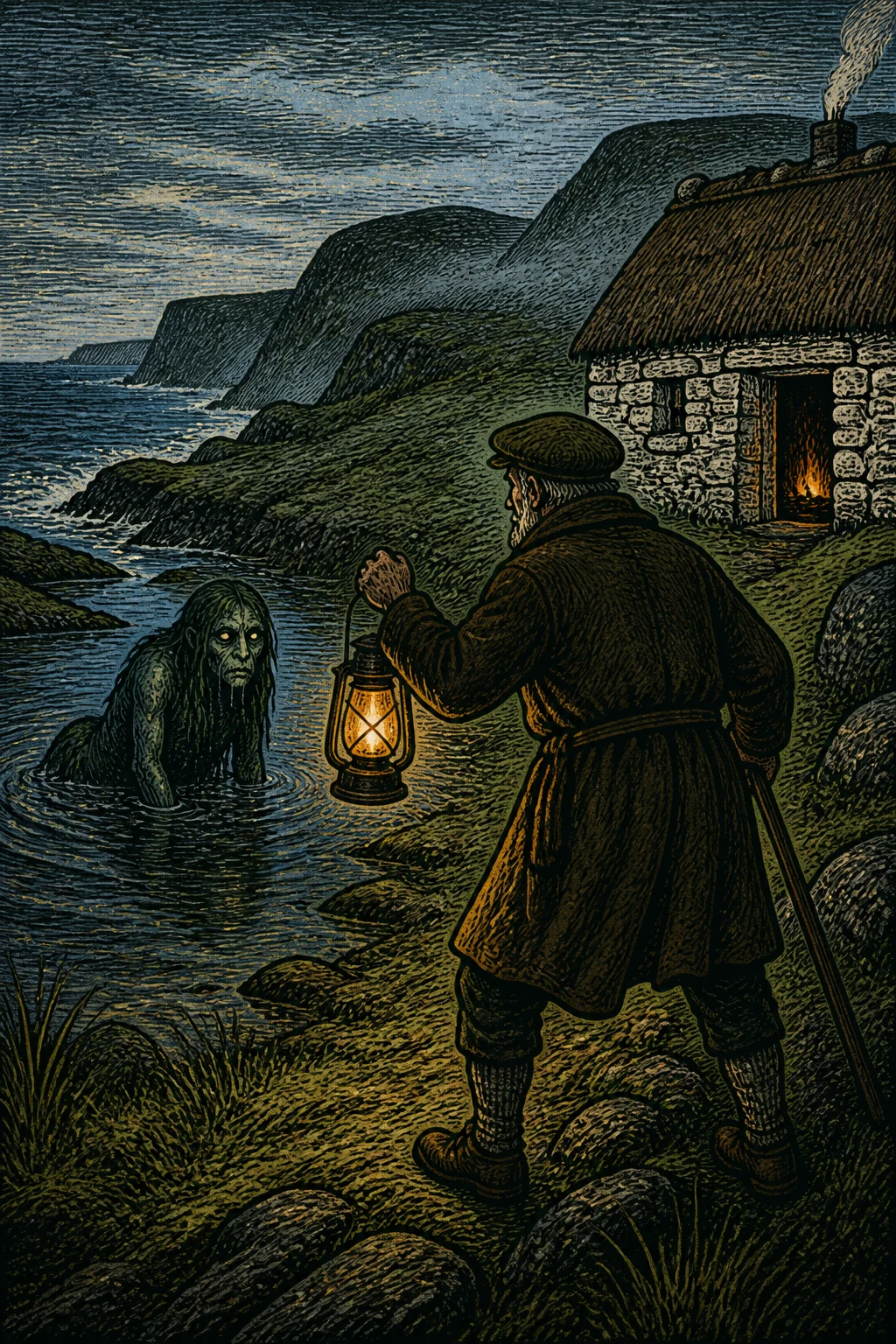
Once upon a time there was a miller who lived happily with his wife. They had money and possessions, and their prosperity increased from year to year. But misfortune comes overnight: just as their wealth had grown, so it dwindled year by year, until at last the miller could scarcely call the mill in which he lived his own. He was full of sorrow, and when he lay down after the day’s work, he found no rest, but tossed and turned in his bed, tormented by worry. One morning he rose before daybreak and went out into the open air, hoping to ease his heart. As he walked along the milldam, the first ray of sunlight broke through, and he heard a rustling in the pond. He turned and saw a beautiful woman slowly rising from the water. Her long hair, which she held over her shoulders with her delicate hands, flowed down on either side and covered her white body. He knew at once that she was the nixie of the pond, and was so afraid that he did not know whether to go or stay. But the nixie spoke in a gentle voice, called him by name, and asked why he was so sad. At first the miller was speechless, but when he heard her speak so kindly, he took courage and told her that he had once lived in happiness and wealth, but was now so poor that he did not know what to do. “Be at ease,” answered the nixie. “I will make you richer and happier than you have ever been, only you must promise to give me whatever has just been born in your house.” “What can that be,” thought the miller, “but a puppy or a kitten?” And he promised her what she asked. The nixie sank back into the water, and he hurried home to his mill, comforted and in good spirits. Before he reached it, the maid came out of the door and called to him that he should rejoice, for his wife had given birth to a little boy. The miller stood as though struck by lightning: he saw clearly that the treacherous nixie had known this and deceived him. With bowed head he went to his wife’s bedside, and when she asked, “Why aren’t you glad to see our beautiful boy?” he told her what had happened and what promise he had made to the nixie. “What use are happiness and riches to me,” he added, “if I must lose my child? But what can I do?” Nor could the relatives who had come to wish them joy offer any advice.
Meanwhile, good fortune returned to the miller’s house. Everything he undertook succeeded; it was as though chests and coffers filled of their own accord, and the money in the cupboard multiplied overnight. Before long he was richer than ever. But he could not enjoy it without a care: the promise he had made to the nixie tormented his heart. Whenever he passed the pond, he feared she would rise from the water and remind him of his debt. He would not let the boy himself go anywhere near the water. “Take care,” he told him. “If you touch the water, a hand will come out, seize you, and pull you under.” Yet as year after year passed and the nixie did not appear again, the miller began to feel more at ease.
The boy grew into a young man and was apprenticed to a huntsman. When he had finished his training and become a skilled huntsman himself, the lord of the village took him into his service. In the village there lived a beautiful and faithful girl who caught the huntsman’s fancy, and when his master noticed this, he gave him a little house. The two were married, lived peacefully and happily, and loved each other with all their hearts.
One day the huntsman was pursuing a deer. When the animal turned out of the forest into the open fields, he followed it and at last brought it down with a shot. He did not notice that he was near the dangerous pond, and after gutting the animal, he went to the water to wash his bloodstained hands. But scarcely had he dipped them in when the nixie rose up, threw her wet arms about him with a laugh, and pulled him under so swiftly that the waves closed over his head.
When evening came and the huntsman did not return home, his wife grew frightened. She went out to look for him, and since he had often told her that he must beware of the nixie’s snares and never venture near the pond, she already suspected what had happened. She hurried to the water, and when she found his hunting bag lying on the bank, she could no longer doubt the misfortune that had befallen him. Lamenting and wringing her hands, she called her beloved by name, but in vain. She hurried to the other side of the pond and called him again; she railed at the nixie with bitter words, but no answer came. The surface of the water remained still, and only the half-moon’s face gazed motionlessly up at her.
The poor woman would not leave the pond. With swift steps, without rest or respite, she circled it again and again, sometimes in silence, sometimes crying out wildly, sometimes whimpering softly. At last her strength failed her: she sank to the ground and fell into a deep sleep. Soon a dream came to her.
She was climbing fearfully between great boulders; thorns and trailing vines caught at her feet, rain beat against her face, and the wind tangled her long hair. When she reached the summit, an entirely different scene lay before her. The sky was blue, the air mild, and the ground sloped gently down to a green meadow bright with flowers, where a neat little cottage stood. She went up to it and opened the door. Inside sat an old woman with white hair, who beckoned to her kindly. At that moment the poor woman awoke. Day had already dawned, and she resolved at once to follow her dream. She climbed laboriously up the mountain, and everything was just as she had seen it in the night. The old woman welcomed her kindly and showed her a chair where she could sit. “You must have suffered some misfortune,” she said, “to seek out my lonely cottage.” Through her tears, the woman told her what had happened. “Take heart,” said the old woman. “I will help you. Here is a golden comb. Wait until the full moon has risen, then go to the pond, sit down at its edge, and comb your long black hair with it. When you have finished, lay it on the bank, and you will see what happens.”
The woman returned home, but the days until the full moon passed slowly. At last its shining disc appeared in the sky. She went out to the pond, sat down, and combed her long black hair with the golden comb; when she had finished, she laid it at the water’s edge. Before long a roaring came from the depths, a wave rose, rolled to the bank, and carried the comb away. In no more time than it took the comb to sink to the bottom, the surface of the water parted, and the huntsman’s head rose above it. He did not speak, but looked at his wife with sorrowful eyes. At that very moment a second wave came rushing up and covered his head. Everything had vanished; the pond lay as still as before, and only the face of the full moon shone upon it.
In despair, the woman returned home, but her dream showed her the old woman’s cottage. The next morning she set out once more and poured out her sorrow to the wise woman. The old woman gave her a golden flute and said, “Wait until the full moon returns, then take this flute, sit on the bank, and play a beautiful tune upon it. When you have finished, lay it on the sand, and you will see what happens.”
The woman did as the old woman had told her. Scarcely had she laid the flute on the sand when a roaring came from the depths: a wave rose, swept towards her, and carried the flute away. Soon afterwards the water parted, and not only the man’s head but his body to the waist rose above it. Full of longing, he stretched out his arms towards her, but a second wave came rushing up, covered him, and drew him down again.
“Oh, what use is it,” said the unhappy woman, “to see my beloved only to lose him again?” Grief filled her heart anew, but for the third time her dream led her to the old woman’s house. She set out, and the wise woman gave her a golden spinning wheel, comforted her, and said, “All is not yet accomplished. Wait until the full moon comes, then take the spinning wheel, sit on the bank, and spin until the bobbin is full. When you have finished, set the wheel close to the water, and you will see what happens.”
The woman followed every instruction exactly. As soon as the full moon appeared, she carried the golden spinning wheel to the bank and spun diligently until all the flax was used up and the bobbin was filled with thread. But scarcely had she set the wheel at the water’s edge when a louder roaring than ever rose from the depths, and a mighty wave rushed up and carried it away. At once the man’s head and his whole body rose in a jet of water. He quickly sprang ashore, took his wife by the hand, and fled. But scarcely had they gone a little way when the whole pond rose with a terrible roar and poured out into the open fields with raging force. The fleeing pair already saw death before their eyes when, in her terror, the woman called upon the old woman for help. At that instant they were transformed, she into a toad and he into a frog. The flood that overtook them could not kill them, but it tore them apart and carried them far away.
When the water had receded and they both touched dry ground again, their human forms returned. But neither knew where the other had gone; they found themselves among strangers who knew nothing of their homeland. High mountains and deep valleys lay between them. To earn their living, they both had to tend sheep. For many long years they drove their flocks through field and forest, full of sorrow and longing.
When spring had once more burst forth from the earth, they both set out one day with their flocks, and chance led them towards each other. He saw a flock on a distant mountainside and drove his sheep in that direction. They met in a valley, but did not recognize each other, though they were glad to be no longer so alone. From then on they drove their flocks side by side every day. They spoke little, but found comfort in each other’s company. One evening, when the full moon shone in the sky and the sheep had already settled down to rest, the shepherd took a flute from his pocket and played a beautiful but sorrowful tune. When he had finished, he noticed that the shepherdess was weeping bitterly. “Why are you crying?” he asked. “Ah,” she answered, “the full moon shone just so when I last played that tune on the flute, and my beloved’s head rose out of the water.” He looked at her, and it was as though a veil fell from his eyes: he recognized his dearest wife. And when she looked at him, with the moon shining on his face, she recognized him too. They embraced and kissed, and whether they were happy beyond measure, no one need ask.