Prevod
Once upon a time there was a widow who had two daughters. The elder was so like her in temper and looks that to see her was to see her mother. They were both so disagreeable and proud that no one could live with them. The younger, who was the very image of her father in gentleness and kindness, was also one of the most beautiful girls anyone had ever seen. As we naturally love those who resemble us, the mother doted on her elder daughter, while she felt a dreadful aversion to the younger. She made her eat in the kitchen and work without ceasing.
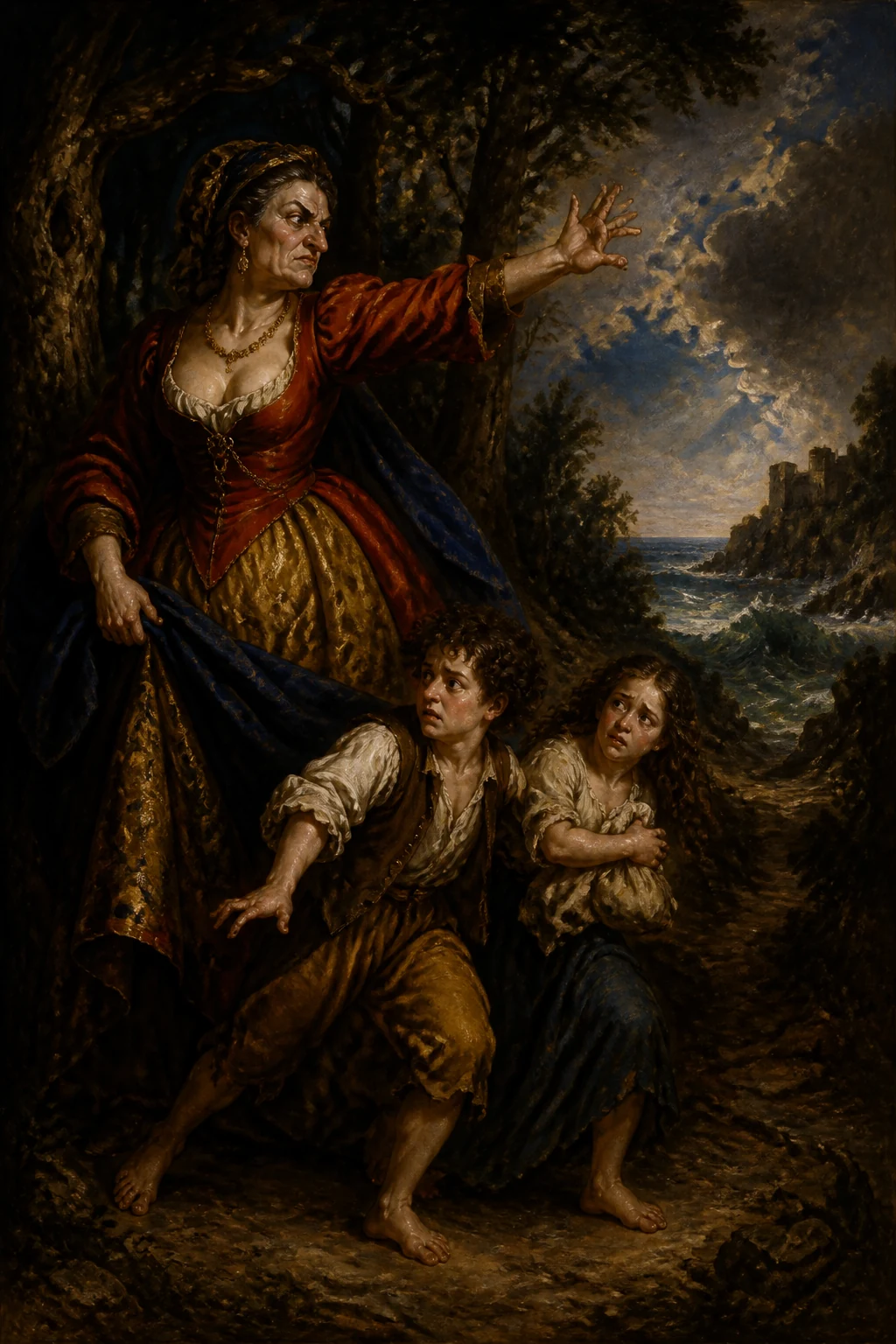
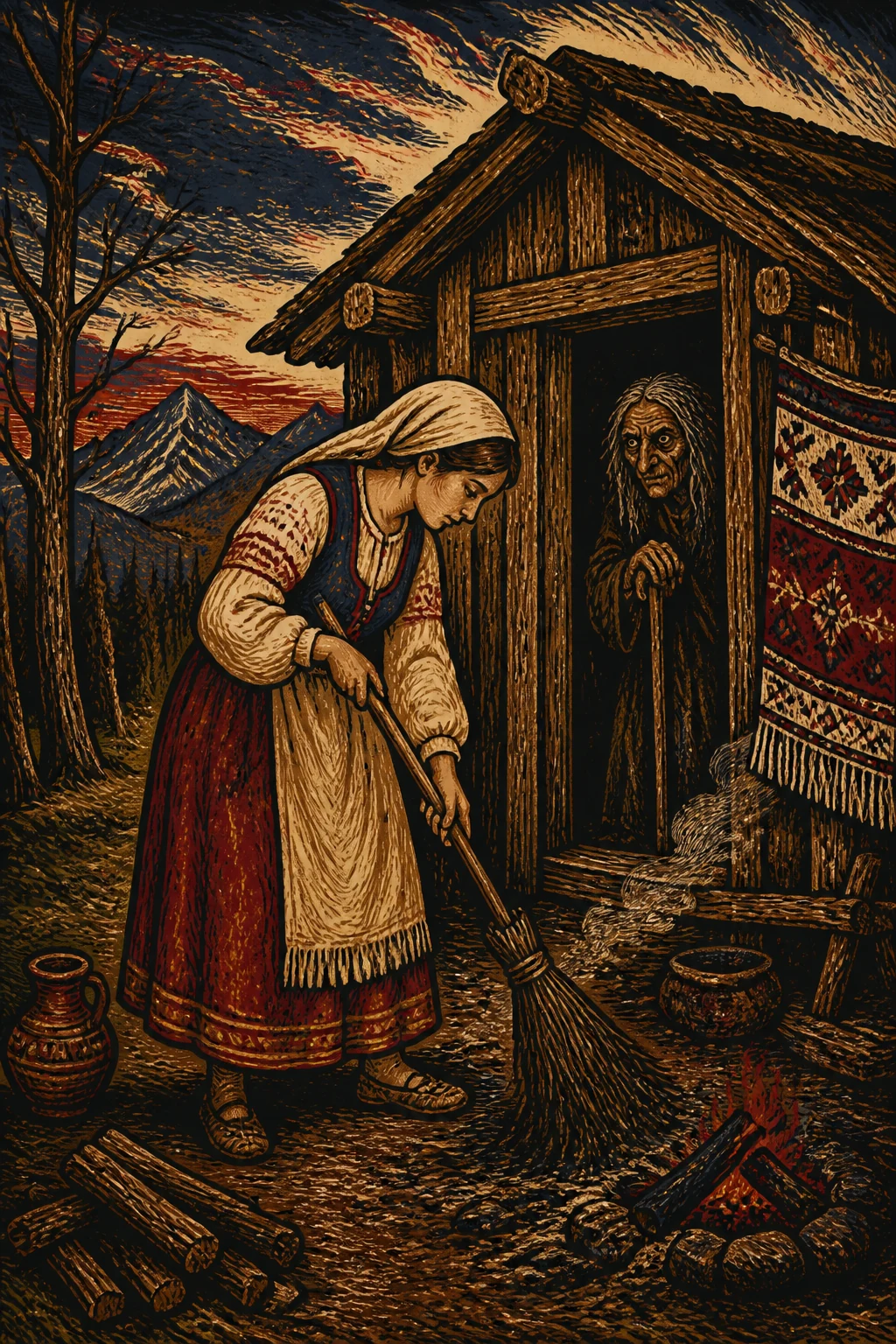
Among other things, this poor child had to go twice a day to fetch water from a spring a good half-league from the house, and bring back a large pitcher filled to the brim. One day, while she was at the spring, a poor woman came up and asked her for a drink. “Why, certainly, good mother,” said the beautiful girl. Rinsing her pitcher at once, she drew water from the clearest part of the spring and offered it to her, holding the pitcher all the while so that she could drink more easily. When the good woman had drunk, she said, “You are so beautiful, so good, and so kind that I cannot help bestowing a gift upon you.” For she was a fairy who had taken the form of a poor village woman to see how far the young girl’s kindness would go. “This is my gift to you,” the fairy went on. “With every word you speak, either a flower or a precious stone shall fall from your mouth.” When the beautiful girl arrived home, her mother scolded her for coming back so late from the spring. “I beg your pardon, Mother,” said the poor girl, “for taking so long.” As she spoke, two roses, two pearls, and two large diamonds fell from her mouth. “What do I see?” said her mother in astonishment. “I believe pearls and diamonds are falling from her mouth! How does this happen, my daughter?” This was the first time she had ever called her her daughter. The poor child told her quite simply everything that had happened, scattering countless diamonds as she spoke. “Indeed,” said the mother, “I must send my daughter there. Come, Fanchon, look at what falls from your sister’s mouth when she speaks. Would you not be glad to have the same gift? All you need do is go and fetch water from the spring, and when a poor woman asks you for a drink, give her one very politely.” “A fine sight I should make,” answered the ill-tempered girl, “going to the spring!” “I insist that you go,” her mother replied, “and this very moment.” She went, but grumbled all the way. She took the finest silver flask in the house. No sooner had she reached the spring than she saw a magnificently dressed lady emerge from the wood and come towards her to ask for a drink. It was the same fairy who had appeared to her sister, but she had assumed the appearance and dress of a princess to see how far this girl’s rudeness would go. “Do you think I came here to give you a drink?” said the proud, ill-tempered girl. “Of course, I brought a silver flask expressly so that Madam might have a drink! A likely story! Drink straight from the spring if you like.” “You are not very polite,” replied the fairy, without growing angry. “Well, since you are so ungracious, this is my gift to you: with every word you speak, either a snake or a toad shall fall from your mouth.” As soon as her mother caught sight of her, she called out, “Well, my daughter?” “Well, Mother,” answered the ill-tempered girl, spitting out two vipers and two toads. “Oh, heavens!” cried her mother. “What do I see? Her sister is to blame for this, and she shall pay for it!” At once she rushed to beat her. The poor child fled and took refuge in the nearby forest. The king’s son, returning from the hunt, met her there, and, seeing how beautiful she was, asked what she was doing all alone and why she was crying. “Alas, sir! My mother has driven me from home.” The king’s son, seeing five or six pearls and as many diamonds fall from her mouth, begged her to tell him how this came about. She told him her whole adventure. The king’s son fell in love with her and, considering that such a gift was worth more than any dowry another bride might bring, took her to the palace of the king his father, where he married her. As for her sister, she made herself so hateful that her own mother drove her out of the house. After wandering far and wide without finding anyone willing to take her in, the wretched girl went off to die at the edge of a wood.
MORAL Diamonds and gold coins may hold great sway over people’s hearts; yet gentle words have greater power still, and are of greater worth.
Another Moral Kindness takes care and a little willingness to please, but sooner or later it meets with its reward, and often when we least expect it.