O besedilu
Nennillo in Nennella
- Vir
- Pentameron
- Avtor
- Giambattista Basile
- Jezik branja
- English
- Jezik izvirnika
- Neapolitan
- Čas branja
- 11 min branja
- Obseg
- 9 strani
- Naslov izvirnika
- Jornata V VIII NENNILLO, E NENNELLA
O izvirniku
Pentameron
Baročna, divja starejša plast evropske pravljice, polna obratov in pretiravanj. Bralni jezik je English, izvirnik pa prihaja iz vira Pentameron v jeziku Neapolitan.
Besedilo
Nennillo in Nennella
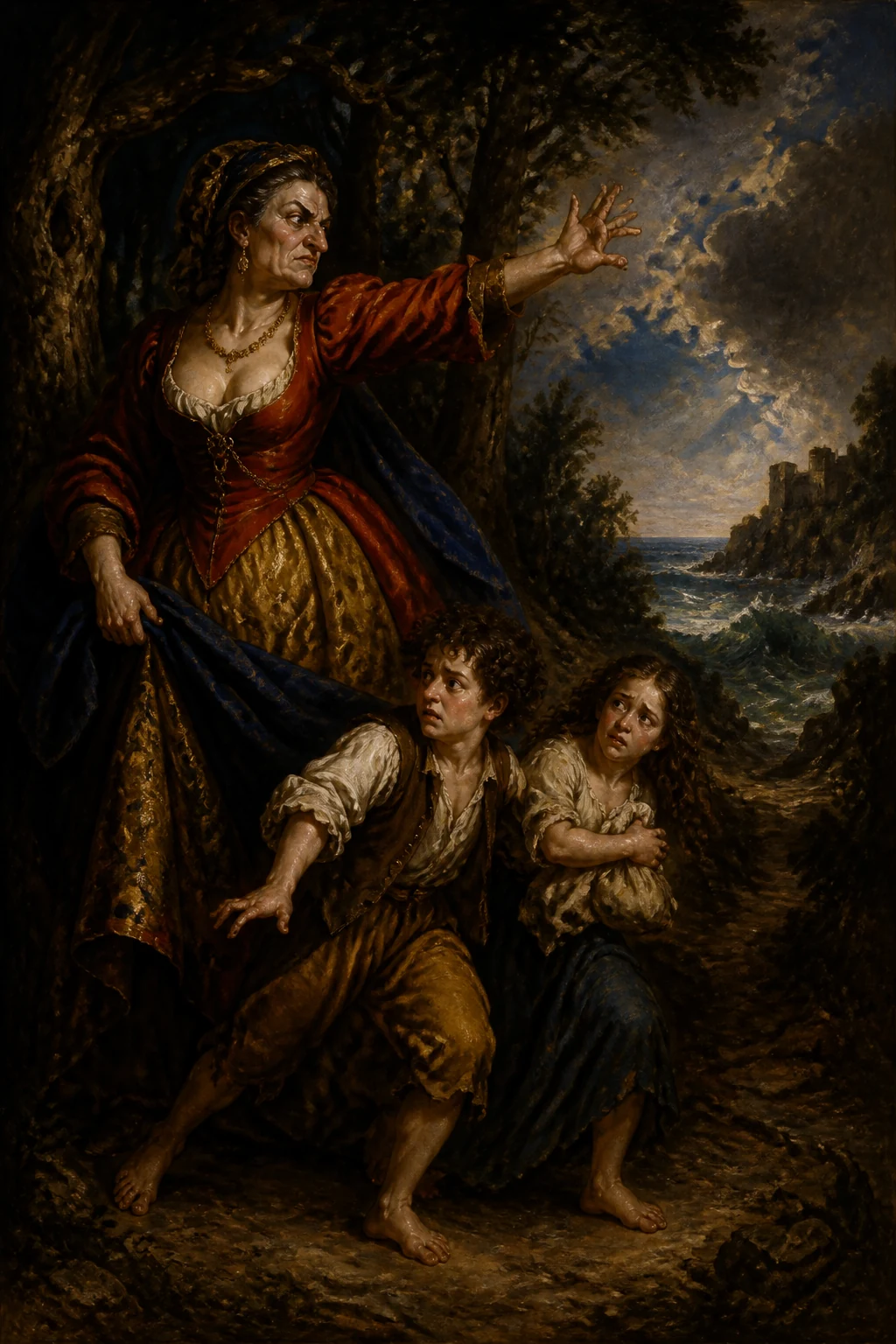
_Jannuccio has two children by his first wife and marries a second time. Their stepmother hates them so bitterly that he takes them into a wood, where they become separated. Nennillo becomes a prince’s favorite courtier, while Nennella throws herself into the sea and is swallowed by an enchanted fish. When it casts her up onto a rock, her brother recognizes her, and the prince marries her off to a very wealthy man._ _Ciulla having finished her race, Paola made ready to run for the prize, and after clearing her throat with a hearty rasp and wiping her mouth with a new handkerchief of linen and hemp, she began as follows._ Wretched is the man who, having children, hopes to provide for them by giving them a stepmother, for he brings into his house the very engine of their ruin. Never yet was a stepmother seen to look kindly on another woman’s brood; and if, by some chance, one has been found, you may stop the hole with a twig and call her a white crow. But among the many you may have heard spoken of, I shall tell you of one who deserves a place on the roll of heartless stepmothers, and whom you will judge worthy of the punishment she bought with ready money.
Once upon a time there was a father called Jannuccio, who had two children, Nennillo and Nennella, whom he loved as dearly as the pupils of his eyes. But Death, with the silent file of time, having broken through the bars that imprisoned his wife’s soul, he married an ugly shrew, a cursed she-dog, who had scarcely set foot in her husband’s house before she began to insist on having the stable all to herself, saying, “Have I come here to pick the lice off another woman’s children?
“This was all I needed now, to saddle myself with somebody else’s burdens and have these little wretches forever underfoot! Better to have broken my neck than come into this hell, to eat badly, drink worse, and sleep worse still, plagued by these little shits! This is no life to put up with. I came here as a wife, not a serving wench. We must find some way out of this and somewhere to put these plasters, or I shall find somewhere for myself. Better to blush once than turn pale a hundred times. Let us settle matters for good:
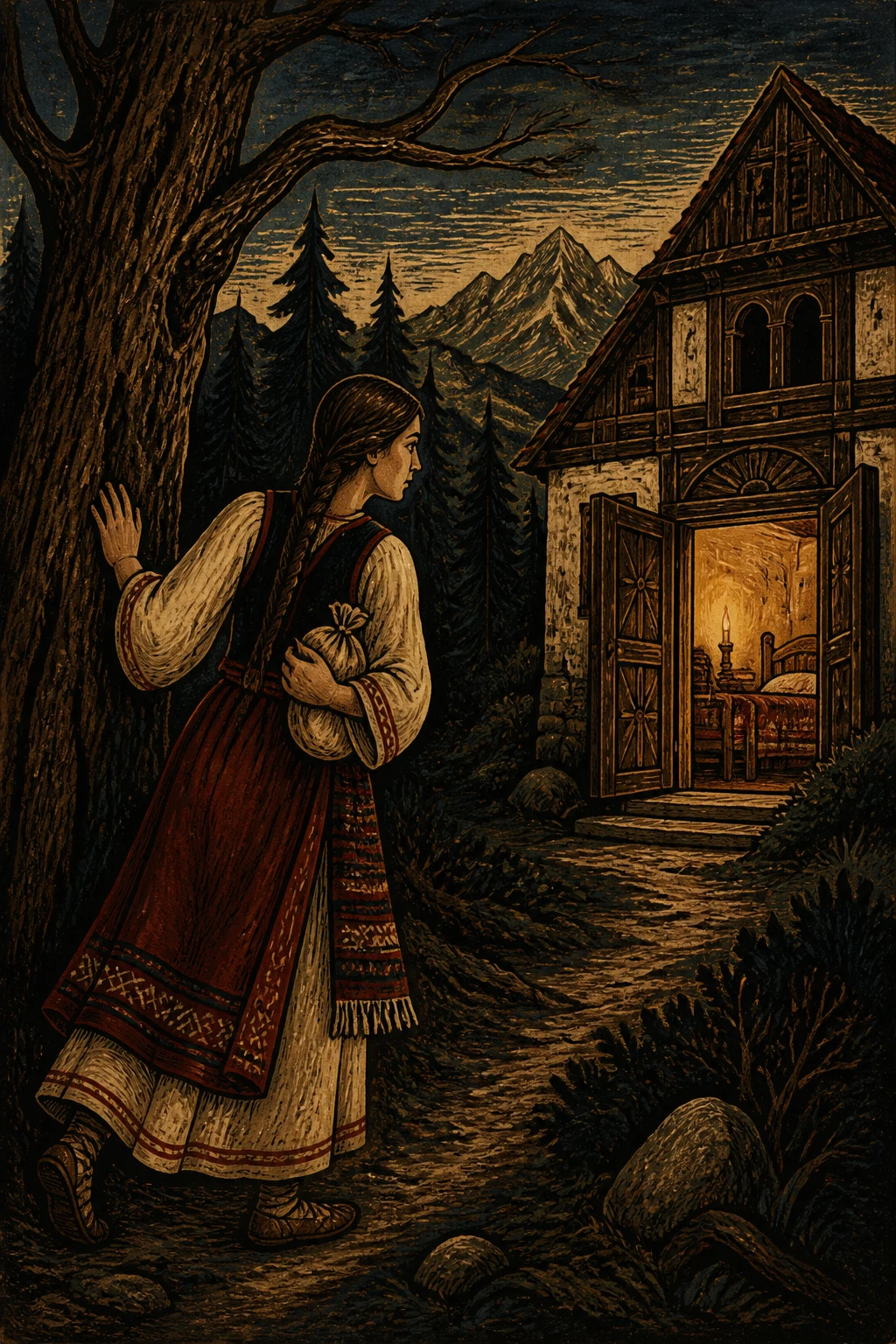
“I am quite determined to see this business through, or break with you altogether.” The poor husband, who had grown somewhat fond of this woman, said to her, “Do not lose your temper, my wife; sugar is dear. Tomorrow morning, before the cock crows, I shall rid you of this trouble, to keep you happy.” And so, the next morning, before Dawn spread her red Spanish blanket to shake the fleas out of the window of the East, he took his children, one by each hand, and, with a good basket of food hanging from his arm, led them into a wood where an army of poplars and beeches held the shadows under siege. When they arrived, Jannuccio said, “My little ones, stay here, and eat and drink merrily. When you need anything, look for this trail of ashes I am scattering: it will be the thread to lead you out of the labyrinth and bring you straight home.” Then he gave each of them a kiss and went back to his house in tears. But when all the animals, summoned by the bailiffs of night, were paying nature her due of necessary rest, the little ones—perhaps frightened at being in that lonely place, where the waters of a river thrashed the impudent stones that got in its way with a noise that would have made a Rodomonte shudder—set off slowly along the little trail of ashes. It was already midnight when, step by little step, they reached home. There Pascozza, their stepmother, behaved not like a woman but like a fury from hell, shrieking to the skies, stamping her feet and beating her hands, and snorting like a startled horse. “What a fine business this is!” she cried. “Where have these rags and tatters sprung from?
“Is there no quicksilver to prise them out of this house? Must you keep them here to break my heart? Go and take them out of my sight this very instant! I will wait for neither the music of cocks nor the lamentations of hens. Otherwise, you may pick your teeth with the hope of my sleeping with you, and tomorrow morning I shall slip away to my own people, for you do not deserve me. And to think I brought so much fine furniture into this house, only to see the shit and smell the stink of other people’s backsides! I did not bring such a handsome dowry to be a slave to children who are not mine.” Unfortunate Jannuccio, seeing his boat headed for the rocks and the business growing far too heated, took the little ones away that very moment and went back to the wood. There he gave the children another little basket of food and said, “You see, my darlings, how that bitch of a wife of mine loathes you. She came into my house to be your ruin and a nail driven through my heart.
“So stay here in this wood, where the trees, more merciful than she, will spread a canopy to shelter you from the sun; where the river, more charitable, will give you drink without poison; and where the earth, more kindly, will give you mattresses of grass without danger. And when you run out of food, here is a little path of bran I am making for you, straight as can be, along which you may come to seek help.” Having said this, he turned his face away so that they would not see him weeping and lose heart, poor little scraps. When they had eaten everything in the basket, they wished to go home; but because some ill-starred donkey had gobbled up the bran scattered on the ground, they lost their way. For several days they wandered about the wood, feeding on acorns and chestnuts they found fallen on the earth. But since Heaven always holds its hand over the innocent, it so happened that a prince came hunting in that wood. When Nennillo heard the barking of the dogs, he was so frightened that he hid inside a hollow tree he found, while Nennella ran so far that she came out of the wood and reached the seashore. Some corsairs had landed there to gather firewood; they seized her, and their captain took her home, where he and his wife, who had lately lost a little daughter, adopted her as their own. But to return to Nennillo: as he crouched inside the hollow tree, the dogs surrounded him, raising a din fit to deafen anyone. The prince went to see what was there and found this handsome little boy, who was too young to tell him who his father and mother were. He had him set upon one of the hunters’ saddles and, taking him back to the royal palace, brought him up with great care and had him taught many accomplishments. Among other things, he had him trained as a carver, and within three or four years the boy became so skilled at his art that he could cut to a hair’s breadth. Meanwhile, it had been discovered that the corsair who was keeping Nennella was a sea robber, and orders were given for his arrest. But he had friends among the clerks, whose mouths he kept well fed, and so he slipped away with his whole household. Perhaps it was Heaven’s justice that a man who had committed his crimes at sea should pay the penalty at sea; for he embarked in a frail boat, and when he was out in the open water, such a squall arose, and the waves grew so furious, that the boat capsized and they all went under like ducks. Nennella alone, who had no share in his robberies as his wife and children had, escaped this danger. For at that very moment a great enchanted fish happened to be near the boat, and, opening the enormous gulf of its throat, it swallowed her. But just when the girl thought her days were ended, she found something to marvel at inside the fish’s belly: beautiful fields, wondrous gardens, and a lordly house with every comfort, where she lived like a princess. The fish carried her, snug and dry, to a rocky islet where the prince had come to take the air, for it was the most sultry part of summer and the heat was fierce. While a magnificent banquet was being prepared, Nennillo had stationed himself on a balcony of the palace overlooking the rock to sharpen some knives, taking great delight in his craft and wishing to do himself credit. Nennella, seeing him through the fish’s throat, called out in a hollow voice, “Brother, brother dear, the knives are whetted, the tables are set, and I weary of life without you inside this fish.” The first time, Nennillo paid no heed to the voice.
But the prince, who was on another balcony, turned at this lament, saw the fish, and heard the same words repeated. He was beside himself with astonishment and sent a number of servants to see whether they could somehow entice the fish ashore. At last, hearing it repeat the same cry over and over—“My brother, my brother!”—he asked all his people, one by one, whether any of them had a sister who had gone missing. Nennillo answered that he was beginning to remember, as though in a dream, that when the prince had found him in the wood, he had had a sister of whom he had never heard any more. The prince told him to go up to the fish and see what the matter was: perhaps this good fortune had been kept in store for him. Nennillo approached, and the fish laid its head upon the rock and opened its throat six spans wide. Out came Nennella, so beautiful that she looked like a nymph appearing in a stage interlude, conjured out of the creature by some magician’s spell. When the king asked how all this had come about, she told him something of their troubles and their stepmother’s hatred. But since they could remember neither their father’s name nor where they lived, the king had it proclaimed that whoever had lost two children called Nennillo and Nennella in a wood should come to the royal palace, where he would hear good news of them. Jannuccio, whose heart had remained dark and desolate, believing they had been eaten by wolves, ran in great joy to the prince and said that he was the one who had lost these children. When he had told the story of how he had been forced to take them into the wood, the prince gave him a sound scolding, calling him a worthless sheep who had let a wretched woman plant her heel upon his throat and bring him to the point of sending two such jewels as his children wandering into the wild. But after cracking his skull with these words, he laid on the plaster of consolation by showing him his children, whom for half an hour he could not kiss and embrace enough. The prince had the rags stripped from his back and dressed him as a gentleman. Then he sent for Jannuccio’s wife and showed her those two nuggets of gold, asking, “What would someone deserve who harmed them and put them in danger of death?” She answered, “For my part, I would shut her in a barrel and roll her down a mountain.” “Then you shall have it,” said the prince. “The goat has turned her horns against herself. Come now: since you have passed your own sentence, you must pay for having borne such hatred toward these beautiful stepchildren.” And so he ordered that the sentence she herself had pronounced should be carried out. Then he found a very wealthy gentleman among his vassals and gave him Nennella in marriage, while to her brother he gave the daughter of another gentleman of equal standing. He granted them enough income to support themselves and their father, so that they had no need of anyone in the world. As for the stepmother, wrapped in a barrel, she brought her life to a shattering end, crying through the bunghole as long as she had breath, _Misfortune may be slow, but woe to whoever awaits it._ _Then comes one stroke of luck, and pays for all._
Izvirnik
Jornata V VIII NENNILLO, E NENNELLA
Naslednje strani prikazujejo izvirno besedilo za primerjavo.
_Jannuccio ha duje figlie de la primma mogliere, se nzora la seconna vota, e songo tanto odiate da la matrea, che le porta a no vosco, dove sperduto l’uno da l’autro, Nennillo deventa caro Cortisciano de no Prencepe, e Nennella jettannose a mmaro, è gliottuta da no Pesce fatato, e ghiettato sopra no scuoglio è da lo fratiello reconosciuta, e da lo Prencepe mmaritata ricca ricca._ _Fremmata la carrera Ciulla, se mese ’n punto de correre sto palio Paola, e dapò d’esserese spurgata la voce co na bella rascata, e annettatose lo musso co no moccaturo nuovo de lino, e cannavo, accossì dette prenzipio._ Negrecato chill’ommo, che avenno figlie, spera de trovarele covierno co darele Matreja, pocca le porta a la casa la machena de le rruine lloro,
non essennose visto maje matreja, che mmirasse de buon uocchio le rrazze d’autro, e se puro, se n’è trovata quarc’una de desgrazia, se pò mettere lo spruoccolo a lo pertuso, e se pò dire, che sia stato Cuorvo janco; ma io fra tante, che fuorze nn’averrite sentuto mentovare, ve parlaraggio d’una, che se pò mettere a la lista de le mmatreje scoscenziate, la quale stimmarrite degna de la pena, che se comperaje a denare contante.
Era na vota no patre chiammato Jannuccio, ch’avea duje figlie, Nennillo, e Nennella; a li quale voleva bene quanto a le bisole soje; ma avenno la morte co la limma-sorda de lo tiempo rotte le ferriate de la presonia de ll’arma de la mogliere, se pigliaje na brutta scerpia, ch’era na Canesca mmardetta, che non accossì priesto appe misso lo pede a la casa de lo marito, che accommenzaje ad essere cavallo de na stalla, e a dicere, che sò benuta a spedocchiare li figlie d’autre?
chesto mme mancava mo de pigliareme sto mpaccio d’autre, e bedereme ntuorno ste rregnole, che nnanze mme fosse rotta la noce de lo cuollo, che benire a sto nfierno pe mmale magnare, peo vevere, e peo dormire pe lo fastidio de sti cacate, chesta n’è bita da zoffrire, so benuta pe mmogliere, non pe bajassa, besogna pegliarence spediente, e trovare recapeto pe ste pitteme, o mme trovo recapeto pe mme stessa, e mmeglio na vota arrossire, che ciento palledire, mo sparentammo pe sempre; che so resoluta propio de vederene lo costrutto o rompere ’n tutto, e pe tutto. Lo nigro marito avenno puosto no poco d’affezzione a sta femmena, le disse: Senza collera, mogliere mia, ca lo zuccaro vale caro: ca craje matino nnanze, che ccanta lo Gallo te levarraggio sto
trivolo, pe tenerete contenta; e accossì la matina appriesso nnanze che l’Arba spannesse la coperta de Spagna rossa pe scotolare li pulice a la fenestra d’Oriente, isso pigliatose li figlie uno pe mano, co no buono panaro de cose da magnare nfilato a lo vraccio, le pportaje a no vosco, dove n’aserzeto de chiuppe, e de faje tenevano assediate l’ombre; a lo quale luoco arrivato, disse Jannuccio: Nennille mieje, stateve ccà drinto, manciate, e bevite allegramente, e comme ve manca niente, vedite sta lista de cennere, che vao semmenanno, che sarrà lo filo, che cacciannove da lo laborinto, ve portarrà a piede fitto a la casa vostra, e datole no vaso ped’uno, se nne tornaje chiagnenno a la casa. Ma comme tutte l’anemale zitate da li sbirre de la notte pagano
lo cienzo a la natura de lo necessario arrepuoso, li Nennille, o fosse la paura de stare a chillo luoco jeremo, dove l’acque de no sciummo, che mmazziava le pprete mpertenente, che se le paravano nnante le piede, averria fatto sorrejere no Rodomonte, s’abbiaro chiano chiano pe chella stratella de cennere, ed era già meza notte quanno adasillo adasillo arrivaro a la casa, dove Pascozza la matreja, non fece cosa de femmena, ma de furia nfernale, auzanno li strille a lo Cielo, sbattenno mano, e piede, e sbruffanno comm’a ccavallo adombrato, decenno; che bella cosa è chesta? dove so sguigliate sti zaccare, e sti peccenache?
è possibele, che non ce sia argiento vivo da scrastarele da sta casa? è possibele, che nce le buoglie tenere pe ccrepantiglia de sto core? Và levamette mo propio da nante l’uocchie, ca non voglio aspettare nè mmuseca de Galle, nè ttrivole de Galline, si nò, te puoje spezzolare li dente, ch’io dorma co ttico, e craje matino mme ne la sfilo a la casa de li pariente mieje, ca tu non mme mmierete, e puro t’aggio portato tante belle mobele a sta casa, pe bedere le ccacate, e lo fieto de li cule d’autre, nè aggio dato accossì bona dote pe essere schiava a li figlie, che non so mieje. Lo sfortunato Jannuccio, che bedde la varca male abbiata, e la cosa pigliare troppo de caudo, a lo stisso momento se pigliaje le ppeccerelle, e tornato a lo vosco, dove dato
n’autro panariello de coselle da mangiare a li figlie, le disse: Vuje vedite, bene mio, quanto ve tene nsavuorrio chella cana de moglierema, venuta a la casa mia pe rroina vostra, e pe cchiuovo de sto core; perzò statevenne a sto vosco, dove l’arvole cchiù pietuse ve farranno pennata contra lo Sole, dove lo sciummo cchiù caritativo, ve darrà da vevere senza tuossoco, e la terra cchiù ccortese ve darrà saccune d’erva senza pericolo, e quanno ve mancarrà lo mazzeco, io ve faccio sta viella de vrenna deritta deritta, pe la quale ve porrite venire a cercare soccurzo, e accossì ditto votaje la facce dall’autra parte pe non se fare a bedere chiagnere, e levare d’armo li povere Zaccarielle, li quale pocca s’appero mangiato la rrobba de lo panariello, vozero
tornare a la casa; ma perchè n’aseno figlio de la mala fortuna s’aveva annorcato la vrenna sparpogliata pe tterra, sgarraro la strata, tanto che ghiettero na mano de juorne spierte pe drinto lo vosco, pascennose de gliantre, e castagne, che trovaro cadute ’n terra. Ma perchè lo Cielo tene sempre la mano soja ncoppa li nnoziente, venne pe bentura no Prencepe a caccia drinto a chillo vosco, e Nennillo sentenno l’abbajatorio de li cane, appe tanta paura, che se schiaffaje drinto a n’arvolo, che trovaje ncafotato, e Nennella deze tanto a ccorrere, che sciuta da lo vosco, se trovaje a na marina, addove essenno smontate cierte corzare a fare legna, nne la zeppoliaro, e lo capo lloro se la portaje a la casa, dove la mogliere essennole morta de frisco
na figliola, se la pegliaro pe ffiglia. Ma tornanno a Nennillo, che ncaforchiatose drinto a chella scorza d’arvolo, era ntorniato da cane, che facevano n’alluccare da stordire, tanto che facenno vedere lo Prencepe, che cosa fosse, e trovato sto bello figliulo, che non seppe dire chi fosse lo patre, e la mamma, tanto era peccerillo, lo fece mettere ncoppa na sarma de no cacciatore, e portatosillo a lo palazzo riale, lo fece crescere co granne delegenzia, e mmezzare vertoluso, e fra l’autre cose lo fece mparare da Scarco, tanto che non passaro tre, o quatto anne, che deventaje accossì bravo dell’arte soja, che sparteva a capillo. Fra chisto tiempo essennose scopierto ca lo corzaro, che teneva Nennella era latro de maro, lo vozero pigliare presone, ma
isso, che aveva ammice li scrivane, e le tteneva abboccate, se la folaje co tutta la casa, e fuorze fo jostizia de lo Cielo, che chi aveva fatto le mbroglie a maro, a maro nne pagasse la pena, e perzò nvarcatose ncoppa na varca sottile, comme fu ’n miezo maro, venne tale refola de viento, e tale zirria d’onne, che se revotaje la varca, e fecero tutte lo papariello; schitto, Nennella, che n’avea corpa ne li latrocinie suoje, comme avea la mogliere, e li figlie, scappaje sto riseco, pocca se trovaje a sto medesemo tiempo ntuorno la varca no gran pesce fatato, lo quale aprenno no gran sfonnerio de cannarone, se la gliottette; ma quanno la figliola se credette d’avere scomputo li juorne, tanno trovaje cosa da strasecolare drinto lo ventre de sto
Pesce, ca nc’erano campagne bellisseme, giardine de spanto, na casa de Segnore co tutte le commedetà, dove stette da Prencepessa; da lo quale Pesce fu portata de zeppa, e de pesole a no scuoglio, dove essenno la maggiore afa de la state, e la cchiù granne carcarella, era venuto lo Prencepe a pigliare frisco; e mentre s’apparecchiava no banchetto terribile, Nennillo s’era puosto a no gaifo de lo Palazzo ncoppa sto scuoglio ad affilare cierte cortielle, delettannose assaje de l’affizio sujo pe farese nore, lo quale visto da Nennella pe lo cannarone de lo Pesce, sparaje na voce ’n cupo; frate mio, frate, li cortielle so ammolate, le tavole apparecchiate, ed a mme la vita ncresce, senza te drinto a sto pesce. Nennillo la primma vota non mese mente a sta voce:
Ma lo Prencepe, che steva a n’autra loggia, votatose a sto lamiento, vedde lo pesce, e sentette n’autra vota le stesse parole; pe la quale cosa restaje fora de se stisso de lo stopore, e mmannato na mano de serveture a bedere si co quarche muodo potessero gabbare lo Pesce a tirarelo ’n terra, finalemente sentenno leprecare sempre chillo medesemo, (frate mio, frate mio), demmannaje ad uno ped uno à tutte le gente soje, chi avesse quarche sore sperduta, e rresponnenno Nennillo, ca se jeva allecordanno comme no suonno, che quanno isso lo trovaje a lo vosco, aveva na sore, che non ne seppe cchiù nova. Lo Prencepe disse, che s’accostasse a lo pesce, e bedesse, che cosa fosse, fuorze stà ventura era stipata ped isso. E Nennillo accostatose a lo pesce,
chillo cacciato la capo ncoppa a lo scuoglio, ed aprenno seje parme de canna, ne scette Nennella accossì bella, che parze no ntermedio appunto de na Ninfa pe ncanto de quarche Mago sciuta da chillo anemale, e demmannato da lo Rè comme passava sto fatto, le jeze azzennanno quarche parte de li travaglie loro, e l’odio de la matreja; ma non se sapenno allecordare de lo nomme de lo patre, nè de la casa lloro, lo Rrè fece jettare banno, che chi avesse perduto duje figlie chiammate Nennillo, e Nennella drinto a no vosco, fosse venuto a lo Palazzo riale, ca n’averria avuto bona nova. Jannuccio, che nne steva sempre co lo core nigro, e sconzolato, credenno che fossero state manciate da lupe, corze co n’allegrezza granne a trovare lo Prencepe, decenno, ch’isso avea
perduto sti figlie. E contato la storia comme fosse stato sforzato de portarele a lo vosco, lo Prencepe le fece na bona nfroata, chiammannolo vervecone da poco; lo quale s’avea fatto mettere lo cauce ncanna da na femmenella, reddocennose a mmannare spierto doje gioje comm’erano li figlie suoje. Ma dapò che l’appe rotta la capo co ste parole, nce mese lo nchiastro de la consolazione, facennole vedere li figlie, che non se saziaje pe mez’ora d’abbracciare, e basare, e lo Prencepe fattole levare lo capo-purpo da cuollo, lo fece vestire da gentelommo; e fatto chiammare la mogliere de Jannuccio le fece vedere chelle doje puche d’oro, decennole, che mmeritarria chi le facesse male, e le mmettesse a pericolo de morte? ed essa respose: io pe mme la metterria drinto
na votte chiusa, e la vrocciolarria pe na montagna. Và ca l’aje, disse lo Prencepe: la crapa ha portato le ccorna contro se stessa; ora susso pocca tu t’aje fatta la sentenza, tu la paga, avenno portato tant’odio a sti belle figliastre; e accossì dette ordene, che se secotasse la settenzia data da essa stessa, e trovato no gentelommo ricco ricco vassallo sujo, le dette Nennella pe mmogliere, e la figlia de n’autro semmele a lo frate, dannole ntrate vastante da campare loro, e lo patre, che n’appero abbesuogno de nesciuno a lo munno, e la matreja nfasciata da na votte, sfasciaje la vita, gridando sempre pe lo mafaro, mentre appe spireto, _Trica malanno, e guajo a chi l’aspetta._ _Po nne vene una bona, e paga tutte._
Nadaljuj z branjem