O besedilu
Venera in Atalantin tek
- Vir
- Ovidove preobrazbe
- Avtor
- Ovid
- Jezik branja
- English
- Jezik izvirnika
- Latin
- Čas branja
- 8 min branja
- Obseg
- 7 strani
- Naslov izvirnika
- Venus and Atalanta's Race
O izvirniku
Ovidove preobrazbe
Pesniški tok antičnih preobrazb, kjer bogovi, ljudje in narava stalno menjavajo obliko. Bralni jezik je English, izvirnik pa prihaja iz vira Ovidove preobrazbe v jeziku Latin.
Besedilo
Venera in Atalantin tek
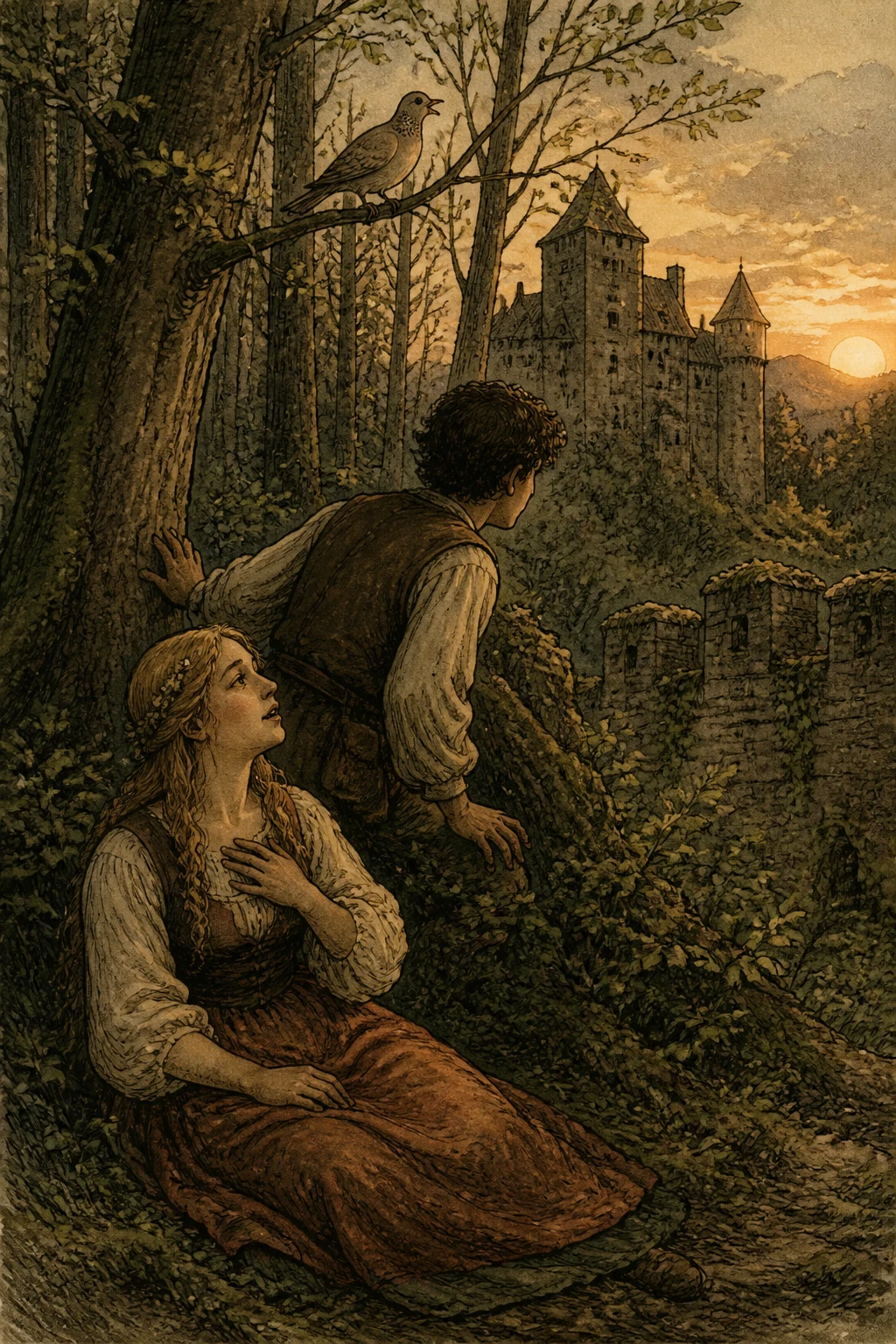
“Perhaps you have heard of a girl who defeated swift men in a footrace. That tale was no fiction: she did defeat them; nor could you have said whether her fleetness or her beauty deserved greater praise. When she asked a god about marriage, he answered: ‘You have no need of a husband, Atalanta: shun marriage! Yet you will not escape, and while still alive you will lose yourself.’ Frightened by the god’s decree, she lives unmarried in shadowy woods, and sternly drives away the pressing throng of suitors with this condition: ‘I am not to be won,’ she says, ‘unless first beaten in a race. Match your feet against mine: the swift shall win a wife and bridal bed;
death is the price for the slow. Let that be the rule of the contest.’ Cruel she was indeed; yet such is beauty’s power that a reckless crowd of suitors accepted these terms. Hippomenes had taken his seat to watch the unequal race. ‘Does anyone seek a wife at such terrible risk?’ he had said, condemning the young men’s excessive passion. But when he saw her face and her body stripped of its covering, a body like mine, or like yours, if you became a woman, he stood amazed, and, lifting his hands, exclaimed, ‘Forgive me, you whom I blamed just now. I did not yet know the prize you were pursuing.’ In praising her, he catches fire, and hopes that none of the young men will run faster than she,
fearing it in his jealousy. ‘But why should I leave my own fortune untried in this contest?’ he says. ‘The god himself helps those who dare.’ While Hippomenes debates these things within himself, the maiden flies on winged feet. Although to the young Aonian she seemed to move no slower than a Scythian arrow, still he marvels more at her beauty; and running itself enhances that beauty.
The breeze streams back the ankle-ribbons fluttering from her flying feet; her hair is tossed across her ivory back, and the bands below her knees, with their embroidered borders, flutter too. A blush had spread across the maiden whiteness of her body, just as when a purple awning casts a borrowed tint upon the shadows in a marble hall. While the stranger watches all this, the final marker is passed, and victorious Atalanta is crowned with a festive wreath.
The defeated groan and pay the penalty they agreed to. Yet their fate does not deter the young man. He steps into their midst and, fixing his gaze on the maiden, says, ‘Why seek an easy victory by defeating weaklings? Match yourself against me! If fortune makes me the winner, you will not resent being beaten by so worthy a man: for my father is Megareus of Onchestus, whose grandfather is Neptune; I am the great-grandson of the king of waters, and my courage is no less than my lineage. But if I lose, you will win a great and lasting name by defeating Hippomenes.’ As he speaks, the daughter of Schoeneus looks at him with softened eyes, unsure whether she would rather win or lose.
And she says to herself, ‘What god, hostile to handsome men, wishes to destroy him, and commands him to seek this marriage at the risk of his precious life? I am not worth so much, I think.— Nor is it his beauty that moves me, though that too might move me, but that he is still a boy: not he himself, but his youth touches me. And what of his courage, his spirit undaunted by death?
What of his being fourth in descent from the sea god? What of his love, and the value he sets upon marriage with me, that he will die if harsh fortune denies me to him? Go, stranger, while you can, and abandon this bloodstained bridal bed: marriage to me is cruel. No woman would refuse to wed you; any sensible girl might long for you.— Yet why do I care for you, when so many have already perished?
Let him look to himself! Let him die, since the slaughter of so many suitors has not warned him, and he is weary of life.— Must he die, then, because he wished to live with me, and suffer an undeserved death as the price of love? My victory will bring more hatred than I can bear. But it is not my fault. If only you would give up! Or, since you are so reckless, if only you were faster!
Ah, how like a maiden’s is the face of this boy! Ah, poor Hippomenes, I wish you had never seen me! You deserved to live. And if I were more fortunate, if merciless fate did not deny me marriage, you alone would be the one with whom I wished to share my bed.’ So she spoke; and, innocent, touched by Cupid for the first time, not knowing what she does, she loves without knowing it is love.
Now the people and her father demand the customary race, when Neptune’s descendant, Hippomenes, calls upon me in an anxious voice: ‘Cytherea, I pray you, favour my daring, and help the love you yourself have kindled.’ A kindly breeze carried his pleading prayer to me; and I was moved, I confess. There was little time to bring him help. There is a field the natives call Tamasus, the richest part of Cyprus, which the elders of old consecrated to me, decreeing that this gift should be added to my temples’ wealth. In the middle of the field shines a tree, golden in its foliage, its branches rustling with gold.
As it happened, I was coming from there, carrying in my hand three golden apples I had picked. Invisible to everyone but Hippomenes, I approached him and taught him how to use them. The trumpets had sounded the signal, and both, leaning forward, dart from the starting line, barely touching the sand with their swift feet. You would think they could skim the sea without wetting their soles, or race across the standing ears of ripened grain.
Shouts and cheers give heart to the young man, and voices call, ‘Now, now is the time to press on! Hippomenes, hurry! Now use all your strength! Waste no time: you will win!’ It is hard to tell whether Megareus’s son or the daughter of Schoeneus takes greater pleasure in these words. Oh, how often, when she could have passed him, she lingered, gazing long at his face, and left it behind unwillingly!
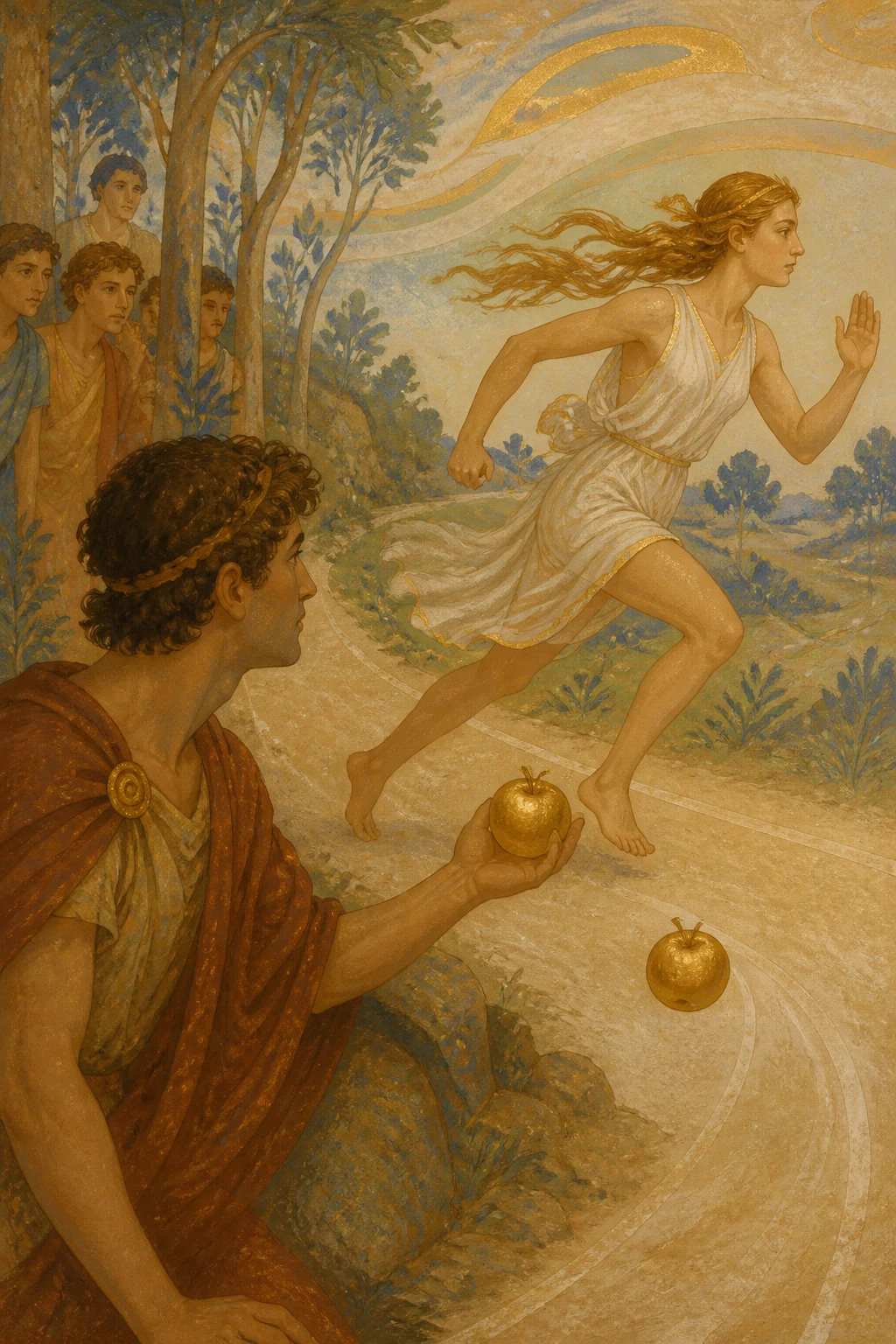
Dry gasps were coming from his weary mouth, and the finish was far away. Then at last Neptune’s descendant threw one of the three fruits from the tree. The maiden was astonished, and, longing for the gleaming apple, turned aside from her course and picked up the rolling gold. Hippomenes passes her! The spectators thunder with applause. She makes up for her delay and the time she has lost with a burst of speed, and once more leaves the young man behind.
Again delayed by the throwing of the second apple, she catches him and passes him. Only the final stretch remained. ‘Now,’ he said, ‘help me, goddess who gave me this gift!’ And towards the edge of the course, to delay her return, he hurled the shining gold sideways with all his youthful strength. The maiden seemed to hesitate over fetching it: I compelled her to pick it up, and added weight to the apple once she had it, hampering her alike with the burden and the delay.
And lest my tale run slower than the race itself, the maiden was outstripped; the victor led away his prize. Did I not deserve his thanks, Adonis, and an offering of incense? Yet, ungrateful, he neither thanked me nor gave me incense. I was suddenly seized with anger; hurt by his contempt, and determined that none should scorn me hereafter, I resolved to make an example of them, and roused myself against them both.
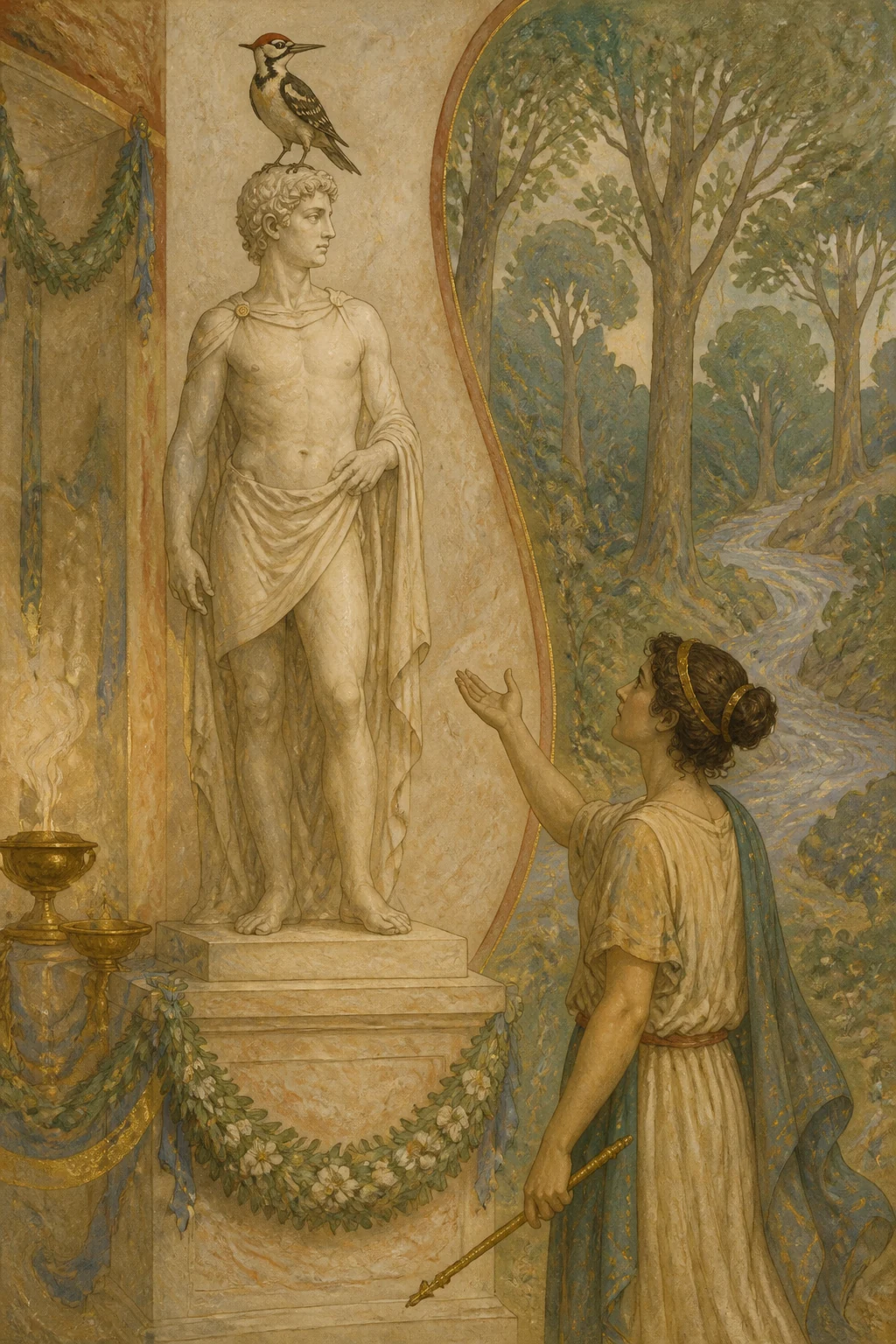
They were passing a temple to the Mother of the Gods, which famed Echion had once built to fulfil a vow, hidden deep in wooded shade; their long journey tempted them to rest. There an untimely desire for lovemaking seizes Hippomenes, stirred by my divine power. Near the temple was a dimly lit recess, like a cave, roofed with natural pumice, hallowed by ancient worship, where the priest had gathered many wooden images of the gods of old.
He enters it and defiles the sanctuary with forbidden lust. The sacred images turned their eyes away; and the turret-crowned Mother debated whether to plunge the guilty pair into the waters of Styx. That punishment seemed too light. So tawny manes clothe their necks, smooth only moments before; their fingers curve into claws; their shoulders become forelegs, and all their weight passes into their chests; their tails sweep the surface of the sand.
Their faces are fierce; instead of words they utter growls, and haunt the woods instead of bridal chambers. Feared by others, they are lions whose tamed jaws champ Cybele’s bridles. These creatures, my beloved, and with them every kind of beast that offers not its back in flight, but its breast to battle, you must avoid, lest your courage bring ruin upon us both.”
Izvirnik
Venus and Atalanta's Race
Naslednje strani prikazujejo izvirno besedilo za primerjavo.
Source ID: ovid_metamorphoses_story_073 Citation: Ovid, Metamorphoses 10.560-10.707 Original language: Latin Source: PerseusDL canonical-latinLit Source URL: https://github.com/PerseusDL/canonical-latinLit/blob/master/data/phi0959/phi006/phi0959.phi006.perseus-lat2.xml Segmentation certainty: medium 560: “Forsitan audieris aliquam certamine cursus 561: veloces superasse viros. Non fabula rumor 562: ille fuit: superabat enim; nec dicere posses, 563: laude pedum formaene bono praestantior esset.
564: Scitanti deus huic de coniuge “coniuge” dixit 565: “nil opus est, Atalanta, tibi: fuge coniugis usum! 566: nec tamen effugies teque ipsa viva carebis.” 567: Territa sorte dei per opacas innuba silvas 568: vivit et instantem turbam violenta procorum 569: condicione fugat, nec “sum potienda, nisi” inquit 570: “victa prius cursu. Pedibus contendite mecum: 571: praemia veloci coniunx thalamique dabuntur, 572: mors pretium tardis. Ea lex certaminis esto.”
573: Illa quidem inmitis: sed (tanta potentia formae est) 574: venit ad hanc legem temeraria turba procorum. 575: Sederat Hippomenes cursus spectator iniqui 576: et “petitur cuiquam per tanta pericula coniunx?” 577: dixerat ac nimios iuvenum damnarat amores. 578: Ut faciem et posito corpus velamine vidit, 579: quale meum, vel quale tuum, si femina fias, 580: obstipuit tollensque manus “ignoscite,” dixit 581: “quos modo culpavi. Nondum mihi praemia nota, 582: quae peteretis, erant.” Laudando concipit ignes 583: et, ne quis iuvenum currat velocius, optat 584: invidiaque timet. “Sed cur certaminis huius
585: intemptata mihi fortuna relinquitur?” inquit 586: “audentes deus ipse iuvat.” Dum talia secum 587: exigit Hippomenes, passu volat alite virgo. 588: Quae quamquam Scythica non setius ire sagitta 589: Aonio visa est iuveni, tamen ille decorem 590: miratur magis; et cursus facit ipse decorem. 591: Aura refert ablata citis talaria plantis, 592: tergaque iactantur crines per eburnea, quaeque 593: poplitibus suberant picto genualia limbo; 594: inque puellari corpus candore ruborem 595: traxerat, haud aliter, quam cum super atria velum 596: candida purpureum simulatas inficit umbras.
597: Dum notat haec hospes, decursa novissima meta est 598: et tegitur festa victrix Atalanta corona. 599: Dant gemitum victi penduntque ex foedere poenas. 600: Non tamen eventu iuvenis deterritus horum 601: constitit in medio, vultuque in virgine fixo 602: “quid facilem titulum superando quaeris inertes? 603: mecum confer!” ait. “Seu me fortuna potentem 604: fecerit, a tanto non indignabere vinci: 605: namque mihi genitor Megareus Onchestius, illi 606: est Neptunus avus, pronepos ego regis aquarum, 607: nec virtus citra genus est; seu vincar, habebis 608: Hippomene victo magnum et memorabile nomen.”
609: Talia dicentem molli Schoeneia vultu 610: adspicit et dubitat, superari an vincere malit. 611: Atque ita “quis deus hunc formosis” inquit “iniquus 612: perdere vult caraeque iubet discrimine vitae 613: coniugium petere hoc? Non sum, me iudice, tanti. — 614: Nec forma tangor (poteram tamen hac quoque tangi), 615: sed quod adhuc puer est: non me movet ipse, sed aetas.
616: Quid quod inest virtus et mens interrita leti? 617: Quid quod ab aequorea numeratur origine quartus? 618: Quid quod amat tantique putat conubia nostra, 619: ut pereat, si me fors illi dura negarit? 620: Dum licet, hospes, abi thalamosque relinque cruentos: 621: coniugium crudele meum est. Tibi nubere nulla 622: nolet, et optari potes a sapiente puella. — 623: Cur tamen est mihi cura tui tot iam ante peremptis?
624: Viderit! Intereat, quoniam tot caede procorum 625: admonitus non est agiturque in taedia vitae. — 626: Occidet hic igitur, voluit quia vivere mecum, 627: indignamque necem pretium patietur amoris? 628: Non erit invidiae victoria nostra ferendae. 629: Sed non culpa mea est. Utinam desistere velles, 630: aut, quoniam es demens, utinam velocior esses! 631: A! quam virgineus puerili vultus in ore est!
632: A! miser Hippomene, nollem tibi visa fuissem! 633: Vivere dignus eras. Quod si felicior essem, 634: nec mihi coniugium fata importuna negarent, 635: unus eras, cum quo sociare cubilia vellem.” 636: Dixerat; utque rudis primoque Cupidine tacta, 637: quid facit ignorans, amat et non sentit amorem. 638: Iam solitos poscunt cursus populusque paterque, 639: cum me sollicita proles Neptunia voce 640: invocat Hippomenes “Cytherea” que “comprecor, ausis 641: adsit” ait “nostris et quos dedit adiuvet ignes.”
642: Detulit aura preces ad me non invida blandas; 643: motaque sum, fateor. Nec opis mora longa dabatur. 644: Est ager, indigenae Tamasenum nomine dicunt, 645: telluris Cypriae pars optima, quam mihi prisci 646: sacravere senes templisque accedere dotem 647: hanc iussere meis. Medio nitet arbor in arvo, 648: fulva comas, fulvo ramis crepitantibus auro. 649: Hinc tria forte mea veniens decerpta ferebam 650: aurea poma manu: nullique videnda nisi ipsi 651: Hippomenen adii docuique, quis usus in illis.
652: Signa tubae dederant, cum carcere pronus uterque 653: emicat et summam celeri pede libat harenam. 654: Posse putes illos sicco freta radere passu 655: et segetis canae stantes percurrere aristas. 656: Adiciunt animos iuveni clamorque favorque 657: verbaque dicentum: “Nunc, nunc incumbere tempus! 658: Hippomene, propera! nunc viribus utere totis! 659: pelle moram, vinces!” Dubium, Megareius heros 660: gaudeat, an virgo magis his Schoeneia dictis.
661: O quotiens, cum iam posset transire, morata est 662: spectatosque diu vultus invita reliquit! 663: Aridus e lasso veniebat anhelitus ore, 664: metaque erat longe. Tum denique de tribus unum 665: fetibus arboreis proles Neptunia misit. 666: Obstipuit virgo, nitidique cupidine pomi 667: declinat cursus aurumque volubile tollit. 668: Praeterit Hippomenes! Resonant spectacula plausu.
669: Illa moram celeri cessataque tempora cursu 670: corrigit atque iterum iuvenem post terga relinquit. 671: Et rursus pomi iactu remorata secundi 672: consequitur transitque virum. Pars ultima cursus 673: restabat; “nunc” inquit “ades, dea muneris auctor!” 674: inque latus campi, quo tardius illa rediret, 675: iecit ab obliquo nitidum iuvenaliter aurum. 676: An peteret, virgo visa est dubitare: coegi 677: tollere et adieci sublato pondera malo 678: impediique oneris pariter gravitate moraque.
679: Neve meus sermo cursu sit tardior ipso, 680: praeterita est virgo: duxit sua praemia victor. 681: Dignane, cui grates ageret, cui turis honorem 682: ferret, Adoni, fui? — nec grates inmemor egit, 683: nec mihi tura dedit. Subitam convertor in iram; 684: contemptuque dolens, ne sim spernenda futuris, 685: exemplo caveo meque ipsa exhortor in ambos. 686: Templa, deum Matri quae quondam clarus Echion 687: fecerat ex voto, nemorosis abdita silvis, 688: transibant, et iter longum requiescere suasit.
689: Illic concubitus intempestiva cupido 690: occupat Hippomenen, a numine concita nostro. 691: Luminis exigui fuerat prope templa recessus, 692: speluncae similis, nativo pumice tectus, 693: religione sacer prisca, quo multa sacerdos 694: lignea contulerat veterum simulacra deorum. 695: Hunc init et vetito temerat sacraria probro. 696: Sacra retorserunt oculos; turritaque Mater 697: an Stygia sontes dubitavit mergeret unda.
698: Poena levis visa est. Ergo modo levia fulvae 699: colla iubae velant, digiti curvantur in ungues, 700: ex umeris armi fiunt, in pectora totum 701: pondus abit, summae cauda verruntur harenae. 702: Iram vultus habet, pro verbis murmura reddunt, 703: pro thalamis celebrant silvas: aliisque timendi 704: dente premunt domito Cybeleia frena leones. 705: Hos tu, care mihi, cumque his genus omne ferarum, 706: quod non terga fugae, sed pugnae pectora praebet, 707: effuge, ne virtus tua sit damnosa duobus.”
Nadaljuj z branjem