Prevod
Nipmuki so bili številni v Thompsonu v Connecticutu, kjer so spretno obdelovali polja, njihovi zemeljski okopi na Fort Hillu pa so jim dajali zavetje ob sovražnem vdoru. Njihov poglavar Quinatisset je imel bivališče na mestu, kjer danes stoji kongregacijska cerkev v Thompsonu. Verjeli so, da je jezero Chargoggagmanchogagog raj — dom Velikega duha in duš umrlih — in da jim bo vselej dajalo ribe, kakor jim hribi dajejo divjad. Ribe so imeli radi in so jih občasno pri Narragansettih menjavali za jelenje meso in koruzo.
Ti slednji Indijanci so bili ljudstvo, ki je ljubilo vodo, in še danes se njihov »ribiški ogenj« — steber bledega plamena — enkrat na sedem let dvigne iz jezera Quinebaug, kakor pripovedujejo tisti, ki so ob njegovih vodah bedeli vso noč. Ker so vedeli, kako radi imajo Nipmuki skakavke in školjke, so jih Narragansetti nekoč povabili na obed. Ljudje iz notranjosti so vabilo navdušeno sprejeli in se pri mizi izkazali z junaškim tekom; toda gorje, da se je moralo tako končati! Kmalu zatem so se osramotili, ko so Narragansette povabili na gostijo z jelenovim mesom v Killinglyju in se z gosti sprli zaradi priprave jedi. Prepir je prerasel v boj, v katerem so bili pobiti vsi povabljenci razen dveh. Gostitelji so jih dostojno pokopali, toda nad njihovimi grobovi trava nikoli ni hotela rasti.
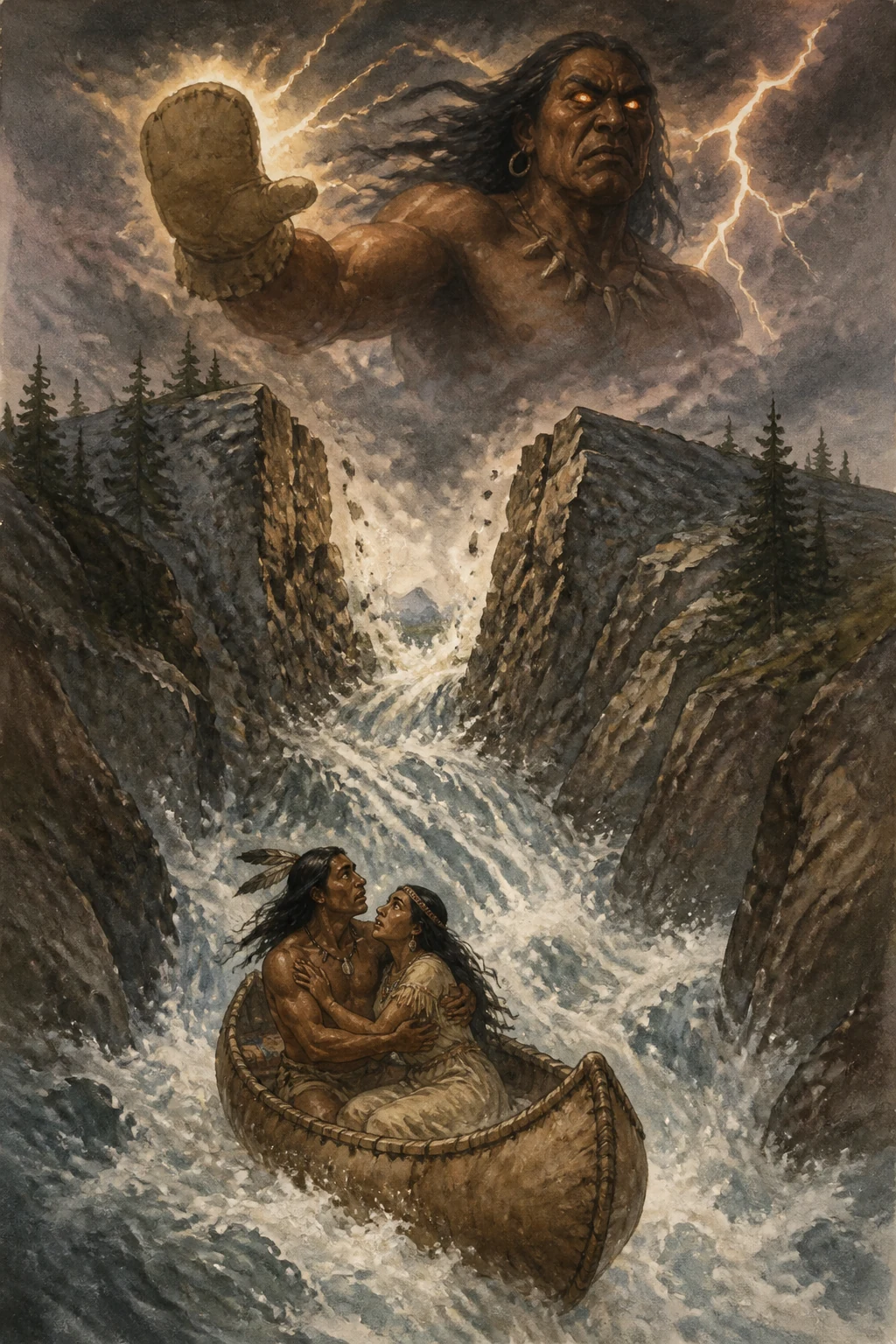
Veliki duh je to izdajstvo kmalu maščeval, ko so se Nipmuki zbrali na obrednem shodu in spremljajočem veseljačenju v travnati dolini, kjer jezero Mashapaug zdaj zrcali očarljivo pokrajino in kjer je bilo še do nedavnega pod gladino mogoče videti ostanke gozda. Na vrhuncu rajanja je bog izpodmaknil temelje hribov, in ko se je zemlja ugreznila skupaj s pregrešnimi možmi in ženami, so v prepad privrele vode in ga napolnile. Vsi so utonili razen ene dobre starke, pod katere nogami so tla ostala trdna. Otok Loon, na katerem je stala, je viden še danes.
Izvirnik
The Nipmucks were populous at Thompson, Connecticut, where they skilfully tilled the fields, and where their earthworks, on Fort Hill, provided them with a refuge in case of invasion. Their chief, Quinatisset, had his lodge on the site of the Congregational church in Thompson. They believed that Chargoggagmanchogagog Pond was paradise--the home of the Great Spirit and departed souls--and that it would always yield fish to them, as the hills did game. They were fond of fish, and would barter deer-meat and corn for it, occasionally, with the Narragansetts.
Now, these last-named Indians were a waterloving people, and to this day their “fishing fire”--a column of pale flame--rises out of Quinebaug Lake once in seven years, as those say who have watched beside its waters through the night. Knowing their fondness for blue-fish and clams, the Narragansetts asked the Nipmucks to dine with them on one occasion, and this courtesy was eagerly accepted, the up-country people distinguishing themselves by valiant trencher deeds; but, alas, that it should be so! they disgraced themselves when, soon after, they invited the Narragansetts to a feast of venison at Killingly, and quarrelled with their guests over the dressing of the food. This rumpus grew into a battle in which all but two of the invites were slain. Their hosts buried them decently, but grass would never grow above their graves.
This treachery the Great Spirit avenged soon after, when the Nipmucks had assembled for a powwow, with accessory enjoyments, in the grassy vale where Mashapaug Lake now reflects the charming landscape, and where, until lately, the remains of a forest could be seen below the surface. In the height of the revel the god struck away the foundations of the hills, and as the earth sank, bearing the offending men and women, waters rushed in and filled the chasm, so that every person was drowned, save one good old woman beneath whose feet the ground held firm. Loon Island, where she stood, remains in sight to-day.